
As Bitcoin and crypto mature as an asset class, their price dynamics and the factors influencing them are on shifting sands. Once predominantly driven by retail speculation and phenomena like 'halving,' the landscape increasingly features institutional involvement and the effects of macroeconomic factors. This shift marks a pivotal evolution in crypto, highlighting the complexity of influences that veteran and new investors must navigate.
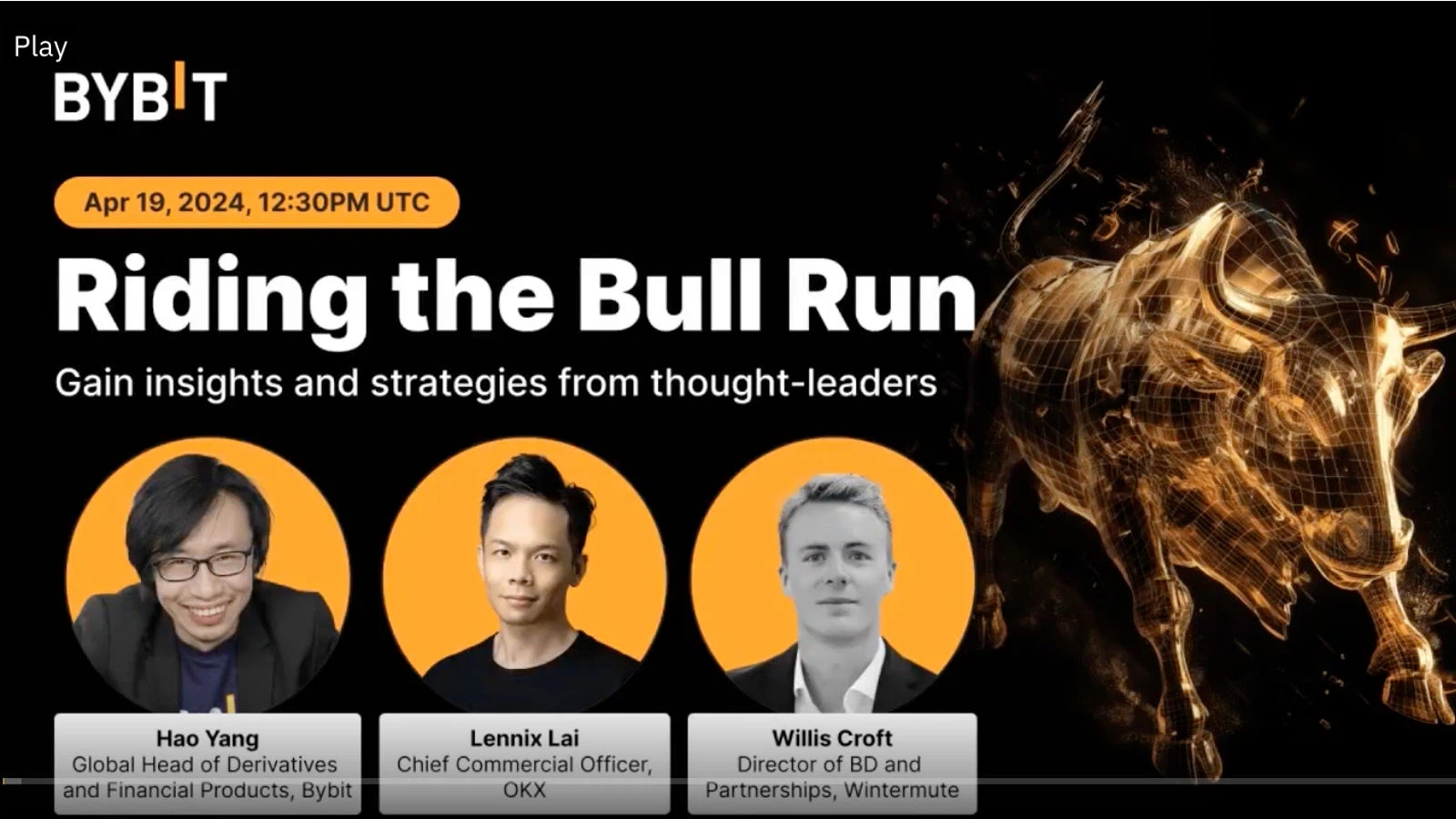
To discuss this, Bybit hosted a panel with Hao Yang, head of financial products at Bybit, Lennix Lai, chief commercial officer at OKX, and Willis Croft, director of business development and partnerships at Wintermute.
The Bitcoin Halving's Diminishing Impact
Historically, Bitcoin's halving events — periodic reductions in the reward for mining new blocks — have been major catalysts for price increases. However, this effect may be waning. "I think the magnitude of being a catalyst of the price of the market is getting less," said Hao Yang. “The total amount of circulating bitcoin will arrive at 21 million via a non-linear curve. That means the impact from halvings altering the supply side will be less as the total circulating amount of bitcoin increases.”
Institutional Influence and ETFs
The introduction of Bitcoin ETFs has opened the gates for institutional money, which has traditionally been cautious about entering the crypto market due to its volatility and regulatory uncertainties. "Post ETF, we opened the floodgates for demand, especially the institutional money," explained Lennx Lai, suggesting that these financial products provide a more familiar entry point for traditional finance into Bitcoin. The impact of ETFs extends beyond just providing an investment vehicle — they symbolize a “stamp of approval” and help to reduce volatility by attracting stable, long-term investment.
Macroeconomic Factors at Play
While the halving events have their impact, all the speakers emphasized that macroeconomic factors play a more substantial role in shaping Bitcoin's price dynamics today. This shift reflects Bitcoin's growing integration into the broader financial landscape, where it is increasingly affected by the same factors that influence traditional assets. “The market is changing,” said Willis Croft, explaining that the crypto market can’t be viewed in isolation from global economic conditions. "I always thought that the last link for a real mature crypto ecosystem is to bond with the real world economy... And once we started tokenizing other stuff on chain, we will see a huge efficiency improvement to the old system."
Future Outlook
The role of Bitcoin and other cryptocurrencies is expected to evolve further. With the integration of blockchain technology into various sectors and the increasing acceptance of crypto by major financial institutions, Bitcoin's narrative is shifting from an alternative, speculative investment to a more established asset. "We’re seeing very traditional, legacy business in the securities market or commodity trading … directly trading or interacting with crypto — that's unique," said Lennix Lai.
As the speakers concluded, the future of Bitcoin lies not just in its potential as a digital gold but as a key player in the evolving fabric of global finance. Its journey is emblematic of the broader crypto market's potential to mature and stabilize, inviting optimism about its role in future economic systems. The panel agreed that Bitcoin is poised to integrate into and alter the global financial system.