Block Writer
3989Like0Shares150Fans235Follow
Hyperliquid was built to pull leveraged trading away from centralized exchanges. So what does it say that its own token now trades on a centralized venue with a 10x leverage tag? That tension is the real fundamental question. HYPE is the native asset of Hyperliquid, a decentralized perpetual futures platform. The screenshot shows it at 66.365, up 1.18%, beside a 67.95M figure that isn't labeled, so I won't assume what it measures. What is visible is enough to ask where the token's value actually comes from. The project's strength is focus. Rather than a general-purpose chain searching for a use case, Hyperliquid is organized around one proven source of demand: leveraged derivatives trading. A token placed at the center of that activity has a clearer economic story than most Layer 1 assets. The hidden contradiction is that token price and protocol economics are different things. A modest daily gain on a leveraged listing reflects speculative flow, not platform revenue. Traders can push HYPE higher elsewhere without a single additional user touching Hyperliquid itself. Price discovery is happening off-platform, so the market may be pricing the narrative faster than fundamentals can confirm it. For monetization, the key issue is whether platform trading activity converts into durable token demand through fees, buybacks or staking utility. None of that is verifiable from this screenshot, and no revenue, supply or unlock data is shown, so I am leaving tokenomics out rather than guessing. The bullish case is a focused product, strong brand recognition and listings on major venues that widen access and liquidity. The bearish case is cyclicality. Perpetual futures volume depends on volatility and appetite for leverage, and when traders step back, both activity and the token's value proposition thin out. The critical risk is competition. Derivatives traders move wherever liquidity and fees are best, and that includes centralized exchanges, which are the very venues Hyperliquid set out to displace. My view: the thesis is credible but concentrated. HYPE is effectively a claim on one business line, and that purity cuts both ways. It deserves serious attention, not blind enthusiasm. The milestone that would change my assessment is evidence that platform revenue translates into measurable, recurring token demand independent of price momentum. Until that link is visible, price strength is a sentiment signal rather than a fundamental one. If a token's price is set mostly on centralized venues, how much of its value does the protocol itself actually control? $HYPEUSDT #IMPACTbyTrade
Can a network that sells blockchain data access to everyone survive if the market barely trades its own token? That is the tension around Lava. The project positions itself as a decentralized access layer, where independent providers serve RPC requests and applications pay for reliable connectivity. The problem is real. Many "decentralized" apps still depend on a few centralized RPC vendors, which quietly reintroduces single points of failure. If Lava delivers a credible multi-provider alternative, the technology matters. The screen shows something narrower. LAVA trades at 0.01596 USDT, down 2.15% on the session, with 574.58K displayed beside the ticker. If that is LAVA-denominated volume, the notional is roughly 9,000 USDT. That is my arithmetic, not a confirmed exchange statistic, and I can't verify the time window. It does frame the question: an infrastructure token needs real market depth before any usage story can be priced with confidence. The contradiction sits in who the customer is. Developers buying data access want cheap, predictable costs, not token exposure. Paying in the token is a design choice, not a necessity. If demand comes mainly from incentives, with providers earning rewards for serving requests, the token reflects subsidy rather than consumption. Nothing supplied shows revenue, supply, unlocks or fee data, so I won't pretend to know which one dominates. The bull case is that RPC is a recurring cost for every onchain application. Capturing even a small share of that spend through token-linked settlement could make a sub-two-cent asset look mispriced. The bear case is that centralized providers already compete well on latency and price. Developers switch only when decentralization becomes a purchasing criterion rather than a talking point. The critical risk is that the token's utility can be bypassed. Entrenched competitors plus optional token payments is a hard combination, and thin liquidity makes it worse. When small orders move price, a single-day percentage change says very little. My view: the thesis is plausible, but the evidence in front of me doesn't confirm it. A 2.15% decline on light turnover is noise, not a verdict on fundamentals. The next milestone is verifiable growth in fee-paying request volume, reported separately from incentive-funded activity, along with the share of provider rewards covered by organic fees. That would show whether usage is earning its place rather than being paid for. If Lava's customers could pay in any currency, would the token still be necessary? $LAVAUSDT #IMPACTbyTrade

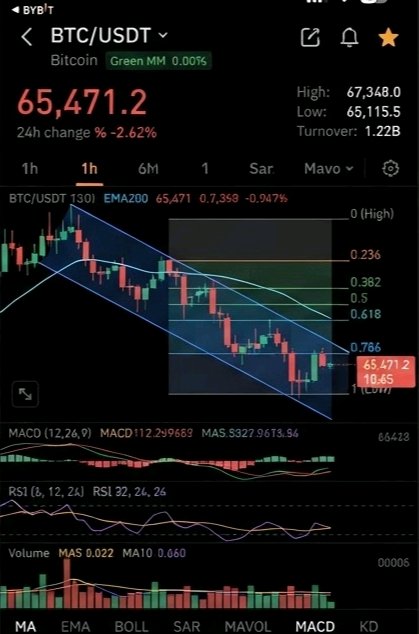
Is a monetary asset still a monetary asset if it can lose 2.62% in a single session? The screenshot shows Bitcoin at 65,471.2 against USDT, down 2.62% on the day. The listing also carries a 10x tag and a 1.22B figure beside the name. The screenshot doesn't label that figure, so I read it as trading activity, but that is my interpretation. **The contradiction** Bitcoin's fundamental case rests on being scarce, non-sovereign money. Its market behavior still looks like a risk asset. A store of value is supposed to absorb stress, yet a drop of this size shows the asset is priced by marginal buyers and sellers, not by its monetary properties. Both facts are true at once, and neither cancels the other. **What the data can and can't tell us** The 10x tag matters more than it looks. It shows Bitcoin is being offered here as a leveraged trading instrument, so part of the visible activity may come from positioning rather than from people accumulating a long-term asset. If so, the figure beside the name measures how much the asset is traded, not how much it is held. I can't verify that split from this screenshot, and I won't pretend to. **Demand** Bitcoin produces no cash flow. Its demand is purely a function of belief in its monetary role, so conviction, not earnings, anchors the price. When sentiment weakens, nothing else steps in to support valuation. That is the structural cost of a pure monetary asset. **Bull and bear cases** The bullish argument is that a fixed, rules-based issuance schedule is rare, and that drawdowns have historically been where long-term holders accumulate. The bearish argument is that a store-of-value claim has to be earned in stress, and today's move is a reminder that the market doesn't yet treat Bitcoin as a refuge. **Critical risk** The biggest risk is narrative dependency. If the market stops seeing Bitcoin as a macro hedge and prices it as a high-beta technology asset, its fundamental premium compresses regardless of its protocol design. **My view** A single red session doesn't damage the thesis, but it doesn't strengthen it either. Bitcoin's fundamentals are about monetary design, and one day's price can't confirm or refute them. I would treat the move as information about positioning and sentiment, not about the asset's long-term value. **What would change my mind** I'd want to see whether volatility falls and whether buying persists after drawdowns. A store of value proves itself by how stable it is under stress, and that is the milestone worth watching. If Bitcoin can't hold its value on an ordinary red day, what evidence would convince you it has become a reserve asset instead of a trade? $BTCUSDT #IMPACTbyTrade
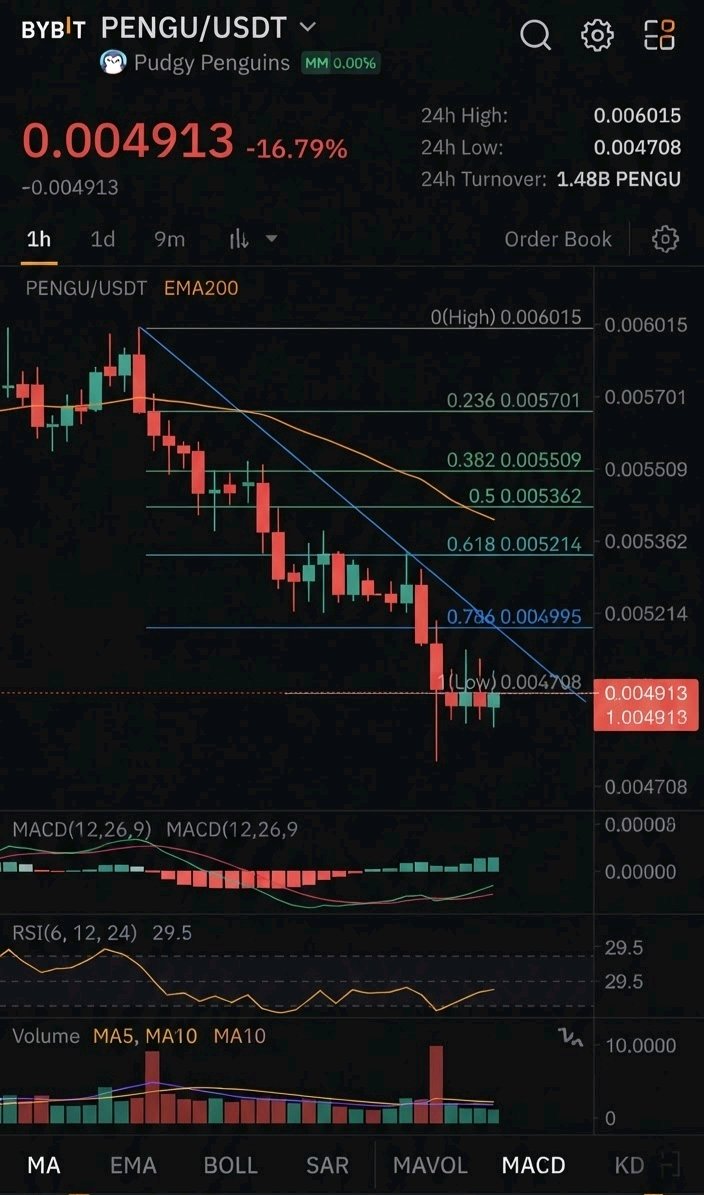
A 16.79% drop to 0.004913 raises an uncomfortable question for PENGU: is the market repricing a token, or doubting whether a consumer brand can turn attention into on-chain value? Pudgy Penguins grew from an NFT collection into a consumer IP, and PENGU is the token layer around it. The thesis is that characters, community and products can reach audiences who never open a crypto wallet, with the token as the connective tissue. That is also where the contradiction sits. Brand reach and token demand are different things. A character can appear in toys, games or media and generate revenue entirely off-chain. The token captures that value only if its structure routes it back. Nothing in the material I was given confirms a revenue-sharing, buyback or burn mechanism, so I won't assume one. Everything hinges on that gap. Without a verified value link, demand rests mostly on narrative. Holders buy because they expect cultural momentum to compound, and that demand is reflexive: it expands in rallies and thins out quickly in drawdowns. A double-digit single-session decline on a pair offered with 5x leverage fits a market where positioning and sentiment outweigh utility. Supply, distribution and unlock schedules aren't part of what I can see, so I won't judge dilution. For a community token, that data often decides whether holders carry a structural headwind. The bullish case is that an IP with mainstream distribution can outlast crypto cycles, and a recognizable brand needs no explanation to new buyers. The bearish case is that brand success may never require the token, while PENGU competes for the same finite speculative capital as every other narrative asset. The critical risk is therefore value capture failure: the brand thrives while the token merely trades alongside it. My view is that PENGU is best treated as a high-beta claim on a brand's cultural momentum, not as a cash-flow asset. Today's move says little about the brand's health, but it shows how thin the fundamental floor beneath the price can be when sentiment turns. The milestone that would change my thesis is a transparent, verifiable link between brand revenue and the token, such as a disclosed buyback, an on-chain sink, or required use of PENGU inside products. Until that exists, I'd treat growth in brand awareness and growth in token demand as separate stories. If Pudgy Penguins becomes a global consumer brand, should PENGU holders be entitled to any of that value, and if not, what exactly are they owning? $PENGUUSDT #IMPACTbyTrade

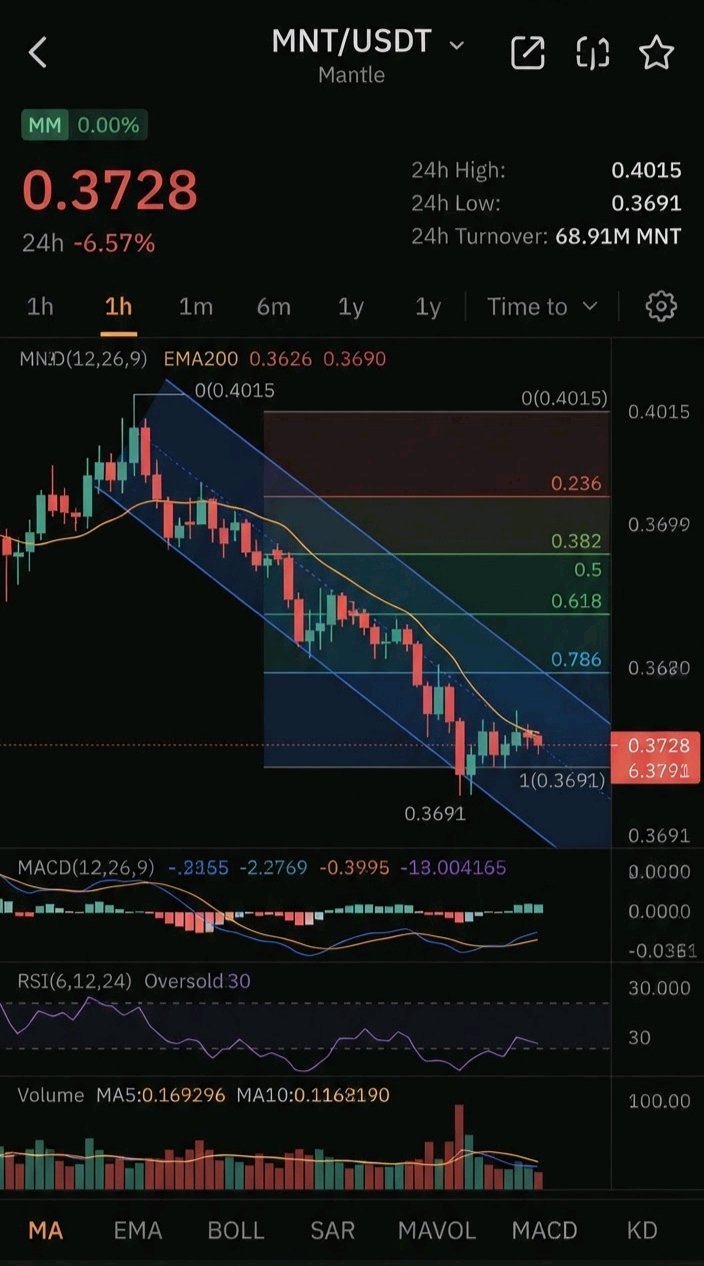
A Layer 2 built to make fees vanish has an awkward job: convincing the market its token still matters. Mantle is an Ethereum Layer 2 with a modular design. It separates execution from data availability to keep transaction costs low, and MNT serves as both gas token and governance asset. Its origin is unusual. The token descends from BitDAO, a treasury-heavy DAO, so the project started with capital before it had users. This is general project background, not live data. That points to the central contradiction. Cheap transactions are the product, yet every fee reduction shrinks the most direct source of token demand. Gas demand is activity multiplied by fee level, and Mantle is deliberately pushing the second number toward zero. A functioning, low-cost chain can therefore coexist with weak economic capture for the token itself. For MNT to justify its valuation, demand has to come from somewhere other than gas. The candidates are governance over a large treasury, ecosystem incentives, collateral use inside applications, or staking-style mechanisms tied to network products. Each is plausible, but none follows automatically from good engineering. Incentive-driven activity in particular rents users rather than keeping them. The screenshot shows no supply, circulation or unlock data, so I won't speculate on dilution. That is the first thing to verify before sizing any conviction. The bullish case is that a well-funded, exchange-linked ecosystem has distribution most L2s lack, and that large reserves buy time to build. The bearish answer is that treasury strength is not demand, and that rollups with near-identical technology are competing for the same liquidity. The critical risk is differentiation. As Ethereum's own scaling roadmap lowers base-layer data costs, the edge of modular L2 stacks narrows, and tokens without a distinct economic role get repriced first. On the market side, MNT is quoted at 0.3728 USDT, down 6.57% in the screenshot. A single-session move says little about fundamentals, so I treat it as noise rather than a verdict. My view is that Mantle looks technically credible and financially resourced, but the link between network usage and MNT value is still unproven. I would call the thesis incomplete rather than broken. The milestone that would change my mind is evidence that organic, non-incentivized activity generates meaningful fees, or that MNT becomes productive collateral or a required sink beyond gas. Either would move the token from a treasury narrative to a usage-backed asset. If an L2's best feature is making its own token unnecessary for everyday users, what should that token be worth? $MNTUSDT #IMPACTbyTrade

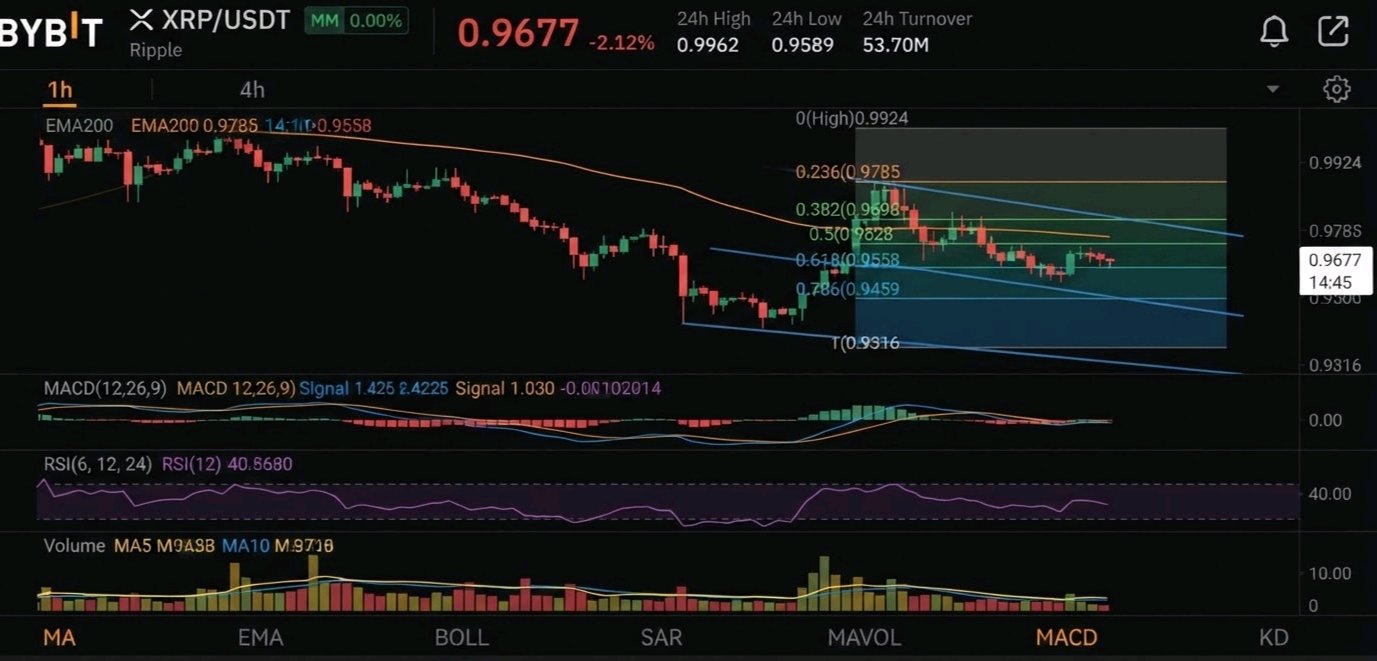
XRP trades at 0.9677, and that price says almost nothing about whether the network is actually being used. That gap is the real question. The screenshot shows XRP/USDT at 0.9677, down 2.12%, with 53.70M listed beside it. Those are the only verified figures I have, so everything below is interpretation, not on-chain evidence. The XRP Ledger is built for fast, low-cost settlement, aimed at cross-border payments and liquidity bridging for financial institutions. That is a real problem with real buyers, unlike tokens whose only use case is speculation. The contradiction is that payments utility does not automatically create token demand. If institutions can use the technology without holding XRP for any meaningful time, the asset captures only transient flow. A bridge asset bought and sold within seconds generates volume, not lasting scarcity. Today's 2.12% decline reveals cautious sentiment, not a verdict on adoption. For the bull case to hold, payment throughput must be persistent and measurable, with XRP as the necessary bridge rather than an optional one. I can't verify adoption figures from this screenshot, so I won't imply them. Without that data, demand rests mostly on narrative and trading flow. Supply, circulation and escrow schedules aren't in the material, so I leave them out rather than guess. Any serious thesis must confront them, because a large held supply changes how dilution is read. Bulls argue that regulatory clarity and institutional rails can convert utility into durable demand. Bears argue that a bridge asset's value is capped by how little of it needs to be held. The most relevant risk is competition from stablecoins and tokenized-dollar rails, which offer comparable settlement speed without price volatility. My view is neutral to cautious on fundamentals until usage translates into holding demand. A single-day price move is not evidence of progress or decline. The milestone that would change this thesis is disclosed, verifiable proof of institutions using XRP itself as the settlement asset at scale, not just the ledger. That would matter more than any price level. If XRP succeeds as a payments rail but the token is only held for moments, who captures the value? $XRPUSDT #IMPACTbyTrade
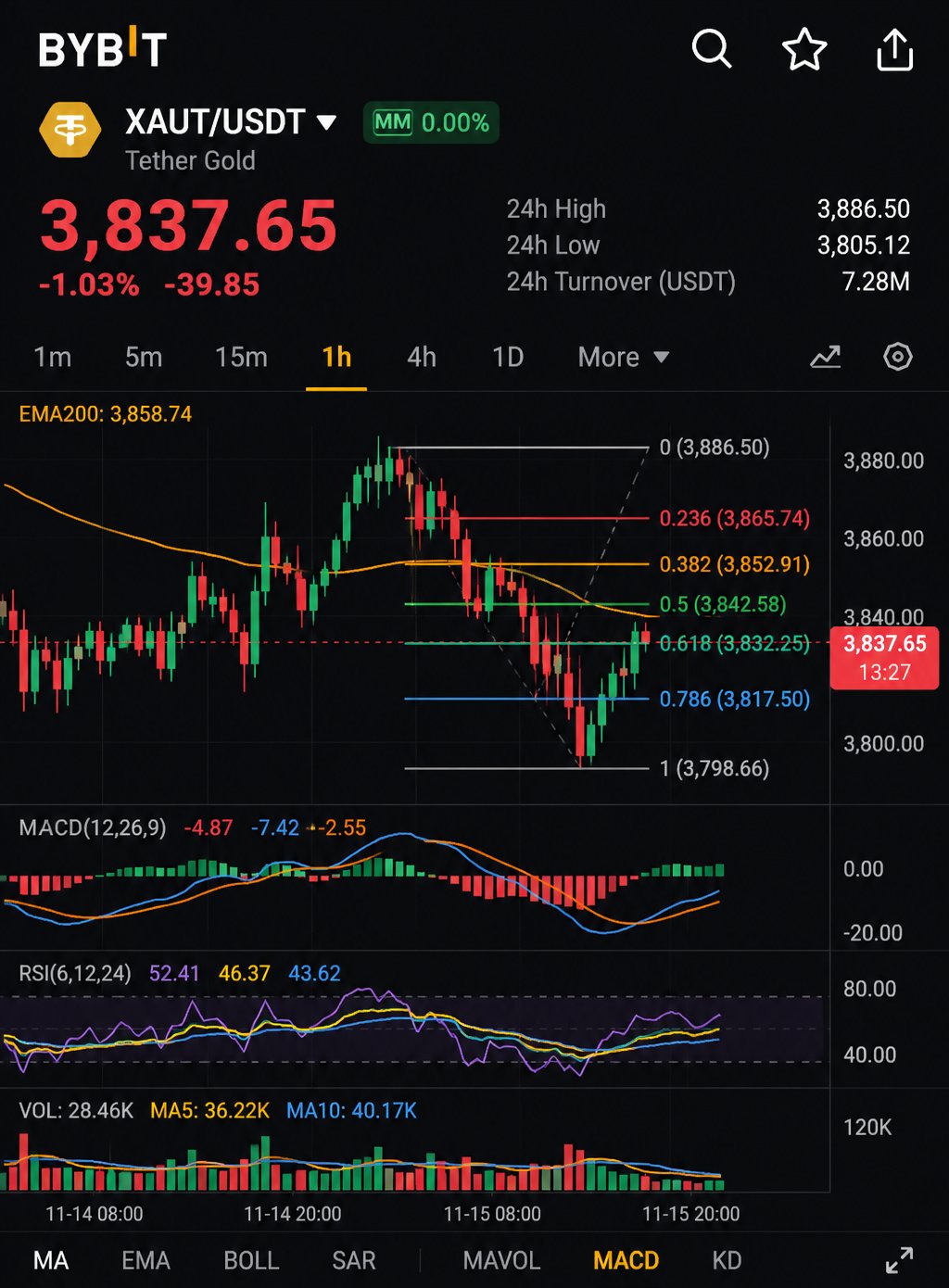
What are you actually holding when you buy gold with a stablecoin: gold, or a promise from the company that issued both sides of the trade? That is the question behind XAUT/USDT. The screen shows Tether Gold at 3,837.65 USDT, down 1.03% on the session, with 7.28M displayed beside the pair. The ticker's price level is consistent with a token designed to track an ounce of gold, so its movement is mostly a reflection of the metal, not of crypto-native growth. **What it does** XAUT lets traders hold gold exposure on crypto rails: no vault logistics, 24/7 trading, settlement in dollars-pegged units. The appeal is convenience and speed, not a new technology. **The contradiction** The pair is a Tether product priced in another Tether product. Gold is the most trust-minimized store of value in history, yet its tokenized version adds layers of trust: custody, attestation, redemption mechanics and issuer solvency. Holders trade gold's independence for crypto's accessibility, and the second asset in the pair carries the same counterparty exposure. **Demand and monetization** Demand here is organic in a way most tokens are not. There are no staking emissions or incentive programs visible on this screen, so any flow reflects people wanting gold-like exposure inside a crypto account. That makes demand durable but capped: XAUT cannot outgrow the appetite for gold itself. Its edge is distribution, not scarcity. **Tokenomics** Supply, reserves and holder data are not visible in the material provided, so I will not speculate on them. For a backed asset, those are the numbers that matter most. **Bull vs bear** The bull case is simple: gold exposure becomes a standard portfolio sleeve in crypto accounts, and liquidity deepens with it. The bear case is equally simple: a wrapped asset is only as good as its redemption path, and any doubt about custody or issuer transparency would hit it harder than the metal itself. **Critical risk** Counterparty concentration. A stress event at the issuer would hit the asset and its quote currency together, so USDT pricing could offer no clean reference in the moment it is needed most. **My view** XAUT is a utility instrument, not a growth thesis. Fair value should follow gold, and the useful analytical question is whether the token tracks that value tightly and redeems cleanly. A wide or persistent gap would be the real signal. **Next milestone** Verifiable, regular reserve attestations and evidence of smooth redemptions at scale. Either would strengthen the thesis; silence or friction would weaken it. If your gold exposure and your stablecoin share one issuer, are you diversified or just doubly exposed to the same name? $XAUTUSDT #IMPACTbyTrade
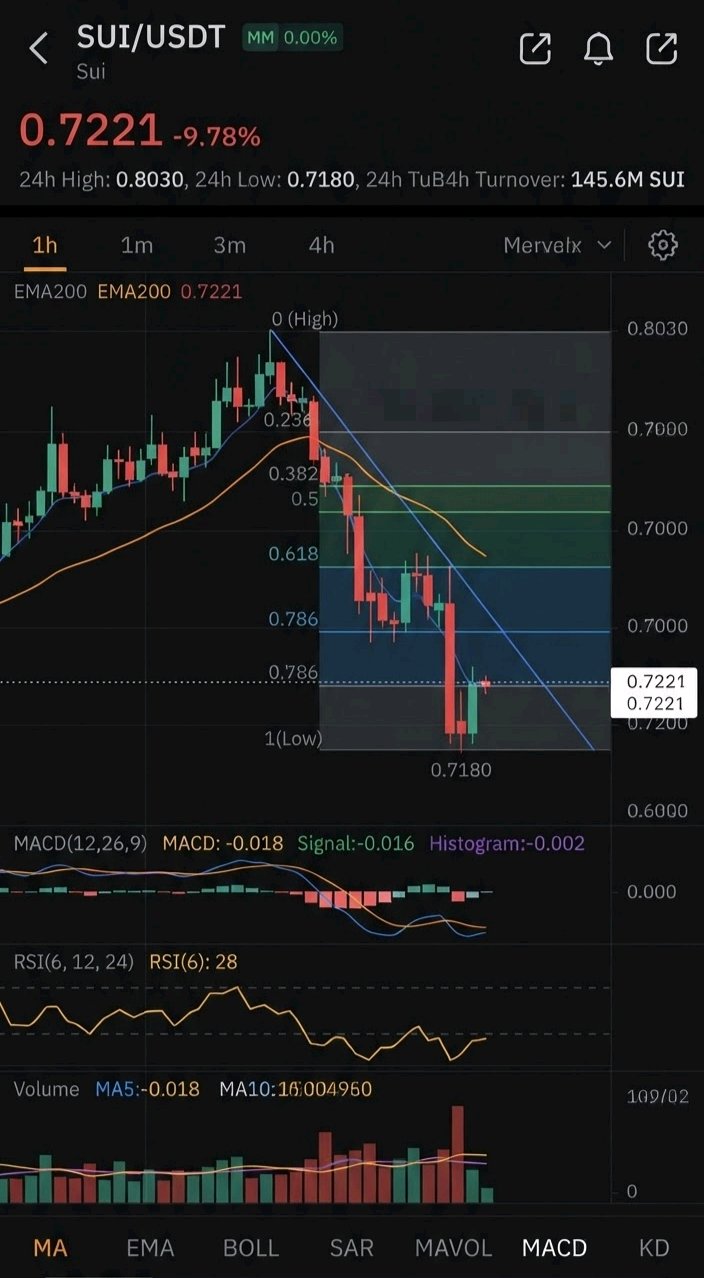
A nearly 10% single-session drop leaves Sui at 0.7221. Did the market reprice a network, or just a ticker? Those are different questions, and the answer matters more than the candle. Sui is a Layer 1 built around an object-centric data model and the Move language. Its core idea is that transactions touching independent objects don't need to compete for global ordering, so they can be processed in parallel. For payments, gaming and asset-heavy applications, that design is a real engineering argument rather than a marketing line. The contradiction sits between that architecture and the token. Technical differentiation is not the same as economic capture. A chain can be faster and cheaper than its rivals, and that very efficiency can push fees toward zero. If fees stay low, the token's value rests on staking demand, its role as collateral in the ecosystem, and sustained application activity. The architecture can be excellent while the token trades like a high-beta risk asset. A drop this size on a 10x-leverage pair suggests that second description is what the market is pricing right now. Demand is the variable to watch. Organic demand comes from users paying gas for something they actually want. Incentive-driven demand comes from emissions, campaigns and yield programs that rent activity rather than earn it. Only the first compounds. I can't verify the split from this screen, so I won't pretend to. Supply, unlock schedules and dilution are the same: they decide whether new demand is absorbed or sold into, but none of that is visible here. The bullish case is that a design built for parallelism is positioned for throughput-heavy applications that sequential chains handle poorly. The bearish case is that Layer 1 competition is crowded, developer attention is finite, and a technically superior chain still needs a reason for capital and users to stay once incentives fade. The critical risk is dependency on sentiment. When fundamentals can't be separated from speculative flow, every broad market selloff hits the token harder than the technology deserves. My view is that Sui has credible technology and an unproven value-capture story. Those are separable, and the market tends to punish the gap between them. The milestone that would change my thesis is evidence that fee revenue and staking participation grow without relying on incentives. If usage holds when subsidies shrink, the token has a case. If it doesn't, the architecture won't matter. So the question for you: does a better-designed chain automatically deserve a better-valued token, or are those two different investments? $SUIUSDT #IMPACTbyTrade
Can a payments token be valued on its mission while the market only prices its liquidity? VELO sits at 0.003019 against USDT, down 2.20% on the session, with a 3x leverage tag attached to the listing. That tag is informative. Leveraged access signals that the market treats VELO as a tradable instrument, and that is a different thing from a network whose token is required to function. The project's stated mission is cross-border payments and liquidity infrastructure, built around the idea of making international value transfer cheaper and faster. That is a real problem with a large addressable market. The contradiction is that a good problem does not guarantee token demand. Payment rails can grow while the native token remains optional, because users and institutions often only need the stablecoin or settlement asset moving through the system, not the governance or utility token beside it. That is the question I would put to VELO: does usage force holders to acquire and lock the token, or can the product scale without touching it? Nothing in the supplied screenshot answers this. I have no verified data on transaction volumes, partner adoption, fee capture or staking requirements, so I will not pretend otherwise. Any bullish thesis depends entirely on that missing link between activity and demand. On tokenomics, the screenshot does not show circulating supply, maximum supply or unlock schedules. For a low-priced token, those matter more than the headline price. A sub-cent price tells us nothing about valuation without the supply behind it, and readers should not confuse a small unit price with cheapness. The bullish case is straightforward: if real payment flows require VELO for collateral, fees or liquidity provisioning, then adoption translates directly into structural demand. The bearish case is equally clear: if the token is only a speculative wrapper around a payments narrative, then price follows market sentiment and leveraged flows rather than fundamentals. The critical risk is competition from stablecoin-native payment networks that deliver the same speed and cost advantages without asking users to hold a separate asset. My view is neutral and conditional. The mission is credible, but the economic bridge from product usage to token value is unproven in the material I can see. I would not call VELO a fundamental opportunity or a fundamental trap until that bridge is demonstrated. The milestone that would change my thesis is verifiable evidence that payment volume or protocol activity creates recurring, non-speculative buying or locking of VELO. If a payments network succeeds but its token is never required, who actually captures the value: the holders or the users? $VELOUSDT #IMPACTbyTrade

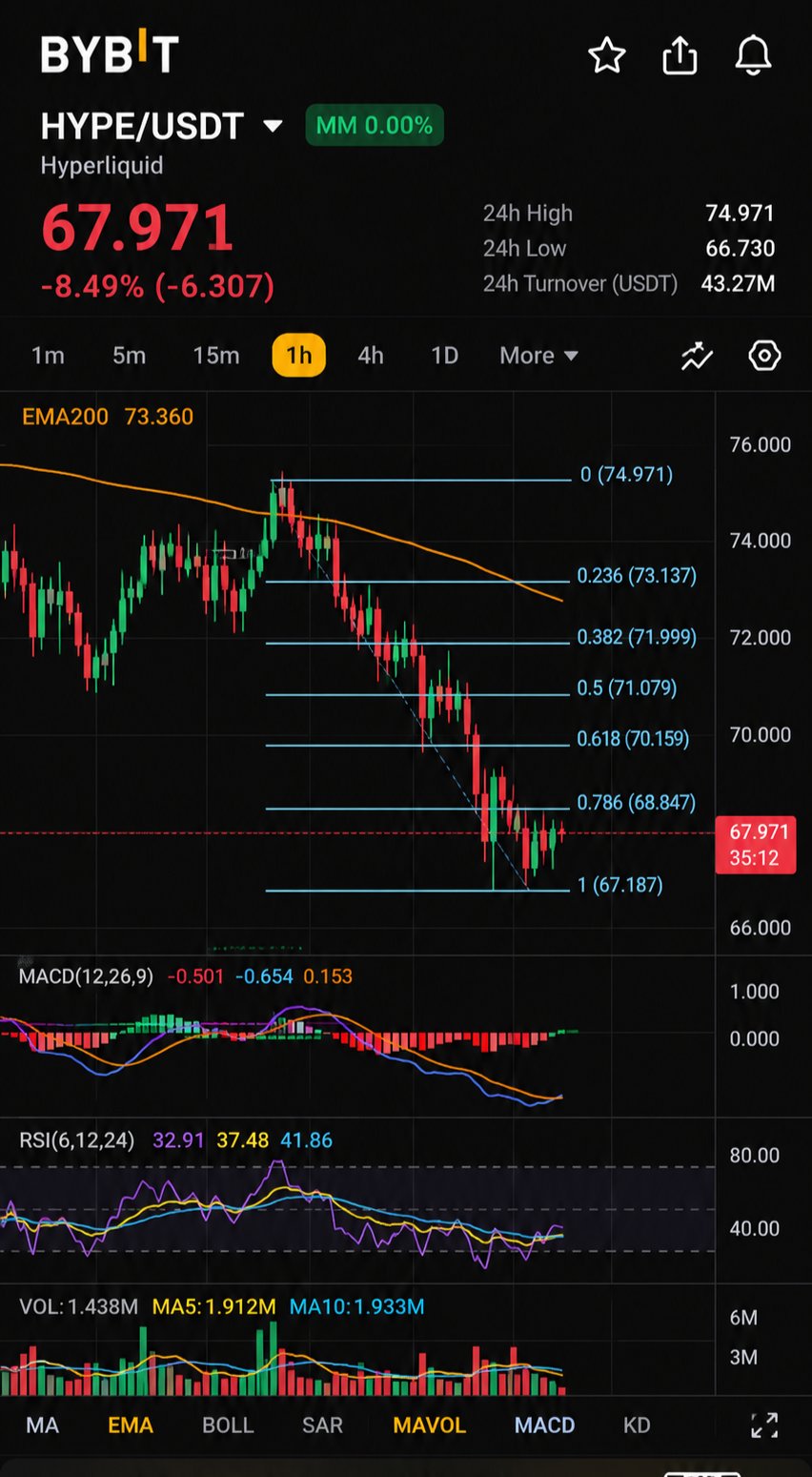
An 8.49% drop on a platform built for leverage raises an uncomfortable question: is HYPE priced like equity in a business, or like the favorite chip at its own casino? At 67.971 USDT, HYPE sits at the center of Hyperliquid, a venue where traders take leveraged perpetual positions on-chain. The 10x tag on this listing is a quiet reminder that the token is traded the same way the protocol's own users trade everything else. That symmetry is the contradiction worth examining. The fundamental case rests on design. Hyperliquid's product is derivatives trading, and a derivatives venue earns from activity rather than narrative. If volume persists, fees persist, and a token tied to that activity has a tangible claim on real usage. That is a cleaner model than most ecosystem tokens, which rely on incentives to manufacture demand. The weakness is the same feature seen from the other side. Fee-driven value is cyclical. Trading volume swells when volatility and leverage swell, and fades when markets go quiet. The 43.27M figure beside the pair, which appears to be turnover, shows participation is present today. It cannot tell us whether that participation is organic or leverage-fueled. I also cannot verify revenue, buyback scale, circulating supply or unlock schedules from this screen, so I won't pretend to. The bullish argument is a liquidity flywheel: deeper order books attract more flow, and more flow deepens the books. One red day does nothing to that loop. The bearish argument is that the flywheel runs in reverse under stress. Liquidations, thinning books and traders migrating to rival venues would hit the product and the token at the same moment. The critical risk is reflexivity. When the asset representing a platform is also a preferred vehicle for leveraged speculation, sharp declines can feed on themselves. The platform's own users become a source of volatility in its token. My view: the model is credible, but the market is paying for sustained activity, and a single session cannot confirm or refute that. HYPE is best understood as a bet that trading demand stays structurally high through quiet markets, not just through euphoric ones. Pullbacks like this one matter less for what they say about price than for what they reveal about how much of the demand is conviction and how much is leverage. The next milestone is evidence that fee generation holds up during low-volatility stretches. Revenue that survives boredom would reframe HYPE from a cyclical beneficiary of trading mania into a durable, cash-flow-style asset. If Hyperliquid's trading volume halved but its fees held steady, would you still call HYPE a leveraged bet on crypto, or finally an equity-like claim? $HYPEUSDT #IMPACTbyTrade

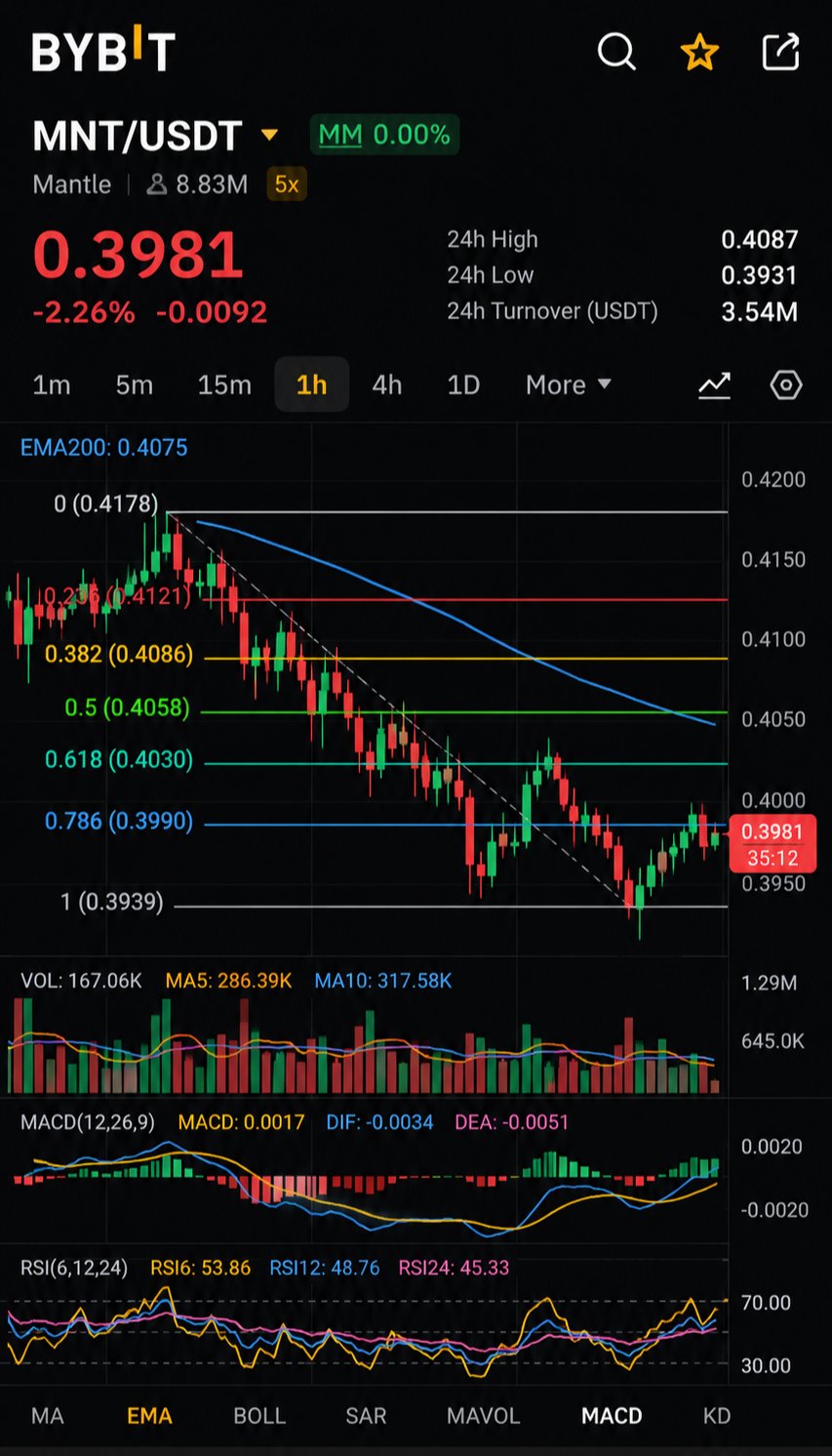
Is MNT priced for what Mantle does today, or for what it might earn someday? The screen shows MNT at 0.3981 USDT, down 2.26%, with 8.83M displayed beside the Mantle name and a 5x tag. That is all the verified data I have, so the rest of this post is interpretation and labeled as such. Mantle is an Ethereum layer-2 network, and MNT is its native token. The L2 proposition is straightforward: cheaper execution that borrows Ethereum's security. If it works, it attracts users and applications. That is where the contradiction sits. Network activity and token value are different things. A chain can process heavy volume while the economic benefit goes to applications, to users paying lower fees, or to the base layer. The question that matters is whether MNT is a required asset in the system or an optional one. The screenshot says nothing about fee mechanics, gas token design or governance weight, so I won't claim an answer. But until that gap is closed, ecosystem growth should not be treated as token demand. Durable demand comes from usage that requires holding or spending the token. Demand driven by incentives or speculation is rented attention and fades when the rewards stop. The 5x tag is a reminder that part of the participation in this market may be leveraged, which amplifies moves in both directions. A 2.26% decline is mild and says little about conviction either way. Supply is the missing piece. Circulating supply, maximum supply and unlock schedules are not visible here, so I won't comment on dilution. Anyone sizing a position should check them first, because supply overhang can outweigh good fundamentals. The bullish case is that a credible L2 with real distribution compounds ecosystem value, and a token with clear value capture benefits directly. The bearish case is that rollup competition is intense, differentiation is hard, and value can leak to other layers. The main risk is competition for the same developers and liquidity, combined with dependence on Ethereum's own trajectory. My view is neutral. The category is clear, but this evidence does not prove that the token is economically necessary. That is a thesis to verify, not assume. The milestone that would change my view is verifiable evidence that network usage or fees flow into token-level demand, through gas requirements, staking or burn mechanics. If Mantle doubled its activity tomorrow, would MNT holders actually capture any of it? $MNTUSDT #IMPACTbyTrade

A token priced at 0.0002245 looks cheap. Does that tell you anything? That is the first trap in the OBT/USDT listing. Price per token is a unit label, not a valuation. Without circulating and fully diluted supply, a price with three leading zeros could describe a micro-cap or a large network. The screen shows neither, so I won't pretend to know. What is verifiable: OBT trades at 0.0002245 against USDT, up 4.66% on the session, listed under the name Orbit..., with a 9.59K figure beside it. The label is unclear, so I won't treat it as volume. If it does represent turnover, a figure that small means a 4.66% move can be driven by a handful of orders. That is interpretation, not fact. The real fundamental question is not whether OBT is rising. It is whether anything beneath the price justifies sustained demand. Token demand comes from three places: required utility, fee or yield capture, and speculation. Only speculation is visible here, and one green session is its weakest expression. The bullish case is that an orderly gain in a low-priced asset can mark early rotation. If the project behind the name has real product usage, the token may be underpriced relative to it. Nothing supplied lets me confirm that usage exists. The bearish case is that low unit prices attract retail attention because they feel accessible, and that attention fades faster than usage builds. If the token is optional to the product rather than required, demand has no floor beyond sentiment. On tokenomics, nothing was provided. Unlock schedules, emissions and holder concentration would be my first checks, because dilution can erase a strong product story. The critical risk is information asymmetry. A decision built on a ticker, a price and a daily percentage rests on almost no evidence. My view is neutral. I'm not bearish on the project, but there is no case to answer yet. A 4.66% move is a data point, not a thesis. The next milestone is disclosure of circulating and total supply, plus evidence that the token is necessary to use the product or earns a share of its fees. Either would give me a real valuation framework. If you could see only one metric before sizing a position in a low-priced token, would it be supply, fee capture or holder distribution? $OBTUSDT #IMPACTbyTrade

What does a memecoin price when there is no cash flow to discount? PEPE poses that question bluntly. The screen shows 0.000004247 against USDT, down 5.07%, on a pair tagged 10x. The 8.10M figure beside the name is unlabeled, so I won't build conclusions on it. PEPE is a narrative asset. It offers no visible fee model, revenue or protocol utility. Its value rests on attention, liquidity and holders' willingness to keep treating a frog meme as speculative conviction. That is a real market mechanism, but a fragile one, because nothing internal cushions a loss of interest. The overlooked detail is the 10x tag. Leverage availability signals deep liquidity, yet it also shifts price discovery toward short-horizon positioning. A 5.07% decline may reflect leveraged flows unwinding rather than any change in community conviction. That is interpretation, not verified fact, but traders should separate forced selling from genuine distribution. Demand here is reflexive: price attracts attention, attention attracts buyers, buyers lift price. Speculation is not a side effect of demand here; it is the demand. The loop runs in reverse just as easily, and without organic usage there is nothing to absorb sustained selling. Supply, distribution and holder concentration are not visible in the supplied material, so I leave them out. For meme assets, those are the numbers that separate durable communities from concentrated ones. Bullish case: deep liquidity and recognizable branding can enable fast recoveries when risk appetite returns, and a drop may simply reset stretched positioning. Bearish case: PEPE competes with every new meme for finite attention, and prolonged weakness can unwind the reflexive loop. Critical risk: sentiment dependency. If speculative appetite cools, there is no fundamental floor, and liquidity can vanish faster than it arrives. My view: neutral. One red session on thin data does not break a thesis. I treat PEPE as a liquid sentiment instrument, not a business, and conviction should follow evidence, not a single candle. Next milestone: evidence that holders stay put through weakness, visible in distribution data and sustained trading activity rather than price alone. If attention is the only product, is a 5% drop a warning or simply the cost of ownership? $PEPEUSDT #IMPACTbyTrade

If Ethereum becomes the place where the world settles value, why does the market keep treating its token as an open question? On screen, ETH trades at 1,898.15 against USDT, down 3.17%, with 257.81M displayed beside the pair. That is the only market data supplied, so I won't dress it up with figures I can't verify. The more interesting question sits beneath the price. **What it is.** Ethereum is a programmable settlement network. Stablecoins, lending markets, and tokenized assets inherit its security instead of building their own. That shared credibility is the real asset, and it is why developers keep choosing it. **The contradiction.** Ethereum's growth increasingly happens one layer above it. Rollups scale the ecosystem by moving activity off the base chain, which is good for users and ambiguous for ETH. The network can grow more relevant while the base layer captures a thinner slice of the value it enables. Adoption and token value are linked, but not proportionally. **Demand.** ETH demand comes from three sources: paying for block space, serving as collateral across on-chain finance, and staking as the security asset. The last two are structural. The first depends on how much activity settles directly on the base layer. Speculative demand sits on top of all three and is the least durable. **Tokenomics.** Supply, issuance, and burn data aren't in the material supplied, so I leave them out. Any view on net issuance needs that data confirmed first. **Bull versus bear.** The bull case is that deeper tokenized-asset and stablecoin flows strengthen ETH's role as collateral and settlement guarantor, wherever individual transactions execute. The bear case is that value accrues to the layers built on top and to competing chains, leaving ETH as critical infrastructure with limited capture. **Critical risk.** Value leakage to higher layers, combined with competition from chains that optimize for cheaper execution. **My view.** A 3.17% daily decline says little about fundamentals. Ethereum remains the most credible neutral settlement venue, but the investment case now rests on proving that this centrality converts into demand for ETH itself, not just ecosystem activity. Until that link is demonstrated, I treat the thesis as strong on relevance and unproven on capture. **Next milestone.** Evidence that rollup activity feeds measurable demand back to the base layer, through settlement usage, collateral demand, or staking participation, would strengthen the case. Its absence would confirm the leakage concern. If every major application runs on Ethereum but most of its fees accrue elsewhere, is ETH a business, or a public good with a price? $ETHUSDT #IMPACTbyTrade
Why would anyone hold gold on a blockchain, when gold has never needed one? The screen offers a clue. XAUT/USDT sits at 3,875.50, down 0.05%, with 7.55M shown beside the pair. That flat tape is the point. Tether Gold is designed to track the metal, so its price is borrowed from gold, not earned by a network. What it does offer is access. XAUT is a tokenised claim on physical gold, issued by Tether. It settles around the clock, moves between wallets in minutes, and sits next to stablecoins without vaults, brokers or market hours. For participants already operating on-chain in dollars, that convenience is the product. The contradiction is that the token has no economics of its own. It pays no yield, captures no network fees and has no growth narrative. Its value reduces to custody, redemption and trust in the issuer. It is also quoted in USDT, another Tether liability, so a holder carries gold price risk plus exposure to two Tether instruments. Nothing in this screenshot lets me verify reserves or audits, so I make no claim either way. Demand here is utility demand, not speculative upside. People buy XAUT to hold gold, hedge or park value on-chain. The 10x tag on the pair shows it is also traded with leverage, but leverage adds turnover, not fundamental value. The 7.55M figure suggests an active pair, but one snapshot says nothing about durable adoption. Supply should follow gold held, not emissions, so minting and redemption matter more than inflation schedules. Circulating supply and holder data aren't in the material, so I leave them out. The bullish case is that on-chain settlement and gold demand converge until XAUT becomes routine collateral. The bearish case is that competing gold tokens, redemption friction or doubts about reserves erode the link to the metal. Unlike most tokens, XAUT has no network effect to cushion that. The critical risk is therefore not volatility but issuer and custody dependency. My view: treat XAUT as a wrapper, not a thesis. If gold goes up, the wrapper follows. What you are really underwriting is whether the wrapper can be trusted. That is a legitimate exposure, but it is a different decision from buying gold. The signals that would change my view are verifiable reserve attestations, visible redemption activity, and liquidity depth outside USDT pairs. If your gold exposure is priced and settled in a stablecoin, which counterparty are you actually trusting more, the gold or the issuer? $XAUTUSDT #IMPACTbyTrade

Is a token that exists to make transactions cheaper actually good for the token? That is the question Mantle forces. The screenshot shows MNT at 0.4059 against USDT, down 2.71% on the session. Nothing in it speaks to the fundamentals, so what follows is my analysis of the project's design, not live data. Mantle is an Ethereum Layer 2 built on a modular architecture. Execution happens on Mantle, settlement on Ethereum, and data availability is handled by a separate layer instead of Ethereum's own expensive blob space. The point is to push transaction costs down. MNT serves as the network's gas token and as its governance asset, and the project descends from the BitDAO treasury model. The contradiction sits in that cost-reduction design. If the network succeeds at making transactions nearly free, the fee flow that could create organic MNT demand shrinks per transaction. Growth has to come from sheer volume, not from fee pressure. Cheap blockspace attracts users, but it does not automatically attract token buyers. Demand therefore has to come from three places: gas consumption from real activity, governance relevance, and the treasury's ability to fund ecosystem growth. Gas demand is the most organic of these and also the most dependent on usage. Incentive-driven activity can inflate usage without creating durable demand, and I cannot tell from this screenshot which kind Mantle has. I have no verified supply, unlock or revenue data here, so I will not pretend otherwise. The bullish case is that a well-funded treasury, a modular cost structure and Ethereum alignment give Mantle room to build an ecosystem competitors with thinner resources cannot easily match. The bearish case is that Layer 2 competition is crowded, liquidity migrates toward incentives, and a gas token on a low-fee chain may capture less value than holders assume. The most relevant risk is token necessity. If users can interact with the chain without ever needing to hold MNT meaningfully, the token becomes a governance claim on a treasury, not a demand sink. My view is that Mantle is better engineered than it is monetized. The infrastructure thesis is credible, but the value-accrual thesis still has to be proven. I would stay neutral until the evidence shifts. The milestone to watch is organic fee generation and gas consumption that persist after incentives taper. Sustained activity without subsidy would change my assessment. When a network is designed to make its own token less necessary per transaction, what should holders actually be paying for: usage, governance or the treasury? $MNTUSDT #IMPACTbyTrade

If a blockchain's greatest achievement is making transactions almost free, where does the value for its token come from? That is the question Solana forces on anyone who looks past the chart. SOL trades at 82.13, up 0.75% on the day. A move that small says little about conviction and a lot about a market waiting for a reason. What Solana does well is clear. It is a high-throughput Layer 1 built so that trading, payments and consumer applications can run on one global state with low latency and minimal cost. That design attracted developers who need speed rather than ideology, and it gave the ecosystem an identity separate from slower, fee-heavy networks. The contradiction sits here: the efficiency that draws users also compresses the fee revenue each action generates. Activity can climb sharply while the value captured per transaction stays tiny. Network usage and token demand are related, but they are not the same thing. SOL has to be needed, staked or held for reasons beyond paying a fraction of a cent. Demand therefore rests on three channels: - Fees paid in SOL, which are small by design. - Staking participation, which is partly funded by protocol issuance. - SOL's role as base collateral and trading pair across the ecosystem, which is reflexive, rising in strong markets and fading in weak ones. I am not citing supply, unlock or revenue figures, because none appear in the material provided. The bullish case is that applications scale to volumes where tiny fees aggregate meaningfully, and SOL stays the default settlement and collateral asset. Usage would then convert into durable demand. The bearish case is that rival fast networks and rollups narrow the performance gap, while inflation-funded security keeps dilution as a standing headwind. The most relevant risk is dependence on speculative activity. If ecosystem volume comes mainly from trading and incentives rather than recurring organic use, the demand base is cyclical, and cyclical demand does not support a premium through downturns. My view: the technology is credible, but the thesis rests on monetization, not speed. A neutral stance is justified until activity shows it can fund network security without leaning on new issuance. The milestone that would change my mind is evidence that fees and staking rewards from real usage cover security costs. That would shrink reliance on issuance and show that cheap transactions can still build a durable economy. Which matters more for SOL over the long run: higher throughput or a stronger fee economy? $SOLUSDT #IMPACTbyTrade

Can a chain built for speed turn that speed into value for its token? That question hangs over Sui at 0.8026, where the pair is down 0.21% and barely moving. A quiet tape proves little, but it does show the market isn't paying a premium for narrative right now. Sui's fundamental case is architectural. It is built around the Move language and an object-centric data model, so transactions touching unrelated assets can execute in parallel instead of queuing behind one another. For consumer-facing uses such as gaming, payments and high-frequency trading, that addresses a real bottleneck rather than a marketing one. The hidden contradiction is that technical differentiation and token value are different things. Throughput is something users consume, not something that automatically accrues to holders. A chain can be excellent while its token trades like a commodity input, if fee demand stays modest and activity depends on incentives. The supplied material shows no fee revenue, TVL or active-user data, so I won't claim adoption I can't verify. Sustainable demand has to come from gas, staking and collateral use inside the ecosystem. Staking supports security and rewards holding, but only organic usage can justify a valuation over a full cycle. Supply, unlock schedules and distribution aren't visible in the screenshot, so I leave tokenomics out rather than guess. Any serious valuation work should start there. The bull case is a differentiated execution model, developer tooling built on Move, and a market that tends to reward chains once real applications arrive. The bear case is a crowded Layer 1 field, liquidity that follows incentives rather than loyalty, and a price showing no urgency from buyers today. The critical risk is the competition for developers. Builders go where users and liquidity already are, and a smaller Move talent pool adds friction against more familiar environments. My view is constructive on the engineering and neutral on the token until economic evidence appears. Technology earns attention, but revenue earns a valuation. What would change my thesis is sustained growth in fee-paying activity that isn't tied to reward programs. Rising organic fees would move the debate from potential to proof. Does speed alone create value for SUI holders, or does the token only matter once the network's fees do? $SUIUSDT #IMPACTbyTrade
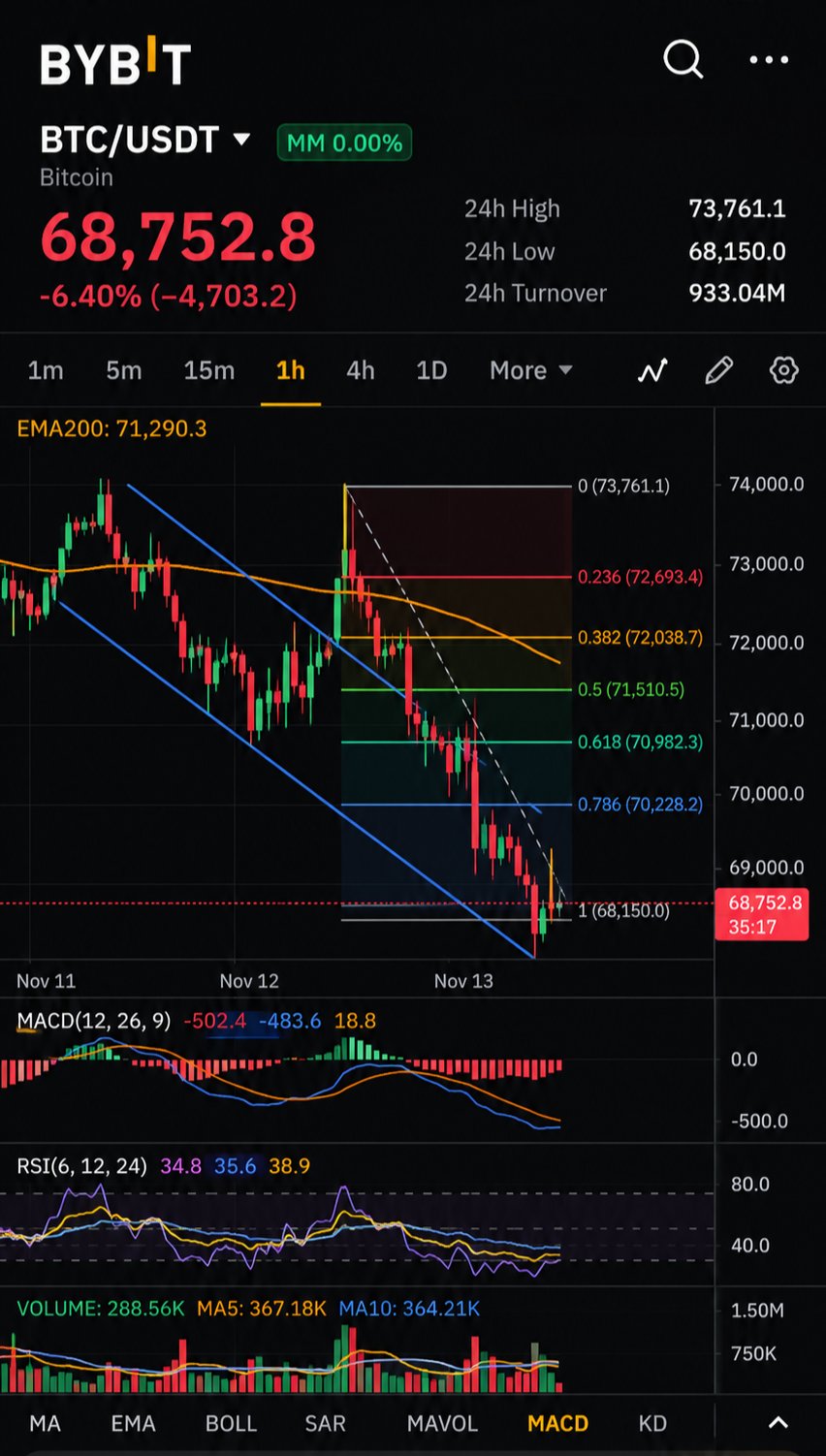
Can an asset sold as digital gold lose 6.40% in one session and still defend the title? The screen shows Bitcoin at 68,752.8 against USDT, down 6.40%, with 933.04M printed beside the pair. That is all I can verify, so everything below is interpretation, not data I haven't seen. **Where the thesis holds** Bitcoin's case rests on monetary properties, not cash flows: a predetermined issuance schedule, no central issuer, and settlement that needs no permission. None of that changed with today's candle. A price move is not a protocol event. **The contradiction** The store-of-value story promises stability over long horizons, yet the same screen tags this pair with 10x leverage. Those two facts pull against each other. A meaningful share of daily price discovery is plausibly set by leveraged participants, not by holders with multi-year conviction. A drop this size is consistent with forced position closures, but the screenshot cannot confirm that, so treat it as a hypothesis. **Demand** Bitcoin has no yield, no fee-sharing and no buyback. Its demand is monetary: people hold it because they expect others to value it later. That makes demand reflexive. When price falls, the short-term case weakens for marginal buyers while staying intact for committed ones. The gap between those two groups is what produces moves like this. **Bull versus bear** Bulls argue that sharp drawdowns are how coins move from weak hands to strong ones, and that scarcity matters most when conviction is tested. Bears argue that an asset behaving like a high-beta risk instrument under stress cannot be priced as a hedge, and that institutions will treat it accordingly. **Critical risk** Correlation. If Bitcoin sells off alongside risk assets whenever liquidity tightens, its diversification case erodes exactly when it is needed. One screenshot cannot measure that, but it is the question that matters most. **My view** Neutral and unhurried. The protocol's fundamentals are untouched by a single session, but the narrative's credibility is audited by days like this one. I would not read 6.40% as a verdict for either side. **Next milestone** The signal to watch is behavioral. Does the selling come from leveraged unwinds that recover quickly, or from long-term holders distributing? The former is noise. The latter would change the thesis. If Bitcoin is truly a monetary asset, why does it still trade like a leveraged one, and what would it take for that to change? $BTCUSDT #IMPACTbyTrade
A decentralized exchange's token is being traded at 10x leverage on a centralized platform. That tension sits at the center of the HYPE debate. The screenshot shows HYPE at 71.842 USDT, up 0.48%, with 38.25M in the volume field. That is a quiet session and a price snapshot, not a thesis. Nothing visible confirms revenue, supply or on-chain activity, so I won't pretend otherwise. Hyperliquid is a trading venue built around perpetual futures, running on its own chain so matching and settlement live in one place. The pitch is exchange-grade execution without handing custody to a company. It is a real product with a clear customer: the leveraged trader. That is also the contradiction. The better the product serves traders, the more HYPE's value depends on trading appetite. Perp volume is cyclical. It expands when volatility is welcome and contracts when leverage gets punished. A token tied to that cycle inherits its reflexivity, however sound the technology. The sustainable demand case is that trading fees flow back to the token through buybacks or similar mechanisms rather than emissions. That is the line between organic and incentivized demand. I can't verify the size of those flows from this screen, so the point stays structural: the link between usage and token demand is what to audit, not the headline price. No circulating supply, unlock or distribution data is visible, so I'm leaving tokenomics out rather than guessing. Any token with scheduled insider supply still needs dilution as a standing line in the model. The bullish case is a venue that keeps its liquidity, converts fees into persistent buy pressure and eventually extends beyond one product line. The bearish case is volume migrating to a rival with cheaper execution or deeper books, or new supply outrunning fee-driven demand. The critical risk is concentration. If perpetuals lose share, there is no second engine to carry the token. My view: respect the product, stay skeptical of the narrative. The real question isn't whether Hyperliquid works. It's whether its revenue stays durable across a full leverage cycle. The milestone that would shift my thesis is evidence that fee-driven token demand holds through a low-volatility, low-volume stretch. If HYPE is ultimately a claim on trading fees, would you rather own the venue's growth or its resilience in a quiet market? $HYPEUSDT #IMPACTbyTrade