Nibras
122382Me gusta20Compartir en el chat709Aficionados421Seguir
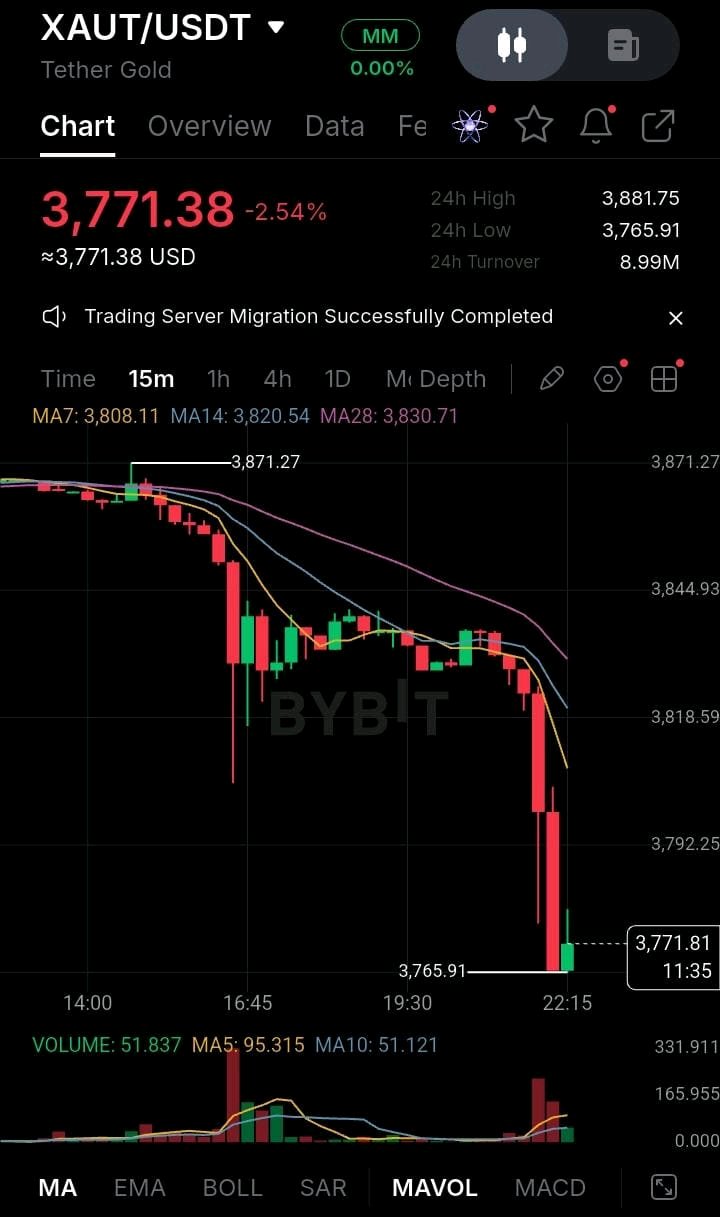
El oro acaba de perder más del 3%, pero lo interesante no es la caída en sí. XAU/USD extendió la venta masiva del viernes tras Jackson Hole hasta el lunes, cayendo brevemente por debajo de los $4,400 y tocando alrededor de $4,396 a medida que los mercados ajustaban sus expectativas sobre la ruta de la Fed tras los comentarios hawkish sobre la inflación de Kevin Warsh. Las probabilidades de una subida de tasas en septiembre se han movido hacia un rango aproximado del 58–60%, mientras que el dólar se mantiene cerca de un máximo de dos semanas. Eso cambia la ecuación del oro a corto plazo. Durante semanas, la operación fue simple: dólar más débil + expectativas de una Fed más laxa = oro más fuerte. Ahora estamos viendo lo inverso. Los rendimientos más altos están aumentando el costo de oportunidad de mantener un activo que no genera rendimiento, mientras que el dólar más fuerte añade otra capa de presión. Al mismo tiempo, el riesgo geopolítico está enviando el petróleo por encima de los $90, lo que crea un problema inusual para los alcistas del oro: la demanda de refugio seguro respalda al oro, pero los precios más altos de la energía pueden reforzar la inflación y mantener a la Fed con una postura hawkish. Técnicamente, $4,467 es el nivel que estoy vigilando. El oro está cotizando por debajo de esa área tras perder el promedio de 200 días, con $4,408 actuando como el pivote inmediato a la baja. Una falla en recuperar los $4,467–$4,511 mantiene la estructura a corto plazo bajista. Mi configuración: Bajista: rechazo alrededor de $4,450–$4,500 → objetivo $4,408, luego $4,368–$4,350 en los próximos días. Alcista: recuperar y mantenerse por encima de $4,511 → el ajuste bajista comienza a perder credibilidad, abriendo un movimiento de regreso hacia $4,540–$4,580. Invalidación: recuperación sostenida por encima de $4,600. El verdadero catalizador ahora no es otro discurso de la Fed. Es el reporte de empleo de EE. UU. Si el empleo se debilita lo suficiente como para revertir las expectativas de una subida en septiembre, el oro podría cambiar de dirección agresivamente. Si los datos mantienen a la Fed con una postura hawkish, ese soporte de $4,400 podría no aguantar. El oro no es necesariamente bajista a largo plazo. El mercado simplemente está ajustando el precio de poseerlo en este momento. $XAUTUSDT #ByXIMPACT
Tesla and Circle are both entering a phase where the narrative has to translate into measurable execution. Tesla has recovered from its September low near $354 to around $378, but the next test is whether buyers can push it back through the $385–$390 area. The biggest catalyst is autonomy: Cybercab is already deployed in Austin, while NHTSA is reviewing Tesla’s self-certification of the driverless vehicle and whether it complies with federal safety standards. Tesla is also preparing its next-generation Roadster reveal, keeping the AI/autonomy narrative firmly in focus. Circle has a different catalyst stack. Binance just invested $100M in Circle and renewed a five-year USDC commercial agreement, while Circle's USDC circulation has grown above $74B. Arc's public mainnet also launched with more than 100 institutional and ecosystem builders, including major banks, payment networks, exchanges and asset managers. Circle is additionally pursuing the Tazapay acquisition, which would add 60+ banking/fintech partners, 100+ payout markets and more than $25B in annualized payment volume. That creates an interesting setup. My setup: • $TSLA Bullish: reclaim $385–$390 → $400, then $420. • $TSLA Bearish: rejection below $385 + loss of $370 → $355, then $340. • $CRCL Bullish: reclaim $95–$100 → $110, then $125. • $CRCL Bearish: rejection near $95 + loss of $85 → $75, then $65. The interesting question isn't which company has the bigger narrative. It's whether Tesla can turn autonomy into a scalable business while Circle turns USDC, Arc and global payment infrastructure into durable growth beyond the economics of reserve income. Both are moving from story → execution. $TSLAXUSDT $CRCLXUSDT #ByXIMPACT


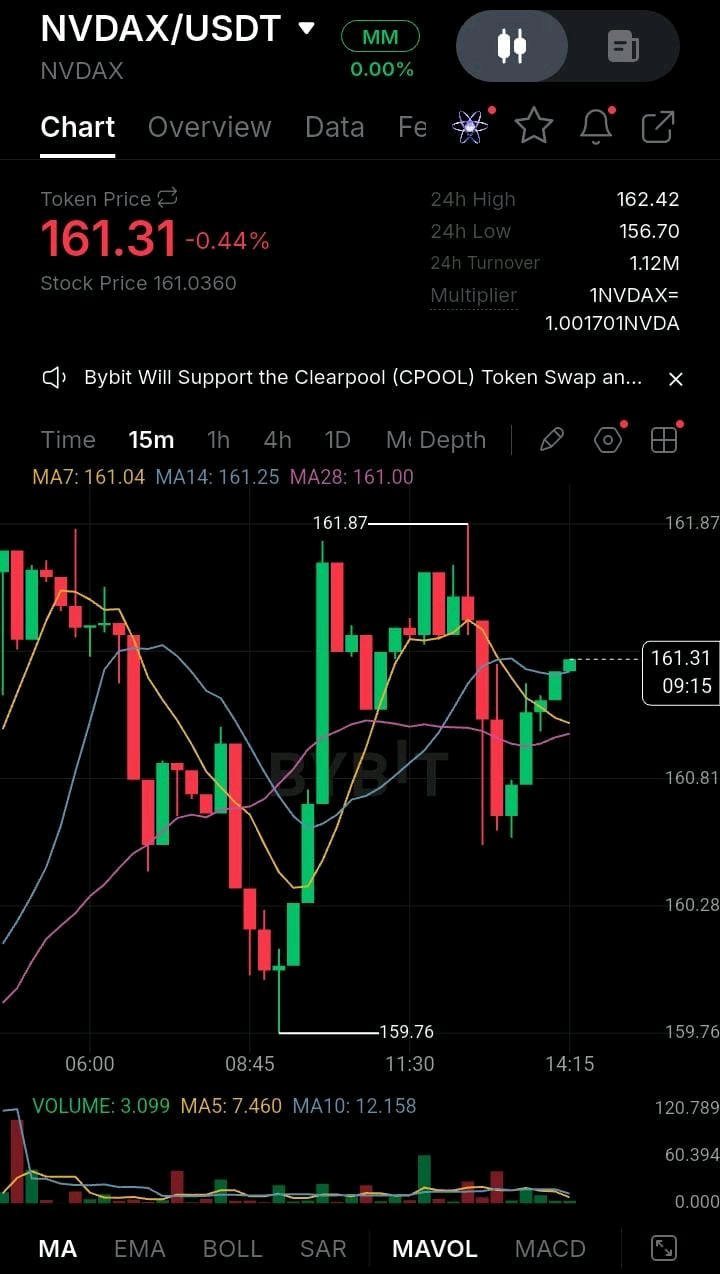
Nvidia Is Testing a Level That Could Decide the Next Move $NVDA has bounced back toward $219 after falling to around $209 earlier this week. Thursday’s 2.54% gain puts the stock back near a short-term decision zone, but it remains well below the $236.54 52-week high. The fundamental backdrop remains unusually strong. Nvidia generated $96.2B in Q2 FY2027 revenue, up 106% YoY, with Data Center revenue reaching roughly $89B. More recently, CEO Jensen Huang said Nvidia expects to sell twice as many chips next year as this year, reinforcing the company’s view that AI infrastructure demand is still expanding. But the next phase is becoming more demanding. Nvidia’s Vera Rubin NVL72 recently posted leading results in MLPerf inference testing, while the company is increasingly focused on performance-per-watt and lowering the cost of AI tokens. At the same time, Huawei is accelerating its own AI-chip roadmap, creating a longer-term competitive challenge, particularly in China. That creates an interesting setup. My setup: Bullish: reclaim and hold $220–$225 with strong volume → $230, then $236–$245. Bearish: rejection around $220–$225 and loss of $215 → $210, followed by $200. Invalidation: sustained acceptance above $245 would significantly strengthen the continuation thesis. The interesting question isn't whether Nvidia still has AI demand. It's whether the next wave of Vera Rubin deployments and rising chip volumes can keep earnings growth ahead of the increasingly demanding expectations already embedded in NVDA's valuation. $NVDAXUSDT #ByXIMPACT
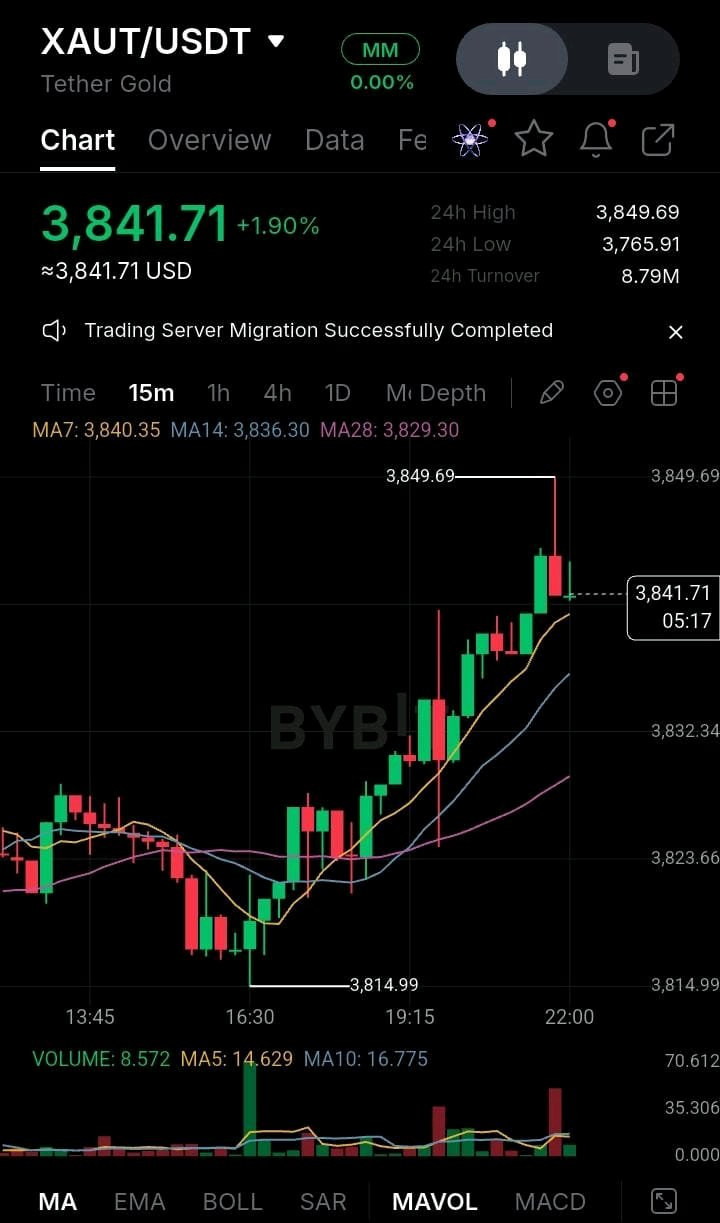
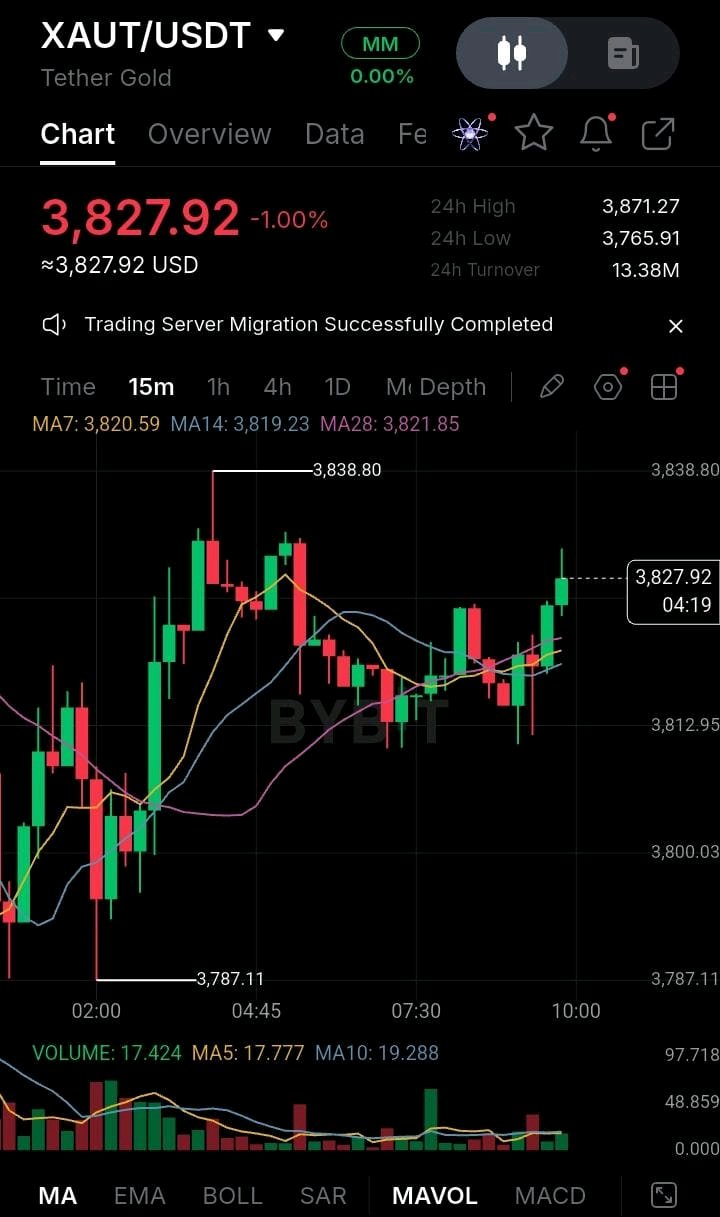
The Gold Reclaims $4,400 But the Fed Is Still the Test Gold is recovering sharply after Wednesday’s Fed-driven selloff, but the bigger question is whether buyers can turn this rebound into a real reclaim. Spot gold has pushed back above $4,400, with December futures around $4,435 in early European trading. The move comes after the Fed raised rates by 25 bps and signaled that further tightening could still follow. Lower Treasury yields and easing oil prices are now giving gold some relief. The less-obvious part is the reaction to the rate hike. Normally, another Fed hike should create pressure on gold because higher yields increase the opportunity cost of holding a non-yielding asset. Instead, gold has bounced from the $4,270–$4,300 area. The World Gold Council also noted that August was an unusually strong month for gold, with ETF buying and futures/options activity helping drive the rally. Technically, $4,400 is now the battleground. Bearish: rejection around $4,450–$4,500 → lose $4,400 → targets $4,350, then $4,300. Bullish: hold above $4,400 and reclaim $4,500 → opens $4,550, then potentially $4,600. Invalidation: sustained acceptance below $4,270 would weaken the recovery structure and put the recent lows back in focus. For $XAUT, the setup is particularly interesting because its recent price action has closely followed the underlying gold market. XAUT closed around $4,273.48 on September 16, while recent daily volume reached more than $300M. Tether has also been concentrating resources on XAUT after winding down Alloy, while XAUT received Shariah certification and recognition as an accepted spot commodity in Abu Dhabi earlier this year. The key distinction now: Gold doesn't need another narrative. It needs buyers to prove that $4,400 can become support after the Fed shock. If $4,500 flips into support, the recovery starts looking much more convincing. Is $4,400 becoming the base for Gold's next move, or is $4,500 still the level where sellers are waiting? $XAUTUSDT #ByXIMPACT

NVIDIA y Tesla se acercan a niveles que podrían decidir si sus recientes retrocesos se convierten en ajustes, o en el comienzo de otra etapa alcista. NVDA cotiza alrededor de la zona de los $212 tras haber caído desde más de $234, mientras que TSLA se ha recuperado hacia los $360 después de haber cotizado recientemente por encima de los $370. Ambas se enfrentan a catalizadores importantes, pero las historias subyacentes son muy diferentes. El último trimestre de NVIDIA reportó $96.2 mil millones en ingresos, un 106% más año tras año, con los ingresos de Data Center alcanzando los $89 mil millones, un aumento del 117%. Tesla, por su parte, entregó 480,126 vehículos en el segundo trimestre, un 25% más año tras año, mientras que los despliegues de almacenamiento de energía alcanzaron los 13.5 GWh. La siguiente fase se trata de ejecución. NVIDIA está pasando de Blackwell a Vera Rubin, con los principales proveedores de nube preparando sistemas Rubin a medida que continúa el gasto en infraestructura de IA. Tesla está impulsando el Cybercab hacia operaciones comerciales autónomas, mientras que su revelación del Roadster en octubre añade otro posible catalizador narrativo. Pero ambas enfrentan riesgos: NVIDIA debe sostener un crecimiento extraordinario en IA a medida que el gasto se vuelve más escrutado, mientras que Tesla necesita demostrar que la autonomía puede convertirse en un negocio escalable en lugar de simplemente otra narrativa de producto. Eso crea una configuración interesante. Mi configuración: • NVDA Alcista: recuperar $225–$228 → $234–$236, luego $245. • NVDA Bajista: perder $210 → $200, seguido de $195. • TSLA Alcista: recuperar $365–$370 → $380, luego $400. • TSLA Bajista: perder $355 → $340, seguido de $325. La pregunta interesante no es qué empresa tiene la historia de IA más grande. Es cuál de ellas puede convertir una inversión masiva en IA en ganancias medibles y crecimiento de flujo de efectivo lo suficientemente rápido como para justificar la valoración que ya se le asigna al futuro. $NVDAXUSDT $TSLAXUSDT #ByXIMPACT

El oro acaba de perder más de un 3%, pero lo interesante no es la caída en sí. XAU/USD extendió la venta masiva del viernes en Jackson Hole hasta el lunes, cayendo brevemente por debajo de los $4,400 y tocando alrededor de los $4,396 mientras los mercados reajustaban la trayectoria de la Fed tras los comentarios hawkish sobre la inflación de Kevin Warsh. Las probabilidades de una subida de tipos en septiembre se han movido hacia aproximadamente un 58–60%, mientras que el dólar se mantiene cerca de un máximo de dos semanas. Eso cambia la ecuación del oro a corto plazo. Durante semanas, la operación fue simple: dólar más débil + expectativas de una Fed más laxa = oro más fuerte. Ahora estamos viendo lo contrario. Los rendimientos más altos están aumentando el costo de oportunidad de mantener un activo que no genera rendimiento, mientras que el dólar más fuerte agrega otra capa de presión. Al mismo tiempo, el riesgo geopolítico está enviando al petróleo por encima de los $90, creando un problema inusual para los alcistas del oro: la demanda de refugio seguro respalda al oro, pero los precios más altos de la energía pueden reforzar la inflación y mantener a la Fed en una postura hawkish. Técnicamente, $4,467 es el nivel que estoy observando. El oro cotiza por debajo de esa área después de perder el promedio de 200 días, con $4,408 actuando como el pivote bajista inmediato. Si no logra recuperar los $4,467–$4,511, la estructura a corto plazo se mantiene bajista. Mi configuración: Bajista: rechazo alrededor de $4,450–$4,500 → objetivo $4,408, luego $4,368–$4,350 en los próximos días. Alcista: recuperar y mantenerse por encima de $4,511 → el reajuste bajista comienza a perder credibilidad, abriendo un movimiento de regreso hacia los $4,540–$4,580. Invalidación: recuperación sostenida por encima de los $4,600. El verdadero catalizador ahora no es otro discurso de la Fed. Es el informe de empleo de EE. UU. Si el empleo se debilita lo suficiente como para deshacer las expectativas de una subida en septiembre, el oro podría revertirse agresivamente. Si los datos mantienen a la Fed con una postura hawkish, ese soporte de $4,400 podría no aguantar. El oro no es necesariamente bajista a largo plazo. El mercado simplemente está reajustando el costo de poseerlo en este momento. $XAUTUSDT #ByXIMPACT

Tesla and Circle are both entering a phase where the narrative has to translate into measurable execution. Tesla has recovered from its September low near $354 to around $378, but the next test is whether buyers can push it back through the $385–$390 area. The biggest catalyst is autonomy: Cybercab is already deployed in Austin, while NHTSA is reviewing Tesla’s self-certification of the driverless vehicle and whether it complies with federal safety standards. Tesla is also preparing its next-generation Roadster reveal, keeping the AI/autonomy narrative firmly in focus. Circle has a different catalyst stack. Binance just invested $100M in Circle and renewed a five-year USDC commercial agreement, while Circle's USDC circulation has grown above $74B. Arc's public mainnet also launched with more than 100 institutional and ecosystem builders, including major banks, payment networks, exchanges and asset managers. Circle is additionally pursuing the Tazapay acquisition, which would add 60+ banking/fintech partners, 100+ payout markets and more than $25B in annualized payment volume. That creates an interesting setup. My setup: • $TSLA Bullish: reclaim $385–$390 → $400, then $420. • $TSLA Bearish: rejection below $385 + loss of $370 → $355, then $340. • $CRCL Bullish: reclaim $95–$100 → $110, then $125. • $CRCL Bearish: rejection near $95 + loss of $85 → $75, then $65. The interesting question isn't which company has the bigger narrative. It's whether Tesla can turn autonomy into a scalable business while Circle turns USDC, Arc and global payment infrastructure into durable growth beyond the economics of reserve income. Both are moving from story → execution. $TSLAXUSDT $CRCLXUSDT #ByXIMPACT


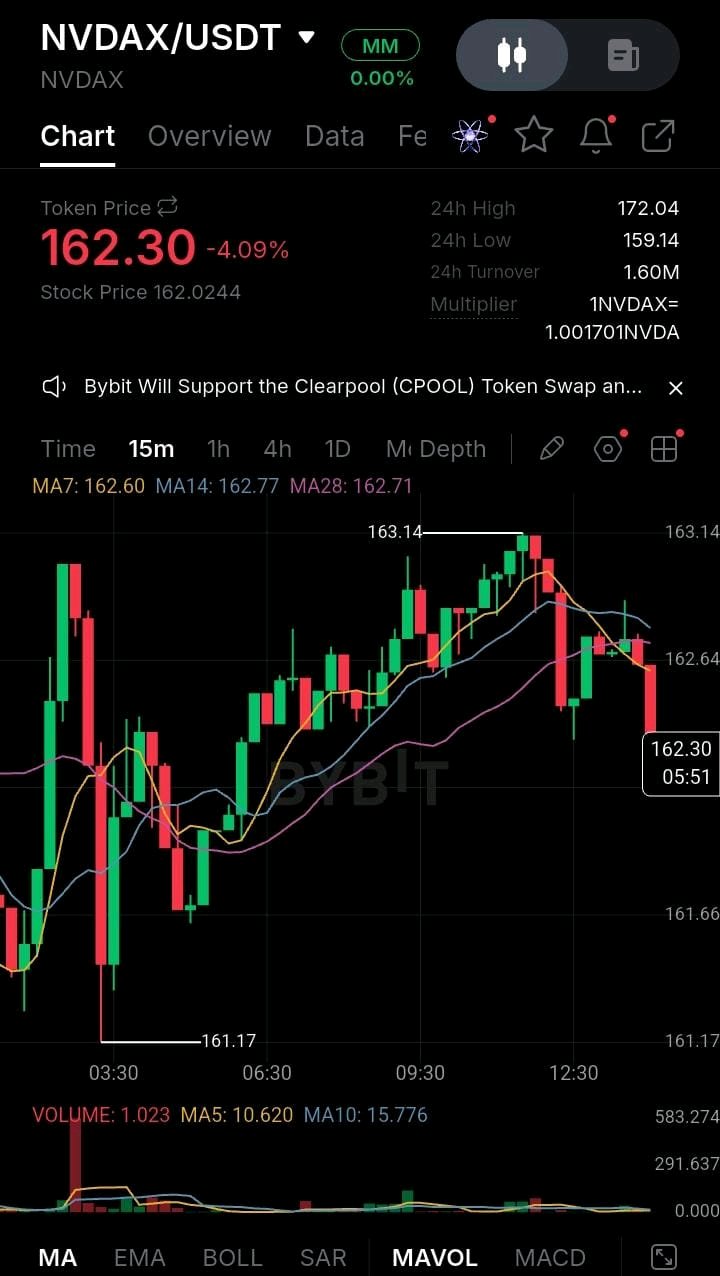
Nvidia Is Testing a Level That Could Decide the Next Move $NVDA has bounced back toward $219 after falling to around $209 earlier this week. Thursday’s 2.54% gain puts the stock back near a short-term decision zone, but it remains well below the $236.54 52-week high. The fundamental backdrop remains unusually strong. Nvidia generated $96.2B in Q2 FY2027 revenue, up 106% YoY, with Data Center revenue reaching roughly $89B. More recently, CEO Jensen Huang said Nvidia expects to sell twice as many chips next year as this year, reinforcing the company’s view that AI infrastructure demand is still expanding. But the next phase is becoming more demanding. Nvidia’s Vera Rubin NVL72 recently posted leading results in MLPerf inference testing, while the company is increasingly focused on performance-per-watt and lowering the cost of AI tokens. At the same time, Huawei is accelerating its own AI-chip roadmap, creating a longer-term competitive challenge, particularly in China. That creates an interesting setup. My setup: Bullish: reclaim and hold $220–$225 with strong volume → $230, then $236–$245. Bearish: rejection around $220–$225 and loss of $215 → $210, followed by $200. Invalidation: sustained acceptance above $245 would significantly strengthen the continuation thesis. The interesting question isn't whether Nvidia still has AI demand. It's whether the next wave of Vera Rubin deployments and rising chip volumes can keep earnings growth ahead of the increasingly demanding expectations already embedded in NVDA's valuation. $NVDAXUSDT #ByXIMPACT
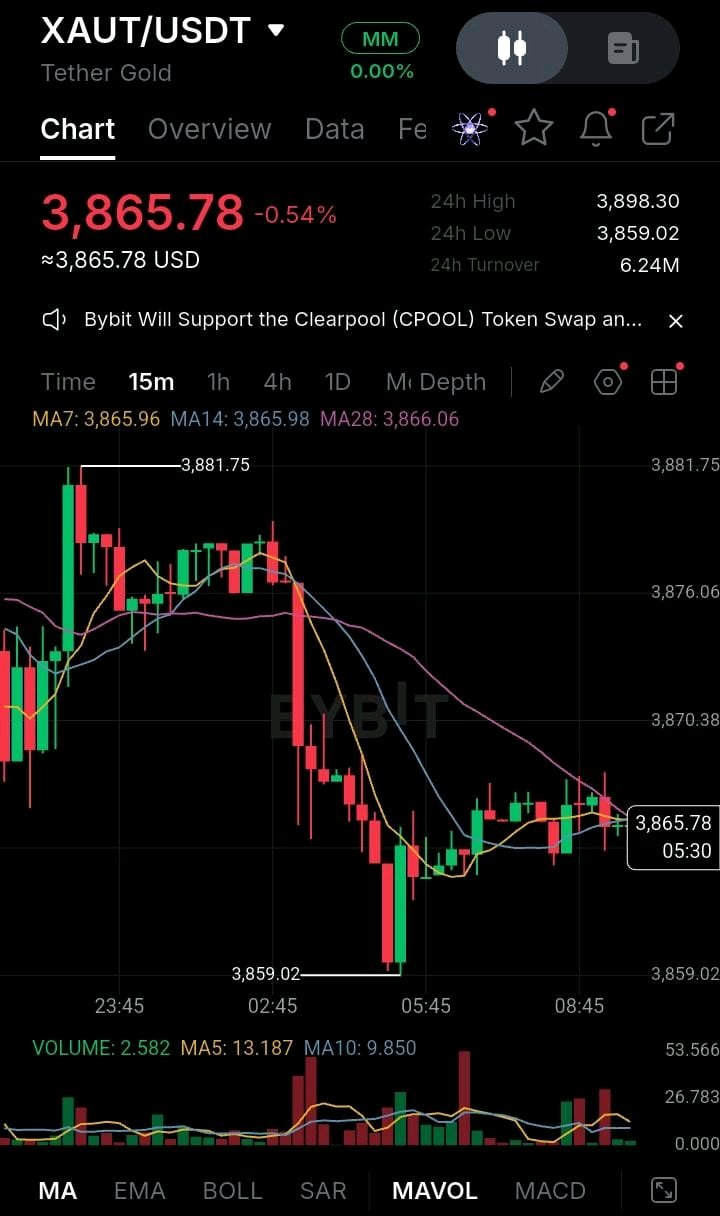
The Gold Reclaims $4,400 But the Fed Is Still the Test Gold is recovering sharply after Wednesday’s Fed-driven selloff, but the bigger question is whether buyers can turn this rebound into a real reclaim. Spot gold has pushed back above $4,400, with December futures around $4,435 in early European trading. The move comes after the Fed raised rates by 25 bps and signaled that further tightening could still follow. Lower Treasury yields and easing oil prices are now giving gold some relief. The less-obvious part is the reaction to the rate hike. Normally, another Fed hike should create pressure on gold because higher yields increase the opportunity cost of holding a non-yielding asset. Instead, gold has bounced from the $4,270–$4,300 area. The World Gold Council also noted that August was an unusually strong month for gold, with ETF buying and futures/options activity helping drive the rally. Technically, $4,400 is now the battleground. Bearish: rejection around $4,450–$4,500 → lose $4,400 → targets $4,350, then $4,300. Bullish: hold above $4,400 and reclaim $4,500 → opens $4,550, then potentially $4,600. Invalidation: sustained acceptance below $4,270 would weaken the recovery structure and put the recent lows back in focus. For $XAUT, the setup is particularly interesting because its recent price action has closely followed the underlying gold market. XAUT closed around $4,273.48 on September 16, while recent daily volume reached more than $300M. Tether has also been concentrating resources on XAUT after winding down Alloy, while XAUT received Shariah certification and recognition as an accepted spot commodity in Abu Dhabi earlier this year. The key distinction now: Gold doesn't need another narrative. It needs buyers to prove that $4,400 can become support after the Fed shock. If $4,500 flips into support, the recovery starts looking much more convincing. Is $4,400 becoming the base for Gold's next move, or is $4,500 still the level where sellers are waiting? $XAUTUSDT #ByXIMPACT

NVIDIA and Tesla are approaching levels that could decide whether their recent pullbacks become resets — or the beginning of another leg higher. NVDA is trading around the $212 area after falling from above $234, while TSLA has recovered toward $360 after recently trading above $370. Both are facing major catalysts, but the underlying stories are very different. NVIDIA’s latest quarter delivered $96.2B in revenue, up 106% YoY, with Data Center revenue reaching $89B, up 117%. Tesla, meanwhile, delivered 480,126 vehicles in Q2, up 25% YoY, while energy-storage deployments reached 13.5 GWh. The next phase is about execution. NVIDIA is moving from Blackwell toward Vera Rubin, with major cloud providers preparing Rubin systems as AI infrastructure spending continues. Tesla is pushing Cybercab toward autonomous commercial operations while its October 1 Roadster reveal adds another potential narrative catalyst. But both face risks: NVIDIA must sustain extraordinary AI growth as spending becomes more scrutinized, while Tesla needs to prove that autonomy can become a scalable business rather than simply another product narrative. That creates an interesting setup. My setup: • NVDA Bullish: reclaim $225–$228 → $234–$236, then $245. • NVDA Bearish: lose $210 → $200, followed by $195. • TSLA Bullish: reclaim $365–$370 → $380, then $400. • TSLA Bearish: lose $355 → $340, followed by $325. The interesting question isn't which company has the bigger AI story. It's which one can convert massive AI investment into measurable earnings and cash-flow growth fast enough to justify the valuation already being assigned to the future. $NVDAXUSDT $TSLAXUSDT #ByXIMPACT

El oro acaba de perder más del 3%, pero lo interesante no es la caída en sí. El XAU/USD extendió la venta masiva de Jackson Hole del viernes hasta el lunes, cayendo brevemente por debajo de los $4,400 y tocando alrededor de los $4,396 mientras los mercados ajustaban sus precios sobre la ruta de la Fed tras los comentarios hawkish sobre la inflación de Kevin Warsh. Las probabilidades de una subida de tipos en septiembre se han movido hacia aproximadamente un 58-60%, mientras que el dólar se mantiene cerca de un máximo de dos semanas. Eso cambia la ecuación del oro a corto plazo. Durante semanas, la operación fue sencilla: dólar más débil + expectativas de una Fed más laxa = oro más fuerte. Ahora estamos viendo lo inverso. Los rendimientos más altos están aumentando el costo de oportunidad de mantener un activo que no genera rendimiento, mientras que el dólar más fuerte añade otra capa de presión. Al mismo tiempo, el riesgo geopolítico está enviando al petróleo por encima de los $90, lo que crea un problema inusual para los alcistas del oro: la demanda de refugio seguro apoya al oro, pero los precios más altos de la energía pueden reforzar la inflación y mantener a la Fed en una postura hawkish. Técnicamente, los $4,467 son el nivel que estoy observando. El oro cotiza por debajo de esa área tras perder la media de 200 días, con los $4,408 actuando como el pivote bajista inmediato. Un fallo en recuperar los $4,467–$4,511 mantiene la estructura a corto plazo bajista. Mi estrategia: Bajista: rechazo alrededor de los $4,450–$4,500 → objetivo $4,408, luego $4,368–$4,350 en los próximos días. Alcista: recuperar y mantenerse por encima de los $4,511 → la repricificación bajista comienza a perder credibilidad, abriendo camino hacia un movimiento de vuelta a los $4,540–$4,580. Invalidación: recuperación sostenida por encima de los $4,600. El verdadero catalizador ahora no es otro discurso de la Fed. Es el informe de empleo de EE. UU. Si el empleo se debilita lo suficiente como para revertir las expectativas de subida de septiembre, el oro podría cambiar de dirección agresivamente. Si los datos mantienen a la Fed en modo hawkish, ese soporte de los $4,400 podría no aguantar. El oro no es necesariamente bajista a largo plazo. El mercado simplemente está ajustando el precio de tenerlo en este momento. $XAUTUSDT #ByXIMPACT

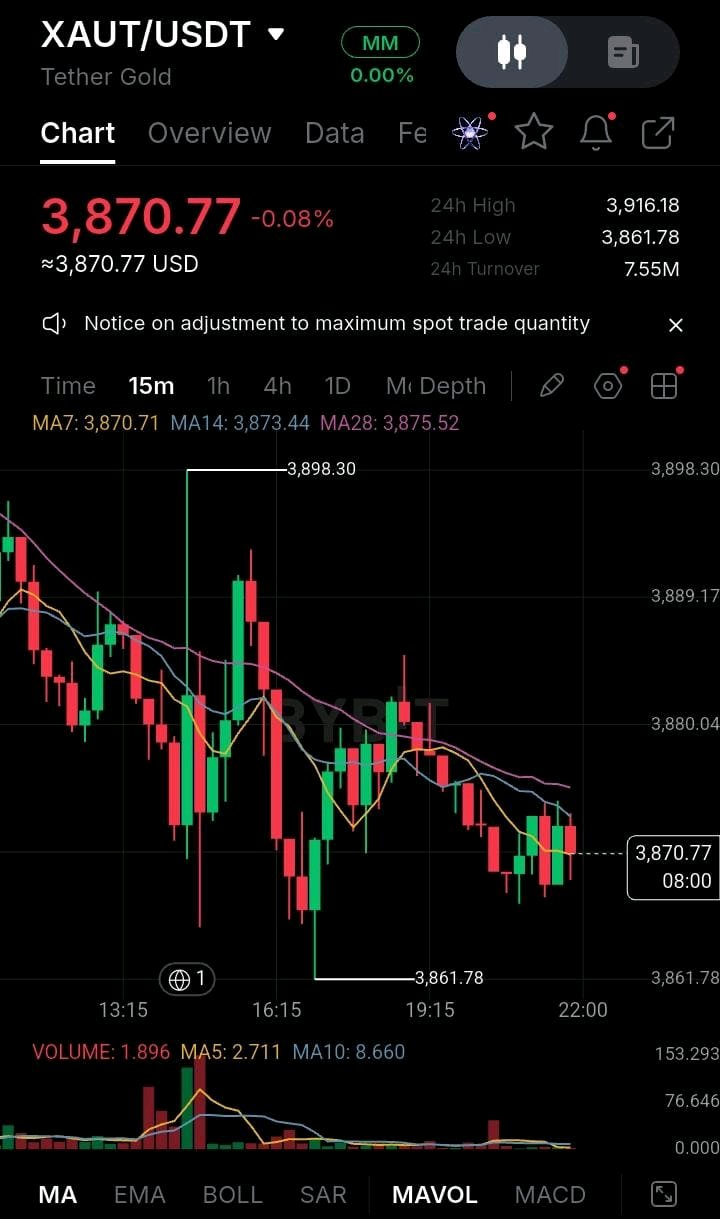
Tesla and Circle are both entering a phase where the narrative has to translate into measurable execution. Tesla has recovered from its September low near $354 to around $378, but the next test is whether buyers can push it back through the $385–$390 area. The biggest catalyst is autonomy: Cybercab is already deployed in Austin, while NHTSA is reviewing Tesla’s self-certification of the driverless vehicle and whether it complies with federal safety standards. Tesla is also preparing its next-generation Roadster reveal, keeping the AI/autonomy narrative firmly in focus. Circle has a different catalyst stack. Binance just invested $100M in Circle and renewed a five-year USDC commercial agreement, while Circle's USDC circulation has grown above $74B. Arc's public mainnet also launched with more than 100 institutional and ecosystem builders, including major banks, payment networks, exchanges and asset managers. Circle is additionally pursuing the Tazapay acquisition, which would add 60+ banking/fintech partners, 100+ payout markets and more than $25B in annualized payment volume. That creates an interesting setup. My setup: • $TSLA Bullish: reclaim $385–$390 → $400, then $420. • $TSLA Bearish: rejection below $385 + loss of $370 → $355, then $340. • $CRCL Bullish: reclaim $95–$100 → $110, then $125. • $CRCL Bearish: rejection near $95 + loss of $85 → $75, then $65. The interesting question isn't which company has the bigger narrative. It's whether Tesla can turn autonomy into a scalable business while Circle turns USDC, Arc and global payment infrastructure into durable growth beyond the economics of reserve income. Both are moving from story → execution. $TSLAXUSDT $CRCLXUSDT #ByXIMPACT


Nvidia Is Testing a Level That Could Decide the Next Move $NVDA has bounced back toward $219 after falling to around $209 earlier this week. Thursday’s 2.54% gain puts the stock back near a short-term decision zone, but it remains well below the $236.54 52-week high. The fundamental backdrop remains unusually strong. Nvidia generated $96.2B in Q2 FY2027 revenue, up 106% YoY, with Data Center revenue reaching roughly $89B. More recently, CEO Jensen Huang said Nvidia expects to sell twice as many chips next year as this year, reinforcing the company’s view that AI infrastructure demand is still expanding. But the next phase is becoming more demanding. Nvidia’s Vera Rubin NVL72 recently posted leading results in MLPerf inference testing, while the company is increasingly focused on performance-per-watt and lowering the cost of AI tokens. At the same time, Huawei is accelerating its own AI-chip roadmap, creating a longer-term competitive challenge, particularly in China. That creates an interesting setup. My setup: Bullish: reclaim and hold $220–$225 with strong volume → $230, then $236–$245. Bearish: rejection around $220–$225 and loss of $215 → $210, followed by $200. Invalidation: sustained acceptance above $245 would significantly strengthen the continuation thesis. The interesting question isn't whether Nvidia still has AI demand. It's whether the next wave of Vera Rubin deployments and rising chip volumes can keep earnings growth ahead of the increasingly demanding expectations already embedded in NVDA's valuation. $NVDAXUSDT #ByXIMPACT
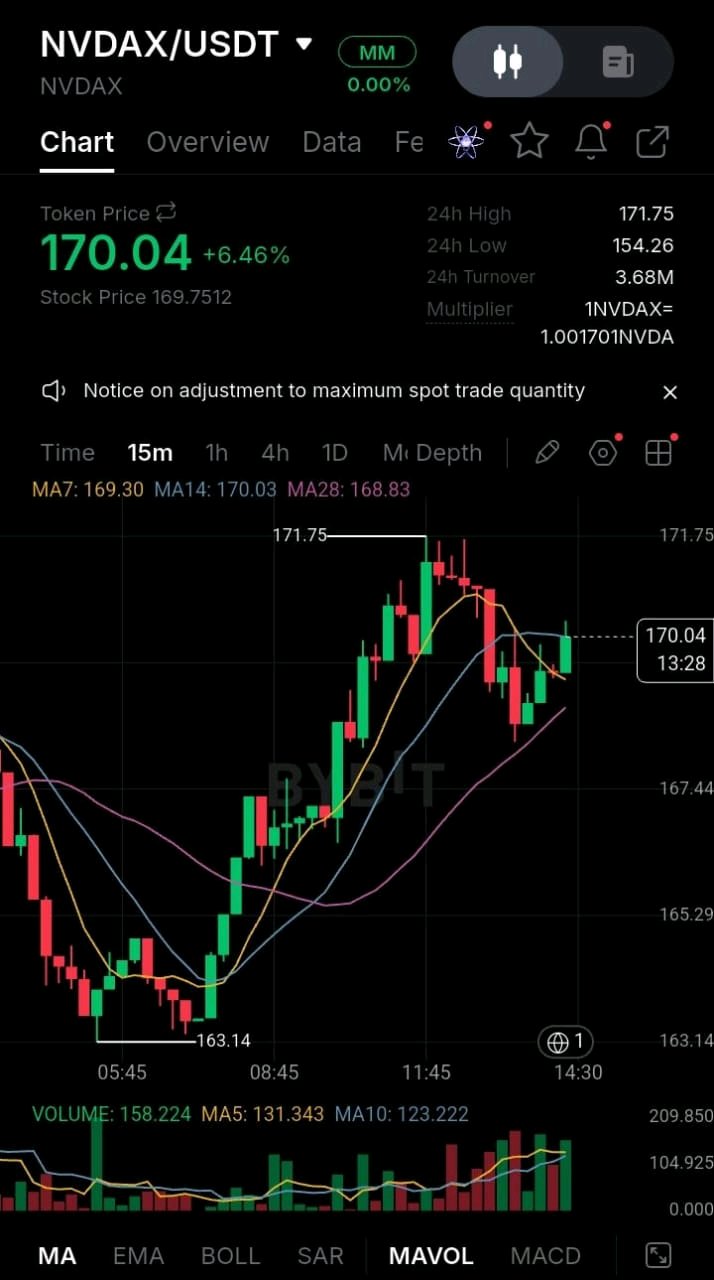
The Gold Reclaims $4,400 But the Fed Is Still the Test Gold is recovering sharply after Wednesday’s Fed-driven selloff, but the bigger question is whether buyers can turn this rebound into a real reclaim. Spot gold has pushed back above $4,400, with December futures around $4,435 in early European trading. The move comes after the Fed raised rates by 25 bps and signaled that further tightening could still follow. Lower Treasury yields and easing oil prices are now giving gold some relief. The less-obvious part is the reaction to the rate hike. Normally, another Fed hike should create pressure on gold because higher yields increase the opportunity cost of holding a non-yielding asset. Instead, gold has bounced from the $4,270–$4,300 area. The World Gold Council also noted that August was an unusually strong month for gold, with ETF buying and futures/options activity helping drive the rally. Technically, $4,400 is now the battleground. Bearish: rejection around $4,450–$4,500 → lose $4,400 → targets $4,350, then $4,300. Bullish: hold above $4,400 and reclaim $4,500 → opens $4,550, then potentially $4,600. Invalidation: sustained acceptance below $4,270 would weaken the recovery structure and put the recent lows back in focus. For $XAUT, the setup is particularly interesting because its recent price action has closely followed the underlying gold market. XAUT closed around $4,273.48 on September 16, while recent daily volume reached more than $300M. Tether has also been concentrating resources on XAUT after winding down Alloy, while XAUT received Shariah certification and recognition as an accepted spot commodity in Abu Dhabi earlier this year. The key distinction now: Gold doesn't need another narrative. It needs buyers to prove that $4,400 can become support after the Fed shock. If $4,500 flips into support, the recovery starts looking much more convincing. Is $4,400 becoming the base for Gold's next move, or is $4,500 still the level where sellers are waiting? $XAUTUSDT #ByXIMPACT
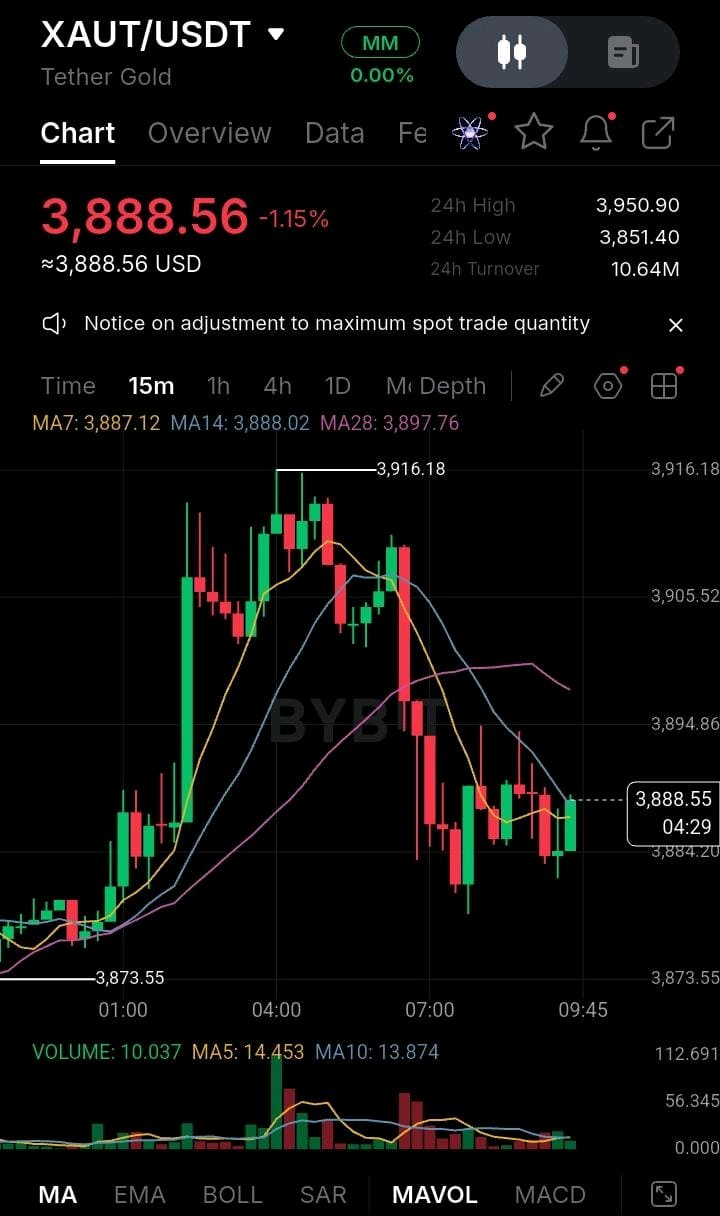

NVIDIA y Tesla se acercan a niveles que podrían determinar si sus retrocesos recientes se convierten en reajustes, o en el inicio de otra etapa alcista. NVDA cotiza alrededor de la zona de los $212 tras caer desde más de $234, mientras que TSLA se ha recuperado hacia los $360 después de cotizar recientemente por encima de los $370. Ambos enfrentan catalizadores importantes, pero sus historias subyacentes son muy diferentes. El último trimestre de NVIDIA generó $96.2 mil millones en ingresos, un aumento del 106% interanual, con los ingresos del centro de datos alcanzando los $89 mil millones, un incremento del 117%. Tesla, mientras tanto, entregó 480,126 vehículos en el segundo trimestre, un aumento del 25% interanual, mientras que los despliegues de almacenamiento de energía alcanzaron los 13.5 GWh. La siguiente fase trata sobre la ejecución. NVIDIA está pasando de Blackwell a Vera Rubin, con los principales proveedores de la nube preparando sistemas Rubin a medida que continúa el gasto en infraestructura de IA. Tesla está impulsando el Cybercab hacia operaciones comerciales autónomas, mientras que la presentación del Roadster en octubre añade otro posible catalizador narrativo. Pero ambos enfrentan riesgos: NVIDIA debe mantener un crecimiento extraordinario en IA a medida que el gasto es más escrutado, mientras que Tesla necesita demostrar que la autonomía puede convertirse en un negocio escalable en lugar de ser simplemente otra narrativa de producto. Eso crea una configuración interesante. Mi configuración: • NVDA Alcista: recuperar $225–$228 → $234–$236, luego $245. • NVDA Bajista: perder $210 → $200, seguido por $195. • TSLA Alcista: recuperar $365–$370 → $380, luego $400. • TSLA Bajista: perder $355 → $340, seguido por $325. La pregunta interesante no es qué empresa tiene la mejor historia de IA. Es cuál de las dos puede convertir la inversión masiva en IA en ganancias medibles y crecimiento de flujo de efectivo lo suficientemente rápido como para justificar la valoración que ya se le asigna al futuro. $NVDAXUSDT $TSLAXUSDT #ByXIMPACT

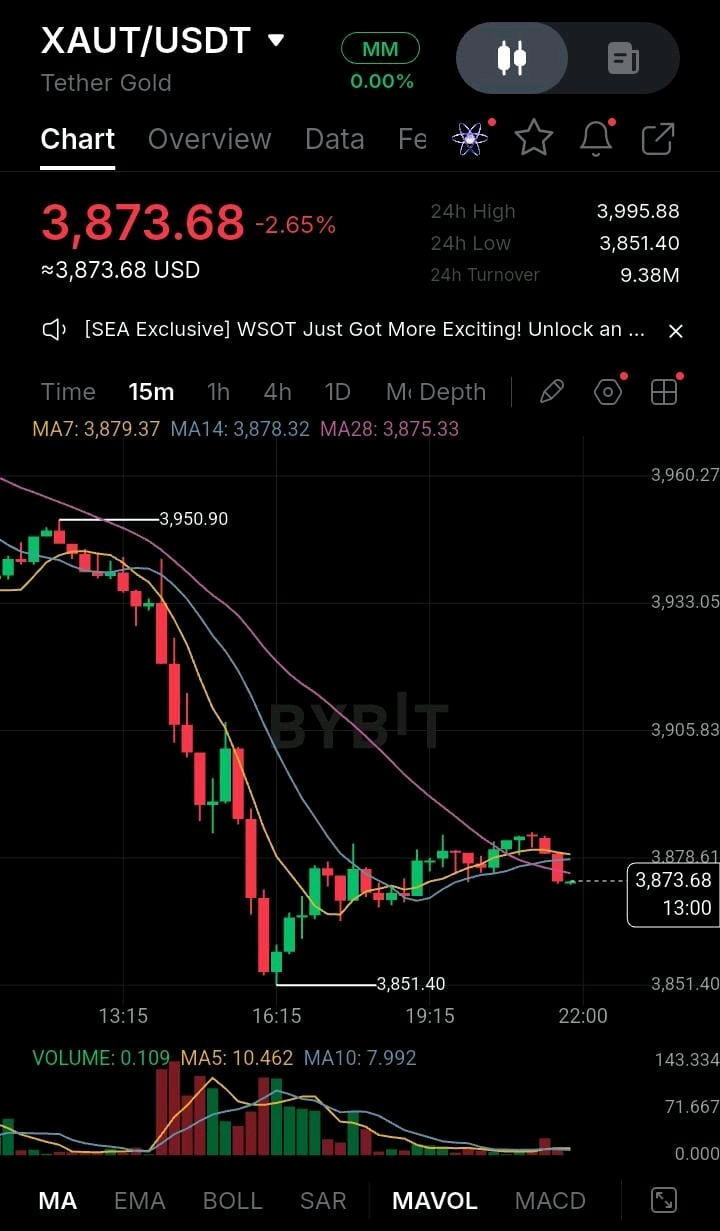
El oro acaba de perder más de un 3%, pero lo interesante no es la caída en sí. El par XAU/USD extendió el lunes la venta masiva del viernes tras Jackson Hole, cayendo brevemente por debajo de los $4,400 y tocando cerca de los $4,396 a medida que los mercados reajustaban la trayectoria de la Fed tras los comentarios hawkish de Kevin Warsh sobre la inflación. Las probabilidades de una subida de tasas en septiembre se han movido hacia un rango aproximado del 58-60%, mientras que el dólar se mantiene cerca de un máximo de dos semanas. Eso cambia la ecuación del oro a corto plazo. Durante semanas, la operación era simple: dólar más débil + expectativas de una Fed más flexible = oro más fuerte. Ahora estamos viendo lo contrario. Los rendimientos más altos están aumentando el costo de oportunidad de mantener un activo que no genera intereses, mientras que el dólar más fuerte añade otra capa de presión. Al mismo tiempo, el riesgo geopolítico está enviando al petróleo por encima de los $90, creando un problema inusual para los alcistas del oro: la demanda de refugio seguro respalda al oro, pero los precios más altos de la energía pueden reforzar la inflación y mantener a la Fed en una postura hawkish. Desde el punto de vista técnico, $4,467 es el nivel que estoy vigilando. El oro cotiza por debajo de esa zona tras perder el promedio de 200 días, con $4,408 actuando como el pivote bajista inmediato. Un fallo en recuperar los $4,467–$4,511 mantiene la estructura a corto plazo bajista. Mi configuración: Bajista: rechazo alrededor de $4,450–$4,500 → objetivo $4,408, luego $4,368–$4,350 en los próximos días. Alcista: recuperar y mantenerse por encima de $4,511 → el reajuste bajista comienza a perder credibilidad, abriendo un movimiento de vuelta hacia los $4,540–$4,580. Invalidación: recuperación sostenida por encima de $4,600. El verdadero catalizador ahora no es otro discurso de la Fed. Es el informe de empleo de EE. UU. Si el empleo se debilita lo suficiente como para deshacer las expectativas de una subida en septiembre, el oro podría revertirse agresivamente. Si los datos mantienen a la Fed en una postura hawkish, ese soporte de $4,400 podría no aguantar. El oro no es necesariamente bajista a largo plazo. El mercado simplemente está reajustando el costo de poseerlo en este momento. $XAUTUSDT #ByXIMPACT

Tesla and Circle are both entering a phase where the narrative has to translate into measurable execution. Tesla has recovered from its September low near $354 to around $378, but the next test is whether buyers can push it back through the $385–$390 area. The biggest catalyst is autonomy: Cybercab is already deployed in Austin, while NHTSA is reviewing Tesla’s self-certification of the driverless vehicle and whether it complies with federal safety standards. Tesla is also preparing its next-generation Roadster reveal, keeping the AI/autonomy narrative firmly in focus. Circle has a different catalyst stack. Binance just invested $100M in Circle and renewed a five-year USDC commercial agreement, while Circle's USDC circulation has grown above $74B. Arc's public mainnet also launched with more than 100 institutional and ecosystem builders, including major banks, payment networks, exchanges and asset managers. Circle is additionally pursuing the Tazapay acquisition, which would add 60+ banking/fintech partners, 100+ payout markets and more than $25B in annualized payment volume. That creates an interesting setup. My setup: • $TSLA Bullish: reclaim $385–$390 → $400, then $420. • $TSLA Bearish: rejection below $385 + loss of $370 → $355, then $340. • $CRCL Bullish: reclaim $95–$100 → $110, then $125. • $CRCL Bearish: rejection near $95 + loss of $85 → $75, then $65. The interesting question isn't which company has the bigger narrative. It's whether Tesla can turn autonomy into a scalable business while Circle turns USDC, Arc and global payment infrastructure into durable growth beyond the economics of reserve income. Both are moving from story → execution. $TSLAXUSDT $CRCLXUSDT #ByXIMPACT


Nvidia Is Testing a Level That Could Decide the Next Move $NVDA has bounced back toward $219 after falling to around $209 earlier this week. Thursday’s 2.54% gain puts the stock back near a short-term decision zone, but it remains well below the $236.54 52-week high. The fundamental backdrop remains unusually strong. Nvidia generated $96.2B in Q2 FY2027 revenue, up 106% YoY, with Data Center revenue reaching roughly $89B. More recently, CEO Jensen Huang said Nvidia expects to sell twice as many chips next year as this year, reinforcing the company’s view that AI infrastructure demand is still expanding. But the next phase is becoming more demanding. Nvidia’s Vera Rubin NVL72 recently posted leading results in MLPerf inference testing, while the company is increasingly focused on performance-per-watt and lowering the cost of AI tokens. At the same time, Huawei is accelerating its own AI-chip roadmap, creating a longer-term competitive challenge, particularly in China. That creates an interesting setup. My setup: Bullish: reclaim and hold $220–$225 with strong volume → $230, then $236–$245. Bearish: rejection around $220–$225 and loss of $215 → $210, followed by $200. Invalidation: sustained acceptance above $245 would significantly strengthen the continuation thesis. The interesting question isn't whether Nvidia still has AI demand. It's whether the next wave of Vera Rubin deployments and rising chip volumes can keep earnings growth ahead of the increasingly demanding expectations already embedded in NVDA's valuation. $NVDAXUSDT #ByXIMPACT
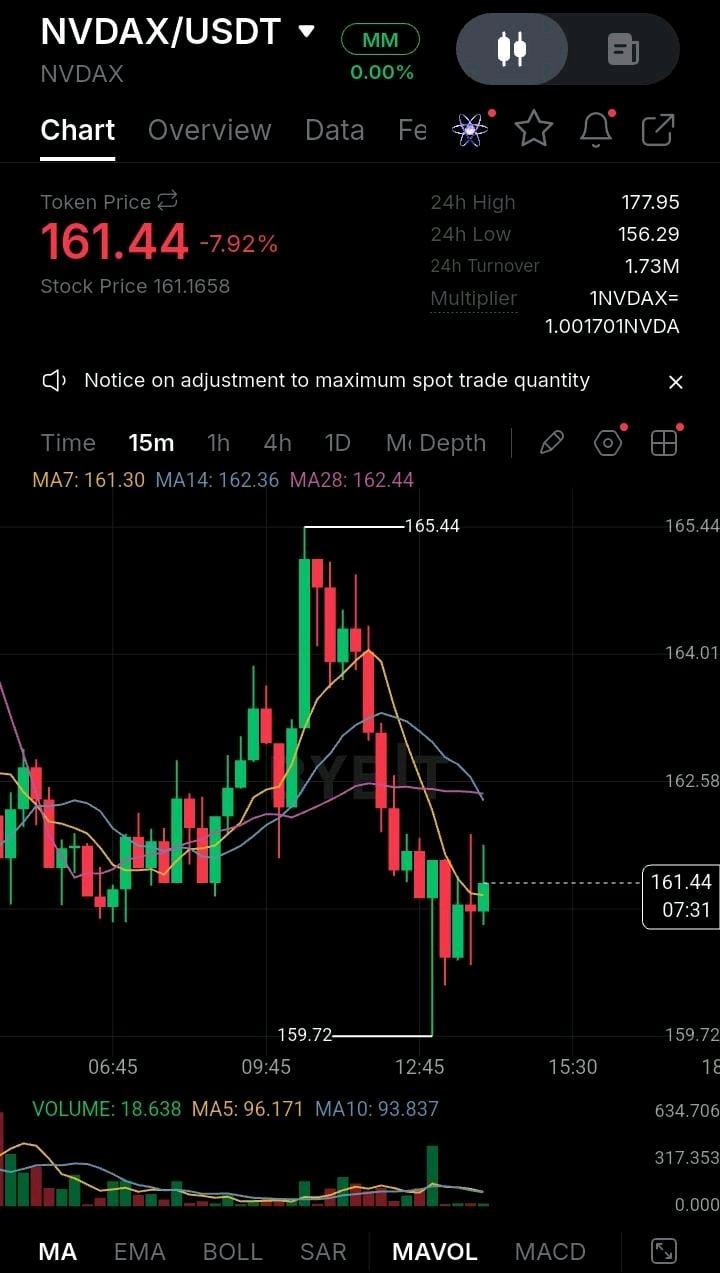
The Gold Reclaims $4,400 But the Fed Is Still the Test Gold is recovering sharply after Wednesday’s Fed-driven selloff, but the bigger question is whether buyers can turn this rebound into a real reclaim. Spot gold has pushed back above $4,400, with December futures around $4,435 in early European trading. The move comes after the Fed raised rates by 25 bps and signaled that further tightening could still follow. Lower Treasury yields and easing oil prices are now giving gold some relief. The less-obvious part is the reaction to the rate hike. Normally, another Fed hike should create pressure on gold because higher yields increase the opportunity cost of holding a non-yielding asset. Instead, gold has bounced from the $4,270–$4,300 area. The World Gold Council also noted that August was an unusually strong month for gold, with ETF buying and futures/options activity helping drive the rally. Technically, $4,400 is now the battleground. Bearish: rejection around $4,450–$4,500 → lose $4,400 → targets $4,350, then $4,300. Bullish: hold above $4,400 and reclaim $4,500 → opens $4,550, then potentially $4,600. Invalidation: sustained acceptance below $4,270 would weaken the recovery structure and put the recent lows back in focus. For $XAUT, the setup is particularly interesting because its recent price action has closely followed the underlying gold market. XAUT closed around $4,273.48 on September 16, while recent daily volume reached more than $300M. Tether has also been concentrating resources on XAUT after winding down Alloy, while XAUT received Shariah certification and recognition as an accepted spot commodity in Abu Dhabi earlier this year. The key distinction now: Gold doesn't need another narrative. It needs buyers to prove that $4,400 can become support after the Fed shock. If $4,500 flips into support, the recovery starts looking much more convincing. Is $4,400 becoming the base for Gold's next move, or is $4,500 still the level where sellers are waiting? $XAUTUSDT #ByXIMPACT

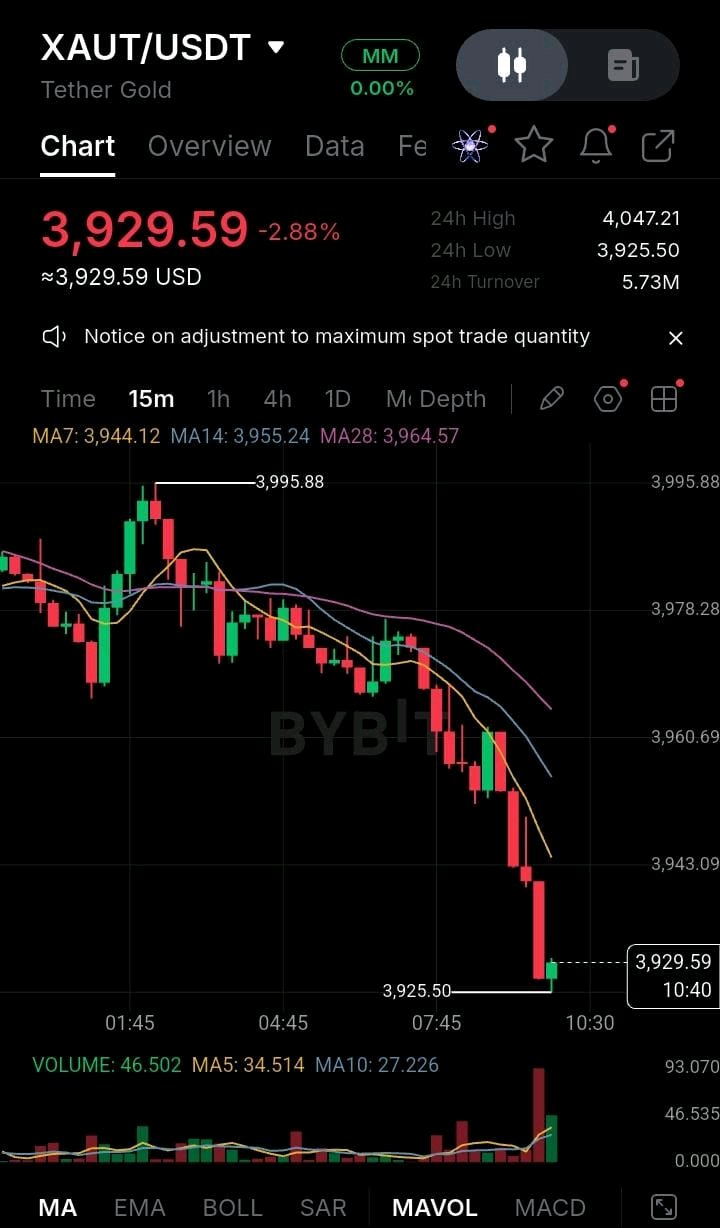
NVIDIA and Tesla are approaching levels that could decide whether their recent pullbacks become resets — or the beginning of another leg higher. NVDA is trading around the $212 area after falling from above $234, while TSLA has recovered toward $360 after recently trading above $370. Both are facing major catalysts, but the underlying stories are very different. NVIDIA’s latest quarter delivered $96.2B in revenue, up 106% YoY, with Data Center revenue reaching $89B, up 117%. Tesla, meanwhile, delivered 480,126 vehicles in Q2, up 25% YoY, while energy-storage deployments reached 13.5 GWh. The next phase is about execution. NVIDIA is moving from Blackwell toward Vera Rubin, with major cloud providers preparing Rubin systems as AI infrastructure spending continues. Tesla is pushing Cybercab toward autonomous commercial operations while its October 1 Roadster reveal adds another potential narrative catalyst. But both face risks: NVIDIA must sustain extraordinary AI growth as spending becomes more scrutinized, while Tesla needs to prove that autonomy can become a scalable business rather than simply another product narrative. That creates an interesting setup. My setup: • NVDA Bullish: reclaim $225–$228 → $234–$236, then $245. • NVDA Bearish: lose $210 → $200, followed by $195. • TSLA Bullish: reclaim $365–$370 → $380, then $400. • TSLA Bearish: lose $355 → $340, followed by $325. The interesting question isn't which company has the bigger AI story. It's which one can convert massive AI investment into measurable earnings and cash-flow growth fast enough to justify the valuation already being assigned to the future. $NVDAXUSDT $TSLAXUSDT #ByXIMPACT