Muhammad_salaar
4246Suka0Pembagian51Penggemar5Ikuti
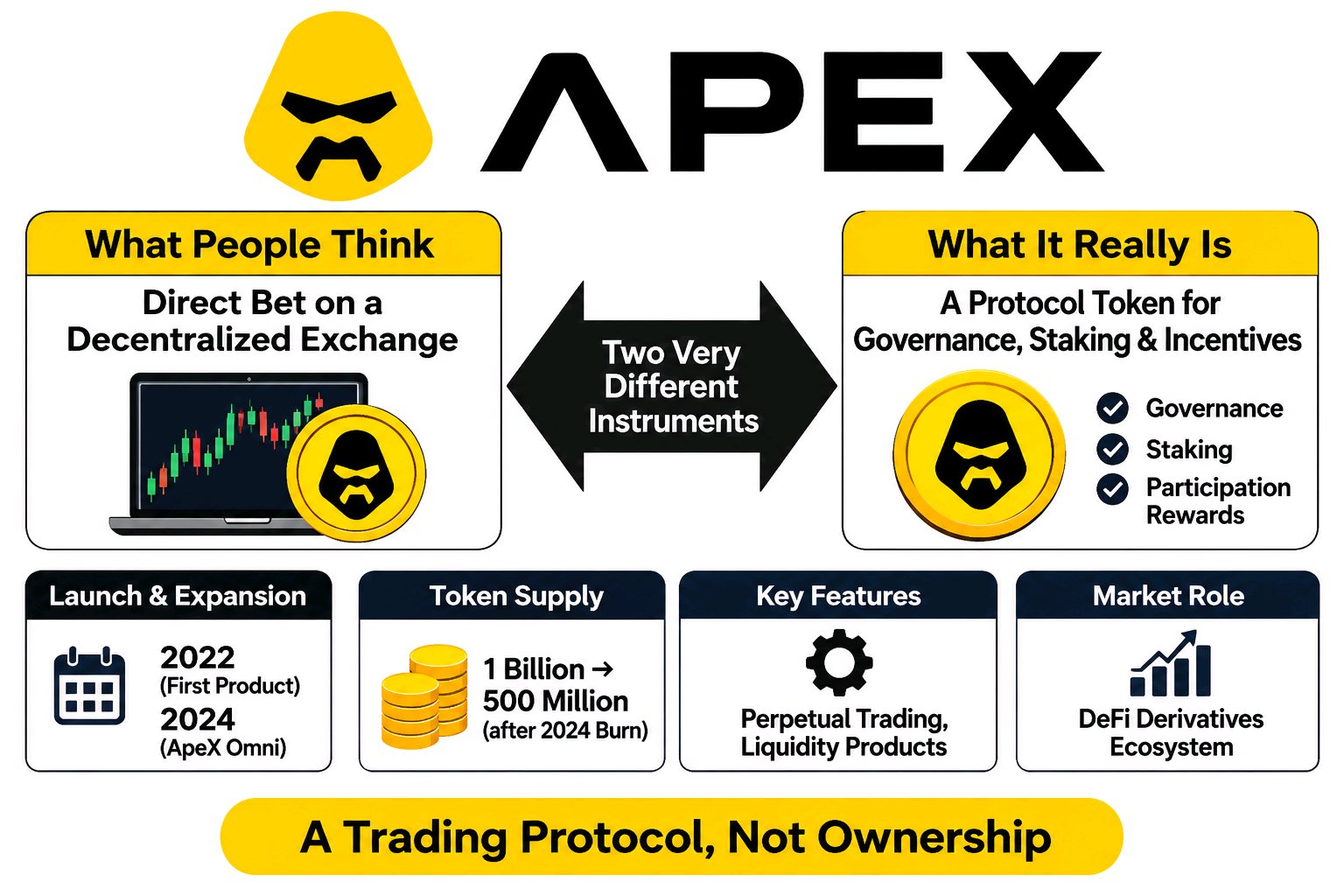
APEX mungkin terlihat seperti taruhan langsung pada bursa terdesentralisasi, tetapi memegang token tersebut tidak sama dengan memiliki bursa itu sendiri atau memiliki klaim atas asetnya. ApeX Protocol meluncurkan produk pertamanya pada tahun 2022 dan kemudian berekspansi melalui ApeX Omni pada tahun 2024. Pasokan tokennya dikurangi dari 1 miliar menjadi 500 juta APEX setelah proses burn tahun 2024. Perbedaan itu mudah terlewatkan jika Anda hanya membaca judulnya saja. APEX adalah token ekosistem protokol yang dirancang untuk tata kelola, staking, dan insentif partisipasi. Pemegang dapat melakukan staking APEX untuk mendapatkan imbalan dan berpartisipasi dalam keputusan protokol, namun token tersebut tidak mewakili ekuitas perusahaan, kepemilikan langsung atas infrastruktur perdagangan, atau klaim yang dijamin atas keuntungan bursa. Harga pasarnya ditentukan oleh penawaran, permintaan, utilitas, dan ekspektasi pasar, bukan oleh nilai penebusan tetap. Skala itu penting. ApeX mengoperasikan ekosistem perdagangan derivatif terdesentralisasi dengan pasar perpetual, produk likuiditas, dan fitur perdagangan tambahan. Namun, ukuran bursa tidak secara otomatis diterjemahkan menjadi klaim keuangan yang setara bagi setiap pemegang token. Perbedaannya sederhana: eksposur terhadap protokol perdagangan bukanlah kepemilikan atas bisnis tersebut. APEX mewakili partisipasi dalam ekosistem, bukan kepemilikan atas segala sesuatu di baliknya. #ByXIMPACT $APEXUSDT
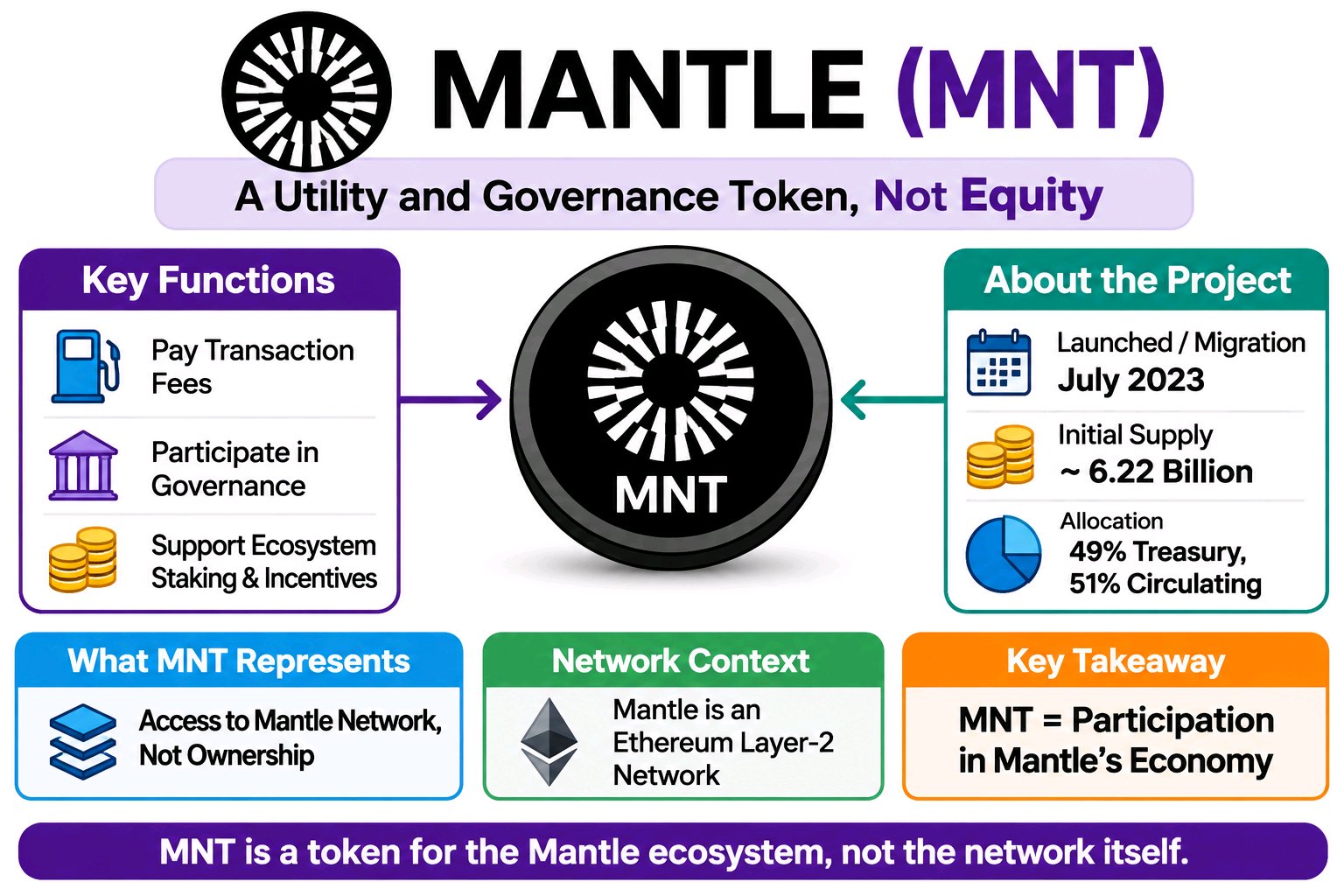
MNT may look like a direct bet on Mantle's entire ecosystem, but it is neither company equity nor a claim on network revenue. It is a utility and governance token whose value depends on demand for the Mantle ecosystem. MNT emerged from BitDAO's transition to Mantle, with the migration taking place in July 2023. Its initial total supply was approximately 6.22 billion tokens, with 49% allocated to the Mantle Treasury and 51% classified as circulating at the initial allocation snapshot. That distinction is easy to miss if you only read the headline. MNT has specific functions: paying transaction fees on Mantle Network, participating in governance, and supporting ecosystem staking and incentive mechanisms. Holders can participate in decisions about treasury allocations and ecosystem development, but holding MNT does not give them direct ownership of Mantle, a guaranteed share of profits, or a fixed redemption claim against treasury assets. The scale matters. Mantle operates as an Ethereum Layer-2 network, while MNT is the token used within its economic and governance structure. The network provides infrastructure for applications and transactions; the token provides access to specific functions and governance rights. These are related, but they are not the same financial exposure. MNT represents participation in Mantle's network economy, not ownership of the network itself. What matters is not the name, but what you are actually holding. #ByXIMPACT $MNTUSDT
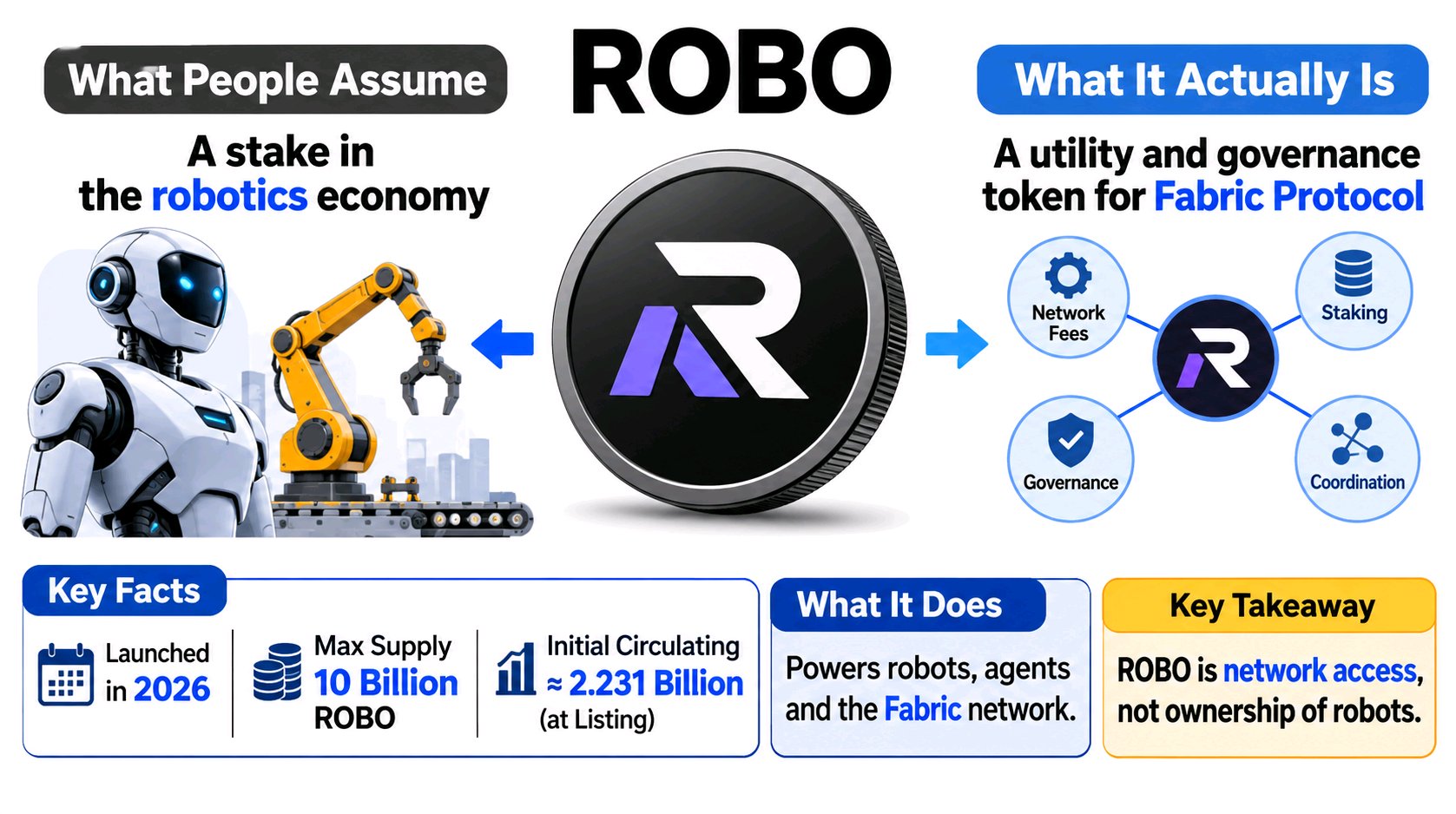
ROBO may look like a way to own a piece of the growing robotics economy, but holding the token does not mean owning robots or their profits. The distinction is fundamental: ROBO is a utility and governance token for Fabric Protocol, not an equity claim on physical machines or a share of their economic output. Launched in 2026, ROBO has a fixed maximum supply of 10 billion tokens. Around 2.231 billion were initially circulating at its March 2026 exchange listing. That distinction is easy to miss if you only read the headline. ROBO is designed to power the infrastructure connecting robots, autonomous agents, and developers. It is used for network fees, operational bonds, staking, coordination, and governance. Operators can stake tokens as performance guarantees, while network participants use ROBO to access services and coordinate machine activity. But there is no automatic claim on robot hardware, company equity, dividends, or underlying assets. Its economic exposure comes from demand for Fabric's network services and participation mechanisms, not direct ownership of the robotics industry. A 10-billion-token supply also puts the scale into perspective: this is a network utility asset whose value depends on adoption, usage, token demand, and circulating supply dynamics. It is not a basket of robots or a guaranteed claim on their productivity. ROBO represents access to the infrastructure of the robot economy, not ownership of the robots themselves. What matters is what you are actually holding. #ByXIMPACT$ROBOUSDT
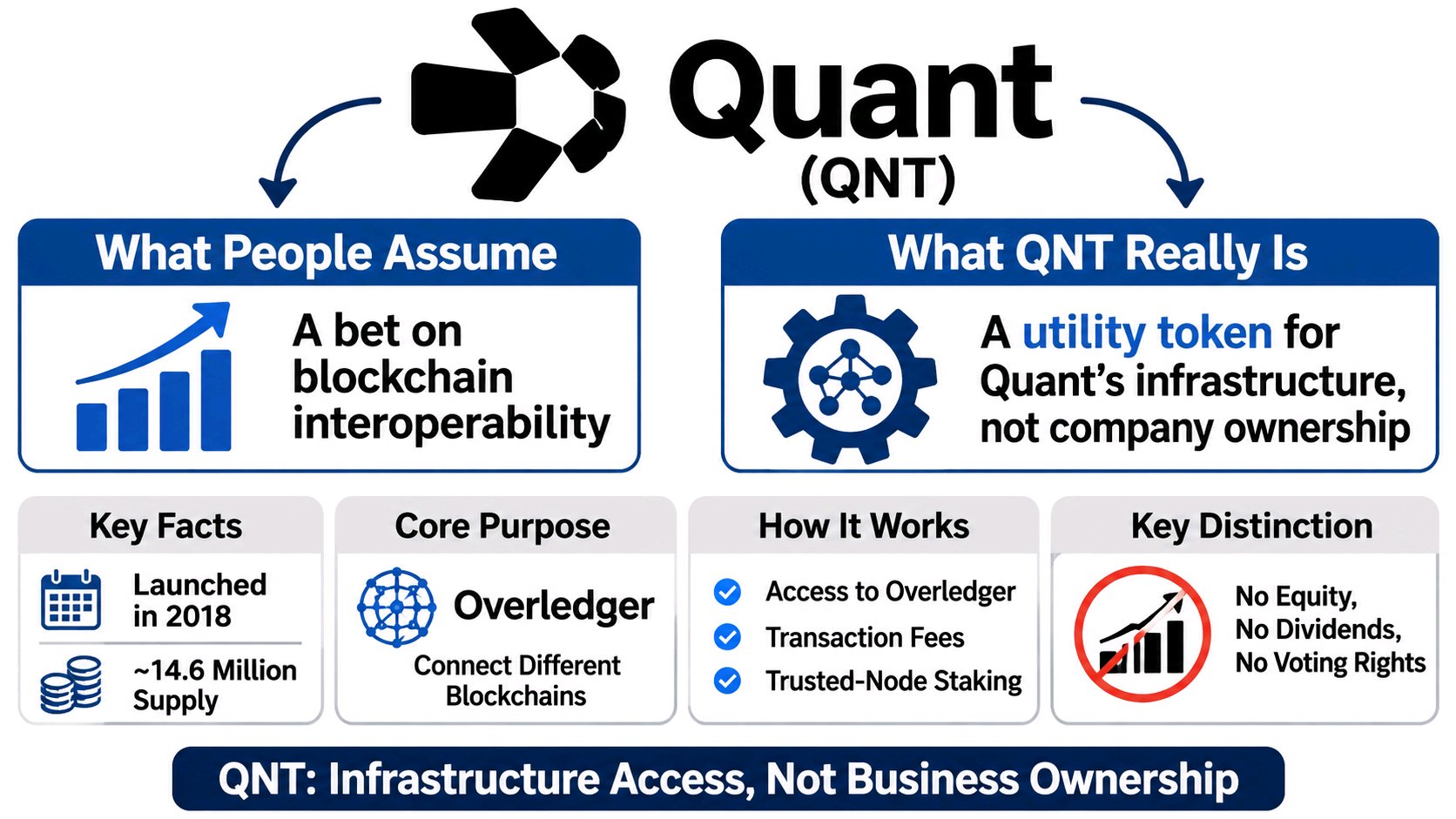
QNT may look like a bet on blockchain interoperability, but it is neither ownership in Quant Network nor a direct claim on institutional revenue. The difference is simple: QNT is a utility token designed to provide access to Quant’s infrastructure, not equity in the company. Launched in 2018 as an Ethereum-based ERC-20 token, QNT underwent a major burn of approximately 9.55 million tokens in September 2018, leaving a reported supply of 14.61 million. Its primary ecosystem revolves around Overledger, Quant’s technology for connecting different blockchains and existing financial systems. That distinction is easy to miss if you only read the headline. QNT is used for Overledger licensing and service access, while its expanding Fusion infrastructure introduces additional roles involving transaction fees and trusted-node staking. Holding QNT does not automatically give investors ownership of Quant Network, dividends, voting rights, or a claim on enterprise contracts. The scale makes this distinction important. With roughly 14.6 million tokens in its reported supply, QNT has a relatively limited token base compared with many large-cap crypto assets. But limited supply alone does not guarantee institutional adoption or create a direct link between company revenue and tokenholder returns. QNT represents access to Quant’s infrastructure, not ownership of the business behind it. The real distinction is what you are actually holding. #ByXIMPACT $QNTUSDT
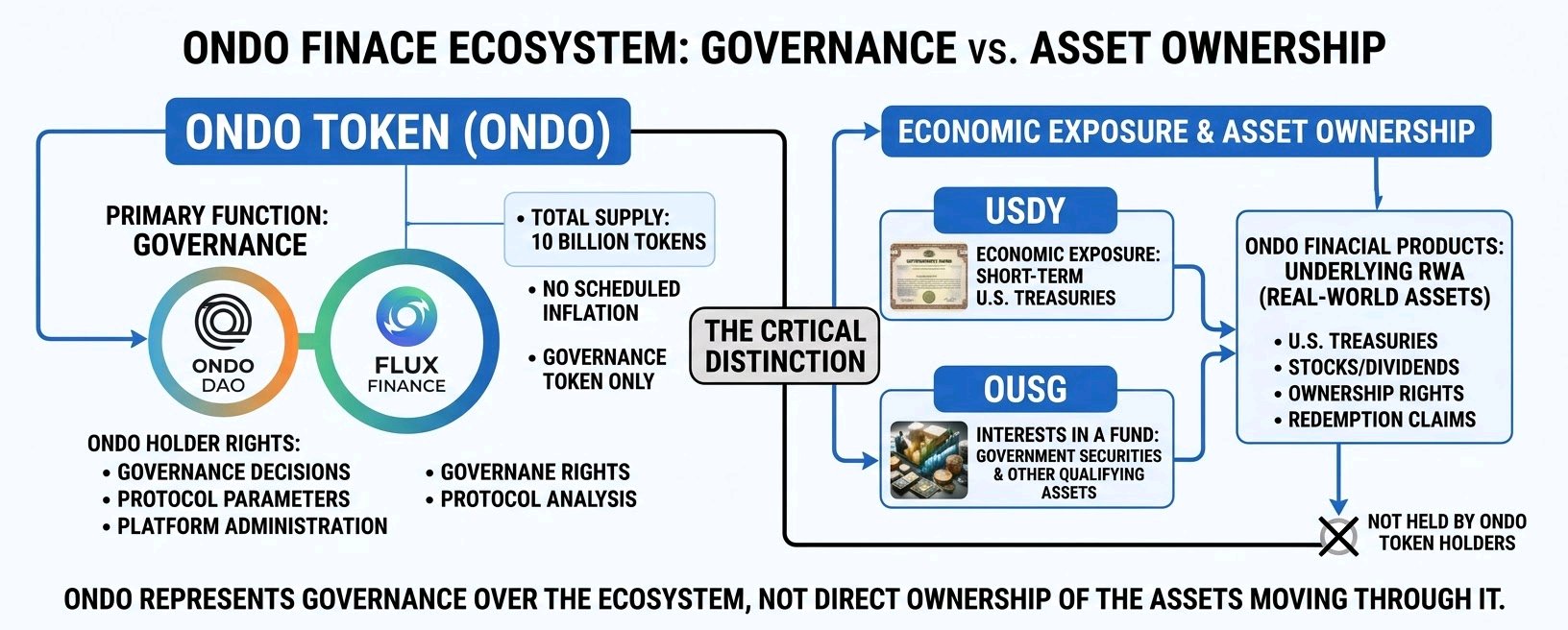
ONDO may look like a direct bet on tokenized U.S. Treasuries and real-world assets, but holding ONDO does not mean owning those assets. The distinction is between governing the ecosystem and receiving the economic returns of its products. ONDO launched with an initial supply of **10 billion tokens**. It serves as the governance token of the Ondo DAO and Flux Finance, with no scheduled inflation under its current token design. That distinction is easy to miss if you only read the headline. ONDO holders participate in governance decisions, including protocol parameters and platform administration. They do not automatically receive Treasury yields, stock dividends, ownership rights, or redemption claims on Ondo's underlying financial products. Those exposures belong to separate instruments such as USDY and OUSG. USDY provides economic exposure to short-term U.S. Treasuries, while OUSG represents interests in a fund investing in short-term government securities and other qualifying assets. The scale difference matters. Ondo's ecosystem connects blockchain infrastructure with billion-dollar real-world asset markets, but the value held inside those financial products is not the same thing as the value represented by ONDO itself. **ONDO represents governance over the ecosystem, not direct ownership of the assets moving through it.** The difference is not the Ondo name. It is what you are actually holding. $ONDOUSDT #ByXIMPACT
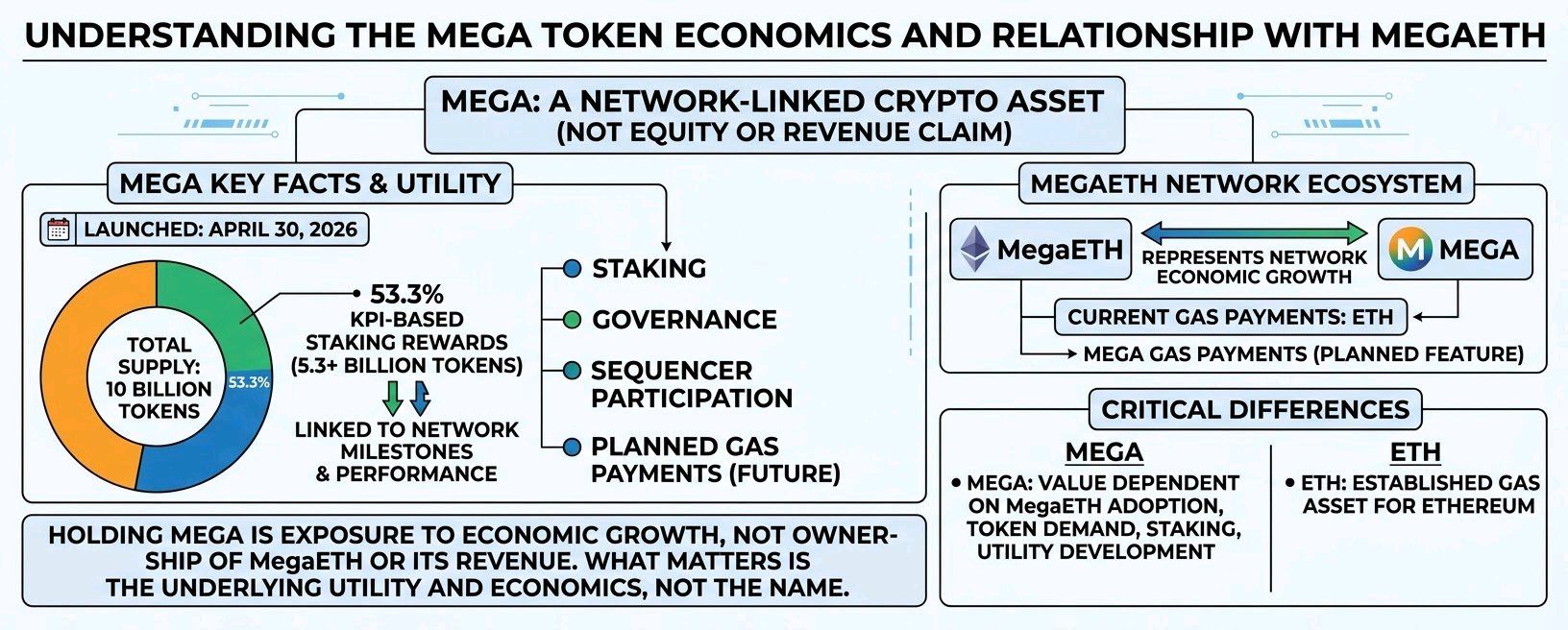
MEGA may look like a direct bet on Ethereum’s next-generation scaling revolution, but holding MEGA is not the same as owning a share of MegaETH or its revenue. Launched on April 30, 2026, MEGA has a fixed total supply of 10 billion tokens. Its most unusual feature is that 53.3% of the supply is allocated to KPI-based staking rewards, released as the network achieves specific performance and ecosystem milestones. That distinction is easy to miss if you only read the headline. MEGA is a network-linked crypto asset, not an equity claim, dollar-pegged token, or redeemable claim on underlying assets. Its intended roles include staking, governance, sequencer participation and future gas payments. However, transaction fees currently use ETH, while MEGA gas payments remain a planned feature. The supply structure makes the distinction even more important. More than 5.3 billion tokens are reserved for milestone-based rewards, meaning future supply distribution is connected to network progress rather than simply following a conventional calendar-based vesting schedule. Unlike ETH, which already serves as Ethereum's established gas asset, MEGA's economic value depends on MegaETH adoption, token demand, staking participation and how successfully its planned utility develops. MEGA represents exposure to a network's economic growth, not ownership of the network itself. What matters is not the name, but what you are actually holding.#ByXIMPACT $MEGAUSDT
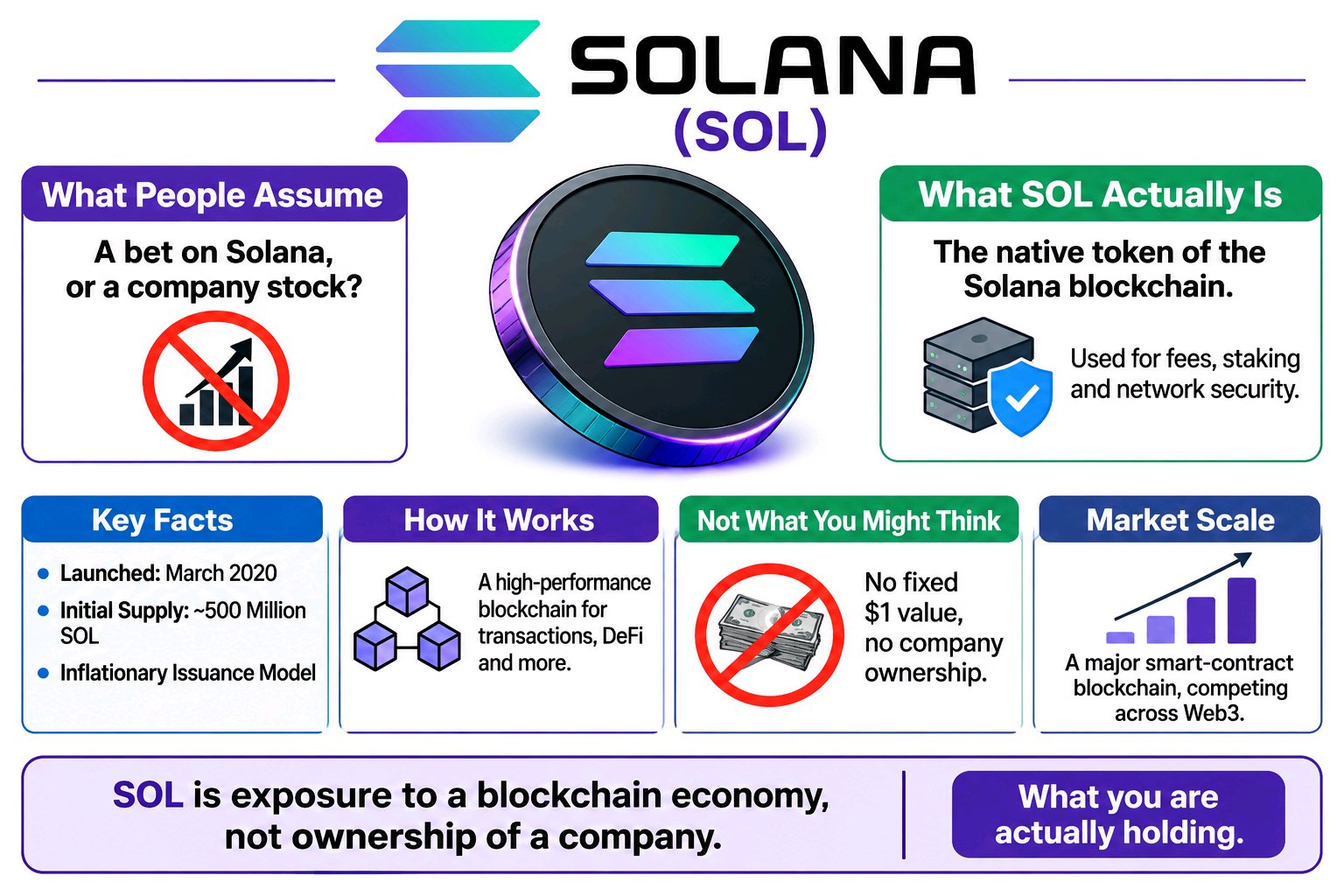
SOL mungkin dapat digambarkan sebagai taruhan pada Solana, tetapi ini bukan ekuitas perusahaan atau aset yang dipatok terhadap dolar. Harganya ditentukan oleh permintaan pasar terhadap token asli jaringan tersebut, bukan oleh nilai penukaran tetap. Solana meluncurkan Mainnet Beta-nya pada Maret 2020, dengan pasokan token awal sekitar 500 juta SOL. Tidak seperti aset dengan pasokan tetap, SOL menggunakan model penerbitan inflasi, dengan token yang baru diterbitkan mendukung imbalan staking. Perbedaan itu mudah terlewatkan jika Anda hanya membaca judulnya. Memegang SOL tidak berarti memiliki saham di Solana Labs, mengklaim keuntungannya, atau memiliki hak untuk menukar token dengan dolar. SOL adalah aset asli dari blockchain Solana. Ini digunakan untuk membayar biaya transaksi, berpartisipasi dalam staking, dan mendukung keamanan ekonomi jaringan. Skalanya membuat perbedaan ini menjadi penting: Solana adalah blockchain smart-contract utama yang bersaing untuk mendapatkan aktivitas di seluruh pembayaran, DeFi, perdagangan, dan aplikasi. Eksposur ekonomi SOL terikat pada adopsi jaringan, permintaan token, partisipasi staking, dan perubahan pasokan—bukan kepemilikan perusahaan atau nilai dolar yang dijamin. 500 juta token awal juga berbeda secara mendasar dari pasokan yang tetap secara permanen karena penerbitan protokol terus berlanjut, sementara pembakaran biaya mengimbangi sebagian darinya. GitHub +1 SOL adalah eksposur ke ekonomi blockchain, bukan kepemilikan perusahaan di baliknya. Yang penting adalah apa yang sebenarnya Anda pegang. #ByXIMPACT $SOLUSDT
NEAR mungkin terlihat seperti taruhan pada pertumbuhan blockchain yang berfokus pada AI, tetapi sebenarnya NEAR adalah token utilitas jaringan dengan eksposur langsung terhadap aktivitas ekonomi Protokol NEAR. NEAR meluncurkan mainnet-nya pada 22 April 2020, dengan 1 miliar token yang dibuat saat genesis. Tokenomiknya telah berkembang sejak saat itu, dengan peningkatan pada Februari 2026 yang memangkas penerbitan tahunan maksimum dari 5% menjadi 2,5%. Perbedaan itu mudah terlewatkan jika Anda hanya membaca judulnya saja. NEAR bukanlah ekuitas perusahaan, stablecoin yang dipatok ke dolar, atau klaim langsung atas aset jaringan. NEAR adalah token asli yang digunakan untuk biaya transaksi, penyimpanan, staking, dan tata kelola. Validator melakukan staking NEAR untuk membantu mengamankan jaringan, sementara penerbitan protokol mendanai keamanan jaringan. Biaya transaksi sebagian dibakar, menciptakan offset terhadap penerbitan baru. Perbedaan pentingnya adalah pasokan NEAR tidak tetap. Ekonominya bergantung pada penerbitan, permintaan staking, penggunaan jaringan, pembakaran biaya, dan kemampuan protokol untuk menangkap nilai dari aplikasinya. Bahkan adopsi yang berkembang tidak secara otomatis menjamin apresiasi token. Tidak seperti stablecoin yang dirancang untuk mempertahankan harga tetap, NEAR diperdagangkan sebagai aset jaringan yang volatil, yang nilai pasarnya mencerminkan ekspektasi tentang utilitas dan permintaan di masa depan. NEAR bukan kepemilikan atas perusahaan blockchain; NEAR adalah eksposur terhadap ekonomi jaringannya melalui apa yang sebenarnya Anda pegang. #ByXIMPACT $NEARUSDT
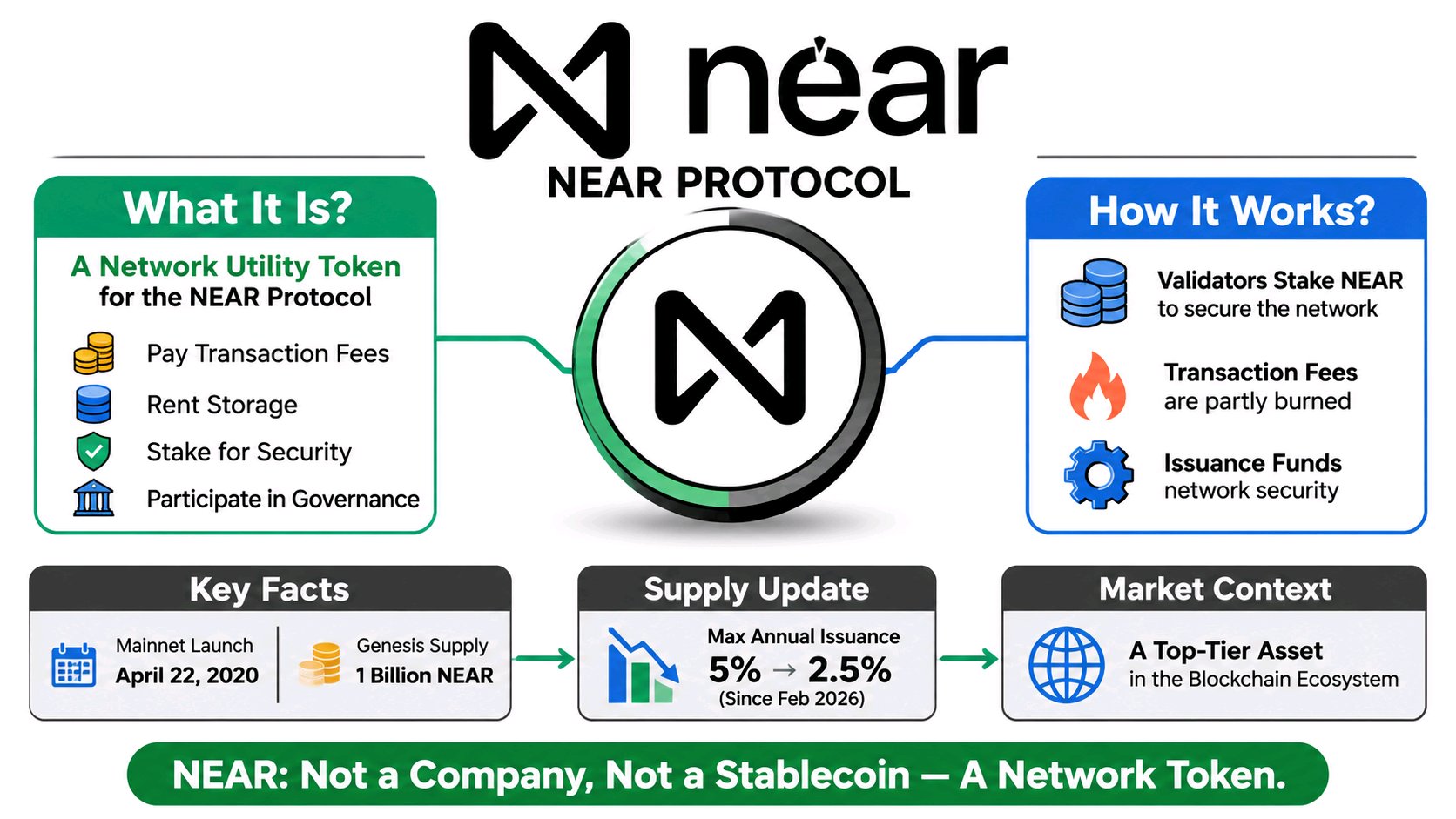
NYM may look like a privacy coin designed to hide transactions, but it is actually a utility token powering decentralized network privacy. NYM launched on the Nyx blockchain in February 2022 with a fixed initial supply of 1 billion tokens. It was designed to reward network operators, support staking, and facilitate access to Nym's privacy infrastructure. Nym +1 That distinction is easy to miss if you only read the headline. NYM does not represent ownership of Nym Technologies, a claim on company profits, or a dollar-pegged asset. Its economic role comes from network participation: users can exchange NYM for privacy-access credentials, node operators earn rewards for routing traffic, and holders can delegate tokens to nodes to build reputation and earn a share of rewards. Nym +1 The scale matters. A 1 billion token supply supports an infrastructure economy rather than a conventional privacy-currency model. NYM's value is tied to the demand for network services, staking participation, token distribution, and the economics of rewarding operators. There is no fixed-dollar redemption promise behind the token. Nym Docs +1 A privacy label describes the network. What matters is the utility and economic exposure of what you are actually holding. $NYMUSDT #ByXIMPACT
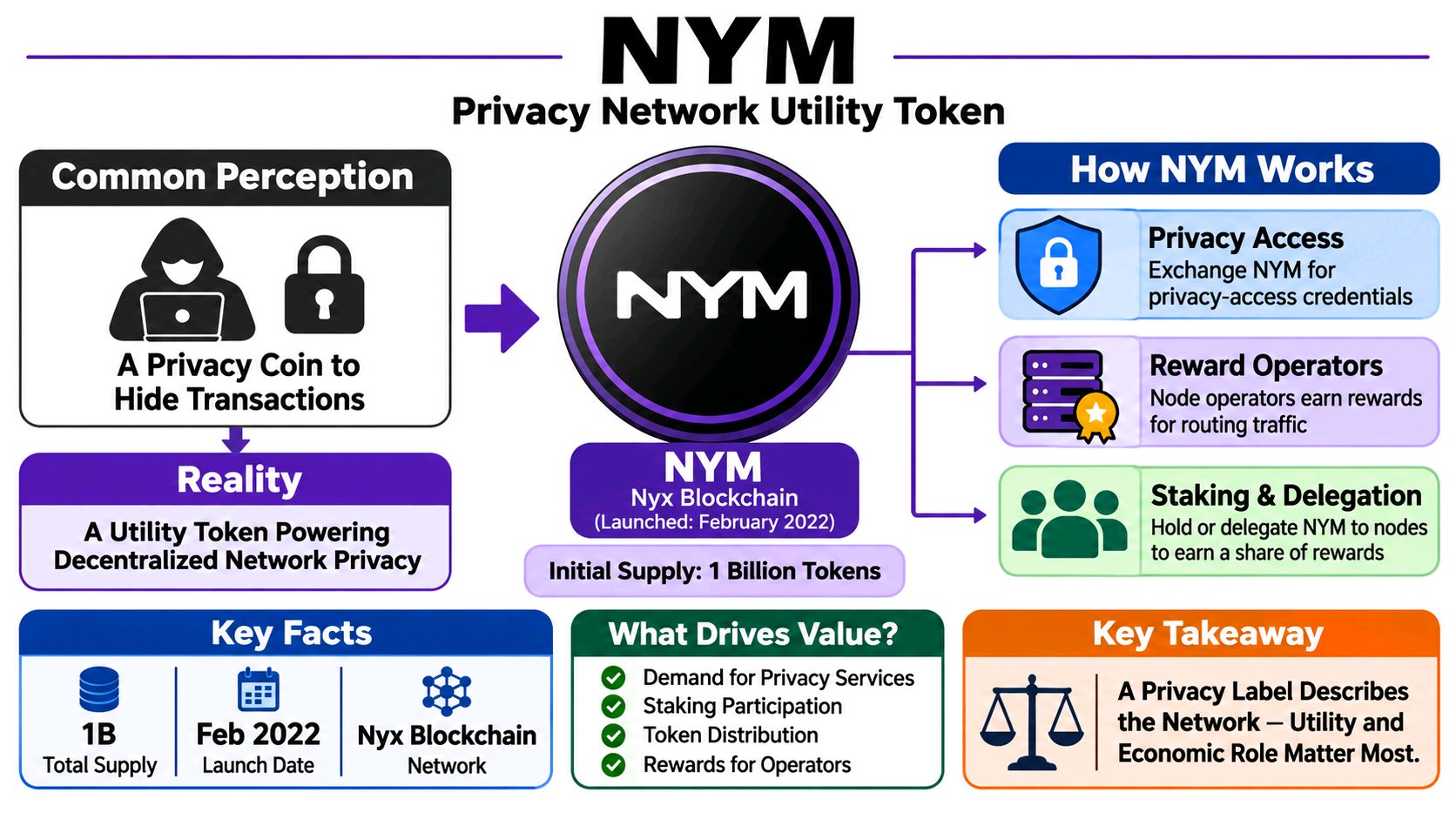
NIGHT may look like another privacy coin, but it is not designed to hide its own market value or represent a claim on private assets. It is the native capital and governance token of Midnight, with a separate resource called DUST handling network operations. Launched in December 2025 with a fixed total supply of 24 billion tokens, NIGHT was initially issued on Cardano. More than 4.5 billion tokens were claimed through the Glacier Drop and Scavenger Mine distribution phases. That distinction is easy to miss if you only read the headline. NIGHT is not a privacy-based stablecoin, a dollar-pegged asset, or a direct claim on underlying collateral. Holding NIGHT generates DUST, a non-transferable resource used to pay for transactions and execute smart contracts. Each NIGHT can generate up to 5 DUST over seven days. NIGHT also carries governance and long-term network participation functions. The economic separation matters. NIGHT represents the capital and governance side of the ecosystem, while DUST represents operational capacity. Its 24 billion token supply and phased community distribution make it a network asset rather than a conventional payment token. Community allocations also follow a scheduled unlocking process, not a fixed-value redemption promise. NIGHT is exposure to Midnight's network economics, not ownership of a private dollar reserve. The distinction is what you are actually holding. Sources: Midnight Network +3 #ByXIMPACT$NIGHTUSDT
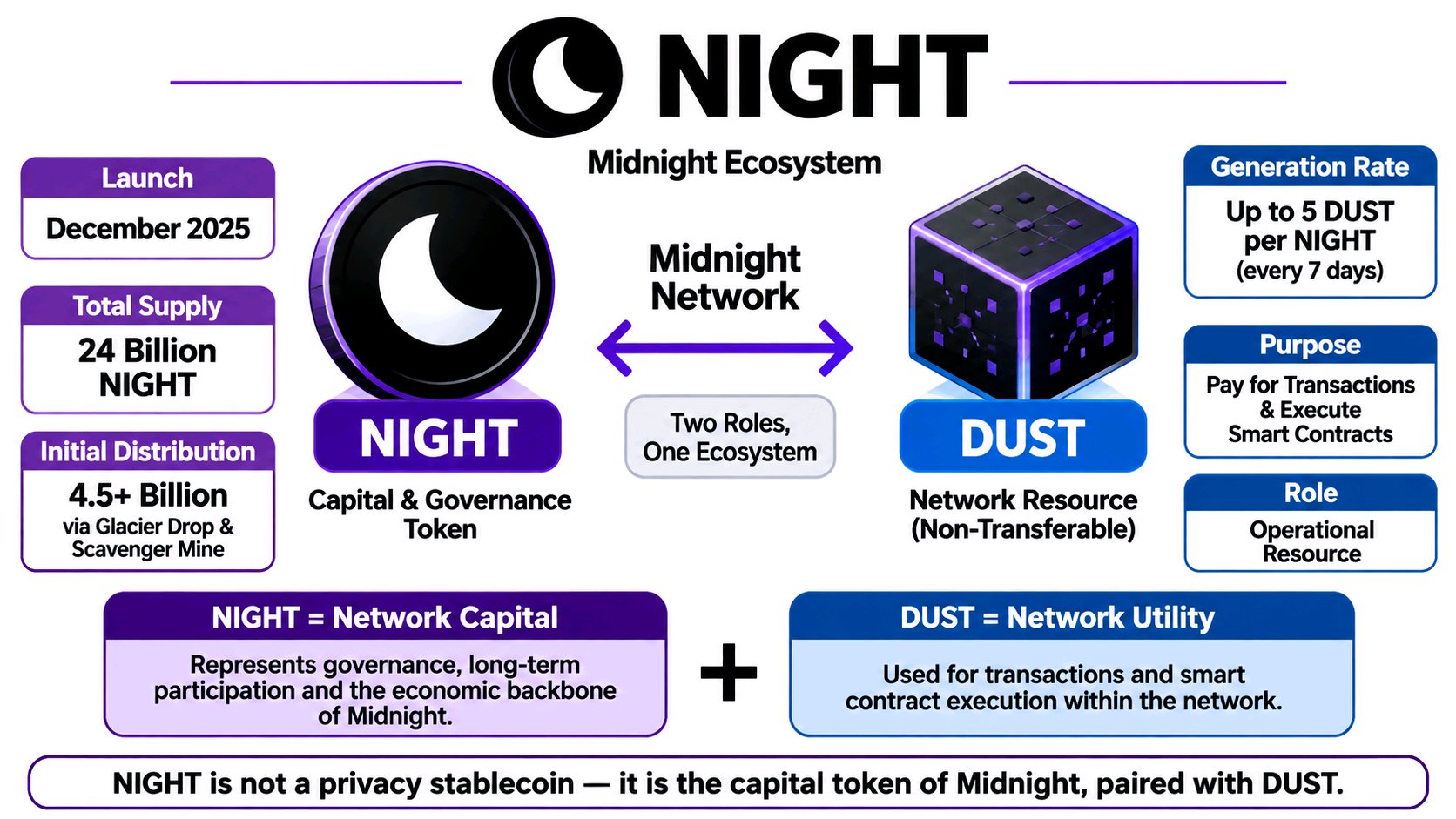
BNB may look like Binance's company token, but it is neither company stock nor a claim on Binance's profits. It is the native utility asset of the BNB Chain ecosystem, with its own market-driven price and declining supply mechanics. Launched in 2017 with an initial supply of 200 million BNB, the token was distributed through an ICO, founding allocations, and investor allocations. Its long-term supply target is 100 million tokens, supported by quarterly Auto-Burns and real-time gas-fee burning. SEC +2 That distinction is easy to miss if you only read the headline. Holding BNB does not give you equity in Binance, ownership of its assets, or a contractual right to its revenue. Instead, it provides exposure to the BNB ecosystem through transaction fees, staking, governance participation, and other network utilities. Its price depends on market demand, ecosystem activity, and supply dynamics. The scale matters: the original 200 million supply had fallen to approximately 131.5 million BNB after the 37th quarterly burn in October 2026. That is roughly 34% removed from the original supply. But burning tokens does not guarantee price appreciation, and a shrinking supply is not the same as a corporate profit claim. BNB Chain Blog +1 BNB is exposure to a blockchain ecosystem, not ownership of Binance. What matters is what you are actually holding. #ByXIMPACT $BNBUSDT
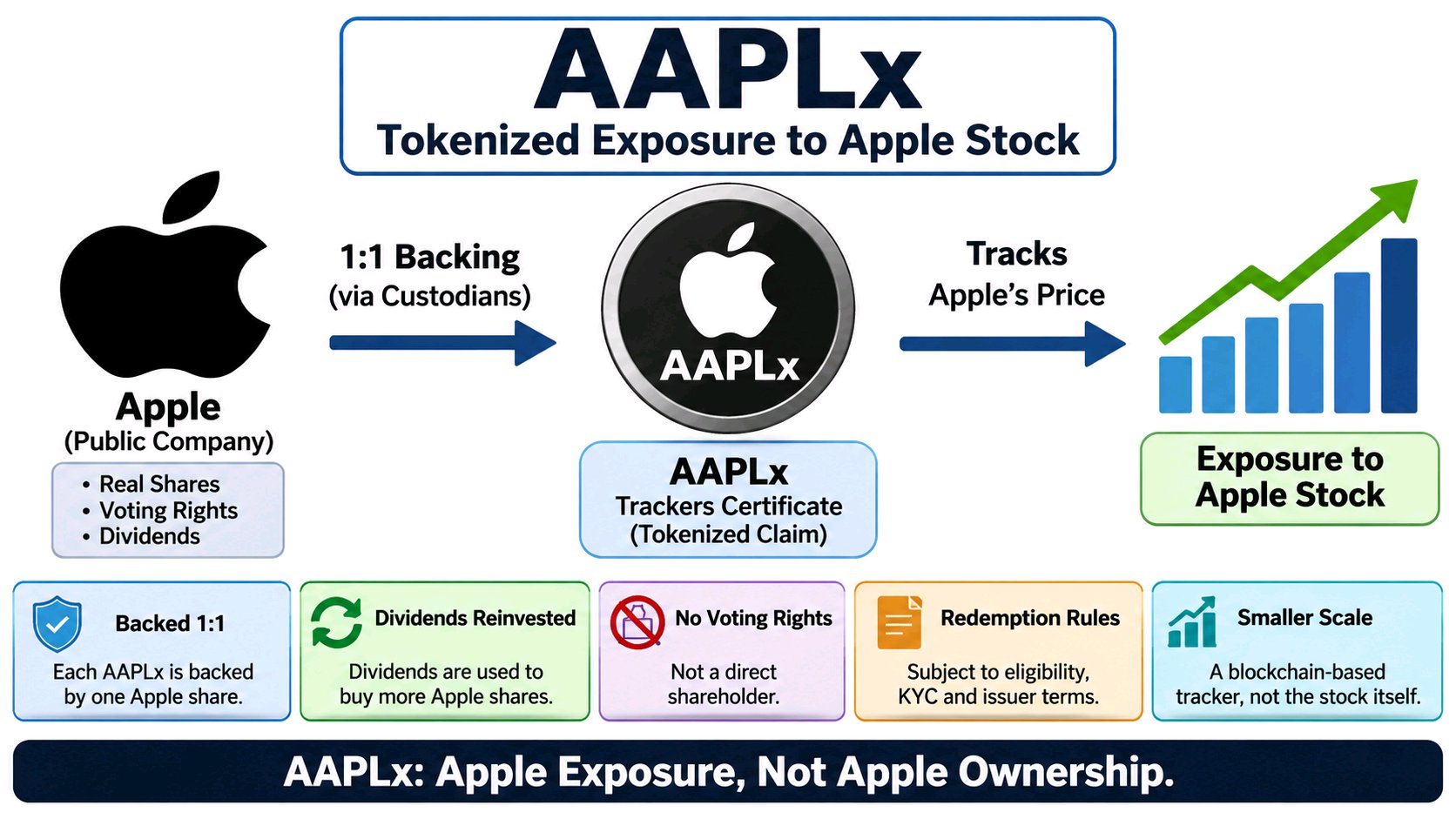
AAPLx may look like owning Apple stock on a blockchain, but it is actually a tokenized financial claim tracking Apple's share price, not direct equity ownership. Launched on June 10, 2025, through Backed Assets (JE) Limited, AAPLx is designed to represent economic exposure to one Apple share, backed 1:1 by underlying Apple stock held with regulated custodians. <Cite refs={["turn772448search0","turn772448search1"]}/> That distinction is easy to miss if you only read the headline. AAPLx is structured as a tracker certificate. Its value follows Apple's stock, while dividend payments are reinvested into additional underlying shares and reflected through token adjustments. Holders do not receive direct shareholder voting rights or become registered Apple shareholders. Redemption is subject to eligibility requirements, identity checks, minimum amounts and issuer terms. <Cite refs={["turn772448search12","turn772448search0","turn772448search7"]}/> The scale difference matters. Apple is a publicly traded company with a vast traditional equity market, while AAPLx represents a comparatively small, blockchain-based layer of exposure to that market. Its token supply and redemption structure do not make it equivalent to owning Apple shares directly. AAPLx puts Apple exposure on-chain, not Apple ownership in your hands. $AAPLXUSDT #ByXIMPACT
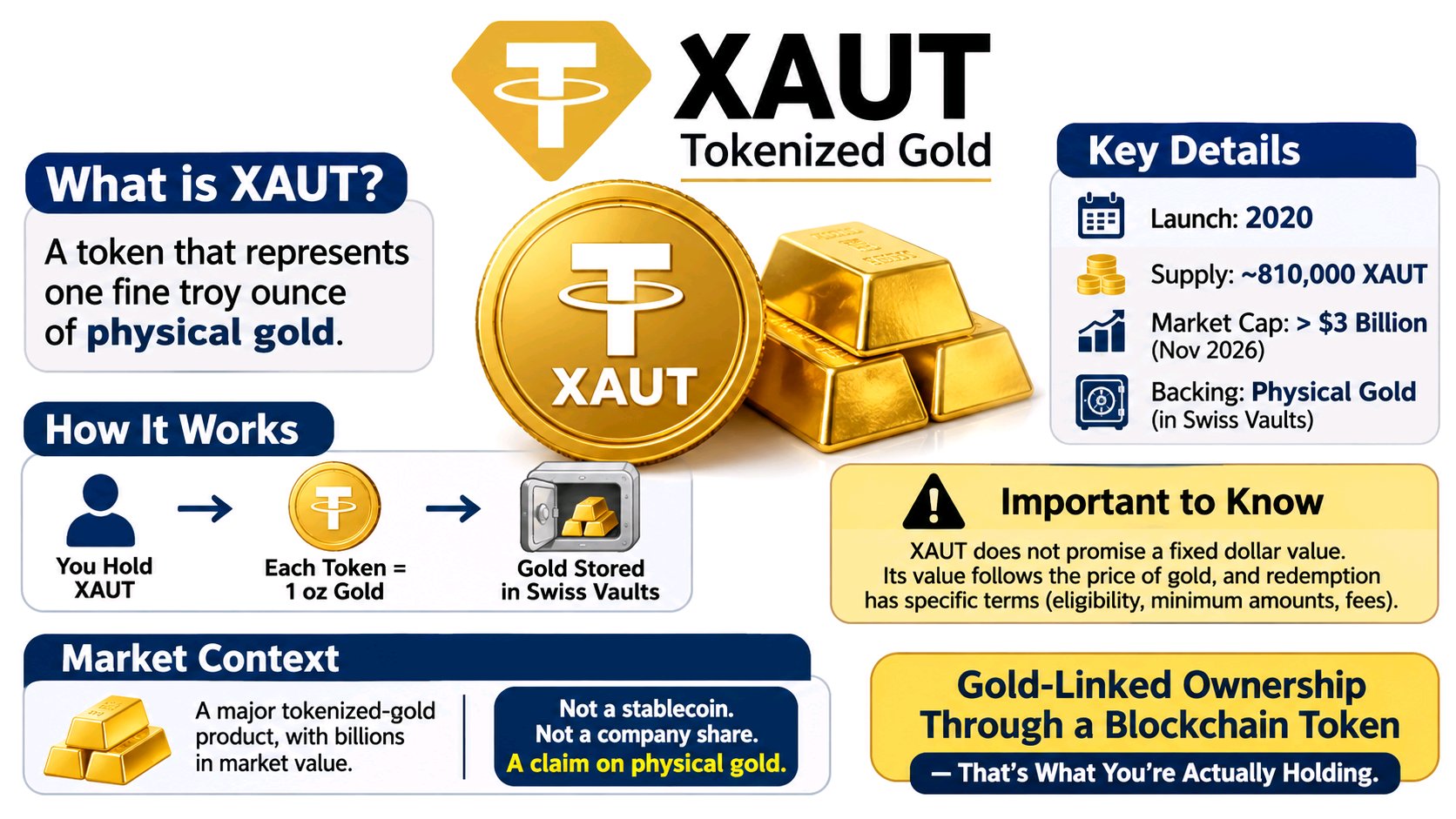
XAUT may look like another cryptocurrency that tracks gold, but it represents a claim to physical gold exposure rather than a dollar peg or ownership of a crypto company. Launched in 2020 by Tether, XAUT is designed so that each token represents one fine troy ounce of physical gold held in Swiss vaults. Its supply expands and contracts with token issuance and redemption. That distinction is easy to miss if you only read the headline. XAUT does not promise a fixed dollar value. Its economic value follows the market price of gold, while the holder's ability to redeem physical gold depends on Tether's eligibility requirements, minimum amounts, fees, and redemption terms. At roughly 810,000 circulating tokens and a market capitalization above $3 billion in November 2026, XAUT has become a significant tokenized-gold product. But its scale does not make it equivalent to holding freely accessible bullion. CoinGecko +1 The distinction is simple: gold-linked ownership exposure through a blockchain token is not the same as physically holding and controlling gold. XAUT is ultimately about what you are actually holding. #ByXIMPACT $XAUTUSDT
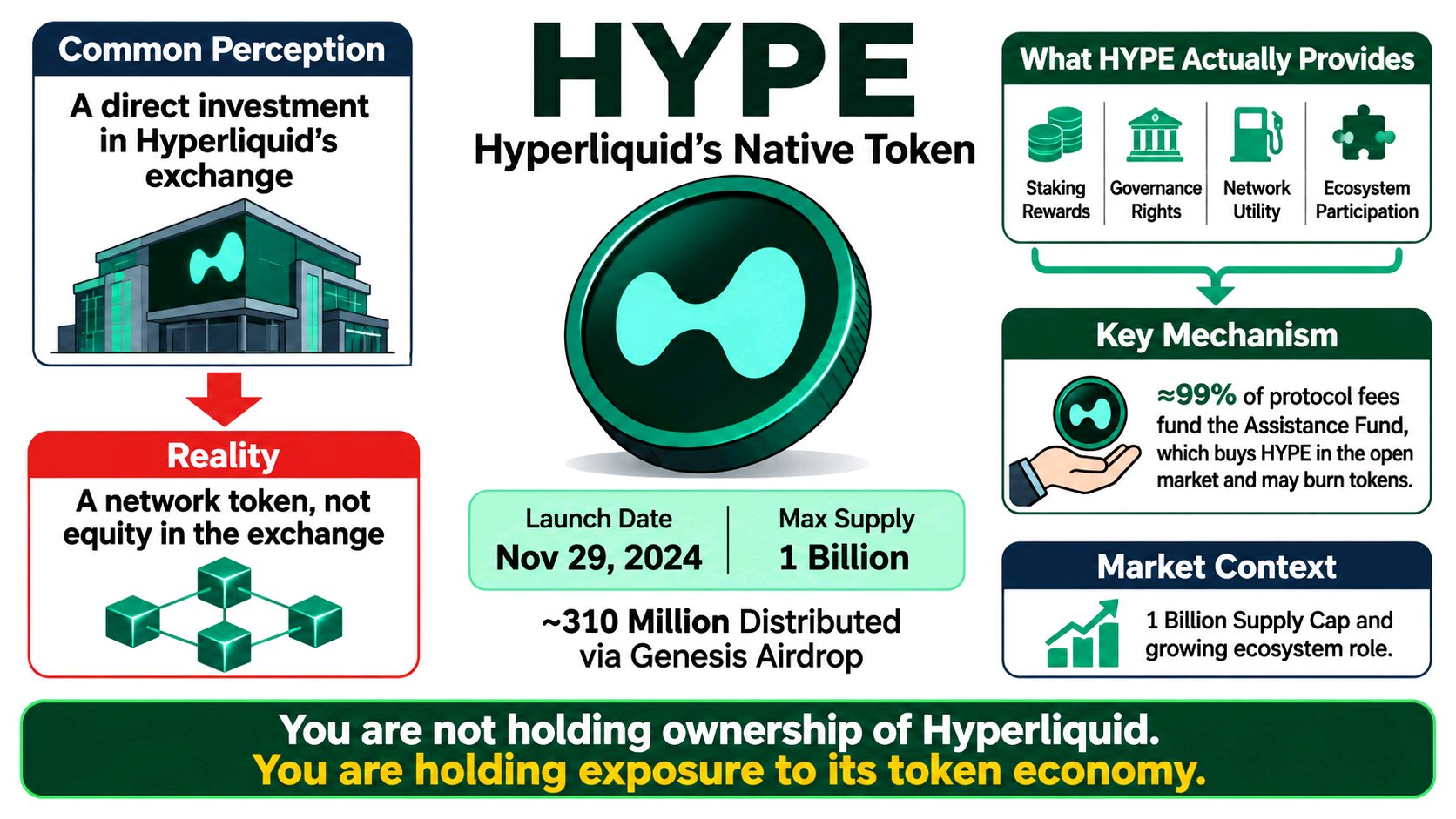
HYPE mungkin terlihat seperti investasi langsung di bursa Hyperliquid, namun sebenarnya ini adalah token jaringan yang nilainya bergantung pada permintaan pasar, aktivitas protokol, dan ekonomi token. Diluncurkan pada 29 November 2024, HYPE memiliki pasokan maksimum 1 miliar token, dengan sekitar 310 juta didistribusikan kepada pengguna awal melalui airdrop genesis-nya. Perbedaan itu mudah terlewat jika Anda hanya membaca judulnya saja. Memegang HYPE tidak berarti memiliki saham di Hyperliquid atau memiliki klaim hukum langsung atas pendapatannya. Token ini menyediakan utilitas untuk staking, tata kelola, biaya jaringan, dan partisipasi ekosistem. Eksposur ekonominya berasal dari permintaan terhadap token dan mekanisme yang menghubungkan aktivitas protokol dengan pembelian token. Salah satu mekanisme penting adalah Dana Bantuan (Assistance Fund). Sekitar 99% dari biaya protokol dialokasikan ke sana, mendanai pembelian HYPE di pasar terbuka, dengan token yang diperoleh berpotensi untuk dibakar (burned). Ini menciptakan hubungan antara aktivitas bursa dan permintaan token, tetapi tidak menjamin kenaikan harga atau memberikan pemegang klaim dividen langsung. Dengan batas pasokan 1 miliar token dan peran yang terus berkembang di seluruh infrastruktur perdagangan dan blockchain Hyperliquid, HYPE lebih dari sekadar aset spekulatif yang terkait dengan bursa. Namun, ini juga bukan ekuitas di bursa tersebut. Anda tidak memegang kepemilikan Hyperliquid. Anda memegang eksposur terhadap ekonomi tokennya. #ByXIMPACT
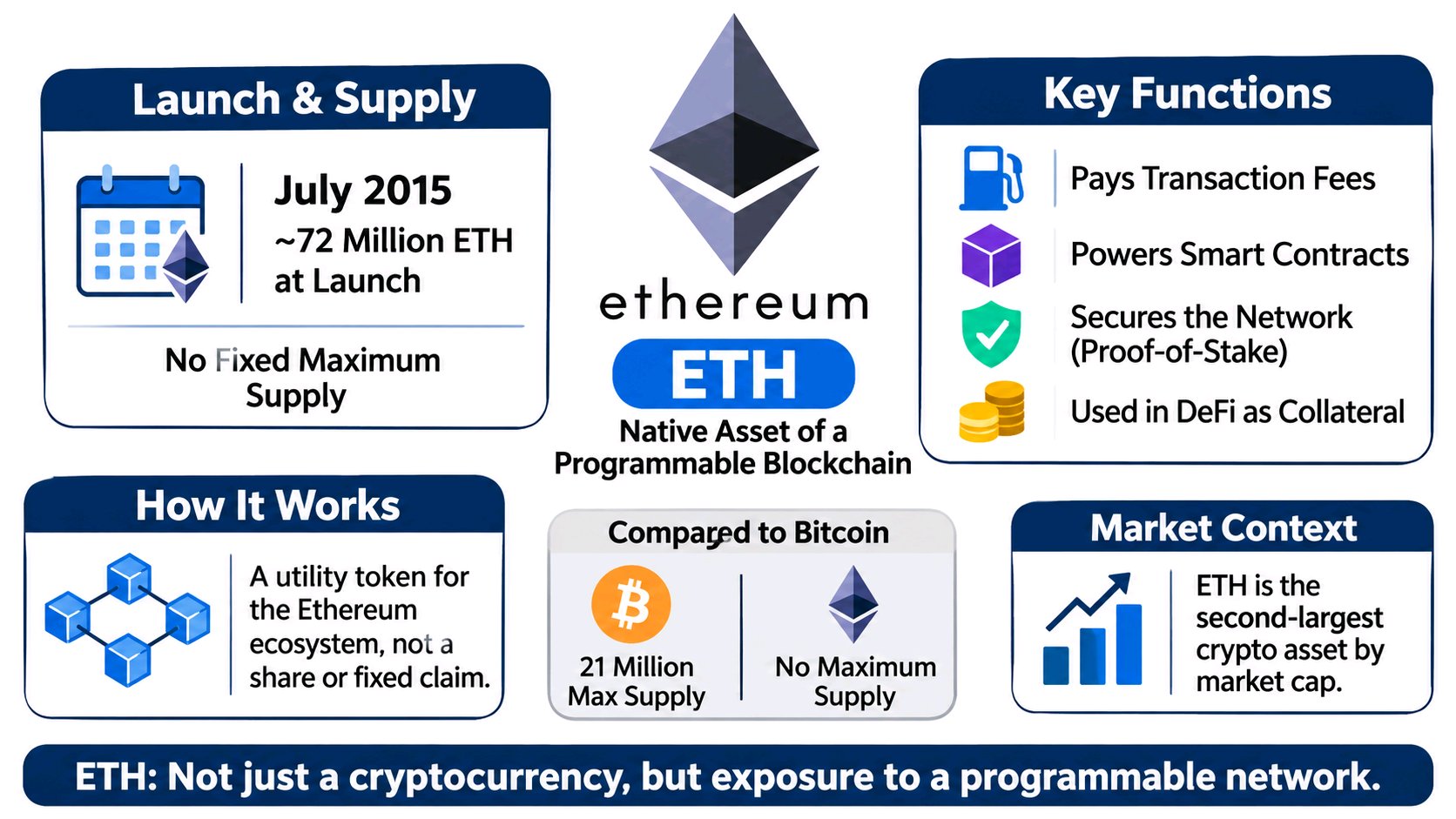
Ethereum may be described as another cryptocurrency competing with Bitcoin, but ETH is fundamentally different: it is the native asset of a programmable blockchain, not a claim on a company or a fixed-value asset. Ethereum launched in July 2015 with an initial supply of approximately 72 million ETH. Unlike Bitcoin’s fixed 21 million supply cap, ETH has no permanent maximum supply. That distinction is easy to miss if you only read the headline. ETH serves multiple economic functions within Ethereum. It pays transaction fees, powers smart-contract execution, secures the network through staking, and acts as collateral across decentralized finance. Since Ethereum introduced proof-of-stake in September 2022, validators have staked ETH to help secure the network and earn rewards. Meanwhile, transaction-fee burning can remove ETH from circulation, meaning supply changes through both issuance and destruction. The important difference is that ETH's economic exposure comes from demand for blockspace, network security, staking, and its role as an asset within the Ethereum ecosystem. It does not provide shareholders' rights, guaranteed income, or a fixed redemption value. Its supply dynamics also differ significantly from Bitcoin's predetermined issuance schedule. ETH is not simply a bet on a cryptocurrency price; it is exposure to the economic activity and security of a blockchain network. What matters is not just the name, but what you are actually holding. #ByXIMPACT $ETHUSDT
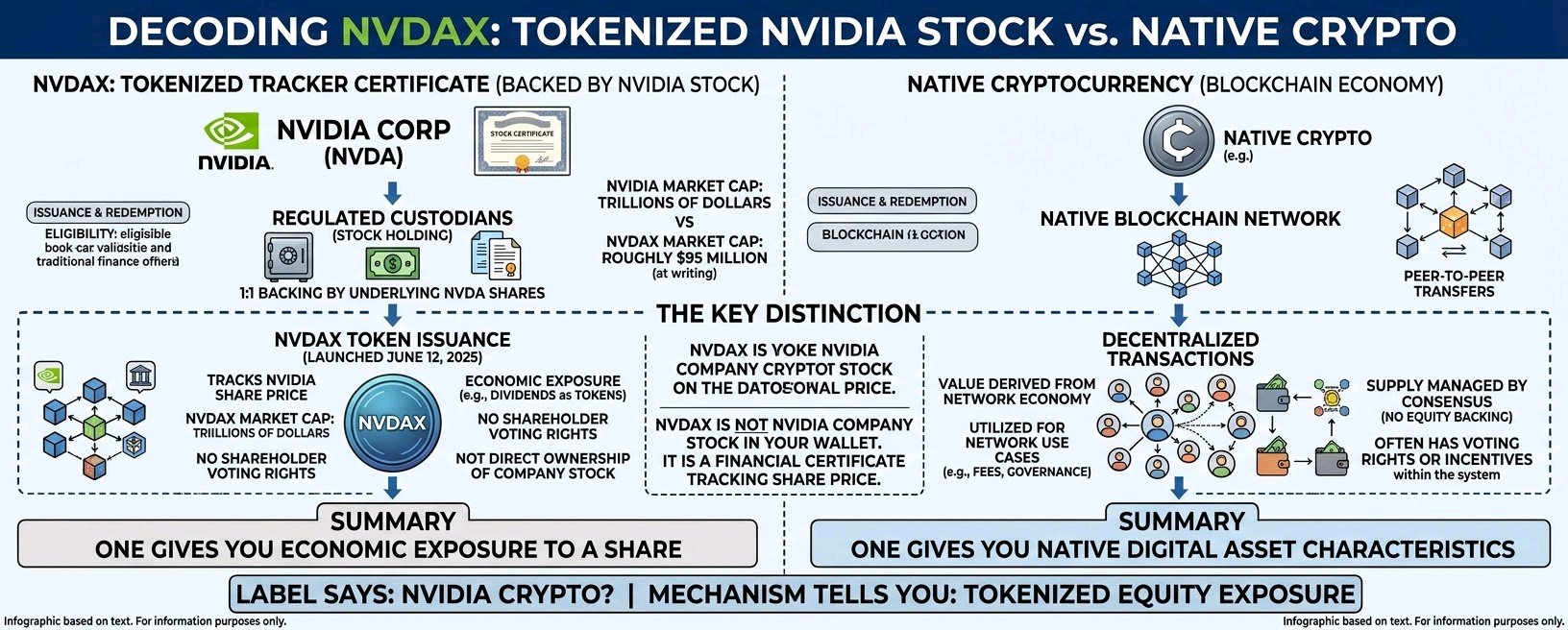
NVDAX may look like an NVIDIA cryptocurrency, but its value comes from NVIDIA stock, not from a native blockchain economy. Launched on June 12, 2025, NVIDIA xStock is issued as a tokenized tracker certificate. Each NVDAX represents economic exposure to one NVIDIA share and is backed 1:1 by the underlying stock held through regulated custodians. That distinction is easy to miss if you only read the headline. NVDAX is not NVIDIA company stock in your wallet. It is a financial certificate designed to track NVIDIA's share price. Holders receive economic exposure, including dividend value reflected through additional tokens, but do not receive shareholder voting rights or direct ownership of the underlying shares. Issuance and redemption operate under eligibility requirements and product terms, rather than unrestricted conversion. The scale difference matters. NVIDIA is a major publicly traded company with a market valuation measured in trillions of dollars, while NVDAX represents a much smaller tokenized market, with roughly $95 million in reported market capitalization at the time of writing. It brings traditional equity exposure onto blockchain networks without turning that exposure into a native NVIDIA cryptocurrency. One gives you ownership of a share through traditional equity markets; the other gives you tokenized economic exposure to that share. The label says NVIDIA crypto. The mechanism tells you what you are actually holding. #ByXIMPACT$NVDAXUSDT
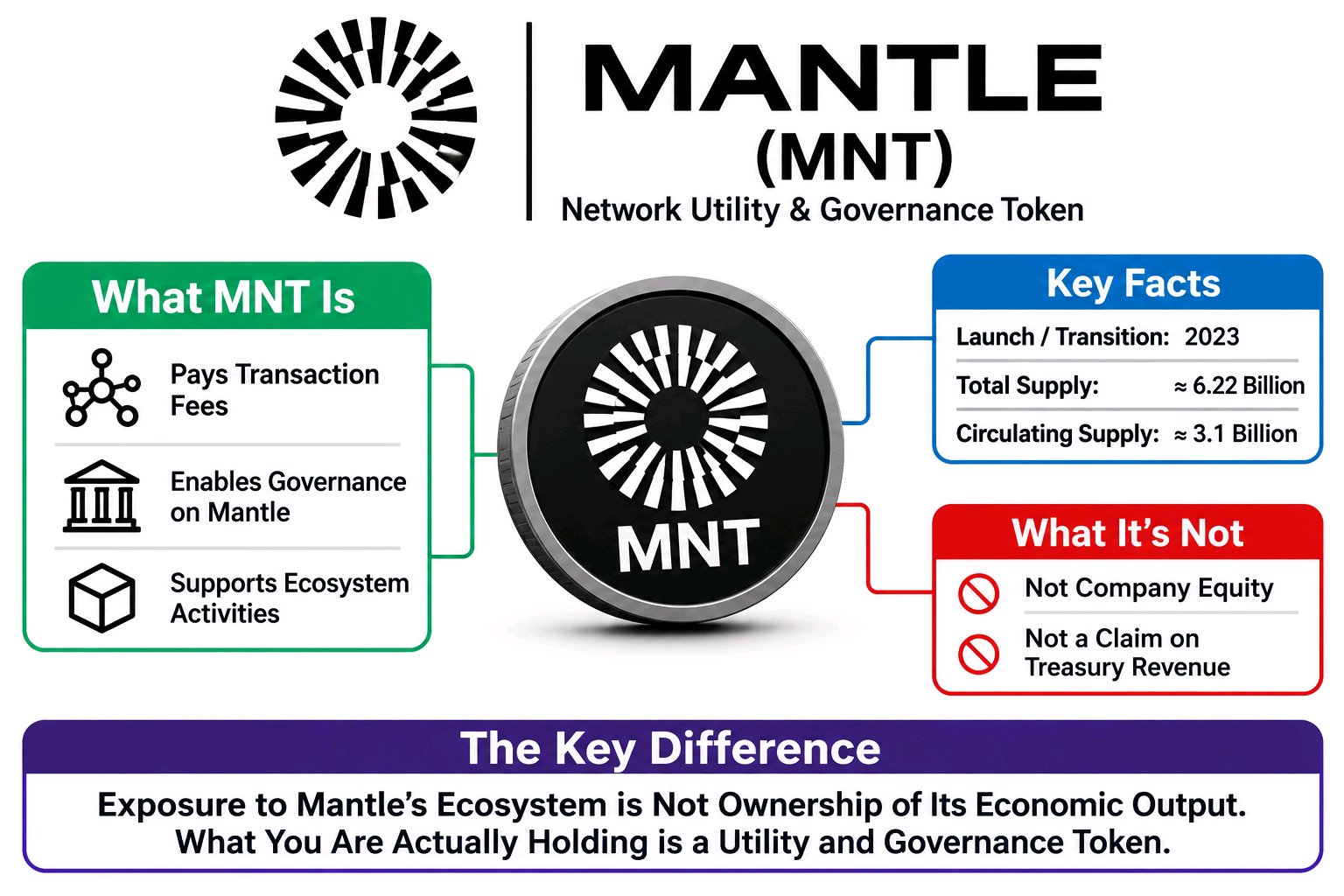
MNT may look like a bet on Mantle's growth, but it is not company equity or a direct claim on network revenue. It is a network utility and governance token whose value depends on ecosystem demand and market exposure. Mantle emerged from BitDAO's transition in 2023, with BIT converting into MNT at a 1:1 ratio. Following a governance-approved decision not to convert 3 billion BIT, the total MNT supply was reduced to approximately 6.22 billion tokens. That distinction is easy to miss if you only read the headline. MNT gives holders several functions: paying transaction fees on Mantle Network, participating in DAO governance, and supporting ecosystem activities. But holding MNT does not provide ownership of Mantle, guaranteed income, or a contractual right to redeem tokens for treasury assets or network revenue. The supply structure adds another important detail. Approximately 3.1 billion MNT is circulating, while roughly 3.0 billion remains in the Mantle treasury, subject to governance-controlled allocation. This means treasury decisions and future token distribution matter alongside network adoption. Unlike an equity instrument, MNT does not automatically give holders a share of business profits. Its exposure comes from network utility, governance influence, ecosystem demand, and market expectations. The difference is simple: exposure to Mantle's ecosystem is not ownership of its economic output. What matters is what you are actually holding. #ByXIMPACT$MNTUSDT
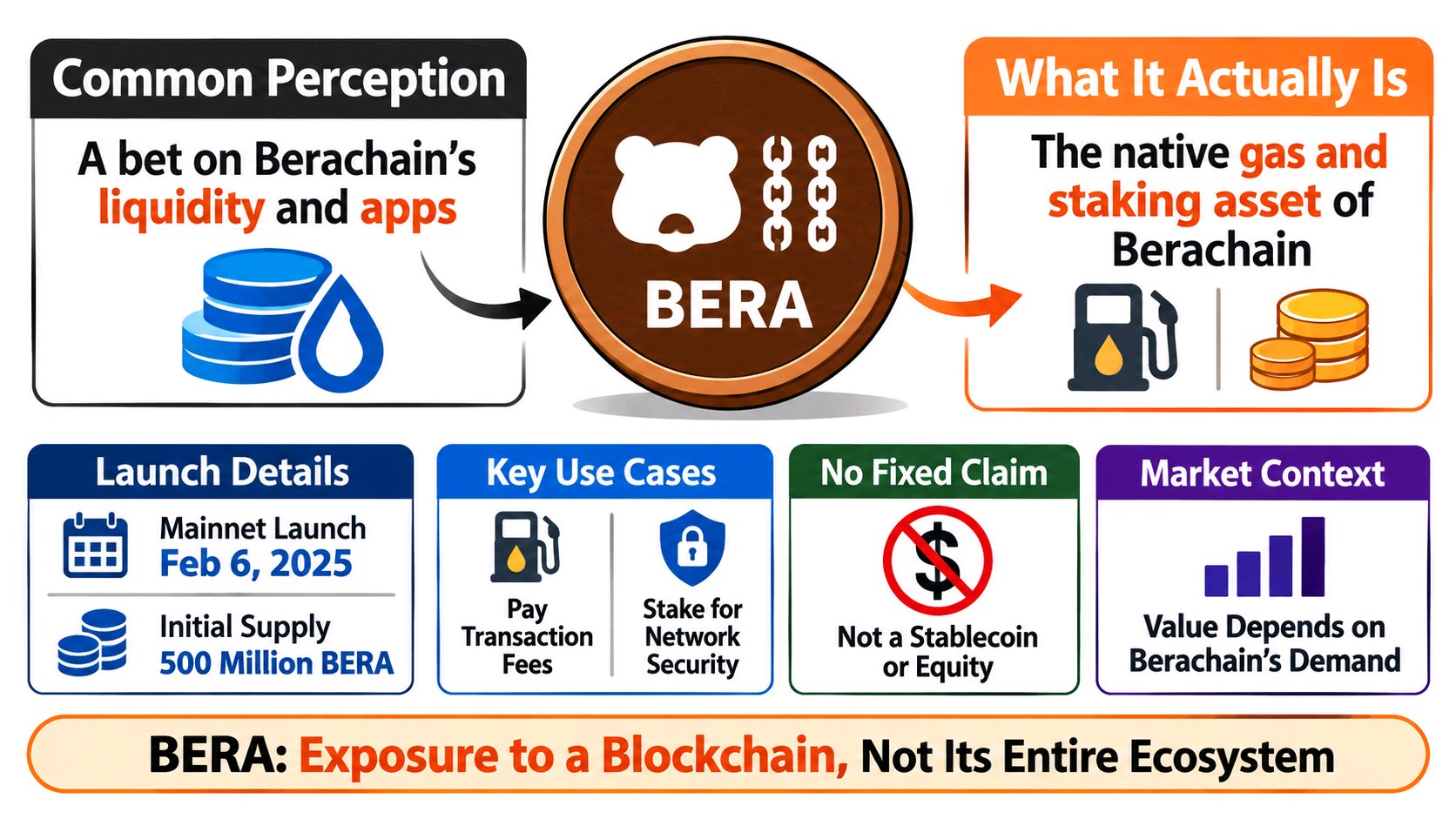
BERA may look like a bet on Berachain’s Proof-of-Liquidity ecosystem, but it is not a claim on the network’s locked liquidity or application revenues. It is the network’s native gas and staking asset, whose value depends on demand for Berachain itself. Berachain launched its mainnet on February 6, 2025, with an initial supply of 500 million BERA. The token is used to pay transaction fees and stake validators responsible for securing the network. The Block +1 That distinction is easy to miss if you only read the headline. BERA gives holders exposure to the economic demand for Berachain’s infrastructure, not direct ownership of its applications, liquidity pools, or ecosystem businesses. Its market value is determined by supply, demand, network activity, and expectations about future adoption. It is not backed by dollars, redeemable for a fixed price, or equivalent to equity in Berachain. The scale matters. A 500-million-token genesis supply establishes a substantial initial distribution, but it does not establish a corresponding amount of collateral or guaranteed economic value. Unlike a stablecoin, BERA has no fixed-dollar redemption promise. Crypto Asset Statement +1 The distinction is simple: owning BERA means holding exposure to a blockchain's native economic asset, not owning the value of everything built on it. #ByXIMPACT $BERAUSDT
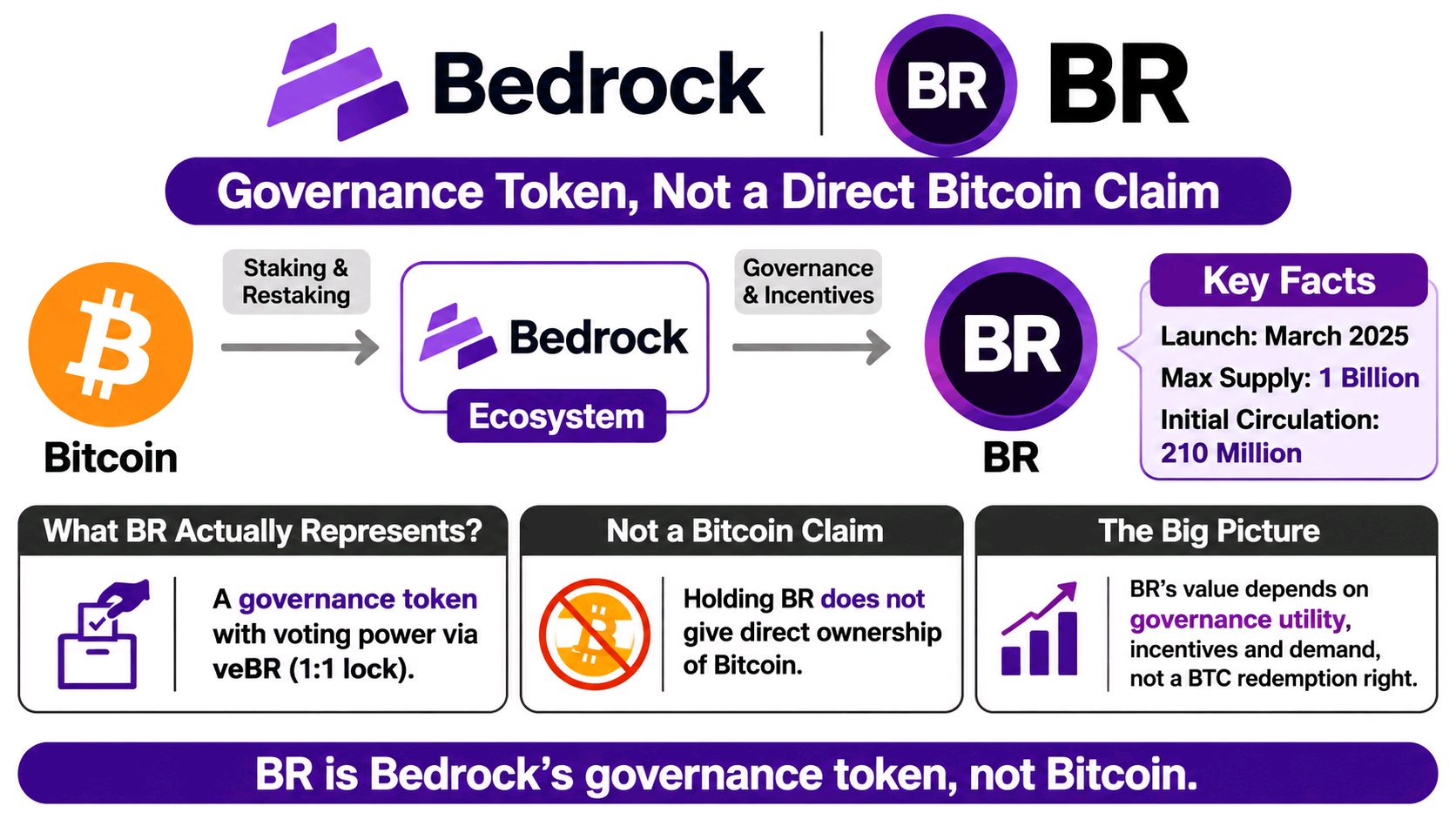
BR may look like a direct bet on Bitcoin restaking, but it is not a claim on Bitcoin or the assets deposited into Bedrock. Bedrock introduced BR in March 2025 with a maximum supply of 1 billion tokens and an initial circulating allocation of 210 million BR. That distinction is easy to miss if you only read the headline. BR is primarily a governance and incentive token. Holders can lock BR at a 1:1 ratio to receive veBR, which provides voting power over protocol decisions and incentive distribution. The longer the lock, the greater the voting power. Bedrock's Bitcoin exposure comes through separate products such as uniBTC, its liquid-staking token. Holding BR does not give holders direct ownership of Bitcoin, a fixed BTC redemption right, or an automatic claim on protocol deposits and yield. The difference matters at scale: Bedrock's ecosystem handles Bitcoin-related staking and restaking, while BR has a separate 1 billion-token supply and a governance-based economic role. Its value depends on market demand, governance utility, incentives, and token supply dynamics rather than a guaranteed relationship with Bitcoin reserves. BR represents participation in Bedrock's governance economy, not ownership of the Bitcoin behind its products. What matters is what you are actually holding.#ByXIMPACT $BRUSDT
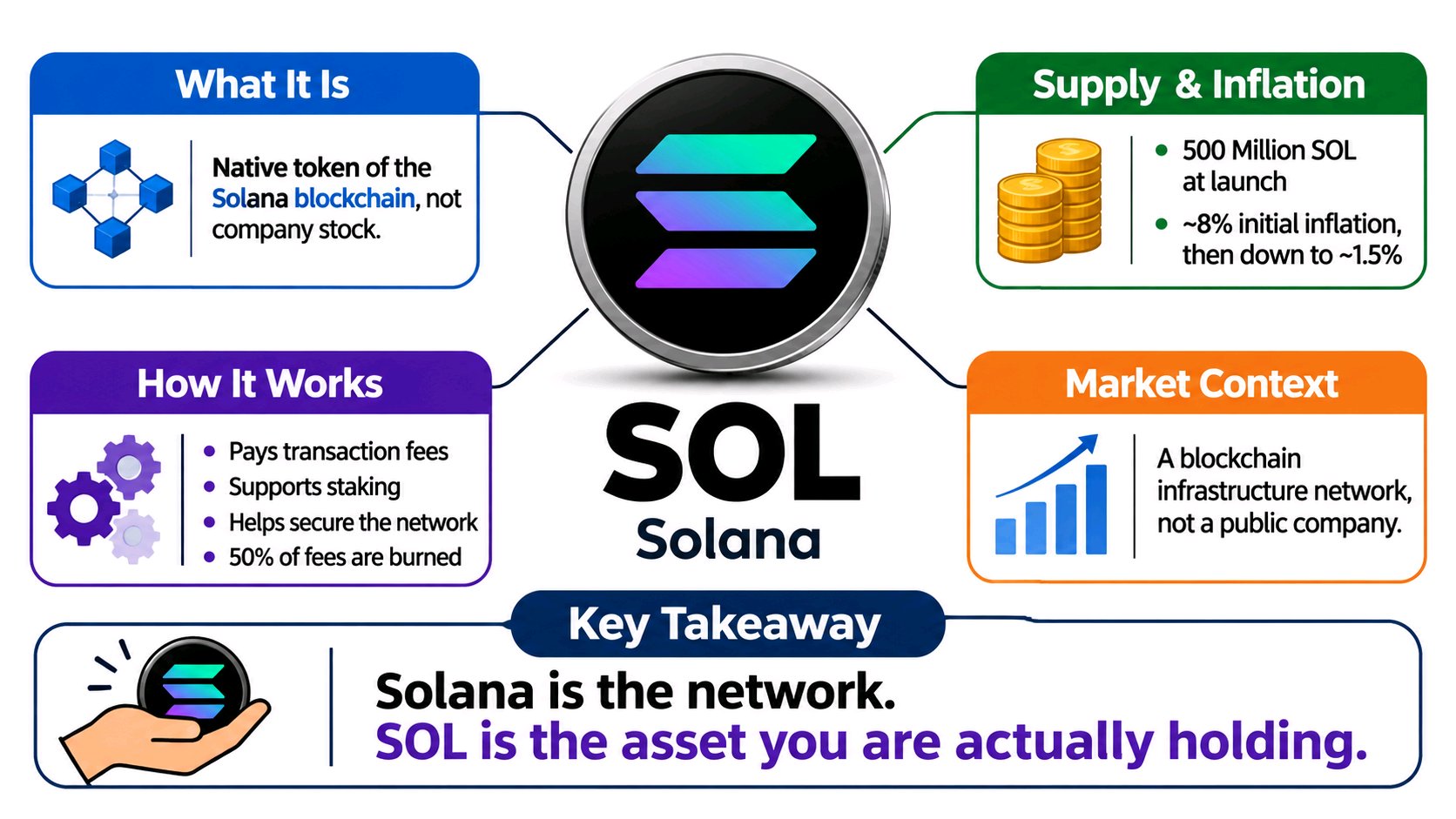
SOL may look like a bet on Solana's growth, but it is neither company stock nor a fixed-value digital asset. It is the native token powering the Solana blockchain, with market value driven by network demand, token supply, and investor expectations. At launch, 500 million SOL were created in the network's genesis allocation. Unlike Bitcoin, which relies on mining for new issuance, SOL follows a protocol-based inflation schedule, initially set at 8% annually and designed to decline toward 1.5%. That distinction is easy to miss if you only read the headline. Holding SOL does not give investors ownership of Solana Labs, a claim on company profits, or a right to redeem tokens for dollars. SOL is used to pay transaction fees, participate in staking, and support the network's proof-of-stake security. Its supply expands through staking-related issuance, while 50% of transaction fees are burned. The scale matters. Solana is a blockchain infrastructure network, not a publicly traded technology company. Its economic activity can influence demand for SOL, but network adoption does not automatically translate into guaranteed token appreciation. Holders also face dilution from new issuance and changing market demand. Solana is the network. SOL is the asset you are actually holding. SEC +2 #ByXIMPACT $SOLUSDT