Suhaif
10691Suka0Pembagian222Penggemar20Ikuti
dex hunter
dex hunter
CPI: Inflasi Tetap Menjadi Risiko Pasar Utama
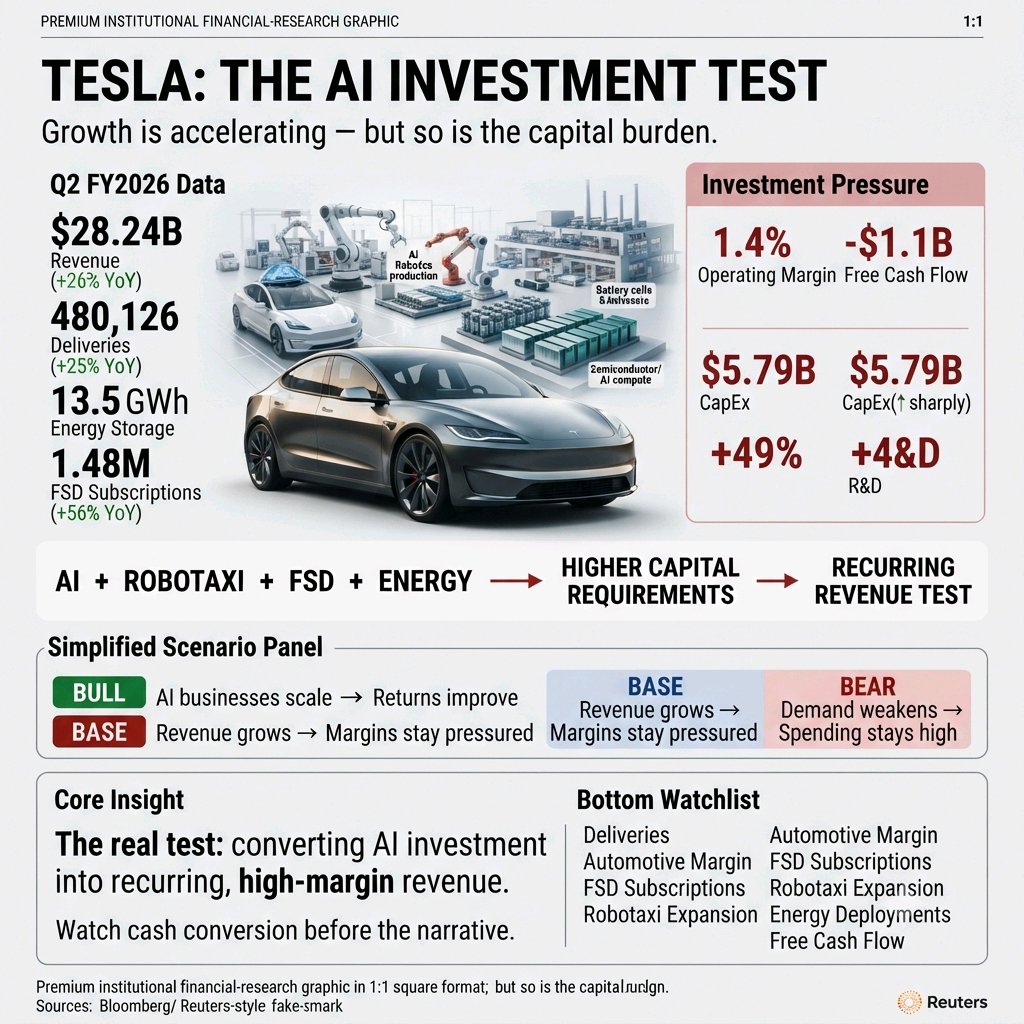
Laporan CPI terbaru meredakan kekhawatiran akan kejutan inflasi lainnya, tetapi tidak menghilangkan masalah tersebut. Headline CPI tercatat di angka 3,4% YoY, sementara Core CPI berada di 2,4%. Keduanya tidak lebih panas dari perkiraan, memberikan sedikit kelegaan pada aset berisiko dan membantu BTC bergerak lebih tinggi. Namun, sinyal yang lebih besar mungkin datang dari PPI. PPI kemarin tercatat sebesar 5,4% YoY, menunjukkan bahwa tekanan harga di tingkat produsen masih tinggi. Jika biaya-biaya tersebut terus berlanjut ke dalam ekonomi, CPI bisa tetap bertahan tinggi untuk waktu yang lebih lama. Hal itu menciptakan tiga kemungkinan hasil: Skenario Bull (Optimis): Inflasi terus mendingin → Imbal hasil Treasury turun → Ekspektasi The Fed menjadi lebih dovish → BTC dan aset berisiko mendapatkan dukungan. Skenario Dasar: Inflasi tetap bertahan tinggi → The Fed tetap berhati-hati → pasar terus bereaksi terhadap setiap rilis makro. Skenario Bear (Pesimis): Tekanan PPI masuk ke dalam CPI → inflasi meningkat kembali → ekspektasi pemotongan suku bunga melemah → imbal hasil naik → BTC menghadapi tekanan baru. Kesimpulan pasar CPI memberikan kelegaan pada pasar, bukan kepastian. Saya sedang memantau: • Imbal hasil Treasury • Ekspektasi suku bunga The Fed • Tekanan PPI terhadap CPI • Reaksi BTC di sekitar $80.000 • Volume di balik setiap breakout Risiko sebenarnya bukanlah satu data CPI yang panas. Risikonya adalah inflasi yang bertahan cukup tinggi untuk menjaga The Fed tetap restriktif lebih lama. #ByXIMPACT $BTCUSDT $HYPEUSDT

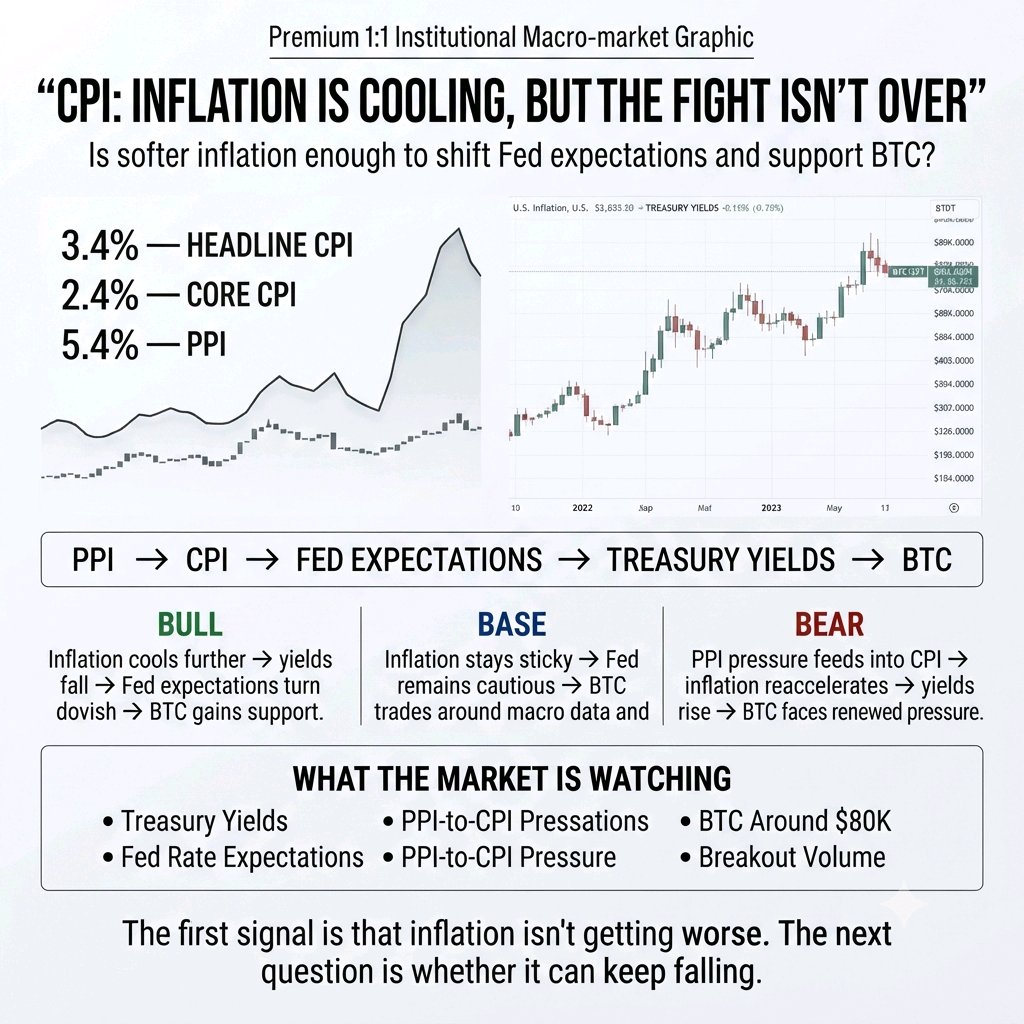
Gold and Solana are both pushing higher, but the reasons behind the moves are very different. Spot gold climbed 1.2% to $4,390.11 as easing oil prices reduced some inflation pressure. SOL, meanwhile, jumped 11.5% on September 18, reaching $114.13 before holding above $113. That difference matters. Gold is reacting mainly to macro conditions: oil, inflation expectations, Treasury yields and Fed expectations. SOL is reacting more like a high-beta risk asset, with its rebound coming after a sharp move down toward $97 earlier in the week. So I'm watching whether both moves can hold after the initial reaction. Gold: $4,400 is the immediate test. Holding above $4,350 would keep the recovery structure intact, while renewed pressure from yields or oil could change the setup. SOL: $114 is the immediate resistance area. Holding above $110 would keep the recent breakout attempt constructive, while losing $100 would weaken the recovery. The interesting part isn't that Gold and SOL are both rising. It's whether their respective catalysts can keep supporting the moves after the first wave of buying fades. I'm watching: • Gold around $4,400 • SOL around $114 • U.S. Treasury yields • Crude oil prices • Fed expectations • Volume behind the rebounds Different assets. Different drivers. But both now need confirmation that buyers can hold the gains. #ByXIMPACT $XAUTUSDT $SOLUSDT
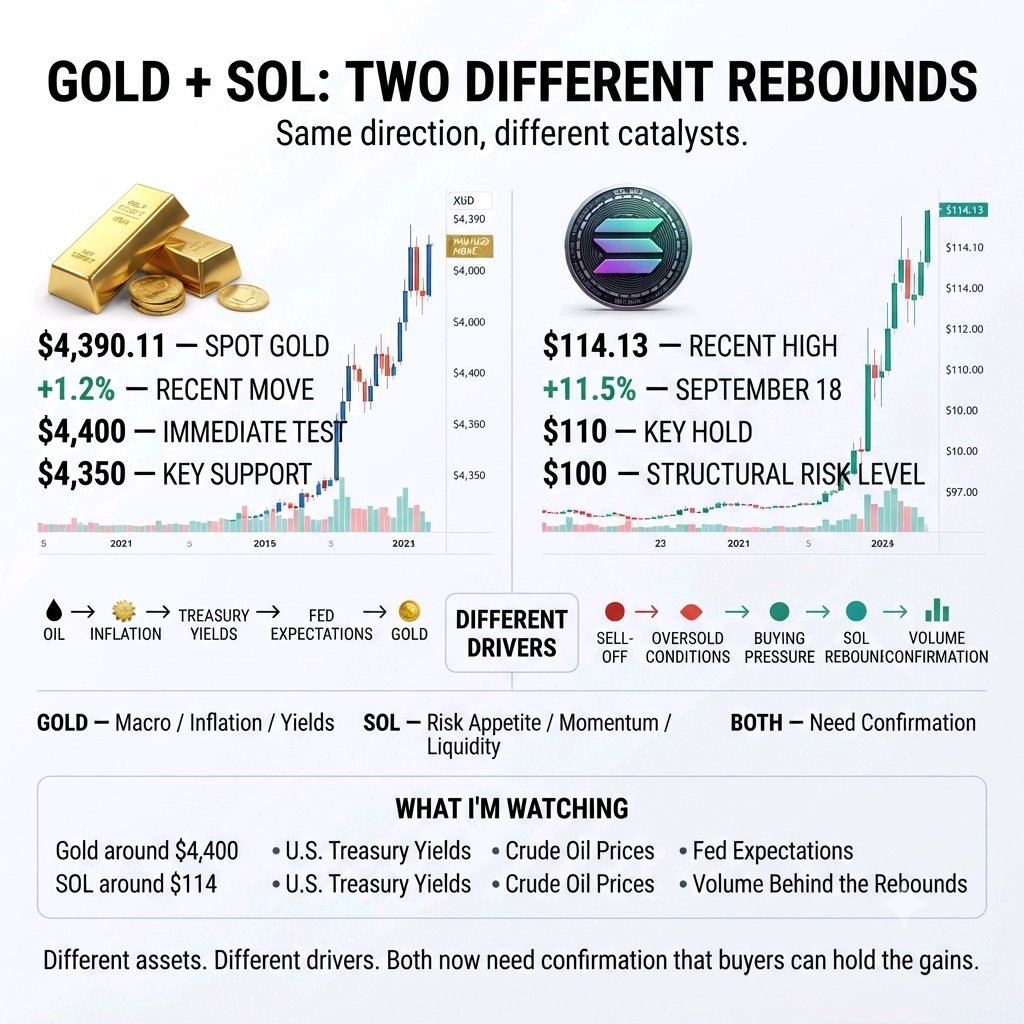
Gold & Circle: Risk Is Being Repriced
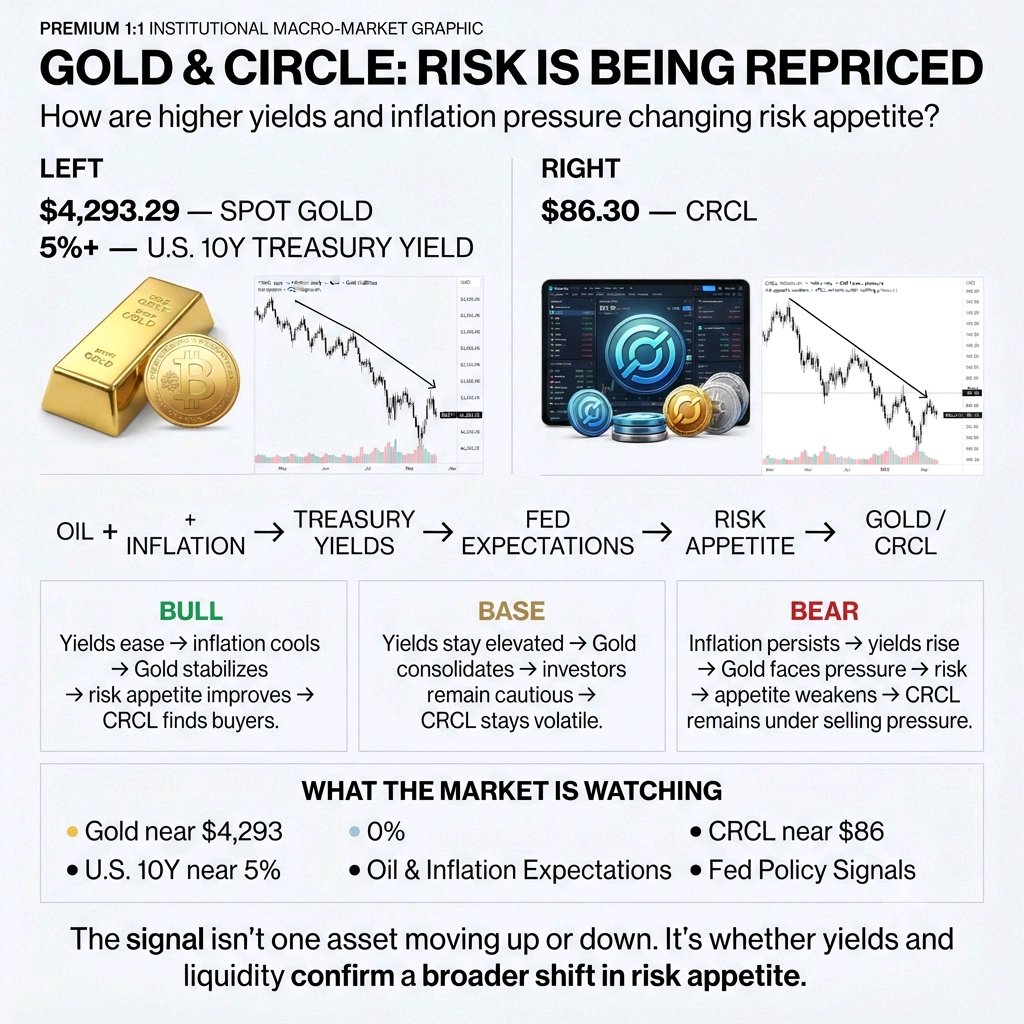
Gold has been under pressure as rising oil prices, inflation concerns and higher Treasury yields push rate-hike expectations higher. Spot gold recently fell to $4,293.29, while the 10-year Treasury yield moved above 5%. But the interesting part isn't the gold decline itself. It's how investors are repricing risk across different parts of the market. Circle ($CRCL) has also faced heavy selling pressure, with the stock recently trading around $86.30. Crypto-linked equities remain sensitive to changes in risk appetite, making CRCL another useful asset to watch alongside broader market conditions. That creates three possible outcomes: Bull case: Treasury yields ease → inflation pressure cools → Gold stabilizes → risk appetite improves → CRCL finds buyers. Base case: Yields remain elevated → Gold consolidates → investors stay cautious → CRCL remains volatile. Bear case: Inflation pressure persists → yields rise further → Gold faces more pressure → risk appetite weakens → CRCL remains under selling pressure. Market takeaway Gold is showing how macro pressure is being priced into defensive assets, while CRCL shows how the same risk-off environment can affect crypto-linked equities. I'm watching: • Gold around $4,293 • U.S. 10Y yield near 5% • Oil and inflation expectations • CRCL around $86 • Fed policy signals The key isn't whether one asset moves higher or lower. It's whether yields and liquidity start confirming a broader shift in risk appetite. #ByXIMPACT $XAUTUSDT $CRCLXUSDT
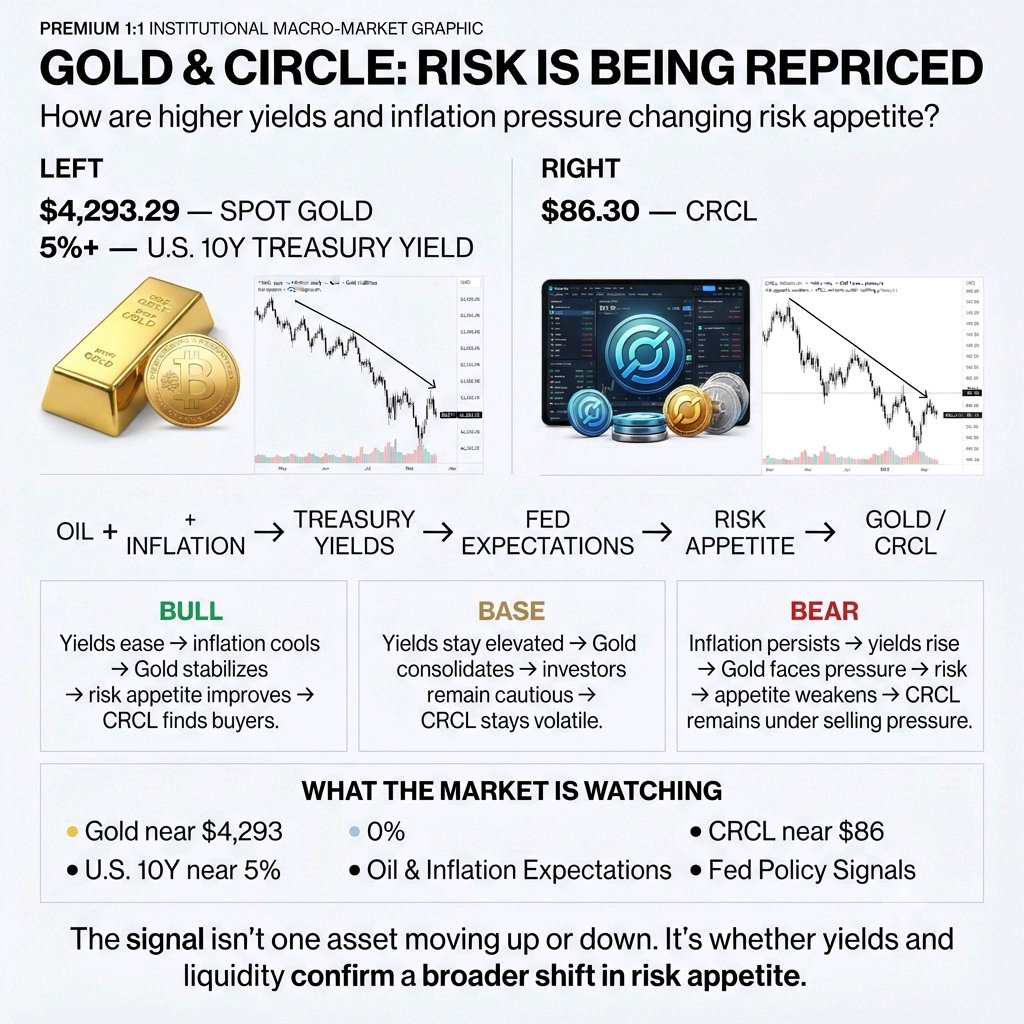
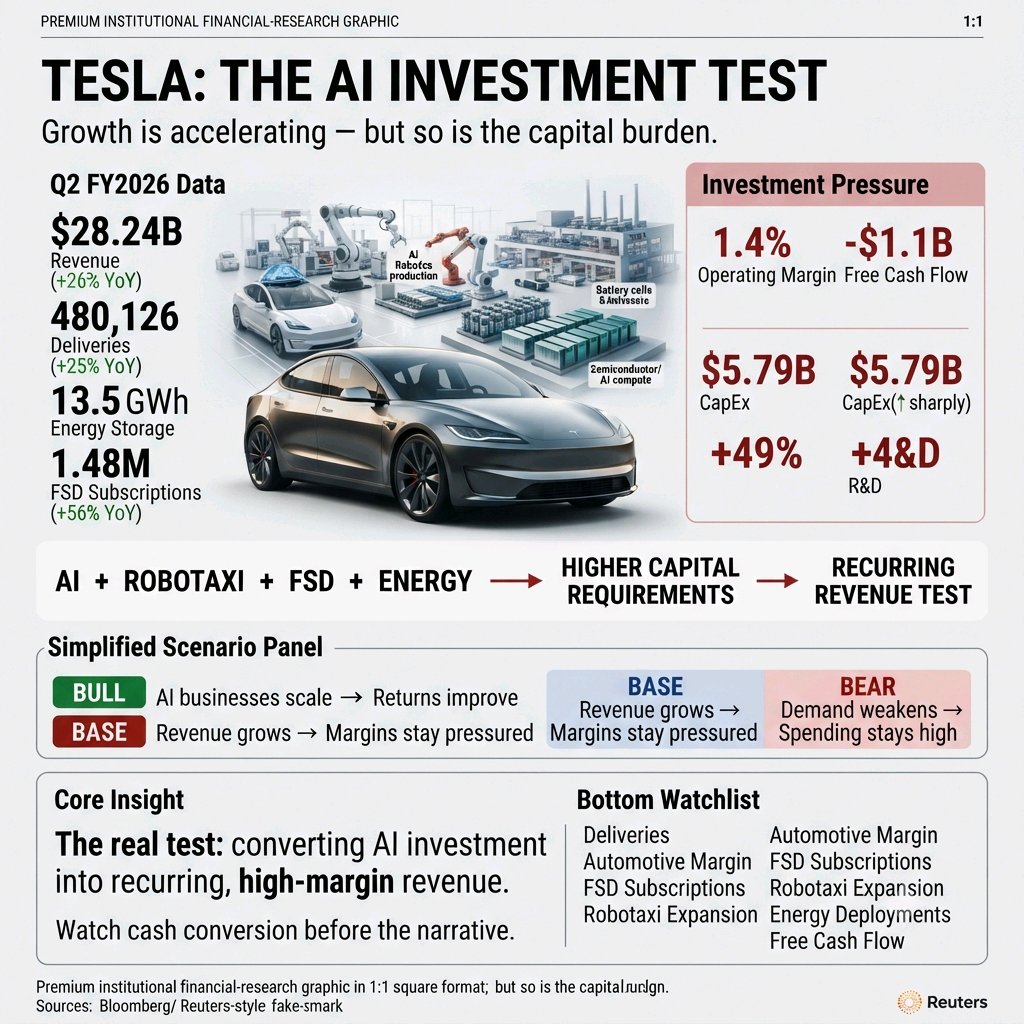
Hasil Q2 FY2026 Tesla mengubah arah perdebatan. Pendapatan mencapai $28,24 miliar, naik 26% YoY, sementara pengiriman kendaraan mencatatkan rekor 480.126 unit, naik 25%. Penyebaran penyimpanan energi mencapai 13,5 GWh, sementara pelanggan aktif FSD naik 56% YoY menjadi 1,48 juta. Sinyal yang lebih dalam adalah transisi Tesla melampaui sekadar kendaraan. Robotaxi kini berekspansi di berbagai wilayah metropolitan AS, Cybercab telah memasuki tahap produksi, dan infrastruktur produksi Optimus sedang dibangun. Di saat yang sama, Tesla berinvestasi besar-besaran dalam komputasi AI, baterai, semikonduktor, dan kapasitas manufaktur baru. Namun, ada risiko krusial: pertumbuhan menjadi lebih padat modal sebelum bisnis AI baru menghasilkan keuntungan finansial yang berarti. Margin operasi Q2 turun menjadi 1,4%, sementara arus kas bebas (free cash flow) menjadi -$1,1 miliar seiring dengan melonjaknya belanja modal (capex) hingga $5,79 miliar. R&D juga meningkat 49% YoY. Kerangka kerja TSLA saya: Bullish jika Robotaxi, FSD, dan energi berskala lebih cepat daripada beban investasi Tesla. Netral jika pendapatan terus tumbuh, tetapi kompresi margin dan capex yang tinggi menyerap potensi keuntungan. Bearish jika permintaan otomotif melemah sementara AI, robotika, dan otonomi memerlukan pengeluaran berkelanjutan tanpa pertumbuhan pendapatan yang sebanding. Sinyal yang sering terlewatkan: Kendala terbesar Tesla mungkin bukan lagi sekadar permintaan kendaraan—melainkan mengubah investasi infrastruktur AI-nya menjadi pendapatan berulang dengan margin tinggi. Perusahaan menyatakan kapasitas paket baterai saat ini membatasi produksi kendaraan dalam jangka pendek, sementara ekspansi AI dan manufakturnya mendorong kebutuhan modal lebih tinggi. Untuk BYX, saya akan fokus pada pengiriman, margin otomotif, langganan FSD, ekspansi Robotaxi, penyebaran energi, dan arus kas bebas, alih-alih mengejar pergerakan harga harian. Perhatikan konversi kas sebelum narasi. DYOR. Bukan nasihat keuangan. $TSLAXUSDT #ByXIMPACT
Apple: Ujian Investasi Besar Berikutnya
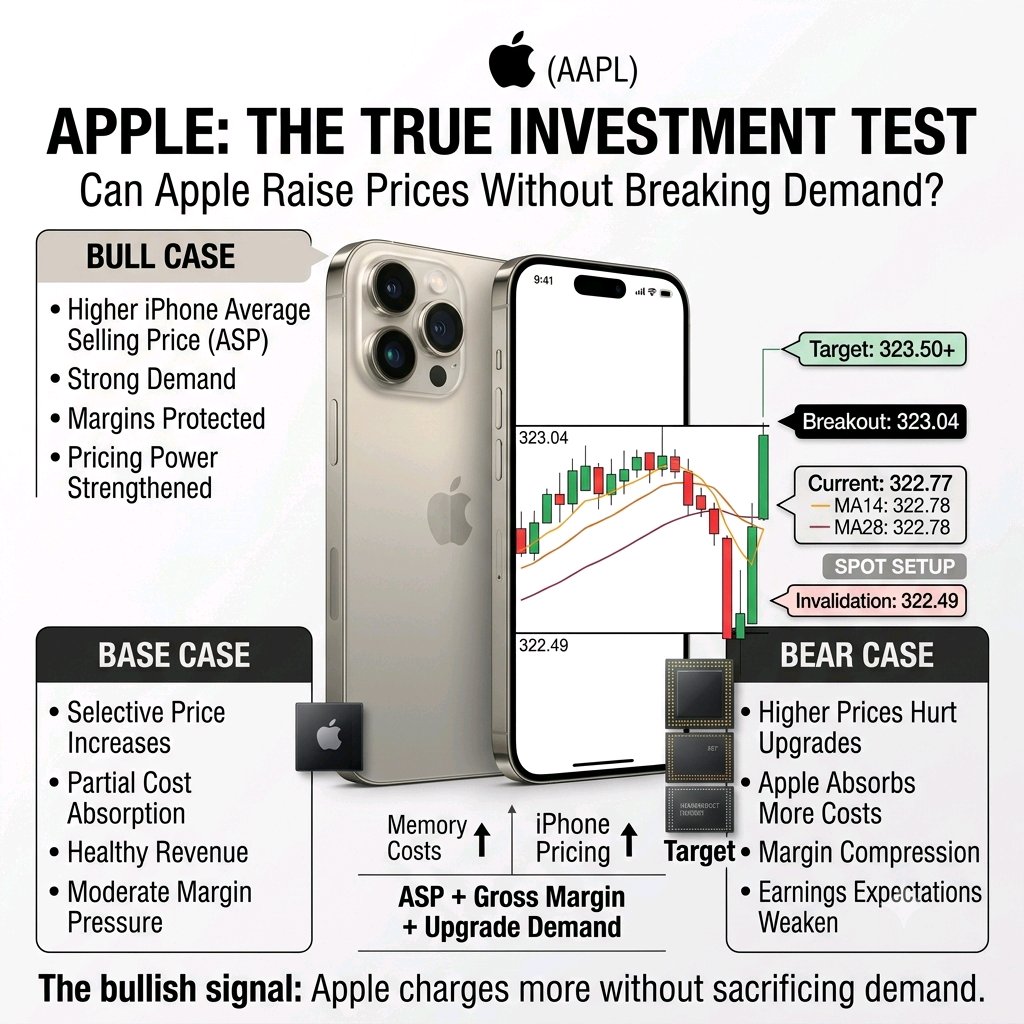
Apple memasuki siklus iPhone berikutnya dari posisi yang kuat. Pendapatan mencapai $109,4 miliar, naik 16% dari tahun ke tahun, sementara permintaan iPhone tetap kuat. Namun, investor harus melihat melampaui pertumbuhan utama tersebut. Biaya memori meningkat seiring infrastruktur AI bersaing untuk mendapatkan kapasitas semikonduktor. Apple telah menaikkan harga pada beberapa Mac dan iPad, sementara manajemen memperkirakan biaya memori akan tetap menjadi titik tekanan pada kuartal September. Kini iPhone menjadi ujian yang lebih besar. Laporan menunjukkan biaya memori untuk iPhone 18 Pro bisa jauh lebih tinggi, menciptakan tantangan lain bagi margin perangkat keras Apple. Pertanyaan investasinya sederhana: Bisakah Apple membebankan biaya yang lebih tinggi kepada konsumen tanpa merusak permintaan iPhone? Jika jawabannya ya, Apple menunjukkan sesuatu yang lebih berharga daripada pertumbuhan pendapatan jangka pendek: kekuatan penetapan harga (pricing power). Hal itu memungkinkan Apple untuk melindungi margin dan pendapatan bahkan ketika biaya perangkat keras meningkat. Namun jika Apple menyerap terlalu banyak kenaikan tersebut untuk menjaga harga tetap menarik, pendapatan mungkin terus tumbuh sementara margin tertekan. Kesimpulan saya tentang Apple: Jangan melihat peluncuran iPhone hanya dari penjualan unit. Perhatikan: ASP + margin kotor + permintaan konsumen. Jika Apple menaikkan harga dan pelanggan terus melakukan upgrade, itu akan memperkuat argumen bahwa ekosistemnya masih memberikan kekuatan penetapan harga yang luar biasa. Jika harga yang lebih tinggi melemahkan permintaan atau margin menurun, investor mungkin perlu memikirkan kembali pertumbuhan pendapatan di masa depan. Sinyal bullish-nya bukan sekadar "Apple menjual lebih banyak iPhone." Melainkan: "Apple bisa mengenakan harga lebih tinggi tanpa merusak permintaan." #ByXIMPACT $AAPLXUSDT
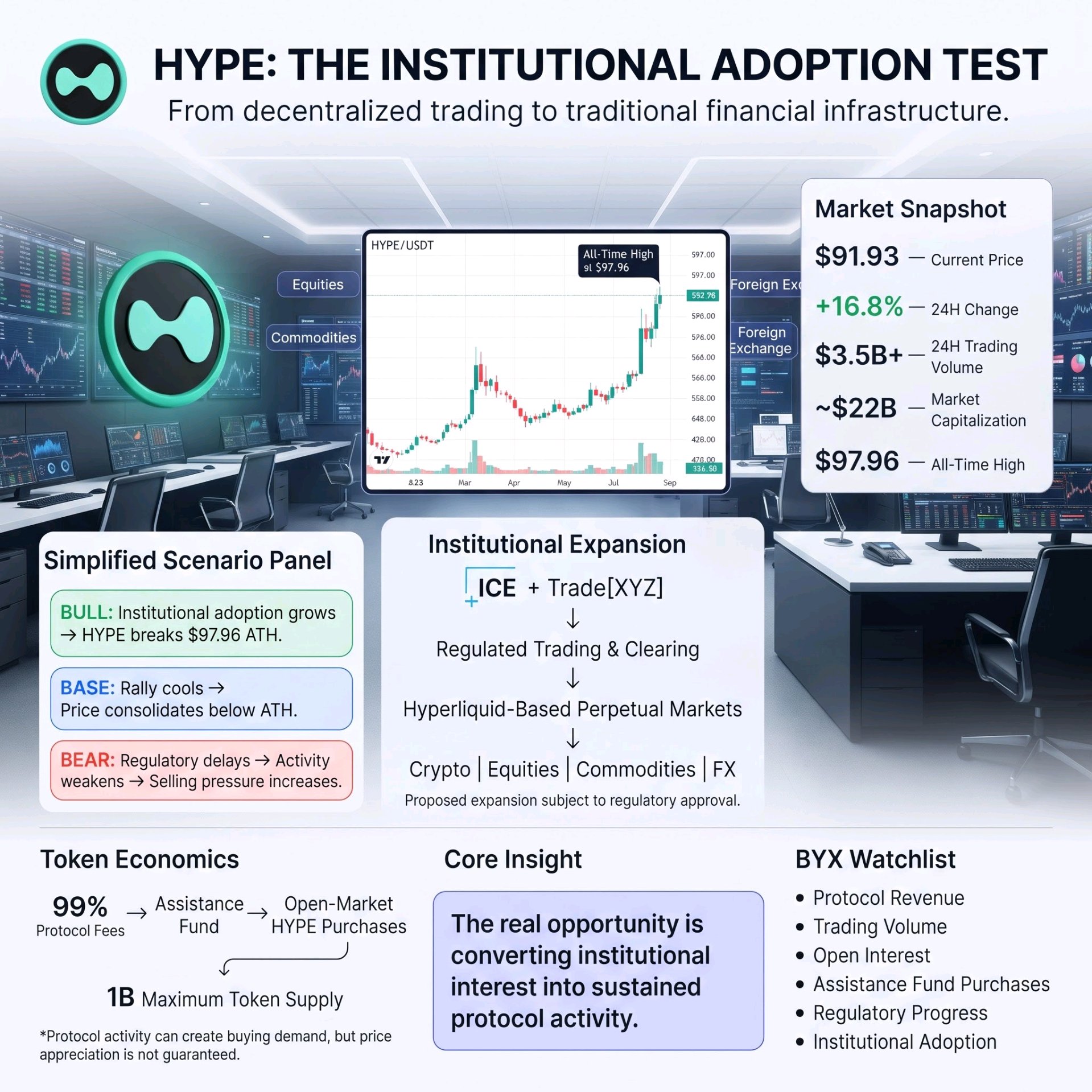
Performa pasar $HYPE Hyperliquid mengubah perdebatan. Token ini naik menjadi sekitar $91,93, mencatatkan kenaikan 16,8% dalam 24 jam, sementara volume perdagangan harian melampaui $3,5 miliar dan kapitalisasi pasar mencapai sekitar $22 miliar. Reli ini menyusul pengumuman yang melibatkan Intercontinental Exchange (ICE), perusahaan induk New York Stock Exchange. Sinyal yang lebih mendalam adalah transisi Hyperliquid di luar perdagangan derivatif terdesentralisasi. Rencana yang melibatkan ICE dan Trade[XYZ] dapat membawa perpetual futures berbasis Hyperliquid ke AS melalui struktur perdagangan dan kliring yang teregulasi, mencakup kripto, ekuitas, komoditas, dan valuta asing. Hal ini dapat memosisikan Hyperliquid sebagai infrastruktur yang menghubungkan pasar terdesentralisasi dengan keuangan tradisional. Namun, ada risiko kritis: ekspektasi pasar bergerak lebih cepat daripada adopsi yang sebenarnya. Kemitraan yang diusulkan masih menunggu persetujuan regulasi, dan keterlibatan ICE bukan merupakan investasi langsung di HYPE. Sementara itu, ekspansi pasokan token di masa depan tetap penting, mengingat pasokan maksimumnya sebanyak 1 miliar. Kerangka kerja HYPE saya: Bullish jika kemajuan regulasi berlanjut, aktivitas perdagangan institusional meningkat, dan HYPE menembus level tertinggi sepanjang masa di $97,96. Netral jika reli yang didorong oleh pengumuman mereda sementara harga berkonsolidasi di bawah level tertinggi sebelumnya karena pasar menunggu adopsi nyata. Bearish jika penundaan regulasi melemahkan ekspektasi, aktivitas protokol menurun, dan aksi ambil untung menciptakan tekanan jual yang berkelanjutan. Sinyal yang terabaikan: ekonomi token Hyperliquid menghubungkan aktivitas protokol dengan potensi permintaan pasar. Saat ini, 99% biaya protokol dialokasikan ke Dana Bantuan (Assistance Fund), yang membeli HYPE dari pasar terbuka. Ini menciptakan mekanisme di mana peningkatan aktivitas protokol dapat menghasilkan permintaan beli tambahan, meskipun tidak menjamin kenaikan harga. Untuk BYX, saya akan fokus pada pendapatan protokol, volume perdagangan, open interest, pembelian Dana Bantuan, kemajuan regulasi, dan adopsi institusional daripada mengejar pergerakan harga yang didorong oleh pengumuman. Perhatikan adopsi di balik kemitraan sebelum narasi. DYOR. Bukan nasihat keuangan. #ByXIMPACT $HYPEUSDT
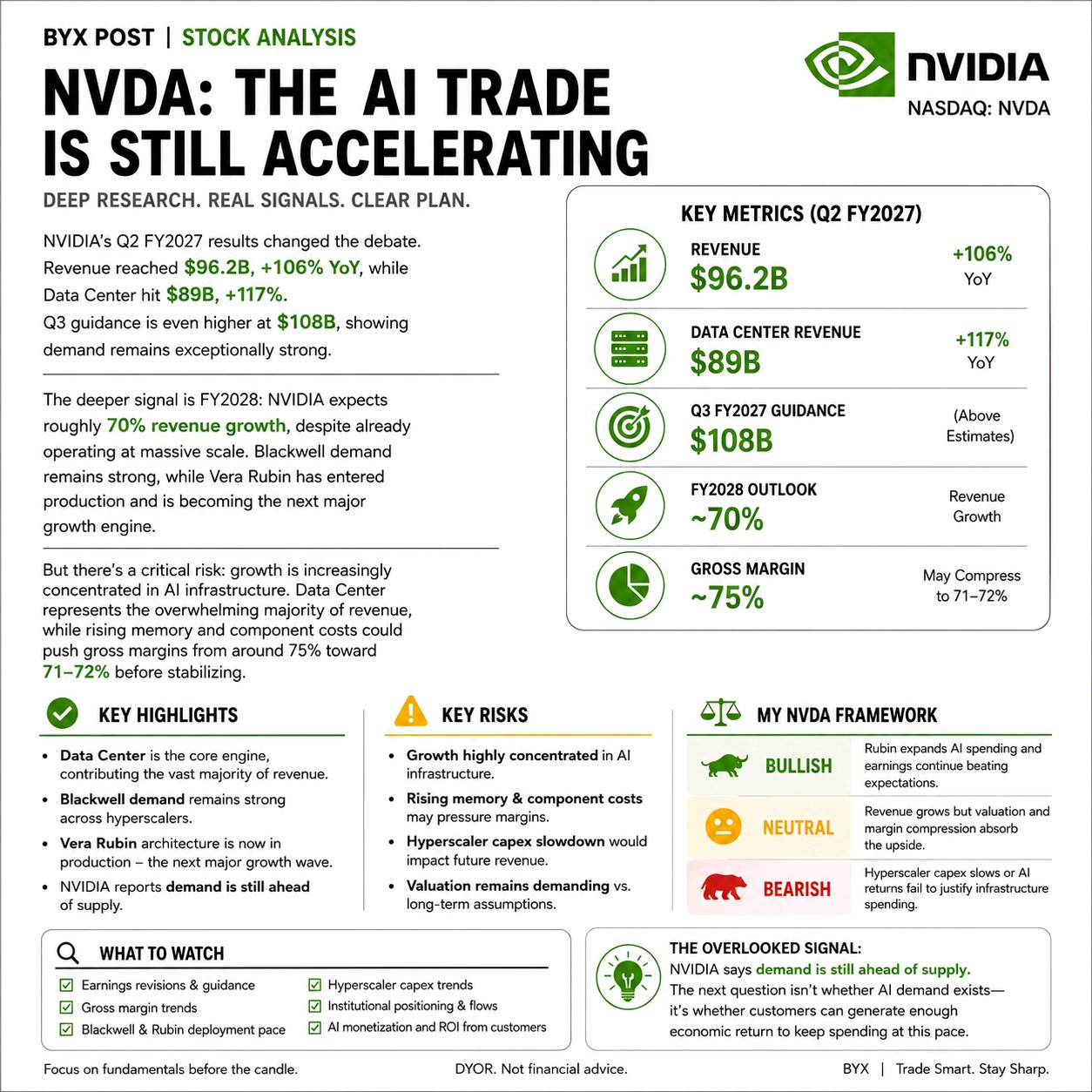
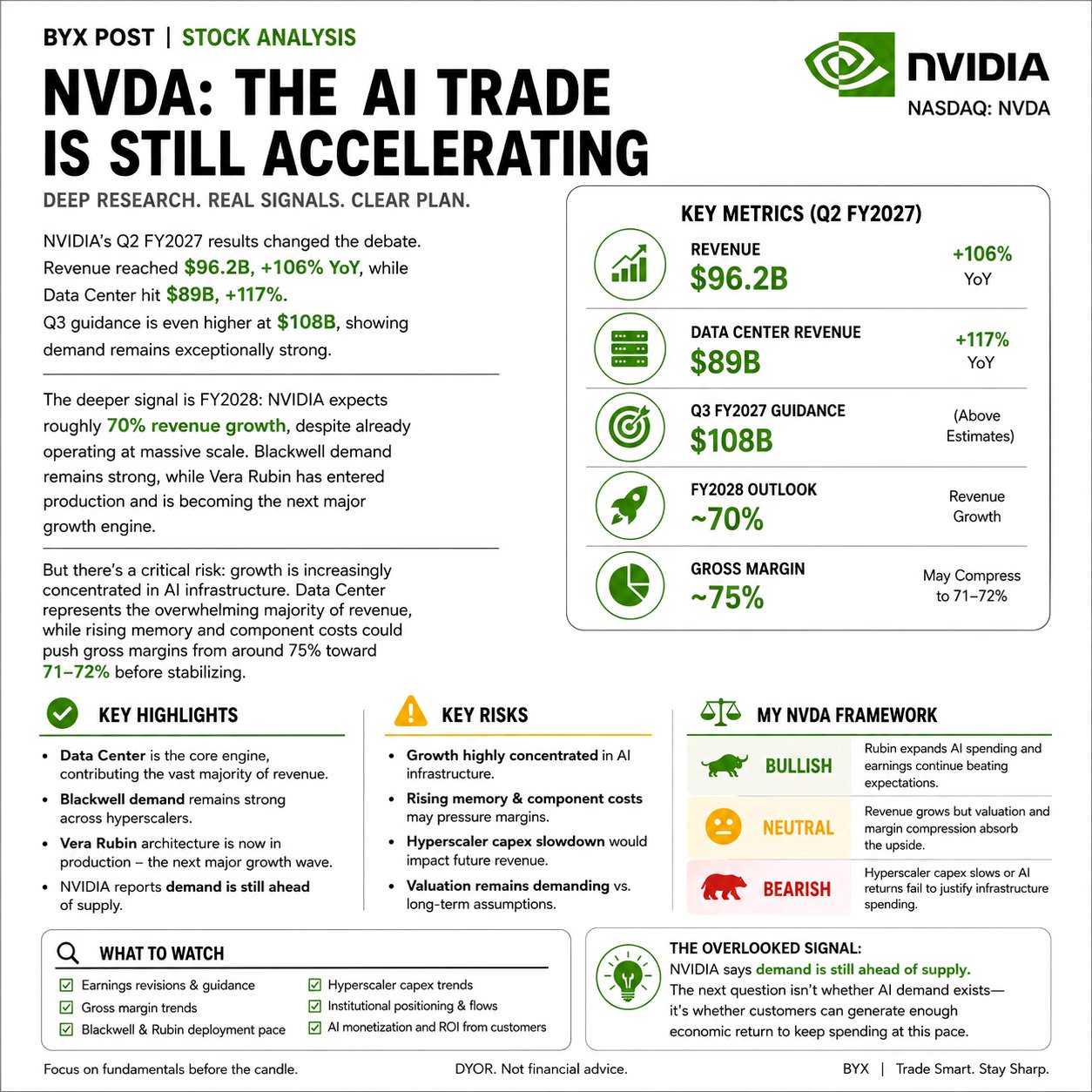
NVIDIA’s Q2 FY2027 results changed the debate. Revenue reached $96.2B, +106% YoY, while Data Center hit $89B, +117%. Q3 guidance is even higher at $108B, showing demand remains exceptionally strong. The deeper signal is FY2028: NVIDIA expects roughly 70% revenue growth, despite already operating at massive scale. Blackwell demand remains strong, while Vera Rubin has entered production and is becoming the next major growth engine. But there’s a critical risk: growth is increasingly concentrated in AI infrastructure. Data Center represents the overwhelming majority of revenue, while rising memory and component costs could push gross margins from around 75% toward 71–72% before stabilizing. My NVDA framework: Bullish if Rubin expands AI spending and earnings continue beating expectations. Neutral if revenue grows but valuation and margin compression absorb the upside. Bearish if hyperscaler capex slows or AI returns fail to justify infrastructure spending. The overlooked signal: NVIDIA says demand is still ahead of supply. The next question isn’t whether AI demand exists—it’s whether customers can generate enough economic return to keep spending at this pace. For BYX, I’d focus on earnings revisions, gross margins, Blackwell/Rubin deployment and institutional positioning rather than chasing daily price moves. Watch the fundamentals before the candle. DYOR. Not financial advice. $NVDAXUSDT #ByXIMPACT
Gold Is Losing Ground. But the Bigger Story Hasn’t Changed. Gold recently pulled back as stronger U.S. economic data pushed rate-hike expectations higher, putting pressure on a non-yielding asset. For $XAUTUSDT, the reaction matters. A move below $4,373 would show that sellers are gaining more control, while reclaiming $4,500 would put buyers back in a stronger position. But there’s another side to the market. Central banks continue accumulating gold, with China extending its buying streak. That creates a conflict between short-term Fed pressure and long-term reserve demand. So I’m not watching the $5,000 target yet. I’m watching whether buyers can absorb this sell-off without losing the $4,373 structure. If they defend it, the pullback could become an opportunity. If they lose it, the market may need to reset lower first. $XAUTUSDT #ByXIMPACT

Apple: The Next Big Investment Test
Apple is entering its next iPhone cycle from a position of strength. Revenue reached $109.4B, up 16% year over year, while iPhone demand remained strong. But investors should look beyond the headline growth. Memory costs are rising as AI infrastructure competes for semiconductor capacity. Apple has already raised prices on some Macs and iPads, while management expects memory costs to remain a pressure point in the September quarter. Now the iPhone becomes the bigger test. Reports suggest memory costs for the iPhone 18 Pro could be significantly higher, creating another challenge for Apple's hardware margins. The investment question is simple: Can Apple pass higher costs to consumers without damaging iPhone demand? If the answer is yes, Apple demonstrates something more valuable than short-term revenue growth: pricing power. That could allow Apple to protect margins and earnings even as hardware costs rise. But if Apple absorbs too much of the increase to keep prices attractive, revenue could continue growing while margins come under pressure. My Apple takeaway: Don't watch the iPhone launch only for unit sales. Watch: ASP + gross margin + consumer demand. If Apple raises prices and customers keep upgrading, that would strengthen the case that its ecosystem still gives it exceptional pricing power. If higher prices weaken demand or margins deteriorate, investors may need to rethink future earnings growth. The bullish signal isn't simply “Apple sells more iPhones.” It's: “Apple can charge more without breaking demand.” $AAPLXUSDT #ByXIMPACT
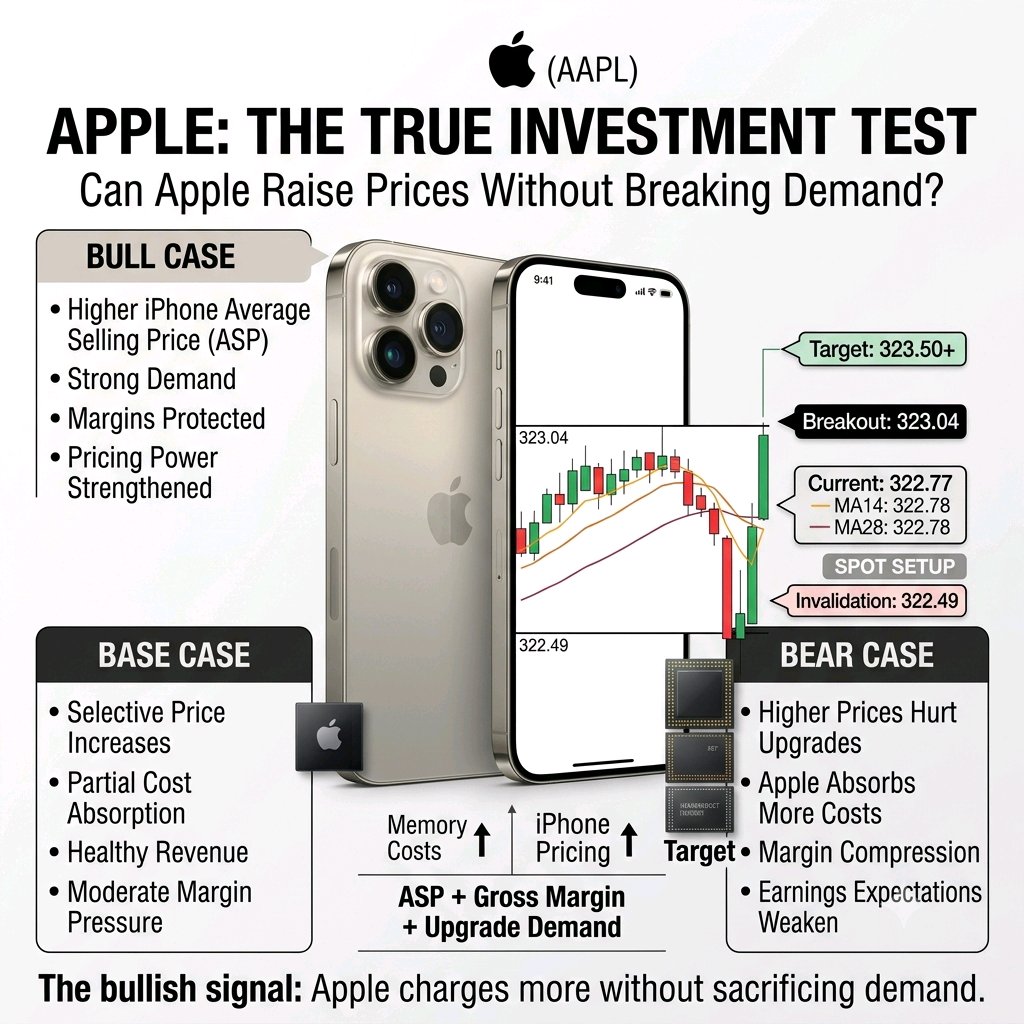
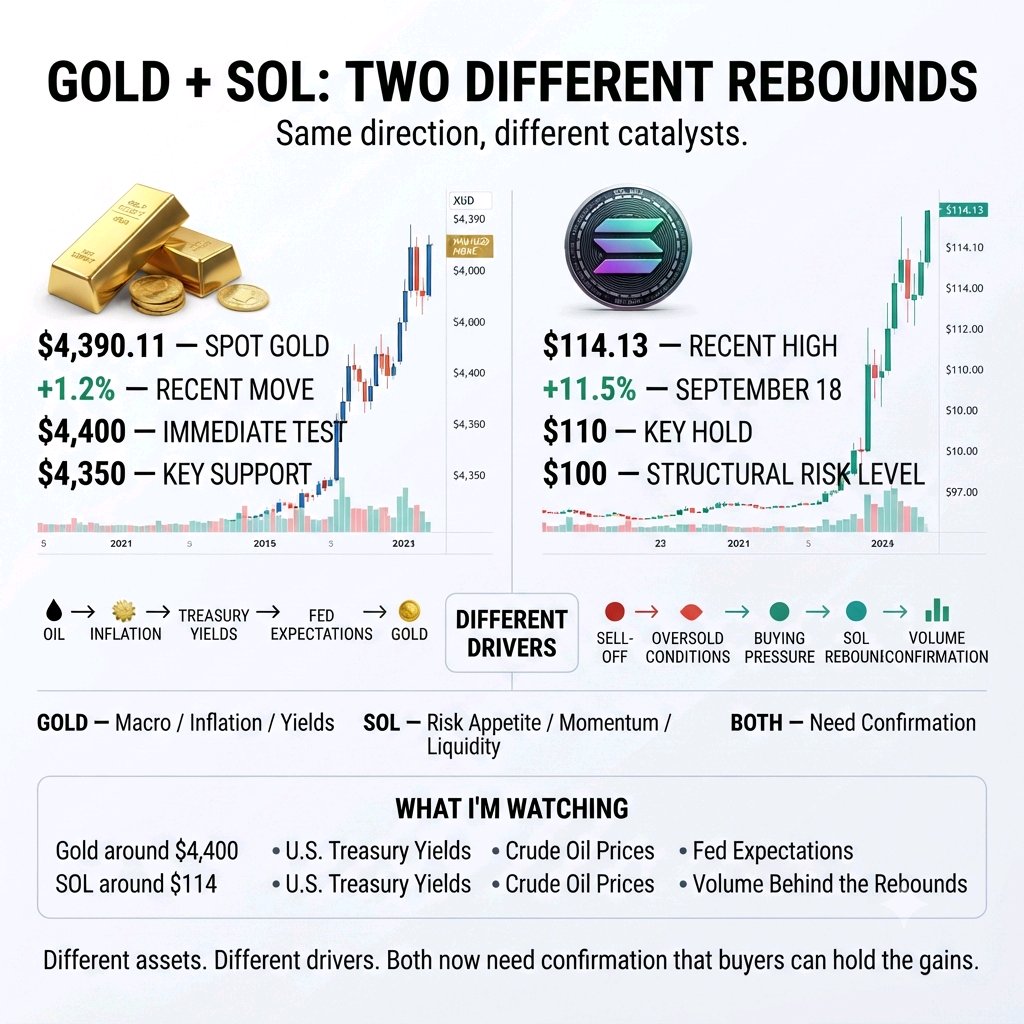
Gold and Solana are both pushing higher, but the reasons behind the moves are very different. Spot gold climbed 1.2% to $4,390.11 as easing oil prices reduced some inflation pressure. SOL, meanwhile, jumped 11.5% on September 18, reaching $114.13 before holding above $113. That difference matters. Gold is reacting mainly to macro conditions: oil, inflation expectations, Treasury yields and Fed expectations. SOL is reacting more like a high-beta risk asset, with its rebound coming after a sharp move down toward $97 earlier in the week. So I'm watching whether both moves can hold after the initial reaction. Gold: $4,400 is the immediate test. Holding above $4,350 would keep the recovery structure intact, while renewed pressure from yields or oil could change the setup. SOL: $114 is the immediate resistance area. Holding above $110 would keep the recent breakout attempt constructive, while losing $100 would weaken the recovery. The interesting part isn't that Gold and SOL are both rising. It's whether their respective catalysts can keep supporting the moves after the first wave of buying fades. I'm watching: • Gold around $4,400 • SOL around $114 • U.S. Treasury yields • Crude oil prices • Fed expectations • Volume behind the rebounds Different assets. Different drivers. But both now need confirmation that buyers can hold the gains. $XAUTUSDT $SOLUSDT #ByXIMPACT
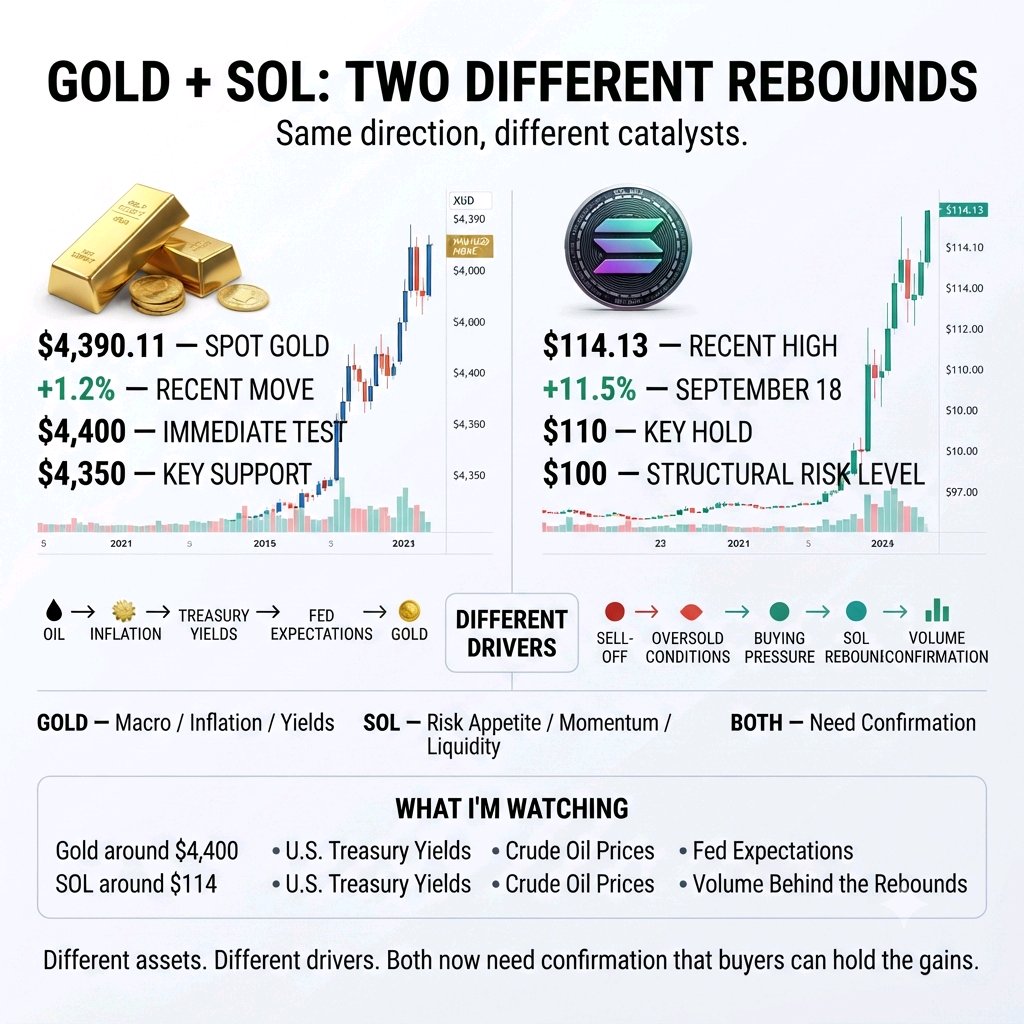
Tesla’s Q2 FY2026 results shifted the debate. Revenue reached $28.24B, +26% YoY, while vehicle deliveries hit a record 480,126, +25%. Energy storage deployments reached 13.5 GWh, while active FSD subscriptions climbed 56% YoY to 1.48M. The deeper signal is Tesla’s transition beyond vehicles. Robotaxi is expanding across U.S. metros, Cybercab has entered production, and Optimus production infrastructure is being built. At the same time, Tesla is investing heavily in AI compute, batteries, semiconductors and new manufacturing capacity. But there’s a critical risk: growth is becoming more capital-intensive before the newer AI businesses generate meaningful financial returns. Q2 operating margin fell to 1.4%, while free cash flow turned -$1.1B as capex surged to $5.79B. R&D also increased 49% YoY. My TSLA framework: Bullish if Robotaxi, FSD and energy scale faster than Tesla’s investment burden. Neutral if revenue keeps growing but margin compression and elevated capex absorb the upside. Bearish if automotive demand weakens while AI, robotics and autonomy require sustained spending without comparable revenue growth. The overlooked signal: Tesla’s biggest constraint may no longer be vehicle demand alone—it’s converting its AI infrastructure investment into recurring, high-margin revenue. The company says battery-pack capacity is currently limiting near-term vehicle production, while its AI and manufacturing expansion is pushing capital requirements higher. For BYX, I’d focus on deliveries, automotive margins, FSD subscriptions, Robotaxi expansion, energy deployments and free cash flow rather than chasing daily price moves. Watch the cash conversion before the narrative. DYOR. Not financial advice. $TSLAXUSDT #ByXIMPACT
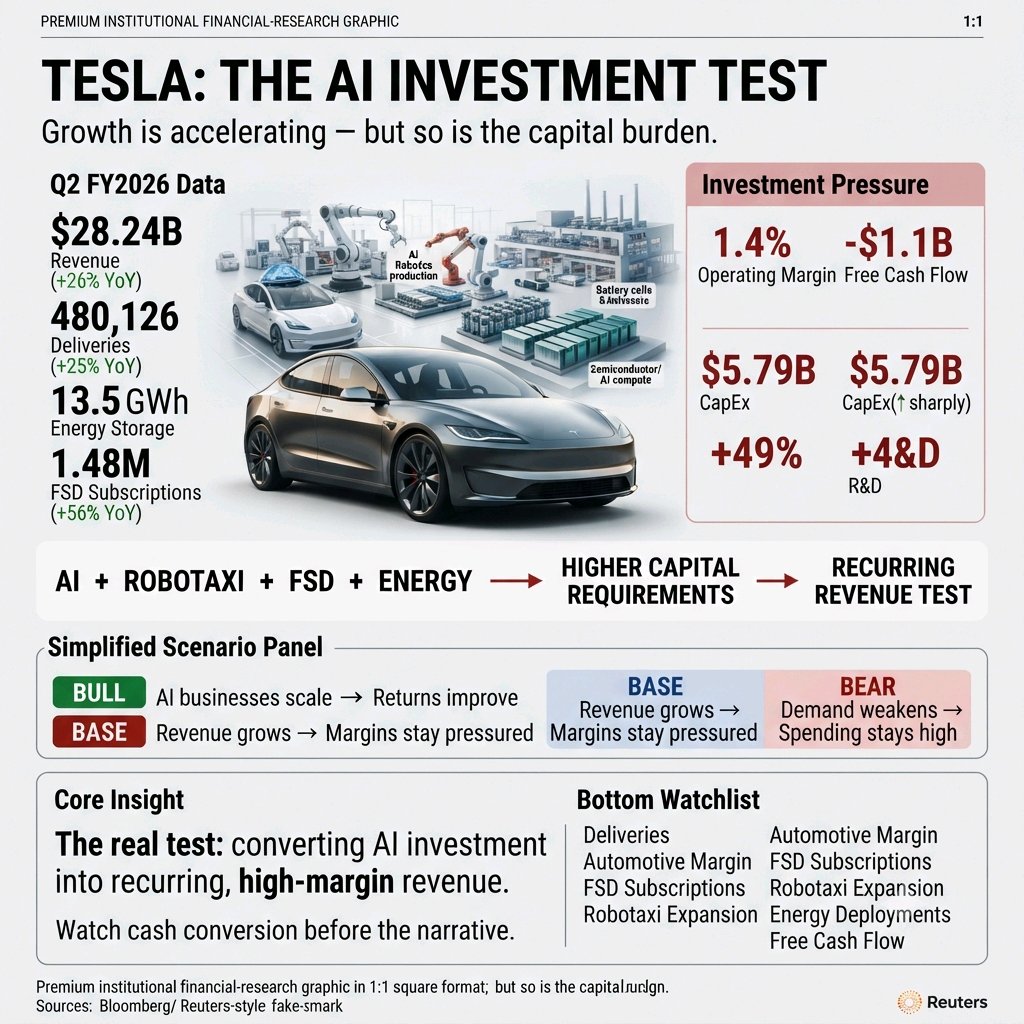
Gold & Circle: Risiko Sedang Dihargai Ulang
Emas berada di bawah tekanan karena kenaikan harga minyak, kekhawatiran inflasi, dan imbal hasil Treasury yang lebih tinggi mendorong ekspektasi kenaikan suku bunga lebih tinggi. Emas spot baru-baru ini turun ke $4.293,29, sementara imbal hasil Treasury 10 tahun bergerak di atas 5%. Namun, bagian yang menarik bukanlah penurunan emas itu sendiri. Melainkan bagaimana investor menetapkan ulang harga risiko di berbagai bagian pasar. Circle ($CRCL) juga menghadapi tekanan jual yang kuat, dengan sahamnya baru-baru ini diperdagangkan di sekitar $86,30. Ekuitas yang terkait dengan kripto tetap sensitif terhadap perubahan selera risiko, menjadikan CRCL aset lain yang berguna untuk dipantau bersama kondisi pasar yang lebih luas. Hal itu menciptakan tiga kemungkinan hasil: Skenario Bullish: Imbal hasil Treasury melandai → tekanan inflasi mereda → Emas stabil → selera risiko membaik → CRCL menemukan pembeli. Skenario Base (dasar): Imbal hasil tetap tinggi → Emas berkonsolidasi → investor tetap berhati-hati → CRCL tetap volatil. Skenario Bearish: Tekanan inflasi berlanjut → imbal hasil naik lebih jauh → Emas menghadapi lebih banyak tekanan → selera risiko melemah → CRCL tetap berada di bawah tekanan jual. Poin penting pasar Emas menunjukkan bagaimana tekanan makro diperhitungkan ke dalam aset defensif, sementara CRCL menunjukkan bagaimana lingkungan risk-off yang sama dapat memengaruhi ekuitas yang terkait dengan kripto. Saya memantau: • Emas di sekitar $4.293 • Imbal hasil 10 tahun AS mendekati 5% • Harga minyak dan ekspektasi inflasi • CRCL di sekitar $86 • Sinyal kebijakan The Fed Kuncinya bukan apakah satu aset bergerak lebih tinggi atau lebih rendah. Melainkan apakah imbal hasil dan likuiditas mulai mengonfirmasi pergeseran yang lebih luas dalam selera risiko. #ByXIMPACT $XAUTUSDT $CRCLXUSDT
NVIDIA’s Q2 FY2027 results changed the debate. Revenue reached $96.2B, +106% YoY, while Data Center hit $89B, +117%. Q3 guidance is even higher at $108B, showing demand remains exceptionally strong. The deeper signal is FY2028: NVIDIA expects roughly 70% revenue growth, despite already operating at massive scale. Blackwell demand remains strong, while Vera Rubin has entered production and is becoming the next major growth engine. But there’s a critical risk: growth is increasingly concentrated in AI infrastructure. Data Center represents the overwhelming majority of revenue, while rising memory and component costs could push gross margins from around 75% toward 71–72% before stabilizing. My NVDA framework: Bullish if Rubin expands AI spending and earnings continue beating expectations. Neutral if revenue grows but valuation and margin compression absorb the upside. Bearish if hyperscaler capex slows or AI returns fail to justify infrastructure spending. The overlooked signal: NVIDIA says demand is still ahead of supply. The next question isn’t whether AI demand exists—it’s whether customers can generate enough economic return to keep spending at this pace. For BYX, I’d focus on earnings revisions, gross margins, Blackwell/Rubin deployment and institutional positioning rather than chasing daily price moves. Watch the fundamentals before the candle. DYOR. Not financial advice. $NVDAXUSDT #ByXIMPACT
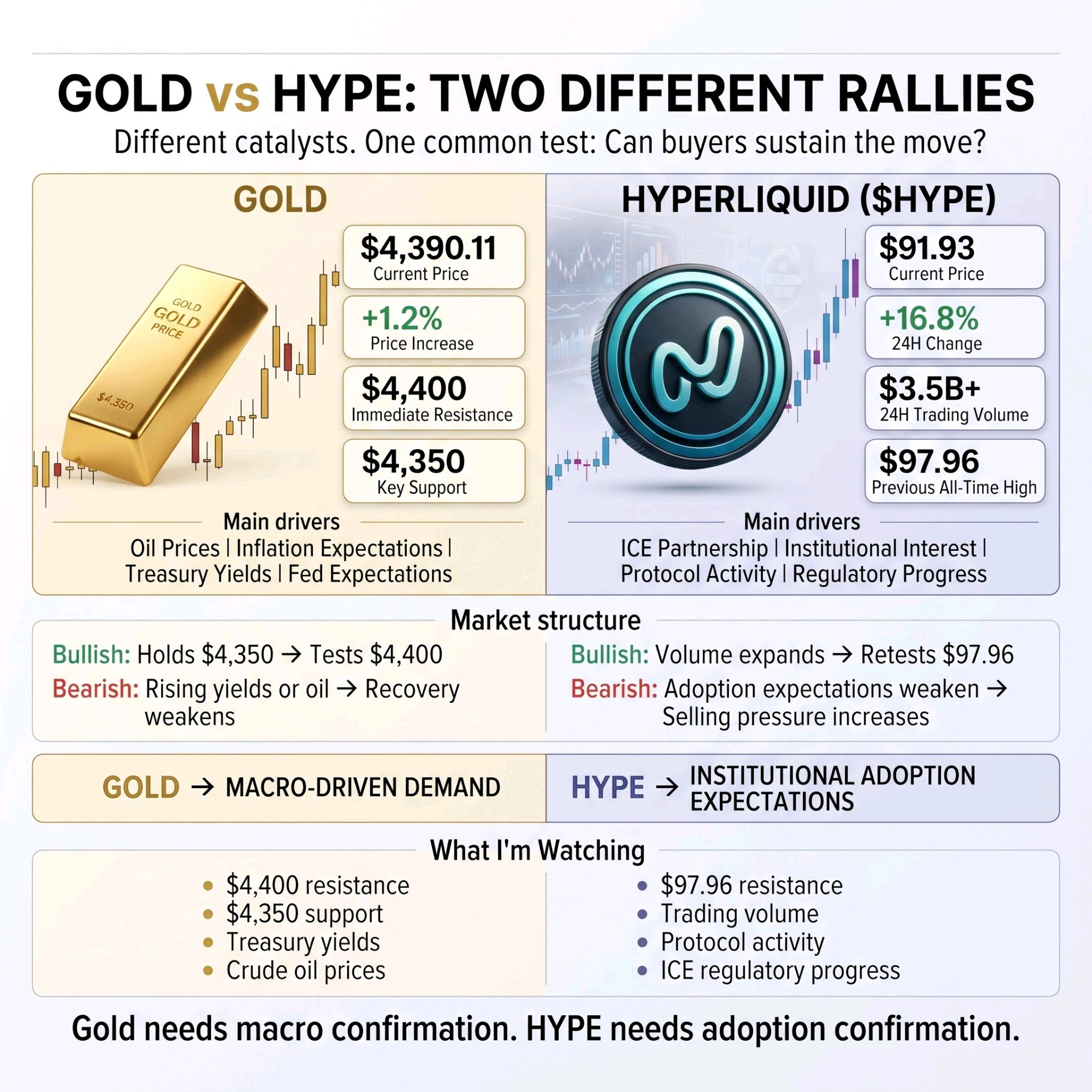
Emas dan $HYPE dari Hyperliquid sama-sama menarik pembeli, namun alasan di balik pergerakan keduanya sangat berbeda. Emas spot naik ke $4.390,11, menguat 1,2% karena harga minyak yang melandai mengurangi tekanan inflasi. Sementara itu, HYPE melonjak sekitar 16,8% ke $91,93, dengan volume perdagangan harian melebihi $3,5 miliar setelah pengumuman yang melibatkan ICE dan Trade[XYZ]. Perbedaan itu penting. Emas bereaksi terutama terhadap kondisi makro: harga minyak, ekspektasi inflasi, imbal hasil Treasury, dan kebijakan The Fed. HYPE bereaksi terhadap meningkatnya ekspektasi seputar adopsi institusional, menyusul rencana untuk memperkenalkan perpetual futures berbasis Hyperliquid melalui struktur perdagangan dan kliring yang teregulasi, dengan tunduk pada persetujuan regulasi. Jadi, saya memantau apakah kedua pergerakan ini dapat bertahan setelah reaksi awal. Emas: $4.400 adalah ujian langsungnya. Bertahan di atas $4.350 akan menjaga struktur pemulihan tetap utuh, sementara tekanan baru dari imbal hasil atau minyak dapat melemahkan pergerakan ini. HYPE: $97,96 adalah area resistance utama dan rekor tertinggi sebelumnya. Volume pembelian yang berkelanjutan dapat mendukung upaya kenaikan berikutnya, sementara penundaan regulasi atau penurunan aktivitas protokol dapat melemahkan reli ini. Bagian yang menarik bukanlah fakta bahwa Emas dan HYPE sama-sama naik. Melainkan apakah katalis masing-masing dapat terus mendukung permintaan setelah gelombang pembelian pertama memudar. Saya sedang memantau: • Emas di sekitar $4.400 • Support emas di sekitar $4.350 • HYPE di sekitar $97,96 • Imbal hasil Treasury AS dan minyak mentah • Progres regulasi seputar kemitraan ICE • Volume dan aktivitas protokol di balik HYPE Aset yang berbeda. Penggerak yang berbeda. Namun keduanya kini membutuhkan konfirmasi bahwa pembeli dapat mempertahankan pergerakan tersebut. $XAUTUSDT $HYPEUSDT #ByXIMPACT
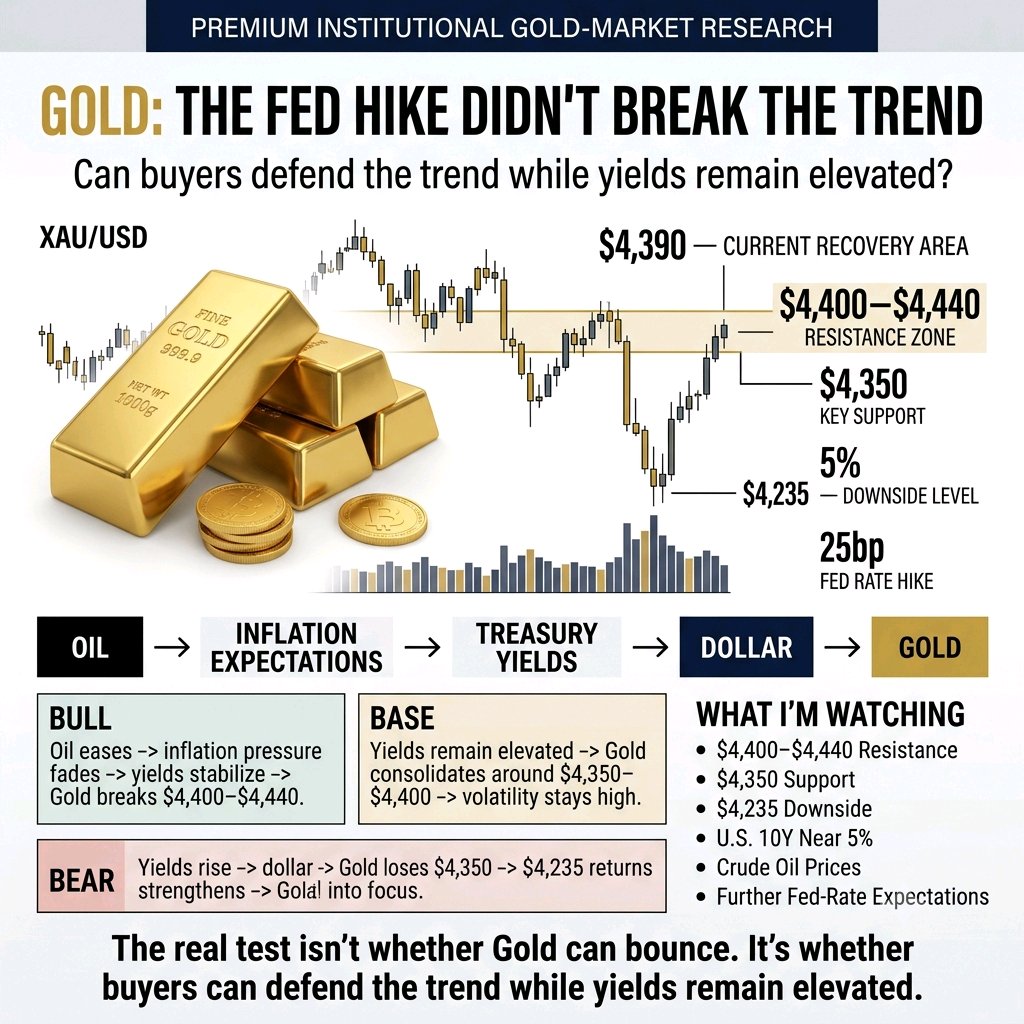
Emas: Kenaikan Suku Bunga The Fed Gagal Mematahkan Tren
Emas telah pulih dengan tajam setelah kenaikan suku bunga Fed terbaru, dan bagian yang menarik bukanlah pemulihan itu sendiri. Halnya adalah apa yang terjadi di baliknya. Emas spot kembali terdorong ke arah $4.400 setelah jatuh ke sekitar $4.235 menyusul kenaikan 25bp oleh Fed. Saat harga minyak mereda dan imbal hasil Treasury menurun, sebagian tekanan pada emas mulai memudar. Reaksi itu penting. Suku bunga yang lebih tinggi biasanya menciptakan tekanan pada emas karena aset tersebut tidak menghasilkan imbal hasil (yield). Namun kali ini, pasar menunjukkan bahwa minyak, ekspektasi inflasi, imbal hasil, dan risiko geopolitik semuanya bersaing untuk mendapatkan pengaruh. Hal itu menciptakan tiga kemungkinan jalur: Skenario Bullish: Minyak terus mendingin → imbal hasil Treasury mereda → tekanan inflasi memudar → Emas bertahan di atas $4.350 dan menguji kembali $4.400+. Skenario Dasar: Imbal hasil tetap tinggi → Emas berkonsolidasi di sekitar $4.350–$4.400 → volatilitas tetap tinggi saat pasar menilai kembali langkah Fed selanjutnya. Skenario Bearish: Minyak rebound → ekspektasi inflasi naik → imbal hasil bergerak kembali ke arah 5% → Emas kehilangan level $4.350 dan menghadapi tekanan jual yang diperbarui. Kesimpulan Pasar Kenaikan suku bunga Fed tidak merusak struktur Emas. Ujian yang lebih besar adalah apakah harga minyak yang lebih rendah dan imbal hasil yang melunak dapat terus mendukung pemulihan tersebut. Saya mengamati: • Resistance $4.400 • Zona reaksi $4.350 • Imbal hasil 10Y AS • Harga minyak mentah • Ekspektasi kenaikan suku bunga Fed lebih lanjut Emas tidak lagi diperdagangkan berdasarkan suku bunga saja. Langkah selanjutnya mungkin bergantung pada apakah tekanan inflasi terus mereda atau kembali melalui harga energi. #ByXIMPACT $XAUTUSDT
Gold and Solana are both pushing higher, but the reasons behind the moves are very different. Spot gold climbed 1.2% to $4,390.11 as easing oil prices reduced some inflation pressure. SOL, meanwhile, jumped 11.5% on September 18, reaching $114.13 before holding above $113. That difference matters. Gold is reacting mainly to macro conditions: oil, inflation expectations, Treasury yields and Fed expectations. SOL is reacting more like a high-beta risk asset, with its rebound coming after a sharp move down toward $97 earlier in the week. So I'm watching whether both moves can hold after the initial reaction. Gold: $4,400 is the immediate test. Holding above $4,350 would keep the recovery structure intact, while renewed pressure from yields or oil could change the setup. SOL: $114 is the immediate resistance area. Holding above $110 would keep the recent breakout attempt constructive, while losing $100 would weaken the recovery. The interesting part isn't that Gold and SOL are both rising. It's whether their respective catalysts can keep supporting the moves after the first wave of buying fades. I'm watching: • Gold around $4,400 • SOL around $114 • U.S. Treasury yields • Crude oil prices • Fed expectations • Volume behind the rebounds Different assets. Different drivers. But both now need confirmation that buyers can hold the gains. $XAUTUSDT #ByXIMPACT $SOLUSDT
Gold & Circle: Risk Is Being Repriced
Gold has been under pressure as rising oil prices, inflation concerns and higher Treasury yields push rate-hike expectations higher. Spot gold recently fell to $4,293.29, while the 10-year Treasury yield moved above 5%. But the interesting part isn't the gold decline itself. It's how investors are repricing risk across different parts of the market. Circle ($CRCL) has also faced heavy selling pressure, with the stock recently trading around $86.30. Crypto-linked equities remain sensitive to changes in risk appetite, making CRCL another useful asset to watch alongside broader market conditions. That creates three possible outcomes: Bull case: Treasury yields ease → inflation pressure cools → Gold stabilizes → risk appetite improves → CRCL finds buyers. Base case: Yields remain elevated → Gold consolidates → investors stay cautious → CRCL remains volatile. Bear case: Inflation pressure persists → yields rise further → Gold faces more pressure → risk appetite weakens → CRCL remains under selling pressure. Market takeaway Gold is showing how macro pressure is being priced into defensive assets, while CRCL shows how the same risk-off environment can affect crypto-linked equities. I'm watching: • Gold around $4,293 • U.S. 10Y yield near 5% • Oil and inflation expectations • CRCL around $86 • Fed policy signals The key isn't whether one asset moves higher or lower. It's whether yields and liquidity start confirming a broader shift in risk appetite. #ByXIMPACT $XAUTUSDT $CRCLXUSDT
Apple: The Next Big Investment Test
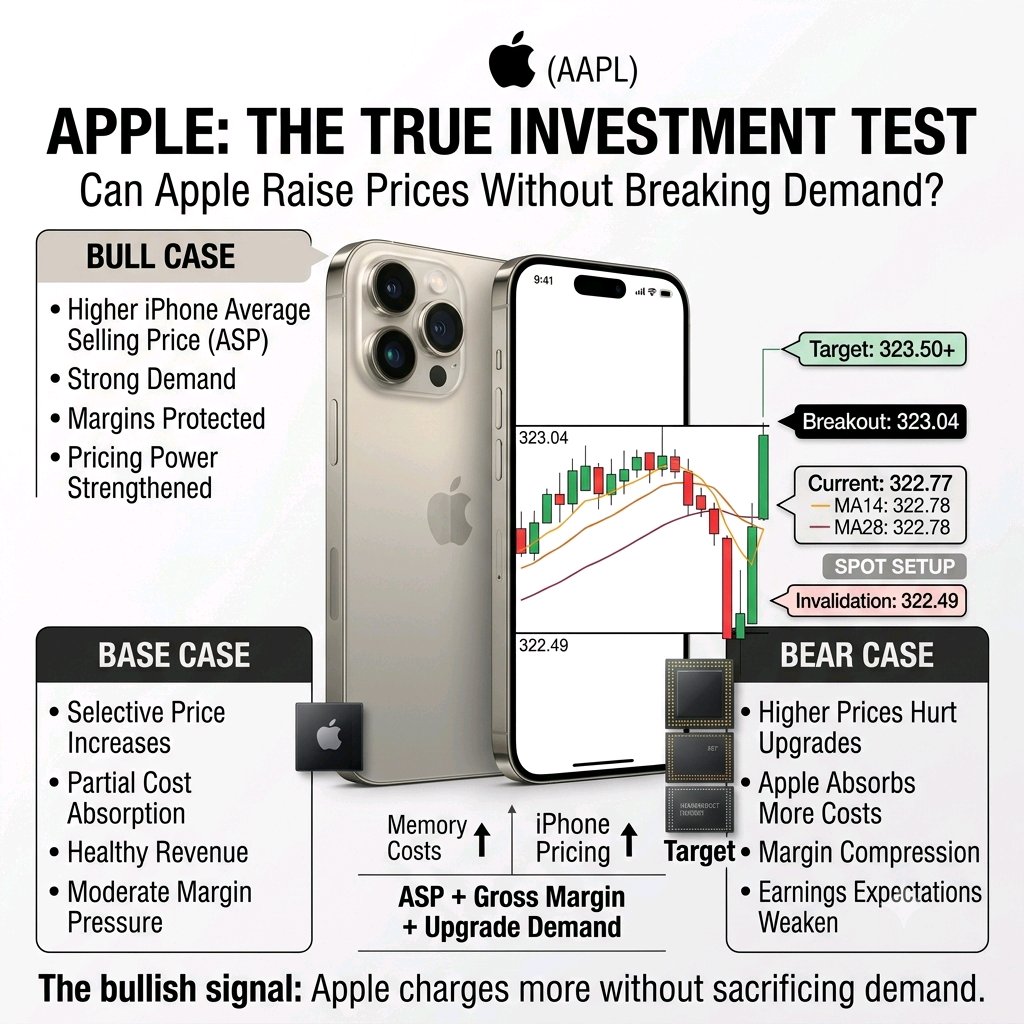
Apple is entering its next iPhone cycle from a position of strength. Revenue reached $109.4B, up 16% year over year, while iPhone demand remained strong. But investors should look beyond the headline growth. Memory costs are rising as AI infrastructure competes for semiconductor capacity. Apple has already raised prices on some Macs and iPads, while management expects memory costs to remain a pressure point in the September quarter. Now the iPhone becomes the bigger test. Reports suggest memory costs for the iPhone 18 Pro could be significantly higher, creating another challenge for Apple's hardware margins. The investment question is simple: Can Apple pass higher costs to consumers without damaging iPhone demand? If the answer is yes, Apple demonstrates something more valuable than short-term revenue growth: pricing power. That could allow Apple to protect margins and earnings even as hardware costs rise. But if Apple absorbs too much of the increase to keep prices attractive, revenue could continue growing while margins come under pressure. My Apple takeaway: Don't watch the iPhone launch only for unit sales. Watch: ASP + gross margin + consumer demand. If Apple raises prices and customers keep upgrading, that would strengthen the case that its ecosystem still gives it exceptional pricing power. If higher prices weaken demand or margins deteriorate, investors may need to rethink future earnings growth. The bullish signal isn't simply “Apple sells more iPhones.” It's: “Apple can charge more without breaking demand.” $AAPLXUSDT #ByXIMPACT
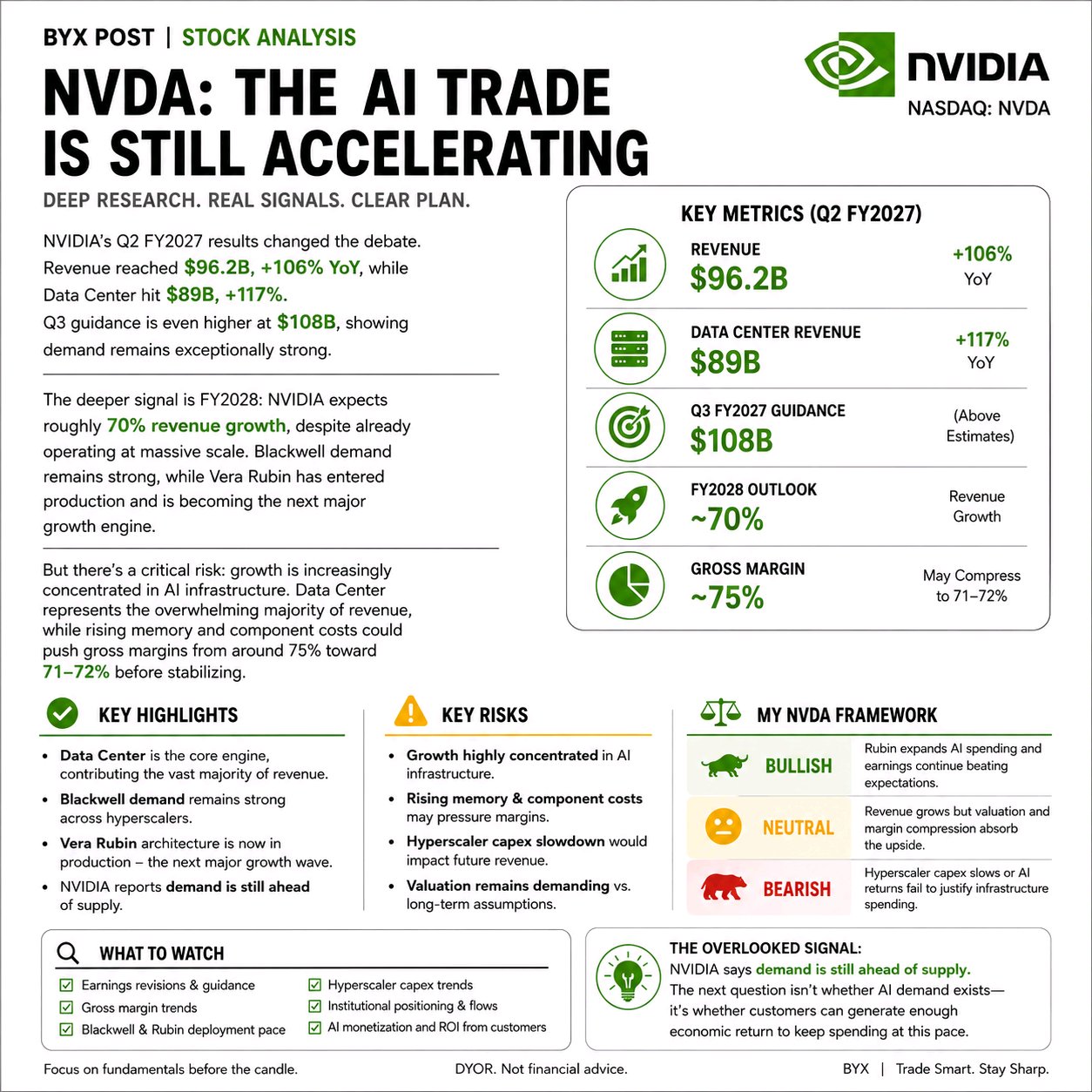
NVIDIA’s Q2 FY2027 results changed the debate. Revenue reached $96.2B, +106% YoY, while Data Center hit $89B, +117%. Q3 guidance is even higher at $108B, showing demand remains exceptionally strong. The deeper signal is FY2028: NVIDIA expects roughly 70% revenue growth, despite already operating at massive scale. Blackwell demand remains strong, while Vera Rubin has entered production and is becoming the next major growth engine. But there’s a critical risk: growth is increasingly concentrated in AI infrastructure. Data Center represents the overwhelming majority of revenue, while rising memory and component costs could push gross margins from around 75% toward 71–72% before stabilizing. My NVDA framework: Bullish if Rubin expands AI spending and earnings continue beating expectations. Neutral if revenue grows but valuation and margin compression absorb the upside. Bearish if hyperscaler capex slows or AI returns fail to justify infrastructure spending. The overlooked signal: NVIDIA says demand is still ahead of supply. The next question isn’t whether AI demand exists—it’s whether customers can generate enough economic return to keep spending at this pace. For BYX, I’d focus on earnings revisions, gross margins, Blackwell/Rubin deployment and institutional positioning rather than chasing daily price moves. Watch the fundamentals before the candle. DYOR. Not financial advice. #ByXIMPACT $NVDAXUSDT
Hasil Q2 FY2026 Tesla mengubah perdebatan. Pendapatan mencapai $28,24 miliar, naik 26% YoY, sementara pengiriman kendaraan mencapai rekor 480.126 unit, naik 25%. Penyebaran penyimpanan energi mencapai 13,5 GWh, sementara langganan FSD aktif naik 56% YoY menjadi 1,48 juta. Sinyal yang lebih mendalam adalah transisi Tesla melampaui kendaraan. Robotaxi berekspansi ke seluruh kota besar di AS, Cybercab telah memasuki tahap produksi, dan infrastruktur produksi Optimus sedang dibangun. Pada saat yang sama, Tesla berinvestasi besar-besaran dalam komputasi AI, baterai, semikonduktor, dan kapasitas manufaktur baru. Namun, ada risiko kritis: pertumbuhan menjadi lebih padat modal sebelum bisnis AI yang lebih baru menghasilkan keuntungan finansial yang berarti. Margin operasi Q2 turun menjadi 1,4%, sementara arus kas bebas berubah menjadi -$1,1 miliar karena belanja modal (capex) melonjak menjadi $5,79 miliar. R&D juga meningkat 49% YoY. Kerangka kerja TSLA saya: Bullish jika Robotaxi, FSD, dan energi berskala lebih cepat daripada beban investasi Tesla. Netral jika pendapatan terus tumbuh tetapi kompresi margin dan capex yang tinggi menyerap kenaikan tersebut. Bearish jika permintaan otomotif melemah sementara AI, robotika, dan otonomi memerlukan pengeluaran berkelanjutan tanpa pertumbuhan pendapatan yang sebanding. Sinyal yang terabaikan: Kendala terbesar Tesla mungkin bukan lagi hanya permintaan kendaraan—tetapi mengubah investasi infrastruktur AI-nya menjadi pendapatan berulang dengan margin tinggi. Perusahaan mengatakan kapasitas paket baterai saat ini membatasi produksi kendaraan dalam jangka pendek, sementara ekspansi AI dan manufakturnya mendorong kebutuhan modal lebih tinggi. Untuk BYX, saya akan fokus pada pengiriman, margin otomotif, langganan FSD, ekspansi Robotaxi, penyebaran energi, dan arus kas bebas daripada mengejar pergerakan harga harian. Perhatikan konversi kas sebelum narasinya. DYOR (Do Your Own Research). Bukan nasihat keuangan. #ByXIMPACT $TSLAXUSDT