Muhammad_salaar
4247いいね0シェア51ファン5フォロー
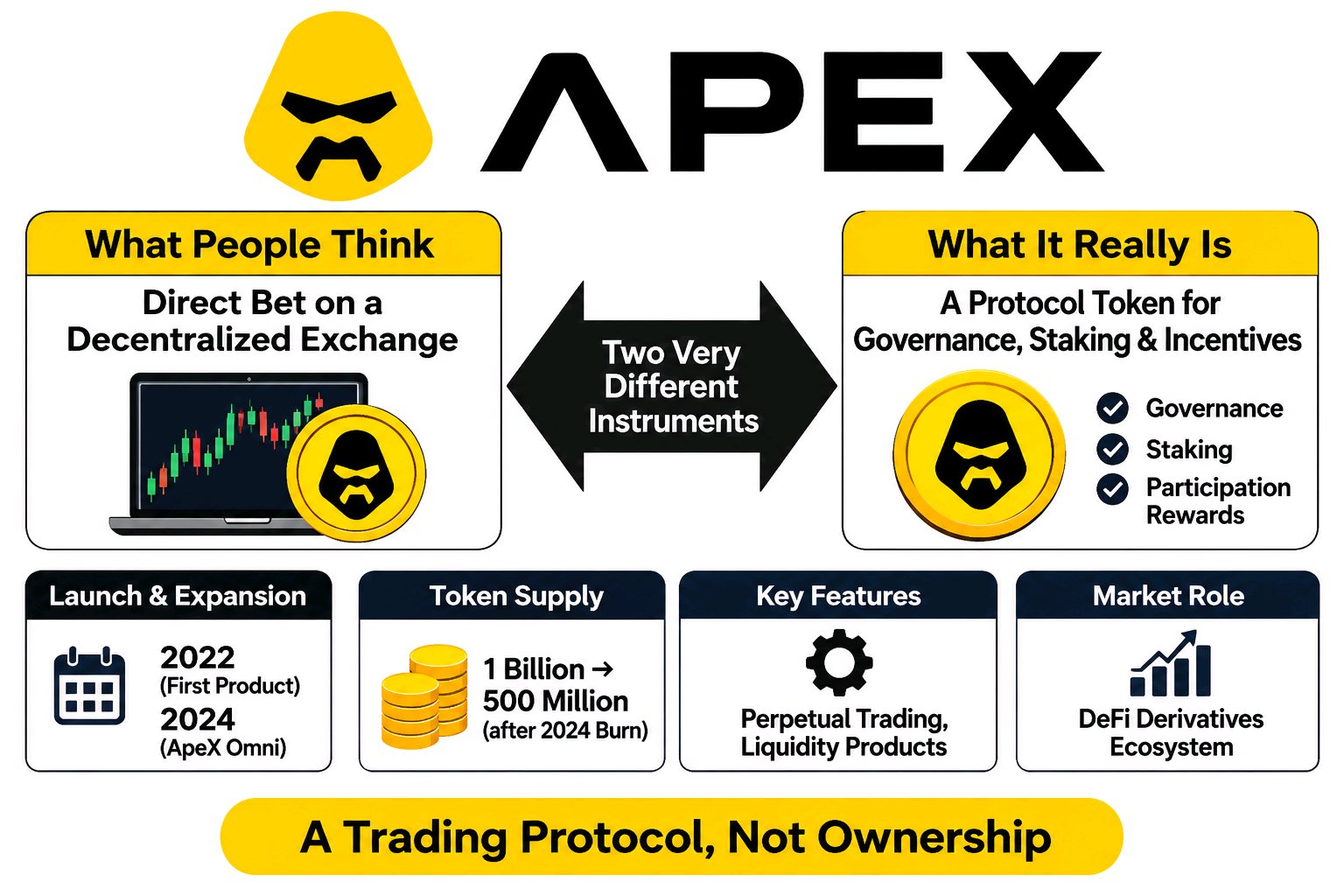
APEXは分散型取引所への直接的な賭けのように見えるかもしれませんが、トークンを保有することは、取引所を所有することや、その資産に対する請求権を持つこととは異なります。 ApeX Protocolは2022年に最初の製品を立ち上げ、その後2024年にApeX Omniを通じて拡大しました。2024年のバーン(焼却)を経て、トークンの供給量は10億APEXから5億APEXに削減されました。 見出しだけを読んでいると、その違いを見落としがちです。 APEXは、ガバナンス、ステーキング、そして参加インセンティブのために設計されたプロトコルエコシステムトークンです。保有者はAPEXをステーキングして報酬を獲得し、プロトコルの決定に参加できますが、このトークンは会社の株式、取引インフラの直接的な所有権、あるいは取引所の利益に対する保証された請求権を表すものではありません。その市場価格は、固定された償還価値ではなく、需給、ユーティリティ、そして市場の期待によって決定されます。 規模は重要です。ApeXは、無期限先物市場、流動性製品、およびその他の取引機能を備えた分散型デリバティブ取引エコシステムを運営しています。しかし、取引所の規模が、トークン保有者全員に対する同等の経済的請求権に自動的に変換されるわけではありません。 違いは単純です。取引プロトコルへのエクスポージャーは、ビジネスの所有権ではありません。APEXはエコシステムへの参加を表すものであり、その背後にあるすべてを所有しているわけではありません。 #ByXIMPACT $APEXUSDT
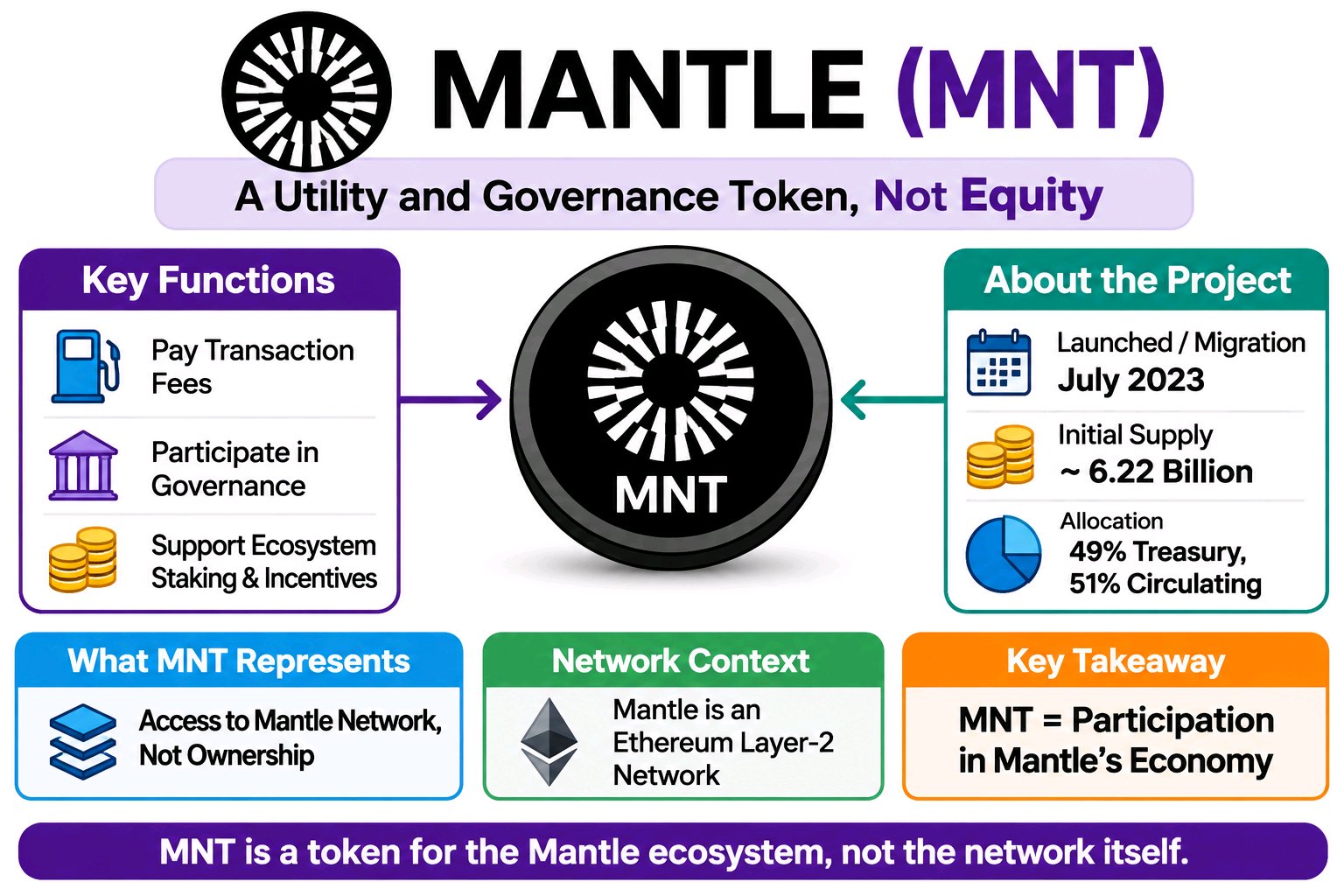
MNT may look like a direct bet on Mantle's entire ecosystem, but it is neither company equity nor a claim on network revenue. It is a utility and governance token whose value depends on demand for the Mantle ecosystem. MNT emerged from BitDAO's transition to Mantle, with the migration taking place in July 2023. Its initial total supply was approximately 6.22 billion tokens, with 49% allocated to the Mantle Treasury and 51% classified as circulating at the initial allocation snapshot. That distinction is easy to miss if you only read the headline. MNT has specific functions: paying transaction fees on Mantle Network, participating in governance, and supporting ecosystem staking and incentive mechanisms. Holders can participate in decisions about treasury allocations and ecosystem development, but holding MNT does not give them direct ownership of Mantle, a guaranteed share of profits, or a fixed redemption claim against treasury assets. The scale matters. Mantle operates as an Ethereum Layer-2 network, while MNT is the token used within its economic and governance structure. The network provides infrastructure for applications and transactions; the token provides access to specific functions and governance rights. These are related, but they are not the same financial exposure. MNT represents participation in Mantle's network economy, not ownership of the network itself. What matters is not the name, but what you are actually holding. #ByXIMPACT $MNTUSDT
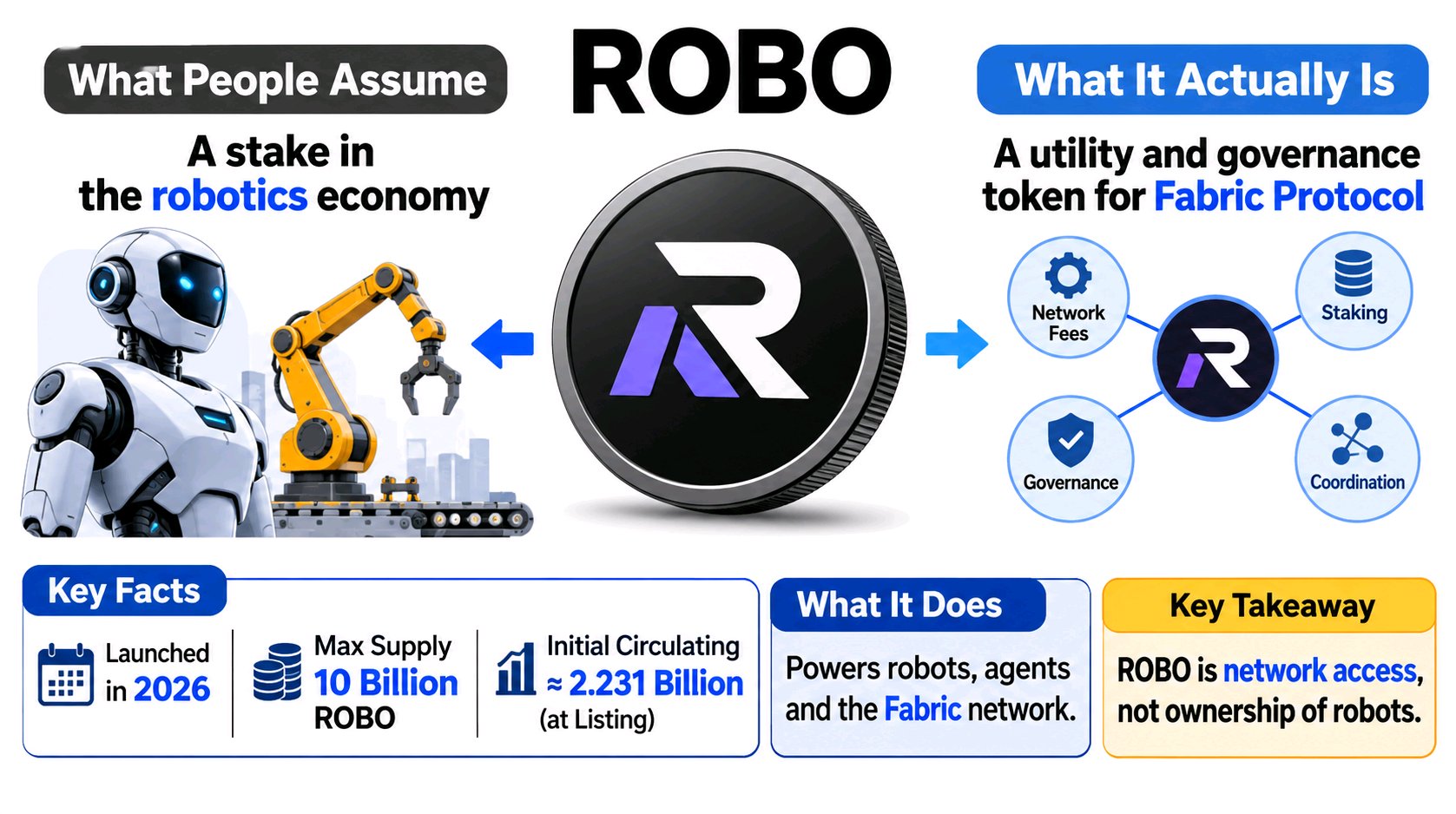
ROBOは成長するロボティクス経済の一部を所有する手段のように見えるかもしれませんが、このトークンを保有することは、ロボットそのものやその利益を所有することを意味しません。 その違いは根本的なものです。ROBOはFabric Protocolのユーティリティおよびガバナンストークンであり、物理的な機械に対する持分や、その経済的成果の配当権ではありません。 2026年にローンチされたROBOの最大供給量は100億トークンに固定されています。2026年3月の取引所上場時には、約22億3100万トークンが流通していました。 見出しだけを読んでいると、この違いを見落としがちです。 ROBOは、ロボット、自律エージェント、開発者をつなぐインフラを支えるために設計されています。ネットワーク手数料、運用ボンド(保証金)、ステーキング、調整、そしてガバナンスに使用されます。オペレーターはパフォーマンス保証としてトークンをステーキングでき、ネットワーク参加者はROBOを使用してサービスへのアクセスやマシン活動の調整を行います。 しかし、ロボットのハードウェア、企業の株式、配当、または基礎となる資産に対する自動的な請求権は存在しません。その経済的エクスポージャーは、Fabricのネットワークサービスへの需要や参加メカニズムから生じるものであり、ロボット産業の直接的な所有権から生じるものではありません。 100億トークンという供給量も、その規模を考える上で重要です。これは採用、利用、トークン需要、そして流通供給の力学に価値が依存するネットワーク・ユーティリティ資産です。ロボットのバスケットでもなければ、その生産性に対する保証された請求権でもありません。 ROBOは、ロボット経済のインフラへのアクセスを表すものであり、ロボットそのものの所有権ではありません。重要なのは、あなたが実際に何を保有しているかということです。 #ByXIMPACT$ROBOUSDT
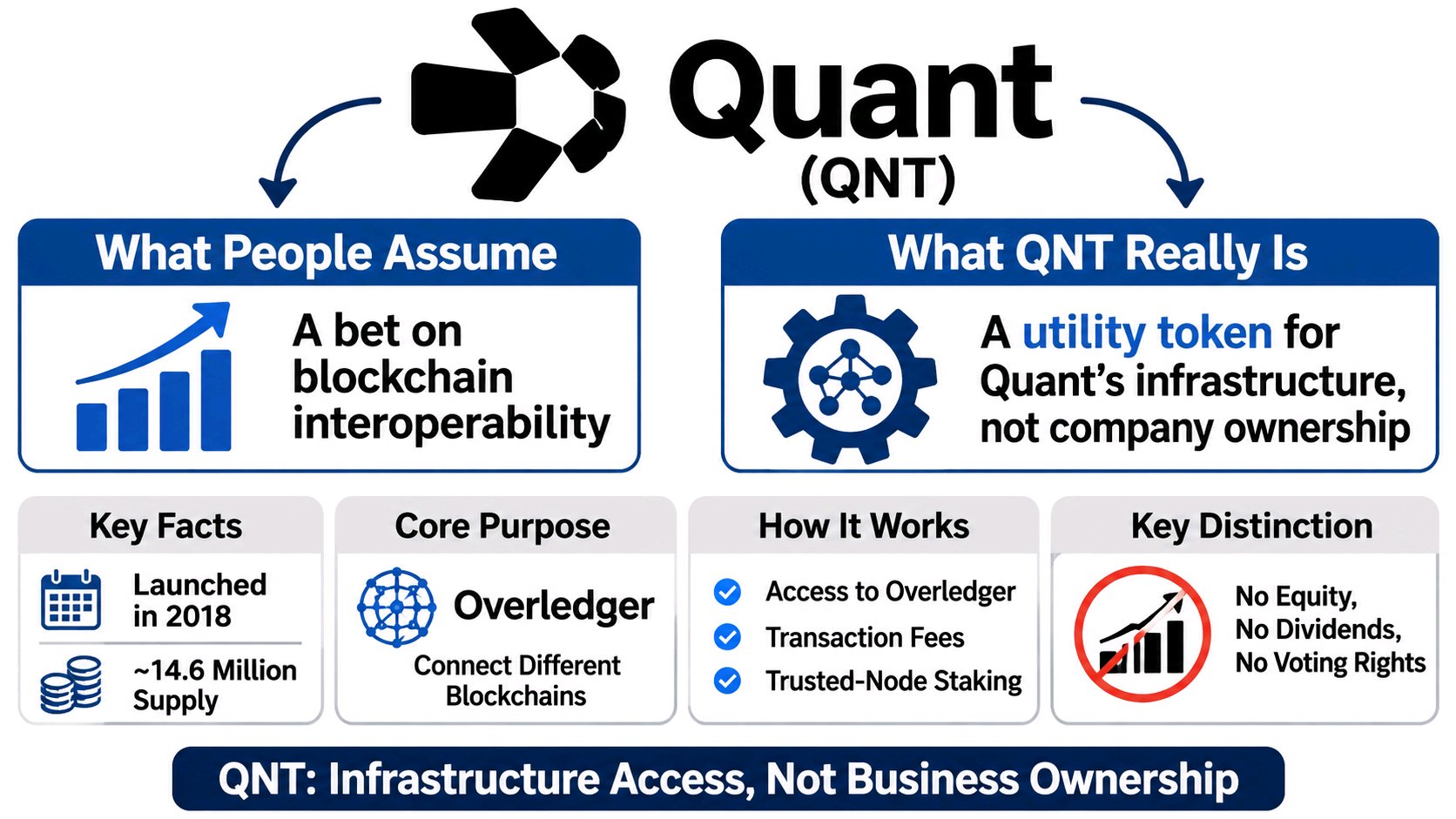
QNTはブロックチェーンの相互運用性への賭けのように見えるかもしれませんが、Quant Networkの所有権でも、機関投資家の収益に対する直接的な請求権でもありません。 その違いは単純です。QNTはQuantのインフラへのアクセスを提供するために設計されたユーティリティトークンであり、同社の株式ではありません。 2018年にイーサリアムベースのERC-20トークンとしてローンチされたQNTは、2018年9月に約955万トークンの大幅なバーン(焼却)が行われ、報告上の供給量は1461万となりました。その主要なエコシステムは、異なるブロックチェーンと既存の金融システムを接続するためのQuantの技術である「Overledger」を中心に展開しています。 見出しだけを読んでいると、その区別を見落としがちです。 QNTはOverledgerのライセンス取得やサービス利用に使用され、拡大するFusionインフラでは、取引手数料や信頼されたノードのステーキングに関連する新たな役割が導入されています。QNTを保有していても、自動的にQuant Networkの所有権、配当、議決権、または企業契約に対する請求権が得られるわけではありません。 この違いは、その規模を考えると重要です。報告されている供給量が約1460万トークンであるQNTは、多くの大型仮想通貨資産と比較してトークンの基盤が比較的限られています。しかし、供給量が限られていることだけで機関投資家の採用が保証されたり、企業の収益とトークン保有者の利益が直接結びついたりするわけではありません。 QNTはQuantのインフラへのアクセス権を表すものであり、その背後にあるビジネスの所有権を表すものではありません。真の違いは、あなたが実際に何を保有しているかという点にあります。 #ByXIMPACT $QNTUSDT
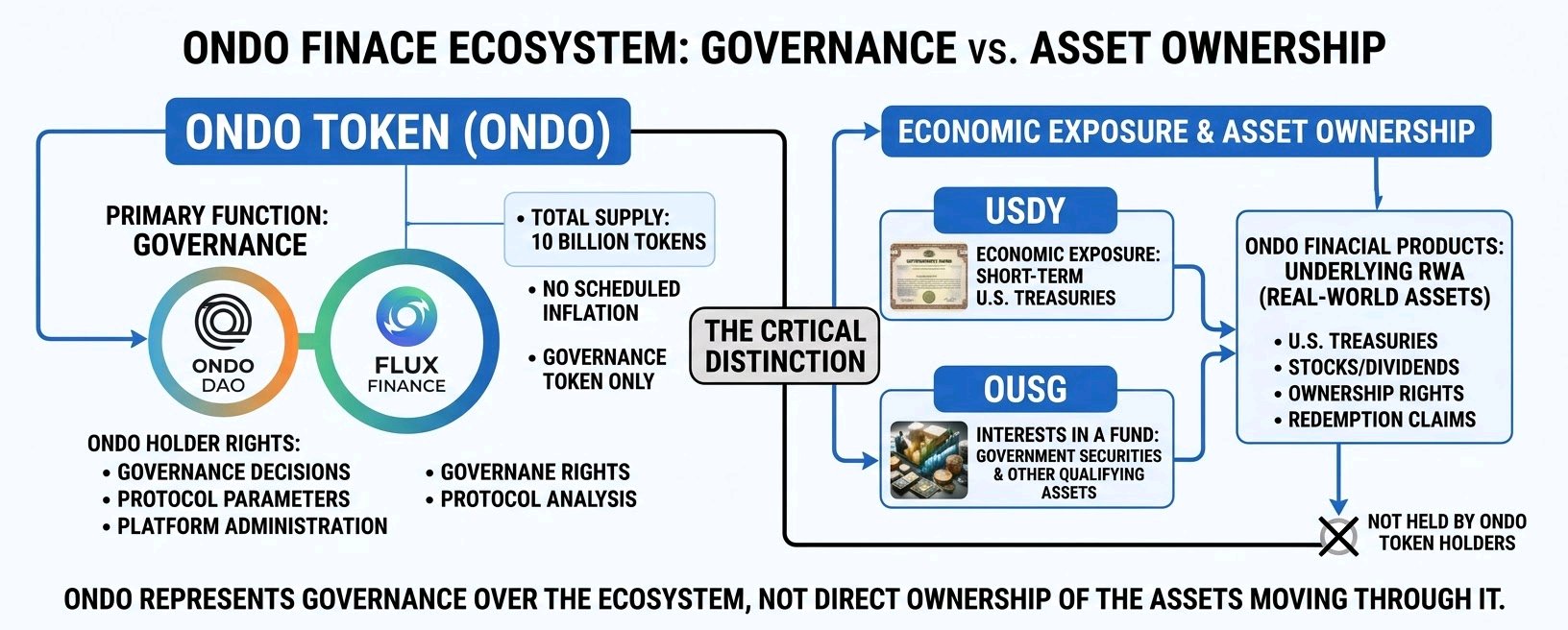
ONDOは、トークン化された米国債や現実資産(RWA)への直接的な投資のように見えるかもしれませんが、ONDOを保有することは、それらの資産を所有することを意味しません。重要なのは、エコシステムのガバナンス(統治)と、そのプロダクトから得られる経済的リターンを受け取ることは別物であるという点です。 ONDOは**100億トークン**の初期供給量でローンチされました。Ondo DAOおよびFlux Financeのガバナンストークンとして機能し、現在のトークン設計において予定されたインフレは存在しません。 見出しだけを読んでいると、その違いを見落としがちです。 ONDO保有者は、プロトコルのパラメータやプラットフォームの運営を含むガバナンスの決定に参加します。彼らは自動的に米国債の利回り、株式配当、所有権、またはOndoの根底にある金融商品に対する償還請求権を受け取るわけではありません。 それらのエクスポージャーは、USDYやOUSGといった個別の金融商品に帰属します。USDYは短期米国債への経済的エクスポージャーを提供し、OUSGは短期政府証券やその他の適格資産に投資するファンドの持分を表しています。 規模の違いは重要です。Ondoのエコシステムはブロックチェーンインフラと数十億ドル規模の現実資産市場を繋いでいますが、それらの金融商品の中に保持されている価値と、ONDO自体が表す価値は同じものではありません。 **ONDOはエコシステムのガバナンスを表すものであり、その中を移動する資産の直接的な所有権を表すものではありません。** 違いはOndoという名称ではなく、あなたが実際に何を保有しているかという点にあります。 $ONDOUSDT #ByXIMPACT
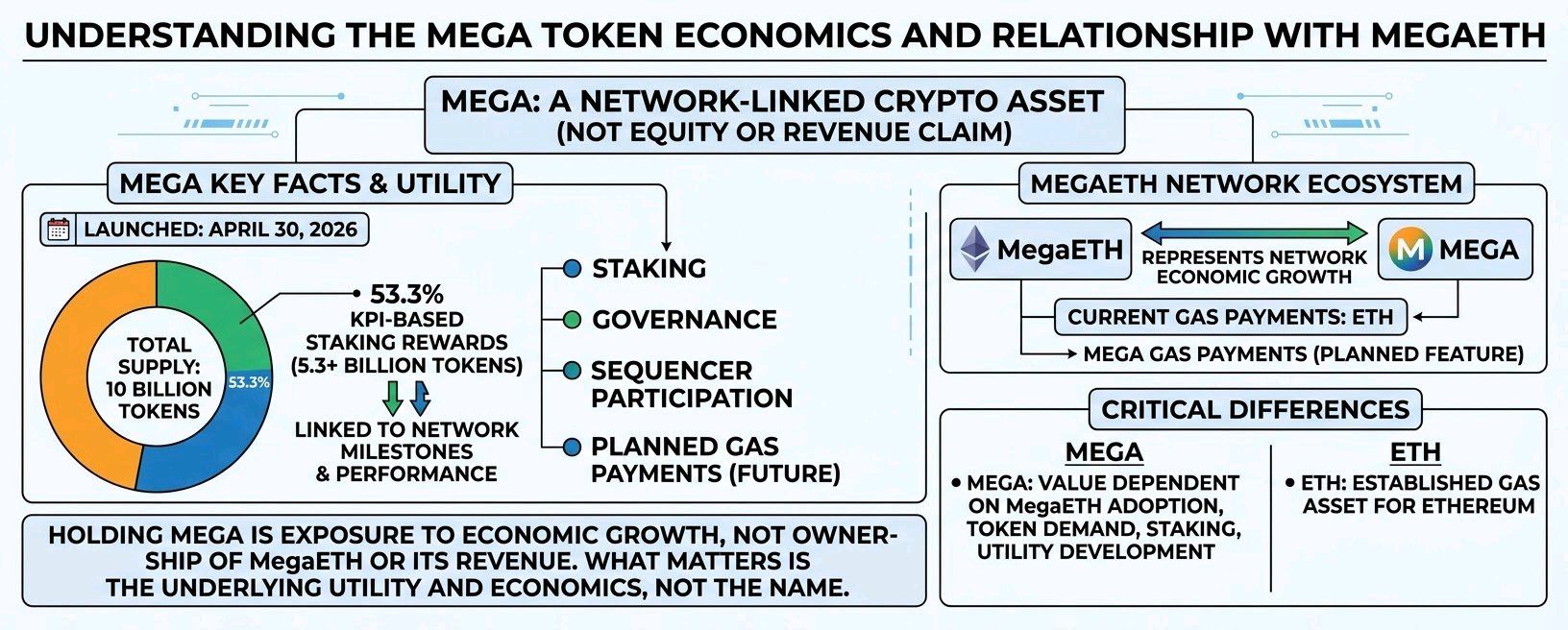
MEGAはEthereumの次世代スケーリング革命への直接的な賭けのように見えるかもしれませんが、MEGAを保有することは、MegaETHやその収益のシェアを所有することとは異なります。 2026年4月30日にローンチされたMEGAは、100億トークンの固定供給量を持ちます。最も特異な点は、供給量の53.3%がKPIベースのステーキング報酬に割り当てられており、ネットワークが特定のパフォーマンスやエコシステムの目標を達成するにつれて解放されることです。 見出しだけを読んでいると、この違いを見落としがちです。 MEGAはネットワーク連動型の暗号資産であり、株式請求権や米ドルペッグトークン、あるいは原資産に対する償還請求権ではありません。意図されている役割には、ステーキング、ガバナンス、シーケンサーへの参加、そして将来的なガス代の支払いが含まれます。ただし、現在の取引手数料にはETHが使用されており、MEGAによるガス代支払いは計画段階の機能にとどまっています。 供給構造により、この違いはさらに重要になります。53億トークン以上がマイルストーンベースの報酬として確保されており、これは将来の供給分配が単なる従来の暦ベースのベスティングスケジュールに従うのではなく、ネットワークの進捗状況に連動していることを意味します。 Ethereumの確立されたガス資産としてすでに機能しているETHとは異なり、MEGAの経済的価値はMegaETHの採用、トークン需要、ステーキングへの参加状況、そして計画されているユーティリティがどれだけ成功裏に発展するかによって左右されます。 MEGAはネットワークそのものの所有権ではなく、ネットワークの経済的成長へのエクスポージャーを表すものです。重要なのは名前ではなく、実際に何を保有しているかということです。#ByXIMPACT $MEGAUSDT
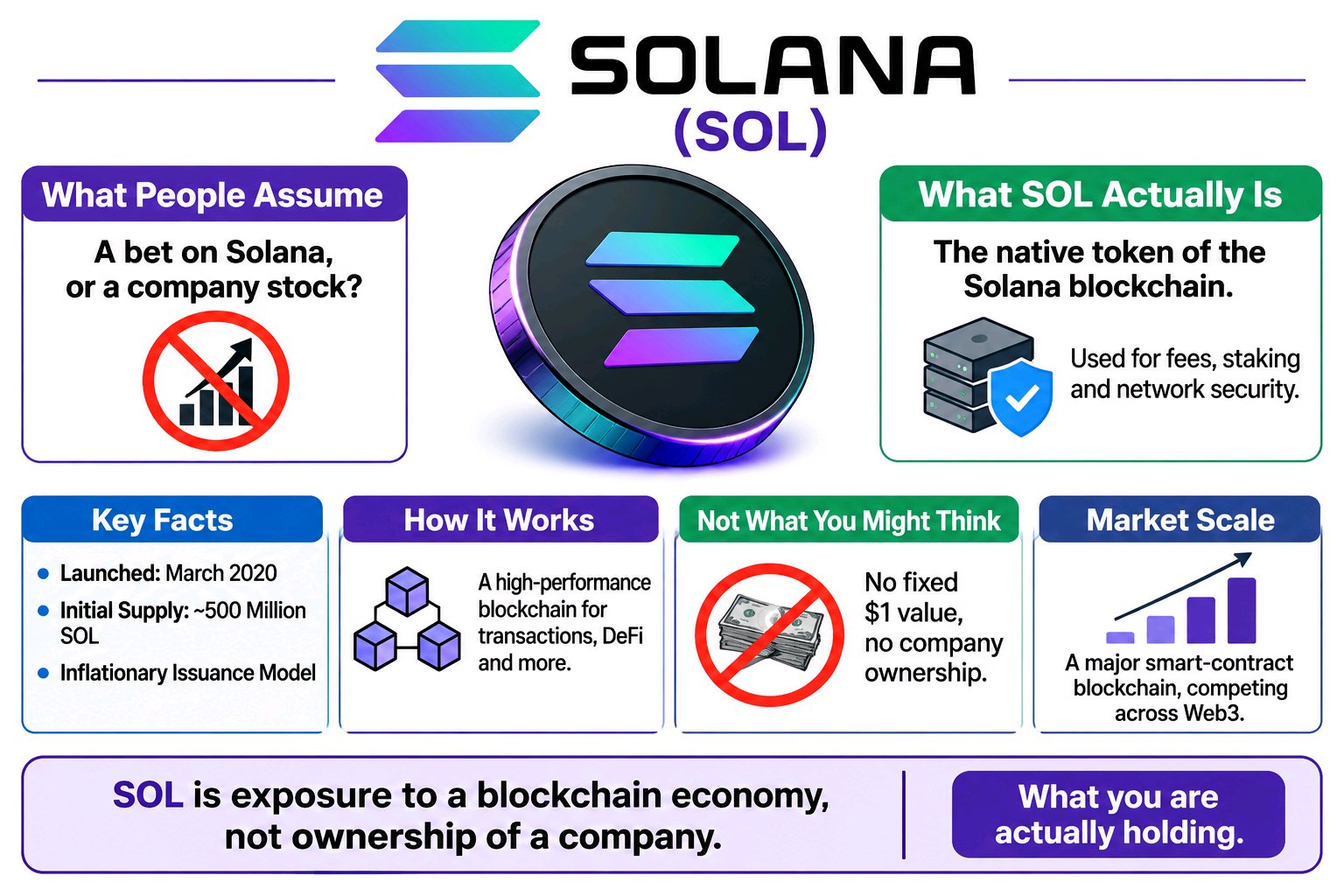
SOLはSolanaへの賭けと表現されるかもしれませんが、これは企業の株式でもドルペッグ資産でもありません。その価格は、固定された償還価値ではなく、ネットワークのネイティブトークンに対する市場の需要によって決定されます。 Solanaは2020年3月にメインネットベータ版を立ち上げ、初期トークン供給量は約5億SOLでした。固定供給資産とは異なり、SOLはインフレ的な発行モデルを採用しており、新規発行されたトークンはステーキング報酬を支えています。 この違いは、見出しだけを読んでいると見落としがちです。 SOLを保有することは、Solana Labsの株式を所有することや、その利益を請求すること、あるいはトークンをドルに償還する権利を持つことを意味するわけではありません。SOLはSolanaブロックチェーンのネイティブ資産です。これは、取引手数料の支払い、ステーキングへの参加、そしてネットワークの経済的セキュリティをサポートするために使用されます。 その規模ゆえに、この区別は重要です。Solanaは、決済、DeFi(分散型金融)、取引、アプリケーションなどの分野で活動を競う主要なスマートコントラクトブロックチェーンです。SOLの経済的エクスポージャーは、企業への所有権や保証されたドル価値ではなく、ネットワークの採用状況、トークンの需要、ステーキングへの参加率、そして変動する供給量に結びついています。また、最初の5億トークンは、プロトコルによる発行が継続され、手数料のバーン(焼却)がその一部を相殺するため、恒久的に固定された供給量とは根本的に異なります。GitHub +1 SOLはブロックチェーン経済へのエクスポージャーであり、その背後にある企業の所有権ではありません。重要なのは、実際に何を保有しているかということです。 #ByXIMPACT $SOLUSDT
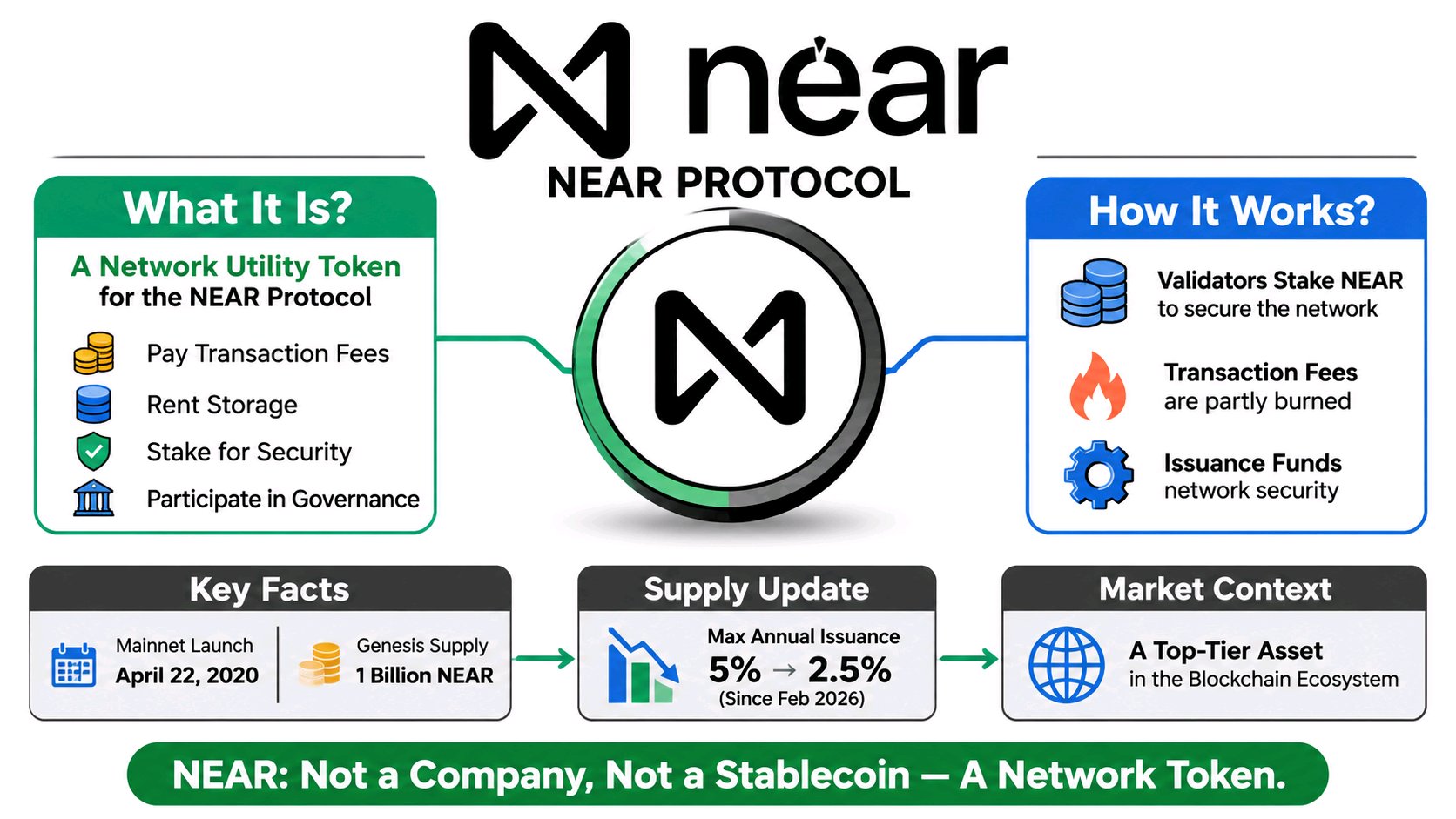
NEARはAI特化型ブロックチェーンへの賭けのように見えるかもしれませんが、実際にはNEARプロトコルの経済活動に直接的なエクスポージャーを持つネットワークユーティリティトークンです。 NEARは2020年4月22日にメインネットを立ち上げ、ジェネシス(最初期)に10億トークンが発行されました。その後トークノミクスは進化し、2026年2月のアップグレードにより、最大年間発行量は5%から2.5%に削減されました。 見出しだけを読んでいると、この違いは見落としがちです。 NEARは企業の株式でも、米ドル連動型のステーブルコインでも、ネットワーク資産に対する直接的な請求権でもありません。これは取引手数料、ストレージ、ステーキング、ガバナンスに使用されるネイティブトークンです。バリデーターはネットワークのセキュリティを維持するためにNEARをステーキングし、プロトコルの発行によってネットワークのセキュリティが賄われます。取引手数料の一部はバーン(焼却)され、新規発行分を相殺する仕組みとなっています。 重要な違いは、NEARの供給量が固定されていないという点です。その経済性は発行量、ステーキング需要、ネットワーク利用状況、手数料のバーン、そしてプロトコルがアプリケーションから価値を獲得する能力に依存します。たとえ採用が拡大しても、それが自動的にトークンの価値上昇を保証するわけではありません。 価格を固定するように設計されたステーブルコインとは異なり、NEARはボラティリティの高いネットワーク資産として取引されており、その市場価値は将来のユーティリティと需要に対する期待を反映しています。 NEARはブロックチェーン企業の所有権ではなく、あなたが実際に保有しているものを通じて、そのネットワークの経済状況にエクスポージャーを持つことを意味します。 #ByXIMPACT $NEARUSDT
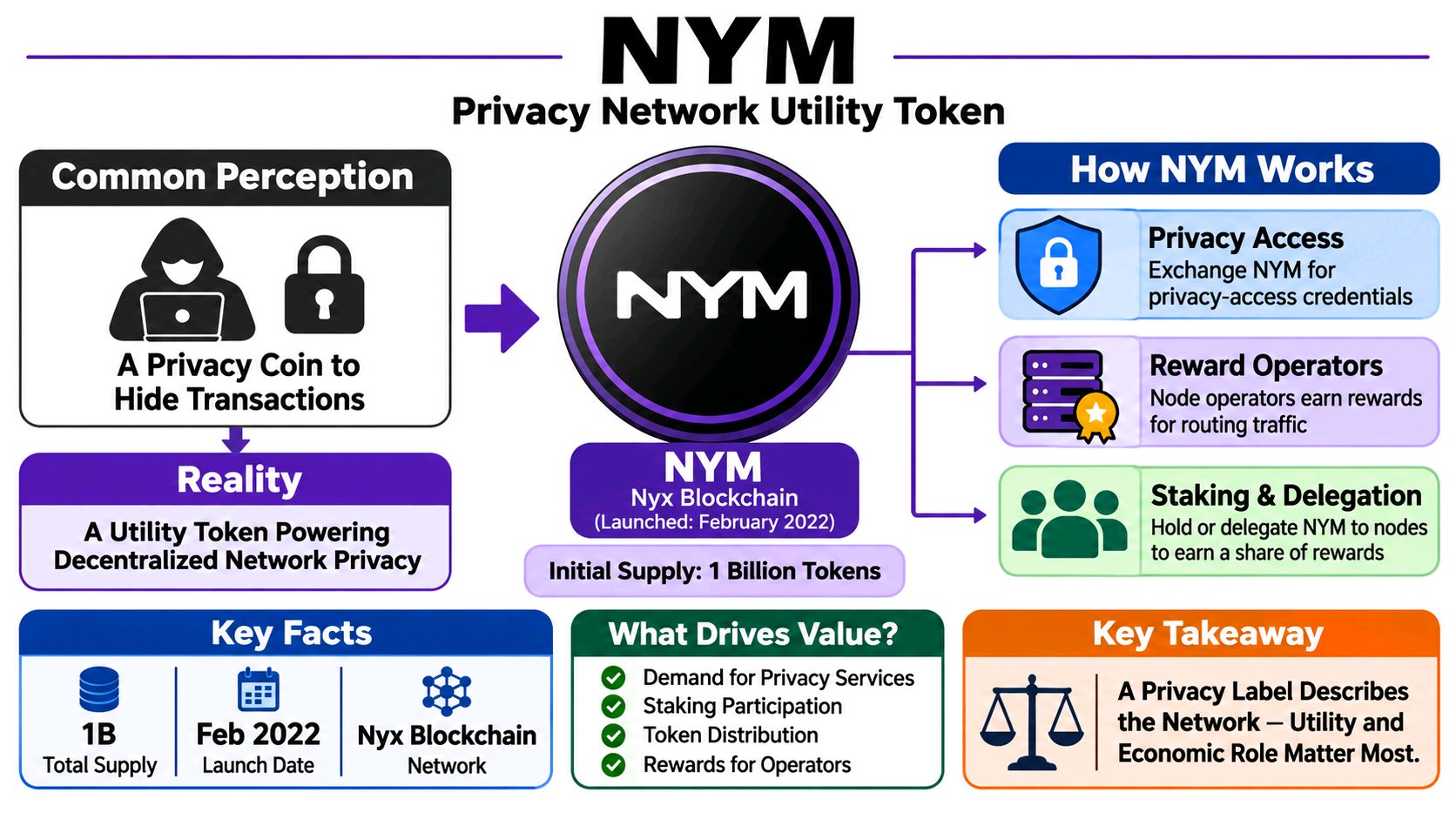
NYMは、トランザクションを隠すためのプライバシーコインのように見えるかもしれませんが、実際には分散型ネットワークのプライバシーを強化するユーティリティトークンです。 NYMは2022年2月にNyxブロックチェーン上でローンチされ、初期供給量は10億トークンに固定されていました。これは、ネットワークオペレーターへの報酬、ステーキングのサポート、そしてNymのプライバシーインフラへのアクセスを容易にするために設計されました。 Nym +1 見出しだけを読んでいると、その違いは見落としがちです。 NYMはNym Technologies社の所有権や利益に対する請求権、あるいはドルペッグ資産を表すものではありません。その経済的役割はネットワークへの参加から生まれます。ユーザーはNYMをプライバシーアクセス認証情報と交換でき、ノードオペレーターはトラフィックをルーティングすることで報酬を得られ、トークン保有者はノードにトークンを委任(デリゲート)して評価を構築し、報酬の一部を獲得できます。 Nym +1 その規模が重要です。10億トークンの供給量は、従来のプライバシー通貨モデルではなく、インフラ経済を支えるためのものです。NYMの価値は、ネットワークサービスへの需要、ステーキングへの参加、トークンの配布、そしてオペレーターへの報酬体系に結びついています。トークンの背後には、固定ドルでの償還保証はありません。 Nym Docs +1 プライバシーというラベルはネットワークを説明するものです。重要なのは、実際に保有しているもののユーティリティ(有用性)と経済的なエクスポージャーです。 $NYMUSDT #ByXIMPACT
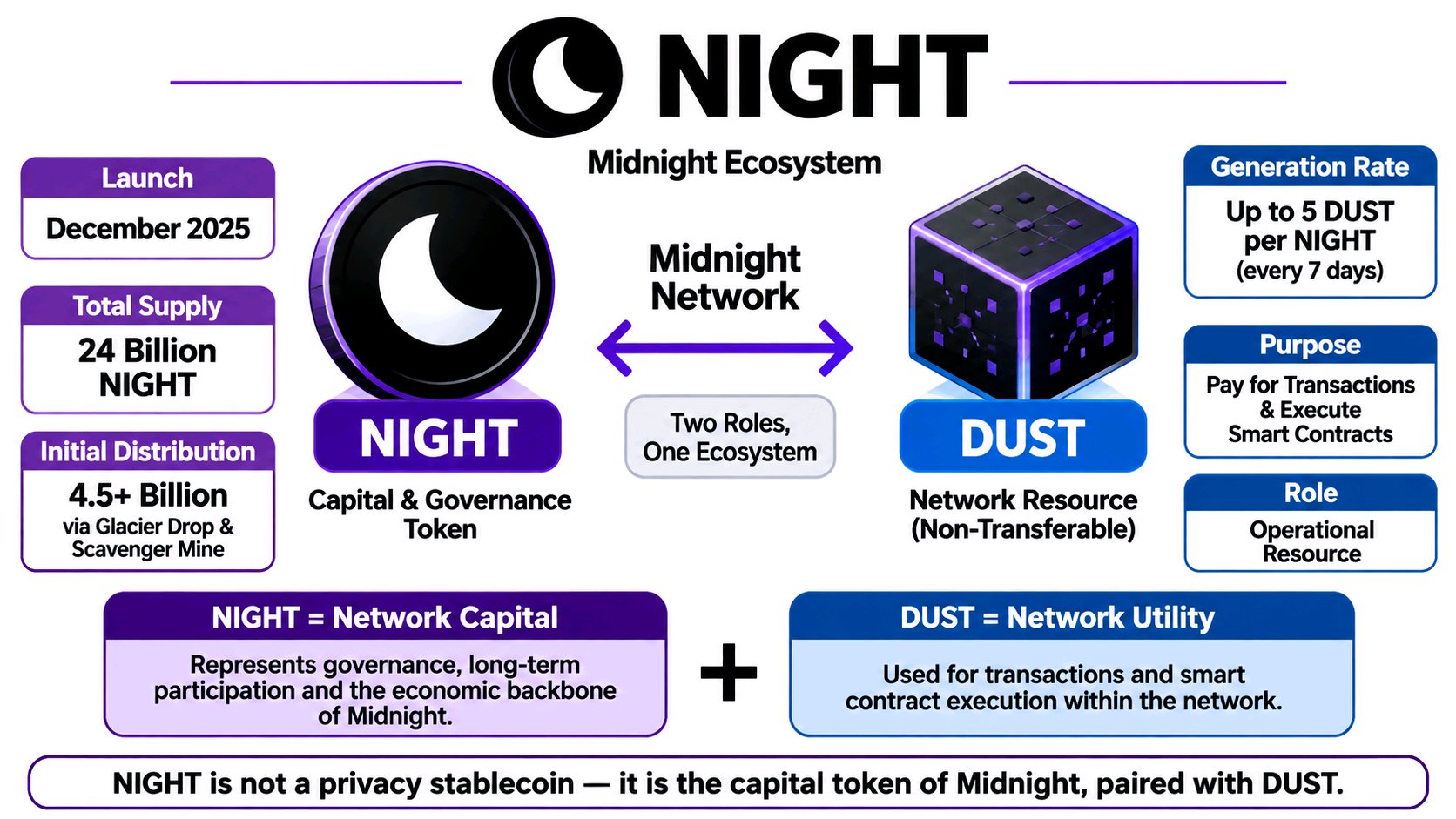
NIGHT may look like another privacy coin, but it is not designed to hide its own market value or represent a claim on private assets. It is the native capital and governance token of Midnight, with a separate resource called DUST handling network operations. Launched in December 2025 with a fixed total supply of 24 billion tokens, NIGHT was initially issued on Cardano. More than 4.5 billion tokens were claimed through the Glacier Drop and Scavenger Mine distribution phases. That distinction is easy to miss if you only read the headline. NIGHT is not a privacy-based stablecoin, a dollar-pegged asset, or a direct claim on underlying collateral. Holding NIGHT generates DUST, a non-transferable resource used to pay for transactions and execute smart contracts. Each NIGHT can generate up to 5 DUST over seven days. NIGHT also carries governance and long-term network participation functions. The economic separation matters. NIGHT represents the capital and governance side of the ecosystem, while DUST represents operational capacity. Its 24 billion token supply and phased community distribution make it a network asset rather than a conventional payment token. Community allocations also follow a scheduled unlocking process, not a fixed-value redemption promise. NIGHT is exposure to Midnight's network economics, not ownership of a private dollar reserve. The distinction is what you are actually holding. Sources: Midnight Network +3 #ByXIMPACT$NIGHTUSDT
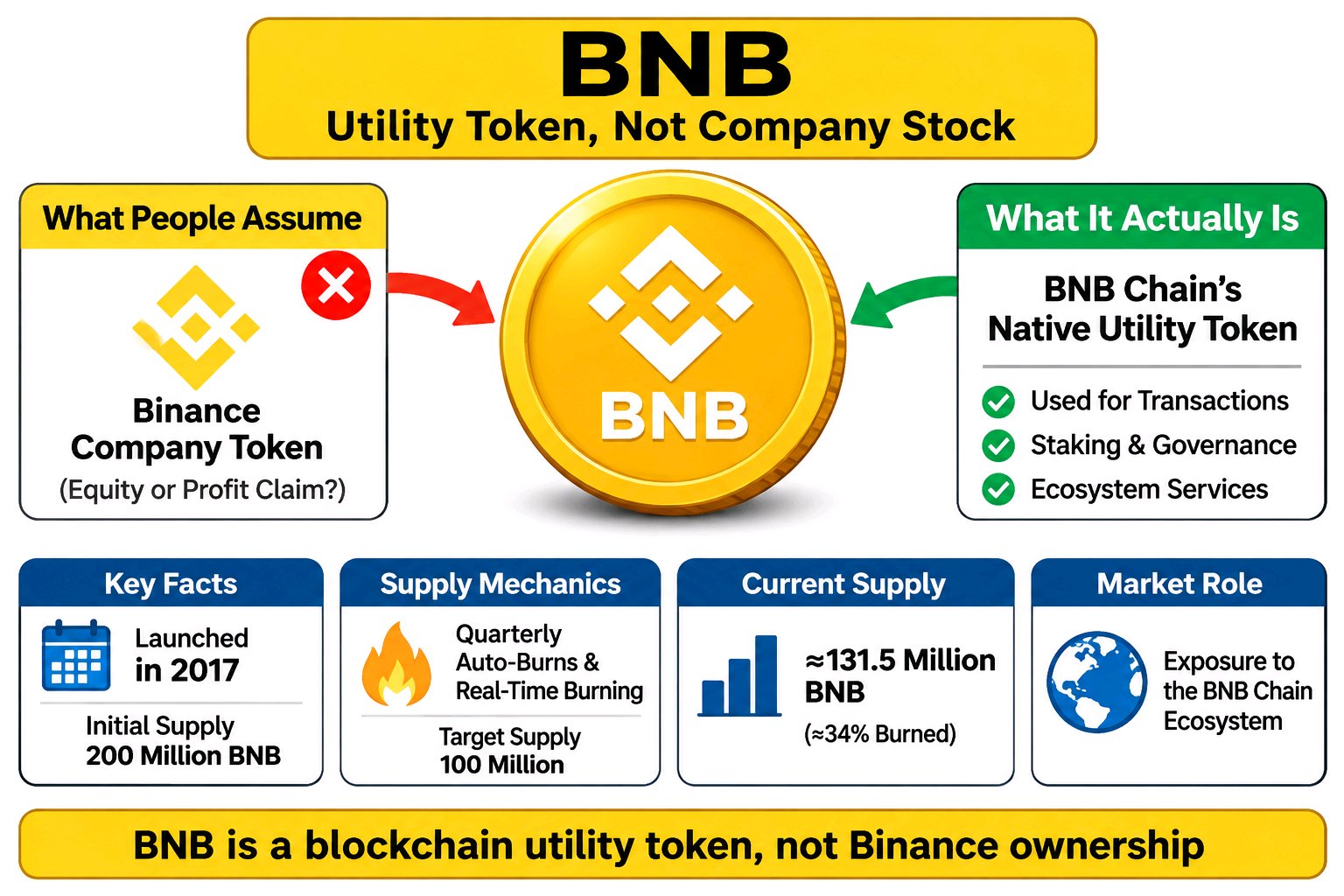
BNB may look like Binance's company token, but it is neither company stock nor a claim on Binance's profits. It is the native utility asset of the BNB Chain ecosystem, with its own market-driven price and declining supply mechanics. Launched in 2017 with an initial supply of 200 million BNB, the token was distributed through an ICO, founding allocations, and investor allocations. Its long-term supply target is 100 million tokens, supported by quarterly Auto-Burns and real-time gas-fee burning. SEC +2 That distinction is easy to miss if you only read the headline. Holding BNB does not give you equity in Binance, ownership of its assets, or a contractual right to its revenue. Instead, it provides exposure to the BNB ecosystem through transaction fees, staking, governance participation, and other network utilities. Its price depends on market demand, ecosystem activity, and supply dynamics. The scale matters: the original 200 million supply had fallen to approximately 131.5 million BNB after the 37th quarterly burn in October 2026. That is roughly 34% removed from the original supply. But burning tokens does not guarantee price appreciation, and a shrinking supply is not the same as a corporate profit claim. BNB Chain Blog +1 BNB is exposure to a blockchain ecosystem, not ownership of Binance. What matters is what you are actually holding. #ByXIMPACT $BNBUSDT
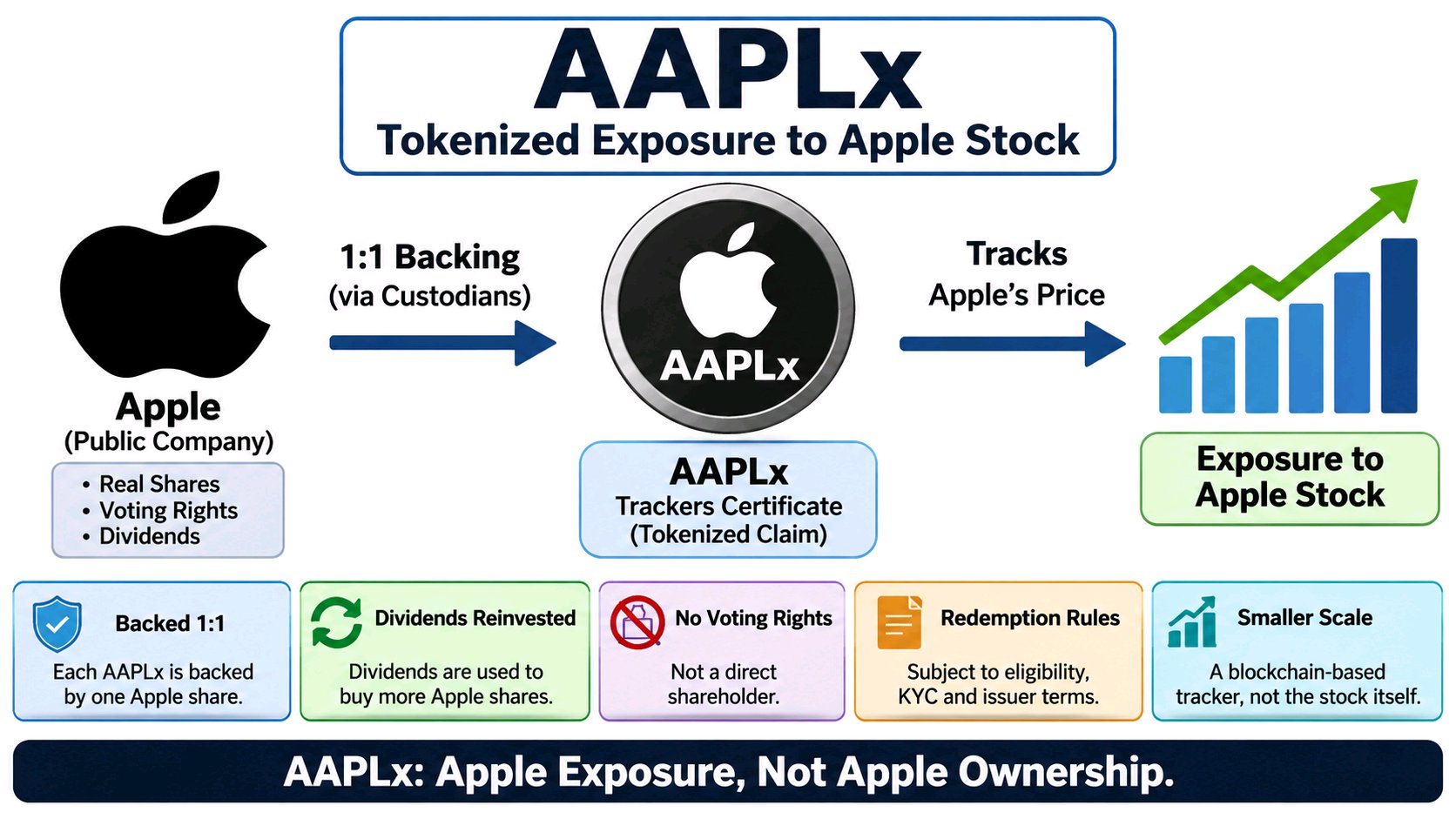
AAPLxは、ブロックチェーン上でApple株を保有しているように見えるかもしれませんが、実際にはAppleの株価に連動するトークン化された金融債権であり、直接的な株式所有ではありません。 2025年6月10日にBacked Assets (JE) Limitedを通じて開始されたAAPLxは、規制されたカストディアンによって保有される裏付け資産であるApple株によって1:1で裏付けられ、Apple株1株分の経済的エクスポージャーを表すように設計されています。<Cite refs={["turn772448search0","turn772448search1"]}/> その違いは、見出しだけを読んでいると見落としがちです。 AAPLxはトラッカー証明書として構成されています。その価値はAppleの株価に追従し、配当金は追加の裏付け株式に再投資され、トークンの調整を通じて反映されます。保有者は直接的な株主投票権を受け取ることはなく、Appleの登録株主になることもありません。償還には、適格要件、本人確認、最低金額、発行体の条件が適用されます。<Cite refs={["turn772448search12","turn772448search0","turn772448search7"]}/> 規模の違いは重要です。Appleは広大な伝統的株式市場を持つ上場企業ですが、AAPLxはそれと比較して、その市場へのブロックチェーンベースの小さなエクスポージャーのレイヤーを表しています。そのトークン供給量と償還構造は、Apple株を直接所有することと同等にはなりません。 AAPLxはAppleへのエクスポージャーをオンチェーンに載せるものであり、あなたの手にAppleの所有権をもたらすものではありません。 $AAPLXUSDT #ByXIMPACT
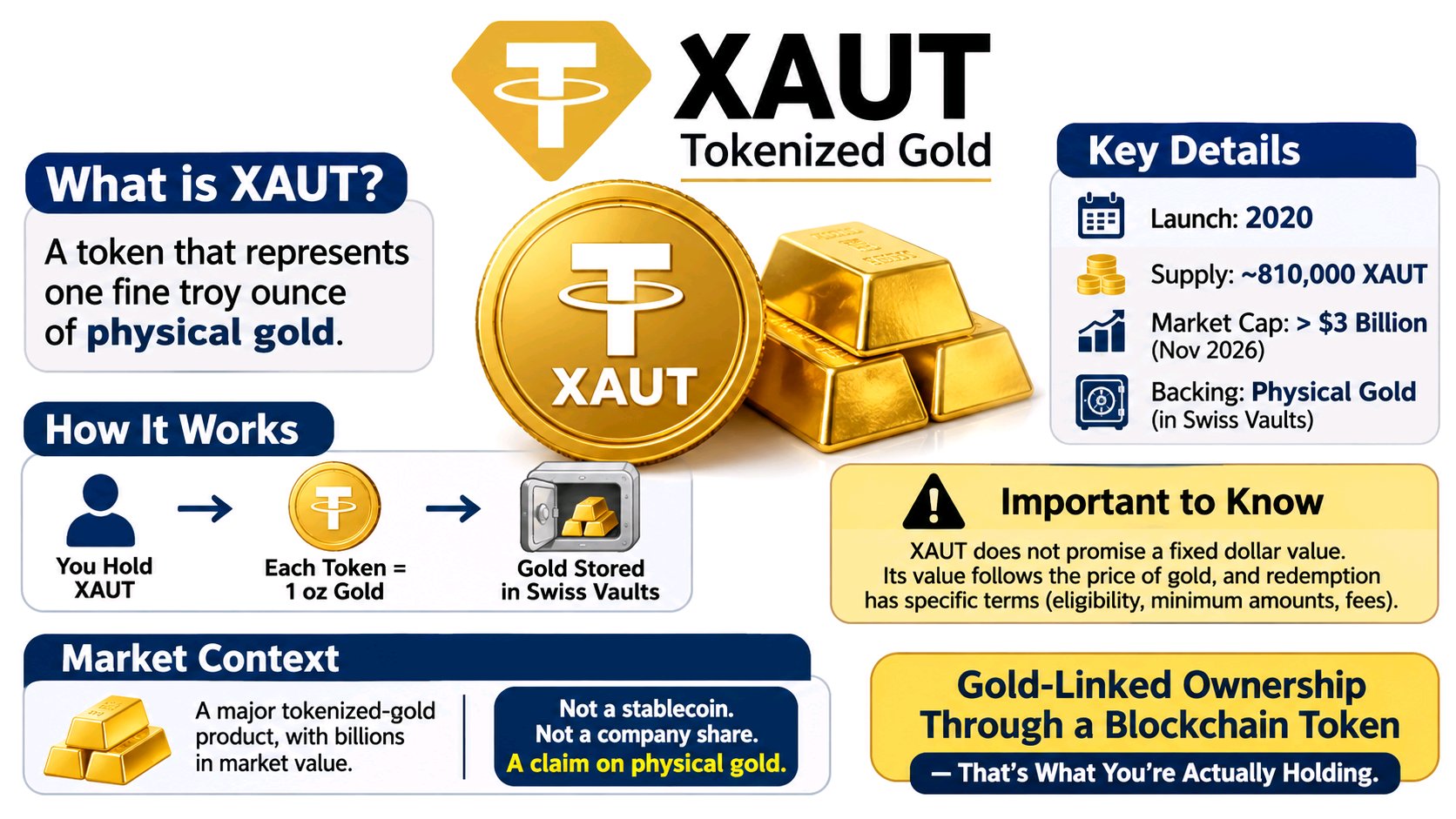
XAUTは単なるゴールド連動型の暗号資産に見えるかもしれませんが、これはドルペッグや暗号資産企業の所有権ではなく、現物ゴールドのエクスポージャーに対する請求権を表すものです。 Tether社が2020年に発行したXAUTは、各トークンがスイスの保管庫に保管されている1トロイオンスの純金に対応するように設計されています。その供給量は、トークンの発行と償還に伴って増減します。 見出しだけを読んでいると、この違いを見落としがちです。 XAUTは固定のドル価値を約束するものではありません。その経済的価値はゴールドの市場価格に追従しますが、保有者が現物ゴールドを償還できるかどうかは、Tether社の適格要件、最低数量、手数料、および償還条件に左右されます。 2026年11月時点で流通量が約81万トークン、時価総額が30億ドルを超えるXAUTは、主要なゴールドトークン化商品となりました。しかし、その規模をもってしても、自由にアクセスできる地金(地金)を保有することと同義ではありません。CoinGecko +1 その違いは単純です。ブロックチェーン上のトークンを通じたゴールド連動型の所有エクスポージャーは、現物のゴールドを物理的に保有・管理することとは異なります。XAUTの本質は、結局のところ「何を実際に保有しているのか」という点にあります。 #ByXIMPACT $XAUTUSDT
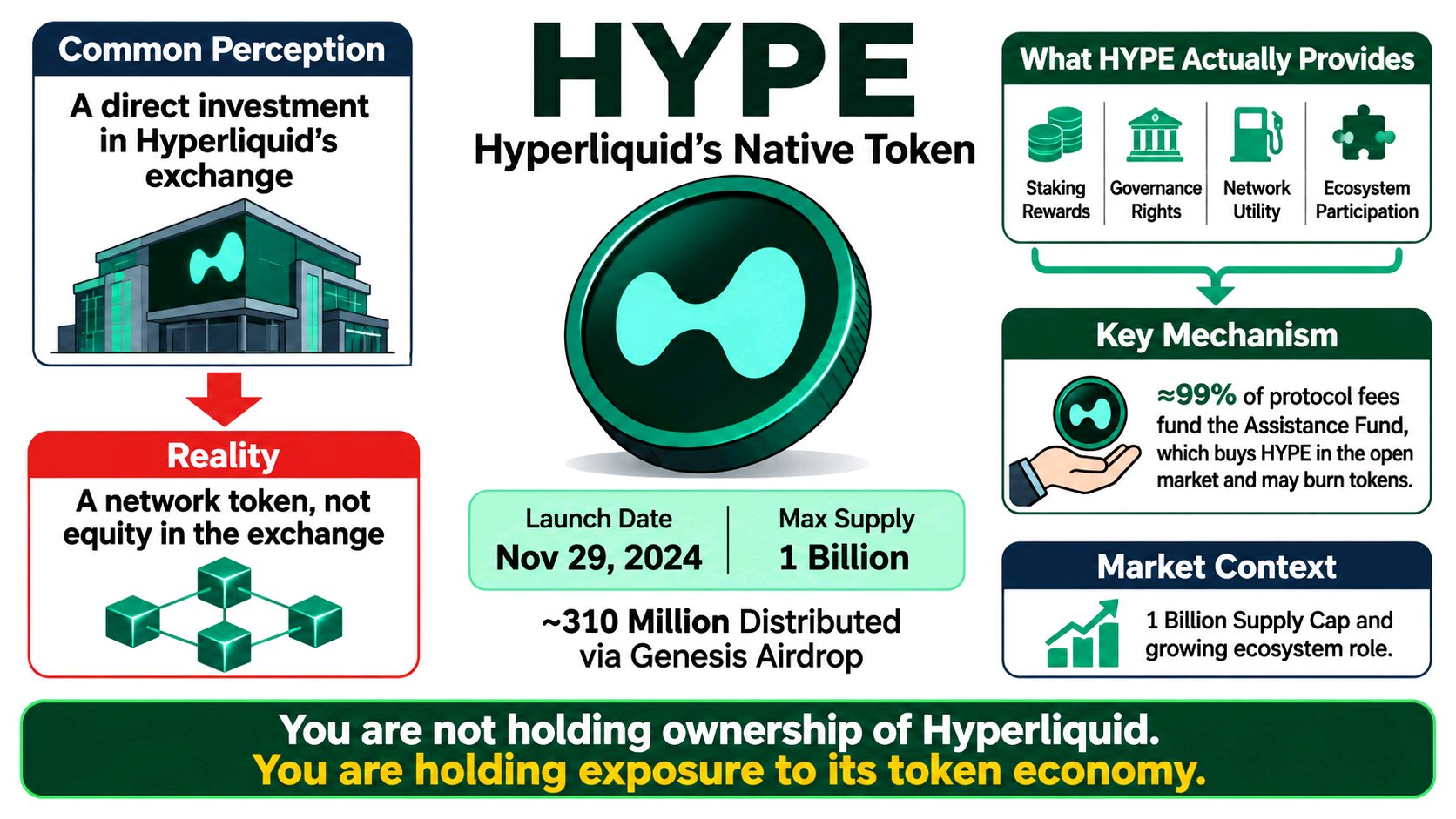
HYPE may look like a direct investment in Hyperliquid's exchange, but it is actually a network token whose value depends on market demand, protocol activity, and token economics. Launched on November 29, 2024, HYPE has a maximum supply of 1 billion tokens, with approximately 310 million distributed to early users through its genesis airdrop. That distinction is easy to miss if you only read the headline. Holding HYPE does not mean owning shares in Hyperliquid or having a direct legal claim on its revenue. The token provides staking, governance, network fee utility, and ecosystem participation. Its economic exposure comes from demand for the token and mechanisms connecting protocol activity to token purchases. One important mechanism is the Assistance Fund. Approximately 99% of protocol fees are allocated to it, funding open-market HYPE purchases, with acquired tokens potentially burned. This creates a connection between exchange activity and token demand, but it does not guarantee price appreciation or give holders a direct dividend claim. With a 1 billion token supply cap and a growing role across Hyperliquid's trading and blockchain infrastructure, HYPE is more than an exchange-related speculative asset. But it is not equity in the exchange either. You are not holding ownership of Hyperliquid. You are holding exposure to its token economy. #ByXIMPACT
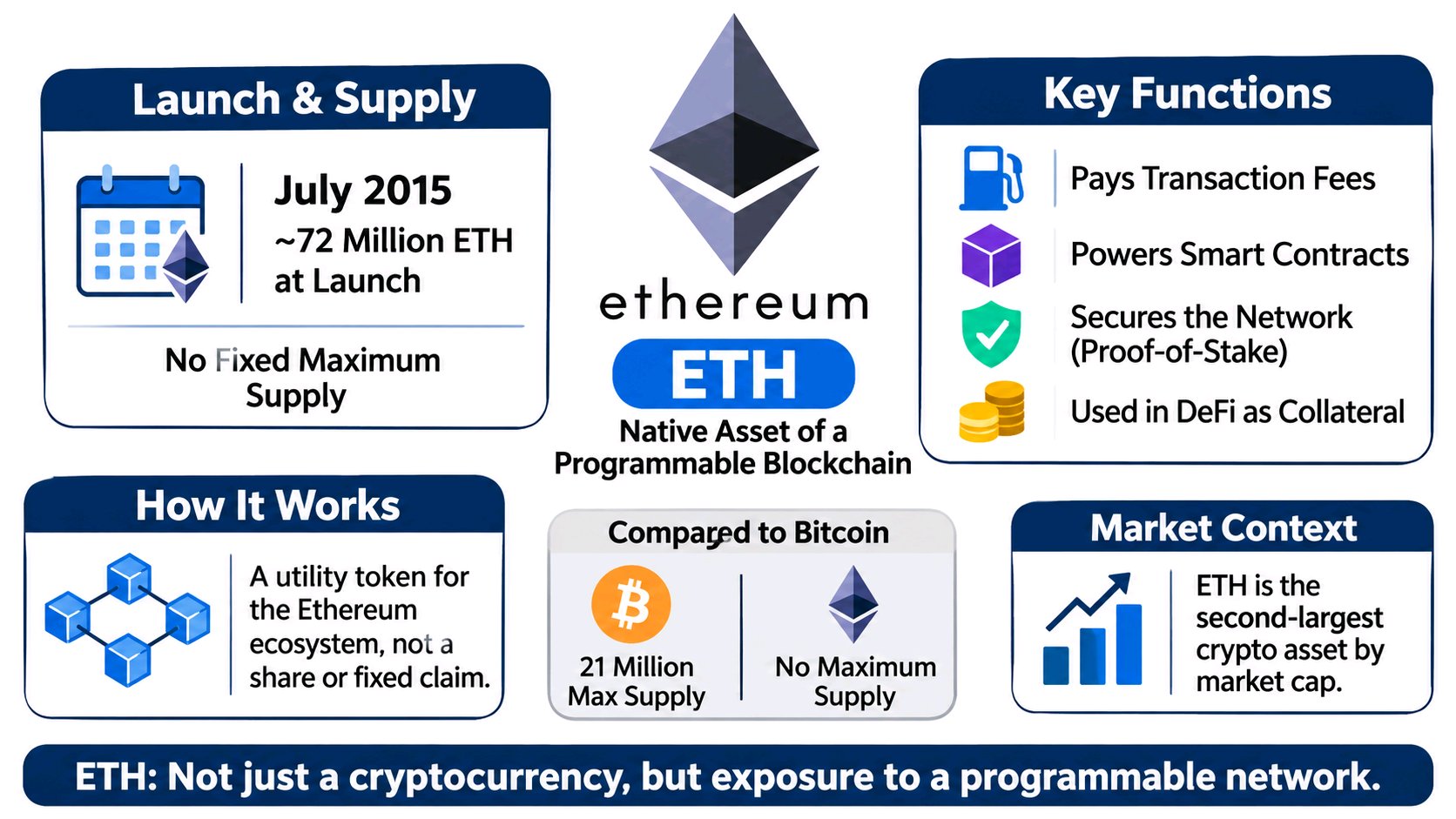
Ethereum may be described as another cryptocurrency competing with Bitcoin, but ETH is fundamentally different: it is the native asset of a programmable blockchain, not a claim on a company or a fixed-value asset. Ethereum launched in July 2015 with an initial supply of approximately 72 million ETH. Unlike Bitcoin’s fixed 21 million supply cap, ETH has no permanent maximum supply. That distinction is easy to miss if you only read the headline. ETH serves multiple economic functions within Ethereum. It pays transaction fees, powers smart-contract execution, secures the network through staking, and acts as collateral across decentralized finance. Since Ethereum introduced proof-of-stake in September 2022, validators have staked ETH to help secure the network and earn rewards. Meanwhile, transaction-fee burning can remove ETH from circulation, meaning supply changes through both issuance and destruction. The important difference is that ETH's economic exposure comes from demand for blockspace, network security, staking, and its role as an asset within the Ethereum ecosystem. It does not provide shareholders' rights, guaranteed income, or a fixed redemption value. Its supply dynamics also differ significantly from Bitcoin's predetermined issuance schedule. ETH is not simply a bet on a cryptocurrency price; it is exposure to the economic activity and security of a blockchain network. What matters is not just the name, but what you are actually holding. #ByXIMPACT $ETHUSDT
NVDAX may look like an NVIDIA cryptocurrency, but its value comes from NVIDIA stock, not from a native blockchain economy. Launched on June 12, 2025, NVIDIA xStock is issued as a tokenized tracker certificate. Each NVDAX represents economic exposure to one NVIDIA share and is backed 1:1 by the underlying stock held through regulated custodians. That distinction is easy to miss if you only read the headline. NVDAX is not NVIDIA company stock in your wallet. It is a financial certificate designed to track NVIDIA's share price. Holders receive economic exposure, including dividend value reflected through additional tokens, but do not receive shareholder voting rights or direct ownership of the underlying shares. Issuance and redemption operate under eligibility requirements and product terms, rather than unrestricted conversion. The scale difference matters. NVIDIA is a major publicly traded company with a market valuation measured in trillions of dollars, while NVDAX represents a much smaller tokenized market, with roughly $95 million in reported market capitalization at the time of writing. It brings traditional equity exposure onto blockchain networks without turning that exposure into a native NVIDIA cryptocurrency. One gives you ownership of a share through traditional equity markets; the other gives you tokenized economic exposure to that share. The label says NVIDIA crypto. The mechanism tells you what you are actually holding. #ByXIMPACT$NVDAXUSDT
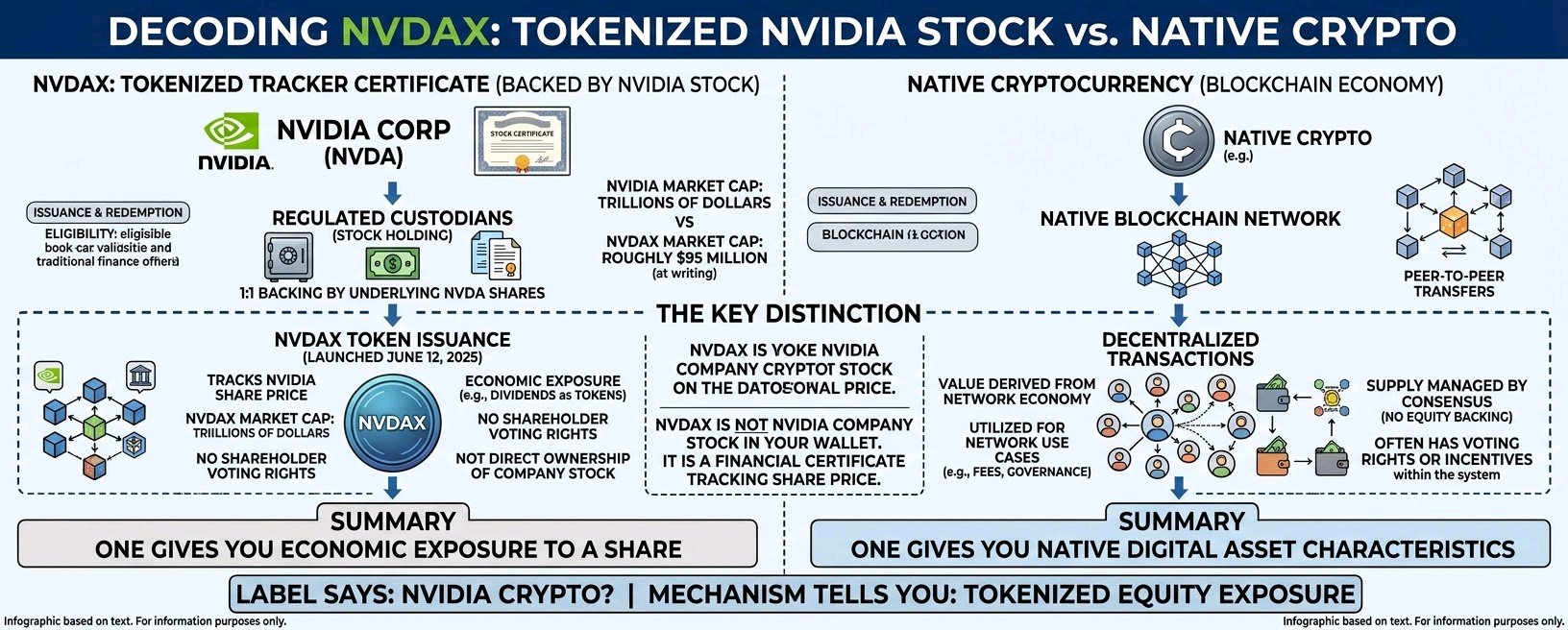
MNT may look like a bet on Mantle's growth, but it is not company equity or a direct claim on network revenue. It is a network utility and governance token whose value depends on ecosystem demand and market exposure. Mantle emerged from BitDAO's transition in 2023, with BIT converting into MNT at a 1:1 ratio. Following a governance-approved decision not to convert 3 billion BIT, the total MNT supply was reduced to approximately 6.22 billion tokens. That distinction is easy to miss if you only read the headline. MNT gives holders several functions: paying transaction fees on Mantle Network, participating in DAO governance, and supporting ecosystem activities. But holding MNT does not provide ownership of Mantle, guaranteed income, or a contractual right to redeem tokens for treasury assets or network revenue. The supply structure adds another important detail. Approximately 3.1 billion MNT is circulating, while roughly 3.0 billion remains in the Mantle treasury, subject to governance-controlled allocation. This means treasury decisions and future token distribution matter alongside network adoption. Unlike an equity instrument, MNT does not automatically give holders a share of business profits. Its exposure comes from network utility, governance influence, ecosystem demand, and market expectations. The difference is simple: exposure to Mantle's ecosystem is not ownership of its economic output. What matters is what you are actually holding. #ByXIMPACT$MNTUSDT
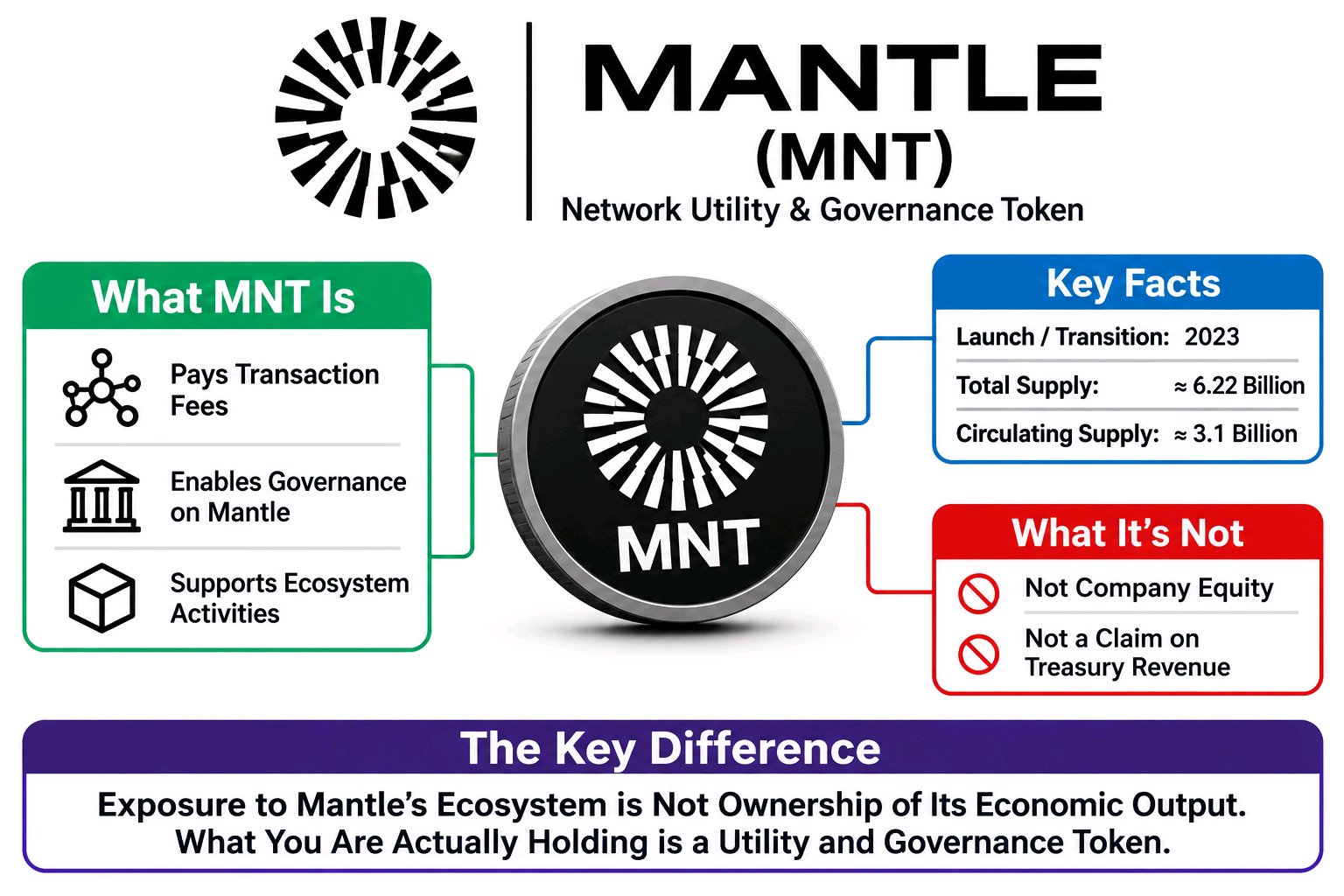
BERA may look like a bet on Berachain’s Proof-of-Liquidity ecosystem, but it is not a claim on the network’s locked liquidity or application revenues. It is the network’s native gas and staking asset, whose value depends on demand for Berachain itself. Berachain launched its mainnet on February 6, 2025, with an initial supply of 500 million BERA. The token is used to pay transaction fees and stake validators responsible for securing the network. The Block +1 That distinction is easy to miss if you only read the headline. BERA gives holders exposure to the economic demand for Berachain’s infrastructure, not direct ownership of its applications, liquidity pools, or ecosystem businesses. Its market value is determined by supply, demand, network activity, and expectations about future adoption. It is not backed by dollars, redeemable for a fixed price, or equivalent to equity in Berachain. The scale matters. A 500-million-token genesis supply establishes a substantial initial distribution, but it does not establish a corresponding amount of collateral or guaranteed economic value. Unlike a stablecoin, BERA has no fixed-dollar redemption promise. Crypto Asset Statement +1 The distinction is simple: owning BERA means holding exposure to a blockchain's native economic asset, not owning the value of everything built on it. #ByXIMPACT $BERAUSDT
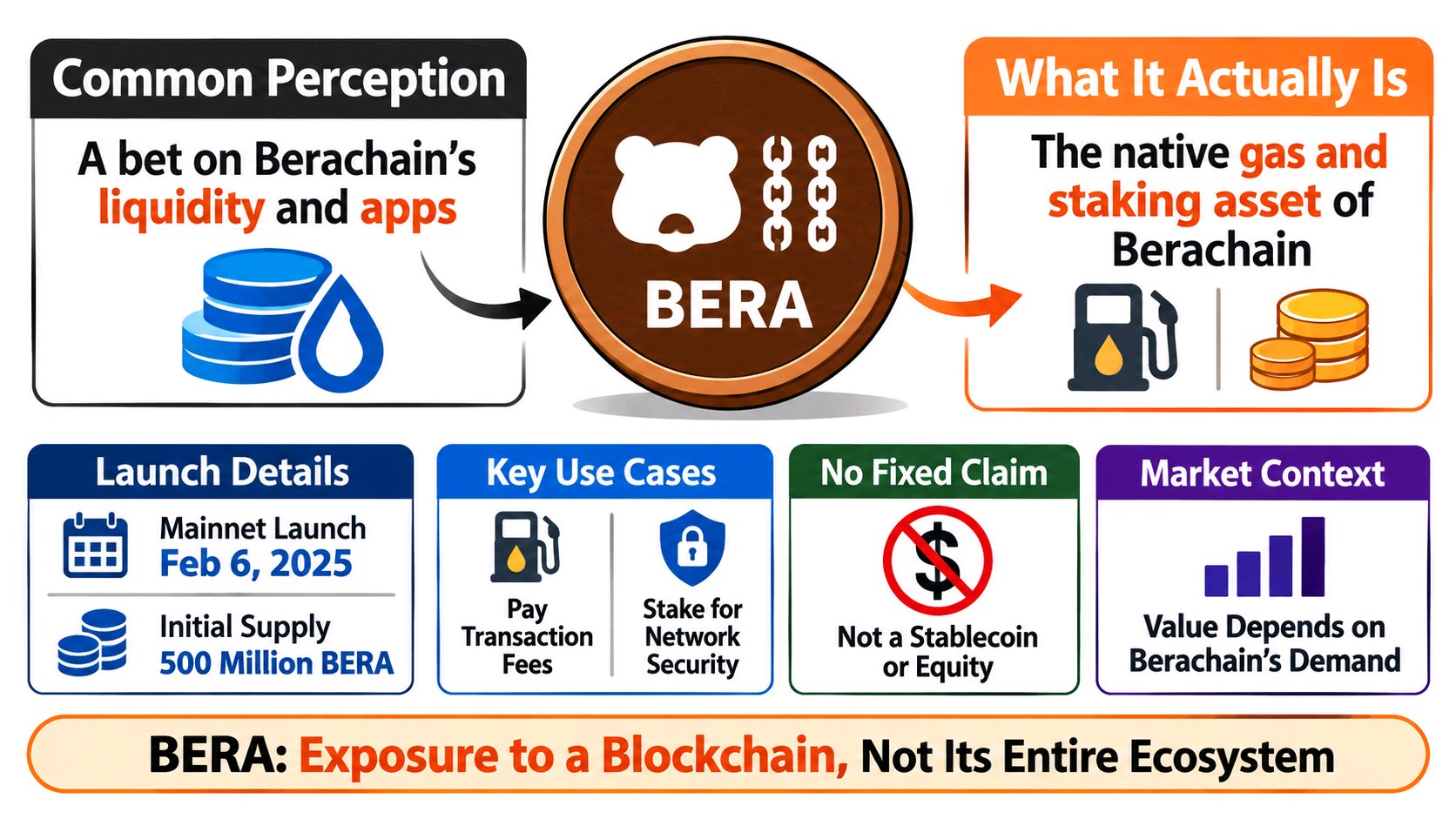
BR may look like a direct bet on Bitcoin restaking, but it is not a claim on Bitcoin or the assets deposited into Bedrock. Bedrock introduced BR in March 2025 with a maximum supply of 1 billion tokens and an initial circulating allocation of 210 million BR. That distinction is easy to miss if you only read the headline. BR is primarily a governance and incentive token. Holders can lock BR at a 1:1 ratio to receive veBR, which provides voting power over protocol decisions and incentive distribution. The longer the lock, the greater the voting power. Bedrock's Bitcoin exposure comes through separate products such as uniBTC, its liquid-staking token. Holding BR does not give holders direct ownership of Bitcoin, a fixed BTC redemption right, or an automatic claim on protocol deposits and yield. The difference matters at scale: Bedrock's ecosystem handles Bitcoin-related staking and restaking, while BR has a separate 1 billion-token supply and a governance-based economic role. Its value depends on market demand, governance utility, incentives, and token supply dynamics rather than a guaranteed relationship with Bitcoin reserves. BR represents participation in Bedrock's governance economy, not ownership of the Bitcoin behind its products. What matters is what you are actually holding.#ByXIMPACT $BRUSDT
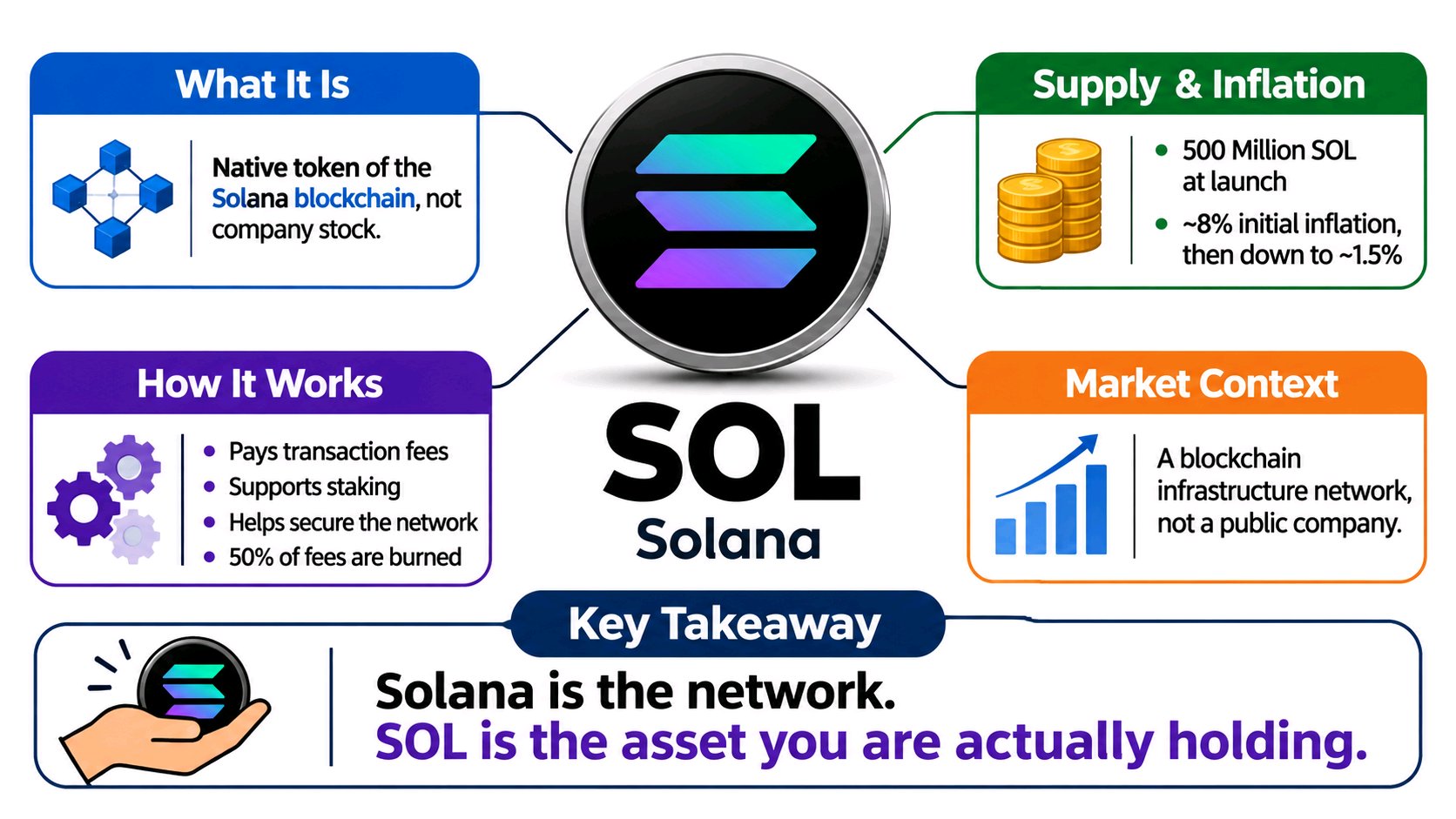
SOLはSolanaの成長に賭けているように見えるかもしれませんが、これは会社の株式でも固定価値のデジタル資産でもありません。SOLはSolanaブロックチェーンを支えるネイティブトークンであり、その市場価値はネットワークの需要、トークンの供給、そして投資家の期待によって左右されます。 ローンチ時、ネットワークのジェネシス割り当てとして5億SOLが作成されました。新たな発行にマイニングを必要とするBitcoinとは異なり、SOLはプロトコルベースのインフレスケジュールに従っており、当初は年率8%に設定され、最終的には1.5%に向かって低下するように設計されています。 この違いは、見出しだけを読んでいると見落としがちです。 SOLを保有していても、Solana Labsの所有権が得られるわけでも、会社の利益に対する請求権が得られるわけでも、トークンを米ドルに換金する権利が得られるわけでもありません。SOLは取引手数料の支払い、ステーキングへの参加、そしてネットワークのプルーフ・オブ・ステーク(PoS)セキュリティのサポートに使用されます。その供給量はステーキング関連の発行によって拡大する一方、取引手数料の50%はバーン(焼却)されます。 その規模が重要です。Solanaはブロックチェーン・インフラネットワークであり、公開取引されているテクノロジー企業ではありません。その経済活動はSOLへの需要に影響を与える可能性がありますが、ネットワークの採用が自動的にトークンの価値上昇を保証するわけではありません。保有者は、新規発行による希薄化や変化する市場需要にも直面しています。 Solanaはネットワークであり、SOLはあなたが実際に保有している資産です。SEC +2 #ByXIMPACT $SOLUSDT