Suhaif
10687いいね0シェア222ファン20フォロー
dex hunter
dex hunter
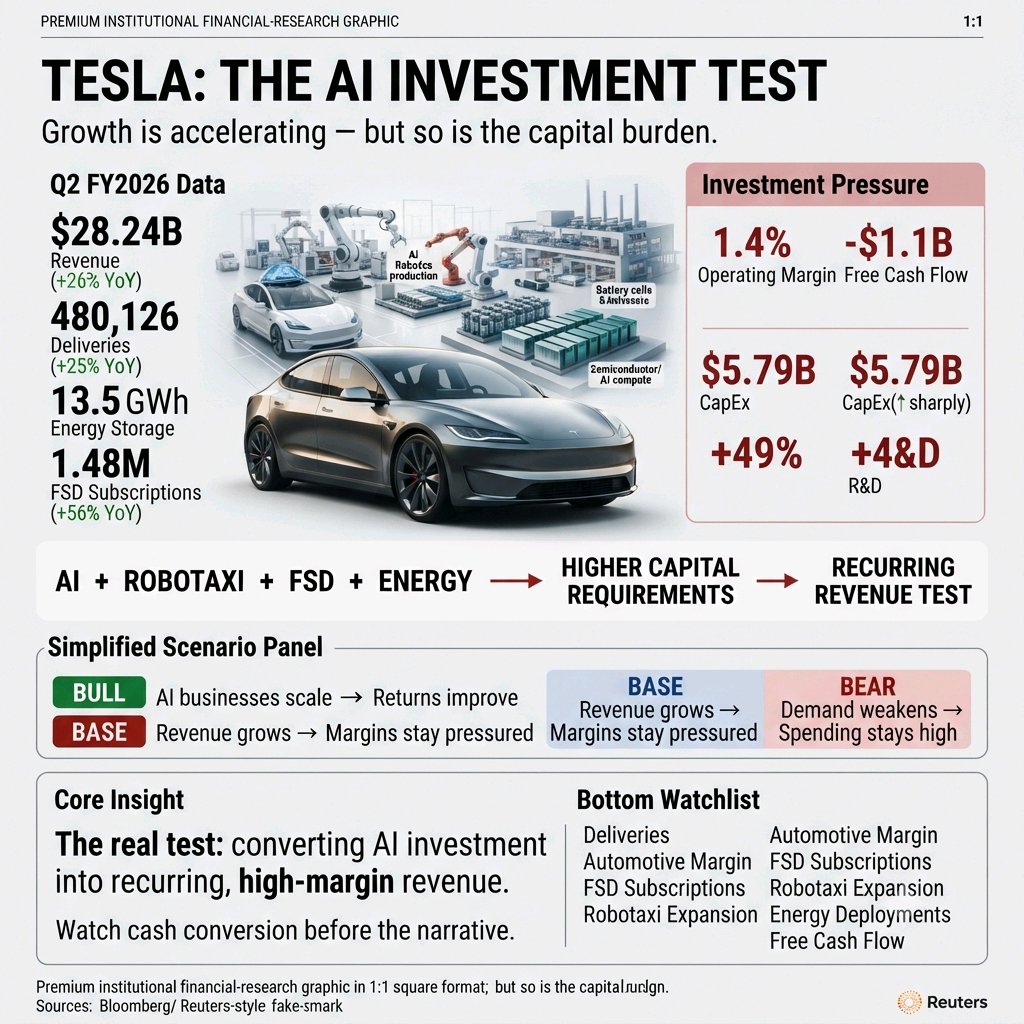
CPI:インフレは依然として市場の主要リスク
最新のCPIレポートにより、インフレショック再燃への懸念は和らぎましたが、問題が解消されたわけではありません。 ヘッドラインCPIは前年比3.4%、コアCPIは2.4%となりました。いずれも予想を上回ることはなく、リスク資産には安心感が広がり、BTCの上昇を後押ししました。 しかし、より重要なシグナルはPPIから発せられている可能性があります。 昨日のPPIは前年比5.4%となり、生産者レベルでの価格圧力が高止まりしていることを示しています。これらのコストが経済全体に波及し続ければ、CPIの粘着性が長引く可能性があります。 この状況下で、3つのシナリオが考えられます。 強気ケース: インフレが鈍化し続ける → 米国債利回りが低下 → FRBの姿勢がハト派寄りになる → BTCおよびリスク資産がサポートされる。 ベースケース: インフレが粘着性を維持 → FRBが慎重な姿勢を保つ → 市場はマクロ指標の発表があるたびに反応し続ける。 弱気ケース: PPIの上昇圧力がCPIに波及 → インフレが再加速 → 利下げ期待が後退 → 利回りが上昇 → BTCが再び下落圧力にさらされる。 市場のポイント CPIは市場に「安心感」を与えましたが、「確信」を与えたわけではありません。 私が注目している指標: • 米国債利回り • FRBの利下げ期待 • PPIからCPIへの価格波及圧力 • 8万ドル付近でのBTCの反応 • ブレイクアウト時の出来高 真のリスクは、一度のCPIの上振れではありません。 インフレが高止まりし、FRBの引き締め姿勢が長期化することです。 #ByXIMPACT $BTCUSDT $HYPEUSDT

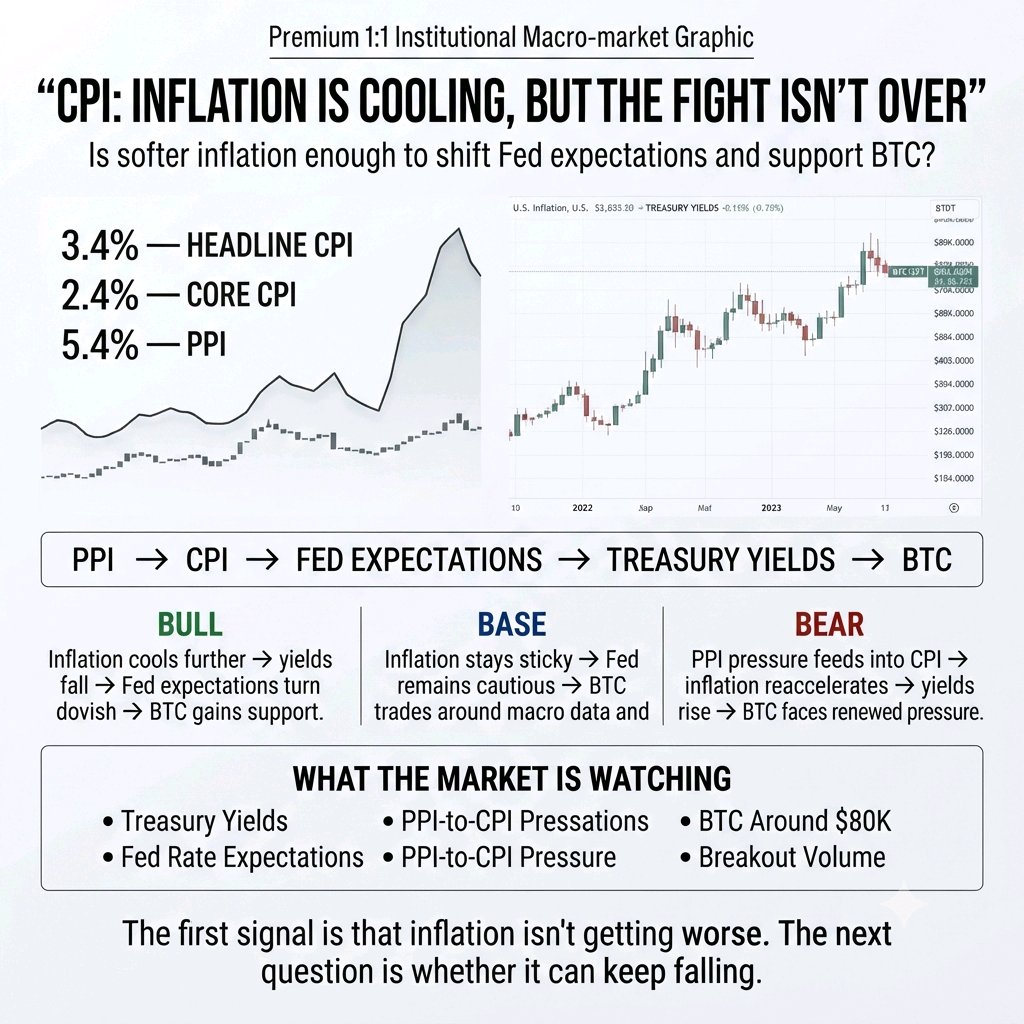
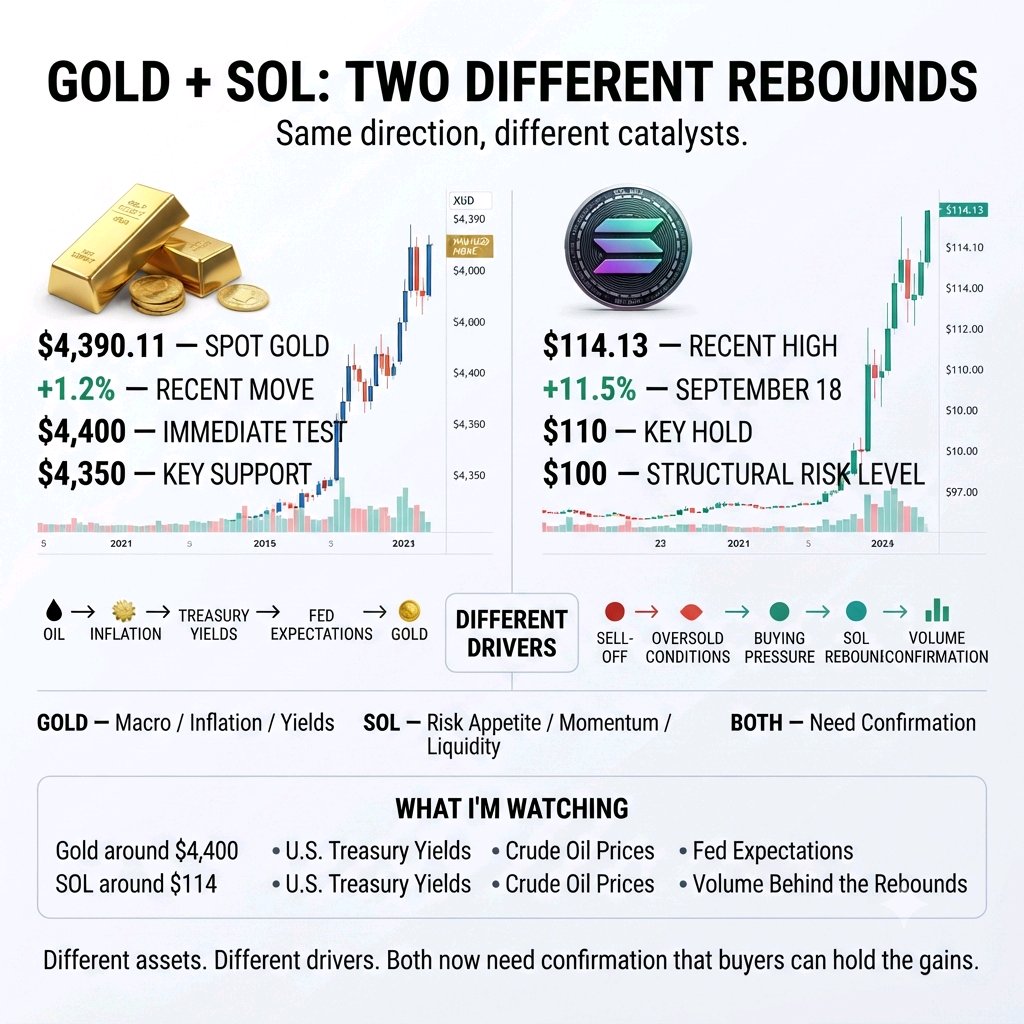
Gold and Solana are both pushing higher, but the reasons behind the moves are very different. Spot gold climbed 1.2% to $4,390.11 as easing oil prices reduced some inflation pressure. SOL, meanwhile, jumped 11.5% on September 18, reaching $114.13 before holding above $113. That difference matters. Gold is reacting mainly to macro conditions: oil, inflation expectations, Treasury yields and Fed expectations. SOL is reacting more like a high-beta risk asset, with its rebound coming after a sharp move down toward $97 earlier in the week. So I'm watching whether both moves can hold after the initial reaction. Gold: $4,400 is the immediate test. Holding above $4,350 would keep the recovery structure intact, while renewed pressure from yields or oil could change the setup. SOL: $114 is the immediate resistance area. Holding above $110 would keep the recent breakout attempt constructive, while losing $100 would weaken the recovery. The interesting part isn't that Gold and SOL are both rising. It's whether their respective catalysts can keep supporting the moves after the first wave of buying fades. I'm watching: • Gold around $4,400 • SOL around $114 • U.S. Treasury yields • Crude oil prices • Fed expectations • Volume behind the rebounds Different assets. Different drivers. But both now need confirmation that buyers can hold the gains. #ByXIMPACT $XAUTUSDT $SOLUSDT
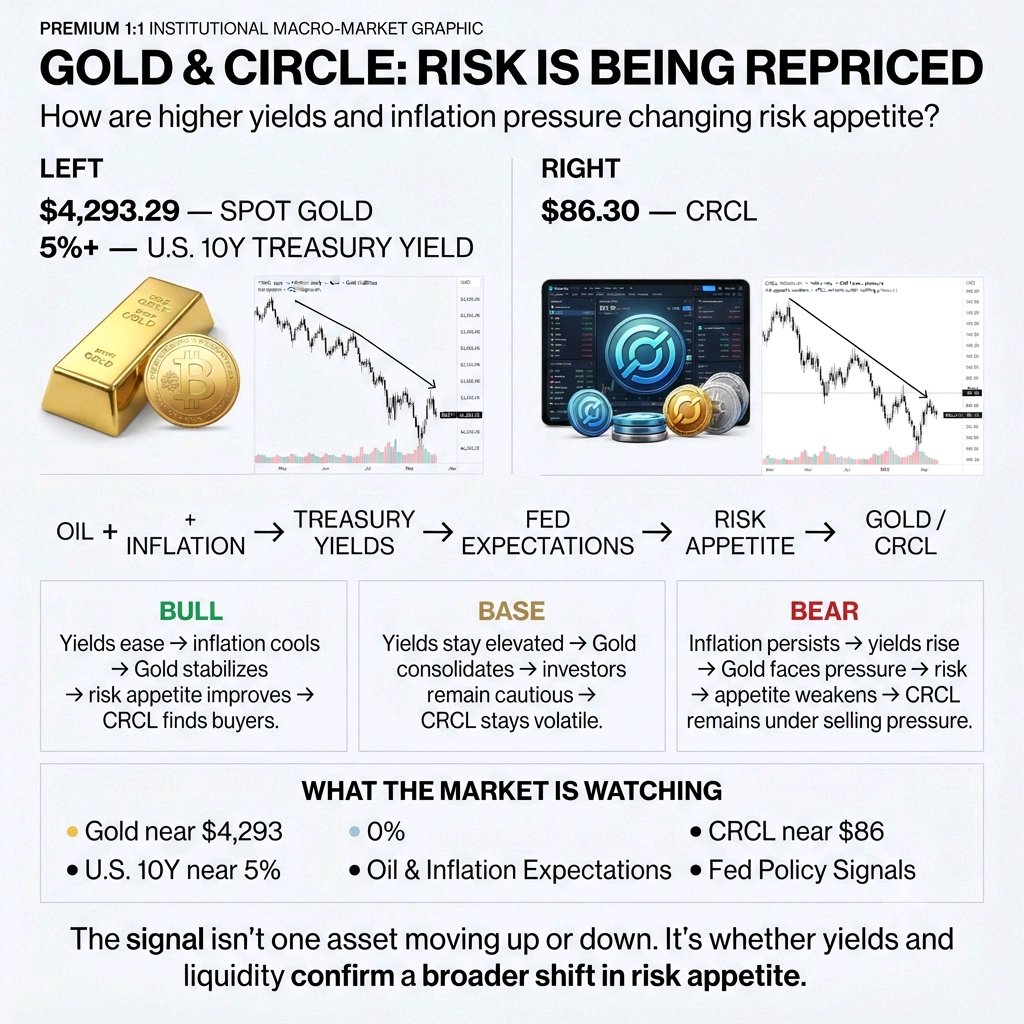
Gold & Circle: Risk Is Being Repriced
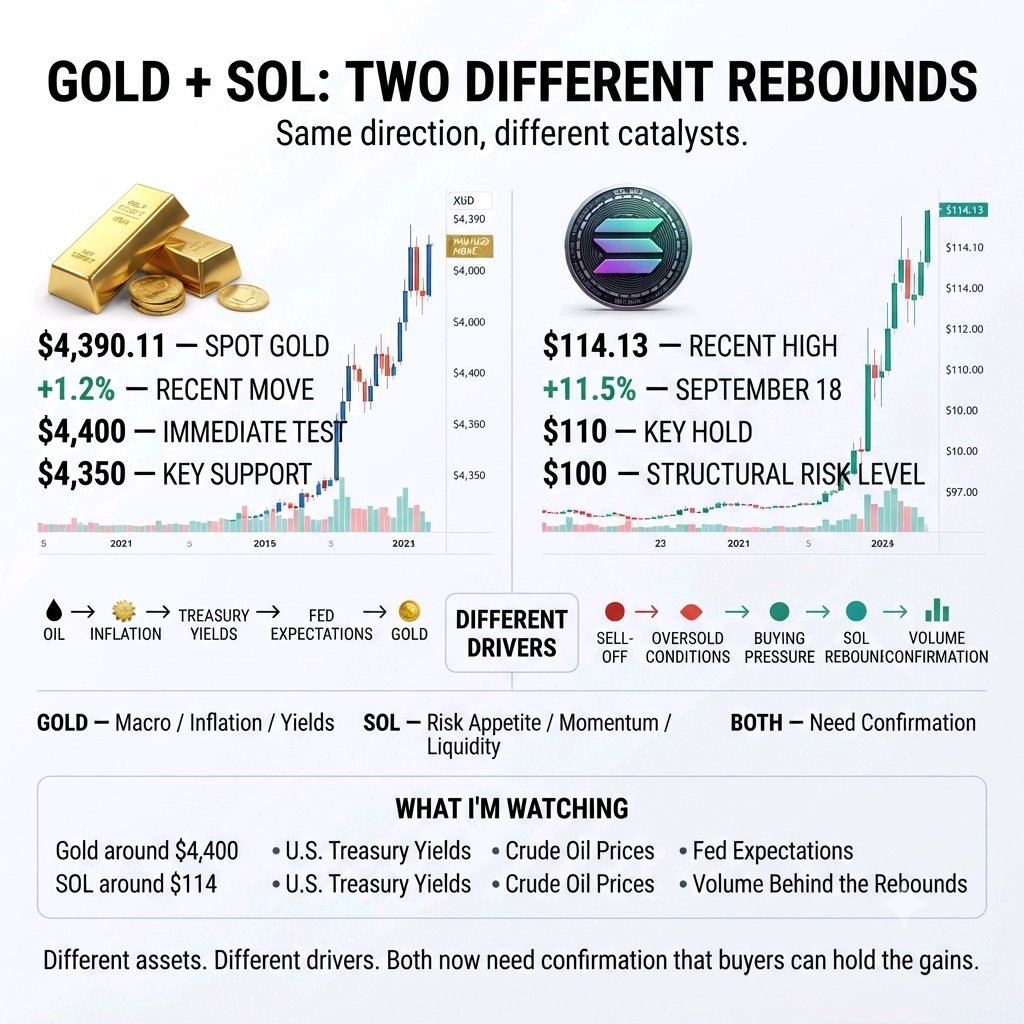
Gold has been under pressure as rising oil prices, inflation concerns and higher Treasury yields push rate-hike expectations higher. Spot gold recently fell to $4,293.29, while the 10-year Treasury yield moved above 5%. But the interesting part isn't the gold decline itself. It's how investors are repricing risk across different parts of the market. Circle ($CRCL) has also faced heavy selling pressure, with the stock recently trading around $86.30. Crypto-linked equities remain sensitive to changes in risk appetite, making CRCL another useful asset to watch alongside broader market conditions. That creates three possible outcomes: Bull case: Treasury yields ease → inflation pressure cools → Gold stabilizes → risk appetite improves → CRCL finds buyers. Base case: Yields remain elevated → Gold consolidates → investors stay cautious → CRCL remains volatile. Bear case: Inflation pressure persists → yields rise further → Gold faces more pressure → risk appetite weakens → CRCL remains under selling pressure. Market takeaway Gold is showing how macro pressure is being priced into defensive assets, while CRCL shows how the same risk-off environment can affect crypto-linked equities. I'm watching: • Gold around $4,293 • U.S. 10Y yield near 5% • Oil and inflation expectations • CRCL around $86 • Fed policy signals The key isn't whether one asset moves higher or lower. It's whether yields and liquidity start confirming a broader shift in risk appetite. #ByXIMPACT $XAUTUSDT $CRCLXUSDT
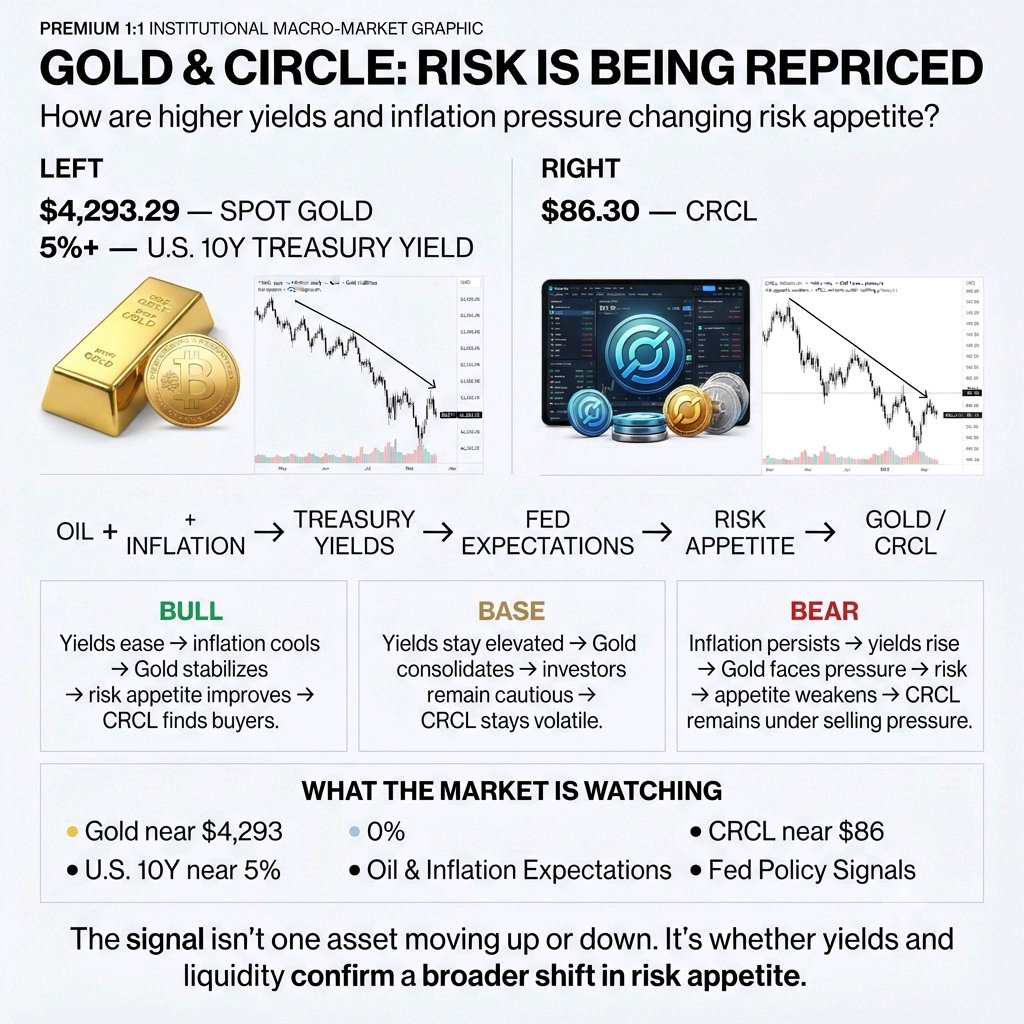
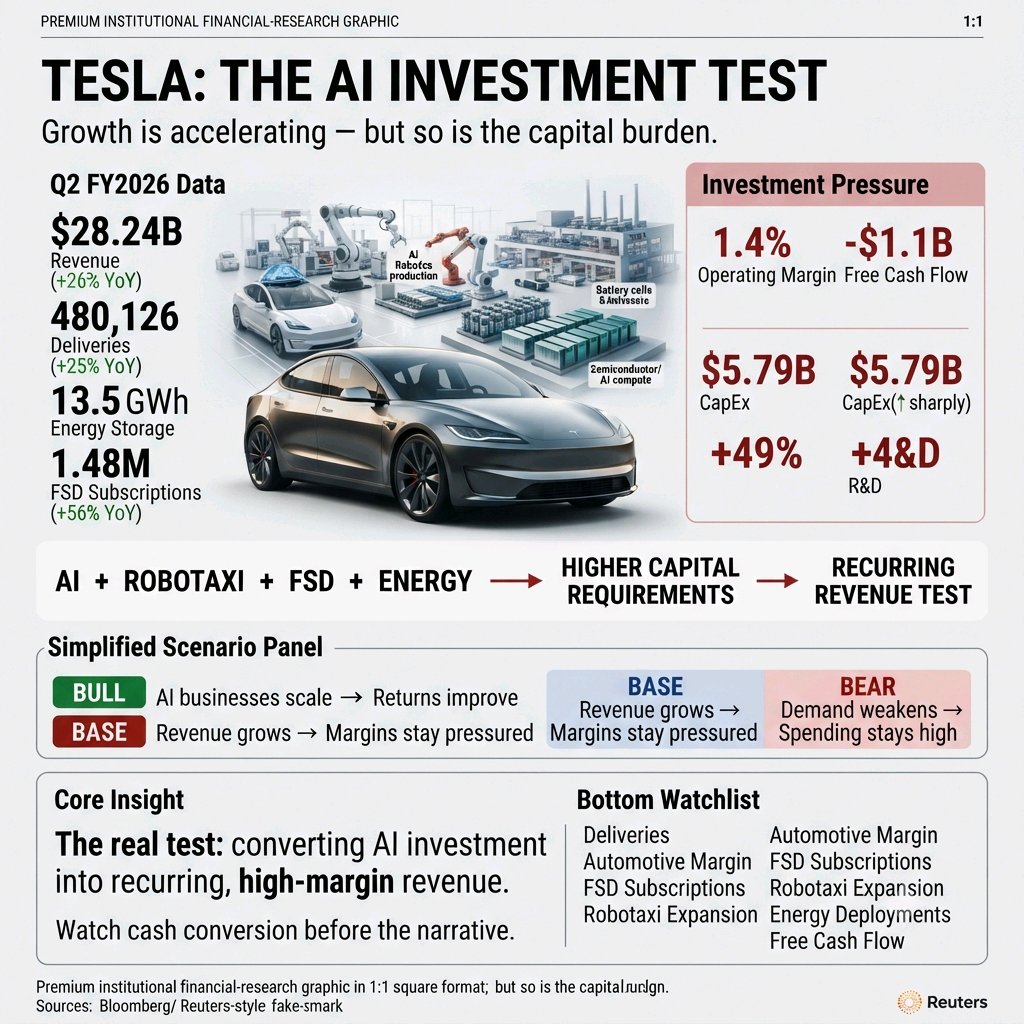
Tesla’s Q2 FY2026 results shifted the debate. Revenue reached $28.24B, +26% YoY, while vehicle deliveries hit a record 480,126, +25%. Energy storage deployments reached 13.5 GWh, while active FSD subscriptions climbed 56% YoY to 1.48M. The deeper signal is Tesla’s transition beyond vehicles. Robotaxi is expanding across U.S. metros, Cybercab has entered production, and Optimus production infrastructure is being built. At the same time, Tesla is investing heavily in AI compute, batteries, semiconductors and new manufacturing capacity. But there’s a critical risk: growth is becoming more capital-intensive before the newer AI businesses generate meaningful financial returns. Q2 operating margin fell to 1.4%, while free cash flow turned -$1.1B as capex surged to $5.79B. R&D also increased 49% YoY. My TSLA framework: Bullish if Robotaxi, FSD and energy scale faster than Tesla’s investment burden. Neutral if revenue keeps growing but margin compression and elevated capex absorb the upside. Bearish if automotive demand weakens while AI, robotics and autonomy require sustained spending without comparable revenue growth. The overlooked signal: Tesla’s biggest constraint may no longer be vehicle demand alone—it’s converting its AI infrastructure investment into recurring, high-margin revenue. The company says battery-pack capacity is currently limiting near-term vehicle production, while its AI and manufacturing expansion is pushing capital requirements higher. For BYX, I’d focus on deliveries, automotive margins, FSD subscriptions, Robotaxi expansion, energy deployments and free cash flow rather than chasing daily price moves. Watch the cash conversion before the narrative. DYOR. Not financial advice. $TSLAXUSDT #ByXIMPACT
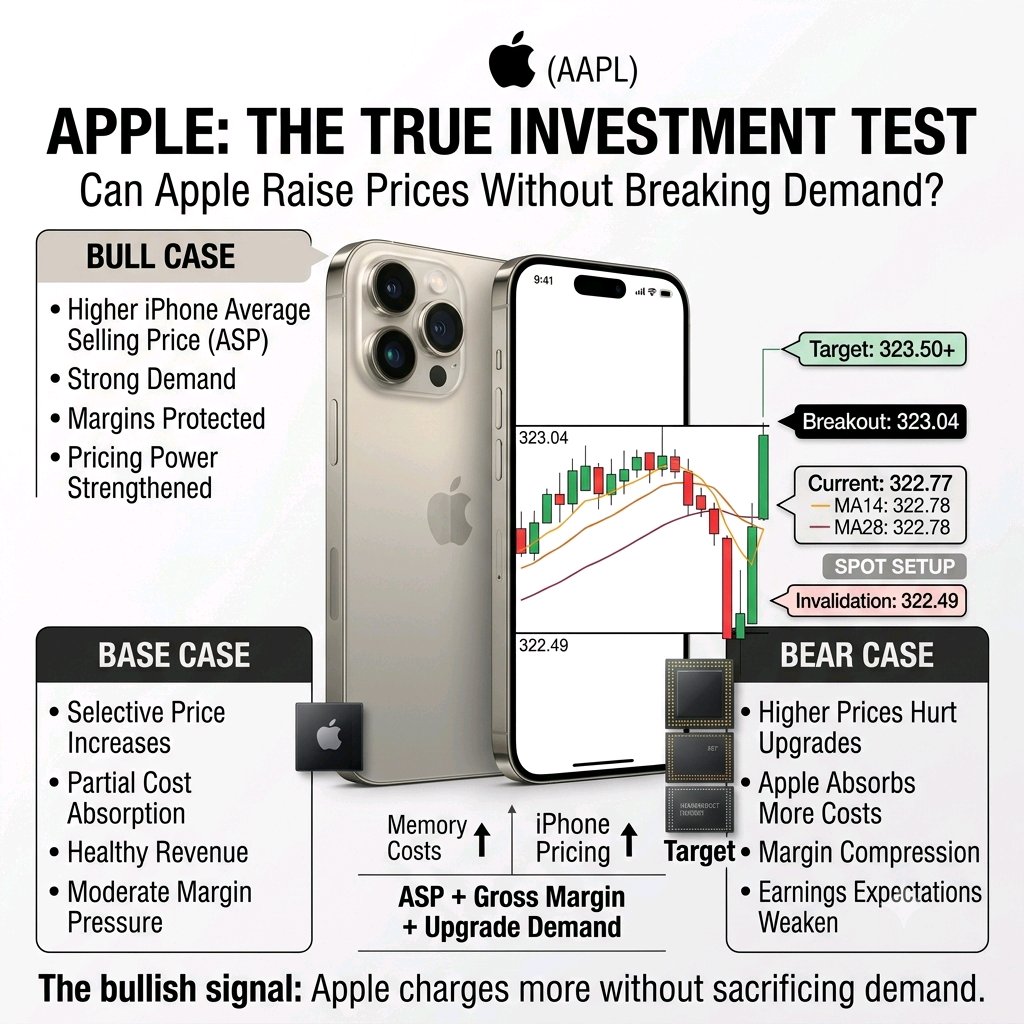
アップル:次なる大きな投資の試金石
Appleは、強固な基盤のもとで次のiPhoneサイクルに突入しようとしています。 売上高は前年比16%増の1,094億ドルに達し、iPhoneの需要は依然として堅調です。 しかし、投資家は表面的な成長の裏側に目を向けるべきです。 AIインフラが半導体の生産能力を奪い合っているため、メモリコストが上昇しています。Appleはすでに一部のMacやiPadで値上げを実施しており、経営陣は9月四半期においてもメモリコストが引き続き重石になると予想しています。 今、iPhoneはより大きな試練に直面しています。 報道によると、iPhone 18 Proのメモリコストは大幅に上昇する可能性があり、Appleのハードウェア利益率にとって新たな課題となっています。 投資判断の問いは単純です。 AppleはiPhoneの需要を損なうことなく、コスト増を消費者に転嫁できるか? もし答えがイエスなら、Appleは短期的な売上成長よりも価値のあるもの、すなわち「価格決定力」を証明することになります。 それにより、ハードウェアコストが上昇しても、利益率と収益を守ることができるでしょう。 しかし、価格の魅力を維持するためにAppleがコスト上昇分を過度に吸収することになれば、売上高は伸び続けても利益率が圧迫される可能性があります。 私個人のAppleに対する見解は以下の通りです。 iPhoneの発売時には、単なる販売台数だけでなく、以下の点に注目してください。 ASP(平均販売価格)+粗利益率+消費者需要。 もしAppleが価格を引き上げても顧客が買い替えを続ければ、同社のエコシステムが依然として卓越した価格決定力を持っているという裏付けが強まります。 もし値上げによって需要が減退するか、利益率が悪化するようなら、投資家は将来の収益成長について再考する必要があるかもしれません。 強気のシグナルは、単に「AppleがiPhoneをたくさん売る」ことではありません。 それは「Appleは需要を損なうことなく、より高い価格を設定できる」ということです。 #ByXIMPACT $AAPLXUSDT
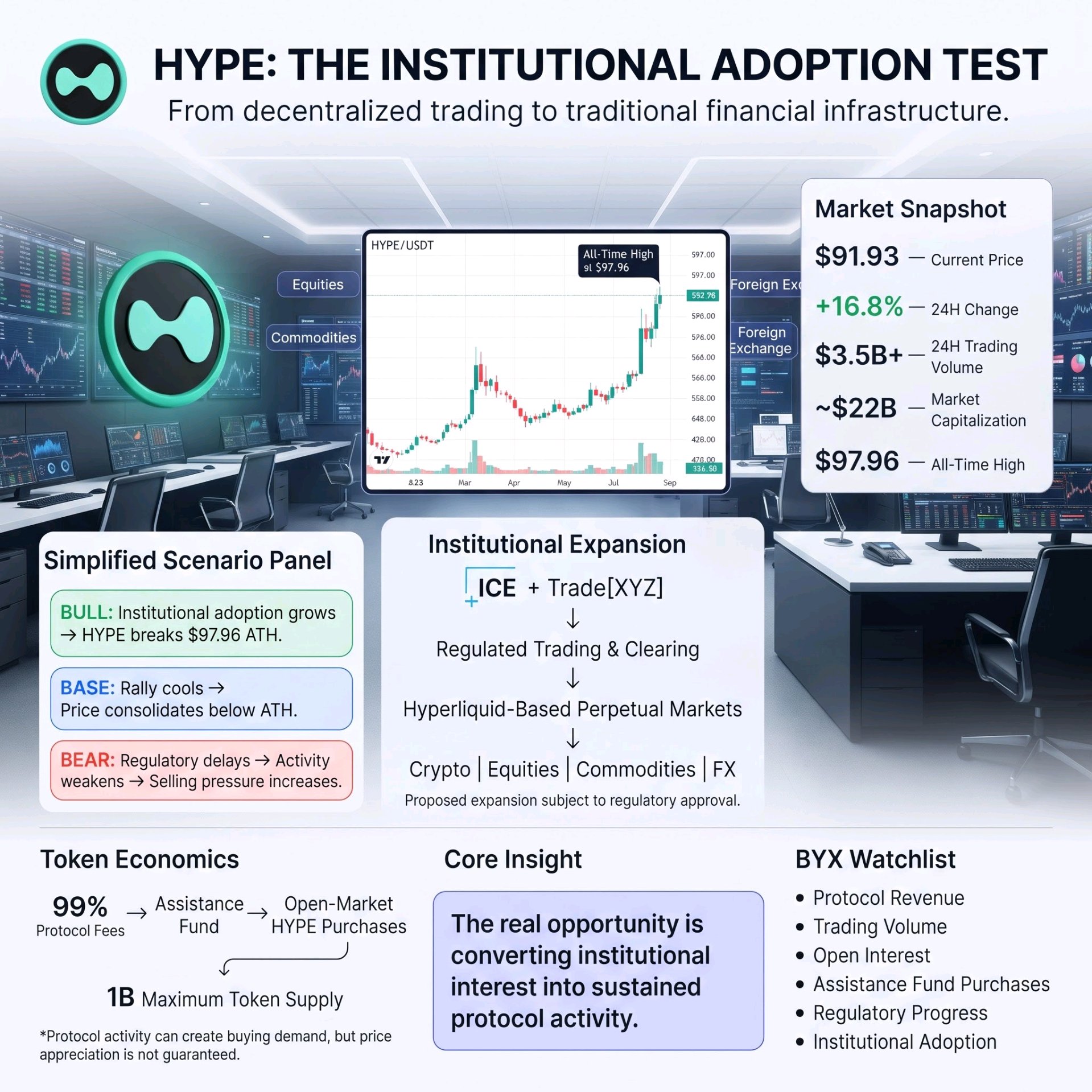
Hyperliquidの$HYPEの市場パフォーマンスが議論の様相を変えた。トークン価格は約91.93ドルまで上昇し、24時間で16.8%のプラスとなった。一方、1日の取引高は35億ドルを超え、時価総額は約220億ドルに達した。この急騰は、ニューヨーク証券取引所(NYSE)の親会社であるインターコンチネンタル取引所(ICE)に関する発表を受けたものだ。 より深いシグナルは、Hyperliquidが分散型デリバティブ取引の枠を超えようとしている点にある。ICEとTrade[XYZ]が関与する計画では、規制された取引および清算構造を通じて、仮想通貨、株式、コモディティ、外国為替をカバーするHyperliquidベースの無期限先物を米国に導入できる可能性がある。これは、Hyperliquidを分散型市場と伝統的金融をつなぐインフラとして位置づける可能性がある。 しかし、重大なリスクがある。市場の期待が実際の普及スピードを上回っていることだ。提案されているパートナーシップは規制当局の承認を待つ必要があり、ICEの関与は$HYPEへの直接投資を意味するものではない。一方で、最大供給量が10億枚であることを考えると、将来的なトークン供給の拡大は依然として重要な要素だ。 私の$HYPEフレームワーク: 強気:規制面での進展が見られ、機関投資家の取引活動が活発化し、$HYPEが史上最高値の97.96ドルを上回った場合。 中立:発表による急騰が冷え込み、市場が実際の普及を待つ中で、価格が以前の高値を下回る水準で推移(調整)する場合。 弱気:規制の遅れで期待が薄れ、プロトコルのアクティビティが低下し、利益確定売りが続いて継続的な売り圧力となる場合。 見落とされがちなシグナル:Hyperliquidのトークンエコノミクスは、プロトコルの活動と潜在的な市場需要を結びつけている。現在、プロトコル手数料の99%がAssistance Fund(支援基金)に割り当てられており、この基金が市場から直接$HYPEを買い入れている。これにより、プロトコルの活動が活発化すれば追加の買い需要が生まれる仕組みになっているが、これによって必ずしも価格上昇が保証されるわけではない。 BYXについては、発表に動かされた値動きを追うのではなく、プロトコル収益、取引高、建玉(オープンインタレスト)、Assistance Fundによる買い入れ、規制の進展、そして機関投資家の採用に注目したい。 ナラティブ(物語)よりも先に、パートナーシップの背後にある普及状況を見極めるべきだ。 DYOR(自分で調査を)。投資助言ではない。 #ByXIMPACT $HYPEUSDT
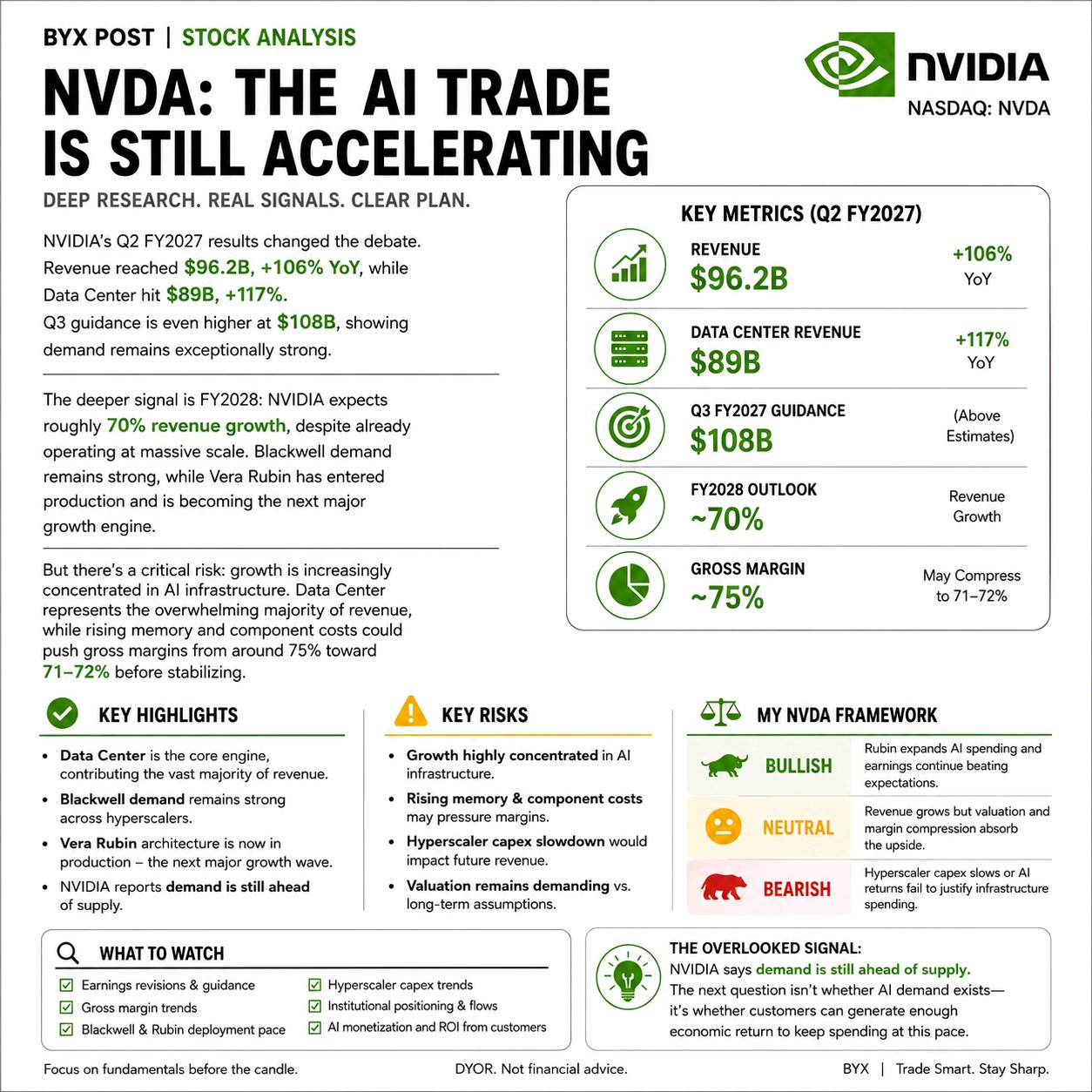
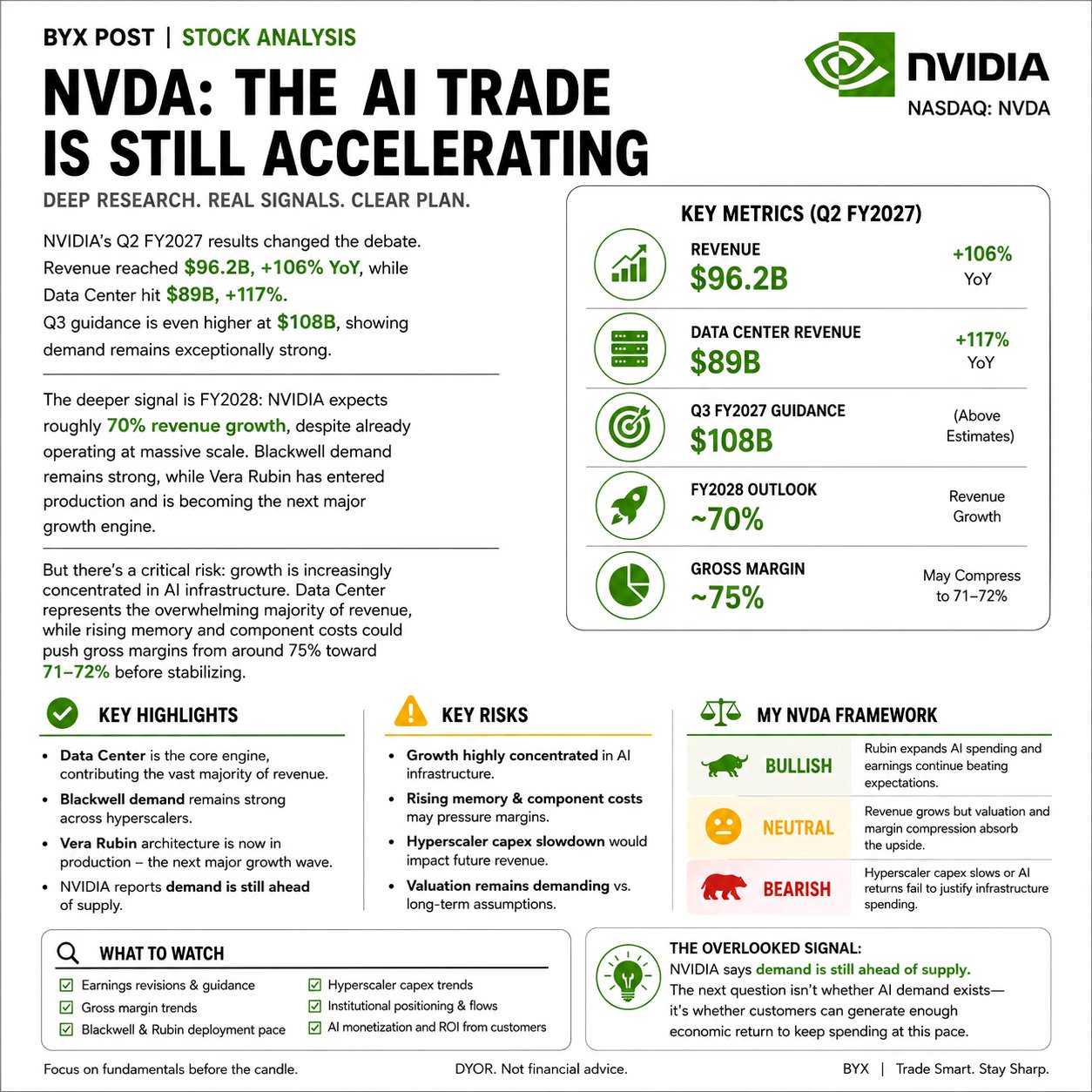
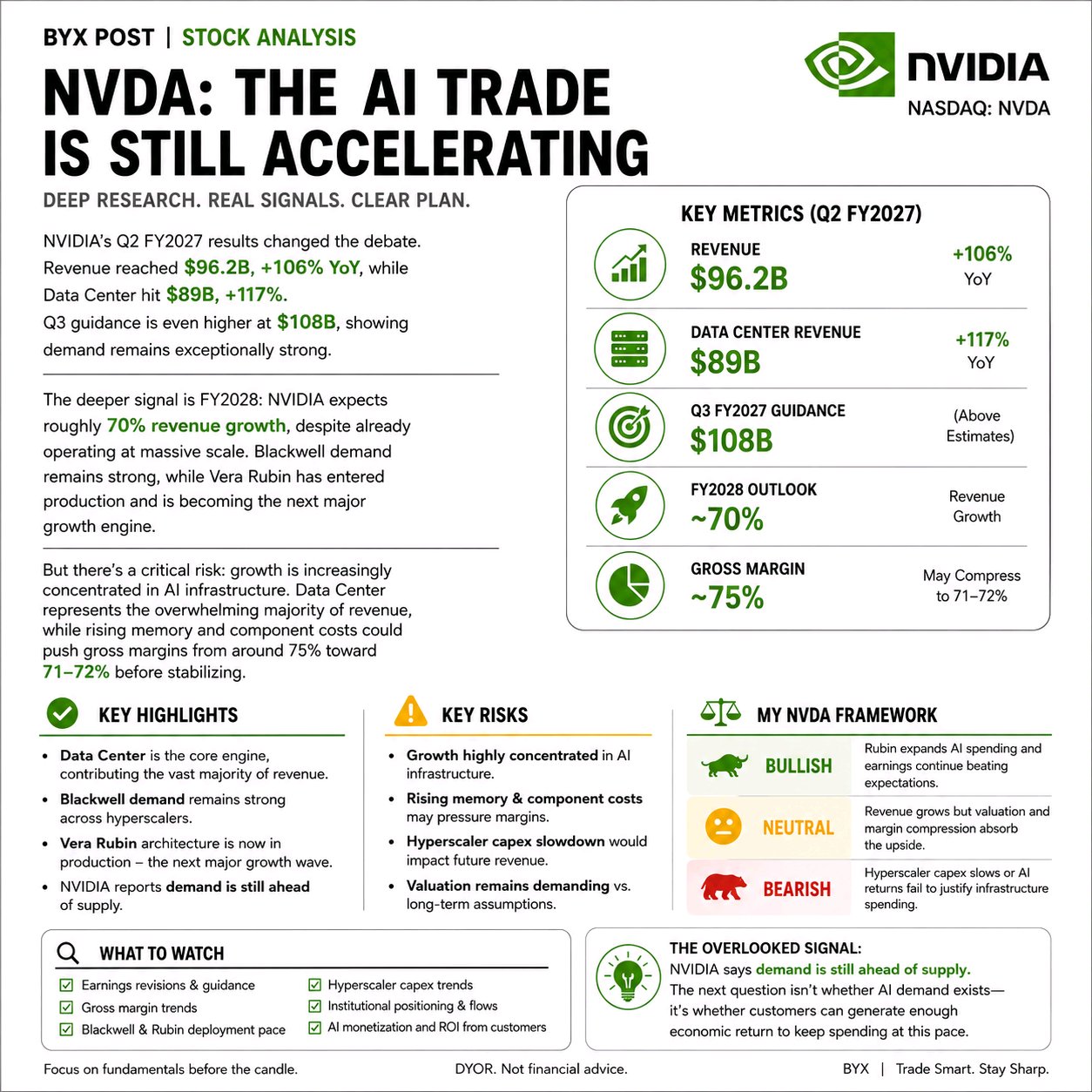
NVIDIA’s Q2 FY2027 results changed the debate. Revenue reached $96.2B, +106% YoY, while Data Center hit $89B, +117%. Q3 guidance is even higher at $108B, showing demand remains exceptionally strong. The deeper signal is FY2028: NVIDIA expects roughly 70% revenue growth, despite already operating at massive scale. Blackwell demand remains strong, while Vera Rubin has entered production and is becoming the next major growth engine. But there’s a critical risk: growth is increasingly concentrated in AI infrastructure. Data Center represents the overwhelming majority of revenue, while rising memory and component costs could push gross margins from around 75% toward 71–72% before stabilizing. My NVDA framework: Bullish if Rubin expands AI spending and earnings continue beating expectations. Neutral if revenue grows but valuation and margin compression absorb the upside. Bearish if hyperscaler capex slows or AI returns fail to justify infrastructure spending. The overlooked signal: NVIDIA says demand is still ahead of supply. The next question isn’t whether AI demand exists—it’s whether customers can generate enough economic return to keep spending at this pace. For BYX, I’d focus on earnings revisions, gross margins, Blackwell/Rubin deployment and institutional positioning rather than chasing daily price moves. Watch the fundamentals before the candle. DYOR. Not financial advice. $NVDAXUSDT #ByXIMPACT
ゴールドは勢いを失いつつある。しかし、より重要な話は何も変わっていない。 米国の経済指標が予想より強かったことで利上げ期待が高まり、利息を生まない資産であるゴールドに圧力がかかり、最近値を下げた。 $XAUTUSDTについては、この反応が重要だ。$4,373を下回れば売り手が主導権を強めていることを示し、$4,500を奪還できれば買い手が再び優位に立つことになる。 しかし、市場にはもう一つの側面がある。 中央銀行は引き続きゴールドの保有を増やしており、中国も買い越しを続けている。これは、短期的なFRB(連邦準備制度理事会)からの圧力と、長期的な準備資産としての需要との間の葛藤を生んでいる。 そのため、私はまだ$5,000のターゲットを見据えてはいない。 私が注目しているのは、$4,373の構造を維持したまま、買い手がこの売りを吸収できるかどうかだ。 もし買い手がこれを守り切れば、今回の調整はチャンスになる可能性がある。もし割り込んでしまえば、市場はまず一段低い水準でリセットする必要があるかもしれない。 $XAUTUSDT #ByXIMPACT

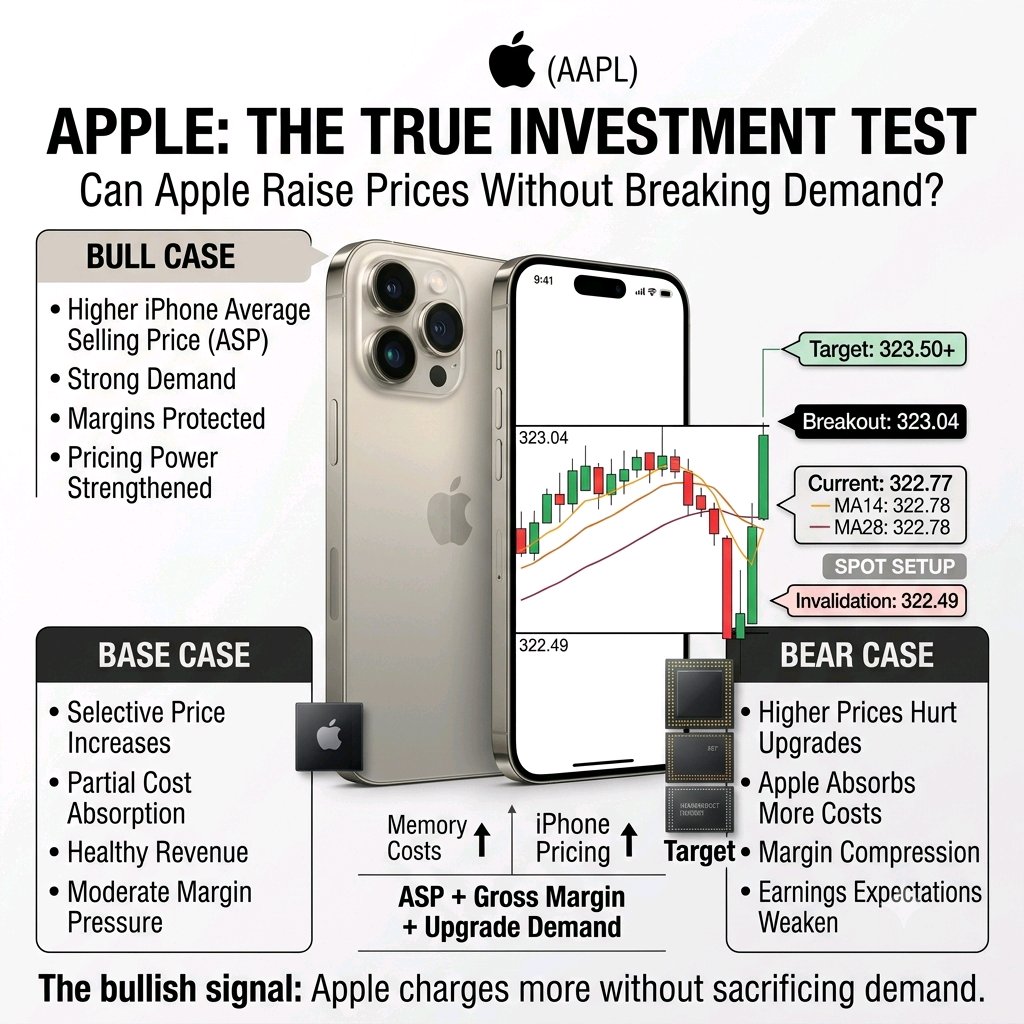
アップル:次なる大きな投資の試金石
Appleは、強固な基盤を維持したまま、次のiPhoneサイクルに突入しようとしています。 売上高は前年比16%増の1094億ドルに達し、iPhoneへの需要も依然として堅調です。 しかし、投資家は表面上の成長の裏側を見るべきでしょう。 AIインフラが半導体の生産能力を奪い合っているため、メモリコストが上昇しています。Appleはすでに一部のMacやiPadで値上げを実施しており、経営陣は9月四半期もメモリコストが懸念材料として残ると予想しています。 今、iPhoneはより大きな試練に直面しています。 iPhone 18 Proのメモリコストは大幅に上昇する可能性があり、これがAppleのハードウェア利益率にとって新たな課題となっています。 投資家が問うべきは単純なことです。 AppleはiPhoneの需要を損なうことなく、コスト増を消費者に転嫁できるのか? もし答えがイエスであれば、Appleは短期的な売上成長よりもはるかに価値のあるもの、すなわち「価格決定力」を証明することになります。 それは、ハードウェアコストが上昇しても利益率と収益を維持できることを意味します。 しかし、魅力的な価格を維持するためにAppleがコスト増の大部分を負担せざるを得なくなれば、売上は伸び続けても利益率が圧迫される可能性があります。 私のAppleに対する結論は以下の通りです。 iPhoneの発売時には、販売台数だけを見てはいけません。 注目すべきは以下の点です。 平均販売価格(ASP)+売上総利益率+消費者需要 もしAppleが価格を引き上げても顧客が買い替えを続ければ、同社のエコシステムが依然として卓越した価格決定力を持っているという説が補強されます。 もし価格上昇が需要を減退させるか、利益率が悪化するようであれば、投資家は将来の収益成長を見直す必要があるかもしれません。 強気のシグナルとは、単に「AppleはiPhoneをたくさん売る」ということではありません。 それは、「Appleは需要を損なうことなく、より高い価格を設定できる」ということです。 $AAPLXUSDT #ByXIMPACT
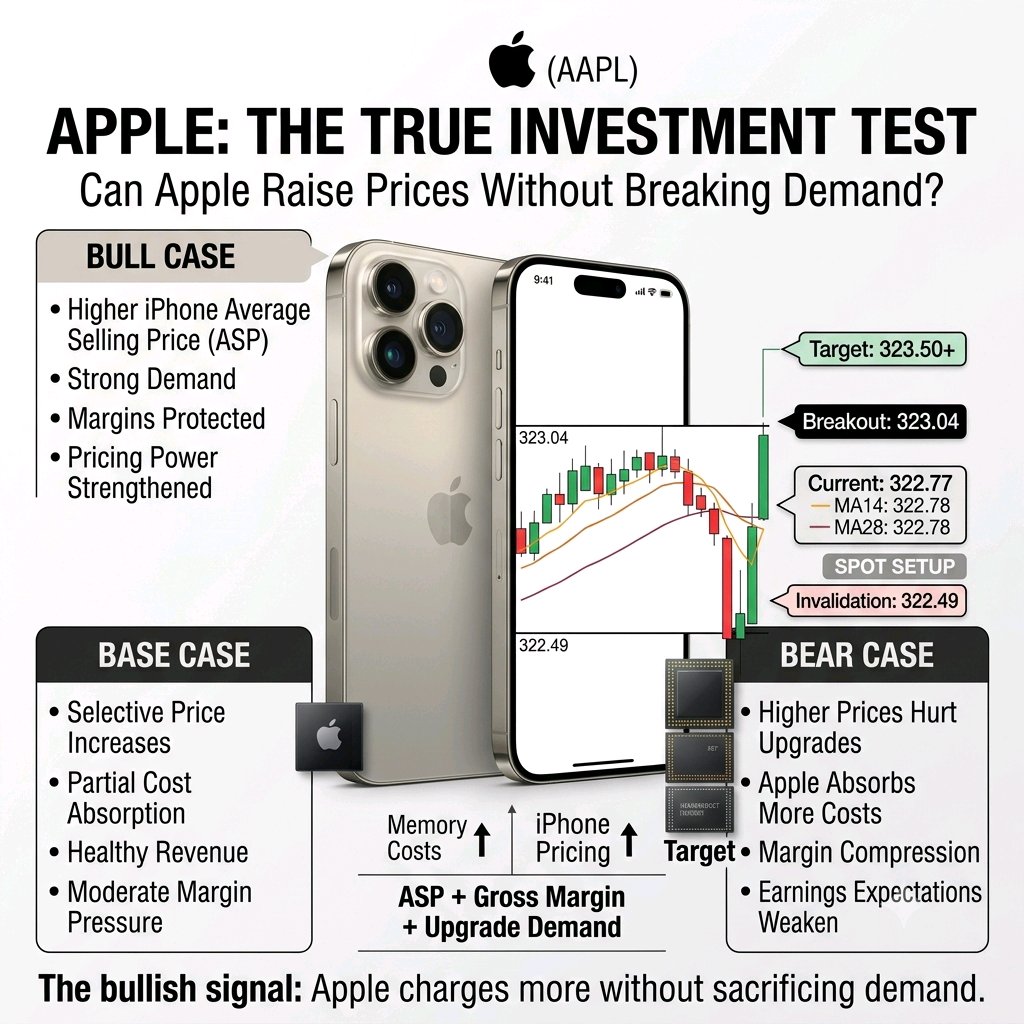
Gold and Solana are both pushing higher, but the reasons behind the moves are very different. Spot gold climbed 1.2% to $4,390.11 as easing oil prices reduced some inflation pressure. SOL, meanwhile, jumped 11.5% on September 18, reaching $114.13 before holding above $113. That difference matters. Gold is reacting mainly to macro conditions: oil, inflation expectations, Treasury yields and Fed expectations. SOL is reacting more like a high-beta risk asset, with its rebound coming after a sharp move down toward $97 earlier in the week. So I'm watching whether both moves can hold after the initial reaction. Gold: $4,400 is the immediate test. Holding above $4,350 would keep the recovery structure intact, while renewed pressure from yields or oil could change the setup. SOL: $114 is the immediate resistance area. Holding above $110 would keep the recent breakout attempt constructive, while losing $100 would weaken the recovery. The interesting part isn't that Gold and SOL are both rising. It's whether their respective catalysts can keep supporting the moves after the first wave of buying fades. I'm watching: • Gold around $4,400 • SOL around $114 • U.S. Treasury yields • Crude oil prices • Fed expectations • Volume behind the rebounds Different assets. Different drivers. But both now need confirmation that buyers can hold the gains. $XAUTUSDT $SOLUSDT #ByXIMPACT
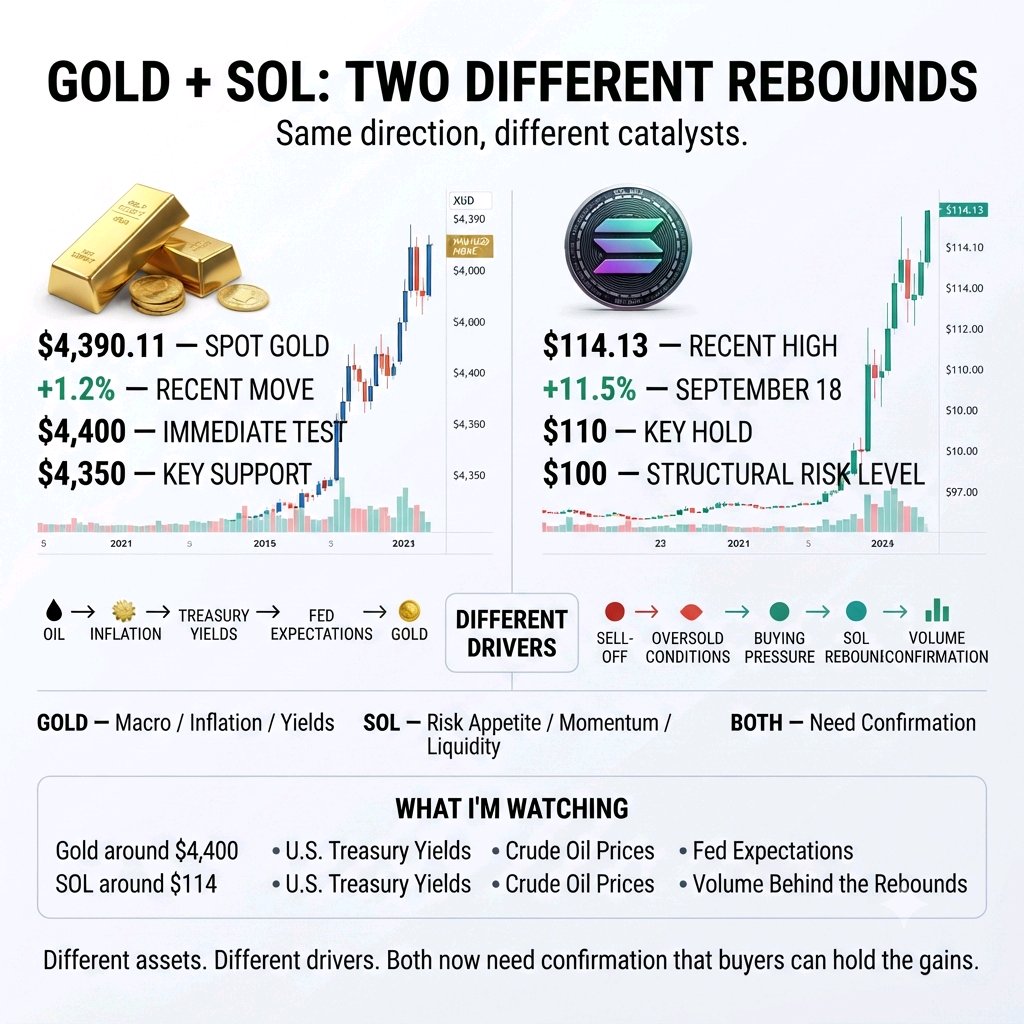
Tesla’s Q2 FY2026 results shifted the debate. Revenue reached $28.24B, +26% YoY, while vehicle deliveries hit a record 480,126, +25%. Energy storage deployments reached 13.5 GWh, while active FSD subscriptions climbed 56% YoY to 1.48M. The deeper signal is Tesla’s transition beyond vehicles. Robotaxi is expanding across U.S. metros, Cybercab has entered production, and Optimus production infrastructure is being built. At the same time, Tesla is investing heavily in AI compute, batteries, semiconductors and new manufacturing capacity. But there’s a critical risk: growth is becoming more capital-intensive before the newer AI businesses generate meaningful financial returns. Q2 operating margin fell to 1.4%, while free cash flow turned -$1.1B as capex surged to $5.79B. R&D also increased 49% YoY. My TSLA framework: Bullish if Robotaxi, FSD and energy scale faster than Tesla’s investment burden. Neutral if revenue keeps growing but margin compression and elevated capex absorb the upside. Bearish if automotive demand weakens while AI, robotics and autonomy require sustained spending without comparable revenue growth. The overlooked signal: Tesla’s biggest constraint may no longer be vehicle demand alone—it’s converting its AI infrastructure investment into recurring, high-margin revenue. The company says battery-pack capacity is currently limiting near-term vehicle production, while its AI and manufacturing expansion is pushing capital requirements higher. For BYX, I’d focus on deliveries, automotive margins, FSD subscriptions, Robotaxi expansion, energy deployments and free cash flow rather than chasing daily price moves. Watch the cash conversion before the narrative. DYOR. Not financial advice. $TSLAXUSDT #ByXIMPACT
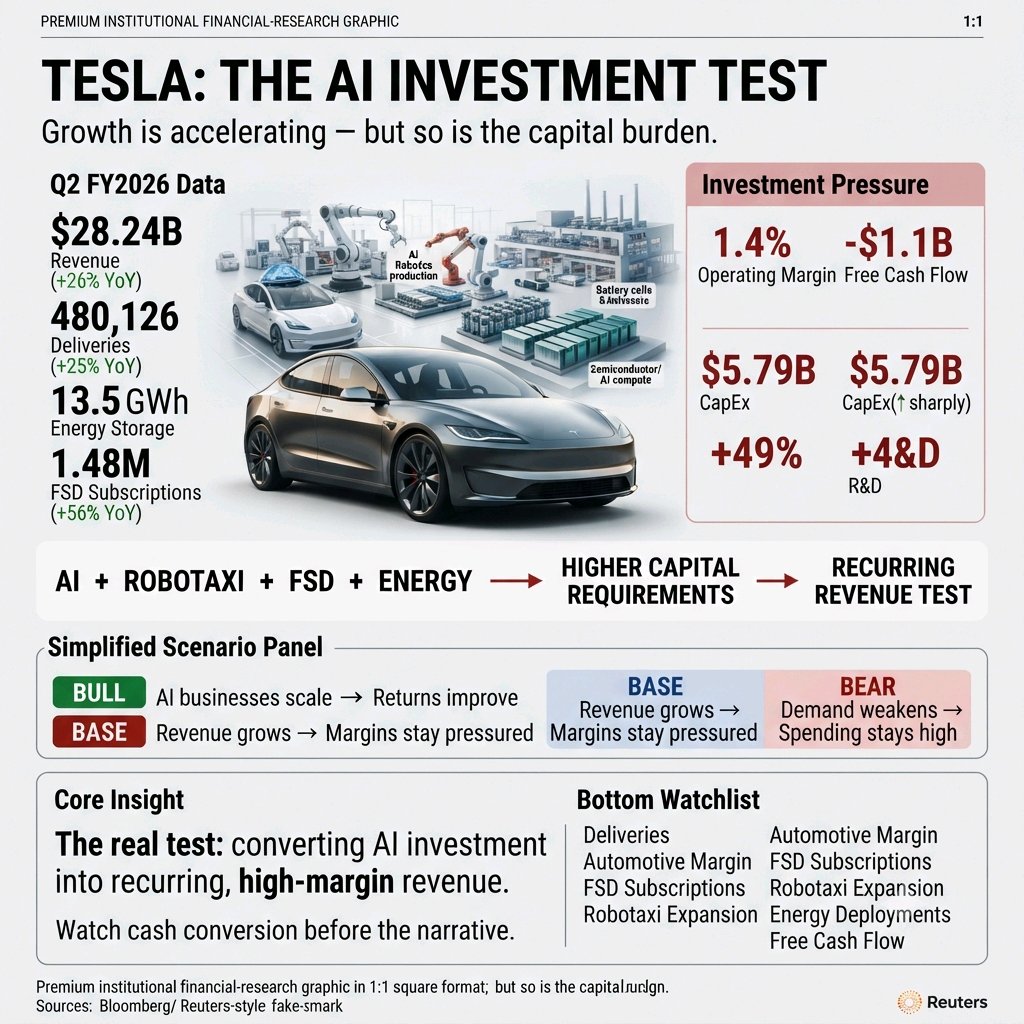
Gold & Circle: リスクが再評価されています
原油価格の上昇、インフレ懸念、そして米国債利回りの上昇により利上げ観測が高まり、金価格は圧力を受けています。スポット金価格は一時4,293.29ドルまで下落し、10年物米国債利回りは5%を上回りました。 しかし、興味深いのは金の下落そのものではありません。 投資家が市場のさまざまなセクターでどのようにリスクを再評価しているかという点です。 Circle ($CRCL) もまた強い売り圧力にさらされており、株価は最近86.30ドル近辺で推移しています。仮想通貨関連銘柄はリスク選好の変化に敏感なままであり、CRCLは市場全体の状況を測る上で注視すべき資産の一つとなっています。 これによって、3つのシナリオが考えられます。 強気ケース: 米国債利回りが低下 → インフレ圧力が緩和 → 金相場が安定 → リスク選好度が改善 → CRCLに買いが入る。 ベースケース: 利回りが高止まり → 金相場は調整局面 → 投資家は慎重姿勢を維持 → CRCLはボラティリティが高い状態が続く。 弱気ケース: インフレ圧力が継続 → 利回りがさらに上昇 → 金相場はさらなる圧力を受ける → リスク選好度が低下 → CRCLは売り圧力が続く。 市場からの教訓 金は、マクロ経済の圧力がディフェンシブ資産にどのように織り込まれているかを示しており、一方でCRCLは、同様の「リスクオフ」環境が仮想通貨関連銘柄にどのような影響を与えるかを示しています。 私が注目しているのは以下の通りです: • 金価格:4,293ドル近辺 • 米10年債利回り:5%近辺 • 原油価格およびインフレ期待 • CRCL株価:86ドル近辺 • FRBの政策シグナル 重要なのは、特定の資産が上がるか下がるかではありません。 利回りと流動性が、リスク選好の広範な変化を裏付け始めるかどうかです。 #ByXIMPACT $XAUTUSDT $CRCLXUSDT
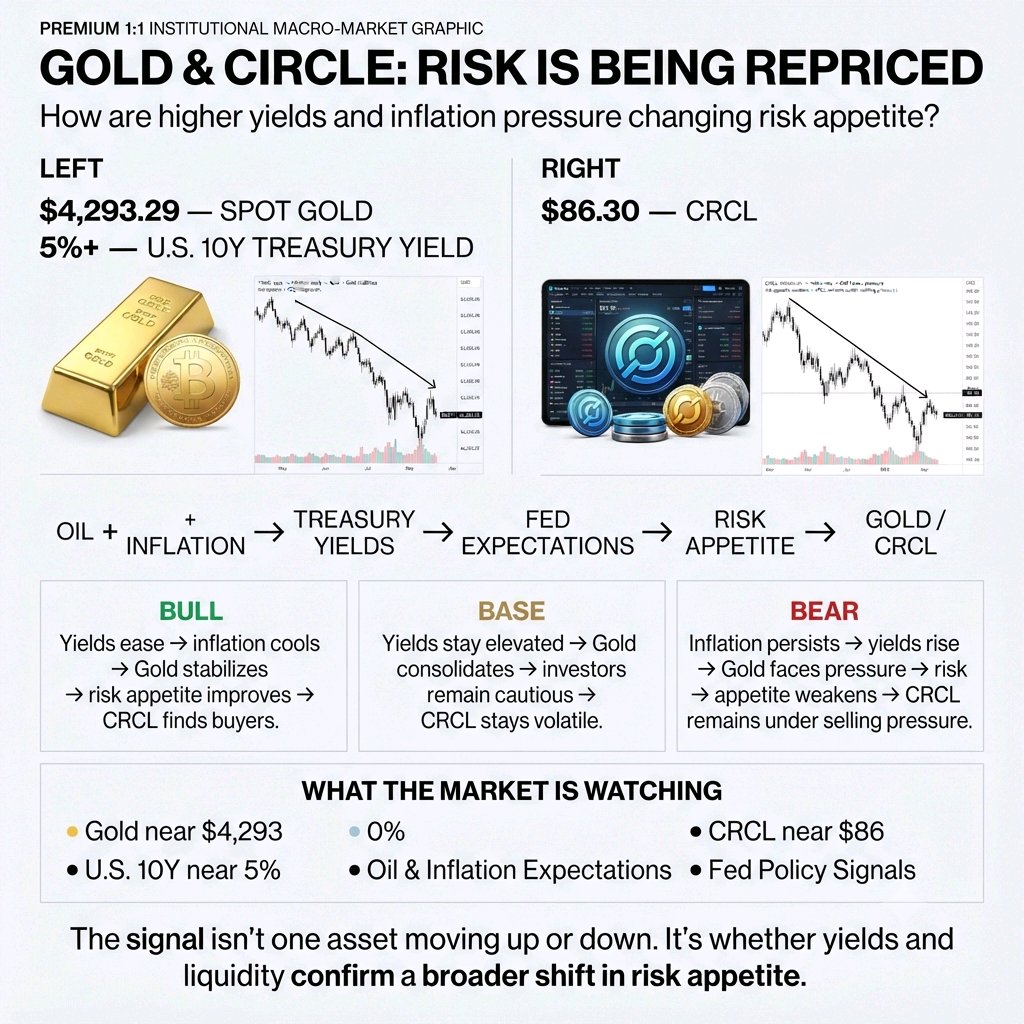
NVIDIAの2027年度第2四半期決算は、議論の様相を一変させました。売上高は前年同期比106%増の962億ドルに達し、データセンター部門は同117%増の890億ドルを記録しました。第3四半期のガイダンスは1080億ドルとさらに高く、需要が依然として極めて強固であることを示しています。 より深いシグナルは2028年度にあります。NVIDIAは、すでに巨大な規模で事業を展開しているにもかかわらず、約70%の売上成長を見込んでいます。Blackwellの需要は引き続き強く、Vera Rubinも生産段階に入り、次の主要な成長エンジンとなりつつあります。 しかし、重大なリスクもあります。成長がAIインフラに集中しすぎている点です。データセンター部門が売上の圧倒的大半を占める一方で、メモリや部品コストの上昇により、粗利益率は約75%から71~72%まで低下し、その後安定する可能性があります。 私のNVDAに関するフレームワーク: 強気:RubinがAI支出を拡大し、利益が予想を上回り続ける場合。 中立:売上は伸びるものの、バリュエーションと利益率の圧縮が上昇分を相殺してしまう場合。 弱気:ハイパースケーラーの設備投資が鈍化、あるいはAI投資がそれに見合う経済的リターンを生み出せなくなった場合。 見落とされているシグナル:NVIDIAは需要が依然として供給を上回っていると述べています。次の問いは、「AI需要が存在するかどうか」ではなく、「顧客がこのペースで支出を維持できるだけの経済的リターンを生み出せるか」です。 BYX(私自身の判断)としては、日々の価格変動を追うのではなく、業績修正、粗利益率、Blackwell/Rubinの導入状況、そして機関投資家の動向に注目します。 ローソク足を見る前に、ファンダメンタルズを確認しましょう。 DYOR(ご自身で調査を)。投資助言ではありません。 $NVDAXUSDT #ByXIMPACT
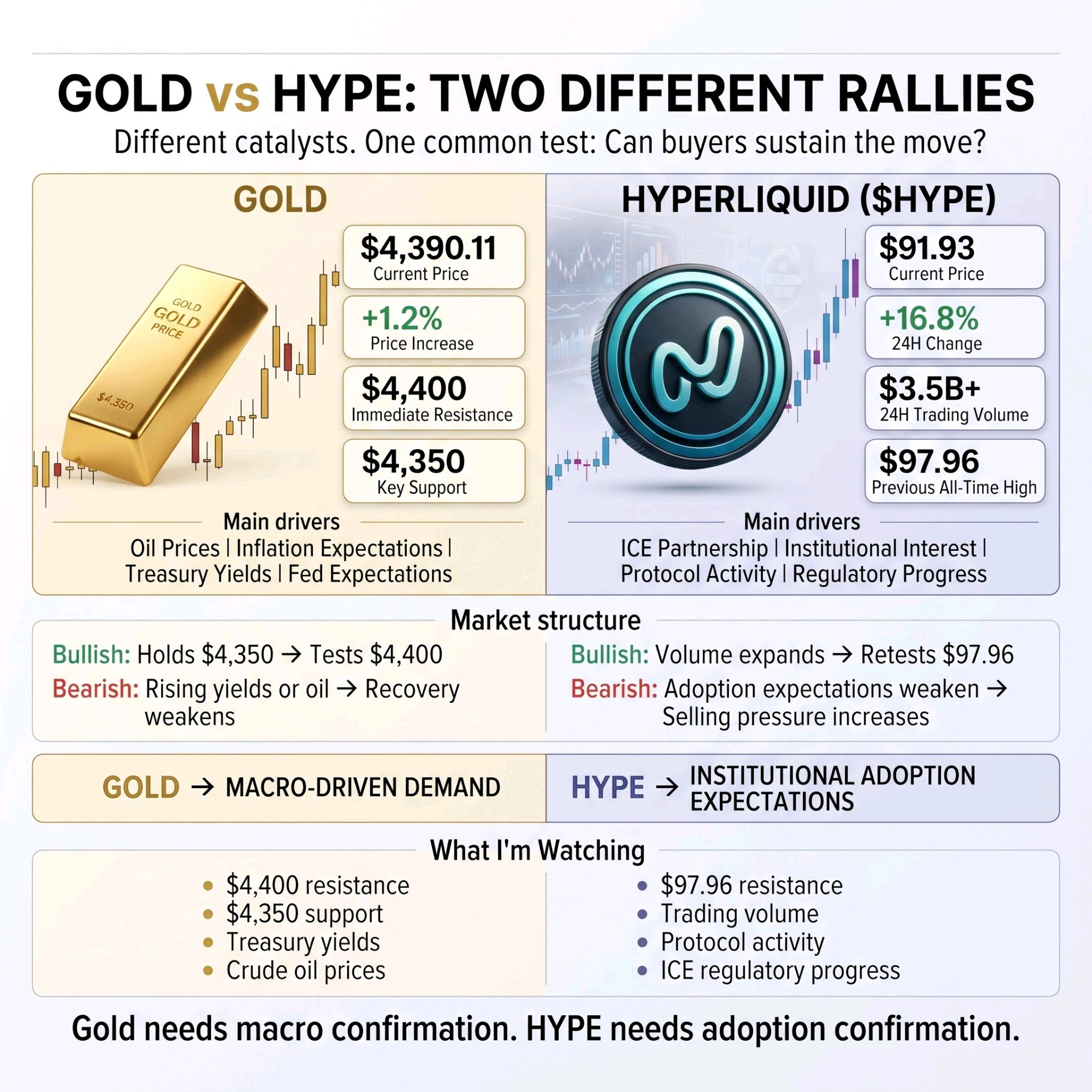
Gold and Hyperliquid's $HYPE are both attracting buyers, but the reasons behind their moves are very different. Spot gold climbed to $4,390.11, gaining 1.2% as easing oil prices reduced some inflation pressure. HYPE, meanwhile, jumped approximately 16.8% to $91.93, with daily trading volume exceeding $3.5B following the announcement involving ICE and Trade[XYZ]. That difference matters. Gold is reacting mainly to macro conditions: oil prices, inflation expectations, Treasury yields and Fed policy. HYPE is reacting to growing expectations around institutional adoption, following plans to introduce Hyperliquid-based perpetual futures through a regulated trading and clearing structure, subject to regulatory approval. So I'm watching whether both moves can hold after the initial reaction. Gold: $4,400 is the immediate test. Holding above $4,350 would keep the recovery structure intact, while renewed pressure from yields or oil could weaken the move. HYPE: $97.96 is the key resistance area and previous all-time high. Sustained buying volume could support another attempt, while regulatory delays or declining protocol activity could weaken the rally. The interesting part isn't that Gold and HYPE are both rising. It's whether their respective catalysts can continue supporting demand after the first wave of buying fades. I'm watching: • Gold around $4,400 • Gold support around $4,350 • HYPE around $97.96 • U.S. Treasury yields and crude oil • Regulatory progress around the ICE partnership • Volume and protocol activity behind HYPE Different assets. Different drivers. But both now need confirmation that buyers can sustain the move. $XAUTUSDT $HYPEUSDT #ByXIMPACT
ゴールド: Fed利上げ、トレンドを破れず
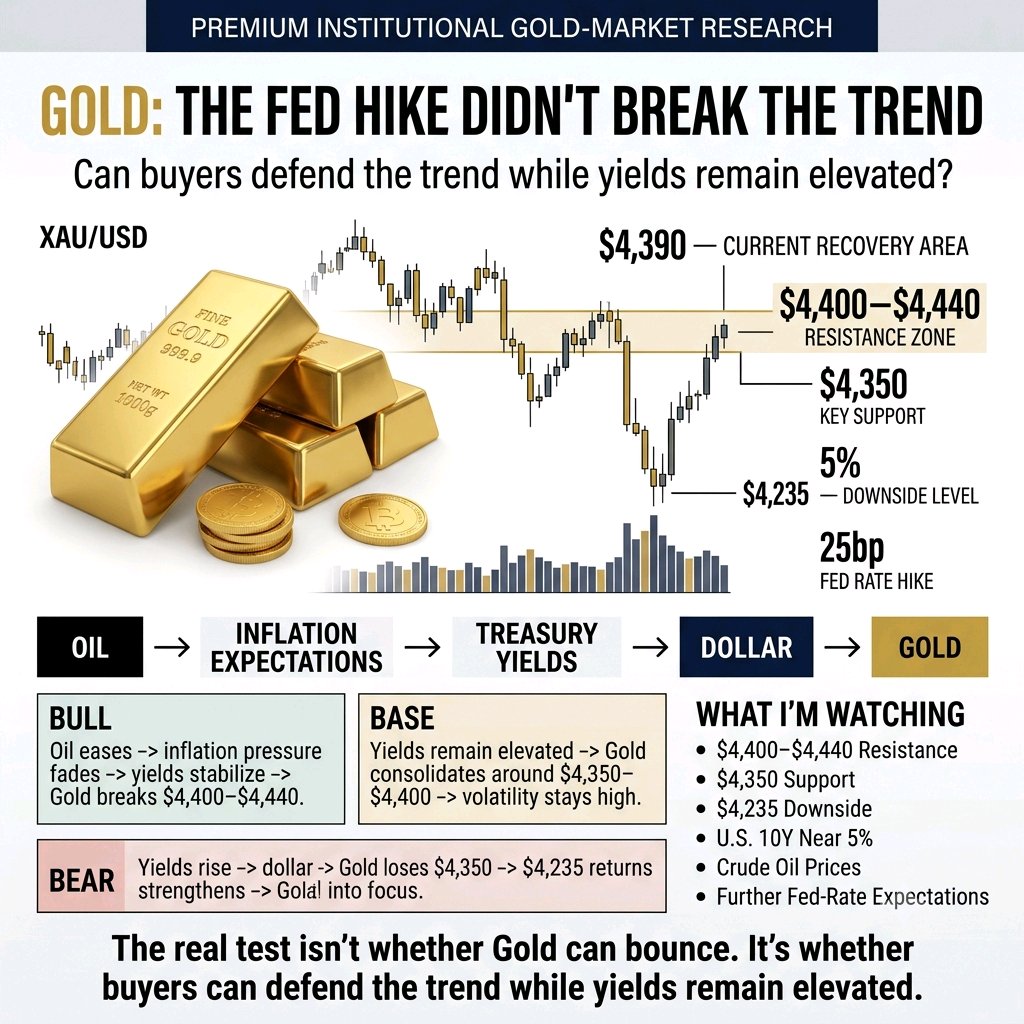
金は最新のFRB利上げ後に急反発しましたが、興味深いのはその反発そのものではありません。 その裏で何が起きたかです。 FRBの25ベーシスポイント(bp)の利上げを受けて約4,235ドルまで下落した後、スポット金は再び4,400ドルに向けて上昇しました。原油価格が落ち着き、米国債利回りが低下するにつれて、金への圧力の一部が和らぎ始めました。 この反応は重要です。 金利上昇は通常、利回りを生まない資産である金に圧力をかけます。しかし今回は、原油、インフレ期待、利回り、そして地政学的リスクが互いに影響を与えようと競い合っていることを市場が示しています。 これにより、3つの可能性が生まれます: 強気シナリオ: 原油が冷え込み続ける → 米国債利回りが低下 → インフレ圧力が緩和 → 金が4,350ドル以上を維持し、4,400ドル超を再テストする。 基本シナリオ: 利回りが高止まり → 金は4,350ドル~4,400ドル付近で揉み合う → 市場がFRBの次の一手を再評価する中でボラティリティが高い状態が続く。 弱気シナリオ: 原油が反発 → インフレ期待が上昇 → 利回りが5%に向けて再上昇 → 金が4,350ドルを割り込み、新たな売り圧力に直面する。 市場の教訓 FRBの利上げは、金の構造を壊しませんでした。 より大きな試練は、原油安と利回りの低下がこの反発を支え続けられるかどうかです。 注目点: ・4,400ドルのレジスタンス ・4,350ドルのリアクションゾーン ・米国10年債利回り ・原油価格 ・今後のFRB利上げ予想 金はもはや金利だけで取引されているわけではありません。 次の動きは、インフレ圧力が緩和し続けるか、あるいはエネルギー価格を通じて再び高まるかによって決まるでしょう。 #ByXIMPACT $XAUTUSDT
金(ゴールド)とSolanaはどちらも上昇していますが、その背景にある理由は大きく異なります。 金スポット価格は、原油価格の下落によりインフレ圧力が幾分緩和されたことを受け、1.2%上昇し4,390.11ドルとなりました。一方、SOLは9月18日に11.5%急騰し、一時114.13ドルに達した後、113ドル以上を維持しています。 この違いが重要です。 金は主にマクロ環境(原油、インフレ期待、米国債利回り、FRBの期待値)に反応しています。 SOLは、週初めに97ドル付近まで急落した後の反発であり、ハイベータ(高ベータ)なリスク資産に近い動きを見せています。 そのため、初期の反応の後に両者の上昇が維持できるか注視しています。 金: 4,400ドルが目先の試金石です。4,350ドル以上を維持できれば回復基調は保たれますが、利回りや原油からの新たな圧力がかかれば状況が変わる可能性があります。 SOL: 114ドルが目先のレジスタンスエリアです。110ドル以上を維持すれば最近のブレイクアウトの試みは建設的と言えますが、100ドルを割り込むと回復の勢いは弱まるでしょう。 興味深いのは、金とSOLの両方が上昇していること自体ではありません。 最初の買いの波が引いた後、それぞれのカタリスト(上昇要因)が引き続きその動きを支えられるかどうかです。 私が注目しているのは以下の点です: • 金:4,400ドル付近 • SOL:114ドル付近 • 米国債利回り • 原油価格 • FRBの期待値 • 反発を支える出来高 異なる資産。 異なるドライバー。 しかし、どちらも現在は買い手がその利益を維持できるかどうかの確認が必要です。 $XAUTUSDT #ByXIMPACT $SOLUSDT
Gold & Circle: Risk Is Being Repriced
Gold has been under pressure as rising oil prices, inflation concerns and higher Treasury yields push rate-hike expectations higher. Spot gold recently fell to $4,293.29, while the 10-year Treasury yield moved above 5%. But the interesting part isn't the gold decline itself. It's how investors are repricing risk across different parts of the market. Circle ($CRCL) has also faced heavy selling pressure, with the stock recently trading around $86.30. Crypto-linked equities remain sensitive to changes in risk appetite, making CRCL another useful asset to watch alongside broader market conditions. That creates three possible outcomes: Bull case: Treasury yields ease → inflation pressure cools → Gold stabilizes → risk appetite improves → CRCL finds buyers. Base case: Yields remain elevated → Gold consolidates → investors stay cautious → CRCL remains volatile. Bear case: Inflation pressure persists → yields rise further → Gold faces more pressure → risk appetite weakens → CRCL remains under selling pressure. Market takeaway Gold is showing how macro pressure is being priced into defensive assets, while CRCL shows how the same risk-off environment can affect crypto-linked equities. I'm watching: • Gold around $4,293 • U.S. 10Y yield near 5% • Oil and inflation expectations • CRCL around $86 • Fed policy signals The key isn't whether one asset moves higher or lower. It's whether yields and liquidity start confirming a broader shift in risk appetite. #ByXIMPACT $XAUTUSDT $CRCLXUSDT
Apple: The Next Big Investment Test
Apple is entering its next iPhone cycle from a position of strength. Revenue reached $109.4B, up 16% year over year, while iPhone demand remained strong. But investors should look beyond the headline growth. Memory costs are rising as AI infrastructure competes for semiconductor capacity. Apple has already raised prices on some Macs and iPads, while management expects memory costs to remain a pressure point in the September quarter. Now the iPhone becomes the bigger test. Reports suggest memory costs for the iPhone 18 Pro could be significantly higher, creating another challenge for Apple's hardware margins. The investment question is simple: Can Apple pass higher costs to consumers without damaging iPhone demand? If the answer is yes, Apple demonstrates something more valuable than short-term revenue growth: pricing power. That could allow Apple to protect margins and earnings even as hardware costs rise. But if Apple absorbs too much of the increase to keep prices attractive, revenue could continue growing while margins come under pressure. My Apple takeaway: Don't watch the iPhone launch only for unit sales. Watch: ASP + gross margin + consumer demand. If Apple raises prices and customers keep upgrading, that would strengthen the case that its ecosystem still gives it exceptional pricing power. If higher prices weaken demand or margins deteriorate, investors may need to rethink future earnings growth. The bullish signal isn't simply “Apple sells more iPhones.” It's: “Apple can charge more without breaking demand.” $AAPLXUSDT #ByXIMPACT
NVIDIA’s Q2 FY2027 results changed the debate. Revenue reached $96.2B, +106% YoY, while Data Center hit $89B, +117%. Q3 guidance is even higher at $108B, showing demand remains exceptionally strong. The deeper signal is FY2028: NVIDIA expects roughly 70% revenue growth, despite already operating at massive scale. Blackwell demand remains strong, while Vera Rubin has entered production and is becoming the next major growth engine. But there’s a critical risk: growth is increasingly concentrated in AI infrastructure. Data Center represents the overwhelming majority of revenue, while rising memory and component costs could push gross margins from around 75% toward 71–72% before stabilizing. My NVDA framework: Bullish if Rubin expands AI spending and earnings continue beating expectations. Neutral if revenue grows but valuation and margin compression absorb the upside. Bearish if hyperscaler capex slows or AI returns fail to justify infrastructure spending. The overlooked signal: NVIDIA says demand is still ahead of supply. The next question isn’t whether AI demand exists—it’s whether customers can generate enough economic return to keep spending at this pace. For BYX, I’d focus on earnings revisions, gross margins, Blackwell/Rubin deployment and institutional positioning rather than chasing daily price moves. Watch the fundamentals before the candle. DYOR. Not financial advice. #ByXIMPACT $NVDAXUSDT
テスラの2026年度第2四半期決算は議論の様相を一変させた。売上高は前年同期比26%増の282.4億ドル、車両納車台数は25%増の48万126台で過去最高を記録した。エネルギー貯蔵システムの導入量は13.5GWhに達し、アクティブなFSDサブスクリプション契約数は前年同期比56%増の148万件に増加した。 より深いシグナルは、テスラが車両メーカーから脱皮しつつある点にある。ロボタクシーは米国の都市部で拡大しており、サイバーキャブは生産を開始し、オプティマスの生産インフラも構築が進んでいる。同時にテスラは、AIコンピューティング、バッテリー、半導体、そして新たな製造能力へ巨額の投資を行っている。 しかし、重大なリスクもある。AI関連の新規事業が意味のある財務的リターンを生み出す前に、成長がより資本集約的になっている点だ。第2四半期の営業利益率は1.4%に低下し、設備投資(Capex)が57.9億ドルへと急増したことで、フリーキャッシュフローはマイナス11億ドルに転じた。研究開発費も前年同期比49%増加した。 私のTSLA(テスラ株)分析フレームワーク: 強気:ロボタクシー、FSD、エネルギー事業の拡大スピードが、テスラの投資負担を上回る場合。 中立:売上高は伸び続けるが、利益率の圧縮と高水準の設備投資が上昇分を相殺してしまう場合。 弱気:自動車需要が減退する一方で、AI、ロボティクス、自動運転分野で、それに見合う収益成長を伴わずに継続的な支出が必要となる場合。 見落とされがちなシグナル:テスラの最大の制約は、もはや自動車需要だけではないかもしれない。それは、AIインフラへの投資を、いかにして利益率の高い継続的な収益に転換できるかという点だ。同社は、短期的にはバッテリーパックの生産能力が車両生産を制限しているとしつつ、AIと製造能力の拡大が資本需要を押し上げていると述べている。 BYX(私自身の判断基準)としては、日々の株価の動きを追うよりも、納車台数、自動車部門の利益率、FSDサブスクリプション数、ロボタクシーの展開状況、エネルギー導入量、そしてフリーキャッシュフローに注目したい。 ストーリーよりも、キャッシュへの転換能力を注視せよ。 DYOR(自分で調査を)。投資助言ではありません。 #ByXIMPACT $TSLAXUSDT