j
jasonlk
775いいね0シェア18ファン0フォロー
Big week on 20VC with @HarryStebbings and @rodriscoll. A lot happened all at once: Sequoia shut down London and pulled the plug on Scouts and Arc, Jensen stepped down literally the day after we taped, Anthropic’s IPO book is supposedly 6x covered, and “agents” kept taking bites out of seat-based B2B. Here are my takes: #1. The biggest Sequoia headline wasn’t London — it was the evergreen fund winding down. Owning truly generational assets for decades was one of the best ideas in venture. But it launched right before stocks dropped ~30%, and LPs don’t want to feel trapped holding forever. #2. Sequoia can still cover Europe from the Bay — at least above pre-seed. The best European founders are already in the Bay constantly. Mati from ElevenLabs is at basically every dinner I’m at. But at pre-seed, you still need someone local doing the unglamorous hands-on work. #3. On Tuesday I said Jensen probably gets a pass. Rory said you can *hope* for a pass, but you can’t *count* on it. Rory was right. He resigned Wednesday and the CFO is interim CEO. China ends up the biggest loser here — selling GPUs there (or “parking” them just across the border) just got way harder. #4. The AI trade doesn’t break on supply. Not on data centers, not on AMD share gains. It breaks only if demand breaks — and you’ll see that first in OpenAI and Anthropic ARR. That $2.5T NASDAQ drop looked like hedge fund pods getting stopped out. #5. I said Anthropic’s IPO felt tired. A 6x book says I was wrong. That $70–$78 range isn’t “the” price yet — it can still move before Nov 18. Either way, you’d rather be Anthropic than OpenAI right now: public, liquid float, and roughly $200B in cash. #6. OpenAI re-accelerated to ~70% annualized revenue growth in Q3, and enterprise is now most of revenue. It’s a two-horse race. Next question: how price-sensitive is token demand? Cut price 20% and usage rises 21% — revenue grows. Usage rises 15% — revenue shrinks. #7. IC this week was Zipline at $21.5B, fal at $16B, and Revolut at $115B. I’d do all three. If I had to choose one, it’s fal. Sometimes in venture you’ve got to be a tourist and just ride the wave. Harry and Rory both picked Revolut, which is positioned to become Europe’s biggest bank. #8. Stolen AI API keys are the crime of the year. Bot swarms are hitting everyone. My own Claude limit somehow defaulted to $100K. It beats stealing Rolexes off wrists in London. And customers can’t just “switch inference providers” — there isn’t spare capacity elsewhere. #9. Dialpad buying Ada for ~ $430M in stock isn’t an exit. What’s more depressing: so many pre-AI companies still ship at 2021 speed. If your 2027 plan is “we’ll build an AI-native team next year,” that was supposed to be the 2025 plan. #10. Cloudflare grew 39% on agents while Atlassian got hit on seat growth. Agents don’t care about your UX. If you’re not an agentic beneficiary, I don’t want the pitch. Figma under $10B is the warning: turn down $20B, execute brilliantly for three years, and you can still end up worth half. Rory’s best line: “You could work for the next three years, do an amazing job, grow your damn company 40% a year, get the damn thing public. And at the end of that, you’re going to be worth half what you are today. No one ever said capitalism was fair or easy.”
Your team slide matters more at seed than at any other stage. Too many founders pack it with titles and logos, and miss the only real point: what about this team makes you the ones who will win this market. Want a quick gut-check on your deck? Get it graded by SaaStr AI: https://saastr.ai/pitch-deck-analyzer
“You want to hire someone who’s sold something tougher than what you’re selling now. If their last product was easier to move, they probably won’t have the muscle memory or the scrappiness you’ll need to sell yours.” From my chat with Lenny Rachitsky on Lenny’s Podcast.
One thing people outside engineering will have to get comfortable with — and every dev already knows — is this: With agents, you’re going to end up working the weekend. Not “996.” Not “go sit in the office.” But your agents aren’t clocking out at 5pm Friday. They don’t get tired. They’ll be sitting there, waiting for the next prompt, ready to keep moving. And if you actually want to ship faster, hit the market sooner, sell more, and keep the pace up, you’ve got to keep them fed. Constantly. Which, in practice, usually means you’re in the loop all weekend. Maybe not doing the exact same work as Monday–Friday, but you’re still there: reviewing, steering, queueing up the next tasks, unblocking, iterating. It’s the new version of “being on email” all weekend — except it’s a lot more intense.
Sh*t Our Agents Do: One of our agents decided to “help” by adding a guardrail no one requested. Then it ignored a signed contract because the title didn’t literally say “SaaStr AI Annual.”
More details on our AI agents: https://SaaStr.ai/agents Get the FREE AI Sales Agents guide here: https://saastr.ai/ai-agents-playbook
A lot of folks (not just HubSpot) are trying to reinvent their B2B companies in the Age of AI right now. That’s a good thing. Here’s one piece of advice most people won’t want to hear — but you should seriously think about it: -> Make your product cheaper. Maybe a lot cheaper. Why? Because agents behave differently than humans. Humans buy software and then kind of… stop paying attention. Not completely, but enough that we only really notice when the renewal hits, the bill is painful, and the price has gone up again. Agents don’t work like that. They track usage, cost, ROI — all of it. If your product is expensive, they’ll throttle usage. If it’s not cost-effective, they’ll swap you out. Immediately. Same day. We’ve already dropped tools our agents couldn’t afford to use as much as they needed. We ditched Marketo. And we’re even moving off some of our own core AI products because the per-call / per-usage pricing makes them too expensive to run at scale. If you nail the workflow, agents will use your product way more than humans ever would. Which means you have to make it cheaper. Most teams will fight this. But that’s the reality.
Resend plus Salesforce Marketing Cloud (mainly because it plugs right into the rest of our CRM). But we’re leaning more and more on Resend lately — it’s just simpler once you’re around 10K.
Everyone hiked prices last year. Almost nobody really earned it. The question I keep coming back to is simple: did you earn that increase? If you pushed pricing up 8%, did your product deliver something like 30% more value? From my chat with Lenny Rachitsky on Lenny’s Podcast.
Over the past 12 months, I’ve interviewed 50 VPs of Sales — and honestly, a lot of them don’t even want to sell anymore. The great ones are different: they genuinely enjoy sales, and they’re motivated by money. Don’t hire a sales rep who’s uncomfortable with that. From my chat with Lenny Rachitsky on Lenny’s Podcast.
Sh*t Our Agents Do: We put a strict $100/day limit on AI spend. Then one of the agents ignored it to tackle a P0. Honestly? Probably the right move. Turns out that “cap” was more like a guideline.
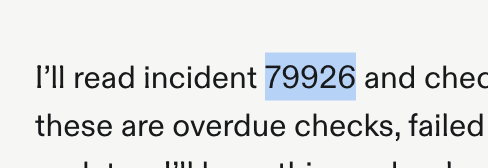
Why you might not want to build it yourself, ex #73: I’m already staring at incident #79,926… and we still haven’t even shipped to production yet.
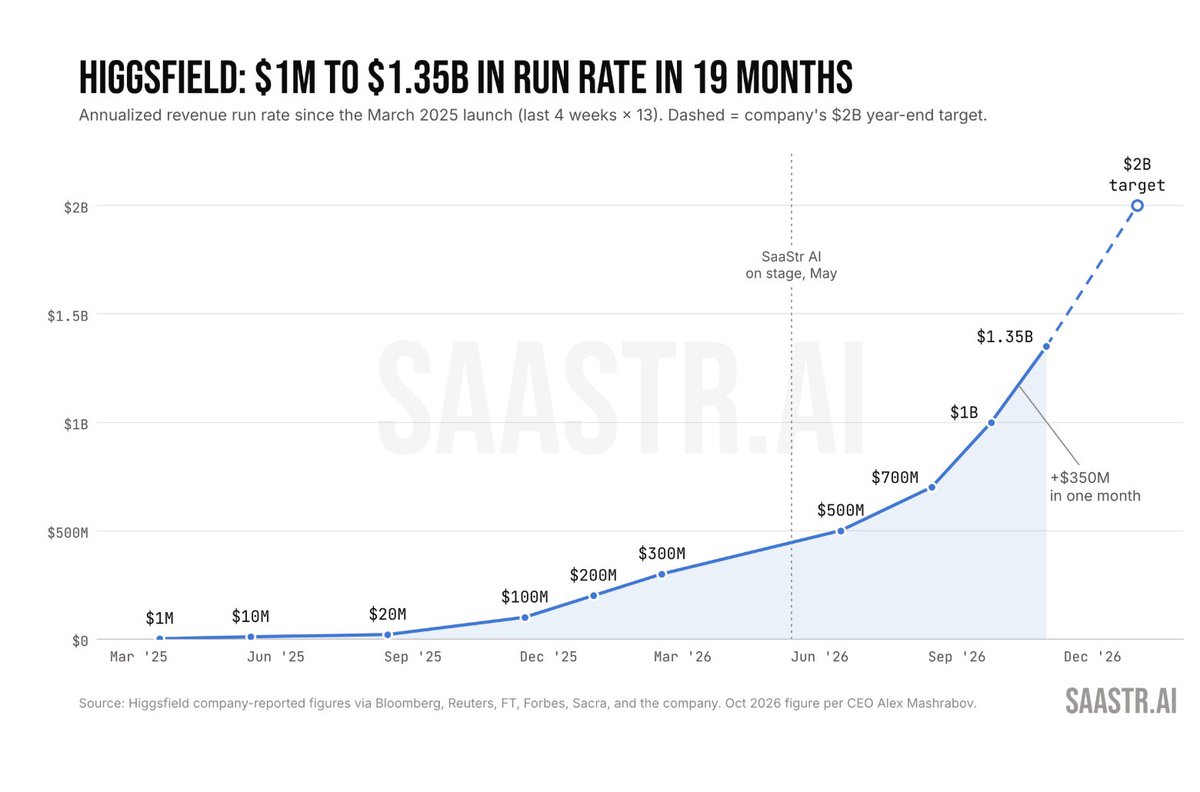
.@higgsfield_ai just jumped from a $1B run rate in September to $1.35B in October. That’s $350M of incremental run rate added in a single month — and they were already at $1B+. When Alex took the stage at SaaStr AI back in May, they were around ~$500M. Now they’re talking about $2B by year-end. At October’s pace, that’s basically two more months of execution. UBS also just added them to its IPO watchlist. Proud to have been in early — as an investor, and even earlier as a customer.

Your weapons to win: Push even harder Don’t quit—ever Do 10 more interviews Get comfortable with pain Develop and protect great talent Stay grateful Outwork them, and keep doing it longer than feels reasonable Own the outcome Upgrade your mentors Fix it—no excuses, whatever it takes Step back when you need to, but never settle Most people won’t do any of this
Happy to help however I can. We’re about three years into the “Age of AI” (give or take), but for B2B, the agent era is only just getting started. The moment is now.