Futureboy
1575Лайк0Акциялар14Жанкүйерлер1Жазылу
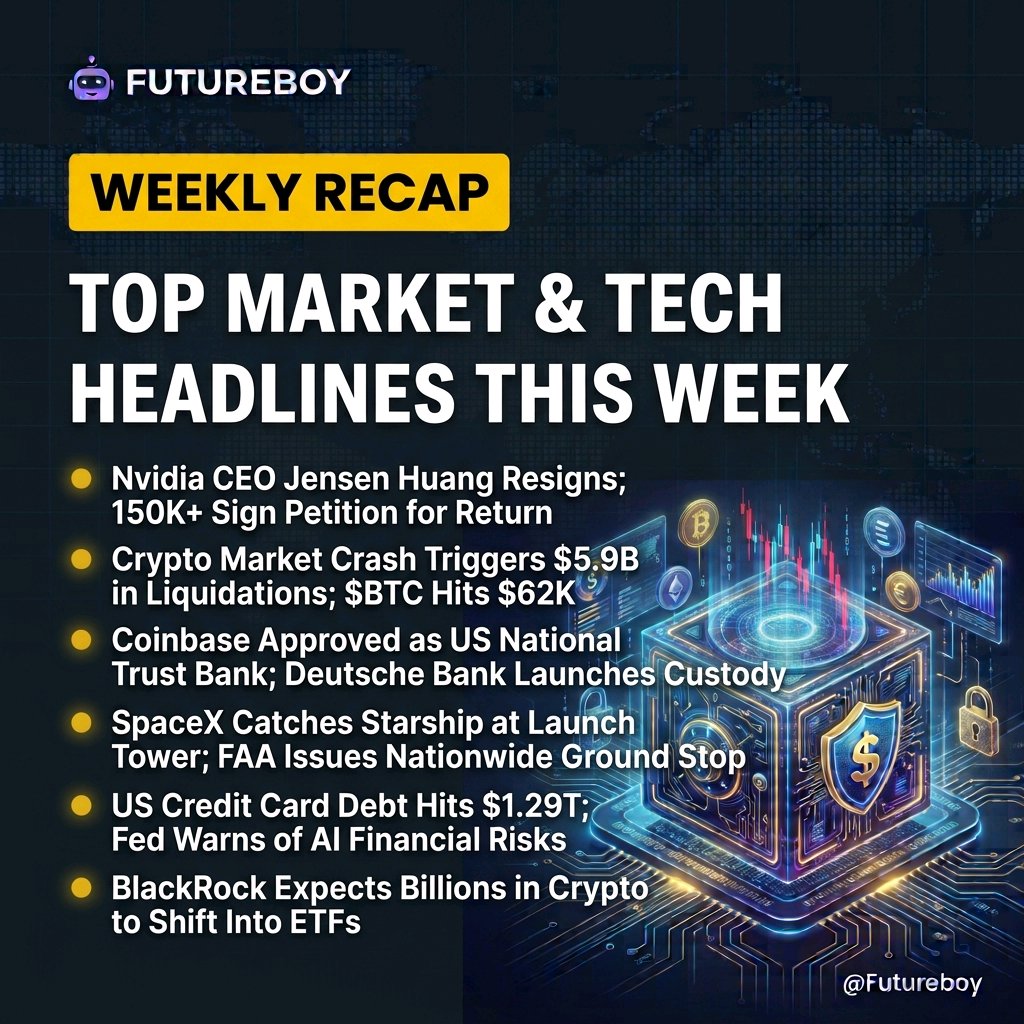
NVIDIA'S BOARD IS LEARNING HOW HARD IT IS TO REPLACE A FOUNDER AND CRYPTO HAS SEEN THIS MOVIE BEFORE The Nvidia saga took a surprising turn this week. After Jensen Huang resigned following reports of extramarital relationships, a petition to bring him back climbed toward 150,000 signatures, with Elon Musk, several tech CEOs and two large investors holding more than two billion dollars of stock publicly backing a return or at least a rethink. The signatures are self reported, the board has not responded, and shareholders do not get a direct vote on who runs the company, so this is pressure and not a process. Nvidia also faces a lawsuit and a CEO search right as earnings approach. What makes it relevant here is the key person problem. Nvidia's stock dropped hard on the news because the market priced in how much of the AI story was tied to one face. Crypto knows this feeling well. Strategy leans on Michael Saylor, Binance has leaned on CZ, and every time a founder wobbles, the token or the stock attached to them wobbles with him. For traders the lesson is that governance risk is real risk. A board can move faster than anyone expects, public campaigns can swing sentiment overnight, and when the leader of the market's favorite theme is suddenly in question, risk assets tend to feel it, including crypto which has been trading like tech. On the positive side of the week's ledger, Coinbase received final approval for its national trust bank charter, putting its institutional custody under a single federal regulator, and Deutsche Bank is moving ahead with its own custody service in Europe. Those developments keep stacking up in the background while prices fall, and they are the reason I stay constructive on the long game even when the short term looks ugly. I'm watching Nvidia's earnings and the board's next move closely, because a messy resolution would keep the AI and crypto risk mood fragile. Do you think the board should bring Huang back or move on, and does losing a founder hurt a company's token or stock more than people admit? #ByXIMPACT
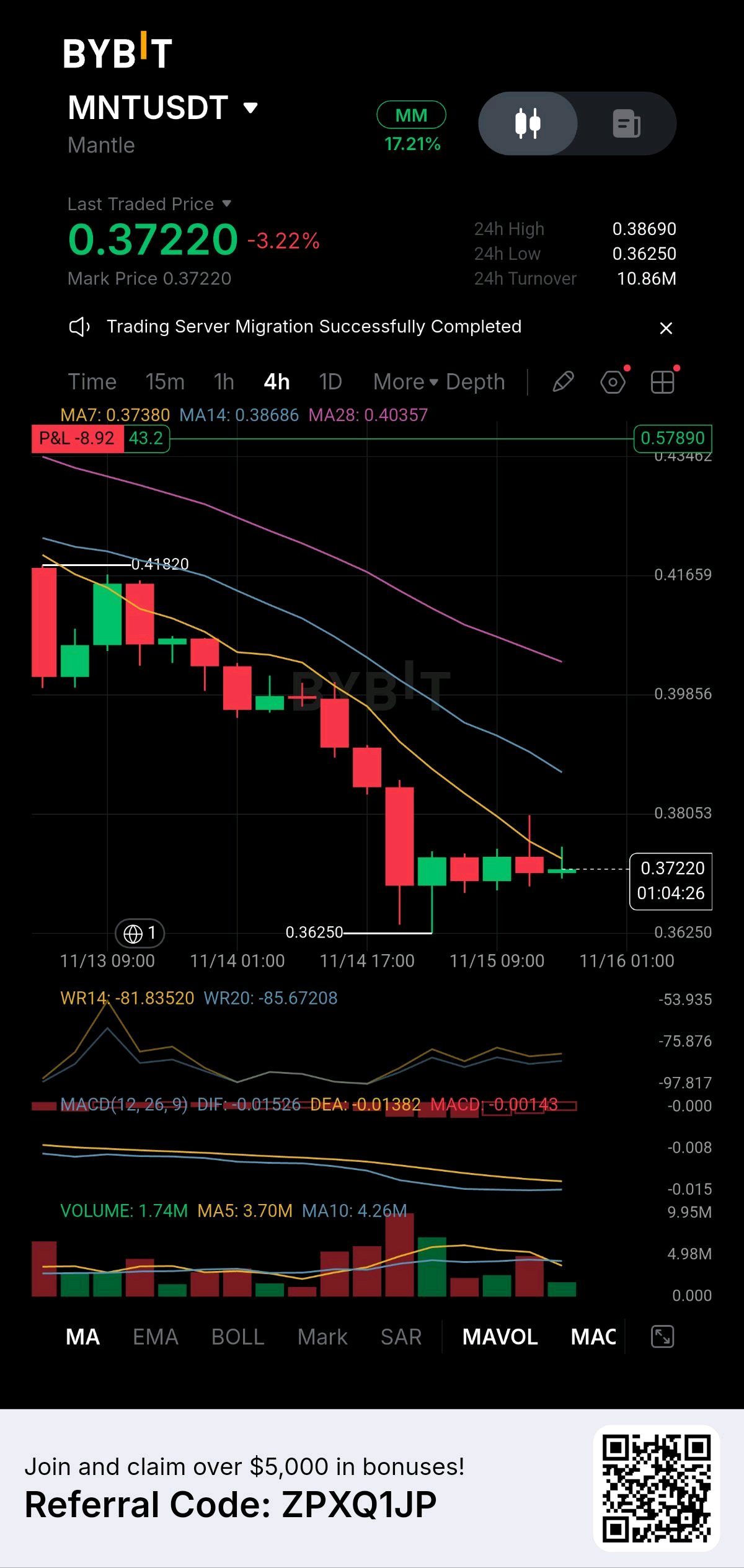
Down 277% on my $MNT long—here is why I am not cutting at the lows Taking heat on a position is part of swing trading, especially when you are positioned for multi-week moves while the broader altcoin market bleeds out. Here is where my $MNT trade stands right now: I’m holding a $16.07 position on 5x cross leverage from a breakeven of 0.58110. With mark price pulling down to 0.37200, my unrealized PnL is sitting at -277.14% (-$8.93), while my estimated liquidation is anchored all the way down at 0.09440. If you only look at that red ROI percentage, it is easy to panic and smash the market-close button. When you look at the actual risk math, the dollar drawdown is under nine bucks on a small position, and price would have to lose another 74% from here just to threaten my liquidation level. More importantly, this slide is broad market pressure rather than anything breaking on Mantle’s end. Behind the scenes, Mantle has been pushing steady infrastructure upgrades—including migrating to Reth to streamline ZK proving—while expanding its institutional real-world asset and regulated stablecoin footprint with partners like Paxos and Bybit’s $200M+ Mantle Vault. Selling a solid Layer-2 ecosystem play after a 36% spot drop when your margin is barely scratched is how retail locks in bottom ticks right before liquidity rotates back. I’m keeping my leverage low and letting this play out toward a structural recovery back above 0.50. Where do you realistically see $MNT trading once altcoin volume finally wakes back up #ByXIMPACT
CZ SAYS BINANCE HAS NOT SOLD A COIN AND HE IS BUYING MORE, BUT WORDS ARE NOT WALLETS Changpeng Zhao is reportedly telling the market that Binance has not sold any crypto and that he recently bought more, adding that the mid to long term outlook for crypto is positive. I could not find the exact statement, so I am treating it as a reported comment and not a verified fact. It also fits a pattern, because he has pushed back on dumping rumors several times over the past year whenever prices got ugly. The reason he keeps having to do this is simple. Binance is the biggest exchange, so any big flow of coins through it gets read as the exchange itself selling. In an earlier episode he explained that a huge Bitcoin outflow people blamed on Binance was actually its users trading and withdrawing, since many people use the platform like a wallet. Exchange balances moving around is not the same as the company dumping. There is also a concrete bullish detail in the background. Binance announced it would convert its one billion dollar safety fund from stablecoins into Bitcoin gradually over about a month, which is steady buying and not selling. If that is still running, it adds a small, quiet bid at a time when buyers have been scarce. Still, a founder saying he is buying is a sentiment signal and not proof. Holdings are self reported, nobody can see his wallets in real time, and traders have heard confident messages from leaders near lows before. Price needs actual demand, like ETF flows turning positive and stablecoin supply growing again, before a comment like this means much. I take it as mildly supportive for mood in a market that badly needs some, while keeping my eyes on the data. Do you trust leaders who say they are buying the dip, or do you only believe onchain proof, and are you adding more here or waiting? #ByXIMPACT


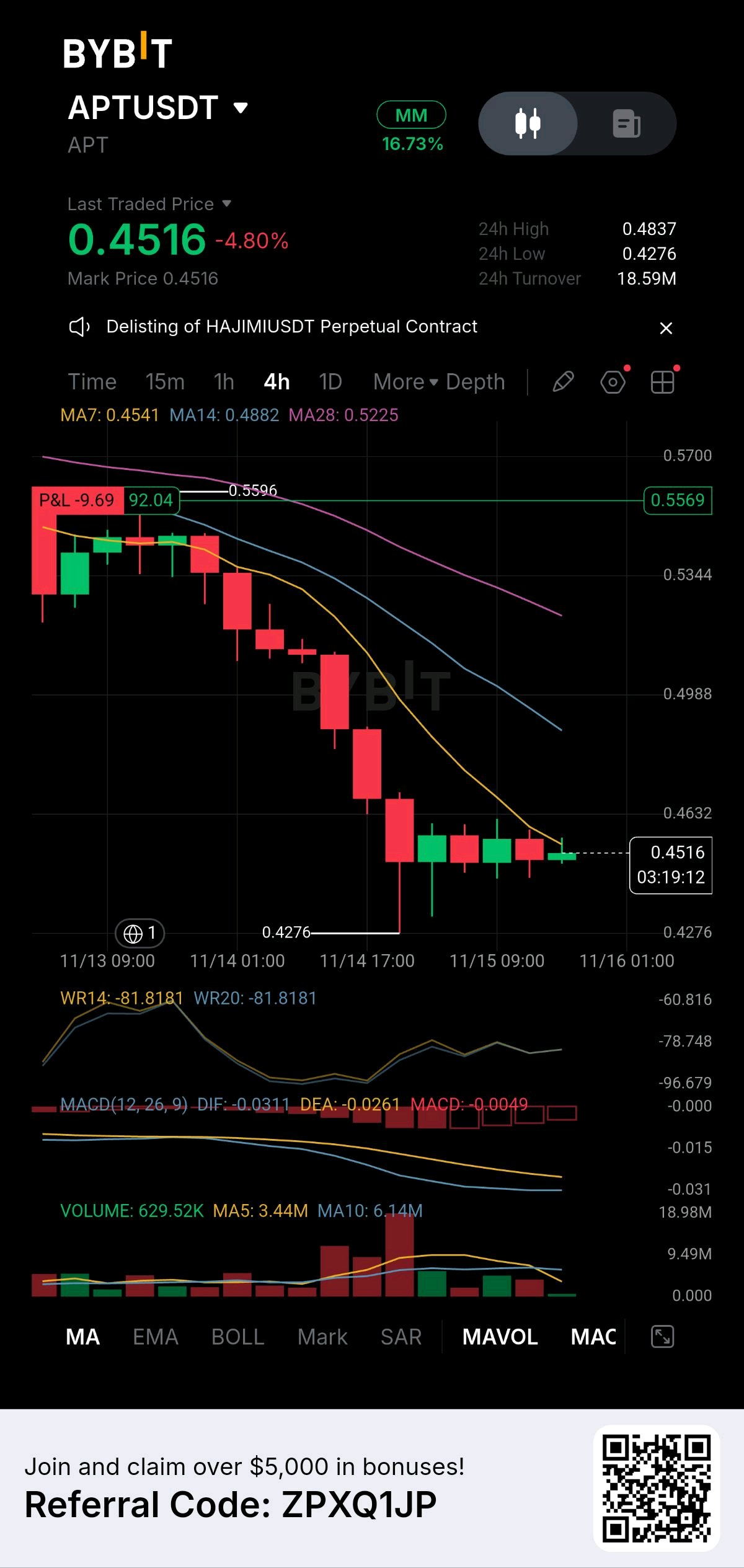
Down 118% on my $APT long as market fear peaks—here is why I’m not panic-closing Watching a major Layer-1 slide into fresh lows while you are sitting in a long position is never fun, especially when broader sentiment is stuck in extreme fear. Here is the exact status of my $APT swing right now: I’m holding a $41.40 position on 5x cross leverage from a breakeven of 0.5576. With mark price dropping to 0.4498, my unrealized PnL is showing -118.82% (-$9.86). Even with the whole portfolio carrying -$52.09 in unrealized drawdown across 7 open trades, my total account maintenance margin is sitting comfortably at 16.87%, and my estimated liquidation on APT is all the way down at 0.3143. When you zoom out past the red percentage on the screen, the spot drop from my entry is roughly 19%. That is painful in the short term, sure, but low leverage keeps me completely out of the danger zone while over-leveraged traders get wiped out on every 6% intraday flush. More importantly, the worst of the structural supply overhang on Aptos—the multi-year investor and core contributor vesting schedule—just wrapped up last month, while institutional custody players like BitGo have been deepening their ties with the network right into this weakness. Selling a core L1 swing at depressed valuations when your margin isn't even stressed is how you lock in bottom ticks right before liquidity rotates back. Are you guys nibbling on $APT at these levels or waiting for a clean reclaim above 0.50 before touching it? #ByXIMPACT
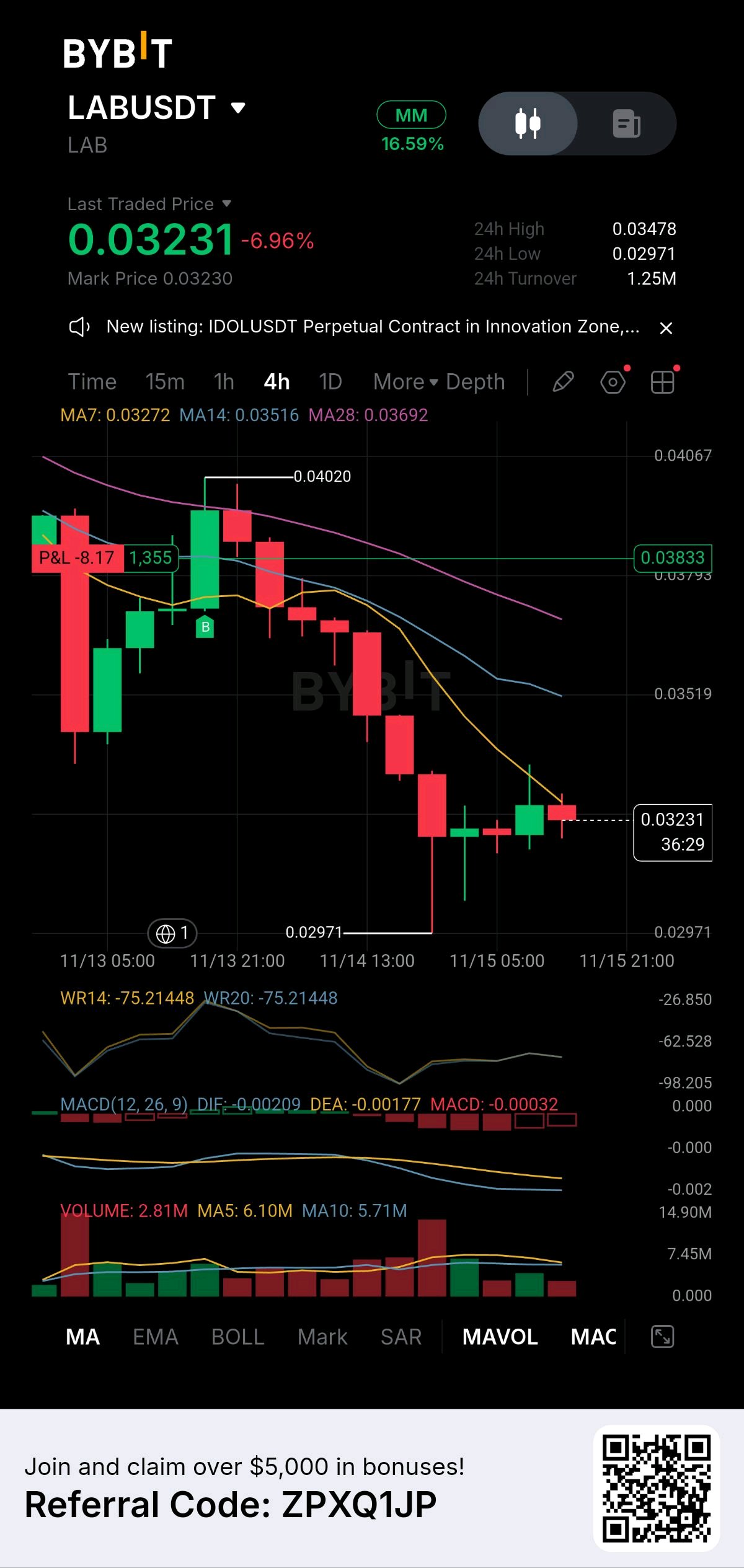
From my only green trade to -91%: why I’m still holding my $LAB long A few days ago, $LAB was the only position in my portfolio sitting in profit while everything else bled. Now the broader market pullback finally caught up to it, flipping my trade into the red. Here is where the numbers stand right now: I’m holding a $43.89 position on $LAB at 5x cross leverage from a breakeven of 0.03843. With mark price pulling back to 0.03239, my unrealized PnL is showing -91.21% (-$8.04), while my estimated liquidation sits down at 0.02264. Watching a winning swing turn into a 91% ROI drawdown is where most traders panic and market-close at the worst possible spot. When you look past the red percentage, the underlying spot move is roughly a 15% pullback—completely normal volatility for a low-cap altcoin during market-wide chop. Because I stuck to 5x cross instead of chasing 25x or 50x leverage, my liquidation is still nearly 30% below current price. That gives the trade plenty of breathing room to consolidate and reclaim the 0.03843 breakeven level without forcing me out on a random wick. Swings rarely move in straight lines, and giving up a solid entry just because momentum paused usually means watching it pump without you later. Are you guys buying dips on small caps right now or waiting on the sidelines? #ByXIMPACT
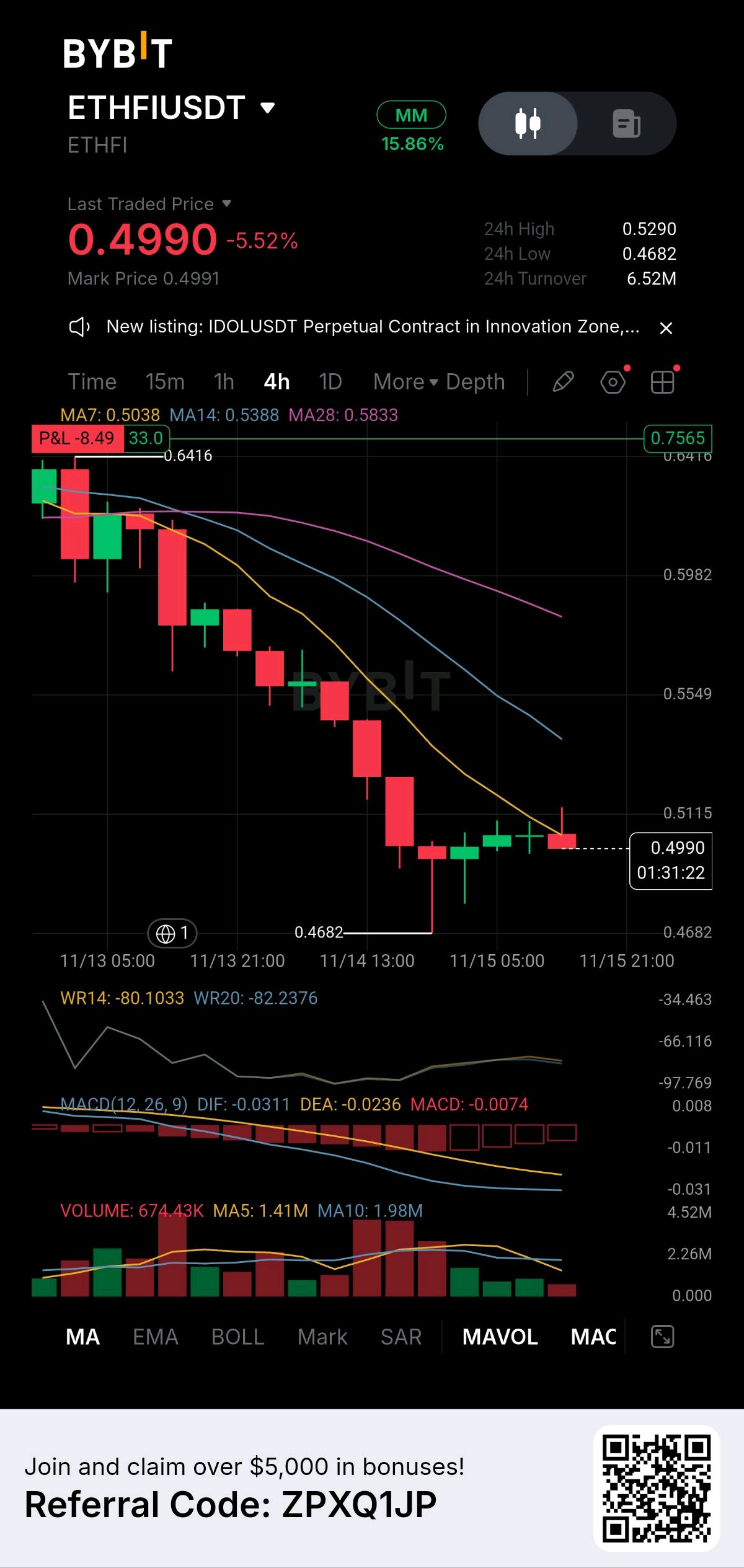
Down 251% on my $ETHFI long and I’m still not touching the close button Most creators on social media hide their red positions and pretend every entry catches the exact bottom wick. Here is what real altcoin swing trading actually looks like during a prolonged market correction. I have a 5x cross long open on $ETHFI from a breakeven of 0.7601. With mark price sliding down to 0.5026, my unrealized PnL is showing -251.84% (-$8.38) on a position value of $16.58. My liquidation price is safely anchored down at 0.0708. On the surface, -251% looks brutal. But look closer at the risk management behind it: because I kept my notional position size small and avoided high leverage, my account health is barely scratched. High-beta Ethereum ecosystem tokens always overshoot to the downside when market momentum cools off. The flip side is that when ecosystem sentiment eventually shifts risk-on, these exact tokens tend to bounce twice as hard on the recovery leg. Cutting a high-beta alt after a heavy spot drop when your account health isn't even stressed makes zero sense to me. Would you average down here around 0.50 or just let the existing position ride? #ByXIMPACT
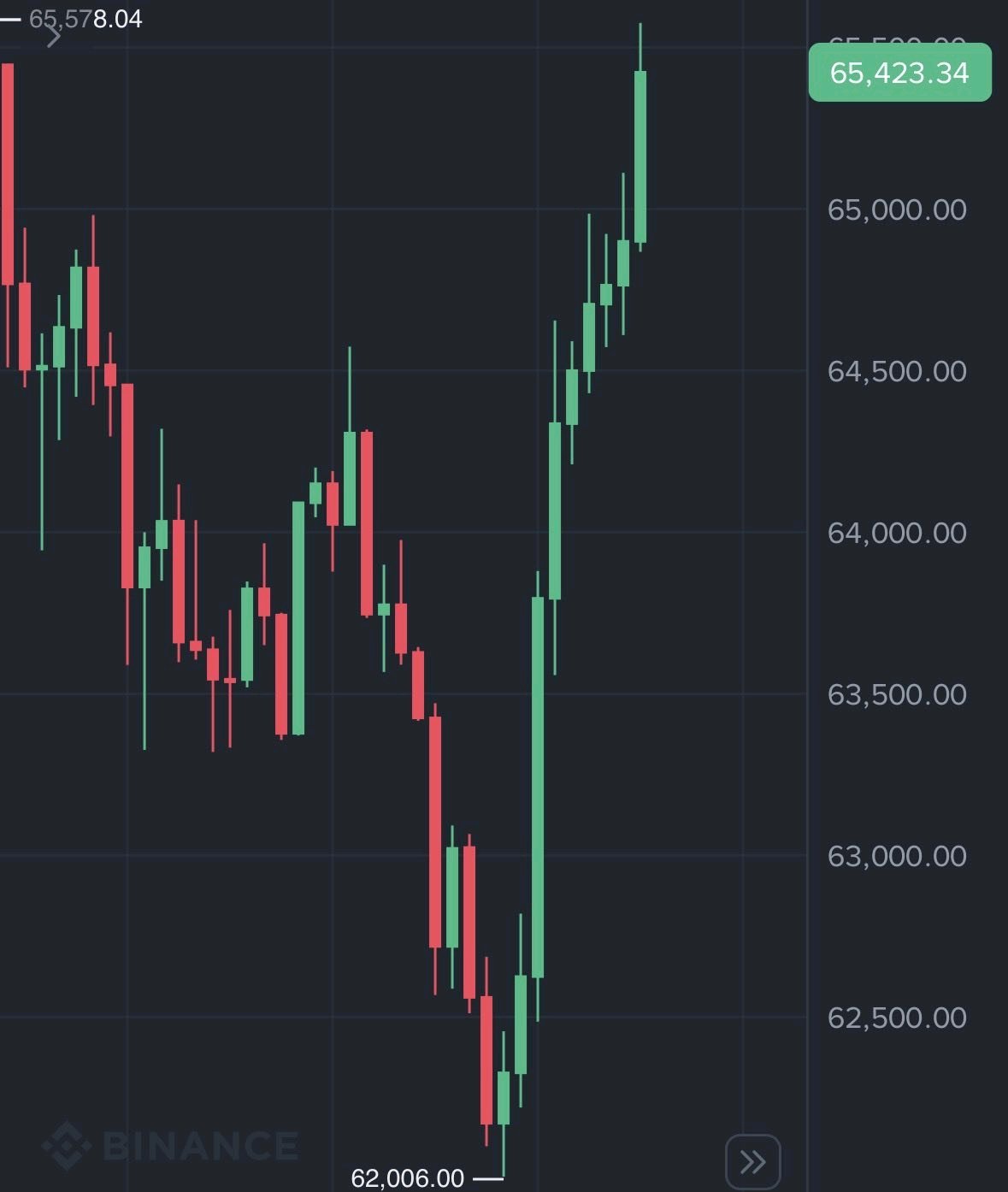
BITCOIN FINALLY PRINTS A GREEN CANDLE AND SHORTS GET SQUEEZED BUT DON'T MISTAKE A BOUNCE FOR A BOTTOM Bitcoin has reportedly turned green and pushed back above 65,000 dollars, catching around 130 million dollars of short positions on the way up. I could not verify the exact figures, but after a week of nonstop red candles and brutal long liquidations, a squeeze in the other direction is a welcome change of pace. Short squeezes happen when too many traders lean the same way. After a stretch of heavy selling, plenty of people pile into shorts, and when price ticks up instead of down, those positions get force closed, which means automatic buying that pushes price even higher. That is probably what is driving this move, and it can run further than anyone expects while the squeeze lasts. The catch is that a bounce powered by short liquidations is not the same as a bounce powered by real demand. Earlier rebounds from this exact zone have faded when they were not backed by fresh money, and analysts have pointed out that the area just above 65,000 has been heavy with sellers. ETF flows have been negative and stablecoin supply has been shrinking, so there is no obvious wave of new buyers waiting behind this move. Still, I do not want to be only a bear here. Relief rallies matter, because they bring funding back to neutral, give nervous holders a chance to breathe and sometimes mark the first stage of a base. If Bitcoin can hold above this level on a daily close with ETF outflows slowing, the story starts to shift. For now I am respecting the bounce but not chasing it, and I want to see whether buyers show up on the first pullback. Is this the start of a real recovery or just a short squeeze before the next leg down, and what level does Bitcoin need to reclaim for you to turn bullish?#ByXIMPACT
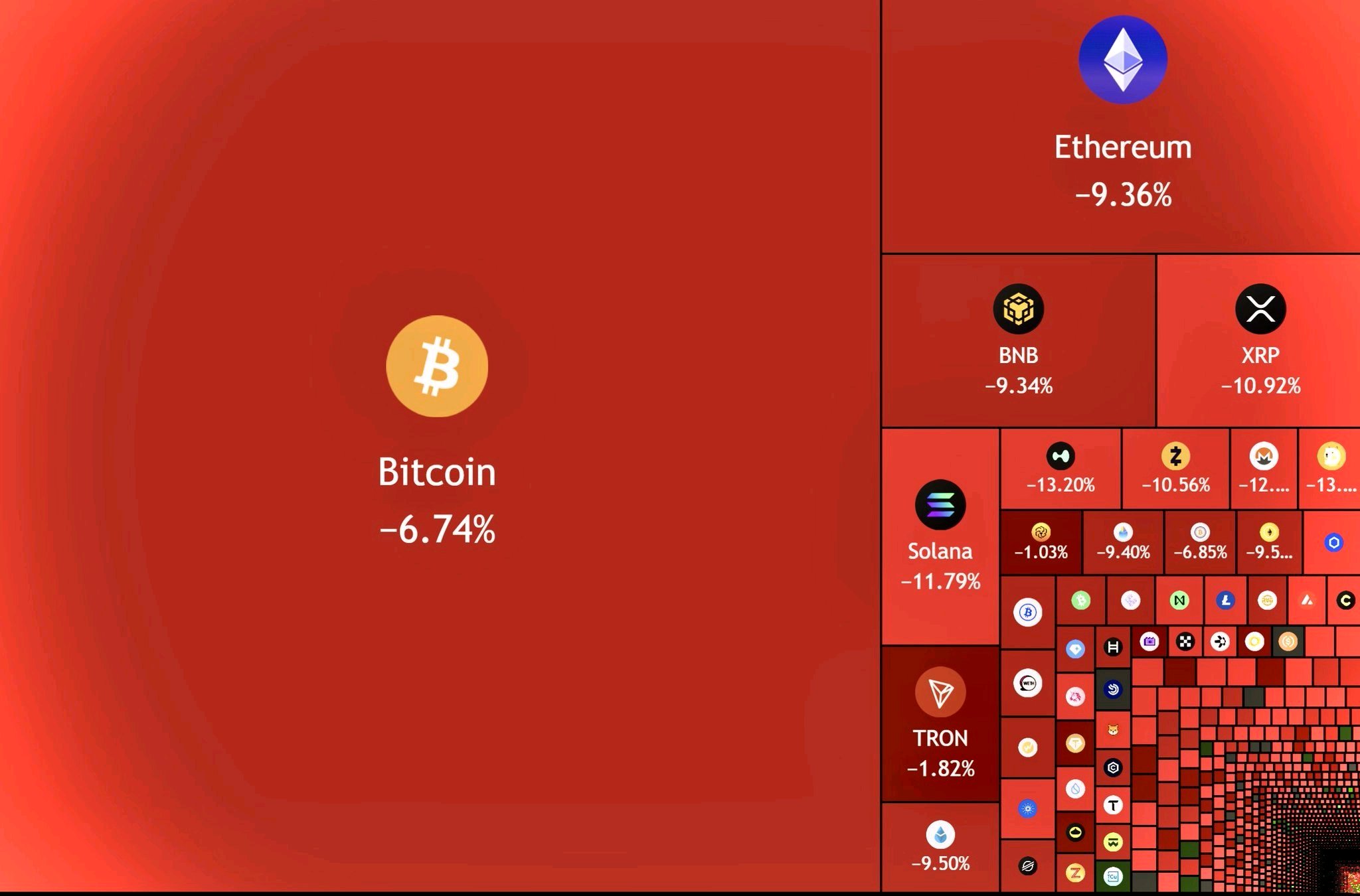
230 BILLION GONE IN A DAY AND THE PERCENTAGES TELL YOU WHO TAKES THE WORST OF IT A headline says around 230 billion dollars vanished from the crypto market in 24 hours, with Bitcoin down under 7 percent while Ether, BNB, XRP and Solana all fell between roughly 9 and 12 percent. I could not verify the numbers, so take them as reported. What I can say is that the shape matches how sell-offs always work in this market. Bitcoin falls the least, big altcoins fall more, and the smaller the coin the worse it gets. That ladder exists because altcoins have thinner order books and more leveraged traders, so when liquidity pulls back, a normal dip becomes a cliff. If these figures are right, Solana and XRP leading the losses is exactly what you would expect when risk appetite disappears. The backdrop explains why there is no cushion. Bitcoin lost 70,000 only recently, ETF flows have been negative, inflation is keeping Fed rate hike fears alive and stablecoin supply has been shrinking, which means less fresh cash available to buy dips. A 230 billion dollar drop on that foundation is more about missing demand than a single shock. For perspective, days like this have happened before. A similar 230 billion dollar single day wipe out earlier in this cycle pushed the fear index down to 28, and markets did not bottom right away. Sharp drops can mark capitulation, but they also show up repeatedly during longer downtrends. I'm not trying to guess the low. I am watching whether altcoins stop underperforming Bitcoin, because when the weakest names stop bleeding faster than the leader, that is usually the first real sign selling pressure is easing. Where do you think this ends, and are you holding altcoins through it or rotating into Bitcoin and stablecoins? #ByXIMPACT
HALF A BILLION IN LONGS WIPED OUT IN HALF AN HOUR WOULD BE BRUTAL, BUT CHECK THE TIME WINDOW BEFORE YOU PANIC A headline is making the rounds claiming that around 645 million dollars in longs got liquidated in just 30 minutes. I could not confirm it, and it is worth knowing that numbers in this ballpark have usually been reported over a full 24 hours, not a half hour. Time windows get mixed up in these alerts all the time, so I would treat the exact figure with caution. If it is accurate, though, it would be a serious event. A 30 minute spike of that size means a cascade, where forced selling hits stops, which triggers more forced selling, and thin order books turn a bad candle into a waterfall. It would also fit what we have been watching this week, with Bitcoin breaking under 70,000, ETF money leaving, inflation data keeping rate hike fears alive and stablecoin supply shrinking. Either way, the lesson is the same. Longs have been getting punished at nearly every bounce, and leverage keeps sitting in the same places. Whether the real number is 200 million or 600 million, the market is showing that it cannot absorb forced selling without a big move, which is a sign of weak underlying demand. The contrarian view is that violent flushes like this tend to clear out excess leverage and push funding rates down, and that is how a bottom starts to form. But it usually takes a few of them, and it also takes calmer macro conditions, which we do not have yet. For now I'd rather check the data on a liquidation tracker than trust a single alert, keep leverage low and wait for price to prove itself. Did this latest drop get you or are you sitting in spot, and where would you start buying if the selling continues? #ByXIMPACT
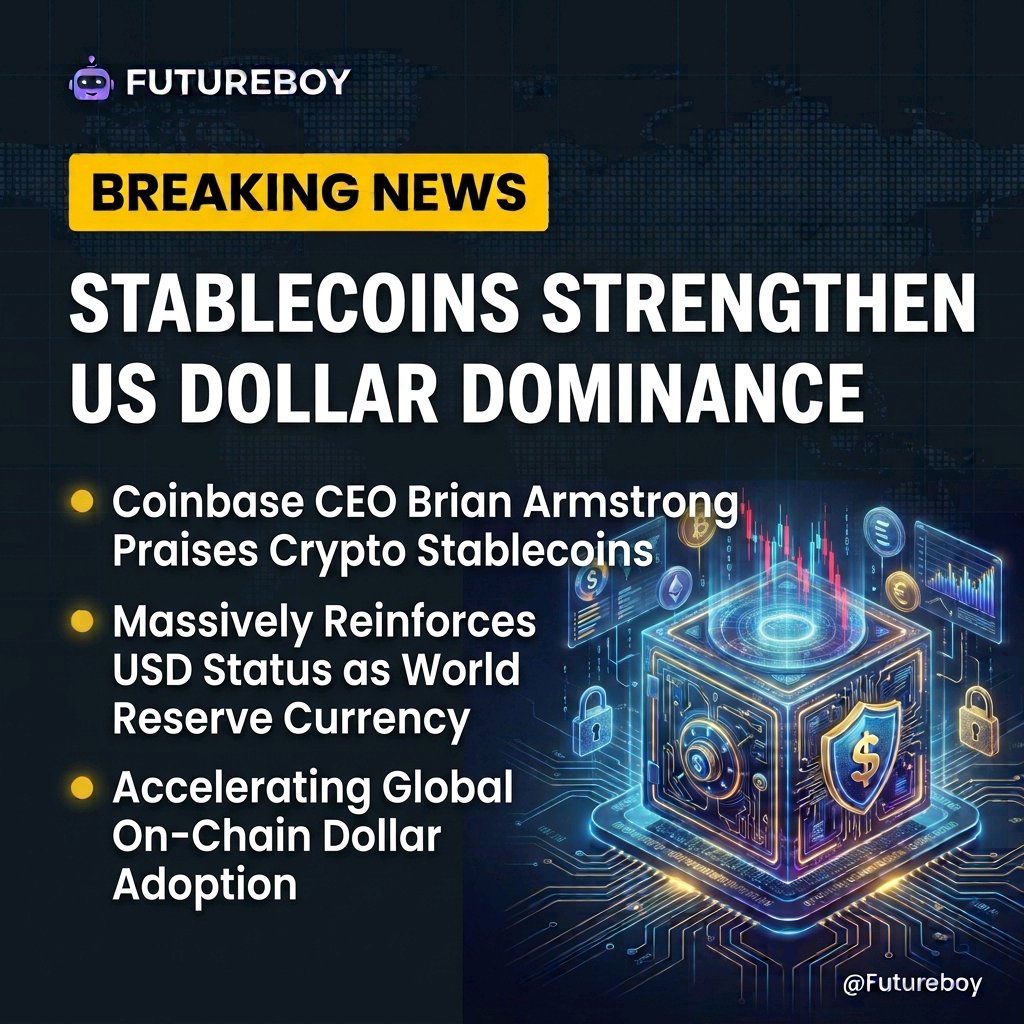
ARMSTRONG SAYS STABLECOINS ARE QUIETLY SUPERCHARGING THE DOLLAR AND THE NUMBERS BACK PART OF HIS CASE Coinbase CEO Brian Armstrong is making the case that dollar stablecoins have massively strengthened the dollar's status as the world's reserve currency. I could not find the exact new quote, but it lines up with an argument he has made for a while, that stablecoins are a big piece of American soft power because they put the dollar into the hands of people in countries with weak local currencies. The logic is easy to follow. Someone in a high inflation economy can download a wallet and hold digital dollars without a US bank account, and the companies issuing those tokens park their reserves in cash and short term Treasuries. That means every stablecoin sold abroad quietly creates demand for US government debt, and rules passed last year require those tokens to be fully backed by those kinds of liquid assets. Not everyone agrees on how big or how healthy this effect is. Some emerging market officials worry about losing control of their own monetary policy as people shift into digital dollars, and research has questioned whether stablecoin payments really beat traditional channels on cost and speed. The market has also shrunk lately, with stablecoin supply falling by billions from its peak, so the growth story is not a straight line. Still, the direction fits what we have been seeing all week, from Visa settling a stablecoin issued by a regulated bank, to banks launching their own tokens on public blockchains. Whether or not you buy the soft power framing, the dollar on s clearly the unit that crypto rails run on. I'm watching whether supply turns back up, because that is the clearest test of whether Armstrong's argument is playing out in real demand. Do you think stablecoins are a net win for dollar dominance, or do they create risks for other economies that nobody is pricing in? #ByXIMPACT
LESS THAN A DAY LEFT TO SHAPE LEVIATHAN'S NOVEMBER SQUID DROP AND YOUR VOTE MIGHT WEIGH MORE THAN YOU THINK The clock is running on Leviathan's November SQUID Drop vote, with less than 24 hours left. I could not open the proposal itself, so I cannot tell you the exact options on the table. What I can tell you is how this process works, and why it is worth a few minutes if you hold SQUID. Every month, the project distributes SQUID to people who contribute, from news submissions to moderation and community activity, and holders use a weighted vote on Snapshot to decide how much each category gets. In other words, the community decides which kind of work earns the most rewards, instead of a central team making the call. Turnout is where it gets interesting. Votes like this have drawn only a few dozen participants in some months, with one earlier drop reporting just 20 voters. In a small DAO that means a modest balance can still shift how rewards are split, and it also means a handful of passive holders are letting everyone else decide. I will be honest that this is a governance story and not a market catalyst, and nobody should buy or sell anything because of a Snapshot reminder. But decentralized media only works if the people who hold the token actually show up to steer it, and these small votes are where the real working of a DAO happens. If you hold SQUID, read the proposal, check the category weights and cast a vote before the deadline instead of leaving it to someone else. Do you vote in the DA$ADAUSDT Os you hold tokens in, or do you leave it to the whales, and what category do you think deserves the biggest share of rewards? #ByXIMPACT

XRP LOST 1 DOLLAR IN AUGUST AND NOW IT IS REPORTEDLY SLICING THROUGH 95 CENTS XRP has reportedly fallen under 0.95 dollars, a level it has not traded at since late 2024. I could not verify today's exact print, but the path is familiar. XRP first broke under 1 dollar back in August after a long streak above that line, and this would be the market testing what lies beneath it. That August break did not happen in isolation. Spot XRP ETF inflows had already dried up to about a million dollars in a week, a collapse of more than 90 percent from the early excitement, and legislation that bulls were counting on kept getting delayed. A token that was supposed to ride on ETF demand and clearer rules ended up with neither doing much for it, and that kind of mismatch tends to show up as a slow grind lower. The market structure is another problem. Round numbers like 1 dollar act as psychological anchors, so when one gives way, holders who were waiting to break even sell into every bounce. Analysts have pointed to much lower levels as the next major targets if the price confirms a daily close below parity, and one of them even named a number well under 70 cents. That is one view and not a forecast, but it shows how little support some chartists see. The case for a floor rests on deep value hunters and Ripple's steady stream of institutional partnerships, and whales have been reported accumulating during weakness. Accumulation can mark bottoms, but it has also shown up repeatedly on the way down. I would rather see a stretch of sideways trading on low volume before trusting a bottom, especially with Bitcoin still bleeding and risk appetite so thin. Do you think XRP finds support near current levels or is this heading for the lower targets, and are you accumulating or waiting for more clarity? #ByXIMPACT

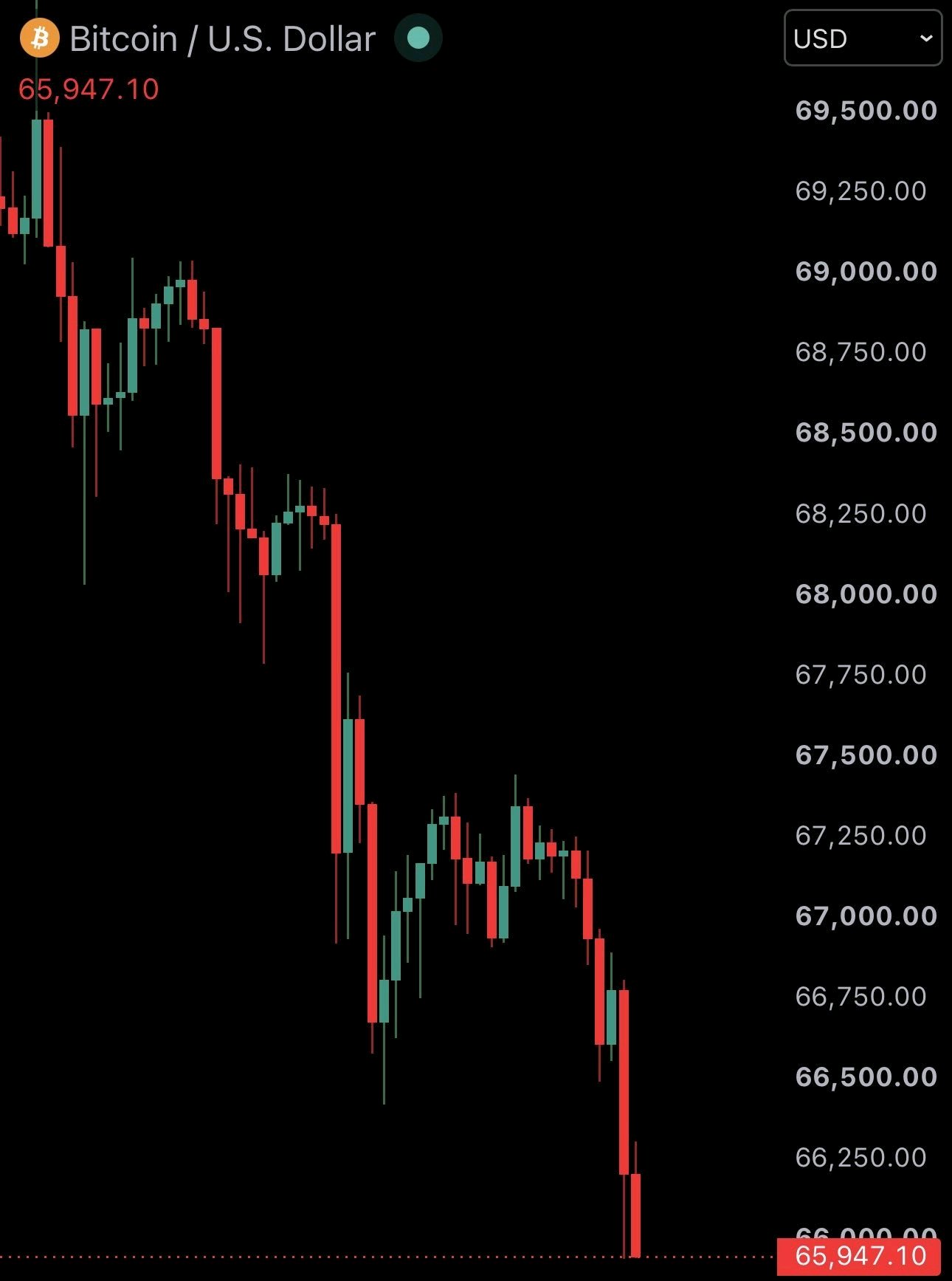
BTC IS TAKING THE STAIRS DOWN ONE ROUND NUMBER AT A TIME AND EACH STEP COSTS LONGS MORE Bitcoin has reportedly slipped under another big level with around 200 million dollars in liquidations in a single hour. I could not verify the exact figures, but the pattern is hard to ignore. It lost 70,000 only a day or so ago, then 67,000, and now this, with each break coming faster than the last. That staircase shape is what a leverage unwind looks like. Every round number has a pile of long positions sitting just below it, and when price taps that zone, forced selling pushes it through to the next pile. The more it repeats, the more traders switch from buying dips to waiting for lower, which removes the very bids that would normally slow the drop. Underneath, the backdrop has not improved. ETF flows have been negative, inflation data is keeping rate hike fears alive, and stablecoin supply has shrunk, so there is less fresh cash ready to step in. Until some of that turns, bounces are more likely to be relief moves than real reversals. The fair counterpoint is that sharp, fast breaks often exhaust sellers sooner than slow grinds do. If liquidations start shrinking while price stops making new lows, that is usually the first quiet sign a floor is forming. I would watch for that pattern instead of guessing an exact bottom. For now I am staying patient, keeping leverage low and letting price prove itself before trusting any bounce. Do you think the next real support is close or are we still early in this leg down, and what is the level where you start buying? #ByXIMPACT
WHEN XRP AND ETH LOSE THEIR ROUND NUMBERS THE PAIN STOPS BEING A BITCOIN STORY The latest crash headline has Bitcoin, Ether, XRP and Solana all sliding at once, with hundreds of millions in leveraged positions reportedly wiped out in a couple of hours. I could not verify the exact levels or the liquidation total, so take the numbers as reported. The more interesting part is who gets hurt. Round numbers matter more for altcoins than most people admit. A coin like XRP slipping under a headline level such as one dollar tends to trigger a different kind of selling, because retail holders who bought around that area start to panic and stop orders cluster right below it. Ether has a similar story near its own psychological levels. Once those give way, the move stops being a Bitcoin story and turns into a market wide one. Altcoins also suffer from thin liquidity. When Bitcoin drops a few percent, smaller coins often drop twice as much because there are fewer buyers and market makers pull back, which is why liquidation cascades hit alts so hard. Add ETF outflows, a hot inflation backdrop and a Fed that is still expected to hike, and there is not much to slow the slide. The upside of this kind of flush is the reset. Weak hands get cleared, funding turns negative and sentiment hits extreme fear, which is where a lot of lasting lows have formed in the past. But the same conditions also show up on the way down, so I would not trust a bounce until volume calms and price holds a level for several days. If you have to choose, which coin do you trust most to hold up if this selling continues, BTC, ETH, SOL or XRP, and what level would make you start buying? #ByXIMPACT
A TELEGRAM SECURITY WARNING IS MAKING THE ROUNDS AND CRYPTO USERS LIVE ON TELEGRAM Security firm GoPlus is reportedly warning that Telegram's HTML widgets could carry a remote code execution risk, with patches not covering everything yet. I could not verify the details of that report, so I would treat it as a heads up and not as a confirmed exploit in the wild. Telegram has also pushed back on disclosures like this before, so expect arguments about severity. Still, the reason this matters is simple. A huge share of crypto runs through Telegram, with trading bots, mini apps, airdrop claims, group chats and signal channels all living in one place. When the platform where people hold conversations also hosts wallets and apps, any code execution bug becomes much more valuable to attackers than it would be on a normal messenger. The practical risk is not mysterious. Most crypto losses from messaging apps do not come from deep exploits but from users tapping a link, connecting a wallet or signing something they should not have. A technical flaw just makes that easier to pull off, especially if the attacker only needs you to open a widget or preview. We saw the same pattern with the Across domain hijack, where the weak point was the human and the interface, not the contract. If you use Telegram for anything involving funds, the sensible habits are boring but effective. Keep the app updated, avoid opening unknown mini apps and links, turn off auto download for media from strangers, and keep your main wallet on a separate device from the one you chat on. I'm watching for a clear technical write up and a statement from Telegram, because until then this stays a warning and not a confirmed breach. Do you trust Telegram mini apps and bots with real money, or do you keep your wallets completely separate from your chat apps? #ByXIMPACT

PARAGUAY IS CASHING IN ON BITCOIN MINERS NOW AND ALREADY LINING UP THE AI CROWD TO TAKE THEIR POWER Paraguay has been one of the friendliest homes for Bitcoin mining thanks to cheap hydropower, and miners are paying real money for it, with the state utility expecting around 350 million dollars from them this year. But the clock is ticking, because the same utility says it will let every special mining contract expire at the end of 2027 and will not extend them. The 350 million figure is expected yearly revenue from miners, not a single deal. The other half of the story explains why. In late October the utility signed a 15 year contract to supply up to 286 megawatts to an AI campus tied to a planned 12 billion dollar project, at roughly 49 dollars per megawatt hour. AI developers want long, stable power contracts, and they can pay more per megawatt than miners can, so a government that sees an opportunity is naturally steering its electricity toward them. For miners the exposure is real. Paraguay held about 4 percent of Bitcoin's total hashrate this summer, and companies like HIVE have hundreds of megawatts there on contracts that run only through 2027. Some players have already left, with Bitfarms selling its last Paraguayan site as it pivots toward AI, so the direction is clear even before the deadline arrives. For Bitcoin itself this is not a catastrophe. Four percent of hashrate can be replaced elsewhere, and a deadline more than a year away gives miners time to relocate or negotiate. The deeper worry is the squeeze on margins. With BTC under pressure, power getting more expensive and AI willing to pay more for the same electricity, miners are being pushed out of the cheapest energy in the world. I will be watching whether Paraguay keeps its stance or softens it as the date nears, because that decides how much hashrate has to move. Do you think AI is going to push Bitcoin miners out of the cheapest power on the planet, or will miners find a way to compete, and does this matter for $BTCUSDT price at all? #ByXIMPACT

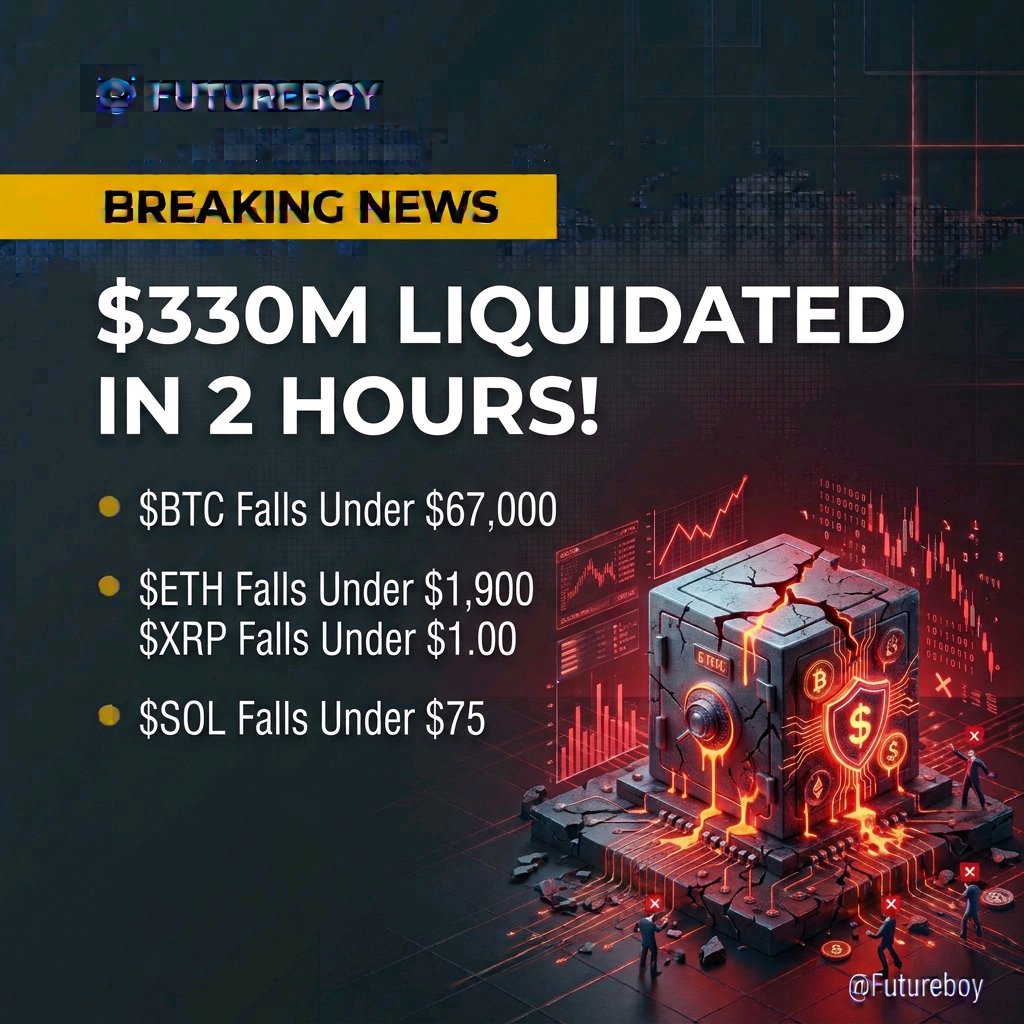
70K BREAK WAS NOT THE END OF IT AND NOW THE WHOLE MARKET IS PAYING FOR IT Reports say the crypto market is cracking again, with Bitcoin, Ether, XRP and Solana all dropping together and hundreds of millions in leveraged positions getting cleared in a couple of hours. I could not verify the exact levels or the liquidation total, but it fits the story from earlier today, when Bitcoin lost 70,000 for the first time since August. Round number breaks like that are dangerous because they flip the mood. Traders who were waiting for a hold above 70,000 turn into sellers, stops that were sitting just below get triggered, and lower levels suddenly feel reachable. Add steady ETF outflows, a hot inflation backdrop and a Fed that is still expected to hike, and there is not much natural buying to slow the fall. What makes this phase tricky is how correlated everything gets. When $BTCUSDT drops and everything else drops harder, it usually means people are selling for cash and not because of any single story. Altcoins tend to suffer most in that situation, since liquidity thins out fast and weaker projects get hit twice as hard. The other side of the coin is that capitulation moves do tend to clear the board. Extreme fear readings, washed out leverage and exhausted sellers are what past bottoms looked like, even if nobody can call the exact day. The problem is that the same readings can also show up on the way to lower prices. I'm not rushing to catch anything. I would rather see liquidations shrink, $ETHUSDT flows stop bleeding and price hold a level for a few days before trusting any bounce. Is this panic washing out the last weak hands or just the start of a bigger leg down, and what level are you waiting for before you buy? #ByXIMPACT
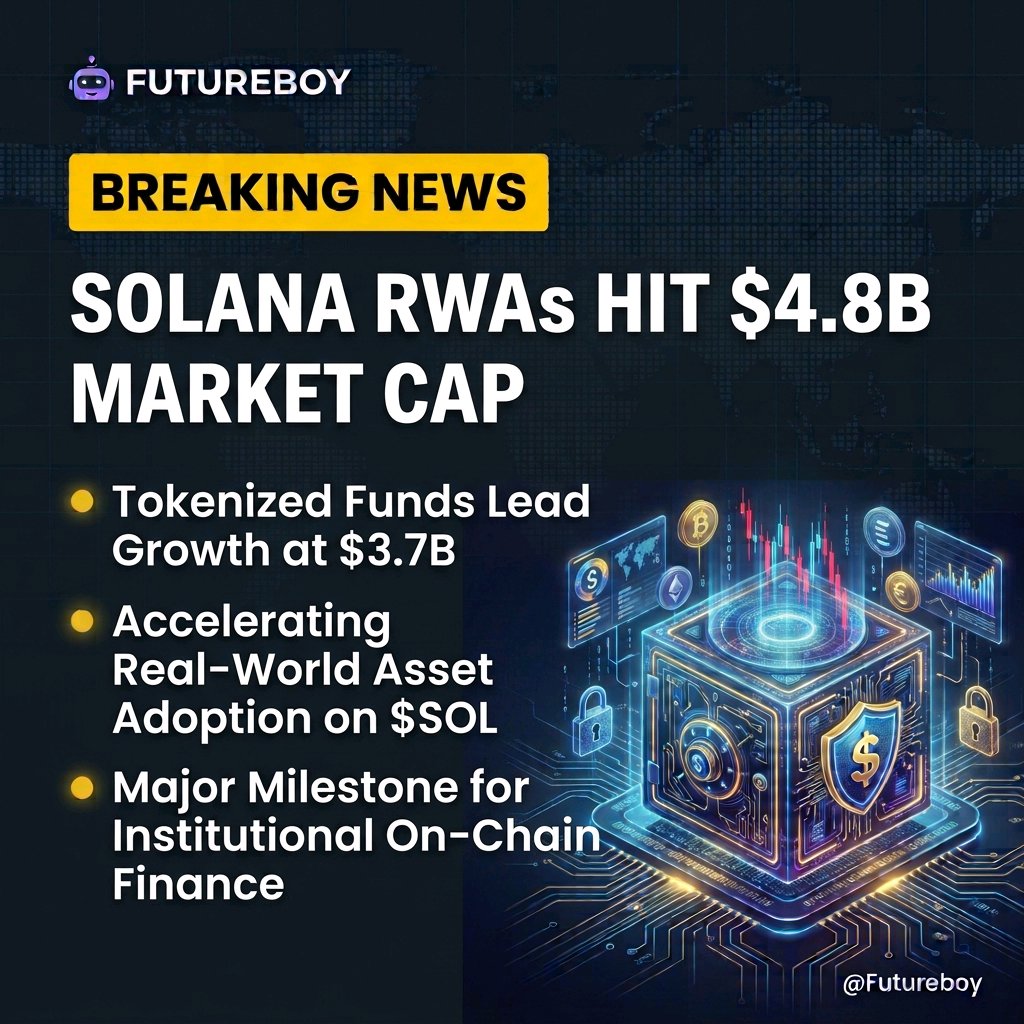
SOLANA'S RWA MARKET JUST KEEPS STACKING BILLIONS AND TOKENIZED FUNDS ARE DOING THE HEAVY LIFTING Solana's real world asset market is reportedly sitting around 4.8 billion dollars, with tokenized funds making up the biggest slice at roughly 3.7 billion. Exact totals depend on which tracker you read, but every dataset points the same way. The market started this year near 1.4 billion, crossed 4 billion in August, hit a record 4.6 billion in late September, and some reports now put it above 5 billion. The funds angle is the part I like most. Money market funds and tokenized treasuries are the boring, institutional kind of RWA, the kind that large asset managers actually build products around, and funds linked to names like BlackRock and JPMorgan have played a role in the growth. Compare that to memecoin season, where activity could vanish overnight, and you can see why this is a very different type of demand. It also fits what we have been seeing across the board, from Ethena backing liquidity for BlackRock's BUIDL to Metaplex building RWA standards and stablecoins from regulated banks landing on Solana. The chain keeps picking up the pieces that make tokenization practical, which is speed, low fees and enough tooling for compliance. The honest caveat is scale. Ethereum still holds far more tokenized value, including a much bigger share of tokenized treasuries, and Solana's fast growth comes off a smaller base. Growth has also not shielded $SOLUSDC from the broader sell off, so strong fundamentals are not translating into price strength right now. What I'm watching is whether these funds see steady net inflows through a rough market, because that is the real test of whether the demand is sticky. Do you think RWAs are the thing that finally gives $SOLUSDT a durable edge over Ethereum, or is this just a nice story while the price stays under pressure? #ByXIMPACT
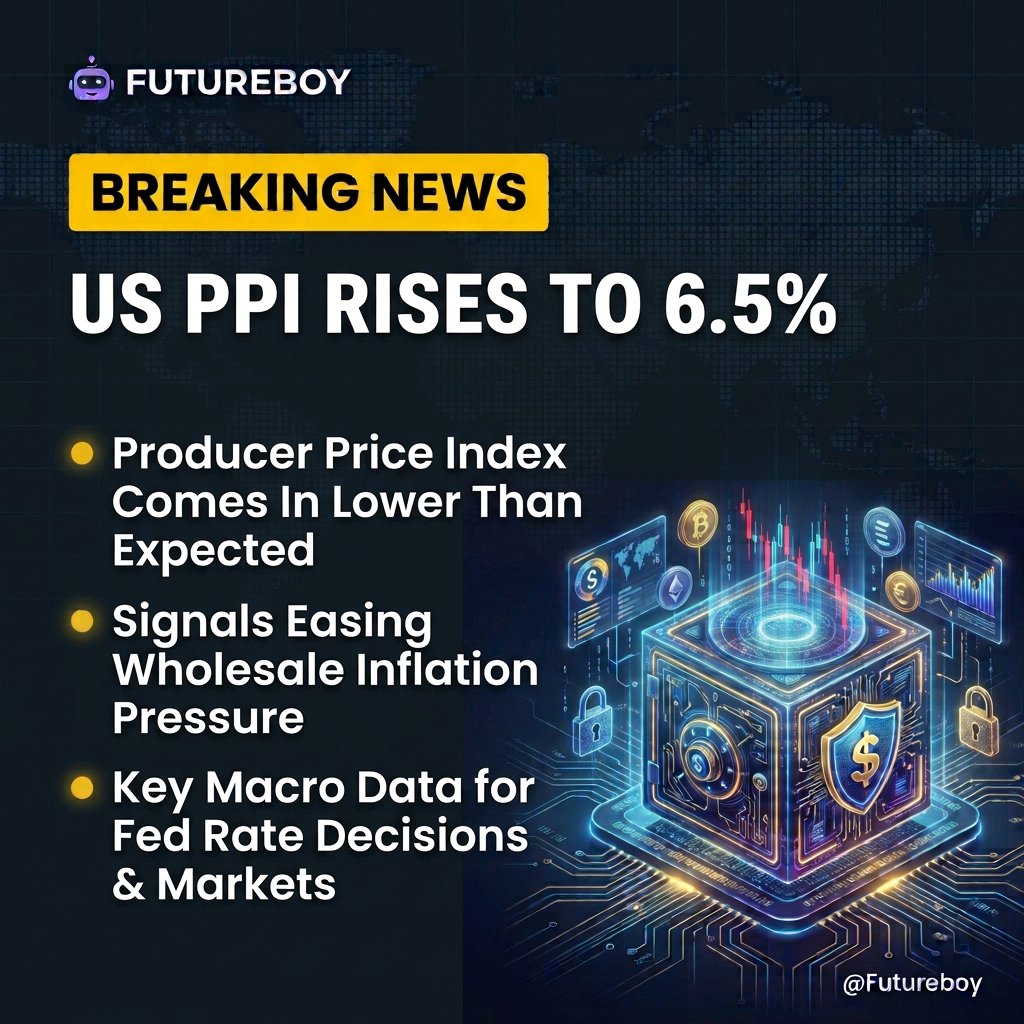
THAN EXPECTED BUT 6.5 PERCENT IS STILL NOT A NUMBER THE FED WILL CELEBRATE The producer price report landed a hair below forecasts, and for a moment that looked like a gift. Prices rose 6.5 percent over the past year, slightly under what economists expected, with the monthly gain also a notch cooler than forecast. But the part that headlines skipped is that this is still the highest annual reading since late 2022, and it was a step up from the month before. That is why the market barely cared. Bitcoin stayed lower after the release and stocks slipped too, because a small miss on a very high number does not change the story. Core prices came in right in line, the Fed is still widely expected to hike in December, and traders are now debating whether it keeps going after that. A relief rally needs inflation to fall clearly, not just edge under a forecast. The mix is a bit awkward for crypto. Energy costs have been pushing producer prices up, and higher costs tend to work their way into consumer prices later, which keeps pressure on central banks. We also just saw a hot consumer inflation print earlier this week, so this report fits a pattern of sticky prices instead of breaking it. Higher rates for longer mean less appetite for risk, and that is exactly what Bitcoin has been feeling as it slid below 70,000. The bullish counterargument is that markets often move on the surprise and not the level, and two soft prints in a row could start to shift rate expectations. If the next consumer data also cools, that might be the first real crack in the hawkish story. For now I am treating this as a neutral data point inside a bearish backdrop, and I will wait for actual confirmation before calling any macro turn. Do you think a slightly softer PPI is the first sign inflation is peaking, or is the Fed still going to hike and keep risk assets under pressure through year end? #ByXIMPACT

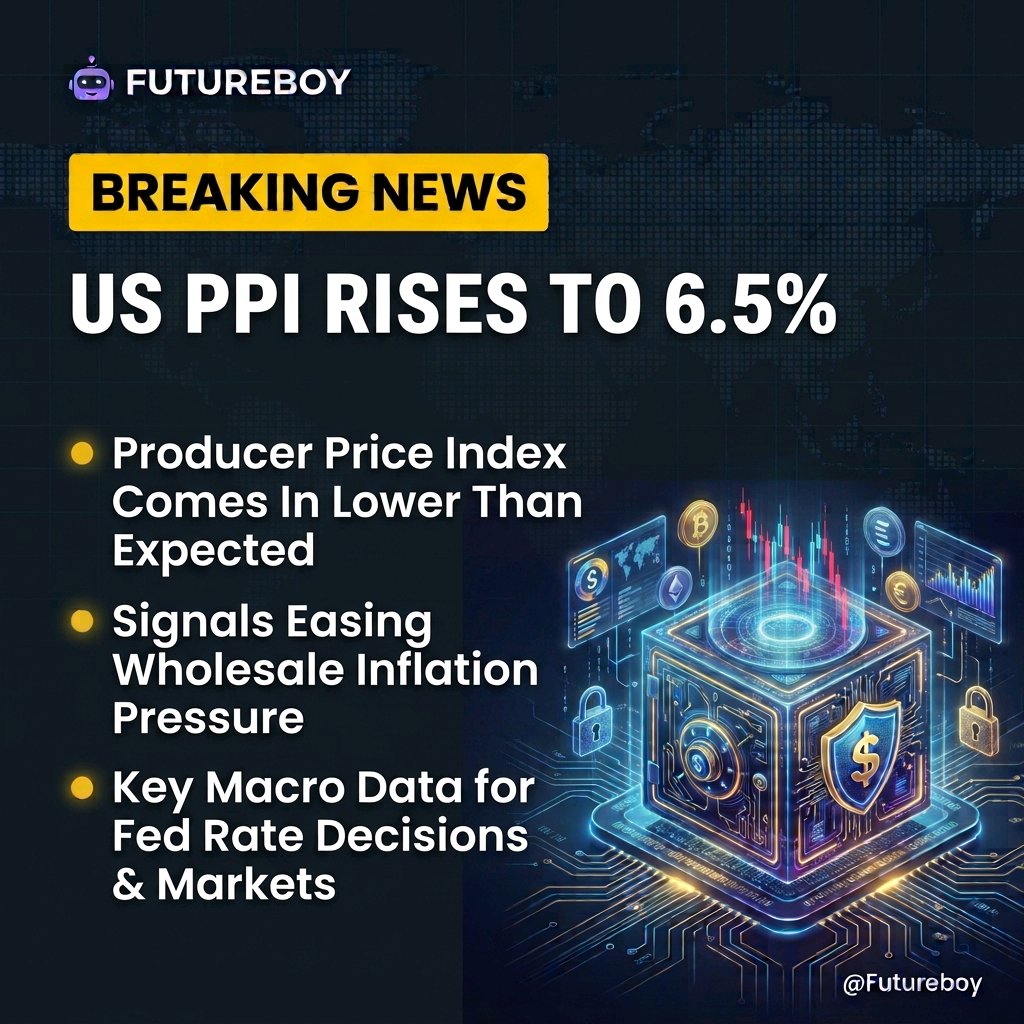
WHOLESALE INFLATION IS REPORTEDLY STILL AROUND 6.5 PERCENT BUT A SMALL MISS ON EXPECTATIONS COULD GIVE THE MARKET A BREATHER Fresh producer price data is reportedly showing wholesale inflation at around 6.5 percent, and the headline angle is that it came in lower than traders expected. I could not confirm the exact print, so keep that in mind. What matters is the context, because this number lands in a very different world from the one where 6.5 percent would be a comfort. Last month's report showed producer prices up 6.3 percent from a year earlier, far above forecasts, with the core measure at 5 percent. Consumer inflation was running at 3.7 percent at the same time. That is a hot pipeline, and it is a big reason the Fed hiked in September and why markets are leaning toward another move in December. Even if today's reading is a touch softer than feared, it is still far above anything that would let the Fed relax. For crypto, though, markets trade on surprises. After Bitcoin slipped under 70,000 on ETF outflows and rate worries, a number that merely avoids making things worse can be enough to spark a relief bounce, especially with positioning already so bearish and leverage getting flushed. The risk is reading too much into one data point. Producer prices tend to feed into consumer prices later, so a still elevated wholesale rate can keep pressure on the Fed even when the monthly surprise is small. One cooler print does not change the trend, and a hawkish Fed message in December could erase any bounce quickly. I would watch the reaction in yields and the dollar more than the headline itself, since that tells you whether traders actually believe the hike risk is fading. Do you think a softer than expected print is enough to spark a real bounce in $BTCUSDT , or does the Fed stay hawkish no matter what, and what level do you need to see before you turn bullish?#ByXIMPACT