Nibras
122375Лайк20Акциялар709Жанкүйерлер421Жазылу
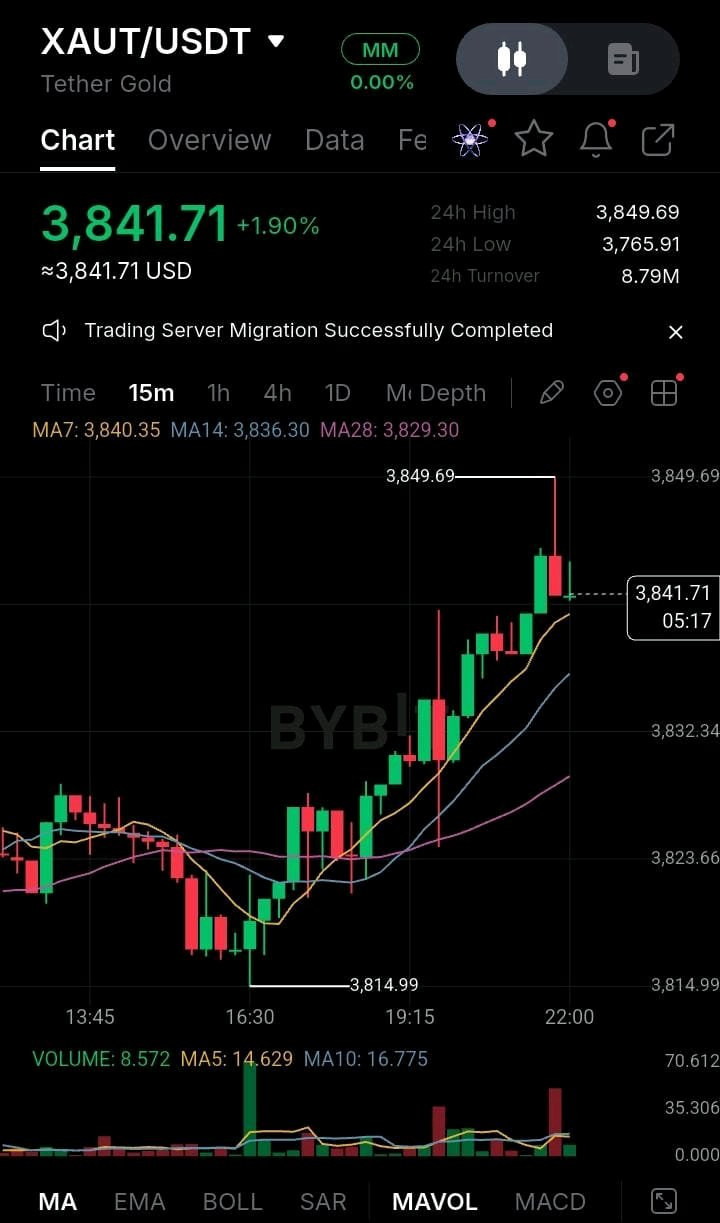
Gold just lost more than 3% but the interesting part isn't the drop itself. XAU/USD extended Friday’s Jackson Hole selloff into Monday, briefly slipping below $4,400 and touching around $4,396 as markets repriced the Fed path after Kevin Warsh’s hawkish inflation comments. September rate-hike odds have moved toward roughly 58–60%, while the dollar remains near a two-week high. That changes the short-term gold equation. For weeks, the trade was simple: weaker dollar + easier Fed expectations = stronger gold. Now we're seeing the inverse. Higher yields are increasing the opportunity cost of holding a non-yielding asset, while the stronger dollar adds another layer of pressure. At the same time, geopolitical risk is sending oil above $90, creating an unusual problem for gold bulls: safe-haven demand supports gold, but higher energy prices can reinforce inflation and keep the Fed hawkish. Technically, $4,467 is the level I'm watching. Gold is trading below that area after losing the 200-day average, with $4,408 acting as the immediate downside pivot. A failure to reclaim $4,467–$4,511 keeps the short-term structure bearish. My setup: Bearish: rejection around $4,450–$4,500 → target $4,408, then $4,368–$4,350 over the coming days. Bullish: reclaim and hold above $4,511 → the bearish repricing starts losing credibility, opening a move back toward $4,540–$4,580. Invalidation: sustained reclaim above $4,600. The real catalyst now isn't another Fed speech. It's the US jobs report. If employment weakens enough to unwind September hike expectations, gold could reverse aggressively. If the data keeps the Fed hawkish, that $4,400 shelf may not hold. Gold isn't necessarily bearish long term. The market is simply repricing the cost of owning it right now.. $XAUTUSDT #ByXIMPACT
Tesla and Circle are both entering a phase where the narrative has to translate into measurable execution. Tesla has recovered from its September low near $354 to around $378, but the next test is whether buyers can push it back through the $385–$390 area. The biggest catalyst is autonomy: Cybercab is already deployed in Austin, while NHTSA is reviewing Tesla’s self-certification of the driverless vehicle and whether it complies with federal safety standards. Tesla is also preparing its next-generation Roadster reveal, keeping the AI/autonomy narrative firmly in focus. Circle has a different catalyst stack. Binance just invested $100M in Circle and renewed a five-year USDC commercial agreement, while Circle's USDC circulation has grown above $74B. Arc's public mainnet also launched with more than 100 institutional and ecosystem builders, including major banks, payment networks, exchanges and asset managers. Circle is additionally pursuing the Tazapay acquisition, which would add 60+ banking/fintech partners, 100+ payout markets and more than $25B in annualized payment volume. That creates an interesting setup. My setup: • $TSLA Bullish: reclaim $385–$390 → $400, then $420. • $TSLA Bearish: rejection below $385 + loss of $370 → $355, then $340. • $CRCL Bullish: reclaim $95–$100 → $110, then $125. • $CRCL Bearish: rejection near $95 + loss of $85 → $75, then $65. The interesting question isn't which company has the bigger narrative. It's whether Tesla can turn autonomy into a scalable business while Circle turns USDC, Arc and global payment infrastructure into durable growth beyond the economics of reserve income. Both are moving from story → execution. $TSLAXUSDT $CRCLXUSDT #ByXIMPACT

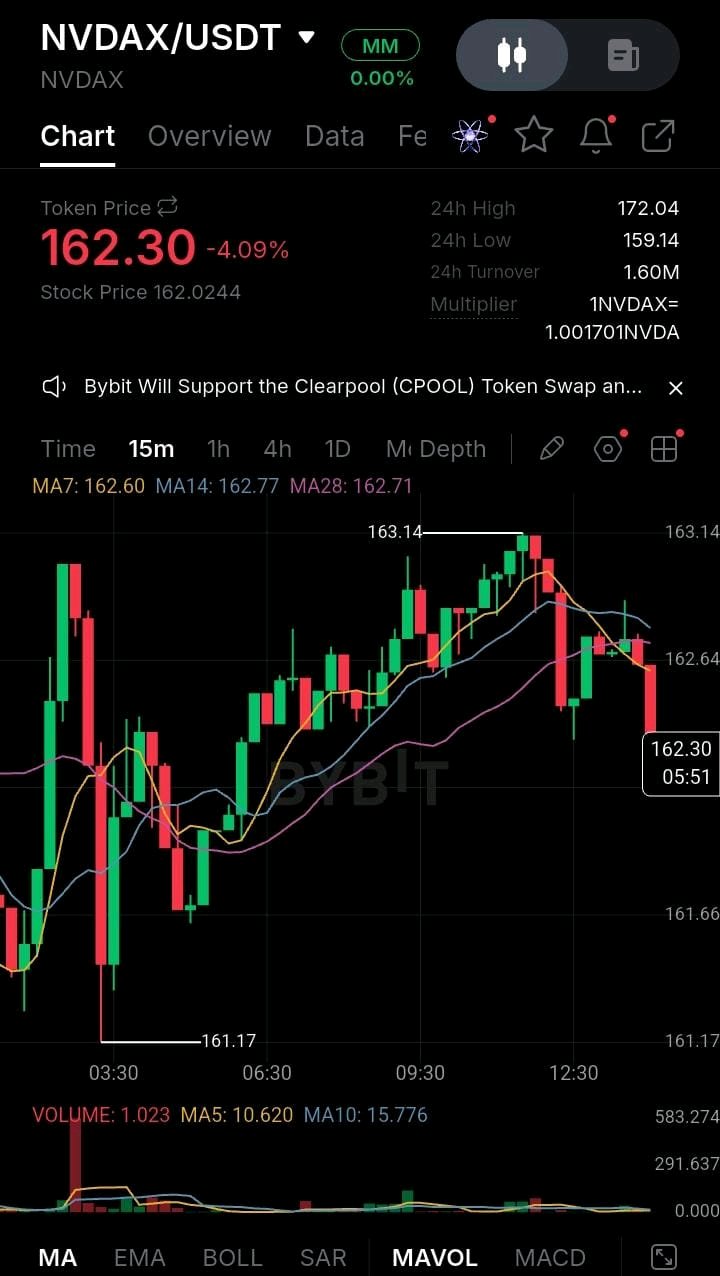
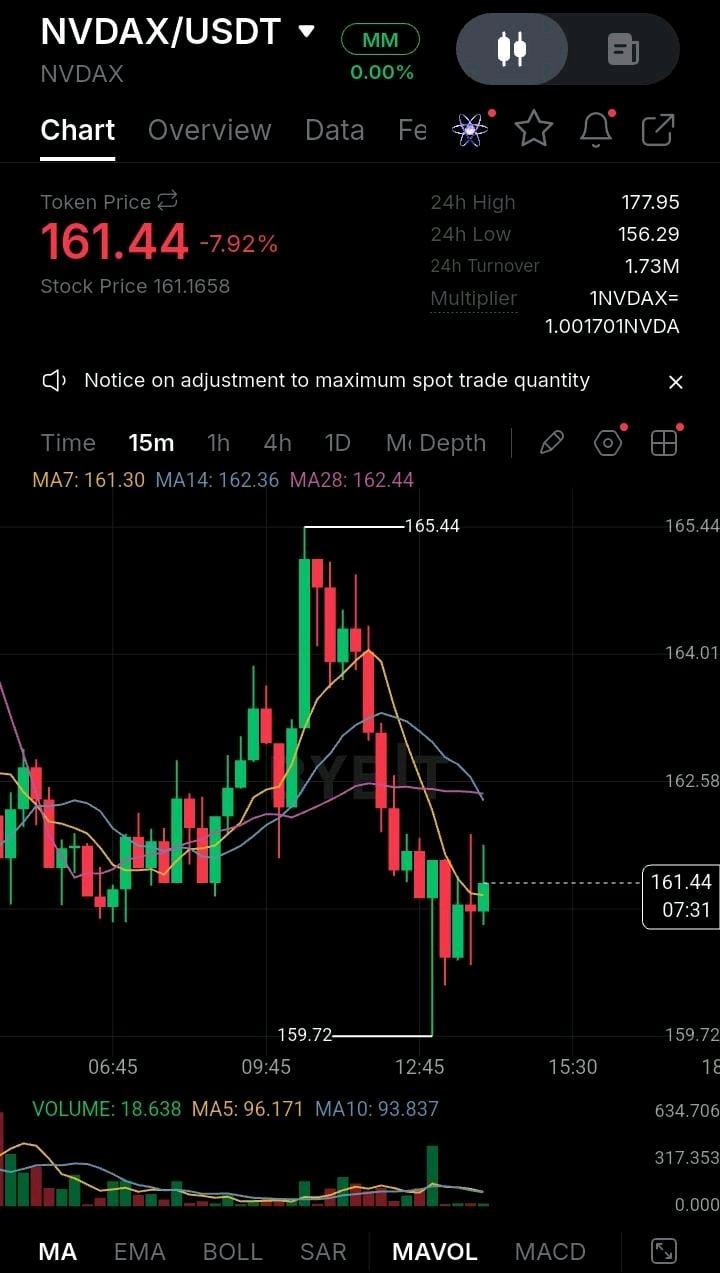
Nvidia Is Testing a Level That Could Decide the Next Move $NVDA has bounced back toward $219 after falling to around $209 earlier this week. Thursday’s 2.54% gain puts the stock back near a short-term decision zone, but it remains well below the $236.54 52-week high. The fundamental backdrop remains unusually strong. Nvidia generated $96.2B in Q2 FY2027 revenue, up 106% YoY, with Data Center revenue reaching roughly $89B. More recently, CEO Jensen Huang said Nvidia expects to sell twice as many chips next year as this year, reinforcing the company’s view that AI infrastructure demand is still expanding. But the next phase is becoming more demanding. Nvidia’s Vera Rubin NVL72 recently posted leading results in MLPerf inference testing, while the company is increasingly focused on performance-per-watt and lowering the cost of AI tokens. At the same time, Huawei is accelerating its own AI-chip roadmap, creating a longer-term competitive challenge, particularly in China. That creates an interesting setup. My setup: Bullish: reclaim and hold $220–$225 with strong volume → $230, then $236–$245. Bearish: rejection around $220–$225 and loss of $215 → $210, followed by $200. Invalidation: sustained acceptance above $245 would significantly strengthen the continuation thesis. The interesting question isn't whether Nvidia still has AI demand. It's whether the next wave of Vera Rubin deployments and rising chip volumes can keep earnings growth ahead of the increasingly demanding expectations already embedded in NVDA's valuation. $NVDAXUSDT #ByXIMPACT
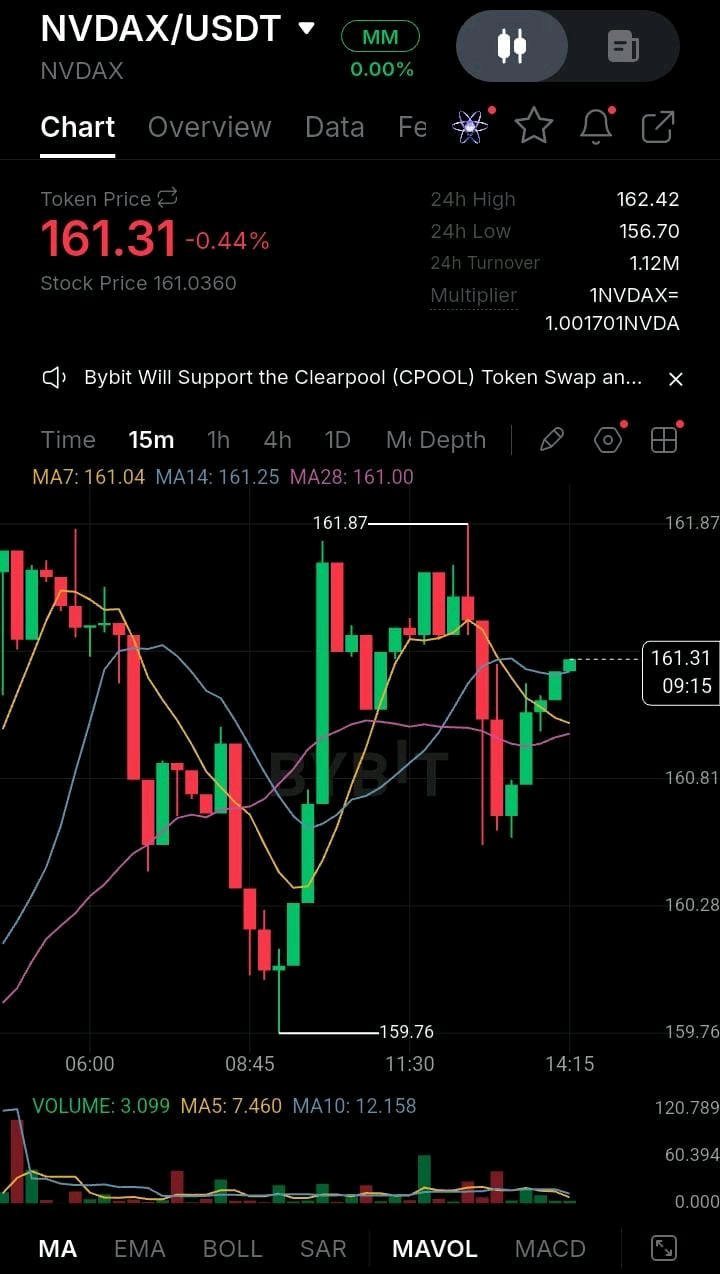
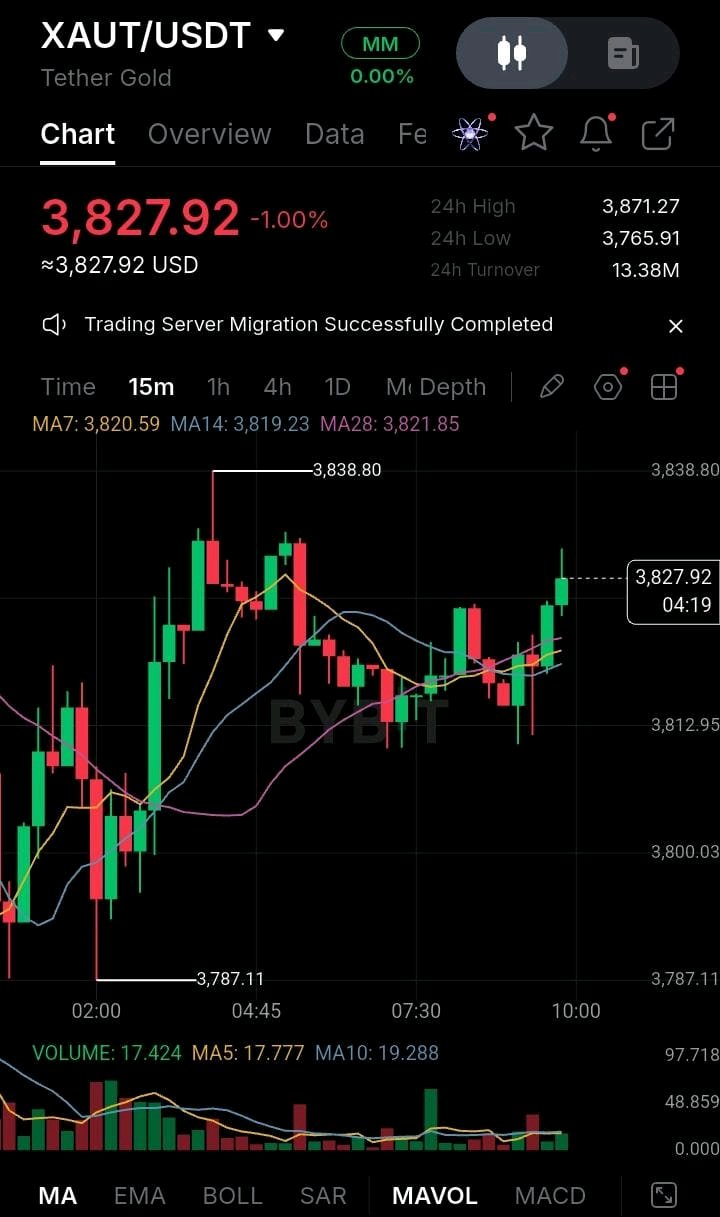
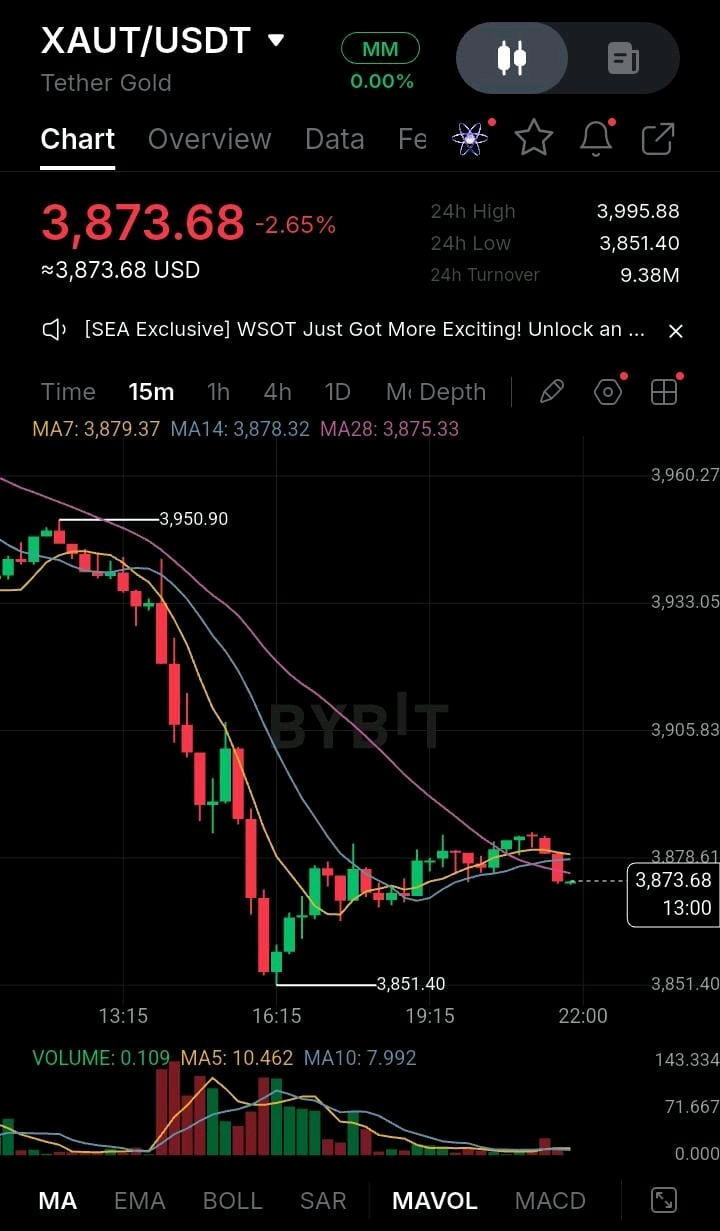
The Gold Reclaims $4,400 But the Fed Is Still the Test Gold is recovering sharply after Wednesday’s Fed-driven selloff, but the bigger question is whether buyers can turn this rebound into a real reclaim. Spot gold has pushed back above $4,400, with December futures around $4,435 in early European trading. The move comes after the Fed raised rates by 25 bps and signaled that further tightening could still follow. Lower Treasury yields and easing oil prices are now giving gold some relief. The less-obvious part is the reaction to the rate hike. Normally, another Fed hike should create pressure on gold because higher yields increase the opportunity cost of holding a non-yielding asset. Instead, gold has bounced from the $4,270–$4,300 area. The World Gold Council also noted that August was an unusually strong month for gold, with ETF buying and futures/options activity helping drive the rally. Technically, $4,400 is now the battleground. Bearish: rejection around $4,450–$4,500 → lose $4,400 → targets $4,350, then $4,300. Bullish: hold above $4,400 and reclaim $4,500 → opens $4,550, then potentially $4,600. Invalidation: sustained acceptance below $4,270 would weaken the recovery structure and put the recent lows back in focus. For $XAUT, the setup is particularly interesting because its recent price action has closely followed the underlying gold market. XAUT closed around $4,273.48 on September 16, while recent daily volume reached more than $300M. Tether has also been concentrating resources on XAUT after winding down Alloy, while XAUT received Shariah certification and recognition as an accepted spot commodity in Abu Dhabi earlier this year. The key distinction now: Gold doesn't need another narrative. It needs buyers to prove that $4,400 can become support after the Fed shock. If $4,500 flips into support, the recovery starts looking much more convincing. Is $4,400 becoming the base for Gold's next move, or is $4,500 still the level where sellers are waiting? $XAUTUSDT #ByXIMPACT

NVIDIA мен Tesla жақындағы түзетулері толық қайта жүктелуге айнала ма, әлде тағы бір өсу кезеңінің басы бола ма деген мәселені шешетін деңгейлерге жақындап қалды. NVDA $234-тен түскеннен кейін $212 аймағында саудалануда, ал TSLA жақында $370-тен жоғары саудаланғаннан кейін $360 деңгейіне дейін қалпына келді. Екеуі де маңызды катализаторлармен бетпе-бет келуде, бірақ олардың негізгі оқиғалары мүлдем басқа. NVIDIA-ның соңғы тоқсандағы кірісі $96,2 млрд құрады, бұл өткен жылмен салыстырғанда 106%-ға өсті, ал деректер орталығының (Data Center) кірісі 117%-ға артып, $89 млрд-қа жетті. Ал Tesla екінші тоқсанда 480 126 көлік жеткізді, бұл өткен жылмен салыстырғанда 25%-ға артық, ал энергия жинақтаушы жүйелерді орналастыру 13,5 ГВт·сағ жетті. Келесі кезең – орындау мәселесі. NVIDIA Blackwell-ден Vera Rubin-ге көшуде, ірі бұлттық провайдерлер AI инфрақұрылымына жұмсалатын шығындар жалғасып жатқандықтан, Rubin жүйелерін дайындауда. Tesla Cybercab-ты автономды коммерциялық операцияларға итермелеуде, ал қазан айындағы Roadster-дің таныстырылымы тағы бір ықтимал баяндау катализаторын қосады. Алайда екеуі де тәуекелдерге тап: NVIDIA шығындар мұқият тексеріліп жатқан кезде AI-ның ерекше өсуін сақтап қалуы керек, ал Tesla автономияның жай ғана кезекті өнім баяны емес, ауқымды бизнес бола алатынын дәлелдеуі қажет. Бұл қызықты жағдай тудырады. Менің болжамым: • NVDA «Бұқалар» (өсу): $225–$228 деңгейін қайтарып алу → $234–$236, одан кейін $245. • NVDA «Аюлар» (төмендеу): $210 деңгейін жоғалту → $200, содан кейін $195. • TSLA «Бұқалар» (өсу): $365–$370 деңгейін қайтарып алу → $380, одан кейін $400. • TSLA «Аюлар» (төмендеу): $355 деңгейін жоғалту → $340, содан кейін $325. Қызықты сұрақ қай компанияның AI тарихы үлкен дегенде емес. Мәселе – қайсысы орасан зор AI инвестицияларын болашаққа берілген бағаны ақтау үшін жеткілікті жылдамдықпен өлшенетін табыс пен ақша ағынының өсіміне айналдыра алады. $NVDAXUSDT $TSLAXUSDT #ByXIMPACT
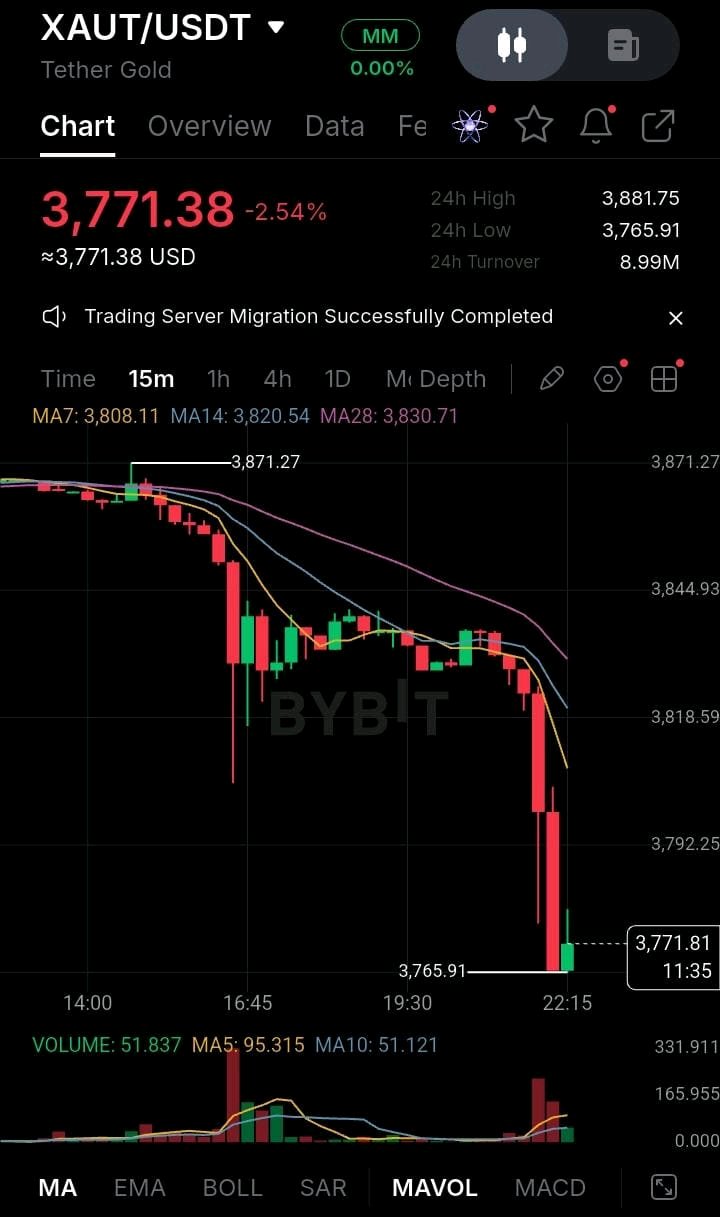
Gold just lost more than 3% but the interesting part isn't the drop itself. XAU/USD extended Friday’s Jackson Hole selloff into Monday, briefly slipping below $4,400 and touching around $4,396 as markets repriced the Fed path after Kevin Warsh’s hawkish inflation comments. September rate-hike odds have moved toward roughly 58–60%, while the dollar remains near a two-week high. That changes the short-term gold equation. For weeks, the trade was simple: weaker dollar + easier Fed expectations = stronger gold. Now we're seeing the inverse. Higher yields are increasing the opportunity cost of holding a non-yielding asset, while the stronger dollar adds another layer of pressure. At the same time, geopolitical risk is sending oil above $90, creating an unusual problem for gold bulls: safe-haven demand supports gold, but higher energy prices can reinforce inflation and keep the Fed hawkish. Technically, $4,467 is the level I'm watching. Gold is trading below that area after losing the 200-day average, with $4,408 acting as the immediate downside pivot. A failure to reclaim $4,467–$4,511 keeps the short-term structure bearish. My setup: Bearish: rejection around $4,450–$4,500 → target $4,408, then $4,368–$4,350 over the coming days. Bullish: reclaim and hold above $4,511 → the bearish repricing starts losing credibility, opening a move back toward $4,540–$4,580. Invalidation: sustained reclaim above $4,600. The real catalyst now isn't another Fed speech. It's the US jobs report. If employment weakens enough to unwind September hike expectations, gold could reverse aggressively. If the data keeps the Fed hawkish, that $4,400 shelf may not hold. Gold isn't necessarily bearish long term. The market is simply repricing the cost of owning it right now. $XAUTUSDT #ByXIMPACT

Tesla and Circle are both entering a phase where the narrative has to translate into measurable execution. Tesla has recovered from its September low near $354 to around $378, but the next test is whether buyers can push it back through the $385–$390 area. The biggest catalyst is autonomy: Cybercab is already deployed in Austin, while NHTSA is reviewing Tesla’s self-certification of the driverless vehicle and whether it complies with federal safety standards. Tesla is also preparing its next-generation Roadster reveal, keeping the AI/autonomy narrative firmly in focus. Circle has a different catalyst stack. Binance just invested $100M in Circle and renewed a five-year USDC commercial agreement, while Circle's USDC circulation has grown above $74B. Arc's public mainnet also launched with more than 100 institutional and ecosystem builders, including major banks, payment networks, exchanges and asset managers. Circle is additionally pursuing the Tazapay acquisition, which would add 60+ banking/fintech partners, 100+ payout markets and more than $25B in annualized payment volume. That creates an interesting setup. My setup: • $TSLA Bullish: reclaim $385–$390 → $400, then $420. • $TSLA Bearish: rejection below $385 + loss of $370 → $355, then $340. • $CRCL Bullish: reclaim $95–$100 → $110, then $125. • $CRCL Bearish: rejection near $95 + loss of $85 → $75, then $65. The interesting question isn't which company has the bigger narrative. It's whether Tesla can turn autonomy into a scalable business while Circle turns USDC, Arc and global payment infrastructure into durable growth beyond the economics of reserve income. Both are moving from story → execution. $TSLAXUSDT $CRCLXUSDT #ByXIMPACT

Nvidia Is Testing a Level That Could Decide the Next Move $NVDA has bounced back toward $219 after falling to around $209 earlier this week. Thursday’s 2.54% gain puts the stock back near a short-term decision zone, but it remains well below the $236.54 52-week high. The fundamental backdrop remains unusually strong. Nvidia generated $96.2B in Q2 FY2027 revenue, up 106% YoY, with Data Center revenue reaching roughly $89B. More recently, CEO Jensen Huang said Nvidia expects to sell twice as many chips next year as this year, reinforcing the company’s view that AI infrastructure demand is still expanding. But the next phase is becoming more demanding. Nvidia’s Vera Rubin NVL72 recently posted leading results in MLPerf inference testing, while the company is increasingly focused on performance-per-watt and lowering the cost of AI tokens. At the same time, Huawei is accelerating its own AI-chip roadmap, creating a longer-term competitive challenge, particularly in China. That creates an interesting setup. My setup: Bullish: reclaim and hold $220–$225 with strong volume → $230, then $236–$245. Bearish: rejection around $220–$225 and loss of $215 → $210, followed by $200. Invalidation: sustained acceptance above $245 would significantly strengthen the continuation thesis. The interesting question isn't whether Nvidia still has AI demand. It's whether the next wave of Vera Rubin deployments and rising chip volumes can keep earnings growth ahead of the increasingly demanding expectations already embedded in NVDA's valuation. $NVDAXUSDT #ByXIMPACT
The Gold Reclaims $4,400 But the Fed Is Still the Test Gold is recovering sharply after Wednesday’s Fed-driven selloff, but the bigger question is whether buyers can turn this rebound into a real reclaim. Spot gold has pushed back above $4,400, with December futures around $4,435 in early European trading. The move comes after the Fed raised rates by 25 bps and signaled that further tightening could still follow. Lower Treasury yields and easing oil prices are now giving gold some relief. The less-obvious part is the reaction to the rate hike. Normally, another Fed hike should create pressure on gold because higher yields increase the opportunity cost of holding a non-yielding asset. Instead, gold has bounced from the $4,270–$4,300 area. The World Gold Council also noted that August was an unusually strong month for gold, with ETF buying and futures/options activity helping drive the rally. Technically, $4,400 is now the battleground. Bearish: rejection around $4,450–$4,500 → lose $4,400 → targets $4,350, then $4,300. Bullish: hold above $4,400 and reclaim $4,500 → opens $4,550, then potentially $4,600. Invalidation: sustained acceptance below $4,270 would weaken the recovery structure and put the recent lows back in focus. For $XAUT, the setup is particularly interesting because its recent price action has closely followed the underlying gold market. XAUT closed around $4,273.48 on September 16, while recent daily volume reached more than $300M. Tether has also been concentrating resources on XAUT after winding down Alloy, while XAUT received Shariah certification and recognition as an accepted spot commodity in Abu Dhabi earlier this year. The key distinction now: Gold doesn't need another narrative. It needs buyers to prove that $4,400 can become support after the Fed shock. If $4,500 flips into support, the recovery starts looking much more convincing. Is $4,400 becoming the base for Gold's next move, or is $4,500 still the level where sellers are waiting? $XAUTUSDT #ByXIMPACT

NVIDIA and Tesla are approaching levels that could decide whether their recent pullbacks become resets — or the beginning of another leg higher. NVDA is trading around the $212 area after falling from above $234, while TSLA has recovered toward $360 after recently trading above $370. Both are facing major catalysts, but the underlying stories are very different. NVIDIA’s latest quarter delivered $96.2B in revenue, up 106% YoY, with Data Center revenue reaching $89B, up 117%. Tesla, meanwhile, delivered 480,126 vehicles in Q2, up 25% YoY, while energy-storage deployments reached 13.5 GWh. The next phase is about execution. NVIDIA is moving from Blackwell toward Vera Rubin, with major cloud providers preparing Rubin systems as AI infrastructure spending continues. Tesla is pushing Cybercab toward autonomous commercial operations while its October 1 Roadster reveal adds another potential narrative catalyst. But both face risks: NVIDIA must sustain extraordinary AI growth as spending becomes more scrutinized, while Tesla needs to prove that autonomy can become a scalable business rather than simply another product narrative. That creates an interesting setup. My setup: • NVDA Bullish: reclaim $225–$228 → $234–$236, then $245. • NVDA Bearish: lose $210 → $200, followed by $195. • TSLA Bullish: reclaim $365–$370 → $380, then $400. • TSLA Bearish: lose $355 → $340, followed by $325. The interesting question isn't which company has the bigger AI story. It's which one can convert massive AI investment into measurable earnings and cash-flow growth fast enough to justify the valuation already being assigned to the future. $NVDAXUSDT $TSLAXUSDT #ByXIMPACT
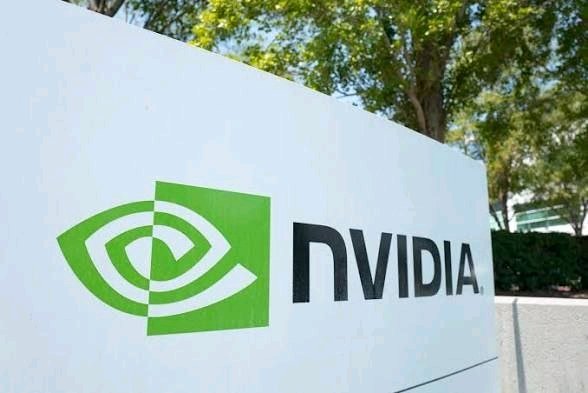
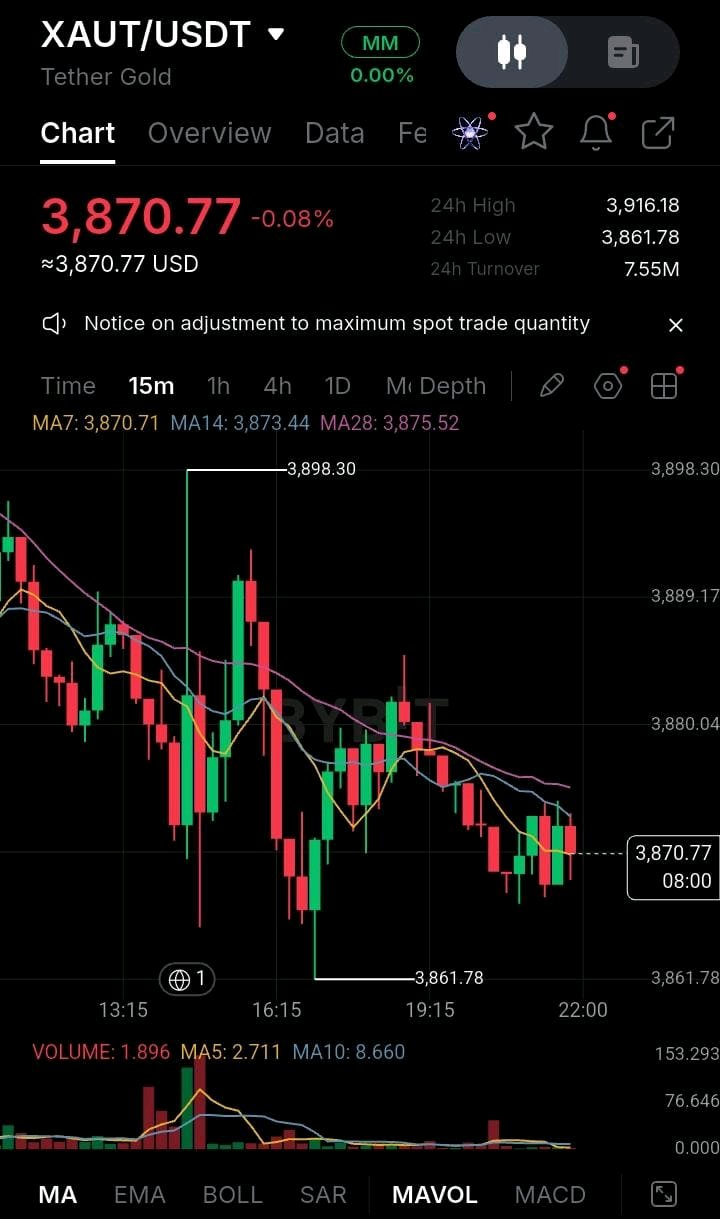
Gold just lost more than 3% but the interesting part isn't the drop itself. XAU/USD extended Friday’s Jackson Hole selloff into Monday, briefly slipping below $4,400 and touching around $4,396 as markets repriced the Fed path after Kevin Warsh’s hawkish inflation comments. September rate-hike odds have moved toward roughly 58–60%, while the dollar remains near a two-week high. That changes the short-term gold equation. For weeks, the trade was simple: weaker dollar + easier Fed expectations = stronger gold. Now we're seeing the inverse. Higher yields are increasing the opportunity cost of holding a non-yielding asset, while the stronger dollar adds another layer of pressure. At the same time, geopolitical risk is sending oil above $90, creating an unusual problem for gold bulls: safe-haven demand supports gold, but higher energy prices can reinforce inflation and keep the Fed hawkish. Technically, $4,467 is the level I'm watching. Gold is trading below that area after losing the 200-day average, with $4,408 acting as the immediate downside pivot. A failure to reclaim $4,467–$4,511 keeps the short-term structure bearish. My setup: Bearish: rejection around $4,450–$4,500 → target $4,408, then $4,368–$4,350 over the coming days. Bullish: reclaim and hold above $4,511 → the bearish repricing starts losing credibility, opening a move back toward $4,540–$4,580. Invalidation: sustained reclaim above $4,600. The real catalyst now isn't another Fed speech. It's the US jobs report. If employment weakens enough to unwind September hike expectations, gold could reverse aggressively. If the data keeps the Fed hawkish, that $4,400 shelf may not hold. Gold isn't necessarily bearish long term. The market is simply repricing the cost of owning it right now. $XAUTUSDT #ByXIMPACT

Tesla and Circle are both entering a phase where the narrative has to translate into measurable execution. Tesla has recovered from its September low near $354 to around $378, but the next test is whether buyers can push it back through the $385–$390 area. The biggest catalyst is autonomy: Cybercab is already deployed in Austin, while NHTSA is reviewing Tesla’s self-certification of the driverless vehicle and whether it complies with federal safety standards. Tesla is also preparing its next-generation Roadster reveal, keeping the AI/autonomy narrative firmly in focus. Circle has a different catalyst stack. Binance just invested $100M in Circle and renewed a five-year USDC commercial agreement, while Circle's USDC circulation has grown above $74B. Arc's public mainnet also launched with more than 100 institutional and ecosystem builders, including major banks, payment networks, exchanges and asset managers. Circle is additionally pursuing the Tazapay acquisition, which would add 60+ banking/fintech partners, 100+ payout markets and more than $25B in annualized payment volume. That creates an interesting setup. My setup: • $TSLA Bullish: reclaim $385–$390 → $400, then $420. • $TSLA Bearish: rejection below $385 + loss of $370 → $355, then $340. • $CRCL Bullish: reclaim $95–$100 → $110, then $125. • $CRCL Bearish: rejection near $95 + loss of $85 → $75, then $65. The interesting question isn't which company has the bigger narrative. It's whether Tesla can turn autonomy into a scalable business while Circle turns USDC, Arc and global payment infrastructure into durable growth beyond the economics of reserve income. Both are moving from story → execution. $TSLAXUSDT $CRCLXUSDT #ByXIMPACT

Nvidia Is Testing a Level That Could Decide the Next Move $NVDA has bounced back toward $219 after falling to around $209 earlier this week. Thursday’s 2.54% gain puts the stock back near a short-term decision zone, but it remains well below the $236.54 52-week high. The fundamental backdrop remains unusually strong. Nvidia generated $96.2B in Q2 FY2027 revenue, up 106% YoY, with Data Center revenue reaching roughly $89B. More recently, CEO Jensen Huang said Nvidia expects to sell twice as many chips next year as this year, reinforcing the company’s view that AI infrastructure demand is still expanding. But the next phase is becoming more demanding. Nvidia’s Vera Rubin NVL72 recently posted leading results in MLPerf inference testing, while the company is increasingly focused on performance-per-watt and lowering the cost of AI tokens. At the same time, Huawei is accelerating its own AI-chip roadmap, creating a longer-term competitive challenge, particularly in China. That creates an interesting setup. My setup: Bullish: reclaim and hold $220–$225 with strong volume → $230, then $236–$245. Bearish: rejection around $220–$225 and loss of $215 → $210, followed by $200. Invalidation: sustained acceptance above $245 would significantly strengthen the continuation thesis. The interesting question isn't whether Nvidia still has AI demand. It's whether the next wave of Vera Rubin deployments and rising chip volumes can keep earnings growth ahead of the increasingly demanding expectations already embedded in NVDA's valuation. $NVDAXUSDT #ByXIMPACT
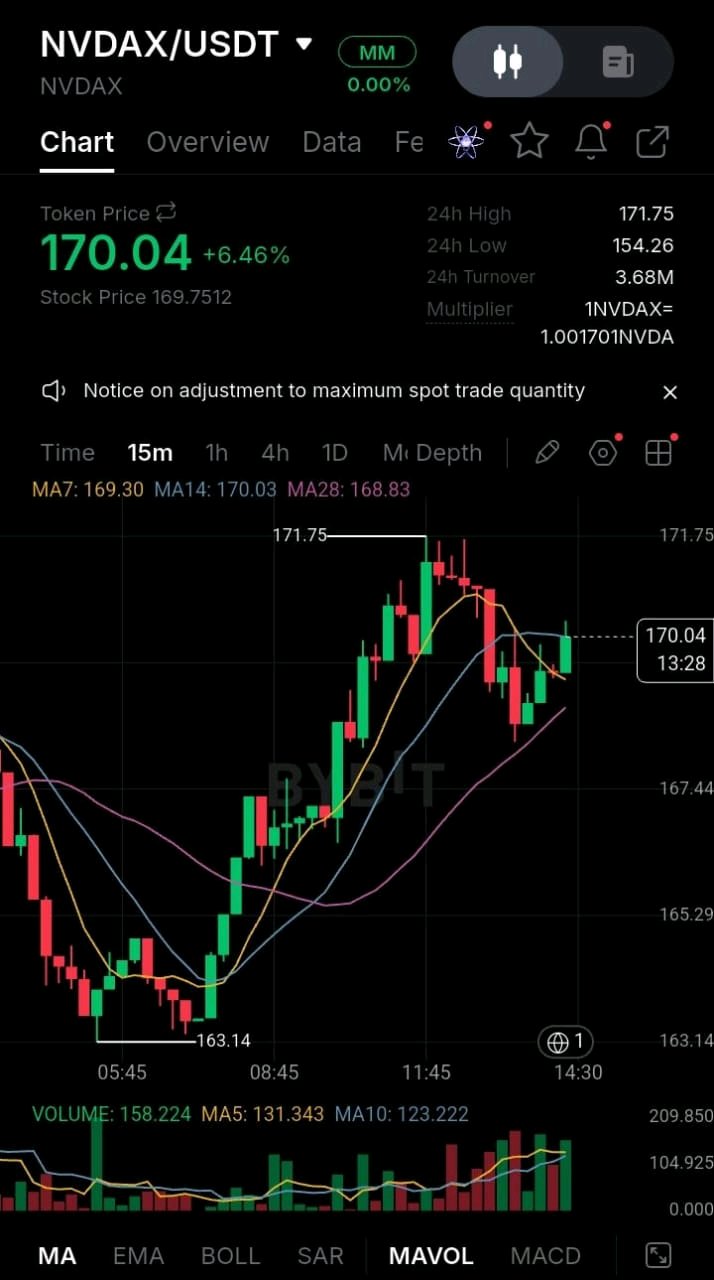
The Gold Reclaims $4,400 But the Fed Is Still the Test Gold is recovering sharply after Wednesday’s Fed-driven selloff, but the bigger question is whether buyers can turn this rebound into a real reclaim. Spot gold has pushed back above $4,400, with December futures around $4,435 in early European trading. The move comes after the Fed raised rates by 25 bps and signaled that further tightening could still follow. Lower Treasury yields and easing oil prices are now giving gold some relief. The less-obvious part is the reaction to the rate hike. Normally, another Fed hike should create pressure on gold because higher yields increase the opportunity cost of holding a non-yielding asset. Instead, gold has bounced from the $4,270–$4,300 area. The World Gold Council also noted that August was an unusually strong month for gold, with ETF buying and futures/options activity helping drive the rally. Technically, $4,400 is now the battleground. Bearish: rejection around $4,450–$4,500 → lose $4,400 → targets $4,350, then $4,300. Bullish: hold above $4,400 and reclaim $4,500 → opens $4,550, then potentially $4,600. Invalidation: sustained acceptance below $4,270 would weaken the recovery structure and put the recent lows back in focus. For $XAUT, the setup is particularly interesting because its recent price action has closely followed the underlying gold market. XAUT closed around $4,273.48 on September 16, while recent daily volume reached more than $300M. Tether has also been concentrating resources on XAUT after winding down Alloy, while XAUT received Shariah certification and recognition as an accepted spot commodity in Abu Dhabi earlier this year. The key distinction now: Gold doesn't need another narrative. It needs buyers to prove that $4,400 can become support after the Fed shock. If $4,500 flips into support, the recovery starts looking much more convincing. Is $4,400 becoming the base for Gold's next move, or is $4,500 still the level where sellers are waiting? $XAUTUSDT #ByXIMPACT
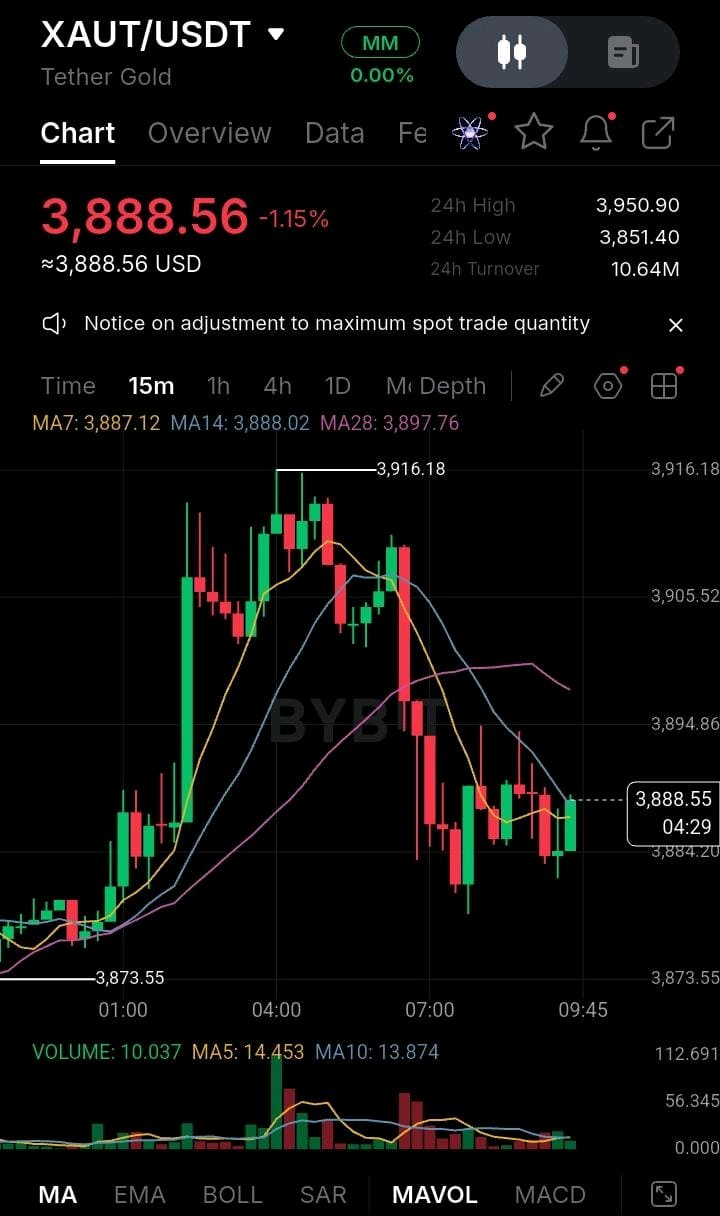

NVIDIA мен Tesla жақындағы құлдыраулары қайта реттелуге әкеле ме, әлде тағы бір өсу кезеңінің басы бола ма деген мәселені шешетін деңгейлерге жақындап қалды. NVDA $234-тен түскеннен кейін $212 аймағында саудалануда, ал TSLA жақында $370-тен жоғары саудаланғаннан кейін $360-қа дейін қалпына келді. Екеуі де маңызды катализаторларға тап болуда, бірақ олардың негізінде жатқан оқиғалар мүлдем бөлек. NVIDIA-ның соңғы тоқсандағы кірісі $96,2 млрд-ты құрады, бұл жылдық есепте 106%-ға өсті, ал деректер орталығынан түскен кіріс 117%-ға артып, $89 млрд-қа жетті. Ал Tesla екінші тоқсанда 480 126 көлік жеткізді, бұл жылдық есепте 25%-ға өсті, ал энергия жинақтау жүйелерін орнату 13,5 ГВт-сағатқа жетті. Келесі кезең – орындауға қатысты. NVIDIA Blackwell-ден Vera Rubin-ге ауысуда, ірі бұлтты провайдерлер AI инфрақұрылымына жұмсалатын шығындар жалғасуда Rubin жүйелерін дайындауда. Tesla Cybercab-ты автономды коммерциялық операцияларға итермелеуде, ал оның қазан айындағы Roadster таныстырылымы тағы бір ықтимал баяндау катализаторын қосады. Бірақ екеуі де тәуекелдерге тап болуда: NVIDIA AI шығындарына қатысты қадағалау күшейген сайын өзінің ерекше AI өсімін сақтап қалуы керек, ал Tesla автономияның жай ғана өнім туралы баяндау емес, ауқымды бизнес бола алатынын дәлелдеуі тиіс. Бұл қызықты жағдай тудырады. Менің болжамым: • NVDA "өсу" (Bullish): $225–$228 деңгейін қайтару → $234–$236, содан кейін $245. • NVDA "құлдырау" (Bearish): $210-ды жоғалту → $200, одан кейін $195. • TSLA "өсу" (Bullish): $365–$370 деңгейін қайтару → $380, содан кейін $400. • TSLA "құлдырау" (Bearish): $355-ті жоғалту → $340, одан кейін $325. Қызықты сұрақ қай компанияның AI тарихы маңыздырақ дегенде емес. Мәселе қайсысы AI-ға салынған орасан зор инвестицияны болашаққа берілген бағалауды ақтайтындай жылдамдықпен нақты табыс пен ақша ағынының өсіміне айналдыра алатынында. $NVDAXUSDT $TSLAXUSDT #ByXIMPACT
Gold just lost more than 3% but the interesting part isn't the drop itself. XAU/USD extended Friday’s Jackson Hole selloff into Monday, briefly slipping below $4,400 and touching around $4,396 as markets repriced the Fed path after Kevin Warsh’s hawkish inflation comments. September rate-hike odds have moved toward roughly 58–60%, while the dollar remains near a two-week high. That changes the short-term gold equation. For weeks, the trade was simple: weaker dollar + easier Fed expectations = stronger gold. Now we're seeing the inverse. Higher yields are increasing the opportunity cost of holding a non-yielding asset, while the stronger dollar adds another layer of pressure. At the same time, geopolitical risk is sending oil above $90, creating an unusual problem for gold bulls: safe-haven demand supports gold, but higher energy prices can reinforce inflation and keep the Fed hawkish. Technically, $4,467 is the level I'm watching. Gold is trading below that area after losing the 200-day average, with $4,408 acting as the immediate downside pivot. A failure to reclaim $4,467–$4,511 keeps the short-term structure bearish. My setup: Bearish: rejection around $4,450–$4,500 → target $4,408, then $4,368–$4,350 over the coming days. Bullish: reclaim and hold above $4,511 → the bearish repricing starts losing credibility, opening a move back toward $4,540–$4,580. Invalidation: sustained reclaim above $4,600. The real catalyst now isn't another Fed speech. It's the US jobs report. If employment weakens enough to unwind September hike expectations, gold could reverse aggressively. If the data keeps the Fed hawkish, that $4,400 shelf may not hold. Gold isn't necessarily bearish long term. The market is simply repricing the cost of owning it right now. $XAUTUSDT #ByXIMPACT

Tesla and Circle are both entering a phase where the narrative has to translate into measurable execution. Tesla has recovered from its September low near $354 to around $378, but the next test is whether buyers can push it back through the $385–$390 area. The biggest catalyst is autonomy: Cybercab is already deployed in Austin, while NHTSA is reviewing Tesla’s self-certification of the driverless vehicle and whether it complies with federal safety standards. Tesla is also preparing its next-generation Roadster reveal, keeping the AI/autonomy narrative firmly in focus. Circle has a different catalyst stack. Binance just invested $100M in Circle and renewed a five-year USDC commercial agreement, while Circle's USDC circulation has grown above $74B. Arc's public mainnet also launched with more than 100 institutional and ecosystem builders, including major banks, payment networks, exchanges and asset managers. Circle is additionally pursuing the Tazapay acquisition, which would add 60+ banking/fintech partners, 100+ payout markets and more than $25B in annualized payment volume. That creates an interesting setup. My setup: • $TSLA Bullish: reclaim $385–$390 → $400, then $420. • $TSLA Bearish: rejection below $385 + loss of $370 → $355, then $340. • $CRCL Bullish: reclaim $95–$100 → $110, then $125. • $CRCL Bearish: rejection near $95 + loss of $85 → $75, then $65. The interesting question isn't which company has the bigger narrative. It's whether Tesla can turn autonomy into a scalable business while Circle turns USDC, Arc and global payment infrastructure into durable growth beyond the economics of reserve income. Both are moving from story → execution. $TSLAXUSDT $CRCLXUSDT #ByXIMPACT

Nvidia Is Testing a Level That Could Decide the Next Move $NVDA has bounced back toward $219 after falling to around $209 earlier this week. Thursday’s 2.54% gain puts the stock back near a short-term decision zone, but it remains well below the $236.54 52-week high. The fundamental backdrop remains unusually strong. Nvidia generated $96.2B in Q2 FY2027 revenue, up 106% YoY, with Data Center revenue reaching roughly $89B. More recently, CEO Jensen Huang said Nvidia expects to sell twice as many chips next year as this year, reinforcing the company’s view that AI infrastructure demand is still expanding. But the next phase is becoming more demanding. Nvidia’s Vera Rubin NVL72 recently posted leading results in MLPerf inference testing, while the company is increasingly focused on performance-per-watt and lowering the cost of AI tokens. At the same time, Huawei is accelerating its own AI-chip roadmap, creating a longer-term competitive challenge, particularly in China. That creates an interesting setup. My setup: Bullish: reclaim and hold $220–$225 with strong volume → $230, then $236–$245. Bearish: rejection around $220–$225 and loss of $215 → $210, followed by $200. Invalidation: sustained acceptance above $245 would significantly strengthen the continuation thesis. The interesting question isn't whether Nvidia still has AI demand. It's whether the next wave of Vera Rubin deployments and rising chip volumes can keep earnings growth ahead of the increasingly demanding expectations already embedded in NVDA's valuation. $NVDAXUSDT #ByXIMPACT
The Gold Reclaims $4,400 But the Fed Is Still the Test Gold is recovering sharply after Wednesday’s Fed-driven selloff, but the bigger question is whether buyers can turn this rebound into a real reclaim. Spot gold has pushed back above $4,400, with December futures around $4,435 in early European trading. The move comes after the Fed raised rates by 25 bps and signaled that further tightening could still follow. Lower Treasury yields and easing oil prices are now giving gold some relief. The less-obvious part is the reaction to the rate hike. Normally, another Fed hike should create pressure on gold because higher yields increase the opportunity cost of holding a non-yielding asset. Instead, gold has bounced from the $4,270–$4,300 area. The World Gold Council also noted that August was an unusually strong month for gold, with ETF buying and futures/options activity helping drive the rally. Technically, $4,400 is now the battleground. Bearish: rejection around $4,450–$4,500 → lose $4,400 → targets $4,350, then $4,300. Bullish: hold above $4,400 and reclaim $4,500 → opens $4,550, then potentially $4,600. Invalidation: sustained acceptance below $4,270 would weaken the recovery structure and put the recent lows back in focus. For $XAUT, the setup is particularly interesting because its recent price action has closely followed the underlying gold market. XAUT closed around $4,273.48 on September 16, while recent daily volume reached more than $300M. Tether has also been concentrating resources on XAUT after winding down Alloy, while XAUT received Shariah certification and recognition as an accepted spot commodity in Abu Dhabi earlier this year. The key distinction now: Gold doesn't need another narrative. It needs buyers to prove that $4,400 can become support after the Fed shock. If $4,500 flips into support, the recovery starts looking much more convincing. Is $4,400 becoming the base for Gold's next move, or is $4,500 still the level where sellers are waiting? $XAUTUSDT #ByXIMPACT

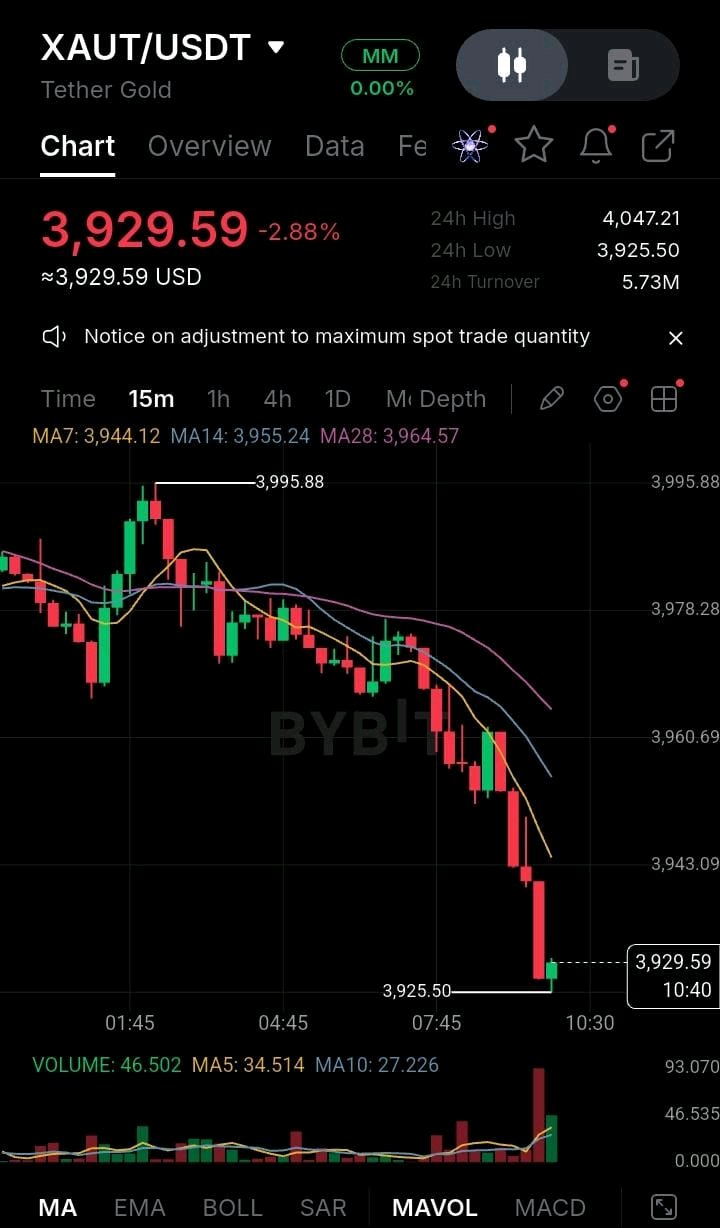
NVIDIA and Tesla are approaching levels that could decide whether their recent pullbacks become resets — or the beginning of another leg higher. NVDA is trading around the $212 area after falling from above $234, while TSLA has recovered toward $360 after recently trading above $370. Both are facing major catalysts, but the underlying stories are very different. NVIDIA’s latest quarter delivered $96.2B in revenue, up 106% YoY, with Data Center revenue reaching $89B, up 117%. Tesla, meanwhile, delivered 480,126 vehicles in Q2, up 25% YoY, while energy-storage deployments reached 13.5 GWh. The next phase is about execution. NVIDIA is moving from Blackwell toward Vera Rubin, with major cloud providers preparing Rubin systems as AI infrastructure spending continues. Tesla is pushing Cybercab toward autonomous commercial operations while its October 1 Roadster reveal adds another potential narrative catalyst. But both face risks: NVIDIA must sustain extraordinary AI growth as spending becomes more scrutinized, while Tesla needs to prove that autonomy can become a scalable business rather than simply another product narrative. That creates an interesting setup. My setup: • NVDA Bullish: reclaim $225–$228 → $234–$236, then $245. • NVDA Bearish: lose $210 → $200, followed by $195. • TSLA Bullish: reclaim $365–$370 → $380, then $400. • TSLA Bearish: lose $355 → $340, followed by $325. The interesting question isn't which company has the bigger AI story. It's which one can convert massive AI investment into measurable earnings and cash-flow growth fast enough to justify the valuation already being assigned to the future. $NVDAXUSDT $TSLAXUSDT #ByXIMPACT