K
KobeissiLetter
699Curtir0Compartilhamentos5Fãs0Seguir
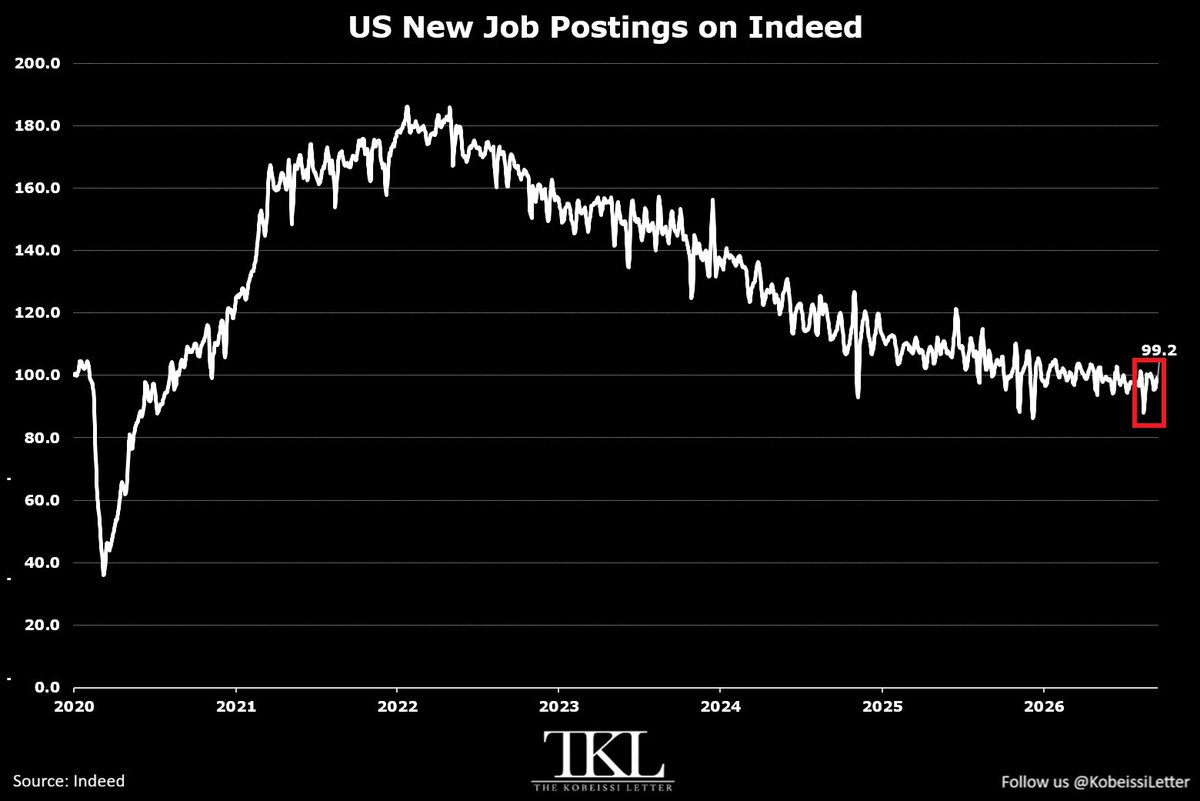
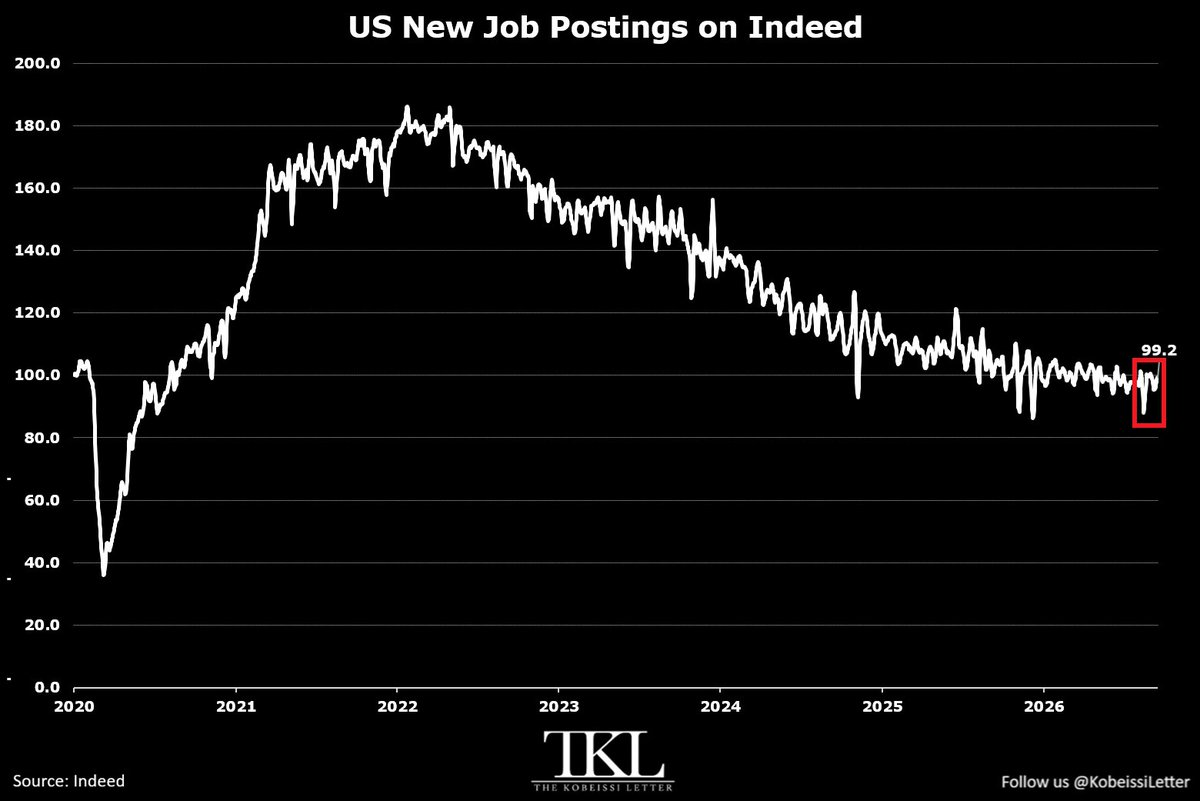
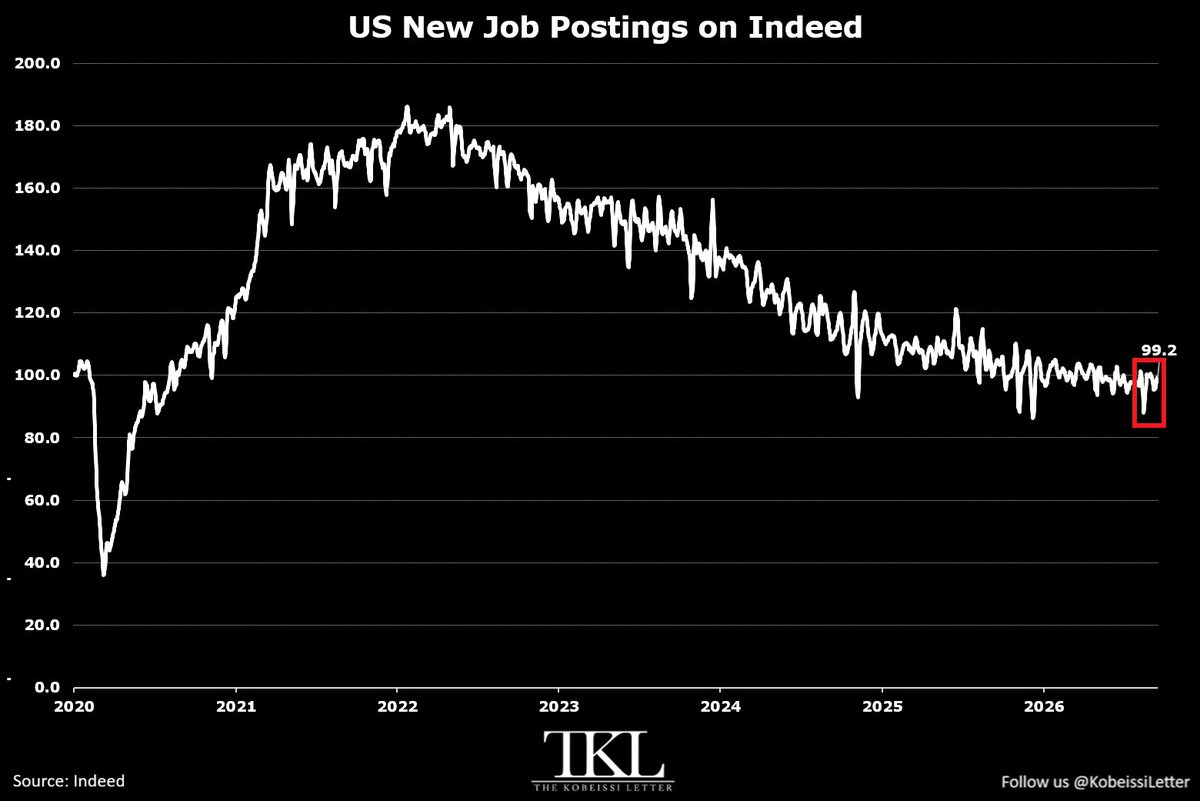
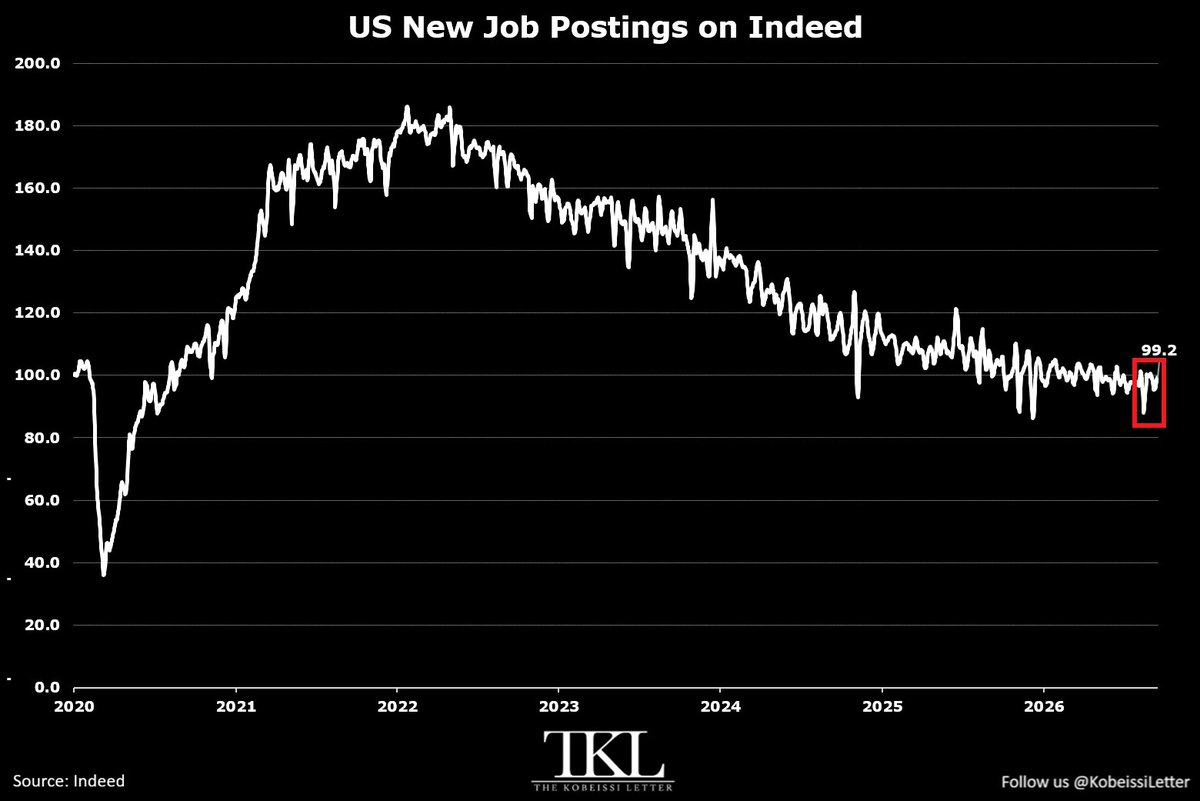
As contratações nos EUA ainda não mostram qualquer sinal real de recuperação. Novas vagas de emprego no Indeed caíram 4,8% em relação ao ano anterior na semana encerrada em 16 de outubro. Desde abril de 2022, as vagas disponíveis acumulam uma queda total de 46,7%. Essa queda empurrou o número de vagas recém-disponíveis para 0,8% abaixo dos níveis pré-pandemia (fevereiro de 2020). A queda diminuiu um pouco nos últimos meses, mas não se transformou em uma recuperação — o ritmo de contratações ainda parece estagnado. Isso também indica pouca melhora a curto prazo nos números oficiais de ofertas de emprego do BLS, que geralmente ficam algumas semanas atrás dos dados de vagas postadas. Conclusão: por trás dos números principais, o mercado de trabalho dos EUA ainda parece fraco.
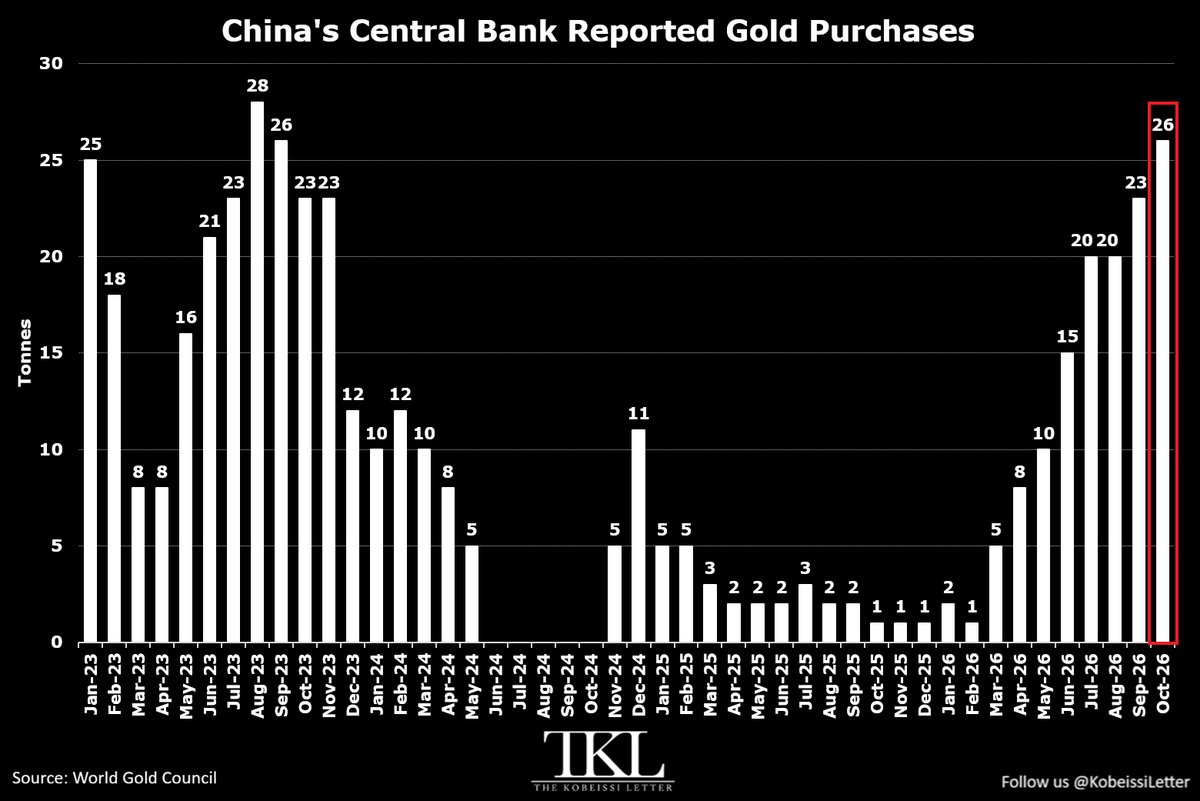
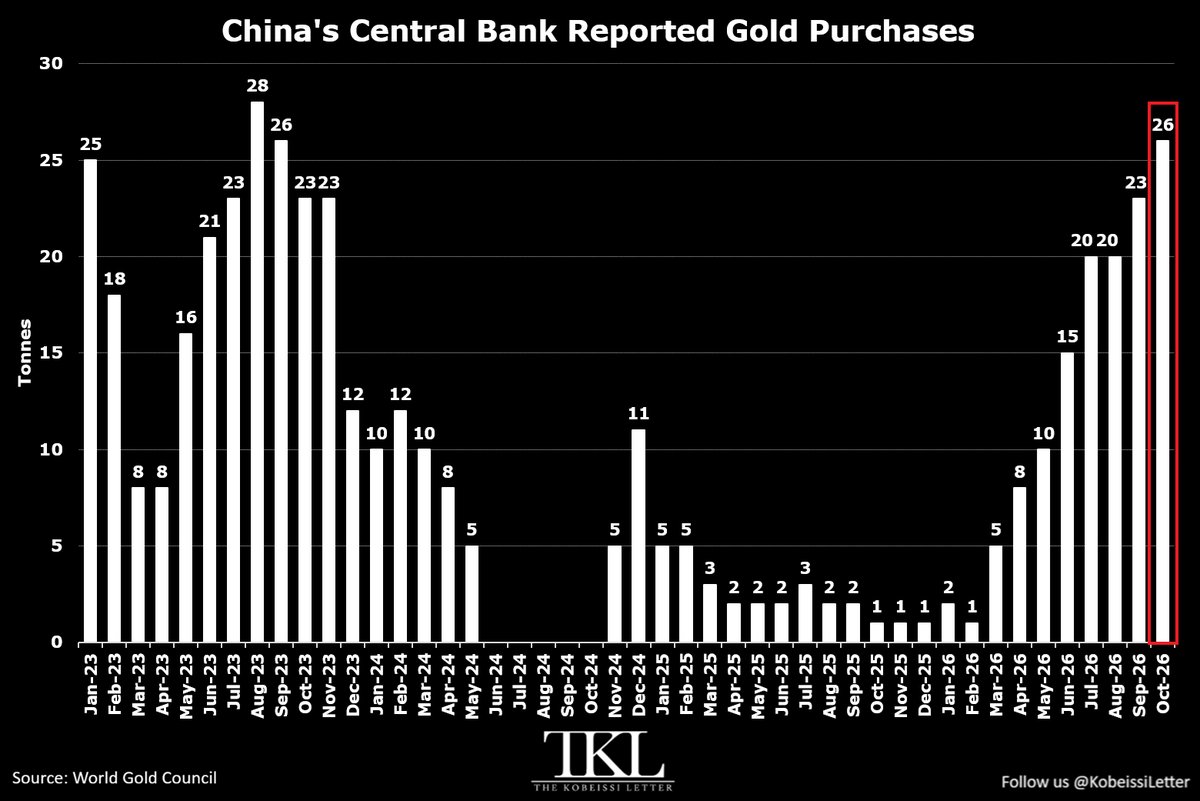
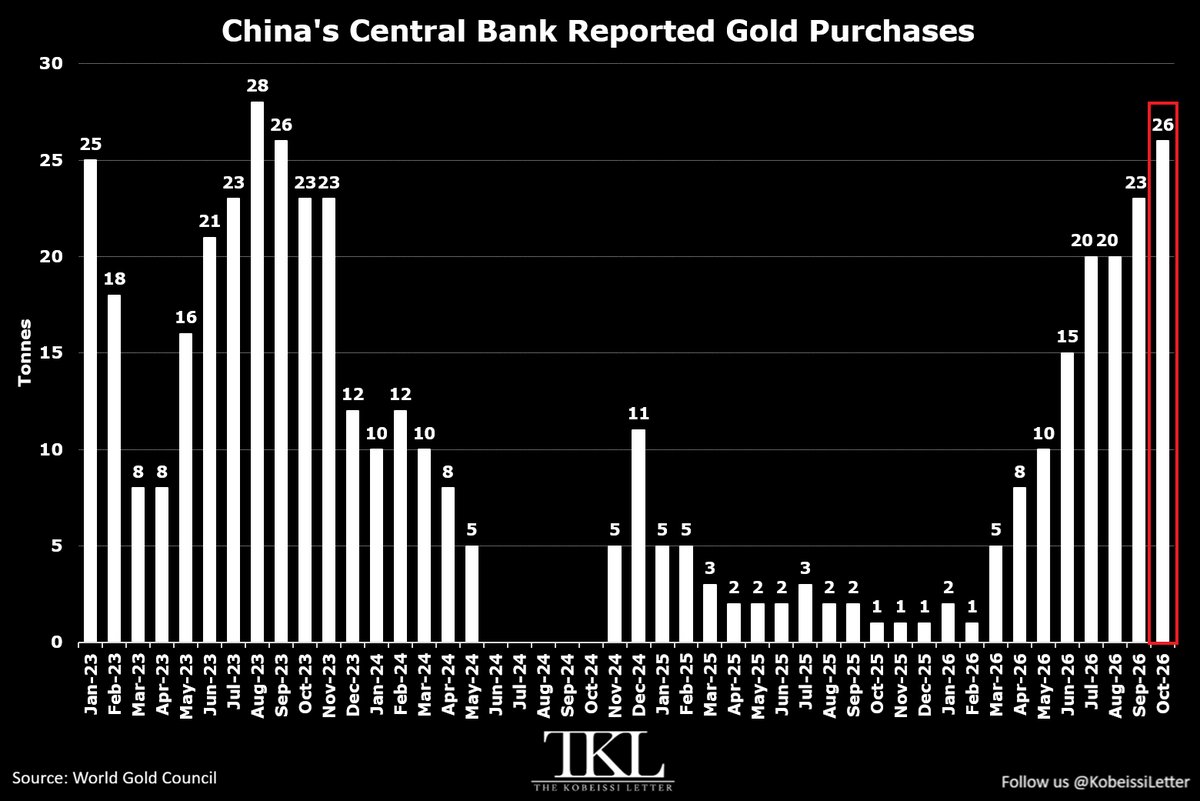
URGENTE: O banco central da China adicionou mais de 26 toneladas de ouro em outubro — a maior compra mensal desde agosto de 2023. Isso ocorre após outras 23+ toneladas em setembro, estendendo a sequência para 24 meses consecutivos de compras líquidas de ouro. Para colocar em contexto: ao longo de 2025, a China não ultrapassou 5+ toneladas em nenhum mês. Até agora este ano, as compras oficiais totalizam mais de 129 toneladas, elevando as reservas para um novo recorde de 2.435 toneladas. Isso deixa a China a apenas 2 toneladas atrás da França, a 4ª maior detentora de ouro do mundo. E o ritmo da demanda de ouro da China ainda parece longe de esfriar.
US hiring still isn’t showing any real signs of turning the corner. New job postings on Indeed were down 4.8% YoY in the week ending October 16. Since April 2022, postings are now off 46.7% in total. That’s left the flow of newly available openings about 0.8% below the pre-pandemic level seen in February 2020. The slide has eased a bit in recent months, but it hasn’t flipped into a rebound—hiring momentum is still missing. That also points to little upside in the official BLS job openings data, which typically trails postings by a few weeks. Bottom line: the labor market looks softer than the headline numbers suggest.
URGENTE: O banco central da China reportou a compra de mais de 26 toneladas de ouro em outubro — o maior aumento mensal desde agosto de 2023. Isso ocorre após a compra de mais de 23 toneladas em setembro, estendendo sua sequência para 24 meses consecutivos de compras líquidas de ouro. Para colocar em contexto: ao longo de 2025, a China não ultrapassou 5 toneladas em nenhum mês. Até agora este ano, as compras oficiais totalizam mais de 129 toneladas, elevando as reservas de ouro da China para um novo recorde de 2.435 toneladas. Isso deixa a China a apenas 2 toneladas atrás da França, atualmente o 4º maior detentor oficial de ouro do mundo. E, a julgar pelo ritmo, o apetite da China por ouro não está diminuindo.
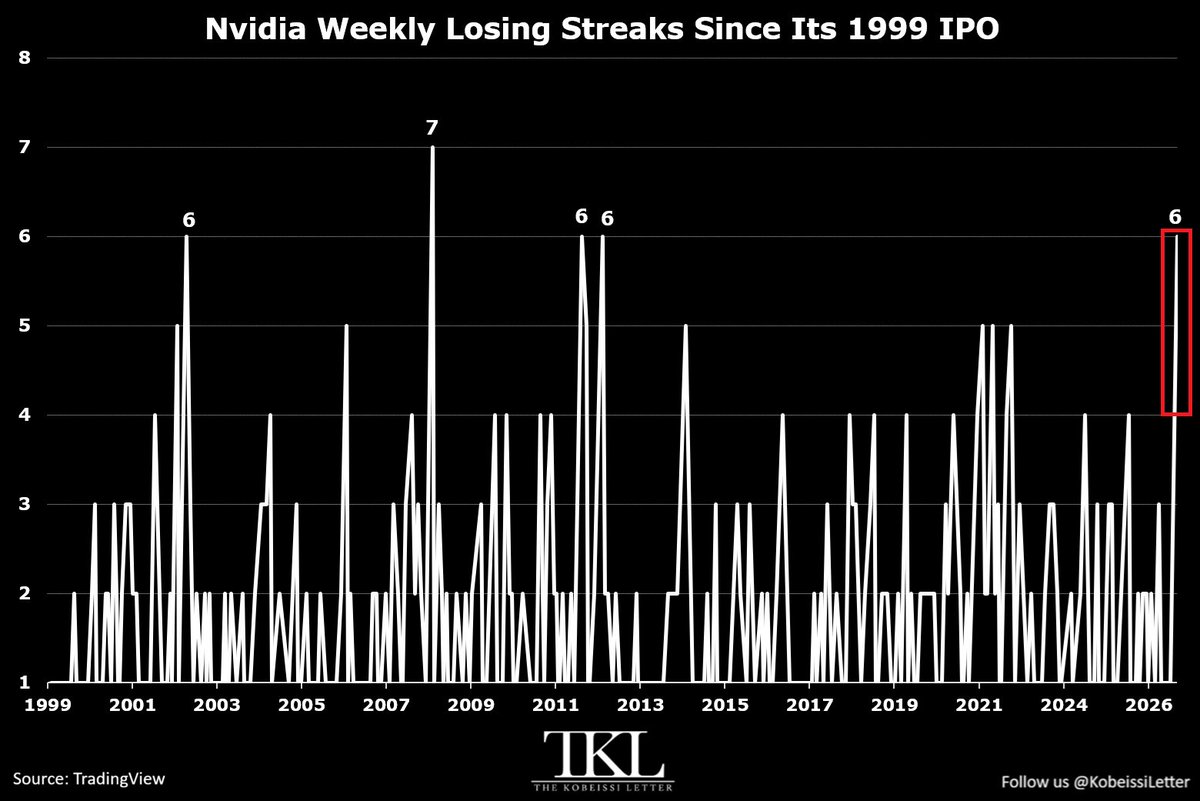
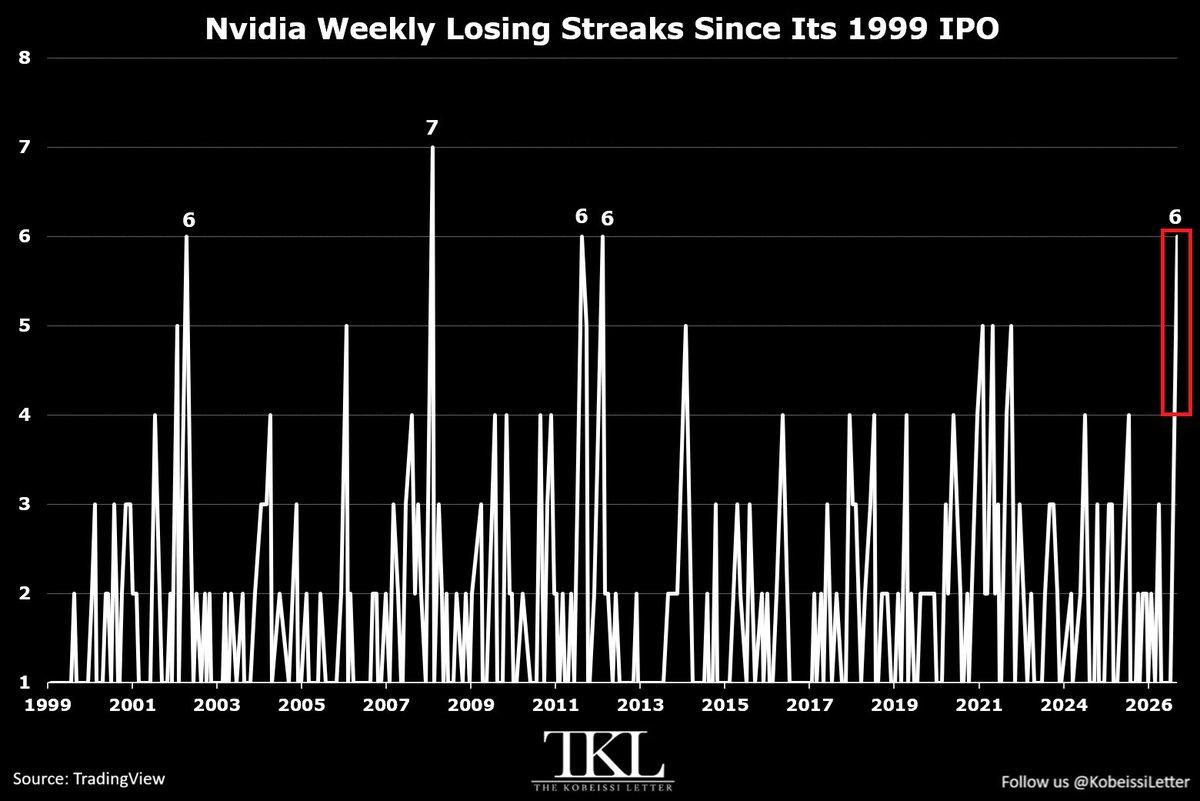
A Nvidia está no meio de uma queda rara. As ações da $NVDA caíram por seis semanas consecutivas — empatando com a segunda maior sequência de perdas semanais da empresa já registrada. Nesse período, a ação caiu 31%, atingindo seu nível mais baixo desde julho de 2025. Quedas de seis semanas como essa têm sido incomuns: elas ocorreram duas vezes em 2012 e uma vez em 2002, após o período da bolha das pontocom. A única sequência mais longa foi de sete quedas semanais consecutivas durante a crise financeira de 2008, quando a Nvidia recuou 53%. O dano desde a máxima de outubro tem sido massivo. A Nvidia perdeu cerca de US$ 1,9 trilhão em valor de mercado, ficando em torno de US$ 3,9 trilhões. Até agora neste ano, a ação acumula uma queda de 12%, ficando bem atrás do S&P 500 e do Nasdaq 100, ambos com alta de aproximadamente 10% e 11%. No geral, esta é uma desvalorização próxima de ser única em uma geração para a Nvidia.
US hiring still isn’t showing any real signs of coming back. New job postings on Indeed were down 4.8% YoY in the week ending October 16. Since April 2022, postings are now off 46.7% in total. That leaves new available vacancies about 0.8% below where they were pre-pandemic (February 2020). The slide has eased a bit in recent months, but that’s not the same as a rebound—hiring hasn’t turned higher. If anything, it points to little meaningful improvement in the official BLS job openings figures, which typically trail postings by a few weeks. Bottom line: the US labor market looks softer than the headline numbers suggest.
BREAKING: China’s central bank added +26 tonnes of gold in October — its largest monthly purchase since August 2023. That comes after +23 tonnes in September, extending China’s gold-buying streak to 24 straight months. For context, throughout 2025, China didn’t buy more than +5 tonnes in any single month. So far this year, official purchases total +129 tonnes, pushing reserves to a new record of 2,435 tonnes. That leaves China just 2 tonnes behind France, the world’s 4th-largest gold holder. And the pace of China’s gold demand still doesn’t look like it’s easing.
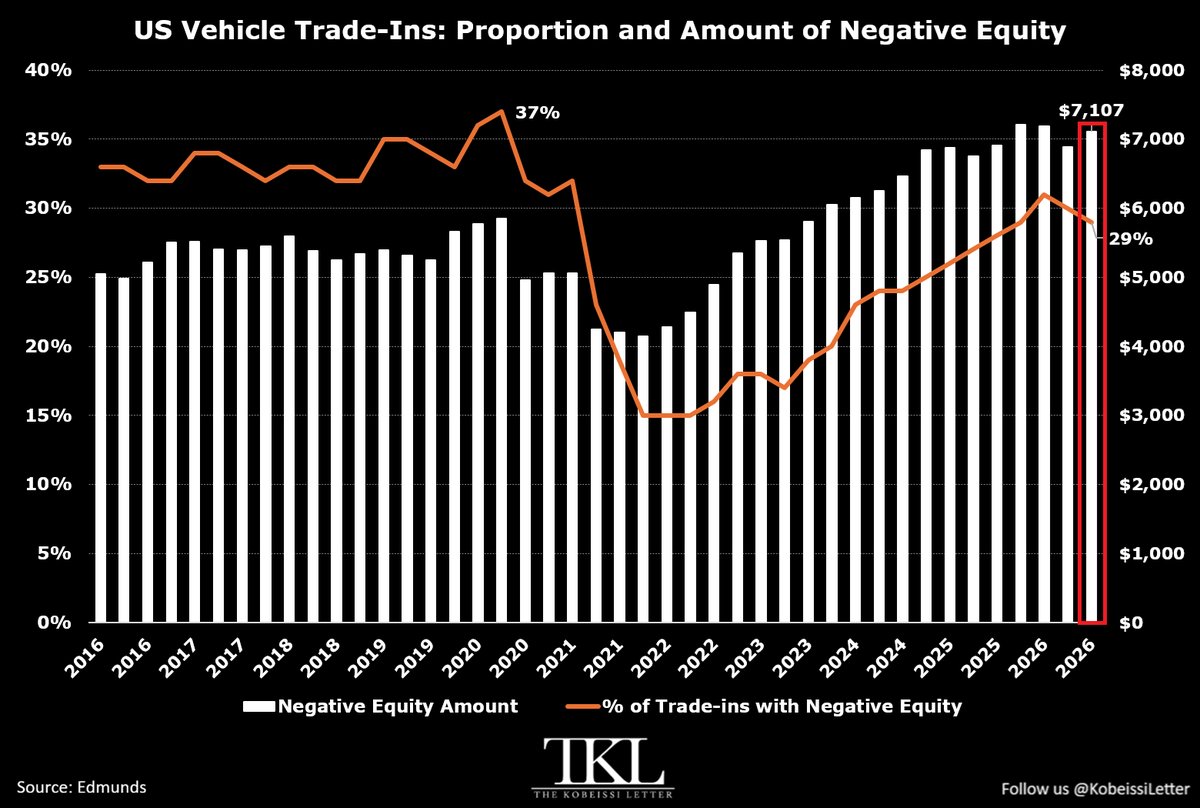
A lot of US car owners are upside down on their vehicles — they owe more than the cars are worth. In Q3 2026, 29% of trade-ins tied to new-vehicle purchases came with negative equity, close to the highest share since Q1 2021. At the same time, the average shortfall on these underwater cars climbed to $7,107, the 3rd-highest level on record. That’s $2,960 higher than the low in Q4 2021 and $1,850 above pre-pandemic levels. And it’s not just trade-ins: buyers who rolled unpaid car debt into new loans ended up with an average loan balance of $57,235 — up 44% from 2019. Their average APR was 8.1%, which pushes total lifetime interest costs to about $16,610, up 83% from $9,093 in 2019. Bottom line: the US is dealing with a real car affordability crunch.
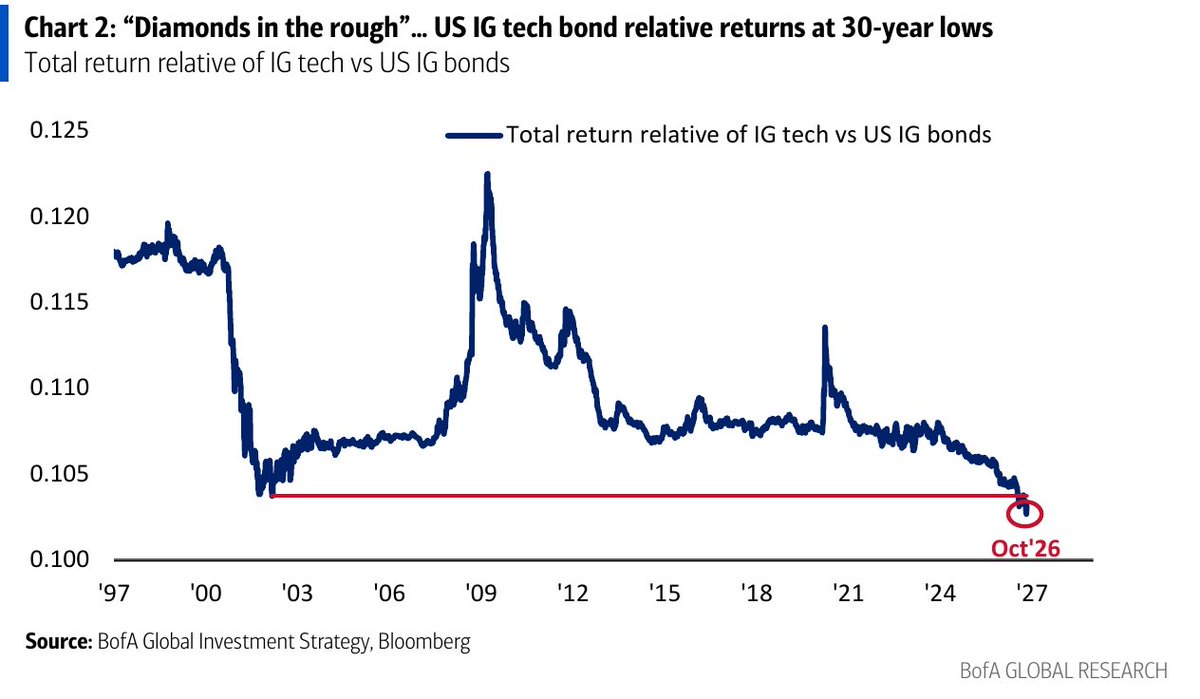
Investors are starting to ask for a bigger payoff to own US tech debt. US investment-grade (IG) technology bonds have lagged the broader IG corporate bond market by about 9% year-to-date, pushing their relative total return to the weakest level in at least three decades. Spreads are telling the same story. The gap between IG tech spreads over Treasuries and the broader IG corporate spread has widened to roughly +15 bps — the largest in at least 14 years. For most of the 2012–2025 period, that gap was actually below zero. Put simply: investors now want an extra yield premium to hold tech bonds versus the rest of the IG market. This shift comes as Big Tech issuance has exploded — a record $182 billion so far in 2026, up from just $17 billion in 2024 (+971%) — with AI now the biggest sector in the IG bond universe. The bottom line: funding the AI boom is getting pricier.
Nvidia is in the middle of a brutal, record‑level slide. $NVDA has now fallen for six straight weeks, tying its second‑longest weekly losing streak ever. Over that stretch, the stock is down 31%, hitting its lowest level since July 2025. The last time Nvidia saw comparable six‑week skids was back in 2012 (twice) and in 2002—periods that came in the aftermath of the Dot‑Com bust. For context, its longest weekly losing streak was seven weeks during the 2008 Financial Crisis, when $NVDA sank 53%. Since the October high, Nvidia has erased about $1.9 trillion in market cap, dropping to roughly $3.9 trillion. So far this year, the stock is down 12%, badly lagging the S&P 500 and Nasdaq 100, which are up about 10% and 11%. This is about as close to an unprecedented drawdown as Nvidia gets.
US hiring still isn’t turning the corner. Indeed data show job postings were down about 5% from a year ago in mid-October, and they’re off nearly half compared with early 2022. That leaves new vacancies slightly below where they stood before the pandemic. The slide has become less steep lately, but it hasn’t flipped into a rebound. If anything, this points to little near-term improvement in the official BLS job openings figures, which typically trail postings by a few weeks. Bottom line: the labor market looks softer than the headline narrative suggests.
BREAKING: US Treasury Secretary Bessent says Nvidia, $NVDA, needs a “major overhaul” in the wake of the Jensen Huang scandal. Bessent says the conversation shouldn’t center on Huang’s personal “missteps,” but on the legal and national-security implications. “I keep coming back to Nvidia’s internal culture—were they pushing what look like improper sales to pump up revenue and earnings?” Bessent said. He added that he expects the board to provide answers “within the next 10 days.”
BREAKING: US Treasury Secretary Bessent says Nvidia, $NVDA, needs a “major overhaul” in the wake of the Jensen Huang scandal. Bessent says he wants to move the conversation away from Huang’s personal “missteps” and toward the legal and national-security implications. “I keep coming back to Nvidia’s internal culture—were they pushing what look like improper sales to juice revenue and earnings?” Bessent said. He added that he expects the board to provide answers “within the next 10 days.”
BREAKING: US lawmakers are moving toward stricter export controls on AI chips in the wake of the Nvidia ($NVDA) controversy, per the FT. Key points: 1. Multiple bills would clamp down on sales of sensitive chips to buyers outside the US. 2. The proposals would also let Congress review—and potentially halt—deals that were previously cleared under the Trump Administration. 3. The effort has backing from both Democrats and Republicans. More regulation looks increasingly likely.
Key Events This Week: 1. Fed Chair Warsh speaks — Monday 2. October Retail Sales data — Tuesday 3. Nvidia ($NVDA) earnings — Tuesday 4. October Pending Home Sales data — Wednesday 5. Fed meeting minutes — Wednesday 6. November Philly Fed Manufacturing data — Thursday 7. November MI Consumer Sentiment data — Friday 8. November MI Inflation Expectations data — Friday 9. 15 total Fed speaker appearances throughout the week Another packed week ahead—plenty on the calendar to watch.
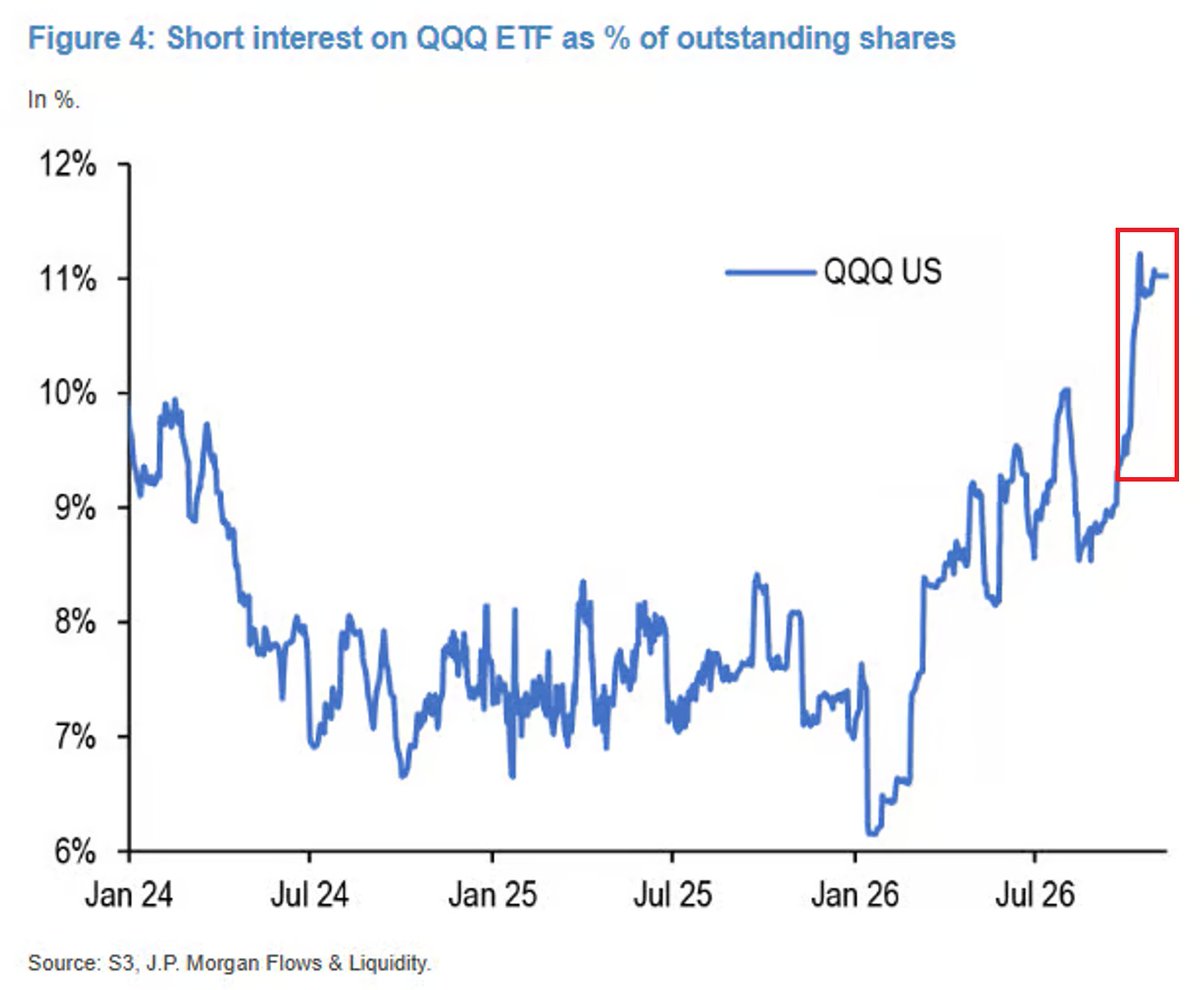
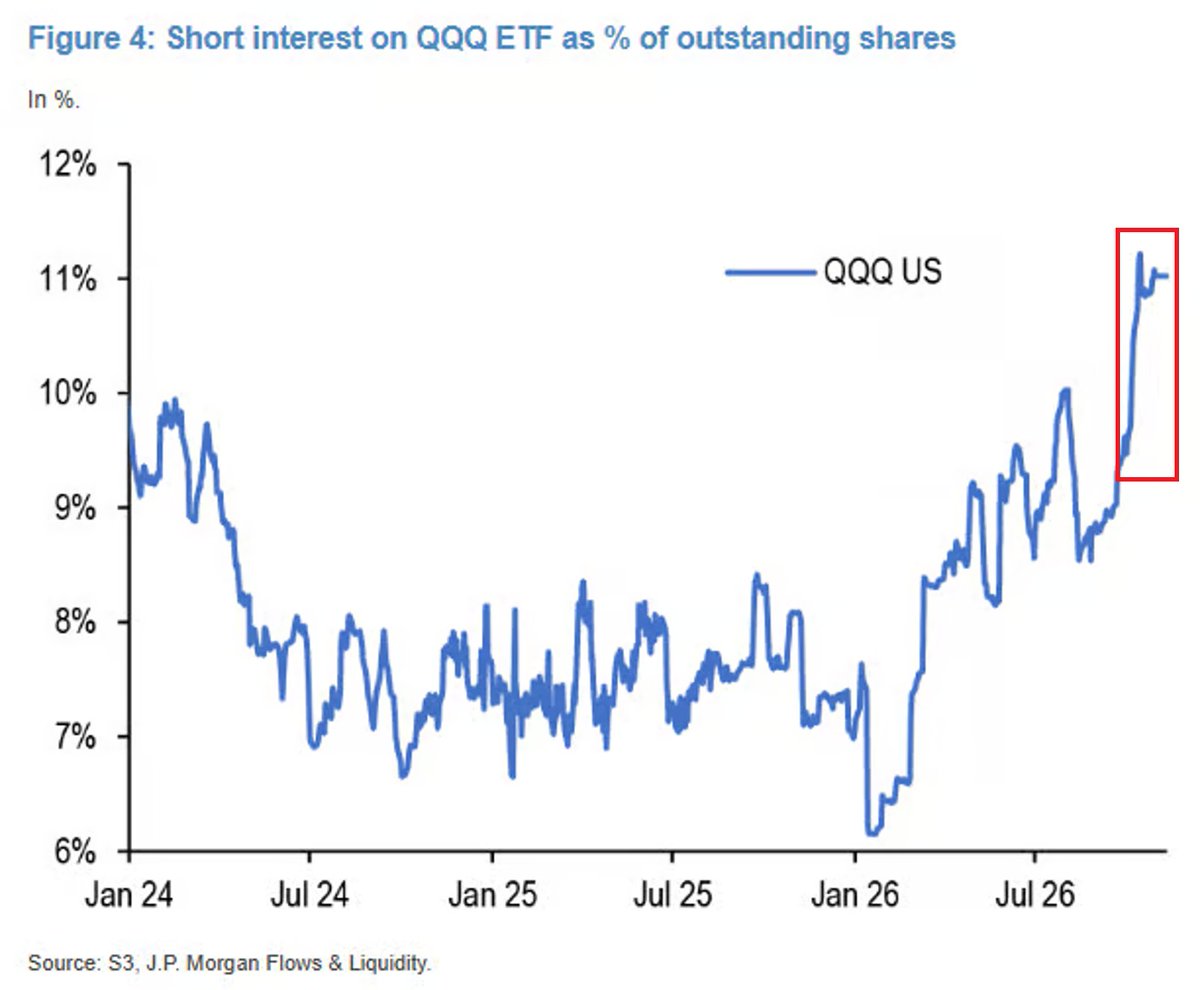
BREAKING: Short interest in the Nasdaq 100 ETF, $QQQ, has climbed to 11% of shares outstanding — the highest level since 2023. That’s a jump of about 5 percentage points since January. For context, during the 2022 bear market, it topped out around 14%. At the same time, Goldman Sachs says hedge funds’ US tech long-to-short ratio has slipped to 1.5 — the lowest reading since the series began in 2016. That ratio is down roughly 0.6 points since June. Is this the kind of setup that can spark a tech short squeeze?
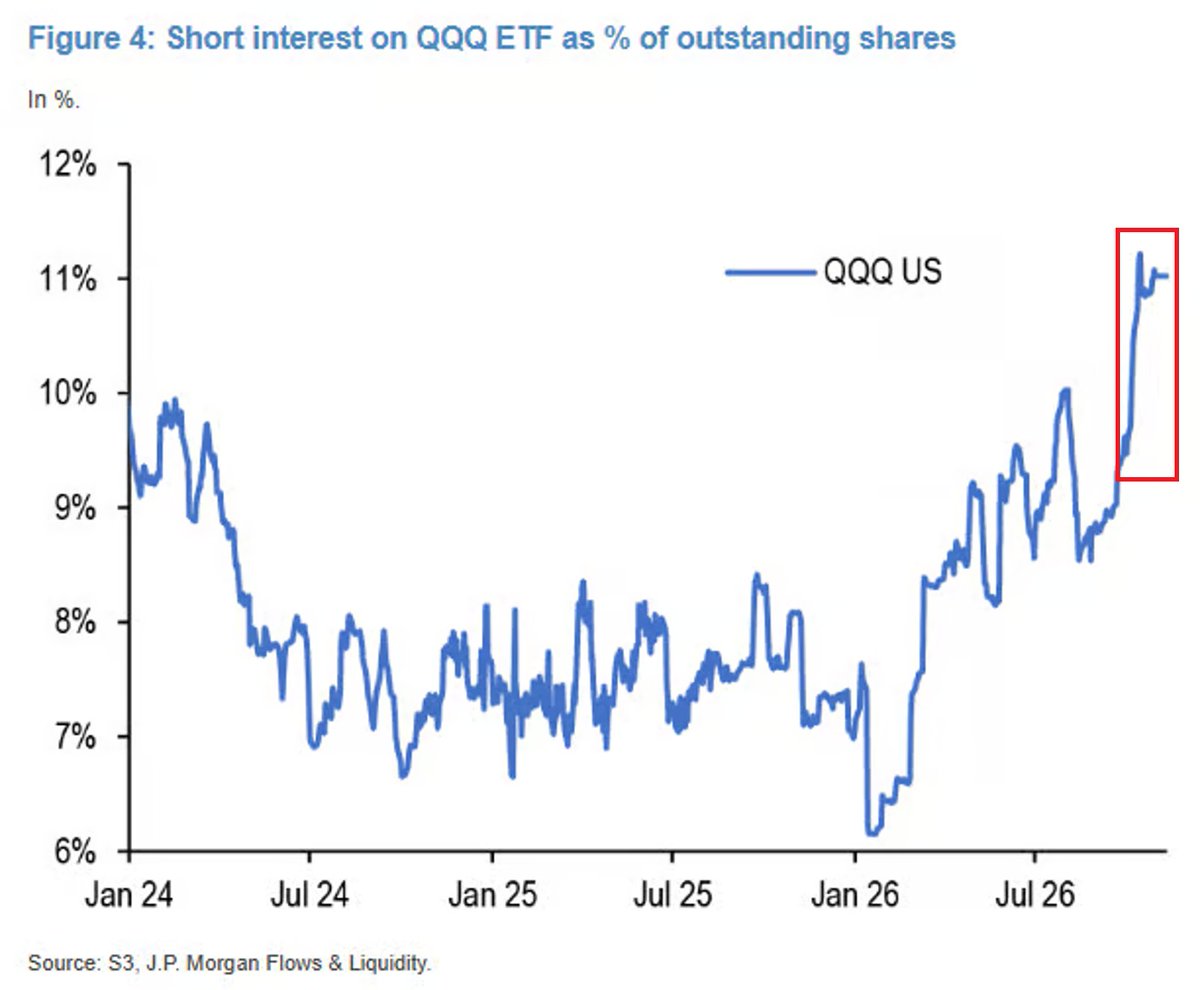
BREAKING: Short interest in the Nasdaq 100 ETF, $QQQ, has climbed to 11% of shares outstanding — the highest level since 2023. That’s a +5 percentage point jump since January. For context, in the 2022 bear market, it topped out around ~14%. At the same time, Goldman Sachs says hedge funds’ US tech long-to-short ratio has slid to 1.5, the lowest reading since the series began in 2016. That ratio is down about -0.6 since June. Is tech starting to look like a setup for a short squeeze?
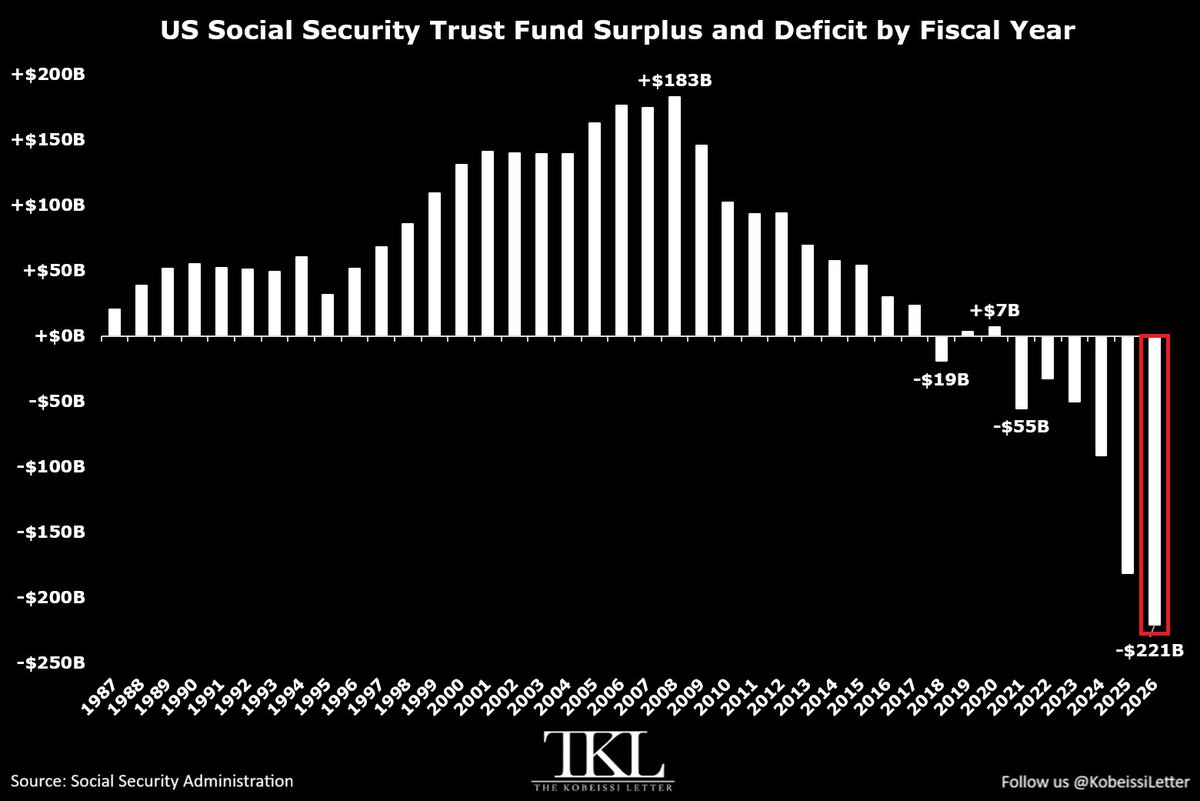
BREAKING: The US Social Security Trust Fund’s deficit widened by $39B YoY in Fiscal Year 2026, hitting a new record at -$221B. The fund covers retirement benefits and payments to eligible survivors of deceased workers. Spending—driven mainly by benefit checks to retirees and survivors—jumped $83B YoY to $1.5T, the highest level on record. Revenue also increased, with income largely from payroll contributions rising $44B YoY to a record $1.3T, but it still wasn’t enough to close the gap. Since FY2022, the deficit has ballooned by $188B (+585%). That shortfall is now showing up in the reserves: trust fund assets fell $221B YoY in FY2026 to $2.18T, the lowest since 2007, and $640B below the 2017 peak. Bottom line: Social Security’s finances are weakening fast.
BREAKING: Short interest in the Nasdaq 100 ETF, $QQQ, has climbed to 11% of shares outstanding—its highest level since 2023. That’s a jump of about 5 percentage points since January. For context, during the 2022 bear market, short interest topped out around 14%. At the same time, Goldman Sachs says hedge funds’ US tech long-to-short ratio has slipped to 1.5—the lowest reading since the data series began in 2016. That ratio is down roughly 0.6 points since June. Is the setup building for a tech short squeeze?
BREAKING: A chain of events last week that ultimately ended with Jensen Huang’s resignation was “set in motion” by Secretary of State Marco Rubio, according to The Washington Post. Here’s what the report says happened: 1. Rubio first sent a memo to President Trump raising concerns about Jensen Huang’s ties to a suspected Chinese spy. 2. The memo drew on a CIA report, which Rubio reportedly rewrote in his own more forceful language. 3. The memo’s claims were then leaked to the press, triggering the cascade of developments seen last week. 4. Huang resigned just six days after the leak. Rubio has reportedly refused to respond to reporters’ questions about whether he played a role in flagging Huang’s affair to the White House.