Stablecoin
Stablecoins are cryptocurrencies pegged to a fiat currency whose price is relatively stable when compared to Bitcoin. They're widely used as stores of value and mediums of exchange, or even for different strategies to achieve price stability. Be a crypto expert today, as we curate all of the content around stablecoins that you need to know.
Total Articles
43
Quantoz Payments: Introducing MiCA-compliant stablecoins USDQ, EURQ and EURD
Quantoz Payments launches MiCA-compliant stablecoins—USDQ, EURQ and EURD—offering regulated digital payments and DeFi solutions within the EEA.
Investing With Tether: A Guide to Using USDT for Wealth Growth
USDT provides a stable entry point into the crypto market, offering diverse investment options on Bybit. Learn more about how to invest with USDT here.
Ripple USD (RLUSD): A Stablecoin Built for Payments
Ripple USD (RLUSD) is a stablecoin designed to provide efficient, low-cost solutions for cross-border payments and DeFi, backed by U.S. dollar reserves.

Usual (USUAL): A New Model of Collateralized Stablecoin Ownership
USUAL introduces USD0, a stablecoin backed by U.S. Treasury Bills, offering transparency, security, and revenue sharing through its governance token, USUAL.

Stablecoin Depeg: Why Does Depegging Happen With Stablecoins?
Why stablecoins lose their peg — from the USDC depeg to UST's collapse. Causes, historical events and strategies to protect your holdings
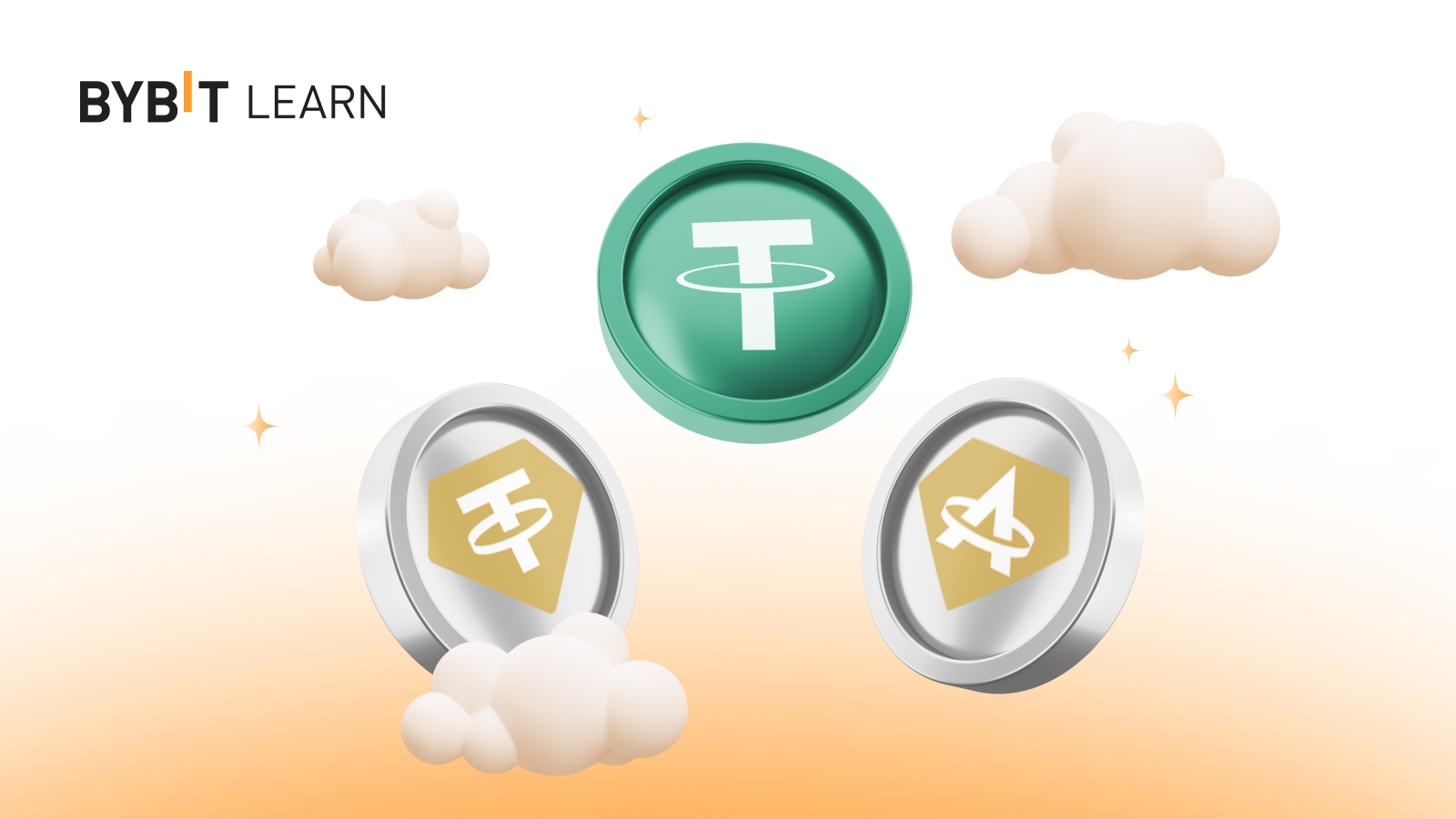
USDT vs. XAUt vs. aUSDT: A Look at Tether's Stablecoins
USDT, XAUt and aUSDT offer distinct advantages, depending upon whether you prioritize dollar stability, investment in gold or a combination of both.

Alloy by Tether (aUSDT): Tether’s Gold-Backed Synthetic Dollar
Alloy by Tether is a type of tethered asset linked to the Tether Gold stablecoin. Learn more about how it works in this article.
Mastering USDT: A Guide on How to Pay With Tether (USDT)
USDT offers a stable and efficient alternative to traditional currencies, making it ideal for both personal and business transactions in the digital space.
USDT vs. USDC: The battle for stablecoin supremacy
How to use USDT and USDC to enter and exit RWA positions — tokenized bonds, Treasuries and real estate — with a four-stage workflow and risk guide

First Digital USD (FDUSD): A Secure and Transparent Stablecoin
First Digital USD (FDUSD) is a secure and transparent stablecoin, now available on Ethereum, BNB Chain, and Sui,
Learn to get up to 80 USDT prize
Master crypto concepts, trade and earn from your expertise.

Your crypto growth roadmap
View All
Explorer
Lv.0
Practitioner
Lv.1
Specialist
Lv.2
Strategist
Lv.3