Muhammad_salaar
4276點贊0分享51粉絲5關注
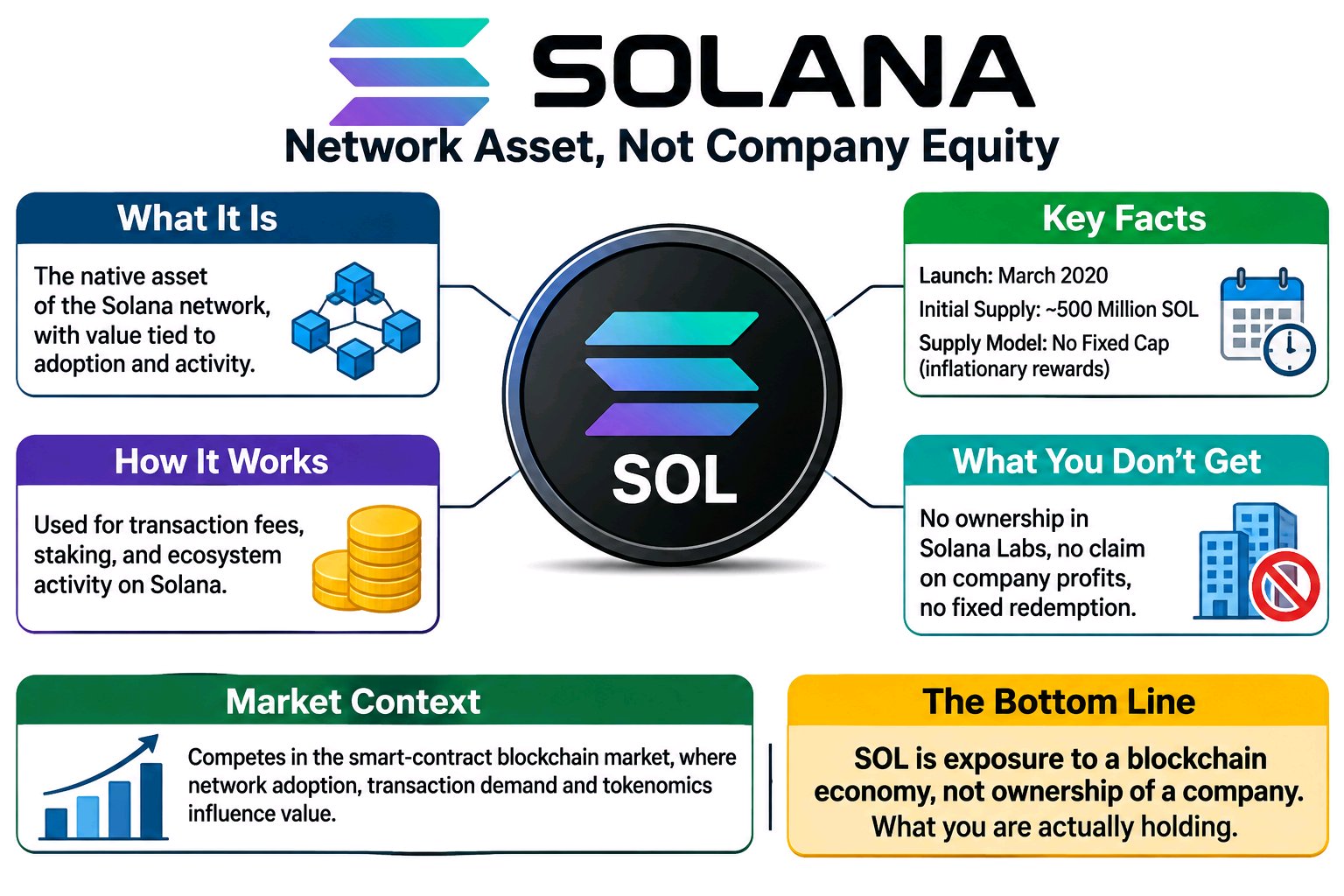
SOL may be treated as a bet on Solana's success, but it is neither company equity nor a dollar-pegged asset. It is the native asset of the Solana network, with its value tied to market demand, network activity, and its role in securing the blockchain. Solana launched in March 2020 with an initial supply of approximately 500 million SOL. Unlike Bitcoin, SOL does not have a fixed maximum supply; new tokens enter circulation through inflationary staking rewards, while transaction fees are partly burned. That distinction is easy to miss if you only read the headline. Holding SOL does not give you ownership of Solana Labs, a claim on company profits, or a guaranteed redemption value. It gives you exposure to a network asset used for transaction fees, staking, and economic activity across Solana's ecosystem. Staking can generate rewards, but those rewards come with inflation and validator-related considerations. The scale matters. Solana competes in the broader smart-contract blockchain market, where network adoption, transaction demand, competing ecosystems, token issuance, and market liquidity all influence the asset's value. A growing network does not automatically guarantee a rising SOL price, because network usage and token-holder returns are not the same thing. SOL is exposure to a blockchain economy, not ownership of a company. What matters is what you are actually holding. #ByXIMPACT$SOLUSDT
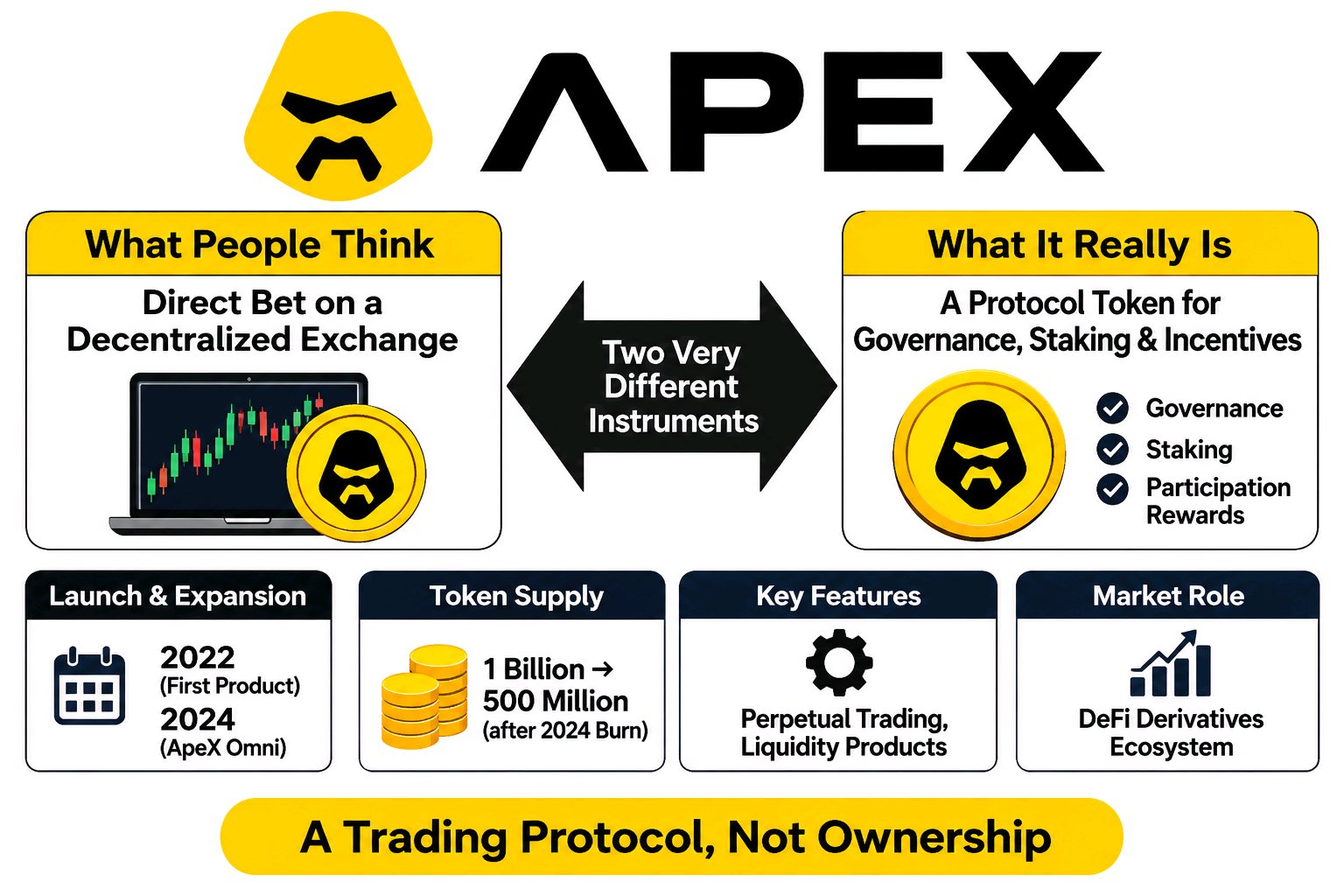
APEX 看起來可能像是對去中心化交易所的直接押注,但持有代幣並不等同於擁有該交易所或對其資產擁有索賠權。 ApeX Protocol 於 2022 年推出了其首款產品,隨後於 2024 年通過 ApeX Omni 進行了擴展。在 2024 年銷毀代幣後,其代幣供應量從 10 億枚減少至 5 億枚 APEX。 如果你只看標題,很容易忽略這一點。 APEX 是一種協議生態系統代幣,旨在用於治理、質押和參與激勵。持有者可以質押 APEX 以賺取獎勵並參與協議決策,但該代幣並不代表公司股權、對交易基礎設施的直接所有權,也不保證對交易所利潤的索賠權。其市場價格由供需、實用性和市場預期決定,而非固定的贖回價值。 規模很重要。ApeX 運營著一個包含永續合約市場、流動性產品及其他交易功能的去中心化衍生品交易生態系統。但交易所的規模並不自動轉化為每個代幣持有者相應的財務索賠權。 區別很簡單:接觸交易協議並不等於擁有該業務。APEX 代表的是對生態系統的參與,而非對其背後一切的所有權。 #ByXIMPACT $APEXUSDT
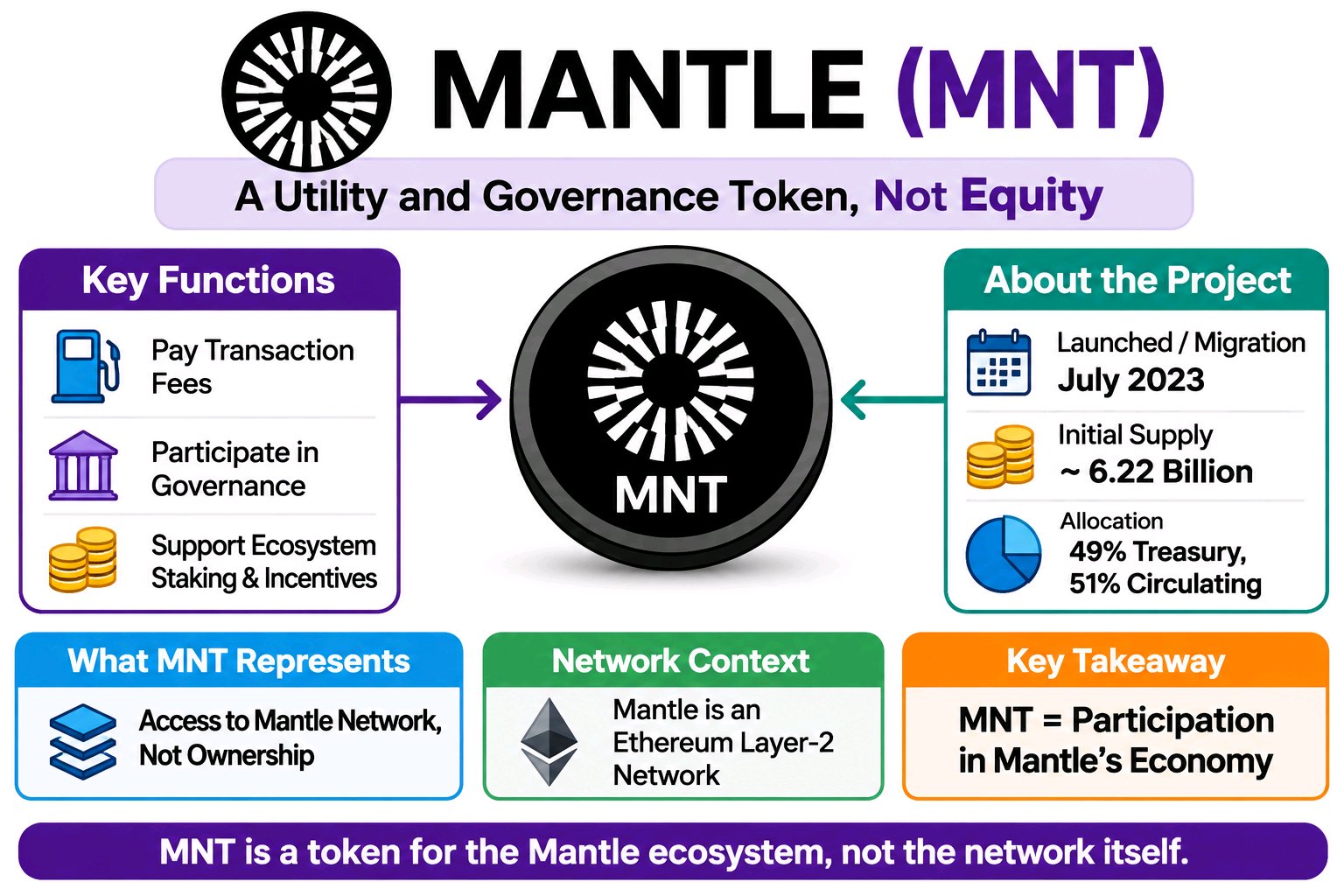
MNT may look like a direct bet on Mantle's entire ecosystem, but it is neither company equity nor a claim on network revenue. It is a utility and governance token whose value depends on demand for the Mantle ecosystem. MNT emerged from BitDAO's transition to Mantle, with the migration taking place in July 2023. Its initial total supply was approximately 6.22 billion tokens, with 49% allocated to the Mantle Treasury and 51% classified as circulating at the initial allocation snapshot. That distinction is easy to miss if you only read the headline. MNT has specific functions: paying transaction fees on Mantle Network, participating in governance, and supporting ecosystem staking and incentive mechanisms. Holders can participate in decisions about treasury allocations and ecosystem development, but holding MNT does not give them direct ownership of Mantle, a guaranteed share of profits, or a fixed redemption claim against treasury assets. The scale matters. Mantle operates as an Ethereum Layer-2 network, while MNT is the token used within its economic and governance structure. The network provides infrastructure for applications and transactions; the token provides access to specific functions and governance rights. These are related, but they are not the same financial exposure. MNT represents participation in Mantle's network economy, not ownership of the network itself. What matters is not the name, but what you are actually holding. #ByXIMPACT $MNTUSDT
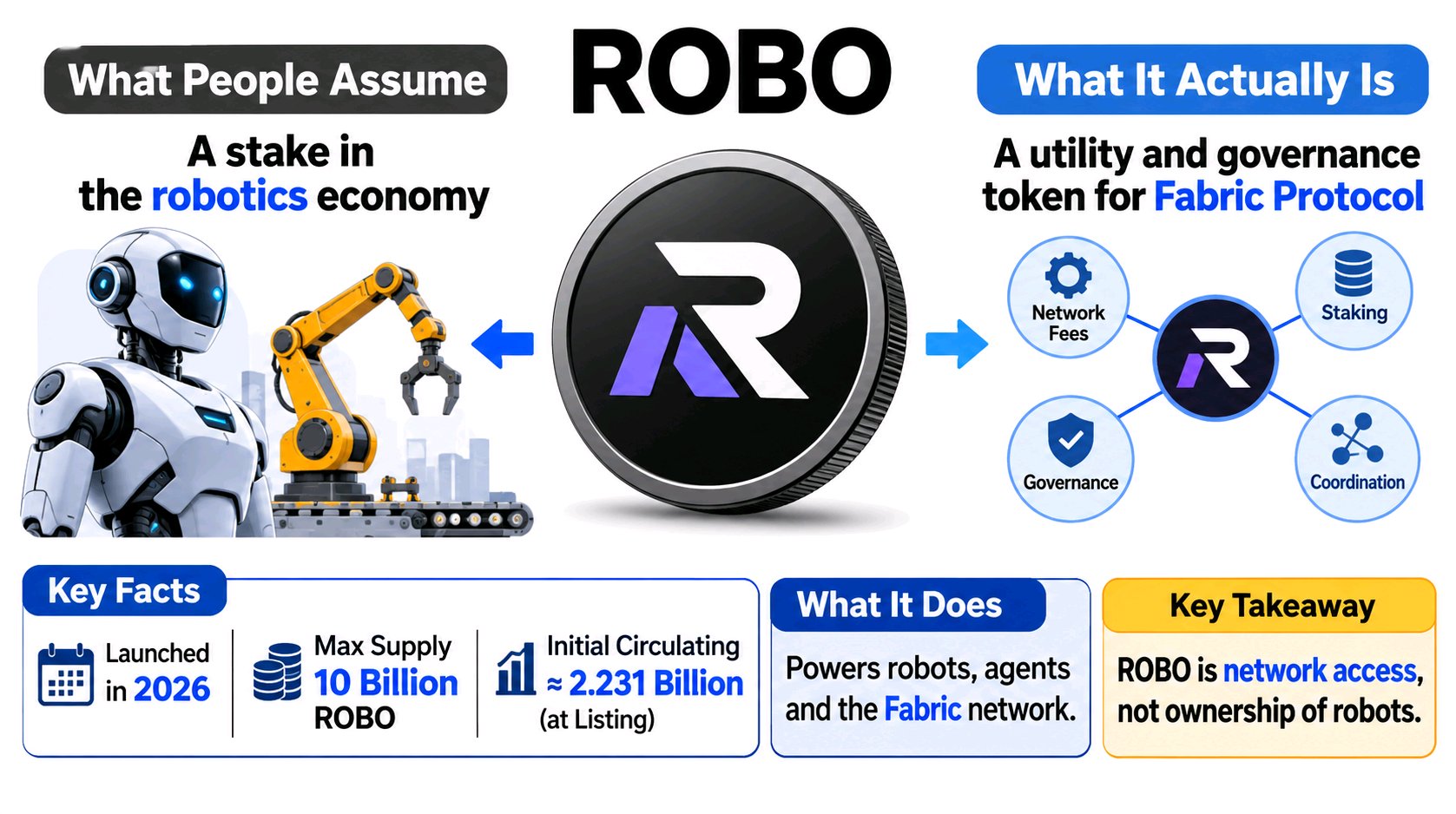
ROBO 看起來像是擁有機器人經濟成長果實的一種方式,但持有該代幣並不代表擁有機器人或其利潤。 這是一個根本性的區別:ROBO 是 Fabric Protocol 的功能型與治理代幣,而非對實體機器或其經濟產出的股權要求權。 ROBO 於 2026 年推出,最大供應量固定為 100 億枚。2026 年 3 月在交易所上市時,初始流通量約為 22.31 億枚。 如果只看標題,很容易忽略這個區別。 ROBO 的設計旨在為連接機器人、自主代理和開發者的基礎設施提供動力。它用於網路費用、營運保證金、質押、協調和治理。營運商可以質押代幣作為績效保證,而網路參與者則使用 ROBO 來存取服務並協調機器活動。 但它並不提供對機器人硬體、公司股權、股息或底層資產的自動索取權。其經濟風險敞口來自於對 Fabric 網路服務和參與機制的需求,而非對機器人產業的直接所有權。 100 億枚的代幣供應量也為其規模提供了參考:這是一種網路功能型資產,其價值取決於採用率、使用量、代幣需求以及流通供應動態。它不是一籃子機器人,也不是對其生產力的保證索取權。 ROBO 代表的是進入機器人經濟基礎設施的權限,而非擁有機器人本身。真正重要的是你手中持有的究竟是什麼。 #ByXIMPACT$ROBOUSDT
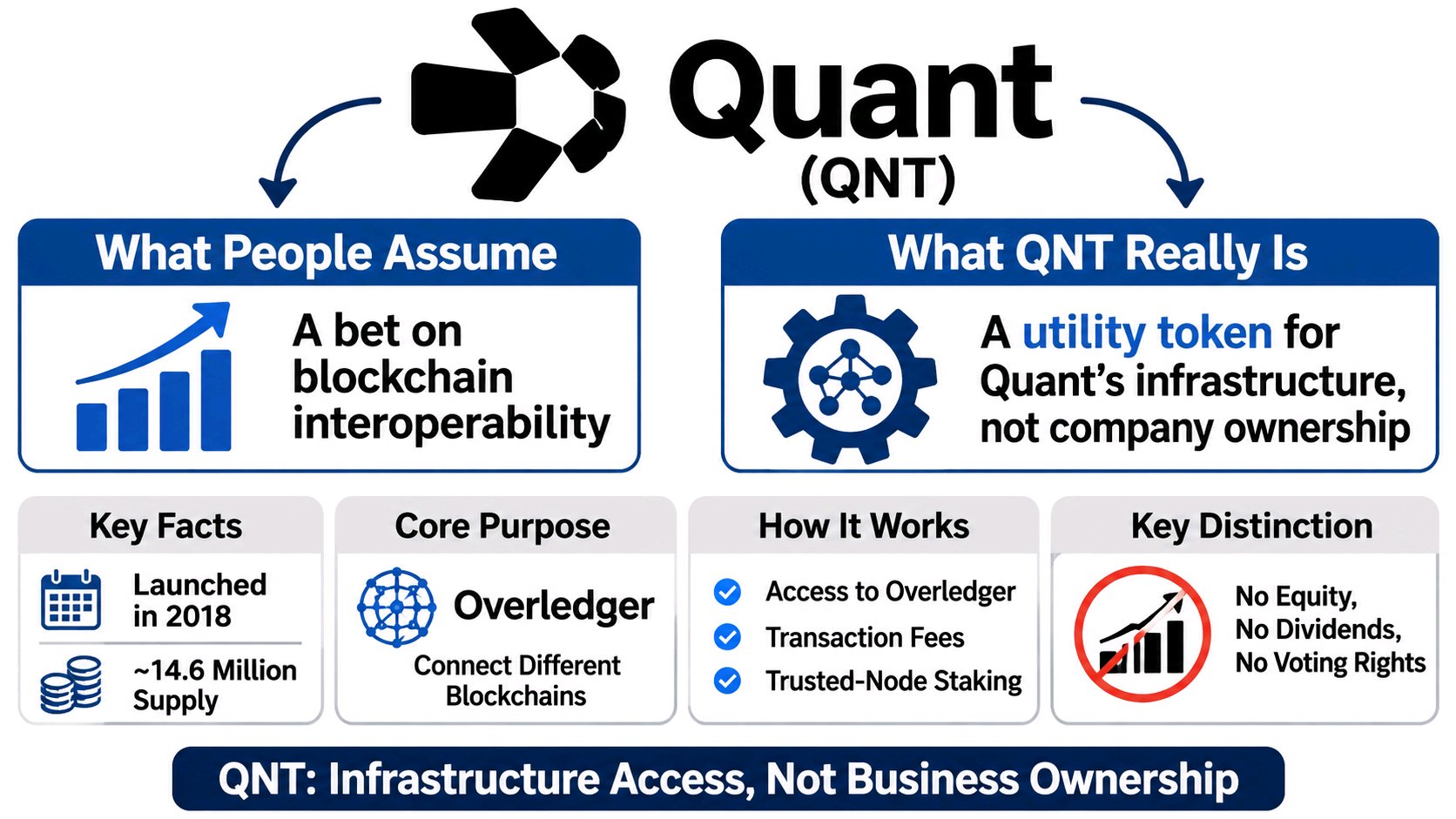
QNT may look like a bet on blockchain interoperability, but it is neither ownership in Quant Network nor a direct claim on institutional revenue. The difference is simple: QNT is a utility token designed to provide access to Quant’s infrastructure, not equity in the company. Launched in 2018 as an Ethereum-based ERC-20 token, QNT underwent a major burn of approximately 9.55 million tokens in September 2018, leaving a reported supply of 14.61 million. Its primary ecosystem revolves around Overledger, Quant’s technology for connecting different blockchains and existing financial systems. That distinction is easy to miss if you only read the headline. QNT is used for Overledger licensing and service access, while its expanding Fusion infrastructure introduces additional roles involving transaction fees and trusted-node staking. Holding QNT does not automatically give investors ownership of Quant Network, dividends, voting rights, or a claim on enterprise contracts. The scale makes this distinction important. With roughly 14.6 million tokens in its reported supply, QNT has a relatively limited token base compared with many large-cap crypto assets. But limited supply alone does not guarantee institutional adoption or create a direct link between company revenue and tokenholder returns. QNT represents access to Quant’s infrastructure, not ownership of the business behind it. The real distinction is what you are actually holding. #ByXIMPACT $QNTUSDT
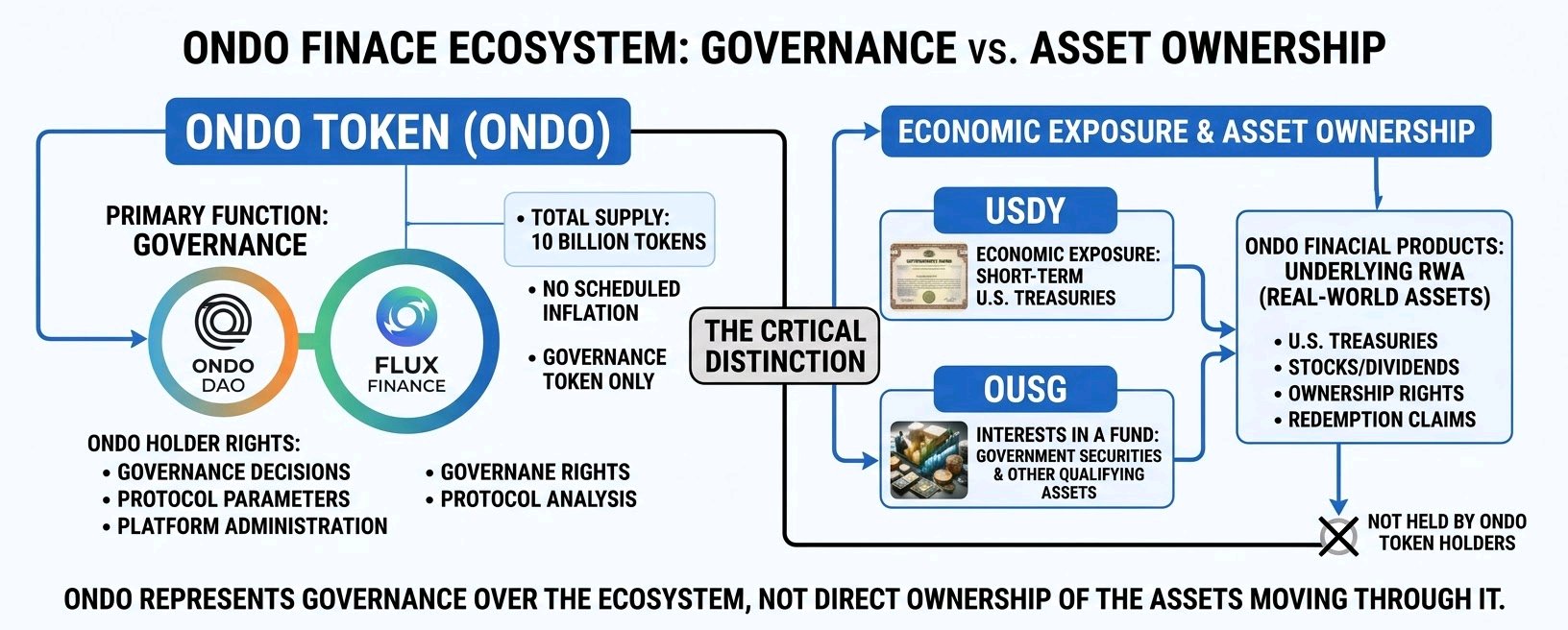
ONDO 看起來可能像是直接押注代幣化的美國國債和現實世界資產 (RWA),但持有 ONDO 並不代表擁有這些資產。治理生態系統與獲得產品的經濟回報之間存在區別。 ONDO 發行時的初始供應量為 **100 億枚代幣**。它作為 Ondo DAO 和 Flux Finance 的治理代幣,目前的代幣設計中沒有設定通膨計劃。 如果只看標題,很容易忽略這個區別。 ONDO 持有者參與治理決策,包括協議參數和平台管理。他們不會自動獲得國債收益、股票股息、所有權或 Ondo 底層金融產品的贖回權。 這些風險敞口屬於不同的工具,例如 USDY 和 OUSG。USDY 提供對短期美國國債的經濟敞口,而 OUSG 代表投資於短期政府證券和其他合格資產的基金權益。 規模差異很重要。Ondo 的生態系統將區塊鏈基礎設施與價值數十億美元的現實世界資產市場連接起來,但這些金融產品內持有的價值與 ONDO 本身所代表的價值並非同一回事。 **ONDO 代表對生態系統的治理權,而不是對流經該生態系統資產的直接所有權。** 區別不在於 Ondo 這個名字。區別在於你實際持有的是什麼。 $ONDOUSDT #ByXIMPACT
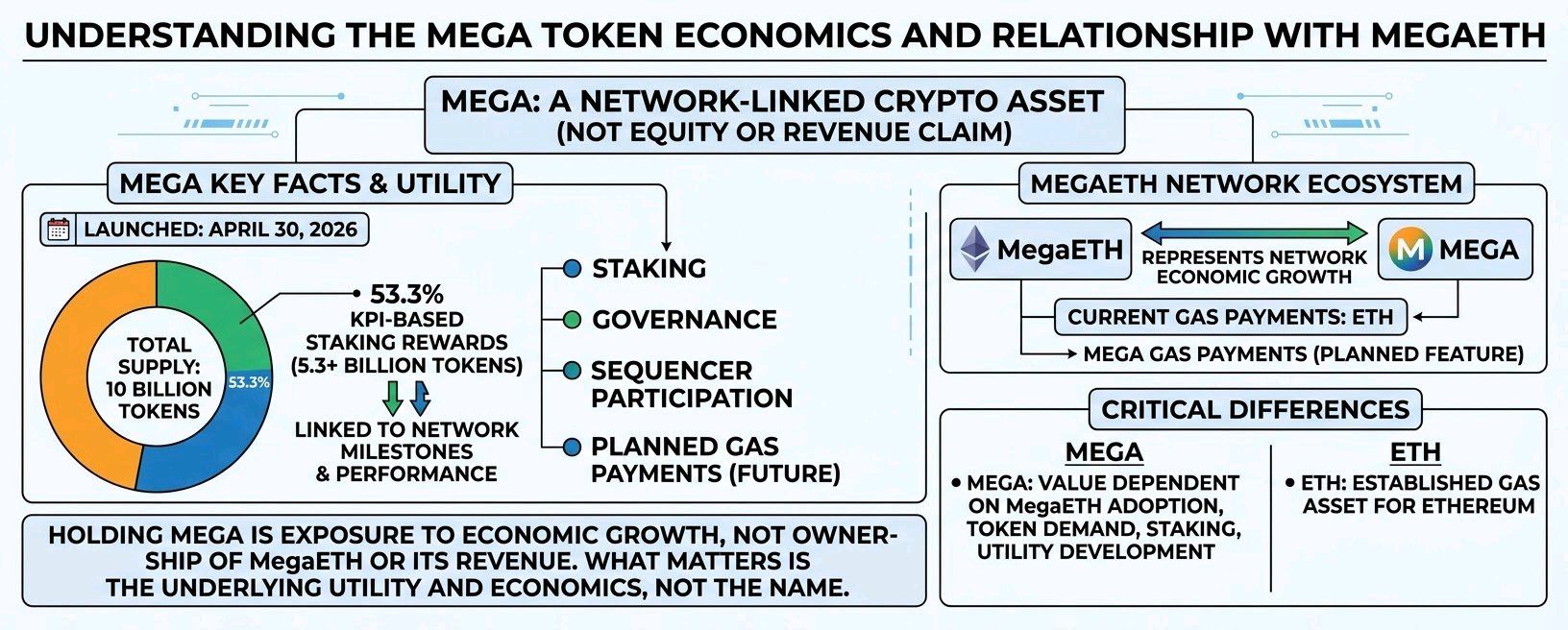
MEGA 看起來像是對以太坊下一代擴容革命的直接押注,但持有 MEGA 與擁有 MegaETH 的股份或其收益權並不相同。 MEGA 於 2026 年 4 月 30 日推出,總供應量固定為 100 億枚代幣。它最獨特之處在於,53.3% 的供應量分配給了基於 KPI 的質押獎勵,隨著網路達成特定的性能與生態系統里程碑而釋放。 如果只看標題,很容易忽略這個區別。 MEGA 是一種與網路掛鉤的加密資產,而非股權憑證、美元掛鉤代幣或對底層資產的可贖回索賠權。其預期用途包括質押、治理、排序器(sequencer)參與以及未來的 Gas 費用支付。然而,目前的交易手續費使用的是 ETH,而 MEGA 用於支付 Gas 費用的功能仍處於規劃階段。 這種供應結構使得上述區別顯得更加重要。超過 53 億枚代幣保留用於基於里程碑的獎勵,這意味著未來的代幣供應分發是與網路進展掛鉤的,而不是簡單地遵循傳統的按時間表解鎖機制。 與已經作為以太坊主要 Gas 資產的 ETH 不同,MEGA 的經濟價值取決於 MegaETH 的採用率、代幣需求、質押參與度以及其計劃中的實用功能發展得如何。 MEGA 代表的是對網路經濟成長的敞口,而非對網路本身的所有權。重要的不是名稱,而是你實際持有的是什麼。#ByXIMPACT $MEGAUSDT
SOL 或許可以被描述為對 Solana 的一種押注,但它既不是公司股權,也不是與美元掛鉤的資產。其價格取決於市場對該網路原生代幣的需求,而非固定的贖回價值。 Solana 於 2020 年 3 月啟動了主網 Beta 版,初始代幣供應量約為 5 億枚 SOL。與固定供應資產不同,SOL 採用通貨膨脹發行模式,新發行的代幣用於支持質押獎勵。 如果你只看標題,很容易忽略這個區別。 持有 SOL 並不意味著擁有 Solana Labs 的股份、要求其利潤或有權將代幣兌換為美元。SOL 是 Solana 區塊鏈的原生資產。它用於支付交易費用、參與質押並支持網路的經濟安全。 其規模使得這種區別顯得尤為重要:Solana 是一條主要的智慧合約區塊鏈,在支付、DeFi、交易和應用程式等領域競爭活動。SOL 的經濟曝險與網路的採用率、代幣需求、質押參與度和變動的供應量掛鉤,而非對公司的所有權或保證的美元價值。最初的 5 億枚代幣也與永久固定供應有根本上的不同,因為協議發行仍在持續,而費用銷毀機制則抵消了部分發行量。GitHub +1 SOL 是對區塊鏈經濟的曝險,而非對其背後公司的所有權。重要的是你實際持有的究竟是什麼。 #ByXIMPACT $SOLUSDT
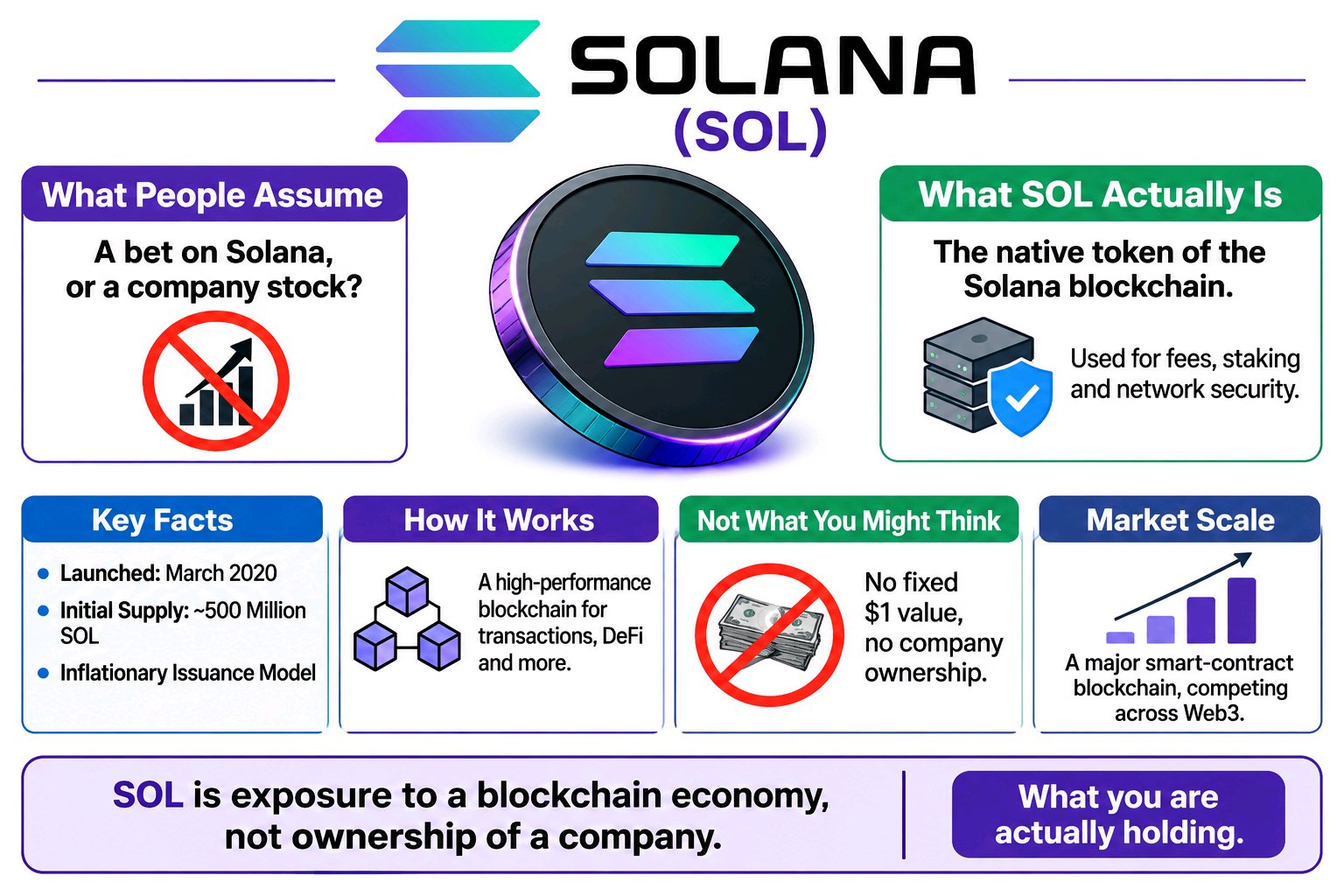
NEAR 看起來可能像是對以 AI 為重點的區塊鏈成長的一場賭注,但它實際上是一種與 NEAR Protocol 經濟活動直接相關的網路實用代幣。 NEAR 於 2020 年 4 月 22 日啟動主網,創世時共發行了 10 億枚代幣。其代幣經濟學此後不斷演進,2026 年 2 月的升級將年度最高發行量從 5% 削減至 2.5%。 如果只看標題,很容易忽略這個區別。 NEAR 並非公司股權、與美元掛鉤的穩定幣,也不是對網路資產的直接索取權。它是用於交易手續費、儲存、質押和治理的原生代幣。驗證節點透過質押 NEAR 來協助確保網路安全,而協議發行則為網路安全提供資金。交易手續費會部分銷毀,從而抵銷新的發行量。 重要的區別在於 NEAR 的供應量並非固定。其經濟機制取決於發行量、質押需求、網路使用量、費用銷毀以及協議從其應用程式中獲取價值的能力。即使採用率不斷提高,也不保證代幣會自動升值。 與旨在維持固定價格的穩定幣不同,NEAR 作為一種波動性的網路資產進行交易,其市場價值反映了對未來效用和需求的預期。 NEAR 並非區塊鏈公司的所有權;透過你所持有的代幣,你獲得的是該網路經濟活動的曝險。 #ByXIMPACT $NEARUSDT
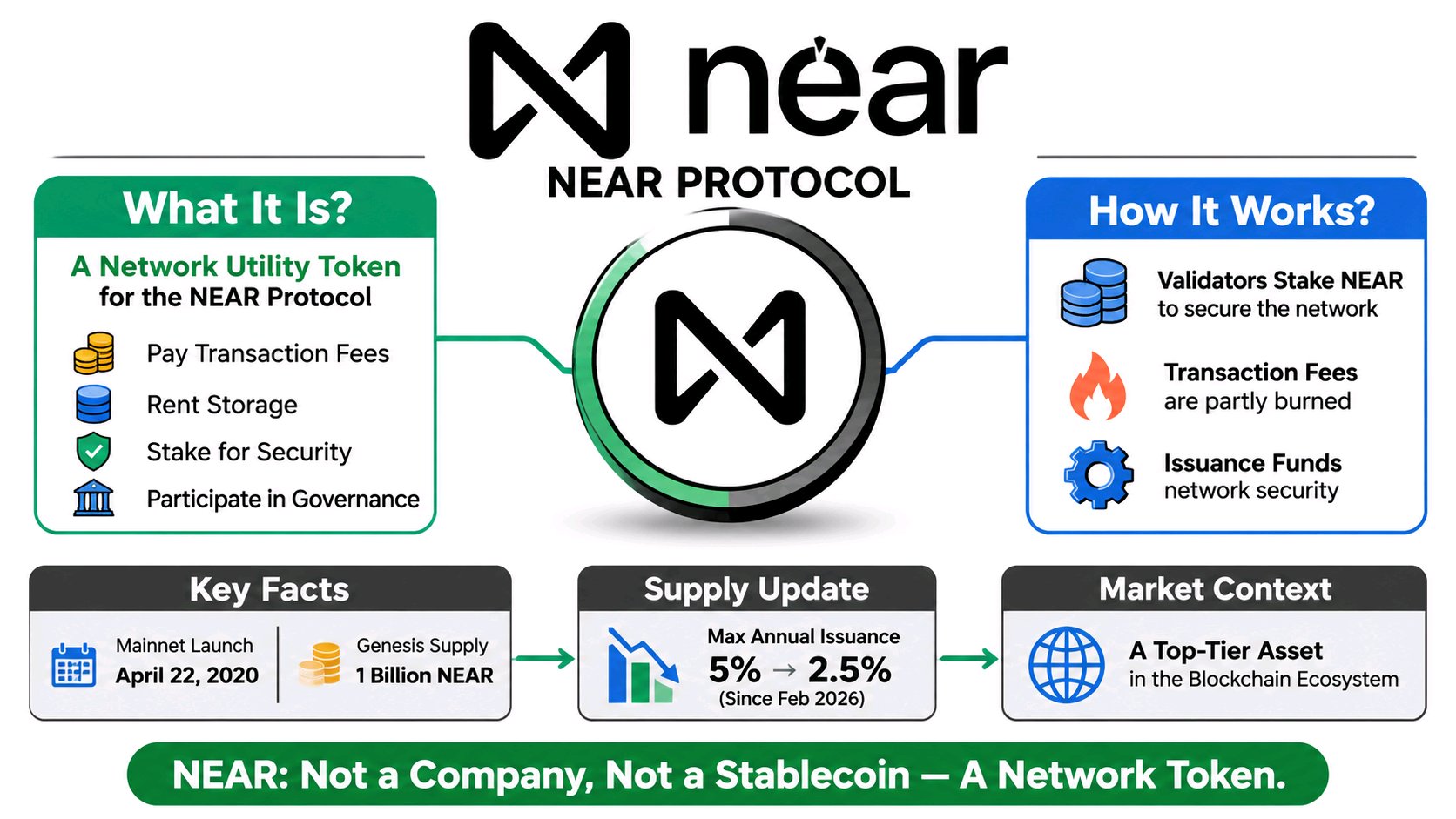
NYM 看起來可能像是一種旨在隱藏交易的隱私幣,但實際上它是驅動去中心化網路隱私的實用代幣 (utility token)。 NYM 於 2022 年 2 月在 Nyx 區塊鏈上發布,初始供應量固定為 10 億枚。其設計初衷是獎勵網路運營商、支援質押,並促進對 Nym 隱私基礎設施的存取。Nym +1 如果只看標題,很容易忽略這項區別。 NYM 不代表 Nym Technologies 的所有權、公司利潤索取權,也不是與美元掛鉤的資產。其經濟角色源於網路參與:用戶可以用 NYM 交換隱私存取憑證,節點運營商因傳輸流量而獲得獎勵,持有者則可以將代幣委託給節點以建立信譽並賺取部分獎勵。Nym +1 規模至關重要。10 億枚的代幣供應量支援的是一個基礎設施經濟,而非傳統的隱私貨幣模型。NYM 的價值與對網路服務的需求、質押參與度、代幣分配以及獎勵運營商的經濟機制掛鉤。該代幣背後沒有任何固定美元贖回的承諾。Nym 文件 +1 「隱私」標籤描述的是該網路。真正重要的是你所持有的代幣其實際用途與經濟曝險。 $NYMUSDT #ByXIMPACT
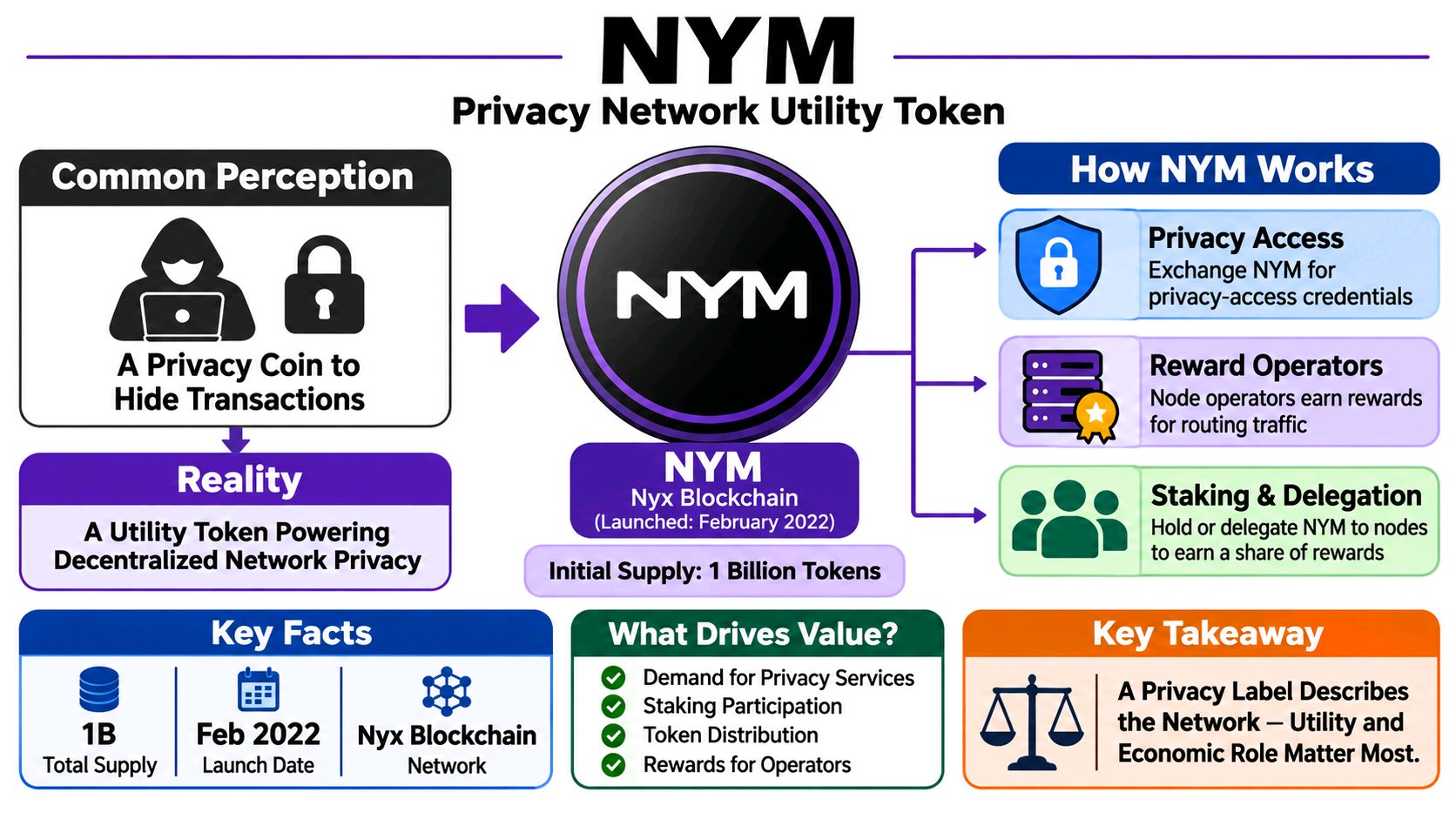
NIGHT may look like another privacy coin, but it is not designed to hide its own market value or represent a claim on private assets. It is the native capital and governance token of Midnight, with a separate resource called DUST handling network operations. Launched in December 2025 with a fixed total supply of 24 billion tokens, NIGHT was initially issued on Cardano. More than 4.5 billion tokens were claimed through the Glacier Drop and Scavenger Mine distribution phases. That distinction is easy to miss if you only read the headline. NIGHT is not a privacy-based stablecoin, a dollar-pegged asset, or a direct claim on underlying collateral. Holding NIGHT generates DUST, a non-transferable resource used to pay for transactions and execute smart contracts. Each NIGHT can generate up to 5 DUST over seven days. NIGHT also carries governance and long-term network participation functions. The economic separation matters. NIGHT represents the capital and governance side of the ecosystem, while DUST represents operational capacity. Its 24 billion token supply and phased community distribution make it a network asset rather than a conventional payment token. Community allocations also follow a scheduled unlocking process, not a fixed-value redemption promise. NIGHT is exposure to Midnight's network economics, not ownership of a private dollar reserve. The distinction is what you are actually holding. Sources: Midnight Network +3 #ByXIMPACT$NIGHTUSDT
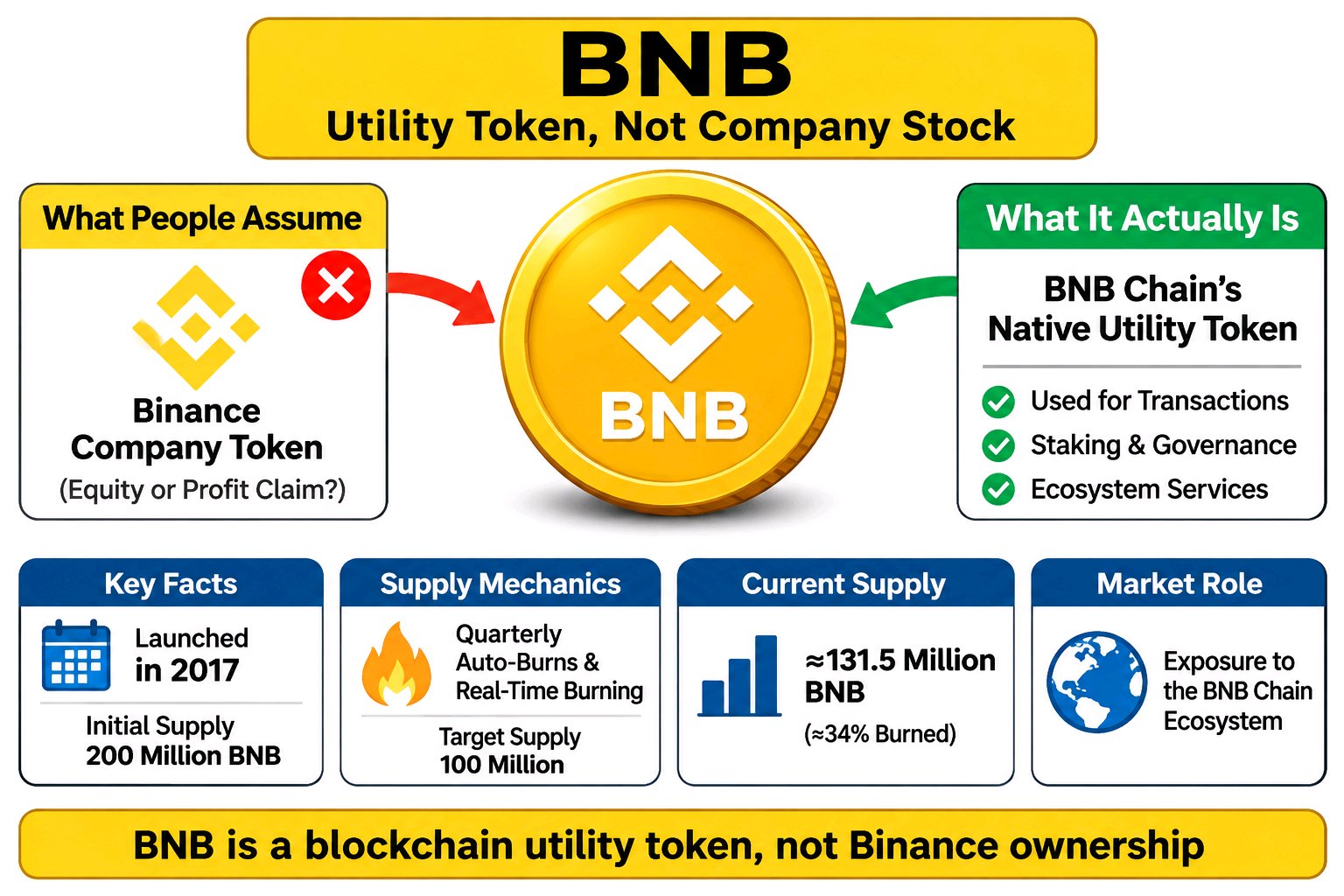
BNB may look like Binance's company token, but it is neither company stock nor a claim on Binance's profits. It is the native utility asset of the BNB Chain ecosystem, with its own market-driven price and declining supply mechanics. Launched in 2017 with an initial supply of 200 million BNB, the token was distributed through an ICO, founding allocations, and investor allocations. Its long-term supply target is 100 million tokens, supported by quarterly Auto-Burns and real-time gas-fee burning. SEC +2 That distinction is easy to miss if you only read the headline. Holding BNB does not give you equity in Binance, ownership of its assets, or a contractual right to its revenue. Instead, it provides exposure to the BNB ecosystem through transaction fees, staking, governance participation, and other network utilities. Its price depends on market demand, ecosystem activity, and supply dynamics. The scale matters: the original 200 million supply had fallen to approximately 131.5 million BNB after the 37th quarterly burn in October 2026. That is roughly 34% removed from the original supply. But burning tokens does not guarantee price appreciation, and a shrinking supply is not the same as a corporate profit claim. BNB Chain Blog +1 BNB is exposure to a blockchain ecosystem, not ownership of Binance. What matters is what you are actually holding. #ByXIMPACT $BNBUSDT
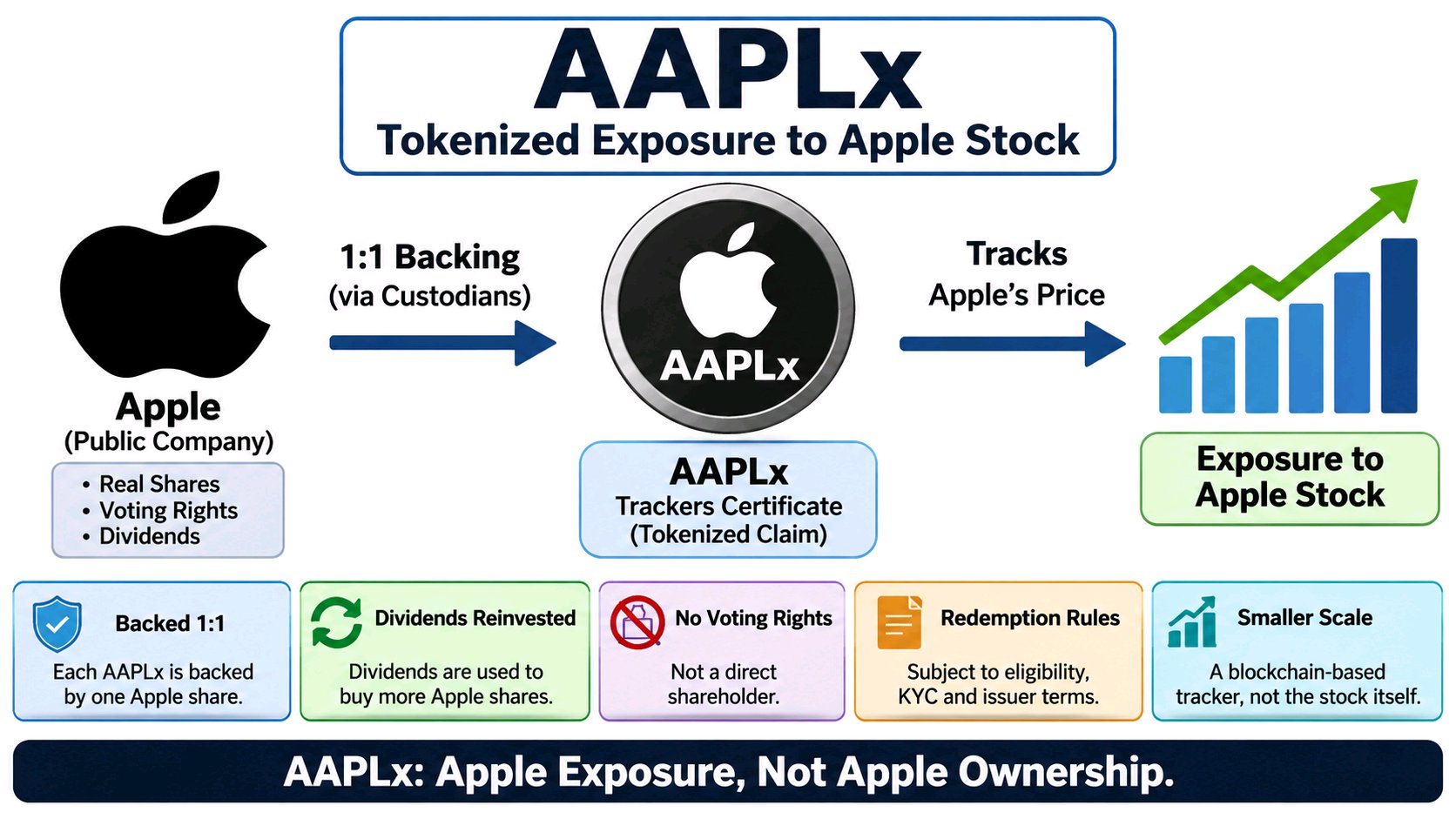
AAPLx 看起來像是持有區塊鏈上的蘋果股票,但它實際上是一種追蹤蘋果股價的代幣化金融債權,而非直接的股權所有權。 AAPLx 於 2025 年 6 月 10 日透過 Backed Assets (JE) Limited 發行,旨在代表對一股蘋果股票的經濟曝險,並由受監管的託管機構持有的標的蘋果股票以 1:1 進行擔保。<Cite refs={["turn772448search0","turn772448search1"]}/> 如果只看標題,很容易忽略這個區別。 AAPLx 的架構為追蹤憑證。其價值追隨蘋果股票,而股息會被再投資於額外的標的股票中,並透過代幣調整來反映。持有者不會獲得直接的股東投票權,也不會成為蘋果公司的登記股東。贖回須符合資格要求、身分驗證、最低金額限制以及發行方條款。<Cite refs={["turn772448search12","turn772448search0","turn772448search7"]}/> 規模差異至關重要。蘋果是一家擁有龐大傳統股票市場的上市公司,而 AAPLx 代表的是該市場中規模相對較小、基於區塊鏈的曝險層。其代幣供應量和贖回結構並不等同於直接持有蘋果股票。 AAPLx 將蘋果的曝險放到了鏈上,而非將蘋果的實際所有權交到您手中。 $AAPLXUSDT #ByXIMPACT
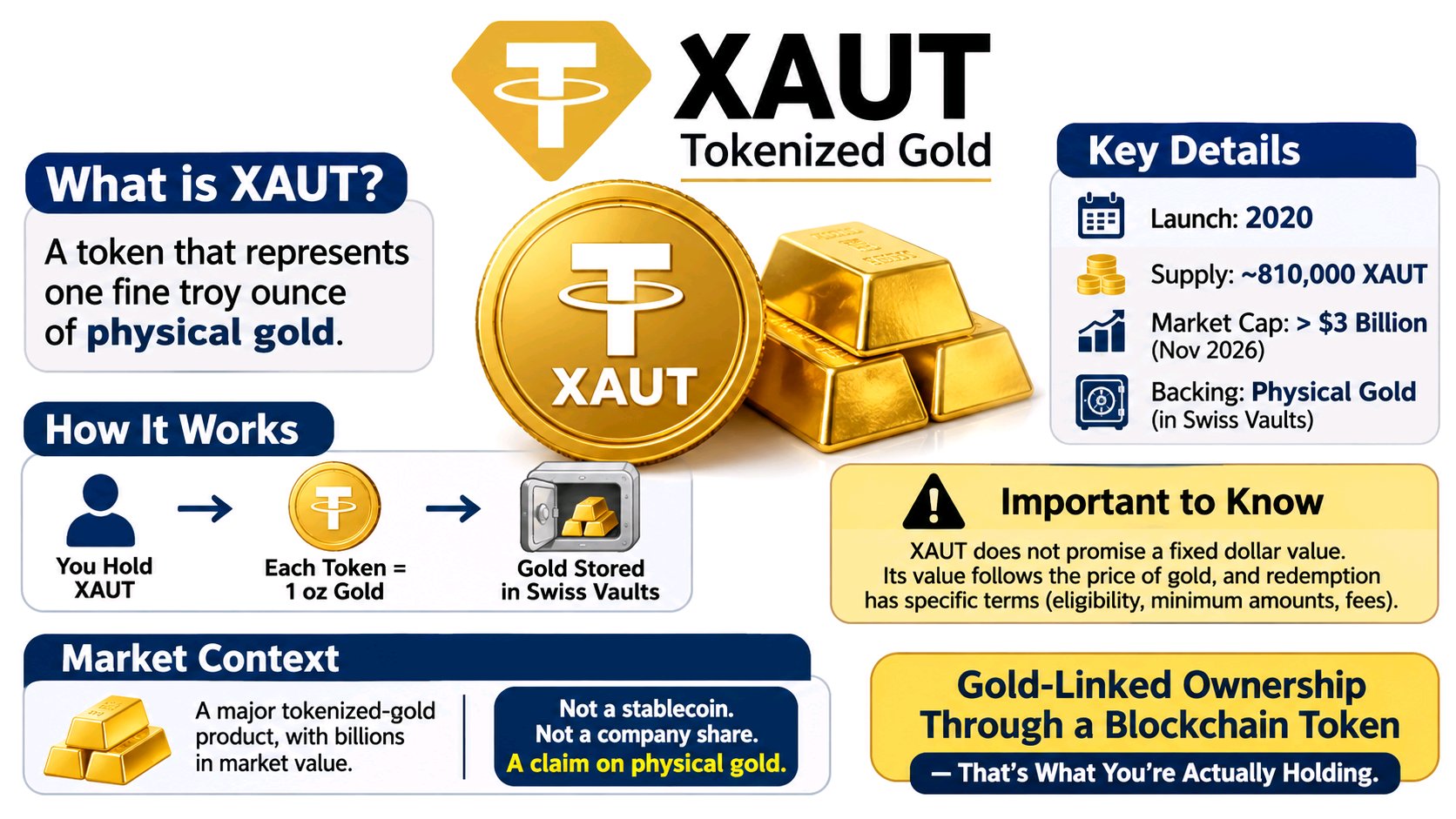
XAUT may look like another cryptocurrency that tracks gold, but it represents a claim to physical gold exposure rather than a dollar peg or ownership of a crypto company. Launched in 2020 by Tether, XAUT is designed so that each token represents one fine troy ounce of physical gold held in Swiss vaults. Its supply expands and contracts with token issuance and redemption. That distinction is easy to miss if you only read the headline. XAUT does not promise a fixed dollar value. Its economic value follows the market price of gold, while the holder's ability to redeem physical gold depends on Tether's eligibility requirements, minimum amounts, fees, and redemption terms. At roughly 810,000 circulating tokens and a market capitalization above $3 billion in November 2026, XAUT has become a significant tokenized-gold product. But its scale does not make it equivalent to holding freely accessible bullion. CoinGecko +1 The distinction is simple: gold-linked ownership exposure through a blockchain token is not the same as physically holding and controlling gold. XAUT is ultimately about what you are actually holding. #ByXIMPACT $XAUTUSDT
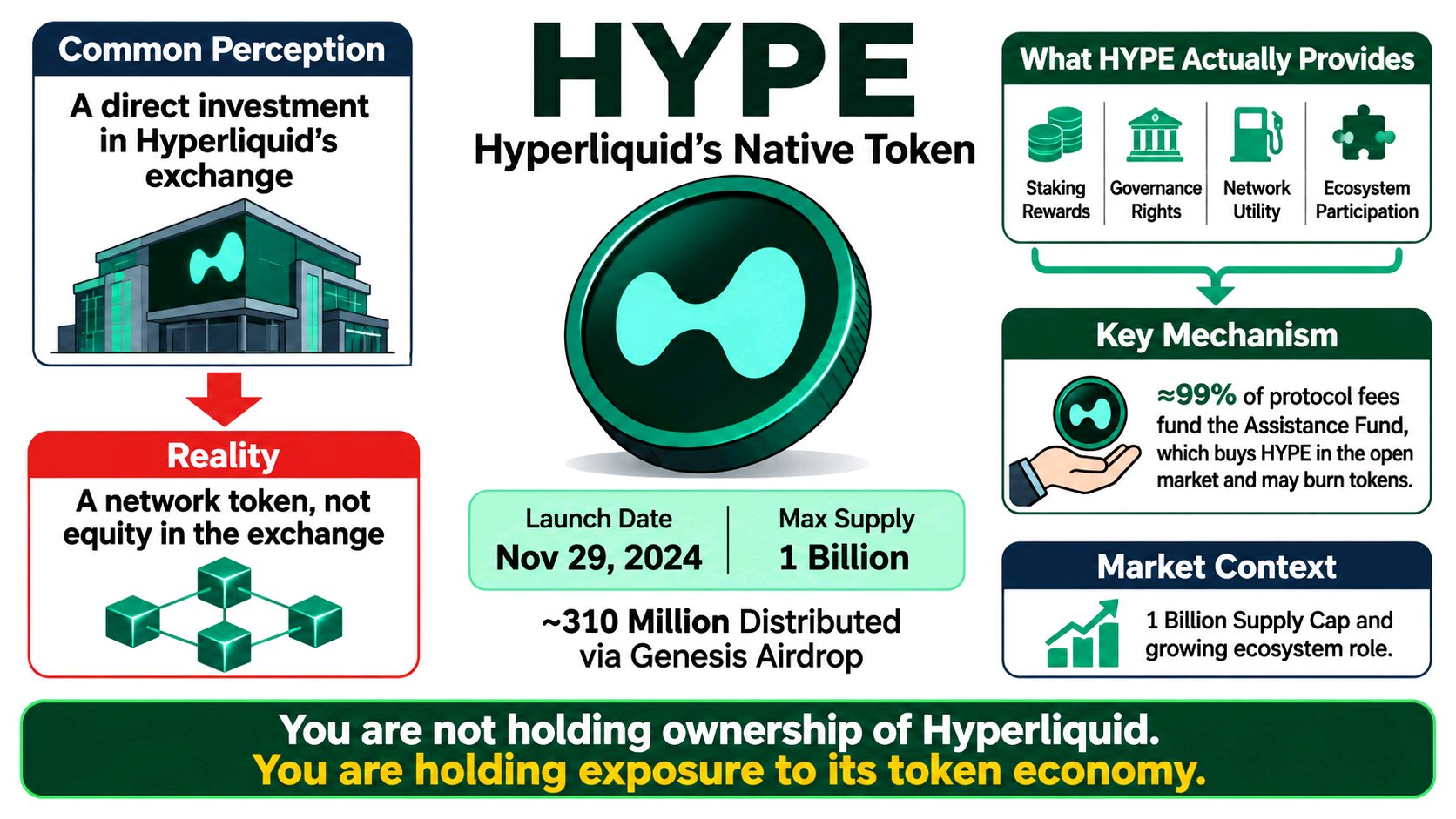
HYPE 看起來可能像是對 Hyperliquid 交易所的直接投資,但實際上它是一種網路代幣,其價值取決於市場需求、協議活動和代幣經濟學。 HYPE 於 2024 年 11 月 29 日推出,最大供應量為 10 億枚,其中約 3.1 億枚透過創世空投分配給早期用戶。 如果你只看標題,很容易忽略這個區別。 持有 HYPE 並不代表擁有 Hyperliquid 的股份,也不代表對其收益擁有直接的法律索償權。該代幣提供質押、治理、網路費用實用性以及生態系統參與功能。其經濟敞口來自於對代幣的需求,以及將協議活動與代幣購買連結起來的機制。 其中一個重要機制是「援助基金」(Assistance Fund)。大約 99% 的協議費用會分配給該基金,用於在公開市場購買 HYPE,所獲取的代幣可能會被銷毀。這在交易所活動與代幣需求之間建立了聯繫,但它並不保證價格上漲,也不賦予持有人直接獲得股息的權利。 隨著 10 億枚代幣的供應上限以及在 Hyperliquid 交易和區塊鏈基礎設施中日益增長的作用,HYPE 不僅僅是一種與交易所相關的投機資產。但它也不是交易所的股權。 你持有的並非 Hyperliquid 的所有權。你持有的是對其代幣經濟的曝險。 #ByXIMPACT
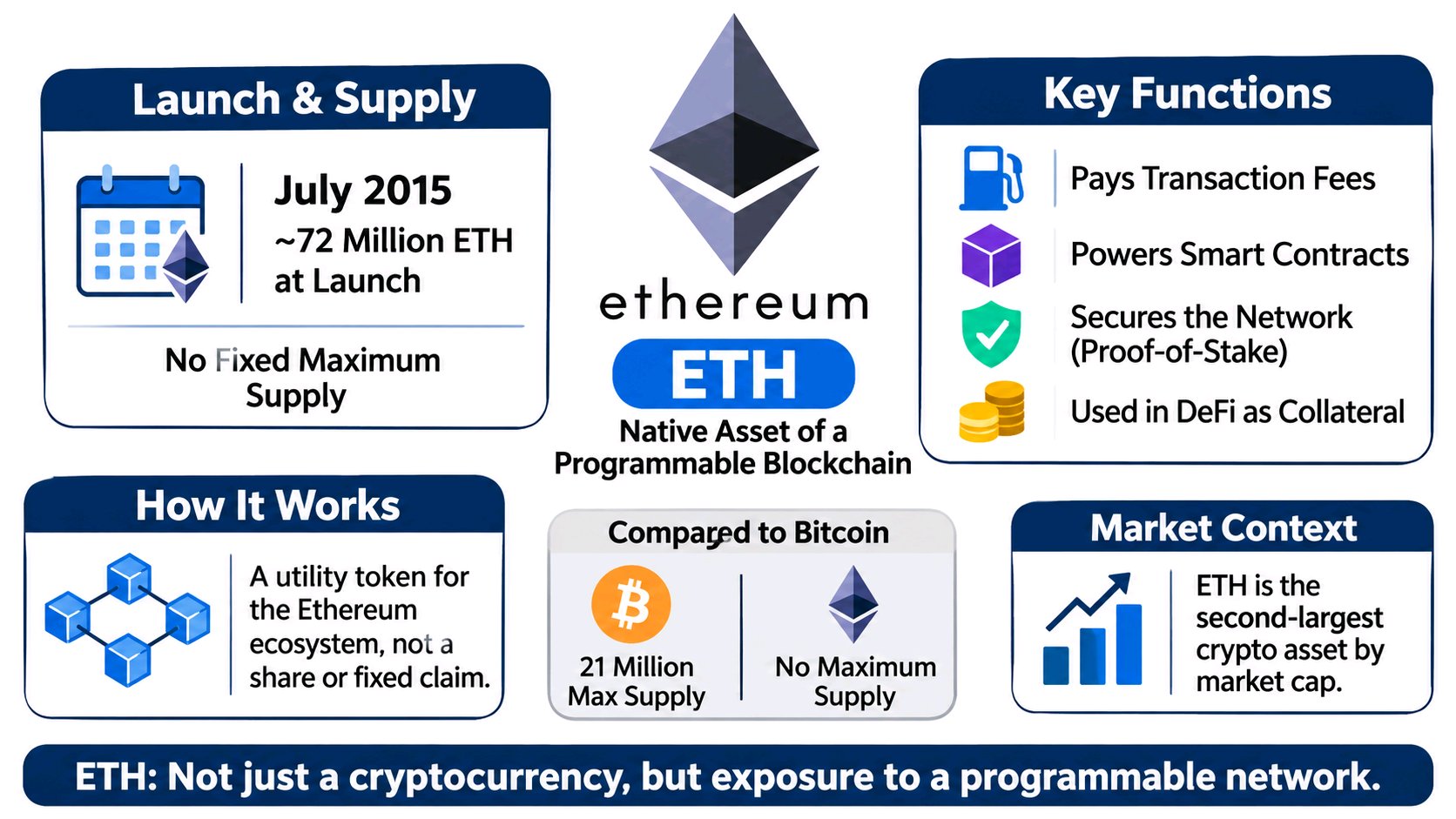
Ethereum may be described as another cryptocurrency competing with Bitcoin, but ETH is fundamentally different: it is the native asset of a programmable blockchain, not a claim on a company or a fixed-value asset. Ethereum launched in July 2015 with an initial supply of approximately 72 million ETH. Unlike Bitcoin’s fixed 21 million supply cap, ETH has no permanent maximum supply. That distinction is easy to miss if you only read the headline. ETH serves multiple economic functions within Ethereum. It pays transaction fees, powers smart-contract execution, secures the network through staking, and acts as collateral across decentralized finance. Since Ethereum introduced proof-of-stake in September 2022, validators have staked ETH to help secure the network and earn rewards. Meanwhile, transaction-fee burning can remove ETH from circulation, meaning supply changes through both issuance and destruction. The important difference is that ETH's economic exposure comes from demand for blockspace, network security, staking, and its role as an asset within the Ethereum ecosystem. It does not provide shareholders' rights, guaranteed income, or a fixed redemption value. Its supply dynamics also differ significantly from Bitcoin's predetermined issuance schedule. ETH is not simply a bet on a cryptocurrency price; it is exposure to the economic activity and security of a blockchain network. What matters is not just the name, but what you are actually holding. #ByXIMPACT $ETHUSDT
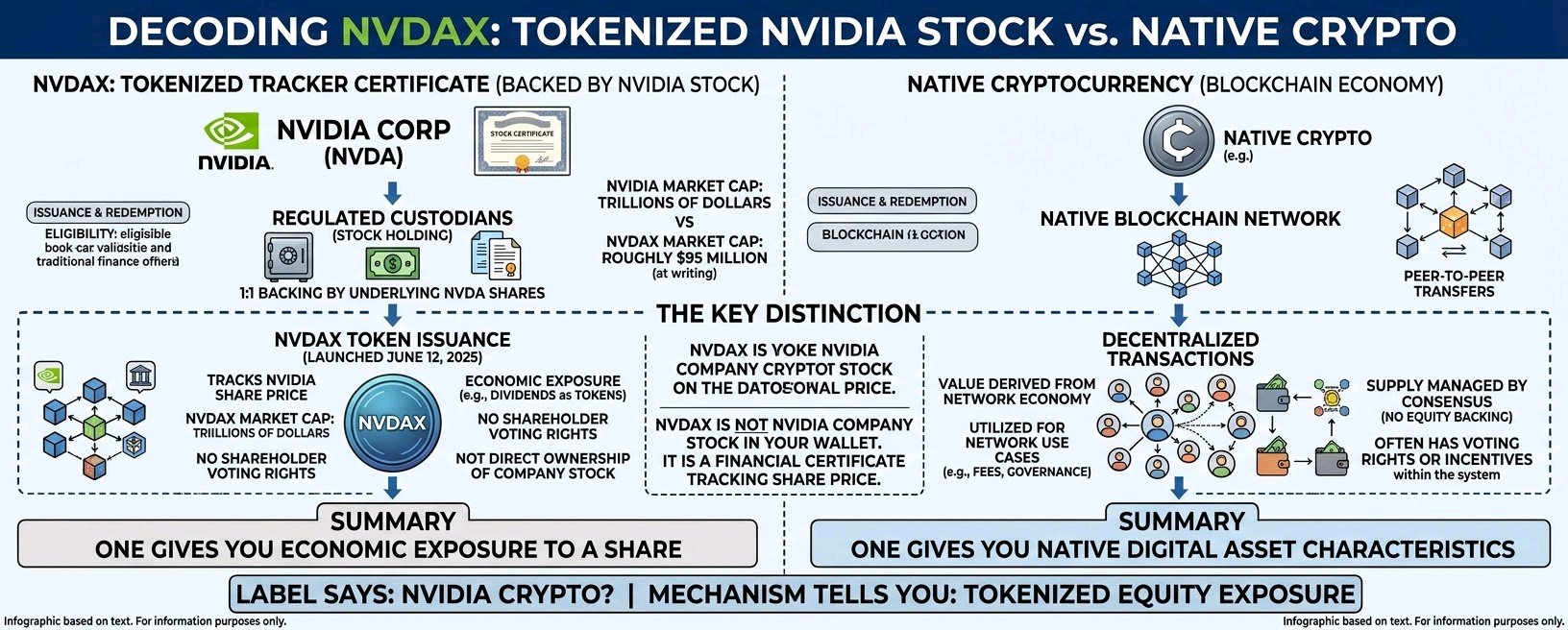
NVDAX may look like an NVIDIA cryptocurrency, but its value comes from NVIDIA stock, not from a native blockchain economy. Launched on June 12, 2025, NVIDIA xStock is issued as a tokenized tracker certificate. Each NVDAX represents economic exposure to one NVIDIA share and is backed 1:1 by the underlying stock held through regulated custodians. That distinction is easy to miss if you only read the headline. NVDAX is not NVIDIA company stock in your wallet. It is a financial certificate designed to track NVIDIA's share price. Holders receive economic exposure, including dividend value reflected through additional tokens, but do not receive shareholder voting rights or direct ownership of the underlying shares. Issuance and redemption operate under eligibility requirements and product terms, rather than unrestricted conversion. The scale difference matters. NVIDIA is a major publicly traded company with a market valuation measured in trillions of dollars, while NVDAX represents a much smaller tokenized market, with roughly $95 million in reported market capitalization at the time of writing. It brings traditional equity exposure onto blockchain networks without turning that exposure into a native NVIDIA cryptocurrency. One gives you ownership of a share through traditional equity markets; the other gives you tokenized economic exposure to that share. The label says NVIDIA crypto. The mechanism tells you what you are actually holding. #ByXIMPACT$NVDAXUSDT
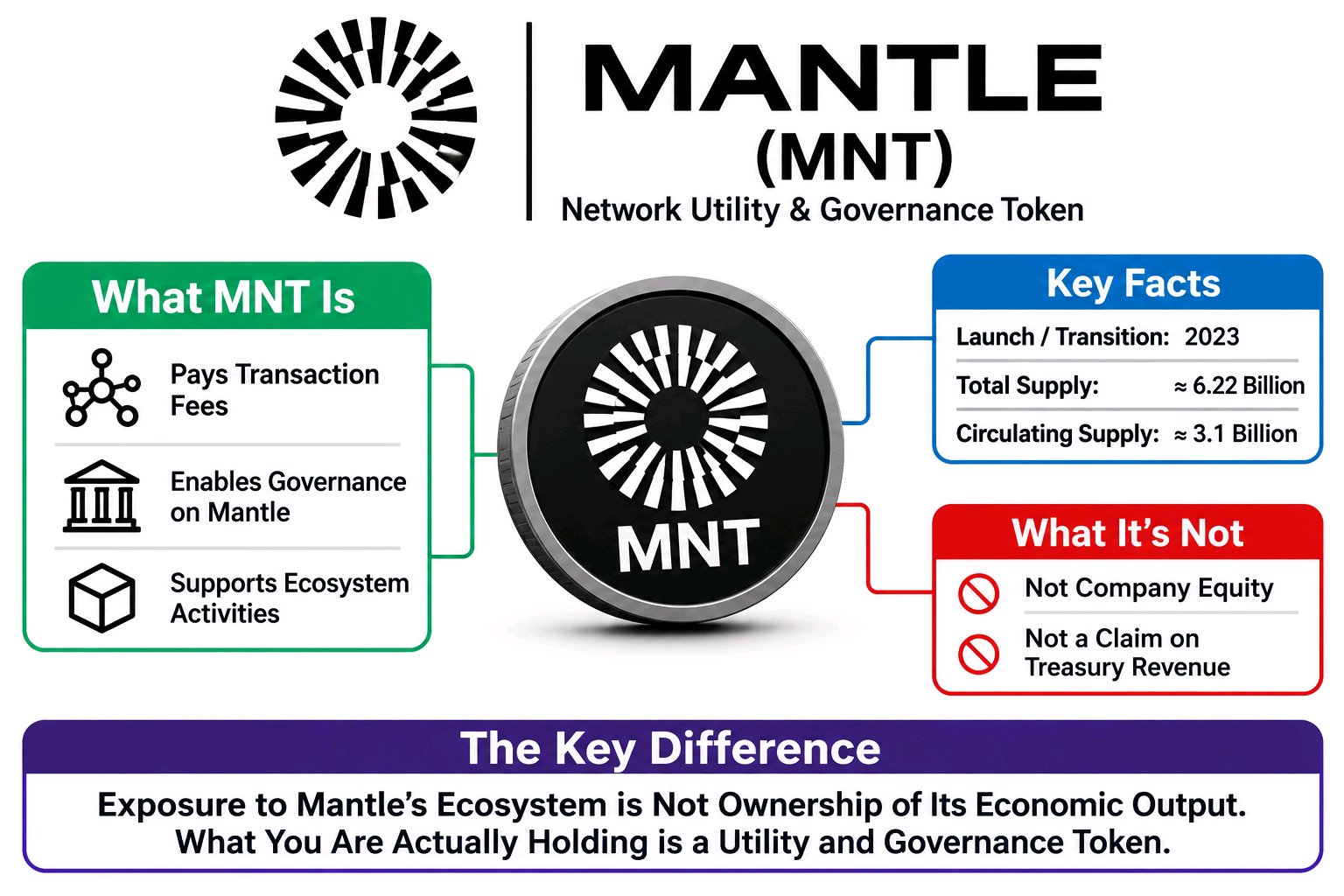
MNT may look like a bet on Mantle's growth, but it is not company equity or a direct claim on network revenue. It is a network utility and governance token whose value depends on ecosystem demand and market exposure. Mantle emerged from BitDAO's transition in 2023, with BIT converting into MNT at a 1:1 ratio. Following a governance-approved decision not to convert 3 billion BIT, the total MNT supply was reduced to approximately 6.22 billion tokens. That distinction is easy to miss if you only read the headline. MNT gives holders several functions: paying transaction fees on Mantle Network, participating in DAO governance, and supporting ecosystem activities. But holding MNT does not provide ownership of Mantle, guaranteed income, or a contractual right to redeem tokens for treasury assets or network revenue. The supply structure adds another important detail. Approximately 3.1 billion MNT is circulating, while roughly 3.0 billion remains in the Mantle treasury, subject to governance-controlled allocation. This means treasury decisions and future token distribution matter alongside network adoption. Unlike an equity instrument, MNT does not automatically give holders a share of business profits. Its exposure comes from network utility, governance influence, ecosystem demand, and market expectations. The difference is simple: exposure to Mantle's ecosystem is not ownership of its economic output. What matters is what you are actually holding. #ByXIMPACT$MNTUSDT
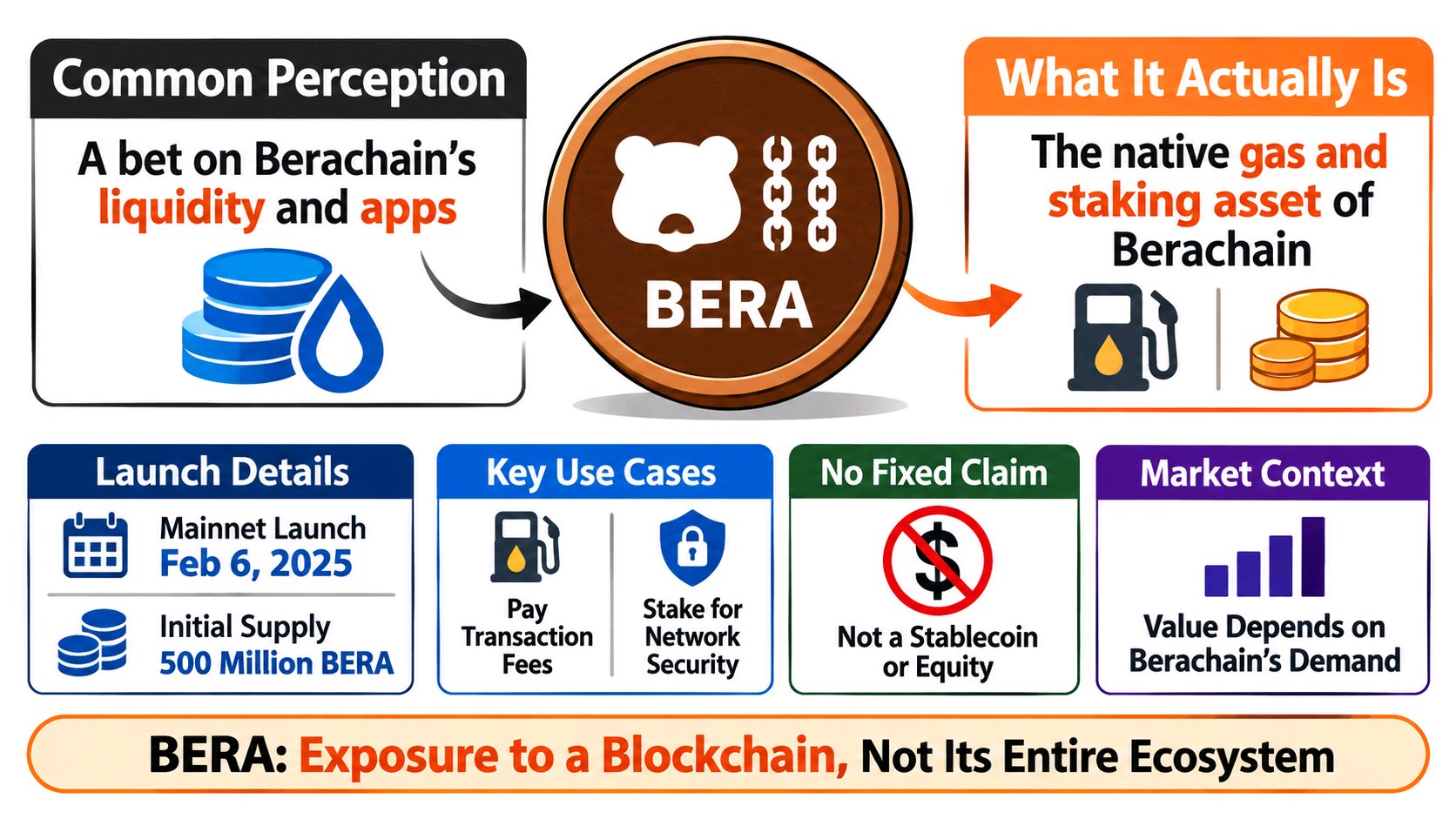
BERA 看起來可能像是對 Berachain 流動性證明(Proof-of-Liquidity)生態系統的押注,但它並非對該網路鎖定流動性或應用程式收益的索取權。它是該網路的原生 Gas 與質押資產,其價值取決於市場對 Berachain 本身的需求。 Berachain 於 2025 年 2 月 6 日上線主網,初始供應量為 5 億枚 BERA。該代幣用於支付交易費用以及質押給負責維護網路安全的驗證者。The Block +1 如果只看標題,很容易忽略這個區別。 持有 BERA 意味著曝險於對 Berachain 基礎設施的經濟需求,而非直接擁有其應用程式、流動性池或生態系統業務。其市場價值由供需、網路活動以及對未來採用的預期所決定。它並非由美元背書、不可按固定價格贖回,也不等同於 Berachain 的股權。 規模很重要。5 億枚代幣的初始供應量建立了相當大的初始分發規模,但並不代表有相應數量的抵押品或保證經濟價值。與穩定幣不同,BERA 沒有固定的美元贖回承諾。加密資產聲明 +1 區別很簡單:持有 BERA 意味著持有區塊鏈原生經濟資產的曝險,而不是擁有建立在其上的一切事物的價值。 #ByXIMPACT $BERAUSDT
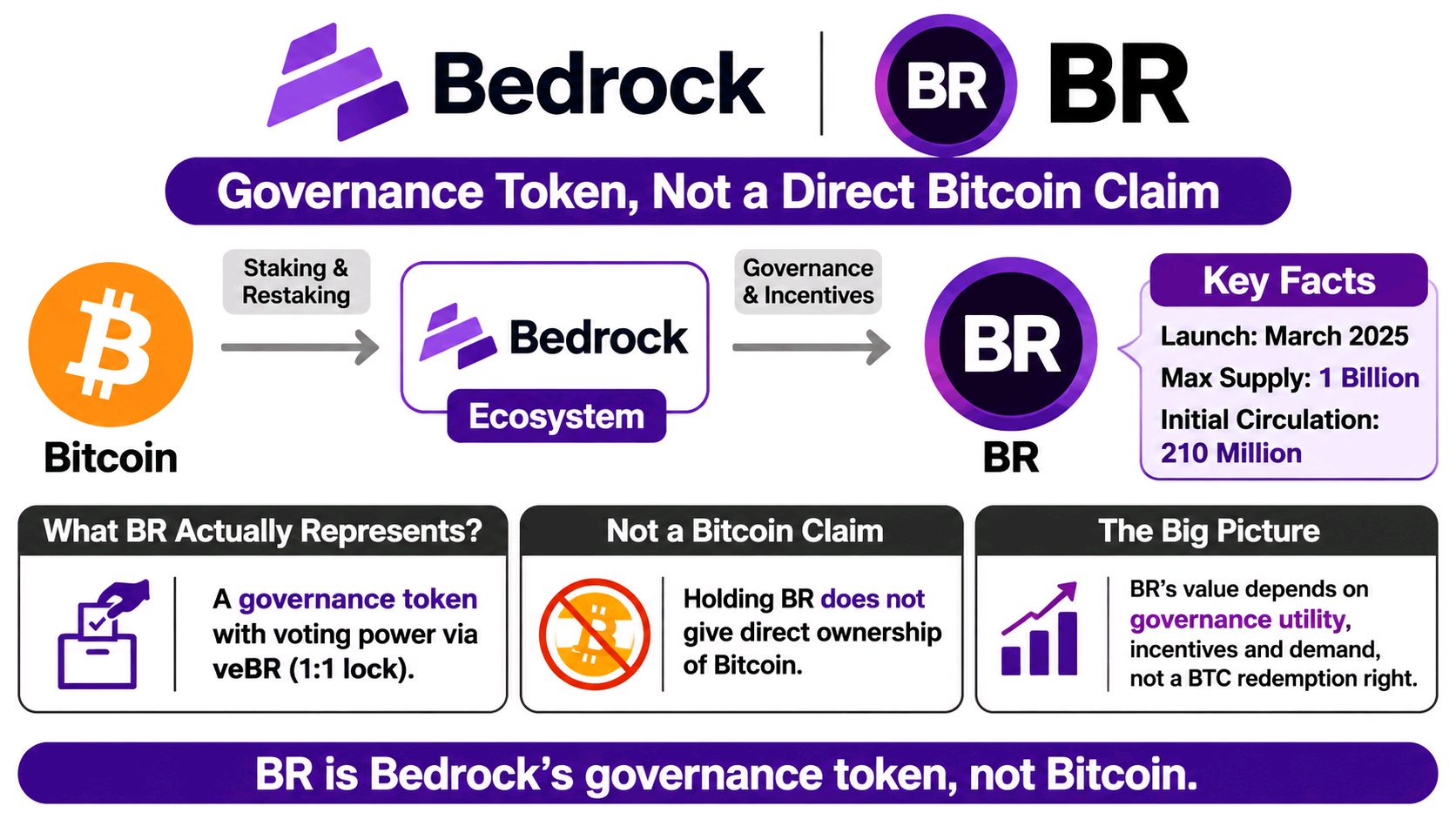
BR may look like a direct bet on Bitcoin restaking, but it is not a claim on Bitcoin or the assets deposited into Bedrock. Bedrock introduced BR in March 2025 with a maximum supply of 1 billion tokens and an initial circulating allocation of 210 million BR. That distinction is easy to miss if you only read the headline. BR is primarily a governance and incentive token. Holders can lock BR at a 1:1 ratio to receive veBR, which provides voting power over protocol decisions and incentive distribution. The longer the lock, the greater the voting power. Bedrock's Bitcoin exposure comes through separate products such as uniBTC, its liquid-staking token. Holding BR does not give holders direct ownership of Bitcoin, a fixed BTC redemption right, or an automatic claim on protocol deposits and yield. The difference matters at scale: Bedrock's ecosystem handles Bitcoin-related staking and restaking, while BR has a separate 1 billion-token supply and a governance-based economic role. Its value depends on market demand, governance utility, incentives, and token supply dynamics rather than a guaranteed relationship with Bitcoin reserves. BR represents participation in Bedrock's governance economy, not ownership of the Bitcoin behind its products. What matters is what you are actually holding.#ByXIMPACT $BRUSDT