B
BitcoinNewsCom
1016點贊0分享29粉絲0關注
P2Pool v2 is an open-source mining protocol in the works that targets one of Bitcoin mining’s sore spots: too much power sitting with centralized pool operators. The idea is to take transaction selection, share tracking, and payouts out of any single operator’s hands. Where Stratum V2 and DATUM push decentralization mainly at the block-template level but still keep pool-run accounting in the loop, P2Pool v2 goes further by letting every node independently verify both the work miners submit and the payouts that follow. What it’s aiming to deliver includes permissionless mining without an operator deciding which transactions make it in—or quietly denying credit for valid shares; share accounting that’s decentralized and checked by every node; and self-custodial payouts that go straight to miners’ own Bitcoin addresses. It also plans tradable mining shares, with atomic swaps over Lightning and Ark on the roadmap, so smaller miners can get paid more smoothly. On top of that, variable difficulty and fewer orphaned-share losses are meant to make life easier for smaller participants. As of now, the protocol is running on Bitcoin testnets. Share trading and full mainnet readiness are still being built out.
🚨 LUXOR CONFIRMS BITCOIN MINING HASHRATE HIJACK Luxor reports that its Commander management software was compromised, causing hashrate from over a dozen client accounts to be rerouted to a different mining pool. The issue was fixed within two hours, and affected miners have been switched back to their original pool configurations. Luxor says no data was taken, Luxor Pool and LuxOS were not impacted, and all affected clients will be fully reimbursed for any lost mining revenue.
LUXOR CEO WARNS AI-DRIVEN CYBERATTACKS ARE RAMPING UP AFTER MINING SOFTWARE BREACH Luxor CEO Nick Hanson says crypto firms are being hit nonstop by AI-assisted attacks, with malicious models running around the clock to scan for weak spots and exploit them. He said Luxor has spent the past 4–6 weeks largely pausing new feature work to focus on tightening security, even buying its own GPUs so it can run AI models against its own systems and stress-test the infrastructure. The comments come after an attack yesterday targeting Luxor’s Commander software, which rerouted customer mining hashrate via what Hanson called a sophisticated, AI-enabled attack path. Luxor says it patched the issue quickly and will make affected customers whole. Hanson added that, despite this incident, Luxor’s security stack has blocked several other attack attempts over the same stretch. “Some folks are grave dancing,” he wrote, pushing back on criticism while admitting the company still has work to do. He warned the pace of AI-powered attacks is only increasing as models get better and more attackers jump in. “Stay frosty.”
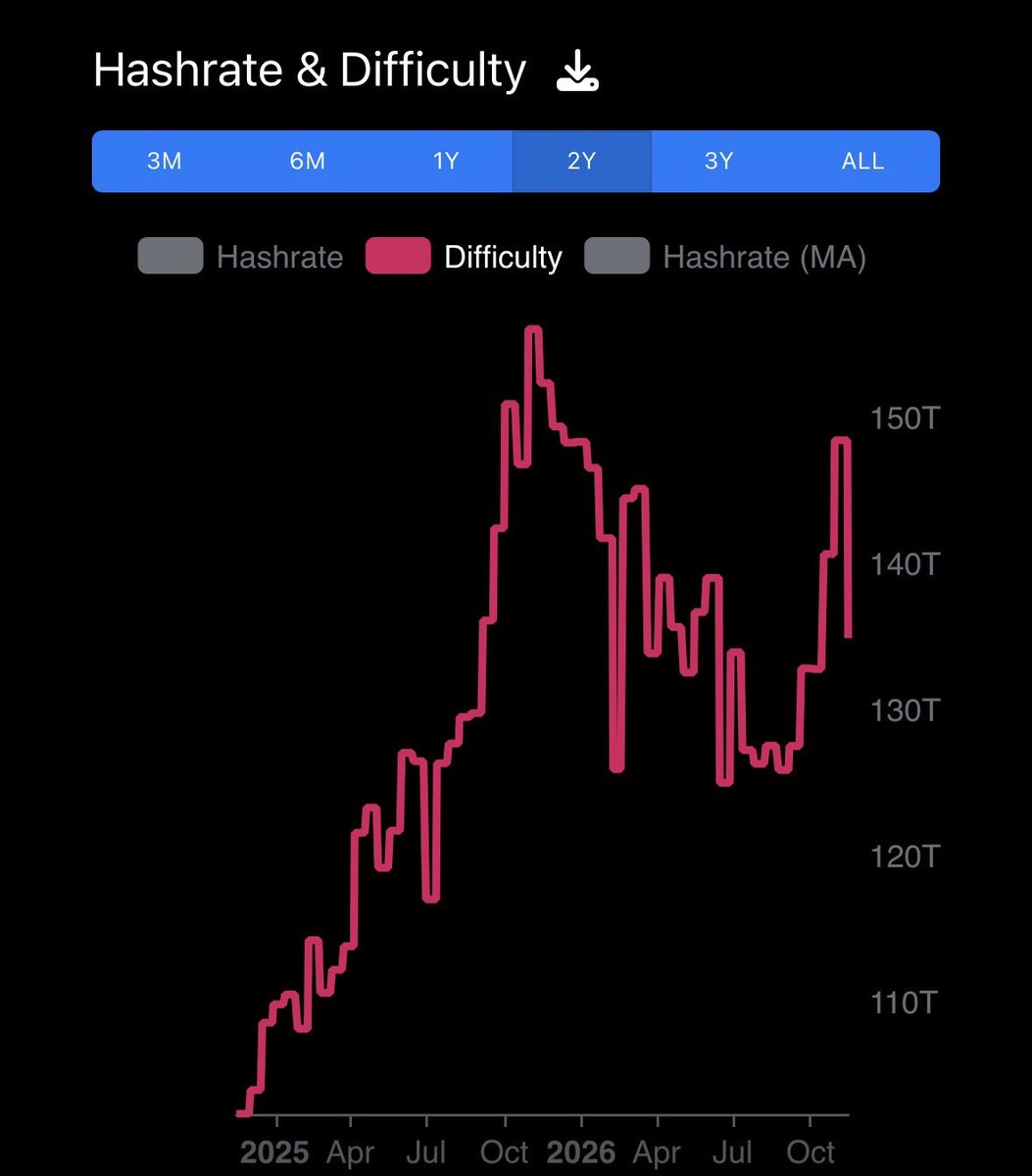
BITCOIN MINING DIFFICULTY SLIDES 9.13% AS NETWORK HASHRATE FACES PRESSURE Bitcoin’s mining difficulty dropped by 9.13% at block 975,744 on Nov. 14, easing from 148.36 trillion down to 134.82 trillion. This retarget came after the latest 2,016-block stretch saw blocks land at roughly 11-minute intervals—slower than Bitcoin’s usual 10-minute pace. With the difficulty now lower, miners should have an easier time finding blocks, boosting expected BTC output for those running the same level of computing power.
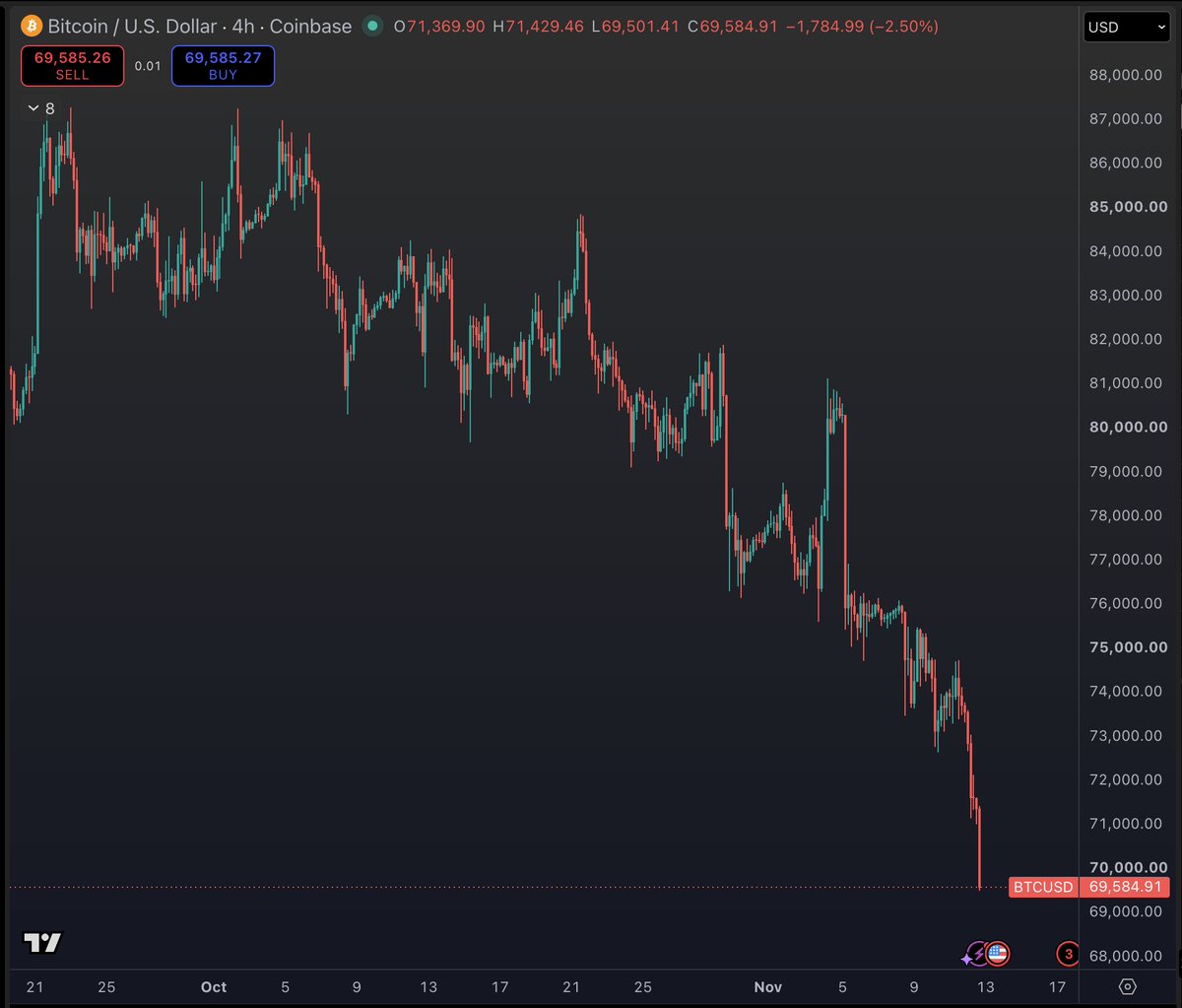
Is it mathematically possible for the powers that be to stop printing money? No. Which is exactly why the core case for Bitcoin hasn’t changed one bit. Keep your head, stay steady, and keep stacking.
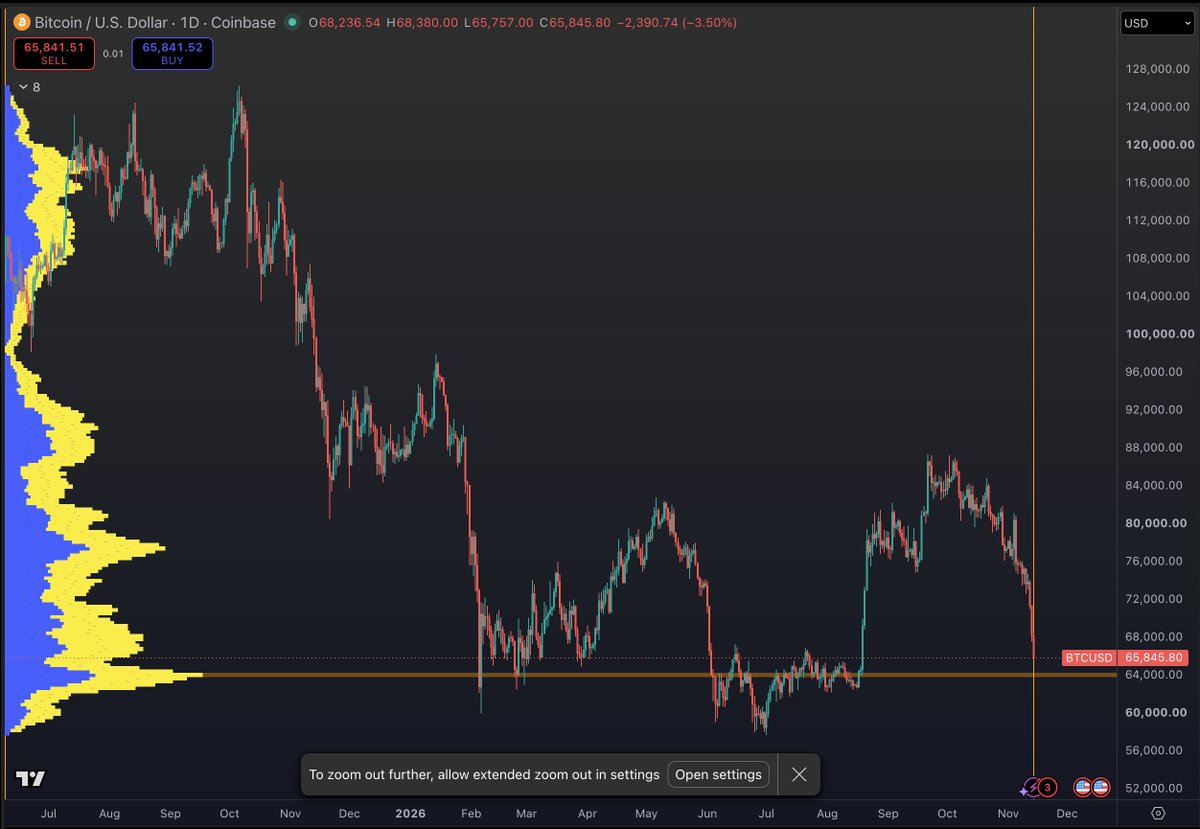
BITCOIN NEARS CRUCIAL SUPPORT AROUND $64,000 Bitcoin is still drifting lower, and it’s now trading under $66,000. If a rebound is going to show up, $64,000 is one of the main levels to keep on the radar—there’s been heavy trading activity there in the past, along with plenty of liquidity.
Two Bitcoin wallets dating back to 2010 just sprang to life, moving a total of 100 BTC—about $6.83 million at today’s prices. According to Mempool and Whale Alert, each wallet had been sitting on 50 BTC earned from a September 2010 block reward, when that stash was worth roughly $3. Fast-forward to now, and each 50 BTC pile comes in around $3.41 million. Both wallets used Bitcoin’s early pay-to-public-key setup, which exposes the public key directly on-chain. Late Thursday, the funds were sent to newer SegWit addresses, and portions of the two transfers were later consolidated into a single address. So far, no one has come forward to claim ownership or explain the move.

🇰🇵 NORTH KOREAN HACKERS USED DEEPFAKE VIDEO CALLS TO STEAL $400 MILLION The Justice Department said Thursday it has seized cloud infrastructure tied to a scheme the FBI calls “FaceStealer,” which investigators say has siphoned off more than $400 million in cryptocurrency over the last 18 months. According to officials, the attackers jump into video calls using a compromised account, then play a recording—or a deepfake—of someone the target recognizes. They follow up by sending a “fix” that’s actually malware. In some cases, they reportedly sat on access for months, even over a year, before finally moving the funds. The FBI said it confiscated more than 900 webcam videos of victims and issued a public warning about the operation.

FOUNDRY STARTS TRIALING A BIG BITCOIN MINING PROTOCOL UPGRADE Foundry USA Pool has kicked off official testing of Stratum V2, a major step forward for Bitcoin’s mining infrastructure. With this upgrade, individual miners can build their own block templates and choose which transactions to include, easing the industry’s dependence on centralized pool operators. Stratum V2 also brings encrypted connections, cuts bandwidth needs by as much as 70%, and helps improve overall mining efficiency. As Foundry and AntPool move closer to rolling it out, Stratum V2 could shift more transaction-selection control back toward miners—without changing how hashrate is distributed.

MSCI has confirmed that UK-based Bitcoin treasury firm The Smarter Web Company ($SWC) will be added to its Micro Cap Index, effective November 30. The update lands only days after MSCI said it would drop Michael Saylor’s Strategy ($MSTR) from its indexes. Being included in the Micro Cap Index likely won’t trigger major passive inflows, but it could give Smarter Web a visibility boost with institutional investors. Smarter Web’s CEO said he was pleased with the addition, though he voiced frustration over Strategy’s removal, repeating his view that Strategy could one day become the most valuable company in the world.

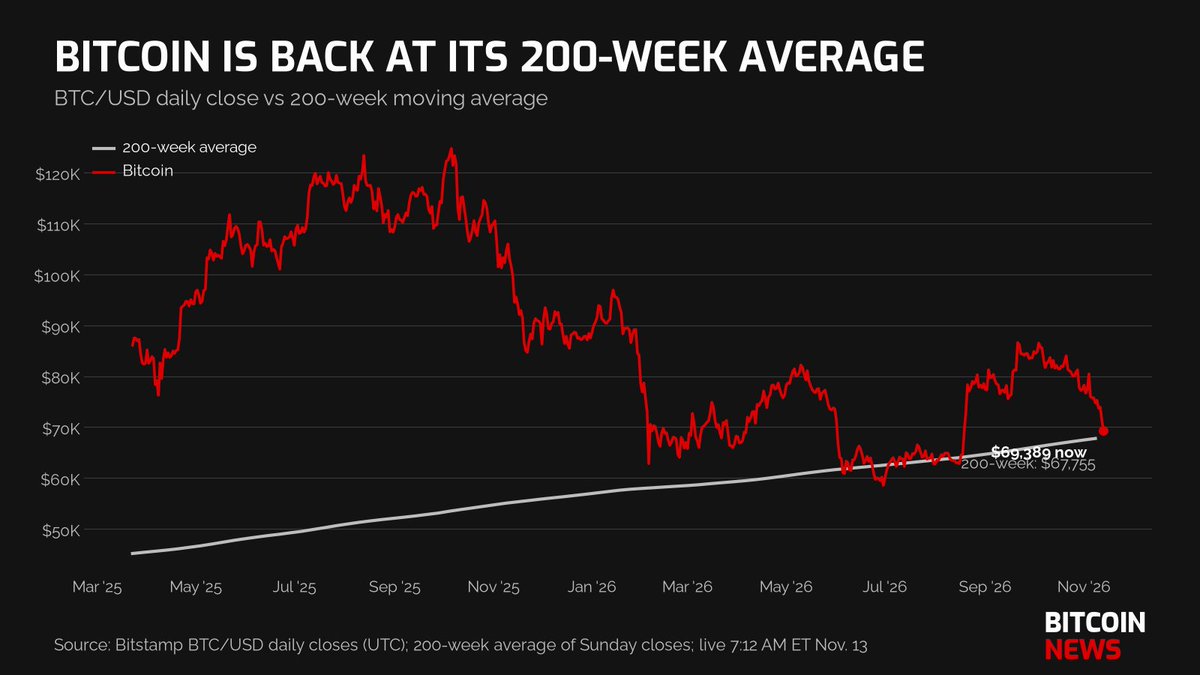
Bitcoin has climbed back to its 200-week moving average for the first time since August. This is a key level—it really needs to hold here.
NEW: MSCI will drop Strategy from its USA Index, with the change taking effect after the November 30 market close. This removal comes after MSCI tweaked its rules in October to filter out companies it believes don’t have meaningful operating assets. Strategy has pushed back, saying the criteria effectively singles out Bitcoin treasury companies. JPMorgan, in a November 2025 estimate, pegged possible index-tracking sell pressure at around $2.8B. Strategy sees it as more limited: it says MSCI-linked funds held about 13M shares—roughly 3.1% of basic shares—and that’s less than a day of average trading volume.

NEW: Bitcoin Core revealed a bug that could let random Tor users inherit “trusted” status on thousands of nodes. In setups where providers shipped Core bundled with Tor, inbound Tor connections could appear as if they were local. That meant operators who used whitelist rules might unintentionally grant outside peers looser spam controls and weaker privacy restrictions. A fix was released in October 2025. Core kept the full details under wraps until two weeks after the 29.x line reached end of support. Core also disclosed a second high-severity issue that could prevent a mining node from producing valid blocks until it was restarted. No attacks have been reported. Nodes that don’t use the whitelist setting aren’t affected.