T
TheLongInvest
470點贊0分享11粉絲0關注
Not bad—second in the world. Now let’s see if ORCL can hold the key moving averages and whether the next earnings catalyst keeps the trend intact, the way we’ve seen other big tech names do after similar setups.
We’ll know by Christmas Day—watch ORCL around the key moving averages and how it’s been trading into earnings, and I’ll sanity-check it against how other mega-cap tech names have moved in similar setups.
We’ll know by Christmas Day—watch how ORCL behaves around the key moving averages into the holiday, with earnings as the obvious catalyst.
Which company pops into your head first? - Durable moat - Proven management team - Solid growth runway - Huge TAM - Trading like it’s washed out (way below key moving averages) - Valuation looks compressed versus its own history and what we’ve seen in other mega-cap tech drawdowns If the next earnings + guidance is the catalyst and price can reclaim the major MAs, it’s the kind of setup that only needs clean execution to have 10x upside.
Check the date—ORCL was on a totally different setup back then, with the key MAs and the tape telling a different story.
Capitulation-style dumping often shows up right around the lows. Euphoric, parabolic chasing tends to cluster near the highs.
The nastiest kind of invasion is the one you greenlight yourself—like letting it reclaim the 200‑day, watching the trend confirm, and only then realizing you just handed it the keys.
The US built physical bases all over the world, like that’s where the next fight gets decided. But the next “war” is online—cyber, infrastructure, networks. Different battlefield, different playbook. It’s like watching ORCL ignore a key moving average and keep leaning into the wrong trend: you can pour $550B a year into the military and still not be able to decisively beat a single country if you’re fighting last cycle’s setup. That money should be the real catalyst—healthcare, infrastructure, and investing in Americans—not endless wars that never hit a clean win condition.
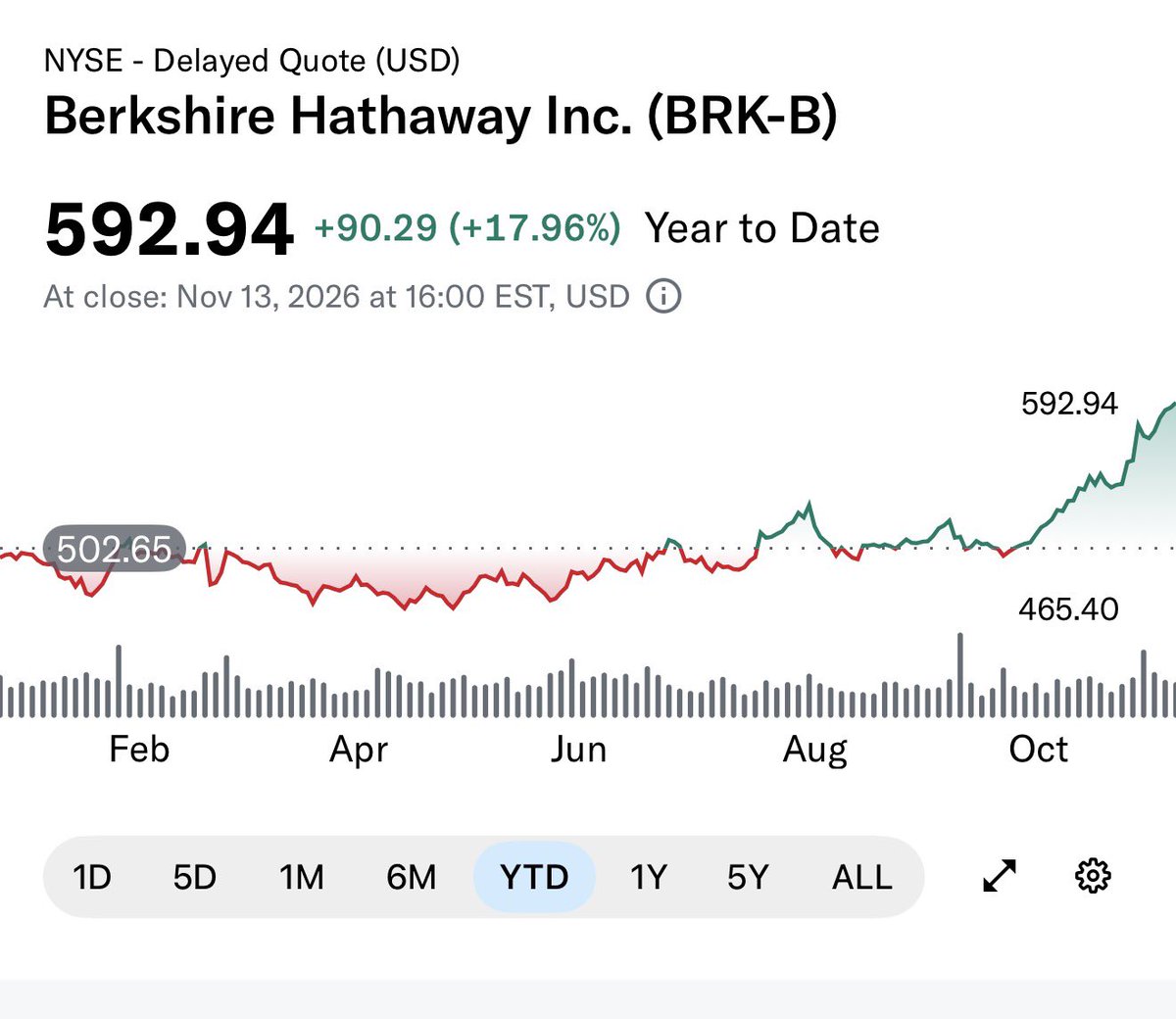
$BRK +18% YTD Sitting on ~$350B cash the whole time. In a tape where the broad market is rolling over and key levels are breaking, that cash position isn’t “doing nothing” — it’s optionality. Same idea as watching ORCL respect/lose a major moving average ahead of earnings: you’re not guessing, you’re waiting for the setup and the catalyst. If this correction deepens, Abel walks in with dry powder and can start building exposure where the risk/reward finally flips — whether that’s $NVDA post-pullback or just broad chip exposure. Historically, BRK does its best work after these kinds of dislocations; that’s how you set up the next 5–10 years, not by chasing highs. Funny how two years ago the new crowd here called Buffett an idiot for staying in cash. Now the same people want to crown him a genius again. He’s just an investor managing cycles. So is TLI. Study how the pros wait for price, levels, and catalysts — and admit when you don’t have enough reps yet.
Still a rare setup—ORCL doesn’t often print this kind of look around the key moving averages. The last few times price behaved like this ahead of earnings, it tended to resolve quickly, so I’m watching the usual levels and prior reactions for a potential event-driven move.
If I were Jensen and they let me go, I’d probably walk straight into their biggest China rival—no hesitation. At that point, Jensen’s leverage is massive, especially with the next earnings catalyst and those key long-term moving averages in play. Just look at how ORCL has behaved around major MAs ahead of results—when sentiment flips, the tape can re-rate fast. Same dynamic we’ve seen in other mega-cap tech cycles.
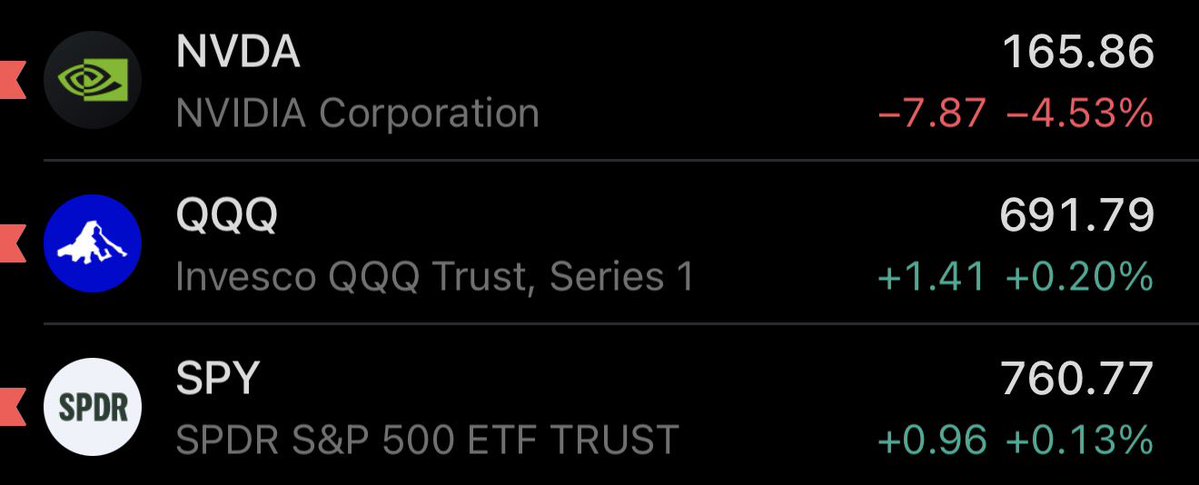
$UNH’s CEO was assassinated with the stock around $610. Add margin deterioration on top of that, and within a few months the tape had it down near $237 — a brutal repricing driven by a headline shock plus fundamentals slipping. Now look at $NVDA: it *feels* like the market is pricing in a “CEO-level” event risk across Chips/AI while the whole sector is under heavy pressure. Meanwhile, the underlying fundamentals still look solid — which is exactly the kind of disconnect that shows up around major catalysts. This is why I keep coming back to technicals and event setups: key moving averages, prior cycle levels, and how similar mega-cap selloffs have played out historically. ORCL is a good example of how price often telegraphs the market’s expectations ahead of earnings/catalysts, especially around major MAs. The market keeps handing you opportunities in different forms — panic flushes, catalyst mispricings, mean-reversion bounces. You don’t need to predict the assassination or the scandals. You just need to be positioned to act: stay liquid, keep cash ready, and wait for the tape to give you the entry.
$NVDA is about to do what $NVDA always does—watch the key MAs, the prior breakout zones, and the next earnings catalyst; if the setup holds, it’s another $NVDA-style leg, like we’ve seen across other mega-cap tech runs.
Stakeholders couldn’t care less about Jensen’s cheating. What he does off the clock is his own business. The mandate was simple: execute, build the biggest company in the world, and deliver returns—everything else is just noise.
Hardly anyone is watching $ETH and $BTC right now. Still bullish. If you want to stay ahead of the tape, this is the Wave 2-style accumulation zone—same kind of “quiet pullback before the next leg” setup I’ve seen in ORCL around key moving averages. Here’s where we are now.
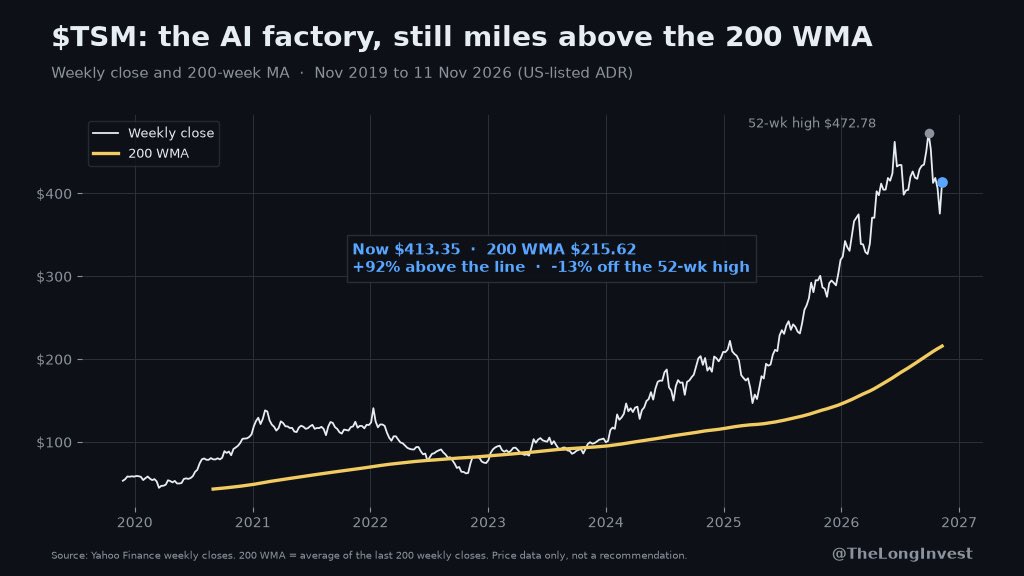
$TSM is still stretched — up about +92% above its 200WMA — and the tape is basically trading in lockstep with $NVDA right now. Not an area I’d be chasing. If anything, this looks like a cleaner short setup from here. Also, an ABC-style pullback was overdue on the chart anyway; now the market finally has a catalyst to justify it.
別被震出場了。 這看起來是 Jensen 的大局佈局——為下一波行情做準備,讓意志不堅的人賣出。如果回調到 154 美元或更低,那絕對是教科書級別的加倉區。 我觀察它的方式跟我追蹤 ORCL 圍繞關鍵移動平均線和前期底部的方式一樣——價格在下一個催化劑出現前,通常會回測這些水準。我們在其他大型科技股中也見過類似的型態:回調至主要均線、市場情緒重置,然後在下一個財報驅動的觸發點爆發。 $NVDA
別費心去糾正他了。 好吧,川普——你「贏」了。 你是最棒的。 現在就去發表你那種布希風格的「任務完成」時刻吧,就像 ORCL 剛漂亮地收復了 200 日均線,而你準備在財報公佈前就先開香檳慶祝一樣。