crypto master
227Me gusta0Compartir en el chat3Aficionados6Seguir
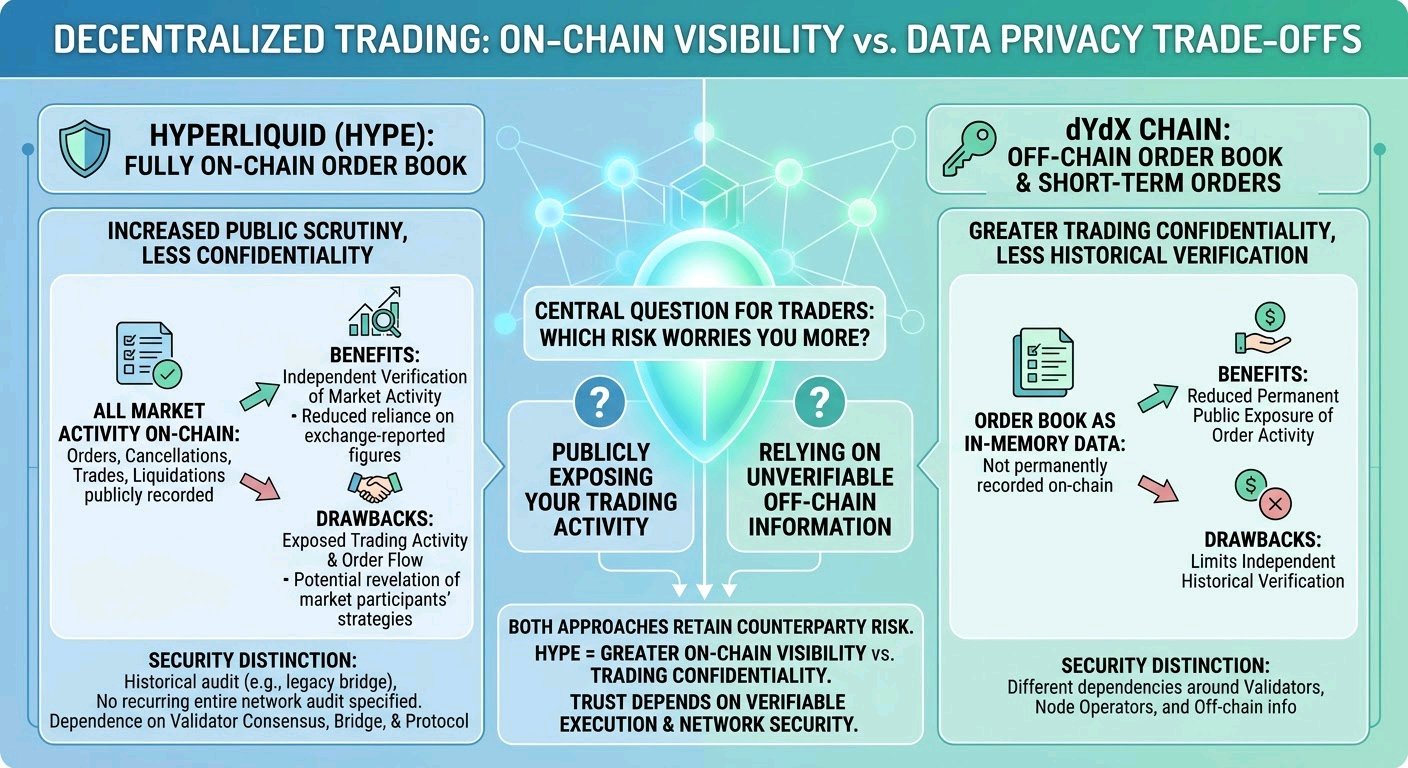
HYPE has a fully on-chain perpetuals and spot order book: orders, cancellations, trades and liquidations are publicly recorded. But public transaction visibility is not the same as independent verification of every part of the system. Holders gain the ability to independently inspect market activity without relying entirely on exchange-reported figures. However, this also exposes trading activity and order flow publicly, potentially revealing market participants' strategies. There is an important security distinction: Hyperliquid's official audit documentation identifies Zellic's audit of its legacy bridge contract. This is a contract audit, not a continuous audit of the entire network. No recurring independent audit schedule is specified in the documentation reviewed. Hyperliquid Docs +1 Compare this with dYdX Chain. Its official documentation describes short-term orders and perpetual order books as in-memory data, rather than permanently recorded on-chain. That reduces permanent public exposure of some order activity, but also limits independent historical verification. v4 +1 More exposure, in exchange for greater public scrutiny. Neither approach removes counterparty risk. Hyperliquid users still depend on validator consensus, bridge security and protocol execution. dYdX users face different dependencies around validators, node operators and off-chain order-book information. I'm not seeing evidence of an explicitly stated secrecy policy from Hyperliquid. Its actual tradeoff is greater on-chain visibility versus the confidentiality of trading activity, with trust ultimately depending on verifiable execution and network security. Which risk worries you more — publicly exposing your trading activity, or relying on information that cannot be permanently verified on-chain? $HYPEUSDT #BitcoinHitsTwoMonthLowAfterUSMidterms
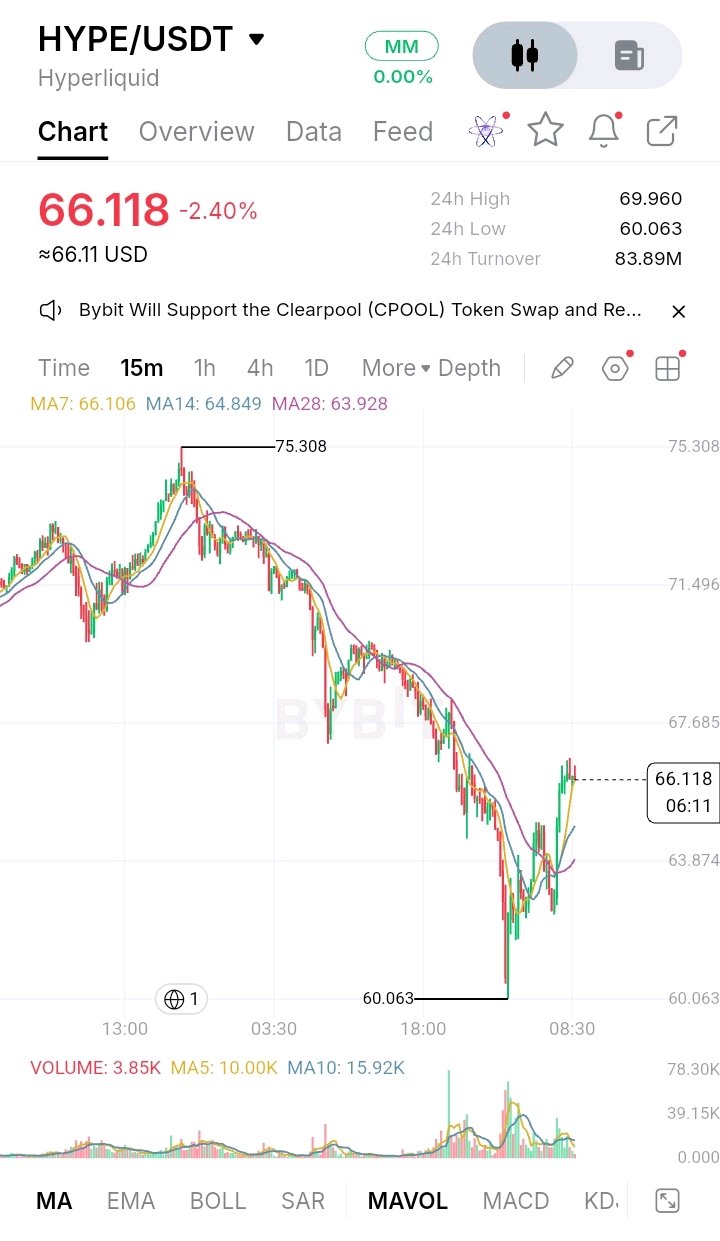
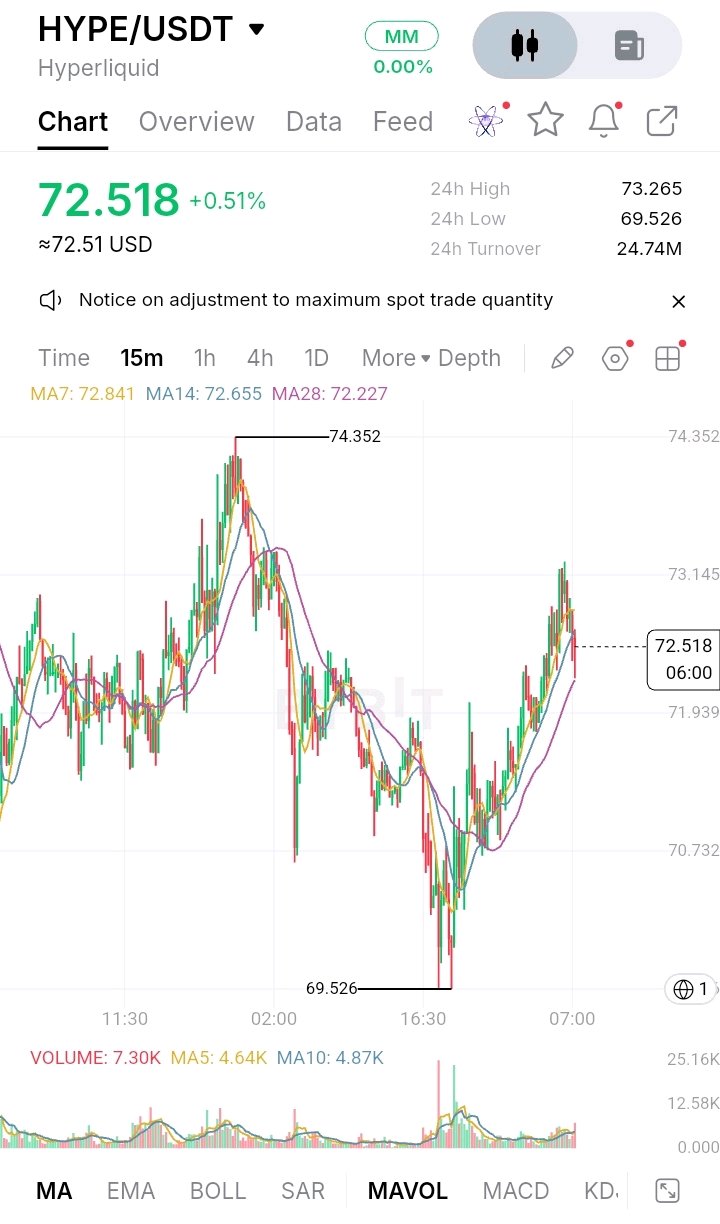
HYPE’s Hyperliquid runs a fully on-chain order book where orders, cancellations, trades and liquidations are publicly recorded. But there is an important distinction: transparent trading activity does not mean every layer of the protocol has received independent security verification. The tradeoff here is not deliberate secrecy. It is the gap between visible operations and independently audited infrastructure. Users gain the ability to inspect transactions, positions and protocol activity without relying entirely on private exchange reports. However, public visibility cannot replace independent verification of the underlying technology. Hyperliquid’s documentation confirms that its legacy bridge contract was audited by Zellic. However, that disclosure does not establish a full independent audit of HyperCore or HyperBFT. No recurring audit schedule or continuous independent monitoring is established by the cited documentation. Hyperliquid Docs +1 Compare this with dYdX. Its documentation distinguishes between on-chain trade data and off-chain short-term orders and order-book information maintained in node memory. Hyperliquid exposes more of its trading activity directly on-chain. dYdX's architecture retains certain operational information outside the permanent ledger. More exposure, in exchange for greater public scrutiny. v4 +2 Neither approach removes counterparty risk. Hyperliquid users can independently inspect recorded activity, but still depend on protocol security, validator operations and infrastructure integrity. dYdX users face additional limitations when independently reconstructing off-chain order activity. The real question is whether visible transactions are enough without broader independent security verification. Which risk worries you more — limited visibility into operational activity, or publicly visible activity without comprehensive independent audits? $HYPEUSDT #SanDiskAnnounces8For1StockSplit
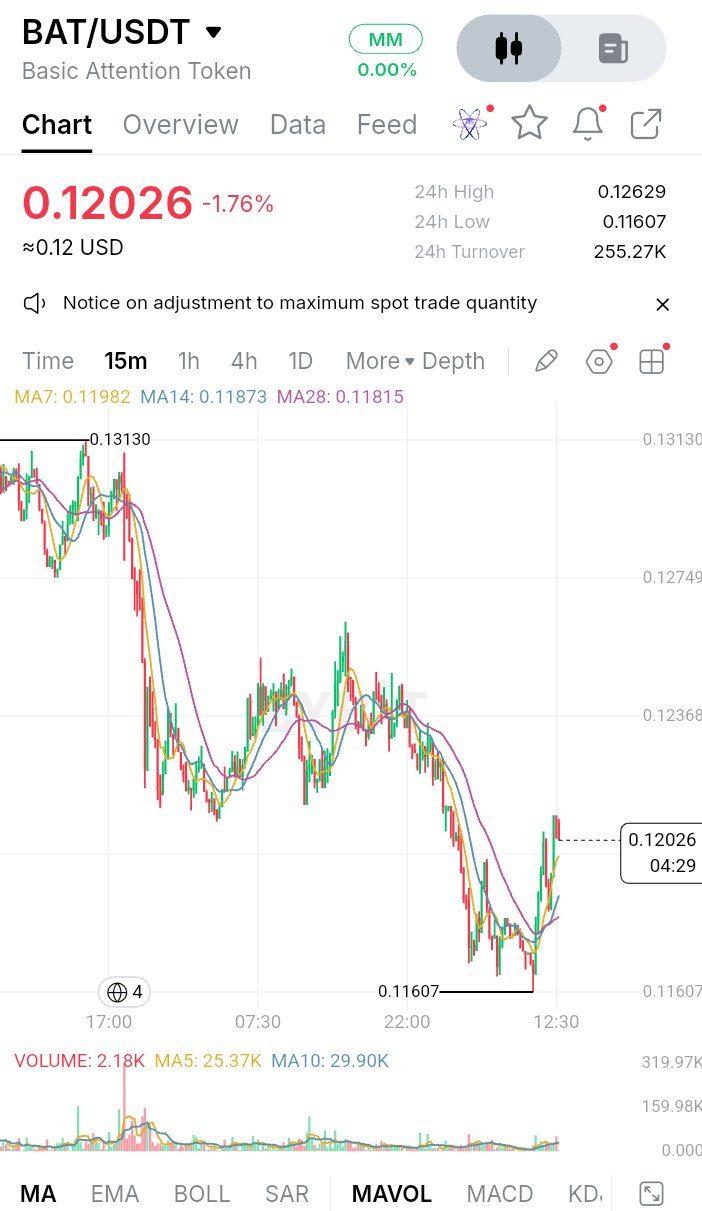
BAT is a utility token, not a reserve-backed stablecoin. Its transparency model therefore needs to be assessed through its public token supply, blockchain activity, and Brave's privacy architecture—not through reserve attestations or custodial backing. BAT runs on Ethereum as an ERC-20 token, with a maximum supply of 1.5 billion. But its core advertising system deliberately keeps user-level activity away from public view. That's not an oversight. It's a stated choice. Brave Help Center +2 Brave matches advertisements directly on users' devices rather than sending personal browsing information to its servers. That protects user privacy and reduces exposure to third-party tracking. The tradeoff is that outsiders cannot independently inspect individual ad views, clicks, or user-level reward calculations. Brave Ads +1 BAT holders can verify the token contract, supply and transfers through Ethereum explorers. Brave also publishes information about its privacy architecture and anonymous advertising confirmations. However, there is no reserve-attestation schedule or named reserve auditor because BAT is not reserve-backed. Public blockchain data cannot independently verify every off-chain advertising event. Etherscan +2 Compare this with AdEx (ADX). Its protocol uses per-impression micropayments as reporting data, giving advertisers and publishers transaction-level accounting. Payment-channel activity is visible to participants, while external observers do not automatically see every transaction. More transaction-level exposure, in exchange for more detailed accounting. GitHub +1 Neither approach removes counterparty risk. BAT relies on Brave's privacy-preserving advertising infrastructure and off-chain reporting. AdEx relies on payment-channel participants and protocol settlement. BAT has chosen privacy over universal visibility, trusting its technical architecture and anonymous verification mechanisms. Which risk worries you more — limited visibility into advertising activity, or greater exposure of transaction-level information? $BATUSDT #BitcoinHitsTwoMonthLowAfterUSMidterms
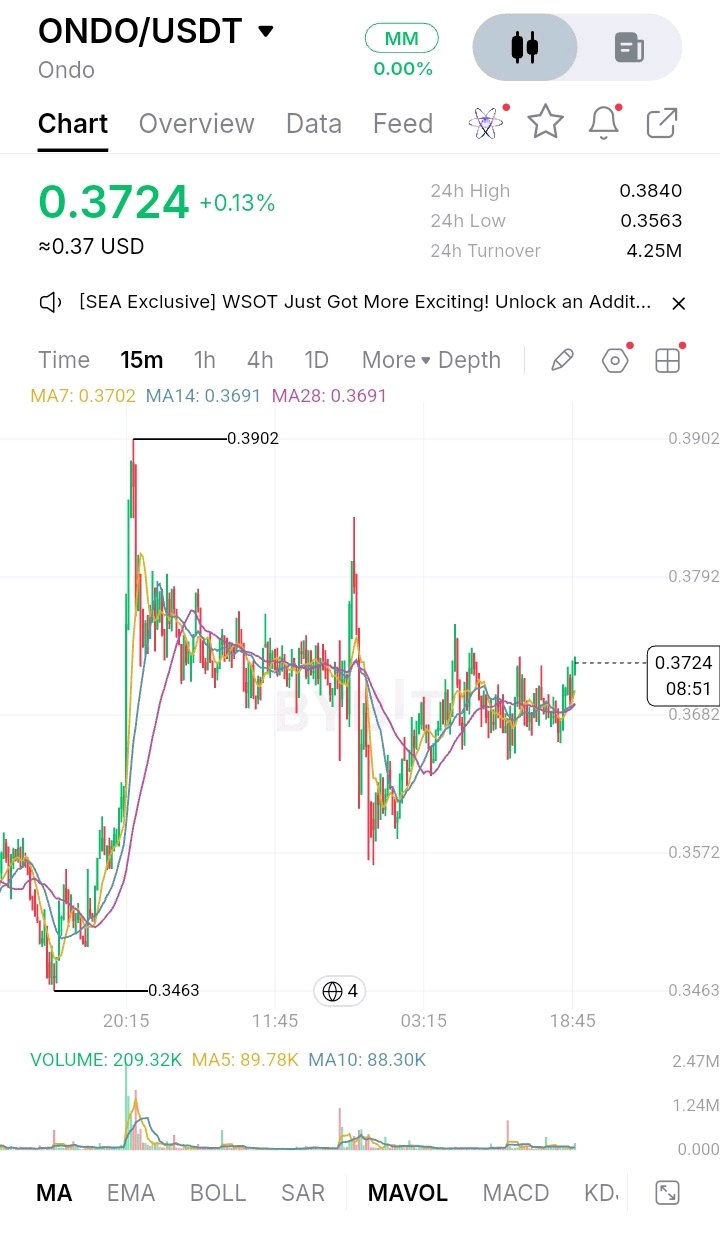
ONDO is not a reserve-backed stablecoin; it is a governance token. Its central transparency question is therefore not whether reserves cover circulating supply, but how much control tokenholders can actually verify and exercise over the Ondo ecosystem. ONDO’s governance design makes that tradeoff visible. Tokenholders can vote on economic parameters and smart-contract upgrades, but the DAO can also elect committees or multisigs to handle sensitive operations, including emergency pauses. That's not an oversight. It's a stated choice. Ondo Foundation Docs +1 The operational logic is security: emergency intervention may need to happen faster than a public voting cycle. But holders surrender some direct visibility and control over decisions delegated to those operators. What can holders verify? ONDO balances, governance proposals, voting outcomes and execution transactions on-chain. Proposals require 100 million ONDO, voting lasts three days, and successful proposals face a one-day timelock. No named independent firm or recurring attestation schedule for DAO governance itself is specified in the governance documentation. Outsiders therefore cannot independently audit every off-chain operational decision between votes. Ondo Foundation Docs +1 Compare Compound’s COMP governance: it uses executable proposals and a two-day timelock, providing more implementation visibility, in exchange for exposing more operational detail publicly. Docs - Governance +1 Neither approach removes counterparty risk. ONDO relies partly on delegated authority and trusted operators; COMP relies more heavily on publicly inspectable governance execution, while retaining emergency controls. ONDO chooses flexibility alongside on-chain accountability. Its trust model leans on governance rules, smart contracts and delegated operational authority. Which risk worries you more — concentrated operational control, or greater public exposure in exchange for verifiability? $ONDOUSDT #NovUSCPIWatch
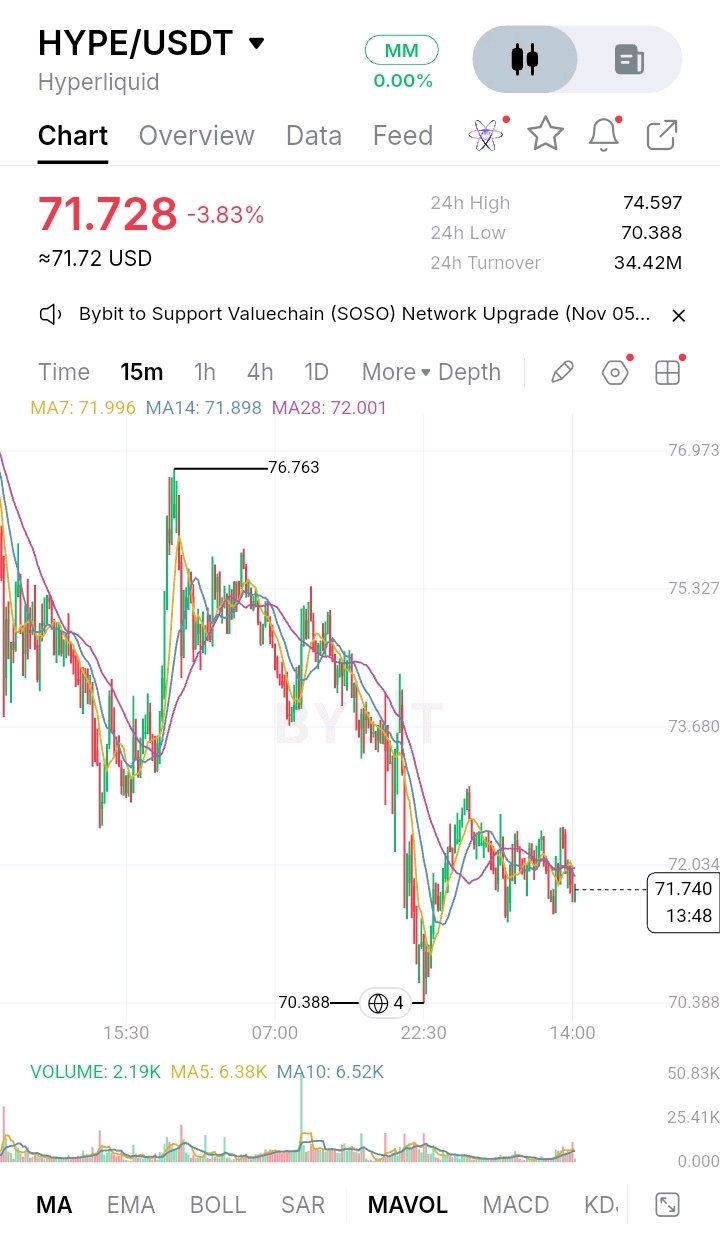
HYPE is not a reserve-backed token, and that changes the transparency debate. Its value is tied to the Hyperliquid ecosystem, not a promise that every token is redeemable against assets held by a custodian. That's not an oversight. It's a different trust model. Hyperliquid prioritises on-chain execution and verifiable market activity. Its order book, trades and cancellations are recorded on-chain, allowing users to inspect activity rather than rely entirely on private exchange statements. But public transactions do not reveal every operational detail about the people and infrastructure maintaining the network. The mechanism is delegated proof of stake. HYPE holders can delegate tokens to validators, while validators participate in block production and receive staking rewards. Hyperliquid requires active validators to maintain at least 10,000 HYPE in self-delegation. Hyperliquid Docs +1 What holders can verify is network activity, validator staking and token supply through public blockchain data. What they cannot establish from transaction history alone is the complete real-world operational resilience of every validator. There is no recurring reserve-attestation schedule for HYPE because it is not a reserve-backed stablecoin. Compare this with BNB: its ecosystem has a strong association with Binance, creating a different relationship between network transparency and institutional exposure. HYPE leans more heavily on on-chain verification; BNB holders also face ecosystem-level concentration risk. Neither approach removes counterparty risk. On-chain transparency reduces dependence on private transaction reporting, while institutional exposure introduces different dependencies. HYPE chooses verifiable execution over confidential financial reporting, but network transparency is not the same as complete decentralisation. Which risk worries you more — relying on visible on-chain systems, or relying on institutional control? $HYPEUSDT #BybitAIEvolving
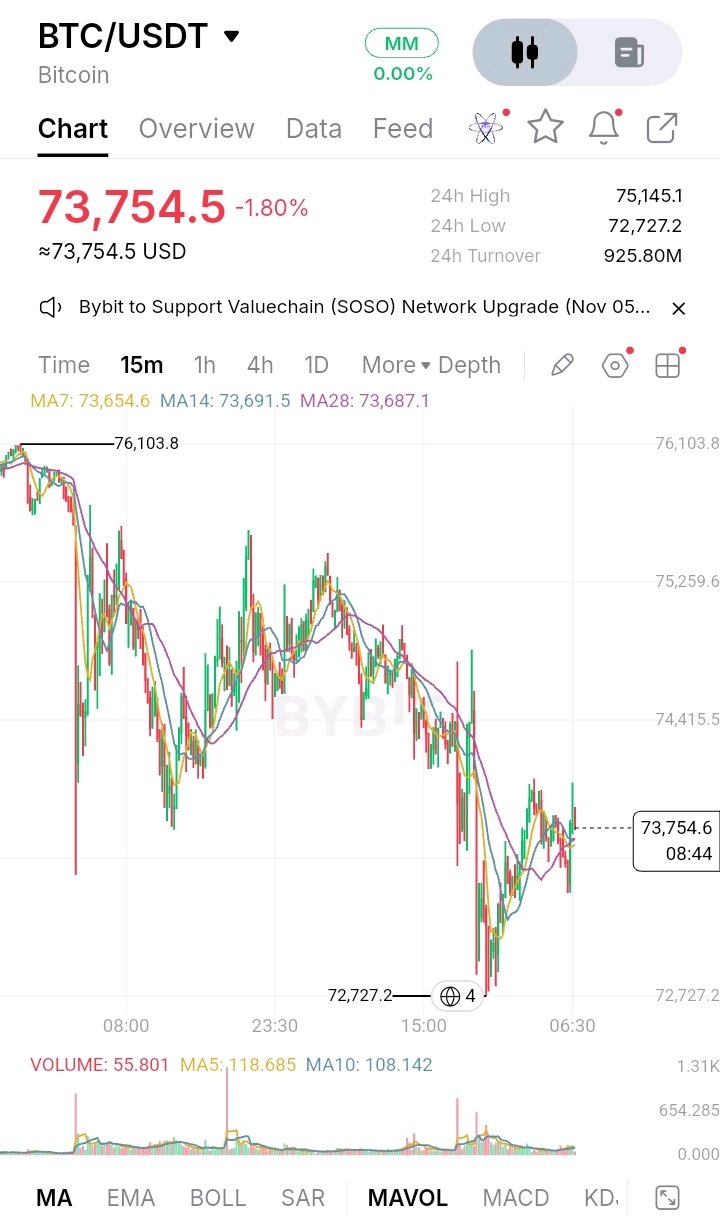
Bitcoin makes every transaction publicly traceable, but it does not reveal the real-world identity behind every wallet address. That's not an oversight. It's a stated choice. The network prioritises public verification while retaining pseudonymous ownership. Anyone can inspect transaction amounts, wallet balances and transaction history, but linking an address to its actual owner requires additional information. That creates a tradeoff. Holders gain transparent monetary records but lose financial privacy. Once an address becomes linked to an identity, its transaction history can become exposed. Bitcoin +1 Bitcoin has no central issuer or reserve custodian publishing monthly backing attestations. Instead, anyone can independently verify transactions, issuance rules and block rewards by running a full node. Verification happens continuously through network consensus, not periodic third-party audits. However, outsiders cannot establish the real-world identity behind every address or independently verify an exchange's off-chain customer liabilities. Bitcoin +1 Monero (XMR) takes the opposite approach. Its ring signatures, stealth addresses and RingCT hide senders, recipients and transaction amounts by default. More privacy, in exchange for less public transaction-level scrutiny. Monero - secure, private, untraceable +1 Neither approach removes risk. Bitcoin exposes financial activity to surveillance and identity linkage. Monero reduces public visibility, placing greater reliance on cryptography and operational security. Bitcoin chooses verifiable transparency with pseudonymous ownership. Which risk worries you more — public financial exposure, or reduced external visibility into transactions? $BTCUSDT
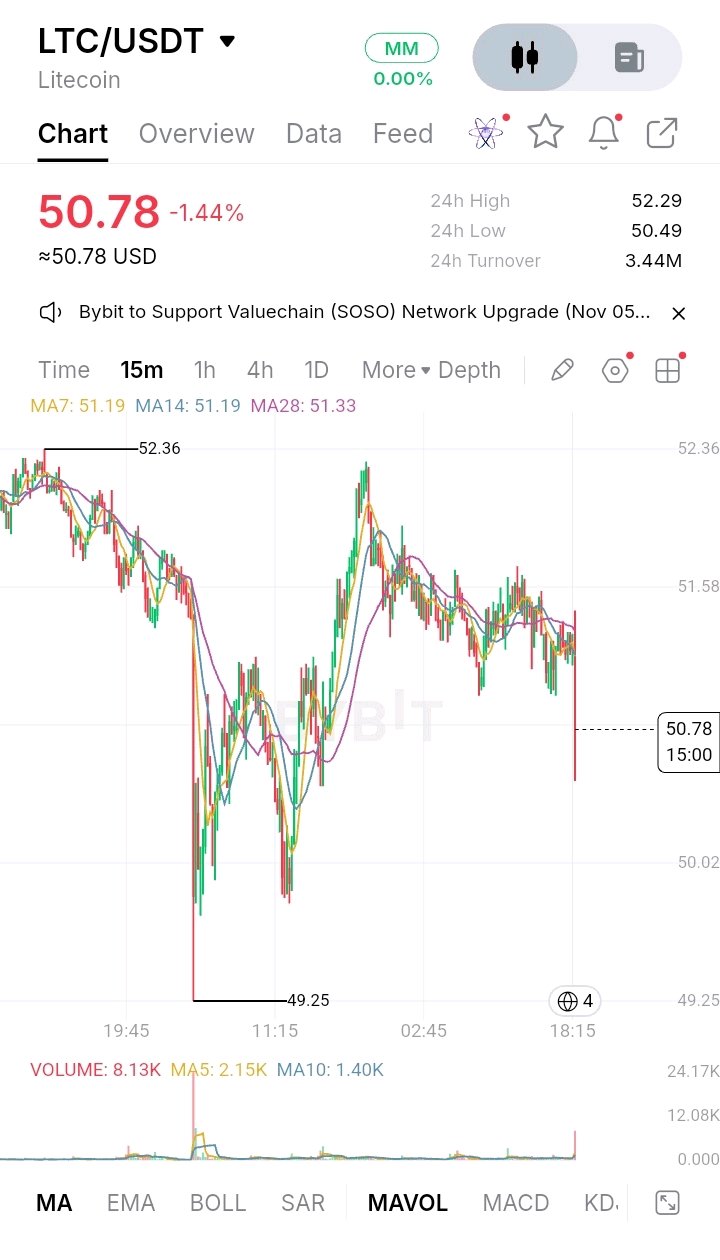
Litecoin takes a different approach to transparency: its base blockchain is public, but its optional MimbleWimble Extension Block (MWEB) hides transaction amounts and addresses. That's not an oversight. It's a stated choice. projects-origin.litecoin.com +2 The reason is financial privacy and fungibility — preventing outsiders from easily tracing and distinguishing individual transactions. But holders also lose something: outsiders cannot independently inspect every amount and transaction flow inside MWEB. There is still information available. MWEB activity is integrated into Litecoin's blockchain, and peg-ins and peg-outs connect the private extension block to the transparent base layer. Quarkslab conducted a code review of MWEB before its 2022 release. However, that was not a recurring reserve attestation or continuous audit. litecoin.com +1 The limitation became tangible in March 2026, when a validation vulnerability in MWEB was exploited, according to Litecoin's published incident report. litecoin.com +1 Bitcoin takes the opposite approach. Its transactions remain publicly traceable, allowing anyone to inspect balances and transaction history. More exposure, in exchange for greater public verifiability. Bitcoin +1 Neither approach removes trust risk. Litecoin shifts more reliance toward protocol security and miner coordination. Bitcoin exposes more financial activity to public scrutiny and surveillance. LTC chose optional privacy rather than complete transaction transparency. Which risk worries you more — reduced public verifiability, or permanent financial exposure on a public blockchain? $LITUSDT #WSOTPicktoEarn10U
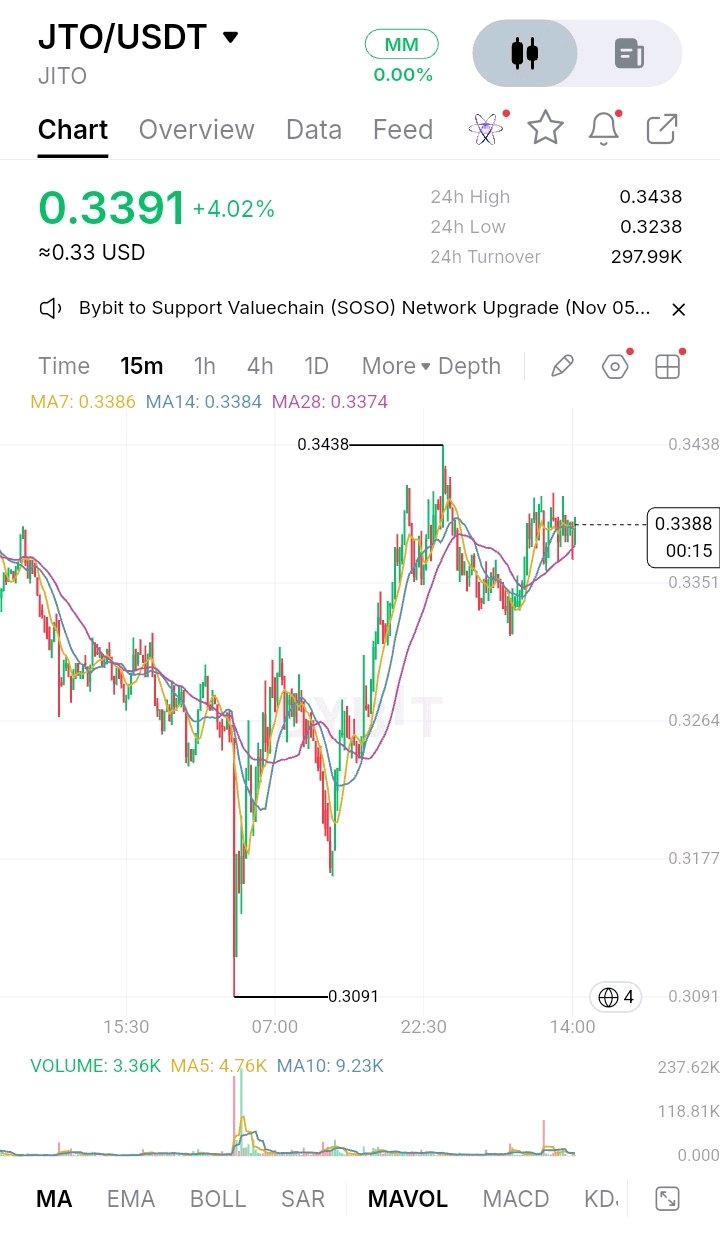
JTO is not a reserve-backed stablecoin. It is the governance token of the Jito Network, giving holders voting power over protocol upgrades, fees and treasury decisions. But there is an important transparency tradeoff: not every governance decision is executed on-chain. That's not an oversight. It's a stated choice. Jito's governance framework allows certain decisions to be handled off-chain. Some require Foundation Director approval, including potential veto authority. This creates operational flexibility, but holders lose the ability to independently verify every execution directly through blockchain transactions. What can holders verify? On-chain DAO proposals, voting records, treasury activity and token allocations. Jito also publishes Foundation transparency reports regularly. Its underlying JitoSOL stake-pool program has been audited by Quantstamp, Neodyme and Kudelski. However, these are code audits, not continuous financial audits or recurring reserve attestations. Outsiders cannot independently verify every off-chain agreement or operational decision in real time. Compare Marinade's MNDE governance model. Its documentation outlines a 6-of-13 multisig for mSOL upgrades, alongside separate DAO and operational authorities. More publicly documented control structures, in exchange for exposing more governance architecture to scrutiny. Neither approach removes counterparty risk. Jito relies on token-holder governance, Foundation oversight and documented execution procedures. Marinade distributes authority across multiple governance and security layers. JTO's tradeoff leans toward operational flexibility, with some decisions remaining outside direct on-chain verification. Which risk worries you more — concentrated operational discretion, or greater exposure of governance and infrastructure details? $JTOUSDT #WSOTPicktoEarn10U
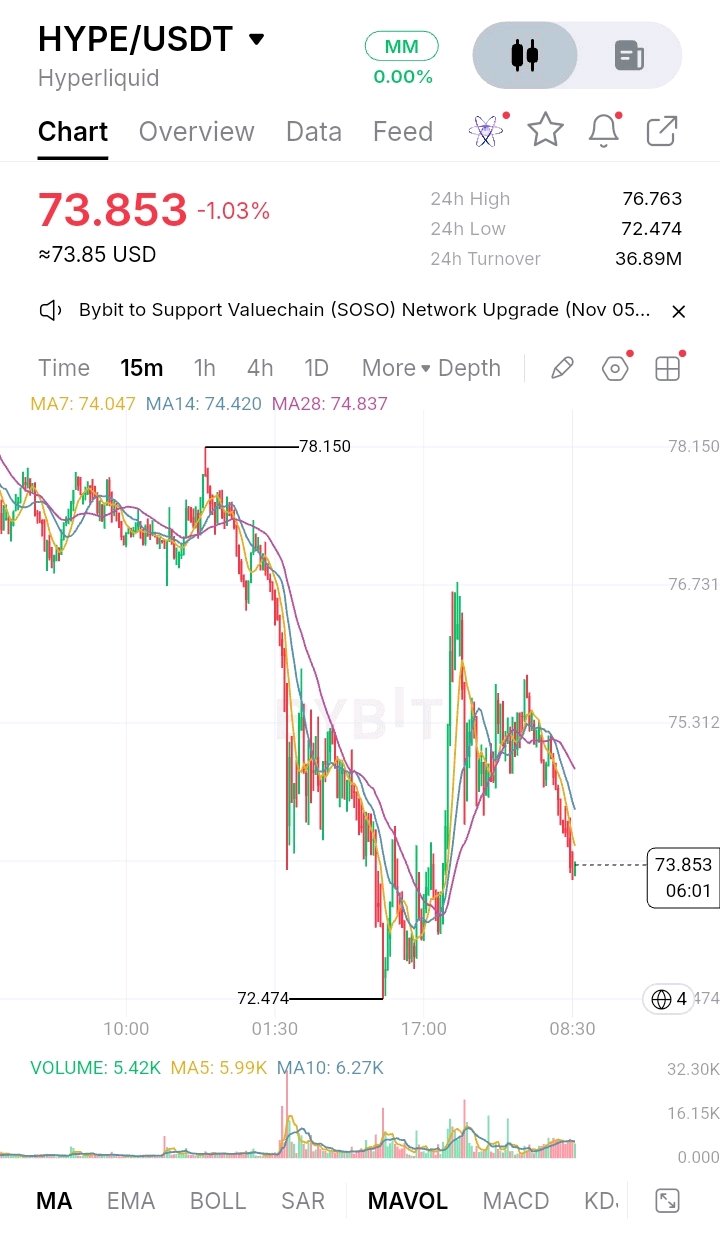
HYPE secures the Hyperliquid network through delegated proof-of-stake, but its validator infrastructure is not completely open to public inspection. The project explicitly instructs validators not to expose validator ports publicly. That's not an oversight. It's a stated choice. The reasoning is operational security: limiting publicly exposed infrastructure can reduce opportunities for attacks against network validators. But holders give up something in return. They cannot independently inspect every validator's network-facing infrastructure or continuously assess its operational exposure. What holders CAN verify is substantial: on-chain validator stakes, delegation activity, consensus participation and validator-set changes. Hyperliquid updates its validator set approximately every 90 minutes. However, the documentation does not provide a recurring independent infrastructure audit or named third-party attestation. On-chain visibility is not continuous security assurance. Outsiders still cannot independently verify every validator's underlying infrastructure between public disclosures. Solana takes a more disclosure-oriented approach, publishing validator counts and its Nakamoto coefficient, a measure of stake concentration. That provides more measurable network-level scrutiny, although it does not eliminate infrastructure risks. Neither approach removes counterparty risk. Hyperliquid prioritises restricted infrastructure exposure, while Solana offers additional public validator-network metrics. HYPE's trust model leans on on-chain consensus, delegated stake and operational controls rather than complete infrastructure visibility. Which risk worries you more — publicly exposed infrastructure that invites scrutiny, or restricted visibility that requires greater trust in operators? $HYPEUSDT #BOERateDecision
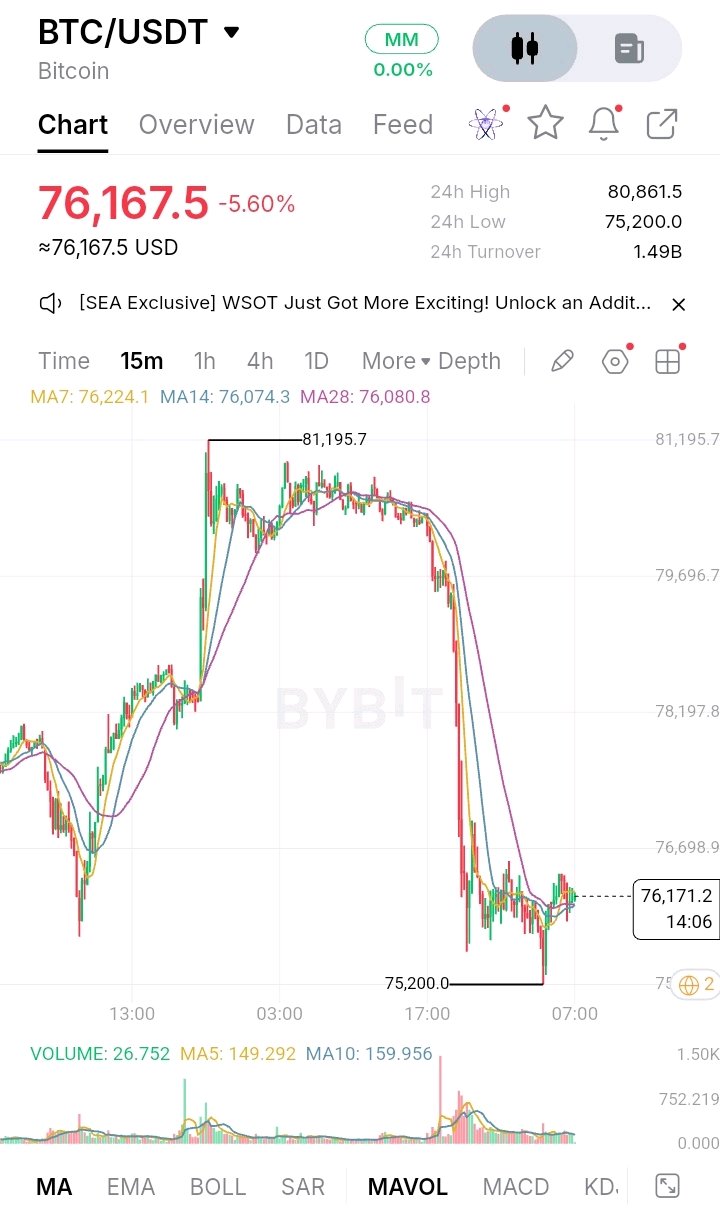
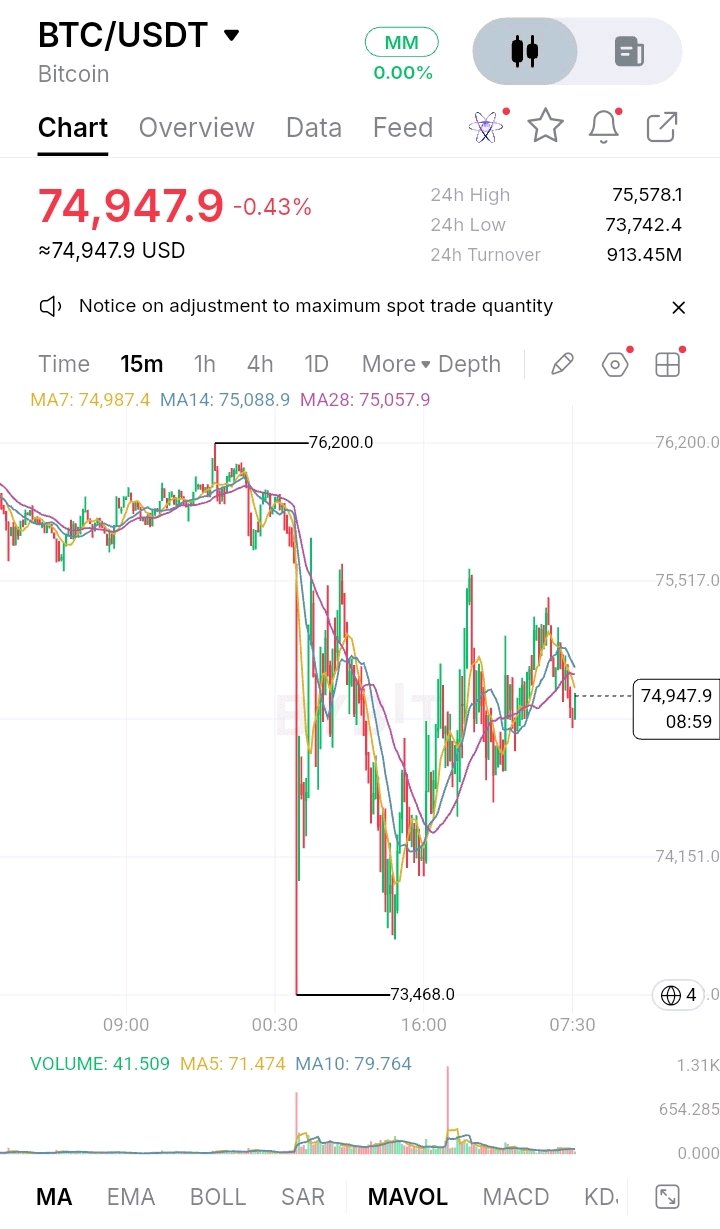
La imagen muestra BTC/USDT (Bitcoin), no una stablecoin respaldada por reservas. Bitcoin no tiene un custodio de reservas ni atestaciones de respaldo; su equilibrio de transparencia relevante es la verificación pública de transacciones frente a la propiedad seudónima y la privacidad financiera. La cadena de bloques de Bitcoin hace que cada transacción confirmada sea visible públicamente, pero las direcciones de las billeteras no revelan automáticamente las identidades del mundo real detrás de ellas. Eso no es un descuido. Es una decisión de diseño declarada. El intercambio es entre la verificación pública y la privacidad financiera. Bitcoin permite que cualquiera inspeccione los flujos de transacciones, pero esa misma visibilidad permite el seguimiento de direcciones, el análisis de saldos y la vigilancia de la cadena. Los titulares pueden verificar de forma independiente las transacciones, la emisión y las reglas de consenso ejecutando un nodo completo. Los nodos validan continuamente los bloques contra las reglas del protocolo de Bitcoin. No existe un custodio de reservas, un auditor externo de respaldo o una atestación periódica de reservas porque BTC no está respaldado por activos fuera de la cadena. Lo que los externos no pueden establecer de manera confiable solo a partir de la cadena de bloques es quién controla cada dirección o si los custodios fuera de la cadena realmente poseen el BTC de los clientes. Ahora comparemos Monero (XMR). Toma el enfoque opuesto: las firmas de anillo, las direcciones ocultas (stealth addresses) y las transacciones confidenciales ocultan a los remitentes, destinatarios y montos por defecto. Eso significa menos escrutinio público a nivel de transacción, a cambio de una mayor privacidad financiera. Bitcoin +3 Ninguno de los enfoques elimina el riesgo de contraparte. Bitcoin expone el historial de transacciones pero deja la atribución de identidad incierta. Monero oculta los detalles de la transacción pero requiere confianza en su criptografía, software y seguridad operativa. Bitcoin eligió la verificabilidad pública con propiedad seudónima. Su modelo de confianza se apoya en la verificación independiente en lugar de atestaciones institucionales. ¿Qué riesgo te preocupa más: la visibilidad financiera permanente o la transparencia pública reducida de las transacciones? $BTCUSDT $XRPUSDT #Observación del IPC de EE. UU. de nov.
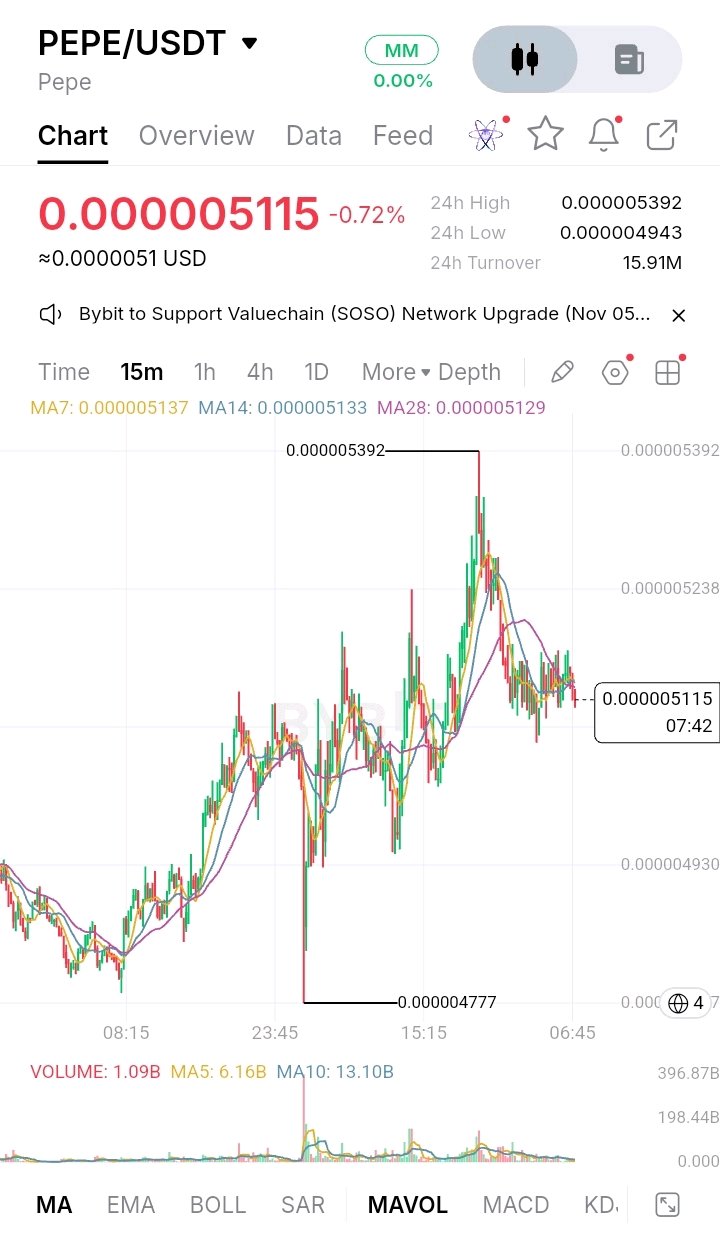
PEPE has a fixed supply of 420.69 trillion tokens, and its Ethereum contract is publicly verifiable. But the people behind the project remain pseudonymous. That's not the same as full transparency. That's the tradeoff: public transactions, private identities. An anonymous team can reduce personal exposure and targeting, but holders lose the ability to independently verify who is making decisions or who controls key wallets. Holders CAN inspect the original contract, token supply, wallet balances and transfers on-chain. The contract's ownership has been renounced, and CertiK lists one available audit. However, an audit is not continuous monitoring, and it cannot establish the real-world identities behind every wallet. The remaining 6.9% allocation was reportedly reserved in a multisignature wallet for exchange listings, bridges and liquidity. Blockchain records can show movements, but not independently establish the identity or intentions of every signer. Dogecoin takes a different route: its public blockchain makes issuance and transactions independently inspectable, without relying on reserve attestations. More exposure, in exchange for verifiable monetary activity. Neither approach removes counterparty risk. PEPE holders face uncertainty around pseudonymous actors and concentrated holdings. Dogecoin holders face market and network risks despite public issuance. PEPE's trust model leans on immutable contract rules and public blockchain verification, rather than identifiable management or recurring reserve attestations. Which risk worries you more — anonymous actors with publicly visible transactions, or identifiable participants with greater institutional exposure? $PEPEUSDT $ETHUSDT #Oracle20BFundingPlanTestsTheAITrade
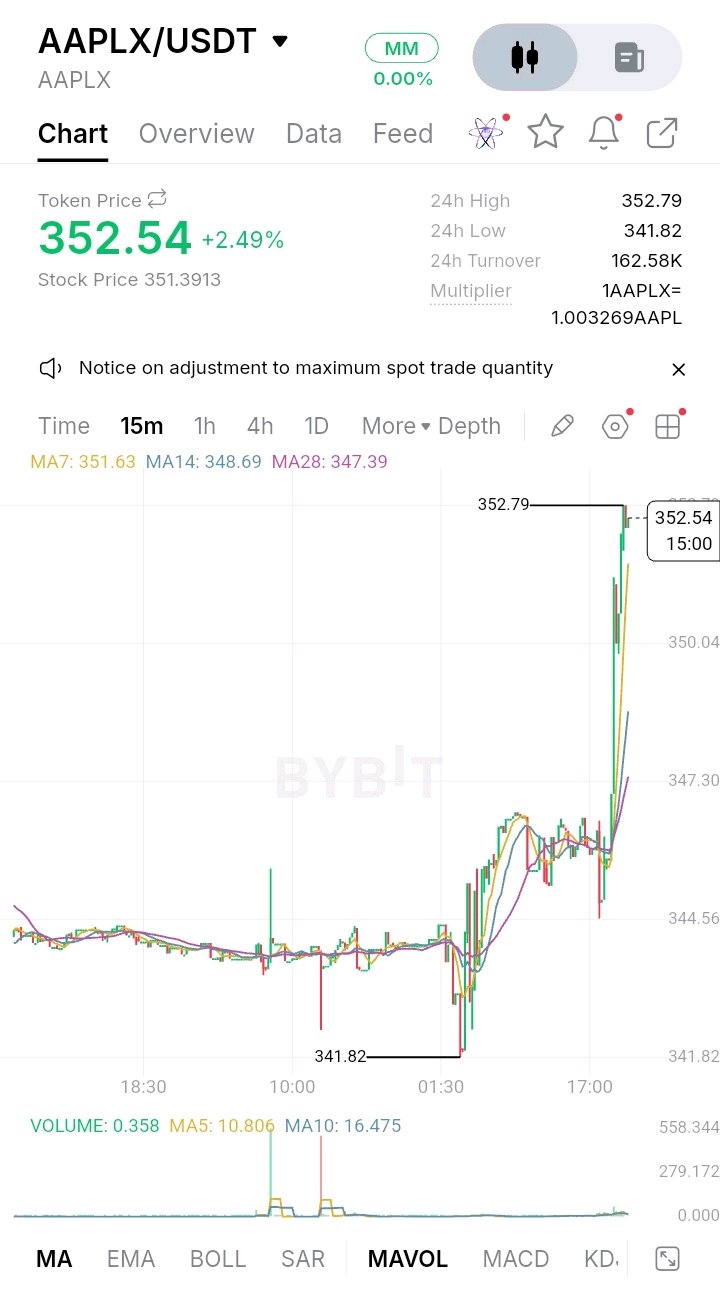
AAPLX gives holders tokenized price exposure to Apple stock, with Backed Assets (JE) Limited stating that each token is backed 1:1 by the corresponding underlying share. But there is a transparency gap: public proof of reserves is available, while a clearly disclosed independent attestation schedule is not. That's not proof of missing backing; it's a distinction between published collateral data and independent verification. The tradeoff is operational visibility versus public verifiability. Backed uses segregated custody accounts and an independent Security Agent to protect collateral interests. However, holders cannot independently inspect those bank and brokerage accounts in real time. The issuer does not publicly identify a recurring independent reserve-attestation firm or schedule in its current legal disclosures. xStocks Docs +2 Holders can check public blockchain ownership records and issuer-published proof-of-reserves information. Backed describes 1:1 collateralization, but an on-chain supply record cannot independently prove that every underlying share remains in custody. No continuous independent audit is established by these disclosures. xStocks Docs +1 Compare Ondo's AAPLon. Ondo says an independent Verification Agent reviews collateral backing every business day, with a separate Security Agent protecting tokenholders' interests. More disclosure, in exchange for more frequent independent scrutiny. Ondo Finance Neither approach removes counterparty risk. AAPLx relies on segregated custody, contractual protections and issuer disclosures. Ondo adds daily verification, but still relies on custodians, legal structures and intermediaries. AAPLx leans on controlled custody and a public proof-of-reserves framework rather than a publicly identified daily verification process. Which risk worries you more — limited independent visibility between disclosures, or greater reliance on a wider network of financial intermediaries? $AAPLXUSDT #WSOT2026
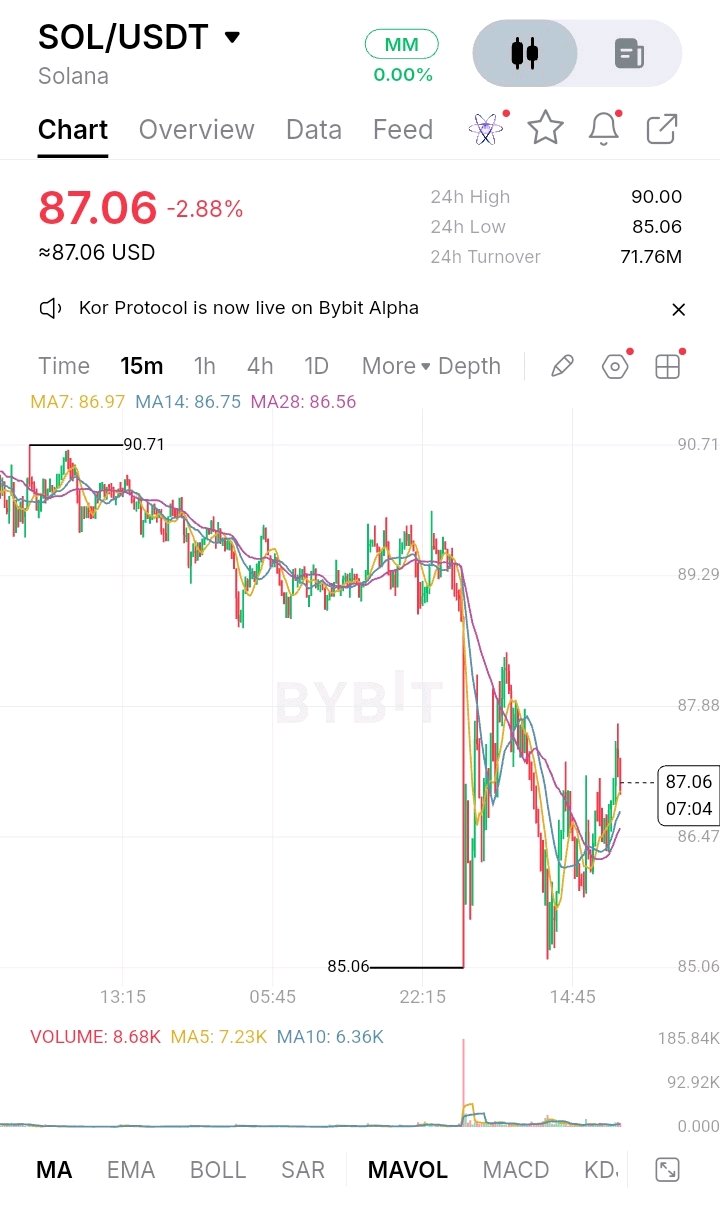
SOL is not a reserve-backed asset. Its value is not supported by a disclosed vault of cash or securities; it depends on the Solana network, its validators, and market demand. But there is a transparency tradeoff. Wallet addresses and transactions are public, while the real-world identities and infrastructure behind many validators are not. That's not an oversight. It's a stated feature of pseudonymous blockchain design. Keeping operator identities and infrastructure details private can reduce targeting and operational security risks. But holders lose the ability to independently connect every validator to a verified real-world operator. SOL holders can inspect transactions, account balances, staking positions, and validator activity directly on-chain. Solana Foundation also publishes network research, including validator distribution and decentralization metrics. Its November 2026 network snapshot reports 650 consensus validators and a Nakamoto coefficient of 18. However, these are published snapshots, not continuous independent audits. Solana +2 Ethereum takes a comparable but more explicitly documented approach to validator deposits, balances, and withdrawal credentials through its public consensus layer. More exposure, in exchange for independently inspectable validator-level information. ethereum.org +1 Neither approach removes counterparty risk. SOL relies on validator performance and network decentralization; ETH relies on validator participation and protocol enforcement. SOL's trust model leans on public ledger verification rather than private reserve attestations. Which risk worries you more — exposed validator infrastructure, or limited visibility into the real-world operators behind the network? $SOLUSDT $FOGOUSDT #WSOTPicktoEarn10U
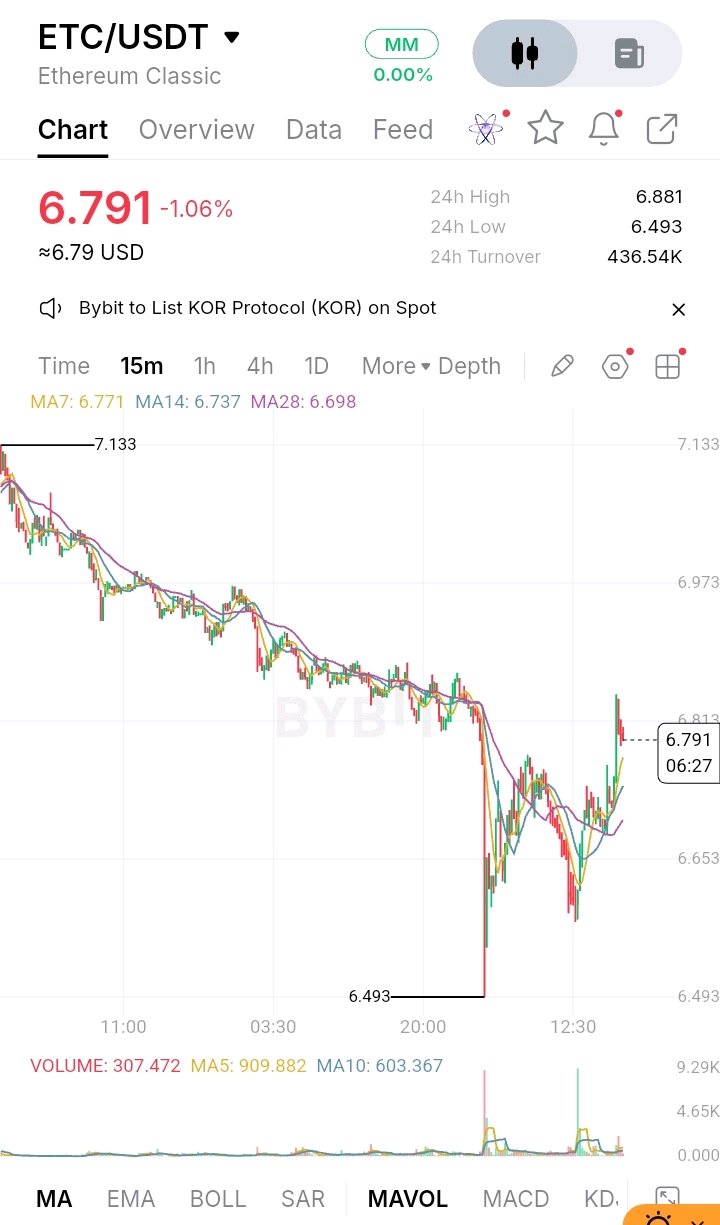
Ethereum Classic (ETC) makes a deliberate choice: public transactions, proof-of-work security, and an open ledger. But public blockchain data does not mean every aspect of ownership is transparent. That's not an oversight. It's a structural distinction. ETC's design prioritises verifiable transactions and censorship resistance. However, it cannot reveal every off-chain arrangement, exchange liability, or custodial ownership record. Holders lose visibility when their ETC sits inside a third-party platform rather than their own wallet. The mechanism is straightforward. ETC holders can inspect transactions, wallet balances, blocks, and network activity through public explorers. Its network uses Etchash proof of work, with miners competing to validate blocks. There is no reserve-backing attestation or recurring reserve audit for native ETC, because it is not a reserve-backed token. On-chain visibility also cannot independently verify an exchange's internal liabilities. Now compare Monero (XMR). It takes the opposite approach: ring signatures, stealth addresses, and RingCT conceal transaction participants and amounts by default. That provides financial privacy, but outsiders sacrifice transaction-level visibility. More privacy, in exchange for less public scrutiny. Neither approach removes counterparty risk. ETC exposes on-chain activity but leaves custodial balances dependent on intermediaries. Monero protects transaction privacy but limits independent observation. ETC chooses public verifiability; its trust model leans on proof of work and independently inspectable records. Which risk worries you more — financial activity exposed to public scrutiny, or financial activity that outsiders cannot independently verify? $ETHUSDT $SOLUSDT #WSOT2026
KOR
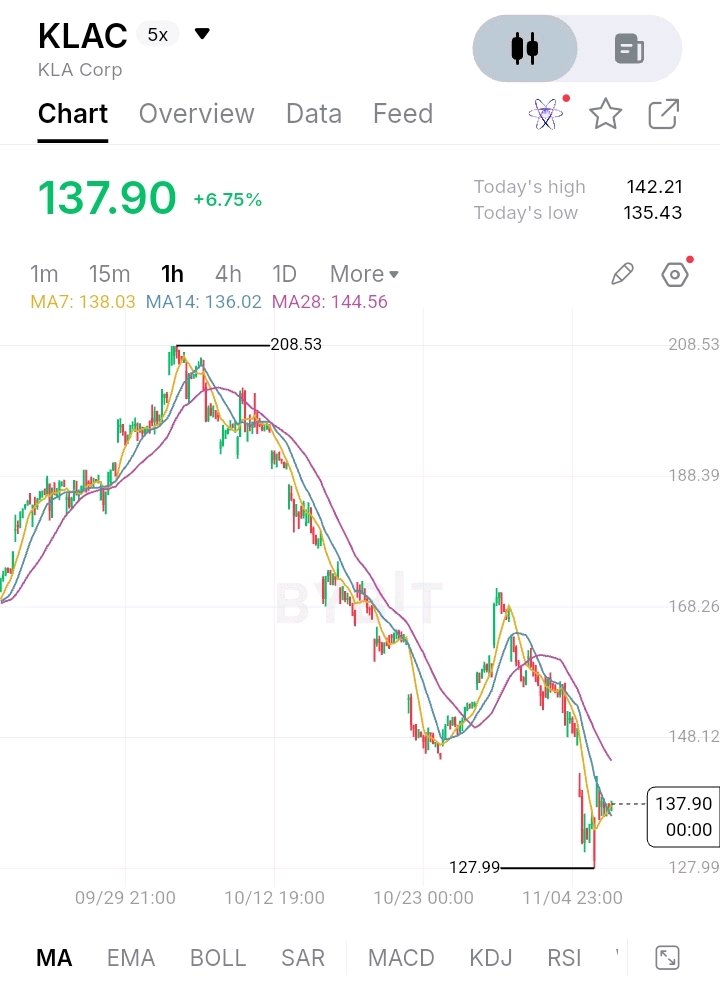
KLA Corporation (KLAC) builds critical semiconductor inspection and process-control equipment, but its competitive advantage depends heavily on protecting proprietary technology and trade secrets. That's not an oversight. It's a stated choice. KLA protects sensitive technology through patents, confidentiality agreements and restricted access. The reason is straightforward: exposing technical details could help competitors replicate its capabilities. But shareholders lose the ability to independently examine important parts of the technology behind the business. What can investors verify? KLA publishes financial statements, revenue breakdowns, risk disclosures and internal-control assessments. Its FY2025 financial statements and internal controls were audited by PricewaterhouseCoopers (PwC), with annual reporting under SEC requirements. However, a financial audit is not continuous verification of product performance or competitive advantage. Outsiders cannot independently inspect every proprietary system or validate its technological edge between reporting periods. ASML takes a more disclosure-heavy approach, publishing extensive annual financial, operational and country-by-country reporting. More exposure, in exchange for greater public scrutiny. Yet ASML also protects its intellectual property and trade secrets. Neither approach removes counterparty risk. KLA shareholders rely on management's execution and protected technology. ASML shareholders rely on disclosed performance while still accepting operational and competitive risks. KLA's model leans toward intellectual-property protection over complete technical visibility. Which risk worries you more — limited visibility into protected technology, or greater corporate disclosure with more publicly exposed information? $KORUSDT $ARKMUSDT #NovUSCPIWatch
HYPE está asegurado
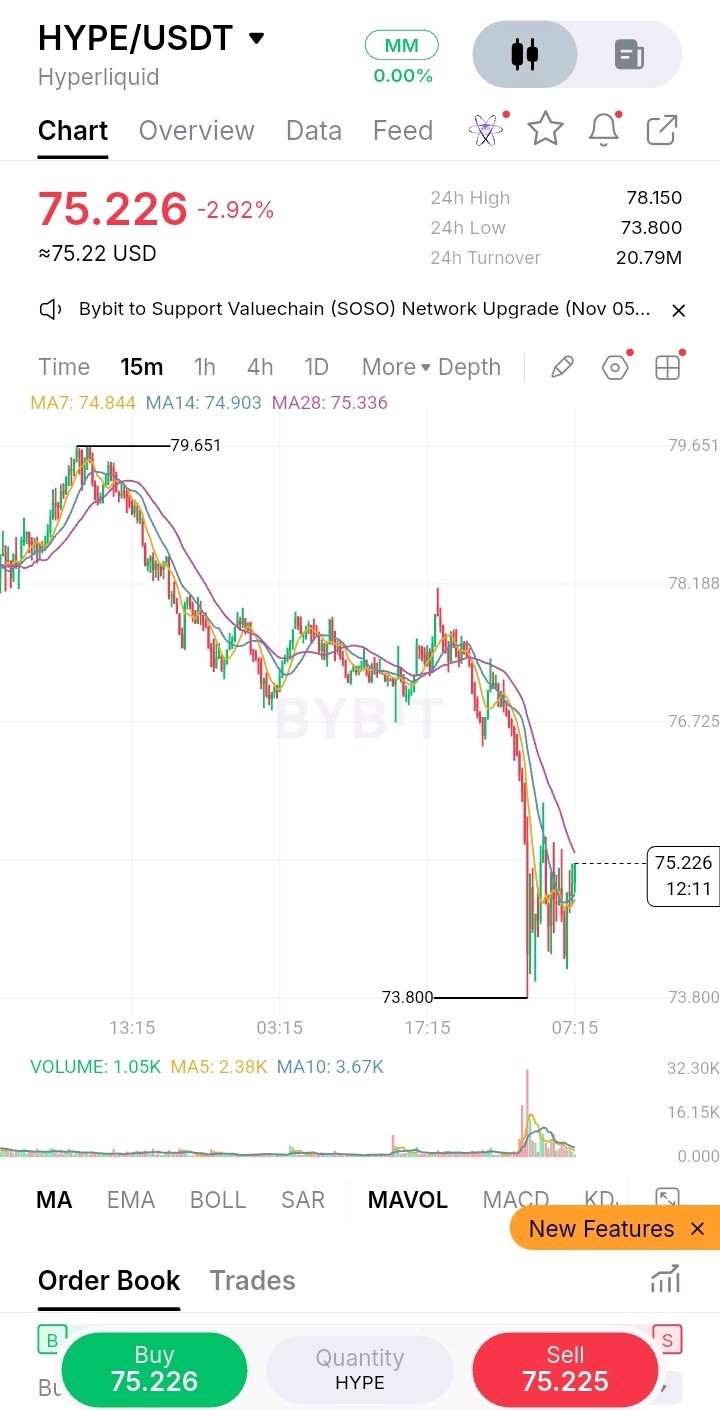
por la red de validadores de prueba de participación (proof-of-stake) de Hyperliquid, con el conjunto de validadores activos seleccionado entre los 24 principales según su participación. Pero los datos públicos de la blockchain no revelan cada detalle de la infraestructura detrás de esos validadores. Eso no es un descuido. Es una compensación de diseño: Hyperliquid prioriza la ejecución transparente en cadena sin requerir que los validadores expongan cada detalle operativo. Mantener los detalles de la infraestructura en privado puede reducir la exposición a ataques dirigidos. Pero los titulares pierden cierta capacidad para evaluar de forma independiente la concentración de validadores, la resiliencia operativa y los riesgos de infraestructura del mundo real. ¿Qué pueden verificar los titulares? Los saldos de staking de HYPE, las participaciones de los validadores, la actividad de delegación y los datos de consenso de la red son de acceso público. La documentación oficial de Hyperliquid explica que los validadores se seleccionan de forma transparente según su participación y que el conjunto activo evoluciona aproximadamente cada 90 minutos. Sin embargo, no existe una certificación periódica de terceros declarada sobre la infraestructura de los validadores. La visibilidad en cadena no es una auditoría independiente continua de las operaciones. Documentación de Hyperliquid +1 Compáralo con DYDX. Su documentación describe un conjunto activo de validadores limitado a 60, con información de validadores de acceso público. Más exposición a nivel de operador, a cambio de un mayor escrutinio de la estructura de validadores de la red. dYdX +1 Ninguno de los dos enfoques elimina el riesgo de contraparte. Hyperliquid se basa en el consenso ponderado por participación y la verificabilidad en cadena. DYDX ofrece una estructura de validadores diferente, pero sigue dependiendo de que los operadores actúen de forma fiable. El modelo de HYPE se inclina hacia transacciones verificables sin una transparencia operativa total. ¿Qué riesgo te preocupa más: exponer la infraestructura a ataques dirigidos o confiar en lo que no puedes verificar de forma independiente? $HYPEUSDT $SOLUSDT #WSOT2026 #Observación del IPC de EE. UU. de nov. #WSOTPicktoEarn10U #Las nóminas de EE. UU. y las decisiones sobre tasas impulsan la semana macro #La volatilidad del petróleo sigue las conversaciones de paz con Irán
HYPE title
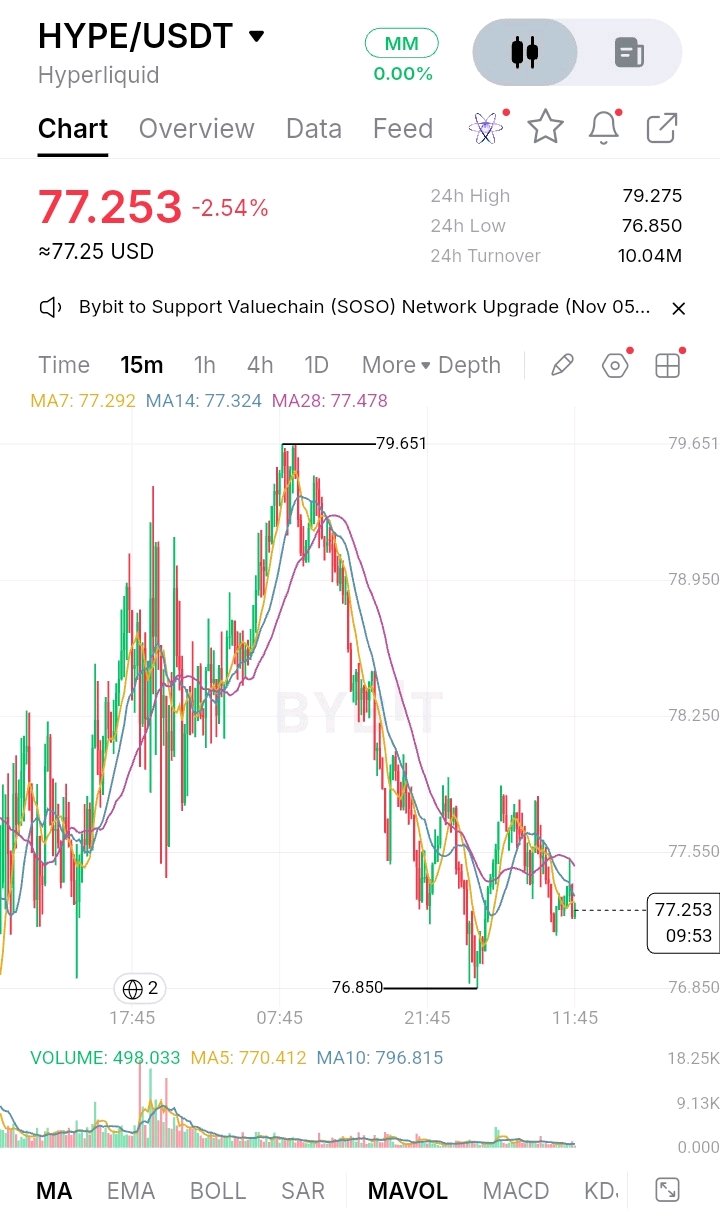
HYPE is not a reserve-backed stablecoin. It is Hyperliquid’s native token, with a maximum initial supply of 1 billion tokens. But transparent supply allocation does not mean every part of token distribution is equally verifiable. That's not necessarily an oversight. It's a disclosure gap worth examining. Hyperliquid publishes major allocation categories and on-chain activity, allowing holders to track token movements and the Assistance Fund. However, knowing how much was allocated to contributors is different from knowing precisely when every contributor token will enter circulation. The verification gap matters because holders cannot independently forecast every potential supply increase from a fully disclosed release curve. Hyperliquid lists Zellic as the auditor of its bridge contract, but that is not a recurring audit of token distribution or contributor balances. Hyperliquid Docs +1 There is no published monthly attestation schedule for those allocations. Compare GMX. Its official documentation identifies vesting contracts, token allocations and a two-year linear contributor distribution. That gives outsiders more exposure to the mechanics, in exchange for greater on-chain scrutiny. GMX Docs Neither approach removes counterparty risk. HYPE holders rely more heavily on disclosed allocations, blockchain data and governance decisions. GMX holders can inspect more of the vesting infrastructure, but still depend on smart-contract execution and governance. HYPE's tradeoff leans toward transparent on-chain activity without complete visibility into every distribution detail. Which risk worries you more — relying on incomplete disclosure, or relying on publicly visible contracts that still require trust in their execution? $HYPEUSDT $BTCUSDT #WSOT2026 #NovUSCPIWatch #WSOTPicktoEarn10U #USPayrollsAndRateDecisionsDriveMacroWeek #OilVolatilityTracksIranPeaceTalks
STX title
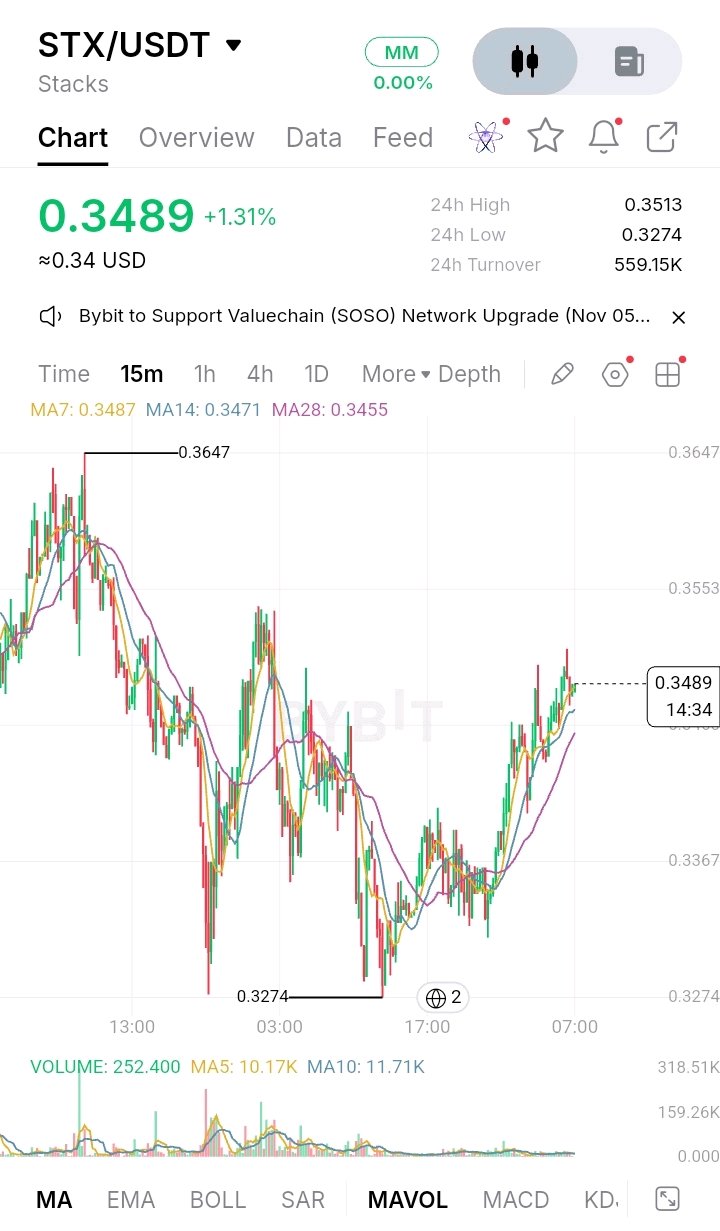
🚀 STX (Stacks) – LONG SETUP I'm watching STX for a potential bullish continuation after its recent recovery on the 15-minute chart. 📊 TRADE PLAN Coin: Stacks (STX) Pair: STX/USD Direction: LONG 🟢 Entry Zone: $0.3370 – $0.3420 🎯 Take Profit Targets: TP1: $0.3513 TP2: $0.3553 TP3: $0.3639 🛑 Stop Loss: $0.3265 📈 TECHNICAL ANALYSIS • Moving averages show a bullish alignment, with MA7 above MA14 and MA28 on the provided chart. • Price has recovered from the $0.3274 swing low, showing improving short-term market structure. • The $0.3367 area is an important support zone to watch. • Resistance around $0.3513 is the first major upside hurdle. • A breakout supported by stronger volume could open the way toward higher targets. 💡 MY STRATEGY I'm looking for a pullback into the entry zone before considering a LONG position. I want to see buyers defend support and volume increase before entering. A breakdown below support would invalidate this setup. Trade smart, manage your risk, and never enter without confirmation. Good luck, traders! 🚀 $STXUSDT $BCHUSDT #NovUSCPIWatch #WSOT2026
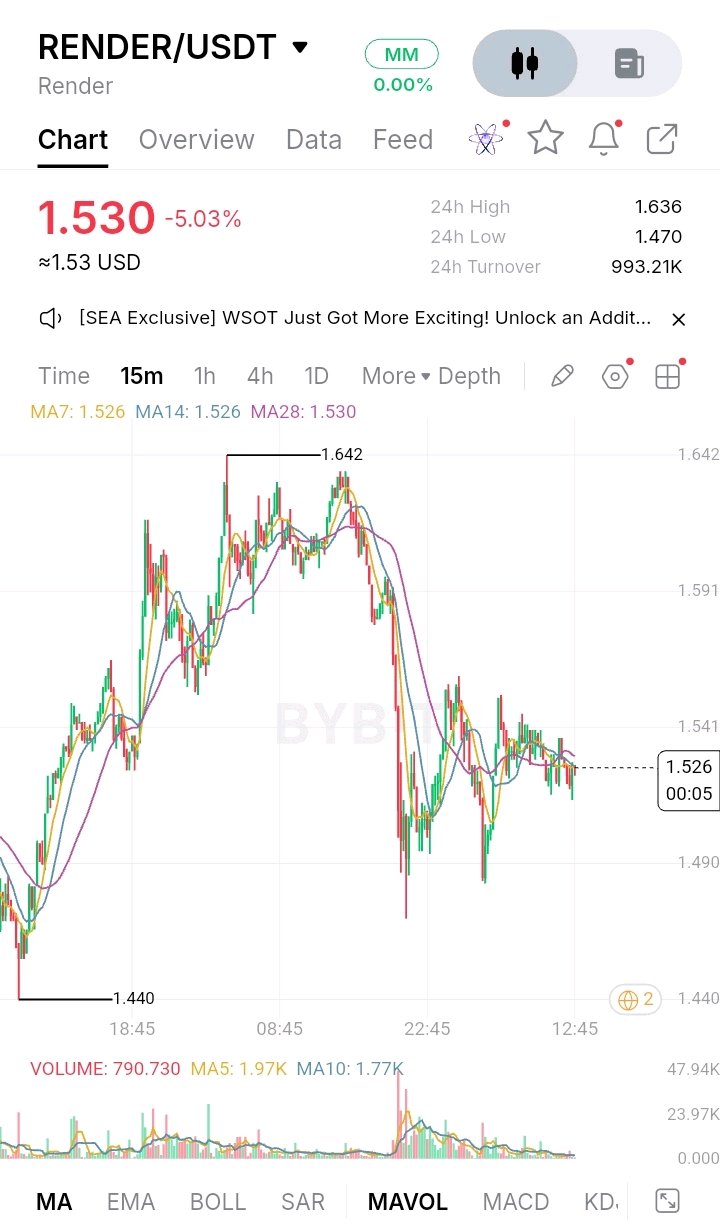
RENDER title
🚀 RENDER – 15M CHART ANALYSIS | TRADE SETUP RENDER is currently trading around 1.530, showing consolidation after a strong downward move. I'm watching this level closely because the market is trying to establish a stable support zone after the recent volatility. 📊 TECHNICAL ANALYSIS • Current Price: 1.530 • MA7: 1.526 • MA14: 1.526 • MA28: 1.530 • 24H High: 1.636 • 24H Low: 1.470 KEY SUPPORT LEVELS - 1.520 - 1.500 - 1.490 - 1.470 KEY RESISTANCE LEVELS - 1.541 - 1.560 - 1.591 - 1.620 🔥 MY TRADE PLAN – LONG SETUP Entry Zone: 1.542–1.550 Target 1: 1.560 Target 2: 1.580 Target 3: 1.591 Target 4: 1.620 Stop Loss: 1.518 ENTRY CONFIRMATION I'm looking for a strong 15-minute candle close above 1.541, followed by a successful retest of the breakout level. I don't want to enter without confirmation. 📈 WHY THIS SETUP WORKS 1. Price is consolidating after a sharp sell-off. 2. The short-term moving averages are clustered around the current price, indicating compression. 3. A breakout above 1.541 could bring fresh buying momentum. 4. The next resistance zones provide potential profit-taking areas. 5. A stop below 1.518 helps define the risk. ⚠️ RISK MANAGEMENT Never risk more than 1–2% of your trading capital on a single trade. If price fails to break 1.541, I will wait patiently. If the support breaks, this LONG setup becomes invalid. I'm focusing on confirmation, discipline and proper risk management instead of chasing candles. Trade smart. Protect your capital. 🚀 $RENDERUSDT $XRPUSDT
Título de BTC
🐻 Análisis del mercado de BTC | Configuración bajista | 15M Estoy vigilando BTC de cerca porque el mercado ha mostrado una presión de venta significativa tras no lograr mantener sus niveles de precio más altos. Descripción general del mercado - Precio actual: 76,167 - Cambio 24H: -5.60% - Máximo 24H: 80,861 - Mínimo 24H: 75,200 - Marco temporal: 15 minutos Análisis técnico BTC ha experimentado un fuerte movimiento bajista, seguido de una consolidación lateral cerca del área de 76,000. Medias móviles: - MA7: 76,224 - MA14: 76,074 - MA28: 76,080 Las medias móviles de corto plazo están estrechamente agrupadas, mostrando consolidación tras la fuerte venta. La estructura intradía más amplia sigue siendo bajista. Niveles importantes Resistencia: - 76,450 - 76,700 - 77,200 Soporte: - 76,000 - 75,500 - 75,200 🎯 Configuración de trade de BTC — SHORT (Venta en corto) Zona de entrada: 76,450–76,650 Take Profit (Toma de ganancias): - TP1: 76,000 - TP2: 75,500 - TP3: 75,200 Stop Loss (Detener pérdidas): 76,950 Dirección del trade: SHORT (Venta en corto) Confirmación: Espere una vela de rechazo bajista en el gráfico de 15 minutos dentro de la zona de entrada antes de entrar. Por qué funciona esta configuración 1. BTC ya ha experimentado un movimiento bajista significativo. 2. El precio se está consolidando por debajo del área de ruptura anterior. 3. La MA7 está ligeramente por encima del precio actual, lo que indica presión de venta a corto plazo. 4. La región de 76,450–76,700 podría actuar como resistencia. 5. El mínimo anterior de 75,200 es un área importante de liquidez a la baja y soporte. Gestión de riesgos Estoy priorizando la protección del capital sobre el trading agresivo. Mantenga el riesgo alrededor del 1% del capital de trading por configuración. Evite el apalancamiento excesivo y no entre sin confirmación. Invalidación: Si BTC rompe por encima de 76,950 y se mantiene, esta configuración de corto queda invalidada. Esta es una configuración técnica condicional basada en el gráfico proporcionado, no una predicción garantizada. Opere con inteligencia. Proteja su capital. Manténgase disciplinado. $BTCUSDT $HAEDALUSDT