ALIENCRYPT
6107Me gusta0Compartir en el chat79Aficionados91Seguir
ALIEN CRYPTO Crypto market analysis, trading setups, price action & market insights. Trade smart. Stay disciplined.
ALIEN CRYPTO Crypto market analysis, trading setups, price action & market insights. Trade smart. Stay disciplined.
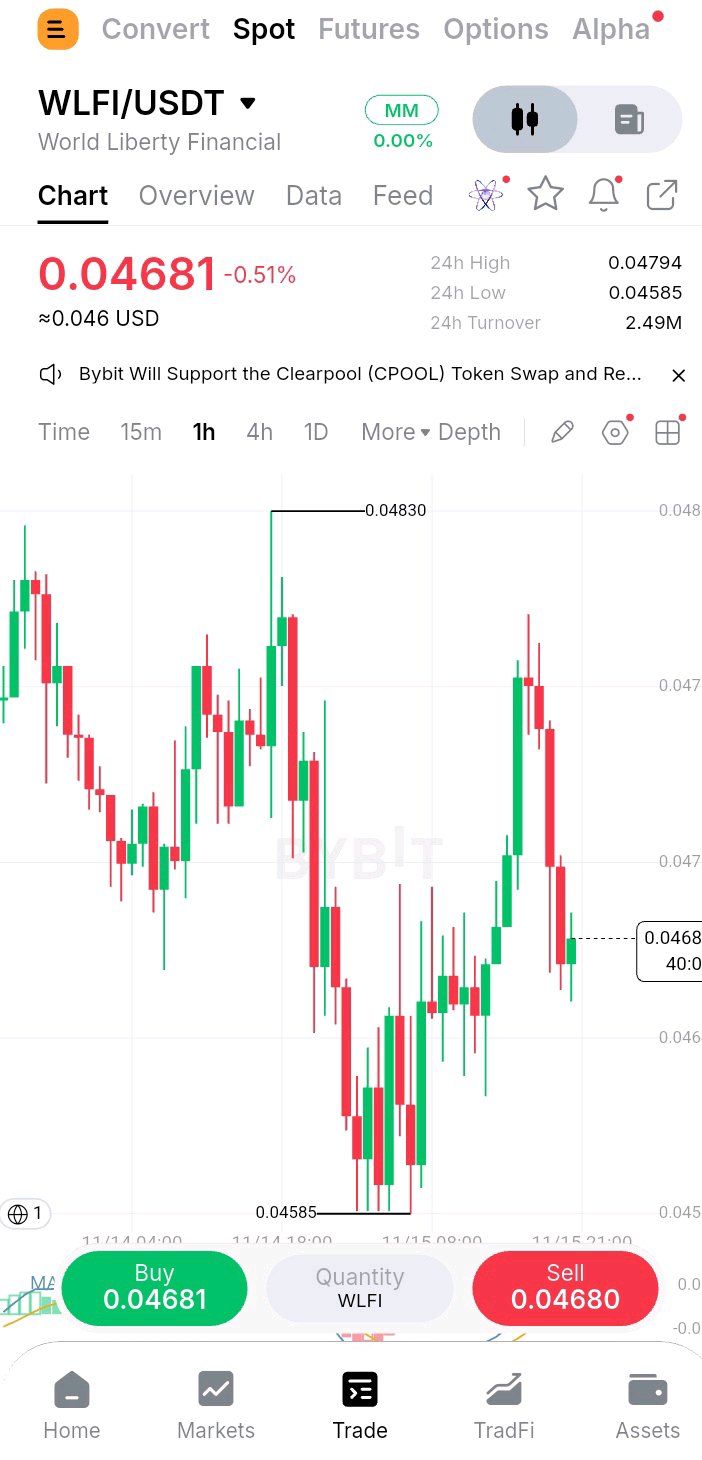
$WLFI DAILY UPDATE — FIRST BUYBACK COMPLETED AS PRESSURE BUILDS** World Liberty Financial has moved from announcement to execution. The project completed its first $1 million WLFI buyback in under 72 hours, with the purchases conducted on-chain through Aster on BNB Chain and visible in a public wallet. Roughly 21 million tokens were acquired in the initial tranche. The buyback program was unveiled shortly after the U.S. midterm elections, when WLFI dropped sharply alongside other Trump-linked assets. The company has said funding may draw from fees generated by reserves backing its USD1 stablecoin, among other sources. The stated goal is to encourage active governance participation and shift more voting power toward longer-term holders. Officials have described buybacks as an ongoing strategy whose pace will depend on ecosystem growth and available resources. This matters because it creates a direct link between USD1 adoption and WLFI demand. If the stablecoin continues generating reserve income, the buyback budget can expand. If growth slows, the program is likely to remain modest. The first $1 million tranche is relatively small against the token’s market size, but it establishes a verifiable, public mechanism that the community can track. Behind the scenes, the project continues operating under elevated scrutiny. Independent investigators, including Coffeezilla working with researcher Molly White, have examined reported UAE-linked investment ties and the use of USD1 in larger deals. World Liberty has denied wrongdoing or improper influence. Separately, the long-running dispute with Justin Sun over frozen tokens remains active, with recent court filings adding another layer of legal friction. On the on-chain side, affiliated wallets have continued staking significant WLFI amounts, signaling that larger holders are still locking up tokens even as price has consolidated near recent lows. What the community should watch next is the scale and frequency of future buybacks, any further disclosure around USD1 reserve income, and how the new congressional environment shapes regulatory attention on the project. Confirmed schedules for additional purchases have not been published; the company has left timing and size discretionary. **My Daily Perspective** The first on-chain buyback is a concrete step after weeks of pressure. It does not erase the political and legal headwinds, but it does give holders a transparent metric to follow. In the coming weeks, the real test will be whether USD1 activity and governance engagement grow enough to make the buyback program meaningful rather than symbolic. For a project this closely watched, consistency and transparency will matter more than any single announcement. #ByXIMPACT $WLFIUSDT
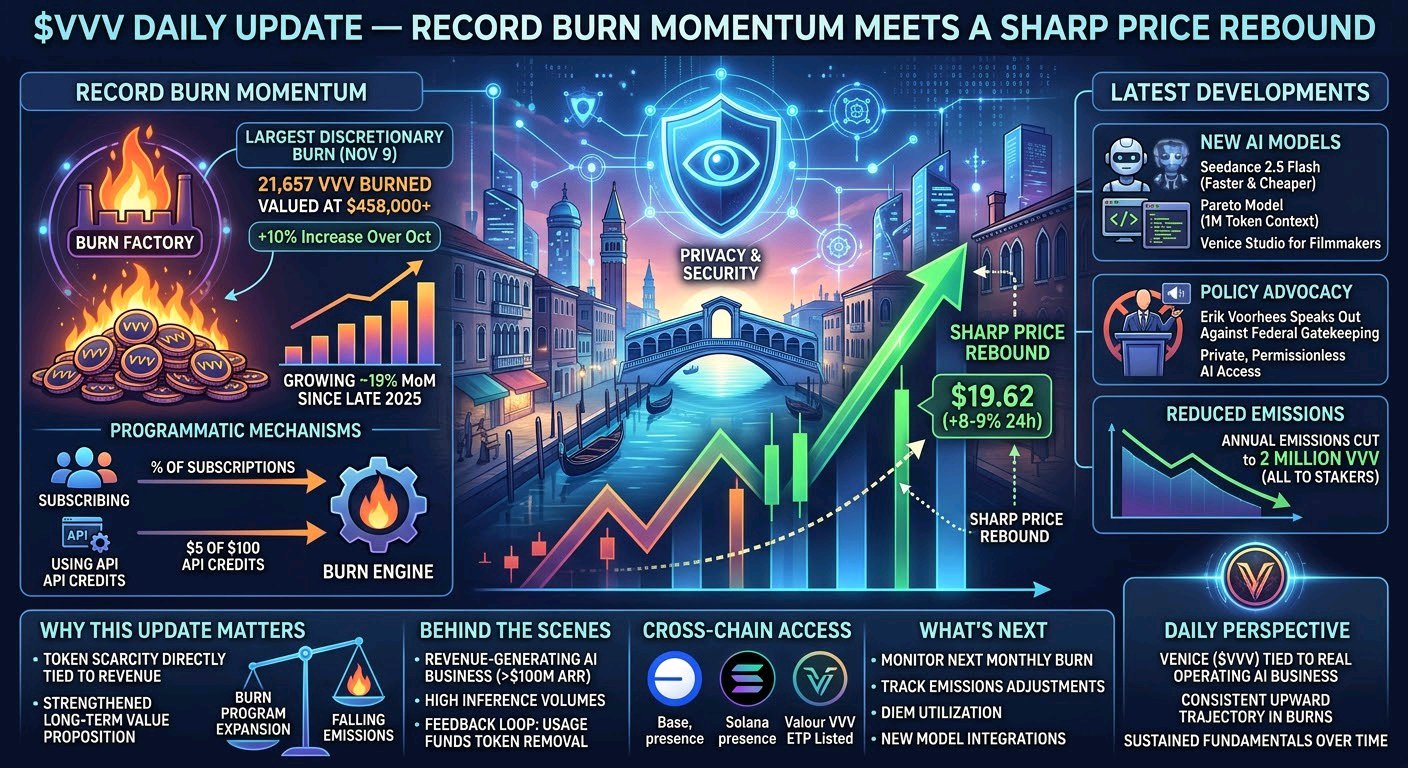
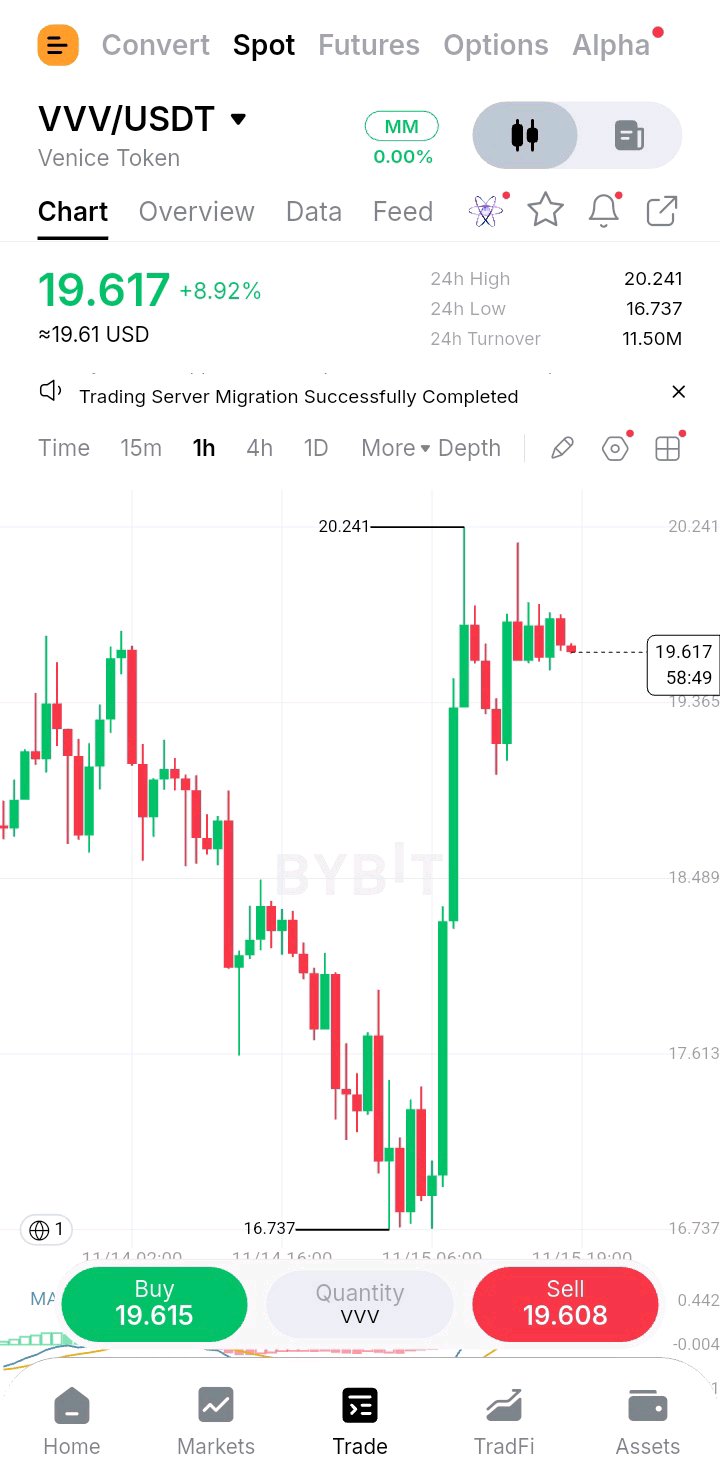
$VVV DAILY UPDATE — RECORD BURN MOMENTUM MEETS A SHARP PRICE REBOUND** Venice Token ($VVV), the utility token powering Venice.ai’s private and uncensored AI platform, is showing renewed energy today after a volatile stretch. On the charts, VVV is trading near $19.62 with gains of roughly 8–9% over the past 24 hours, recovering from a low around $16.74 after earlier pressure in the week. # Latest Developments The clearest recent catalyst remains Venice’s largest discretionary monthly buyback-and-burn to date. On November 9, the project retired 21,657 VVV (valued at approximately $458,000 at the time of the burn). This marked a roughly 10% increase over October’s burn and continued a clear upward trend in the size of these discretionary burns, which have grown at an average of nearly 19% month-over-month since late 2025. Alongside the discretionary burns, Venice continues its programmatic mechanism: a portion of subscription revenue and $5 of every $100 in API credit purchases is used to buy and permanently remove VVV from circulation. Annual emissions were already reduced to 2 million VVV (all directed to stakers) effective October 1, down significantly from earlier rates. The November discretionary burn covered roughly one-eighth of the monthly issuance figure. Product-side activity has stayed active. Venice has continued rolling out new models and tools in recent days, including early access to Seedance 2.5 Flash (positioned as faster and more cost-efficient), promotions around Venice Studio for filmmakers, and additions such as Unbiased’s Pareto model with a one-million-token context window. Founder Erik Voorhees also weighed in publicly around November 12 against proposals for heavy federal gatekeeping of frontier AI models, reinforcing the platform’s core positioning around private, permissionless access. ### Why This Update Matters The growing burn program directly ties platform revenue (subscriptions + API credits) to token scarcity. While monthly emissions still exceed the current burn scale, the consistent expansion of buybacks alongside falling emissions shows a deliberate path toward stronger scarcity mechanics. For a token whose primary utility is staking for yield, Pro access, and minting DIEM (daily AI credit), any credible reduction in net inflation strengthens the long-term value proposition for holders and agents using the system. The price rebound today, occurring against the backdrop of the fresh burn data and continued product shipping, suggests the market is still responsive to these fundamentals even after the broader pullback from September highs near $34–$35. ### What’s Happening Behind the Scenes? Venice continues to operate as a revenue-generating AI business (previously reported at or above a $100 million annualized run rate, with claims of higher figures later in the year) while processing extremely high inference volumes. The dual structure of discretionary monthly burns plus automatic burns from real usage creates a feedback loop: more platform activity funds more token removal. Circulating supply has been in the high-40-million range, with total supply still higher due to ongoing (but reduced) emissions. Cross-chain availability (Base primary, with Solana presence via Sunrise earlier) and regulated access points such as the Valour VVV ETP listed in early November further expand the holder base beyond pure crypto natives. ### What Should the Community Watch Next? Monitor the next discretionary burn announcement (typically early in the following month) for whether the growth trajectory continues. Track any further emissions adjustments, DIEM utilization metrics, and official updates on revenue or user growth. New model integrations and pricing changes on the Venice platform itself often precede shifts in usage that feed the burn engine. Distinguish confirmed tokenomics actions from broader market moves—price can diverge from usage for stretches, as seen recently. ### My Daily Perspective Venice stands out because the token is tied to an actual operating AI business with real revenue rather than pure narrative. The record November burn is not flashy in absolute size relative to total supply, but the consistent upward trajectory in burns combined with already-reduced emissions is the story that matters. When a privacy-focused AI platform keeps shipping models, expanding access, and systematically removing tokens funded by its own cash flow, the setup remains one of the cleaner experiments in AI-crypto token design. The rebound today keeps the conversation alive. In this space, sustained fundamentals tend to reassert themselves over time—watch how the burn program and usage metrics evolve from here. #ByXIMPACT $VVVUSDT
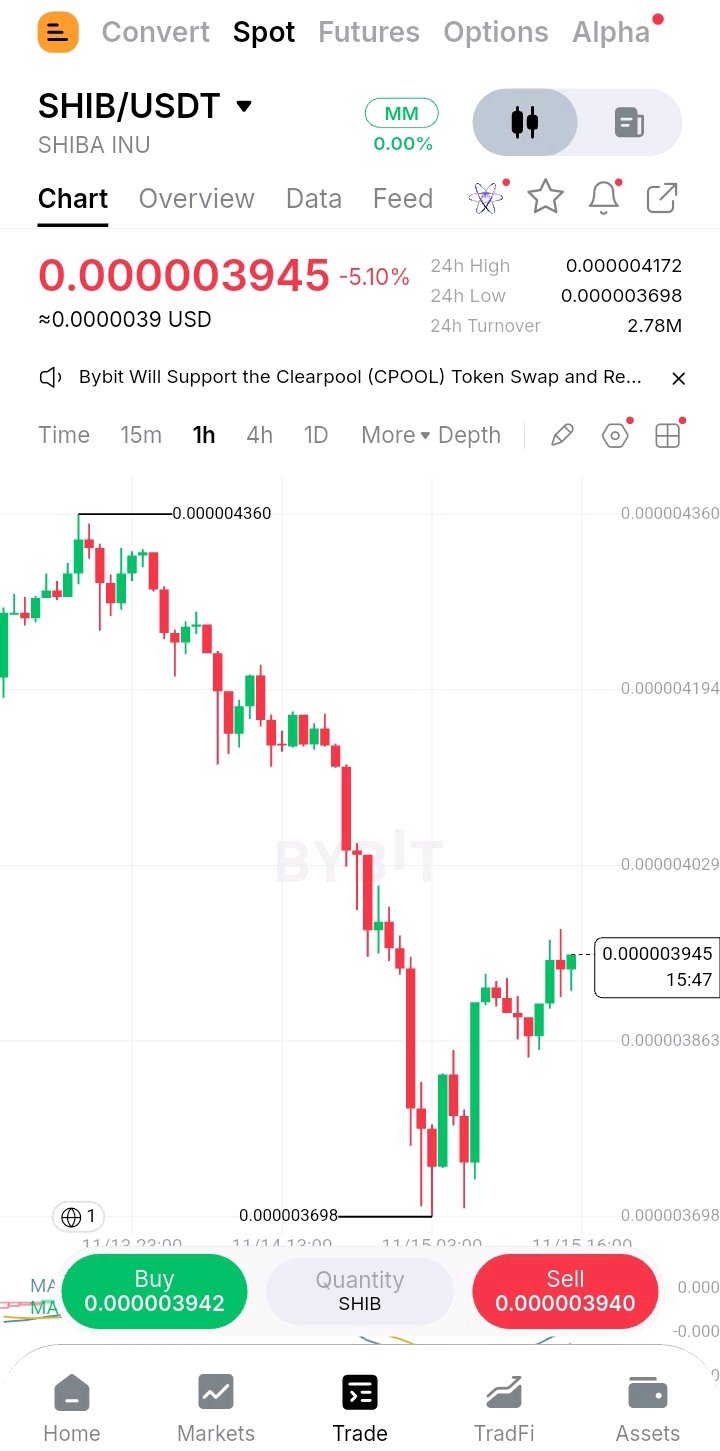
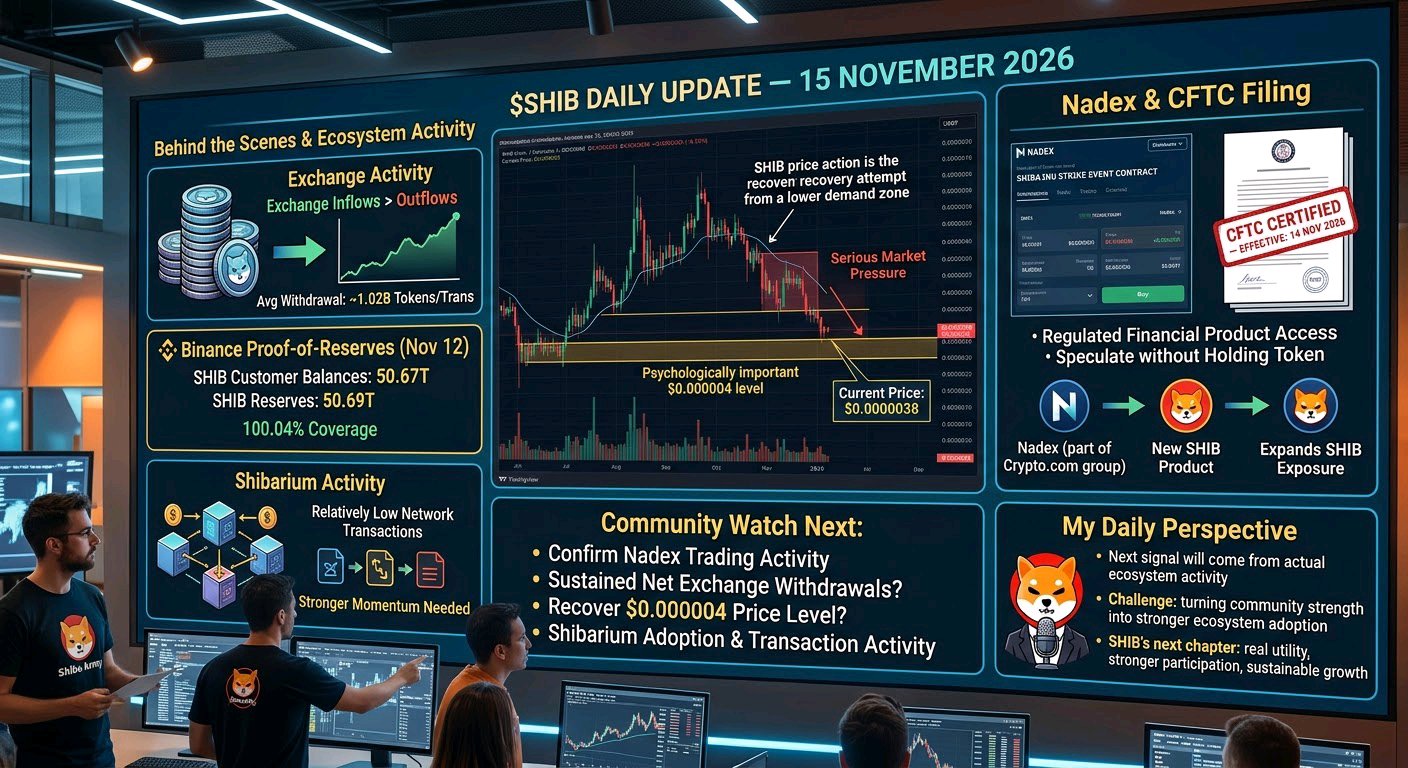
$SHIB DAILY UPDATE — SHIBA INU IS BACK IN FOCUS Shiba Inu ($SHIB) is attracting attention as traders monitor its latest market activity and ecosystem developments. The uploaded chart highlights a possible recovery attempt from a lower demand zone, with buyers attempting to defend recent lows. However, a technical bounce alone does not confirm a sustained trend reversal. ### The Biggest Development: Nadex Introduces a SHIB-Linked Trading Product On November 10, 2026, North American Derivatives Exchange (Nadex), part of the Crypto.com group, submitted an official certification for a new Shiba Inu Strike Event Contract to the US Commodity Futures Trading Commission (CFTC). The filing states that the product was intended to become available on or after November 14. It allows traders to speculate on SHIB's price without directly purchasing or holding the token. This is an important development because it expands SHIB's exposure to regulated financial products. However, derivatives access does not automatically translate into additional spot-market demand. assets.ctfassets.net +1 ### SHIB Faces Serious Market Pressure The positive development comes at a difficult time for SHIB holders. On November 14, SHIB dropped below the psychologically important $0.000004 level, reaching prices not seen since spring 2021. Market reports also highlighted weakness across the memecoin sector, alongside broader cryptocurrency selling pressure. As of November 15, market data placed SHIB around $0.0000038, although prices vary between data providers and exchanges. 15 November 2026 +1 ### What's Happening Behind the Scenes? There are three developments worth monitoring: * Exchange activity: Average SHIB withdrawals reportedly increased to approximately 1.02 billion tokens per transaction. However, exchange inflows remained higher than outflows, so this is not yet clear evidence of accumulation. * Binance reserves: Its November 12 proof-of-reserves report showed 50.69 trillion SHIB against 50.67 trillion SHIB in customer balances, representing approximately 100.04% coverage. * Shibarium activity: Reported network transactions remained relatively low, suggesting ecosystem activity still needs stronger momentum. 15 November 2026 +1 ### What Should the Community Watch Next? The important things to watch are: * Confirmation of actual trading activity for the Nadex SHIB contract. * Whether SHIB exchange flows shift toward sustained net withdrawals. * Improvements in Shibarium adoption and transaction activity. * Whether buyers can recover the $0.000004 price level. These are developments to monitor, not confirmed bullish catalysts. ### My Daily Perspective In my opinion, SHIB is entering an important period. The Nadex development gives the project additional exposure in regulated financial markets, but the current price weakness shows that market confidence has not recovered yet. I believe the next meaningful signal will come from actual ecosystem activity and sustained buying demand rather than another temporary price bounce. Shiba Inu has built a massive community over the years. The challenge now is turning that community strength into stronger ecosystem adoption and lasting market confidence. SHIB's next chapter should be about real utility, stronger participation, and sustainable growth. The community has a reason to watch closely. The next move needs confirmation, not just excitement. #SHIB #ShibaInu #CryptoNews #BinanceSquare Image accuracy note: The uploaded chart appears to contain a decimal error in its entry price. Its displayed entry is inconsistent with the listed targets and recent SHIB market prices. Verify those levels before publishing them as a trading setup. #ByXIMPACT $SHIBUSDT
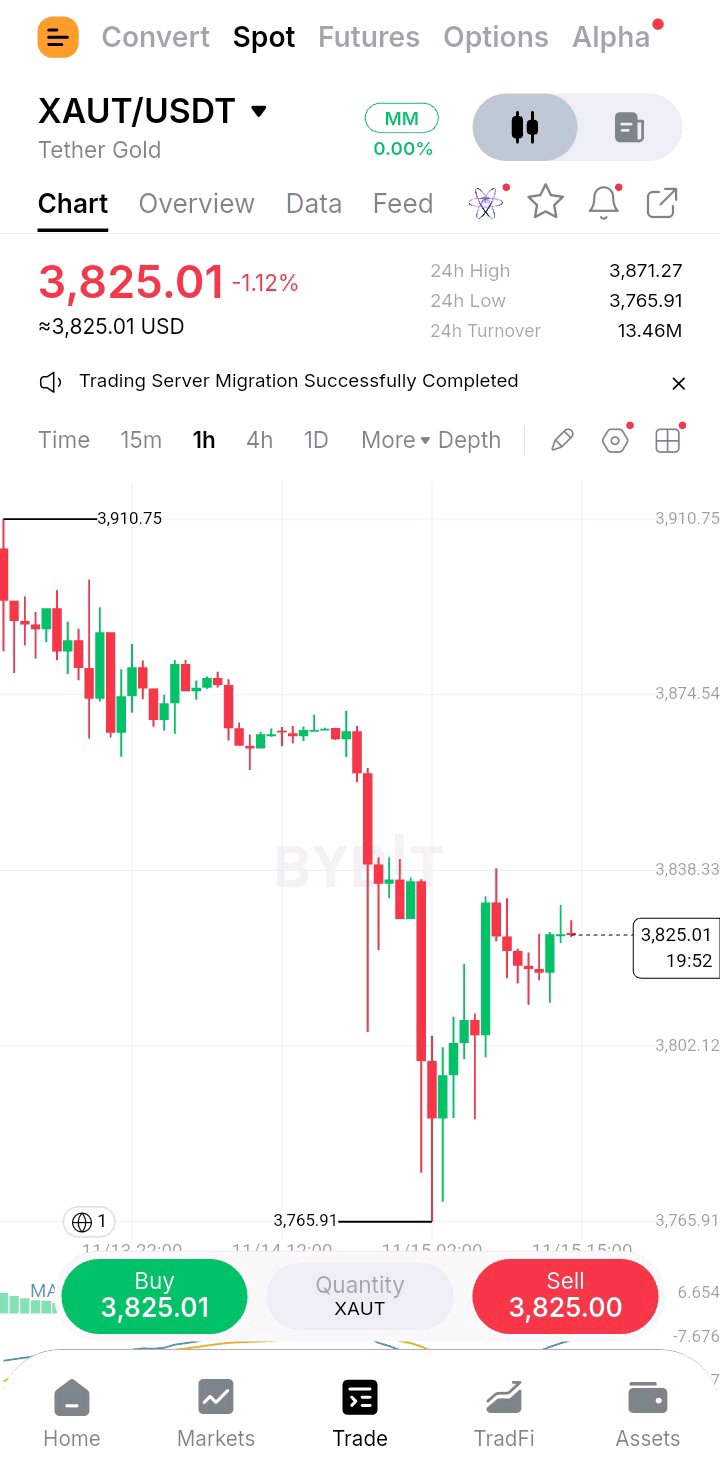
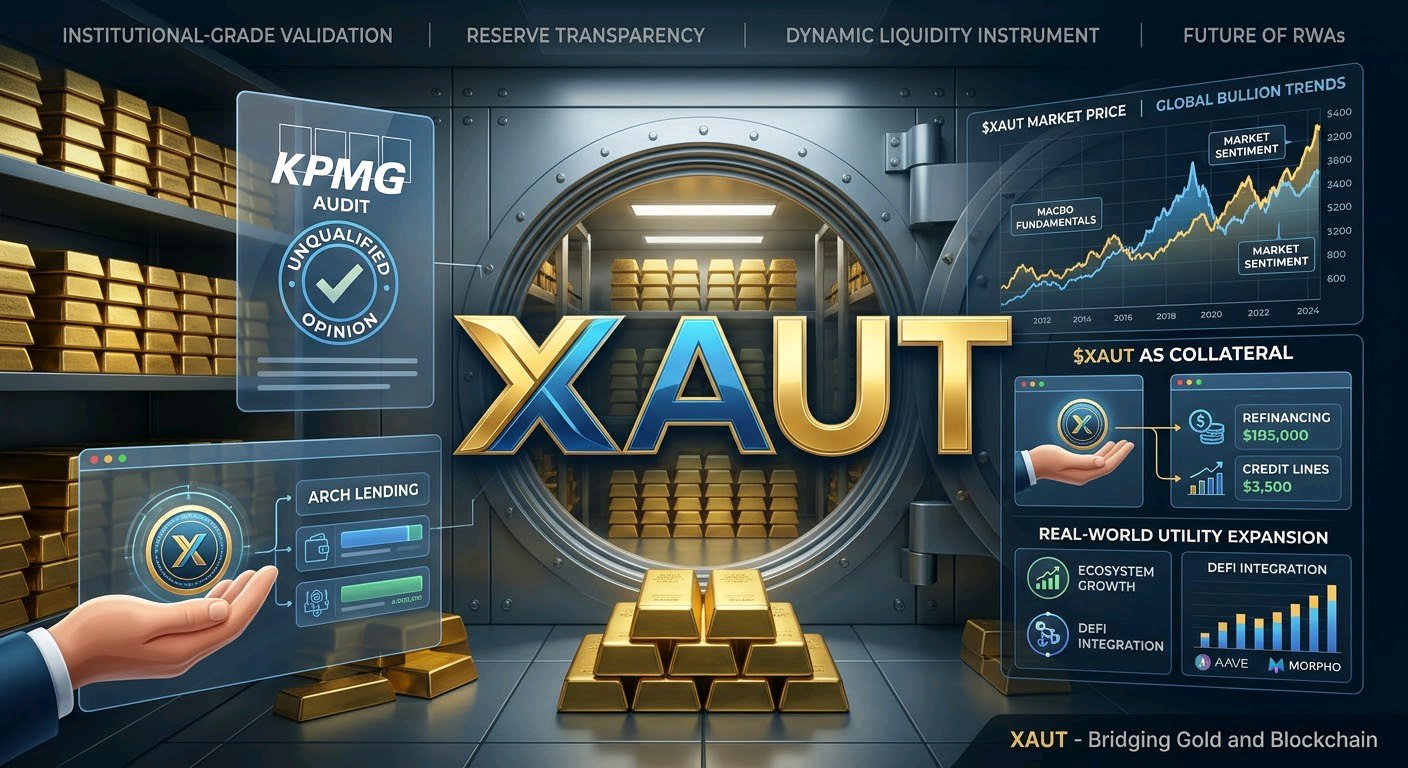
$XAUT IS BACK IN FOCUS — AUDIT MILESTONES MEET REAL-WORLD UTILITY EXPANSION Latest Developments Tether Gold ($XAUT) has captured fresh market attention following a major transparency milestone and a broader macro pullback in the tokenized commodity sector. On November 12, Tether announced that KPMG U.S. issued an independent, unqualified audit opinion on TG Commodities' financial statements for the year ending December 31, 2025. The rigorous audit verified that every circulating token was backed by physically allocated gold bars stored securely in professional vaults. This regulatory and reporting clarity coincides with recent ecosystem growth, including lending integrations such as Arch Lending's program allowing $XAUT holders to utilize their digital bullion as collateral for refinancing and credit lines. Why This Update Matters For the real-world asset (RWA) and tokenized gold sectors, institutional-grade validation from a Big Four accounting firm directly addresses long-standing questions regarding reserve transparency. While blockchain ledgers allow instant proof of token supply, verifiable physical audits bridge the trust gap for conservative institutional participants and high-net-worth investors. Furthermore, expanding financial utility—moving beyond passive holding into credit markets—transforms $XAUT from a static safe-haven asset into a dynamic liquidity instrument within digital finance. What's Happening Behind the Scenes? On-chain metrics and sector analyses highlight a structural evolution in how tokenized gold is handled. Although the tokenized gold market has experienced dramatic volume expansion through 2026, industry reports emphasize that true decentralized finance (DeFi) integration—such as deployment as collateral on lending protocols like Aave and Morpho—is still in its early growth phases. Community discussions and institutional desk activities remain heavily tied to broader macroeconomic gold price fluctuations, as physical bullion trends dictate short-term sentiment across tokenized equivalents. What Should the Community Watch Next? Observers should monitor whether the recent KPMG assurance catalyzes broader institutional adoption and whether additional lending platforms integrate $XAUT into their core collateral frameworks. Additionally, tracking on-chain vault ratios, upcoming reserve attestations, and how liquidity behaves around key macro resistance and support levels will be critical for assessing near-term market health. My Daily Perspective Tokenized gold sits at a fascinating intersection between traditional safe-haven preservation and modern blockchain agility. While short-term price movements naturally mirror broader bullion corrections, the steady march toward rigorous Big Four auditing and expanded DeFi utility proves that digital precious metals are maturing past mere hype. As transparency standards rise, projects that successfully combine physical accountability with seamless on-chain utility will define the future of RWAs. Stay tuned, and keep a close eye on the charts as the market digests these structural updates! #ByXIMPACT $XAUTUSDT
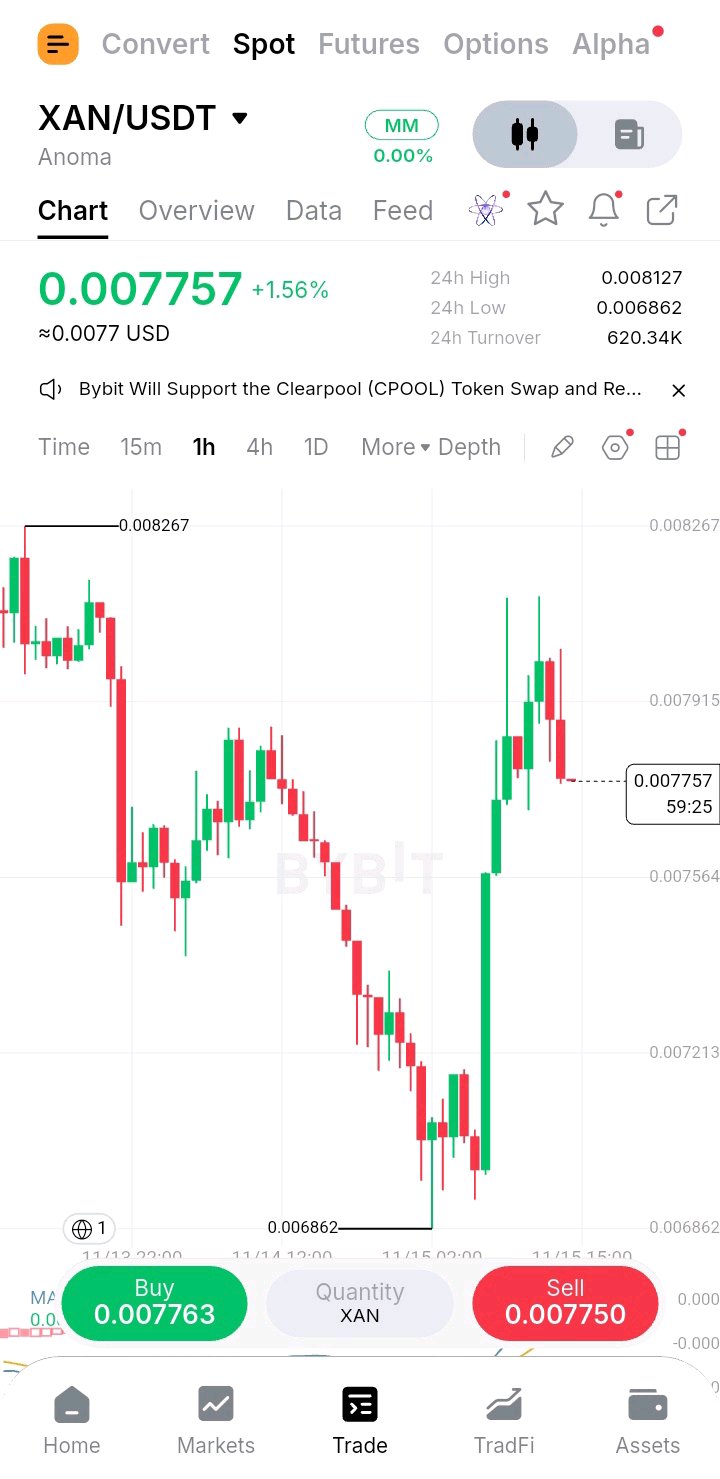
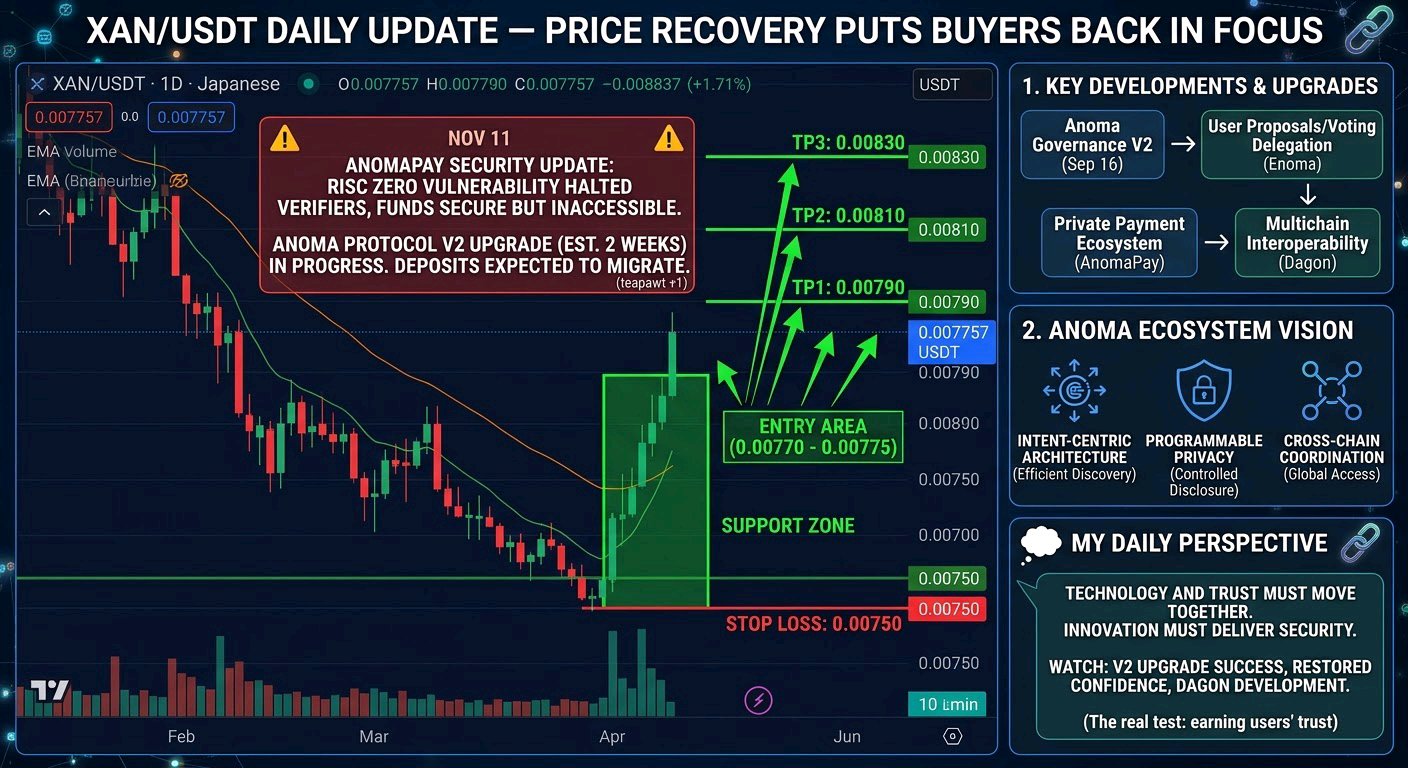
XAN/USDT DAILY UPDATE — PRICE RECOVERY PUTS BUYERS BACK IN FOCUS XAN/USDT is attracting attention after a sharp recovery from its support zone. The uploaded chart shows buyers stepping in after a prolonged downward move, creating a potential shift in short-term market momentum. The chart highlights a current price of approximately 0.007757 USDT, with an entry area around 0.00770–0.00775. However, the broader resistance structure remains important, and the recovery still needs confirmation. # 1\. Latest Development: AnomaPay Security Update Important development — November 11, 2026 The biggest recent development surrounding Anoma is a security issue involving the RISC Zero proof system used by AnomaPay. On November 11, Anoma announced that it had halted the affected verifiers after identifying vulnerabilities that could potentially put user funds at risk. The team stated that deposited funds remain secure but are temporarily inaccessible. A move to Anoma Protocol V2 is expected to take approximately two weeks, incorporating security updates from RISC Zero. Deposits are expected to migrate automatically after the upgrade. teapawt +1 This is an important development because security and user confidence are essential for any privacy-focused payment ecosystem. ## 2\. Why This Update Matters Anoma is building infrastructure designed to make Web3 applications more connected through intent-centric architecture, programmable privacy, and cross-chain coordination. However, the AnomaPay incident highlights an important challenge: innovative technology must also deliver dependable security and uninterrupted access to user funds. A successful V2 upgrade could help restore confidence. Delays or further vulnerabilities could create additional pressure on the project's reputation. ## 3\. What's Happening Behind the Scenes? Anoma has already introduced several ecosystem developments: * September 16, 2026: Anoma Governance V2 went live, giving XAN holders the ability to propose and vote on token protocol changes. * Governance includes voting delegation and a structured proposal process. * AnomaPay has expanded its private-payment ecosystem across multiple networks. * Its broader roadmap includes Dagon, focused on multichain interoperability, and further protocol development. The Anoma Blog +2 These developments show that Anoma's work extends beyond short-term token price movements. ### 4\. XAN Market Situation The latest available market snapshot from November 14 showed XAN trading around $0.0076, with approximately 5% daily weakness and continued selling pressure. COINOTAG +1 The uploaded chart highlights: * Current chart price: 0.007757 * Support zone: around 0.00750 * Entry area: 0.00770–0.00775 * Resistance: overhead supply zone * TP1: 0.00790 * TP2: 0.00810 * TP3: 0.00830 * Stop loss: 0.00750 These are levels from your supplied chart, not independently verified live prices. A sustained move above nearby resistance could strengthen the recovery scenario. However, losing support would weaken the bullish structure. ### 5\. What Should the Community Watch Next? Three developments deserve attention: * Anoma V2 upgrade: The expected security upgrade and restoration of AnomaPay access. * Security improvements: Confirmation that the RISC Zero vulnerability has been addressed. * Dagon development: Progress toward a more interconnected multichain ecosystem. The V2 timeline is an estimate announced by the team, not a confirmed completed upgrade. teapawt +1 ### 6\. My Daily Perspective Personally, I think XAN is at an important stage where technology and trust need to move together. Anoma has an interesting vision for privacy-focused payments and cross-chain applications. Its governance improvements also give token holders a more direct role in the project's future. But I don't want to ignore the recent AnomaPay security issue. Temporary loss of access to deposited funds is serious, even when the team says those funds remain safe. For the market, I will be watching whether buyers can defend the support area and whether the project delivers its V2 upgrade successfully. My view: XAN deserves attention, but the next major catalyst should be restored confidence through verified security improvements, not just a short-term price rebound. The real test for Anoma is simple: building innovative technology matters, but earning users' trust matters even more. #Anoma #XAN #CryptoNews #BinanceSquare Research note: No newer major confirmed announcement was identified in the latest 24–48-hour window. The November 11 security announcement is the most important verified recent development identified in this research. #ByXIMPACT $XANUSDT
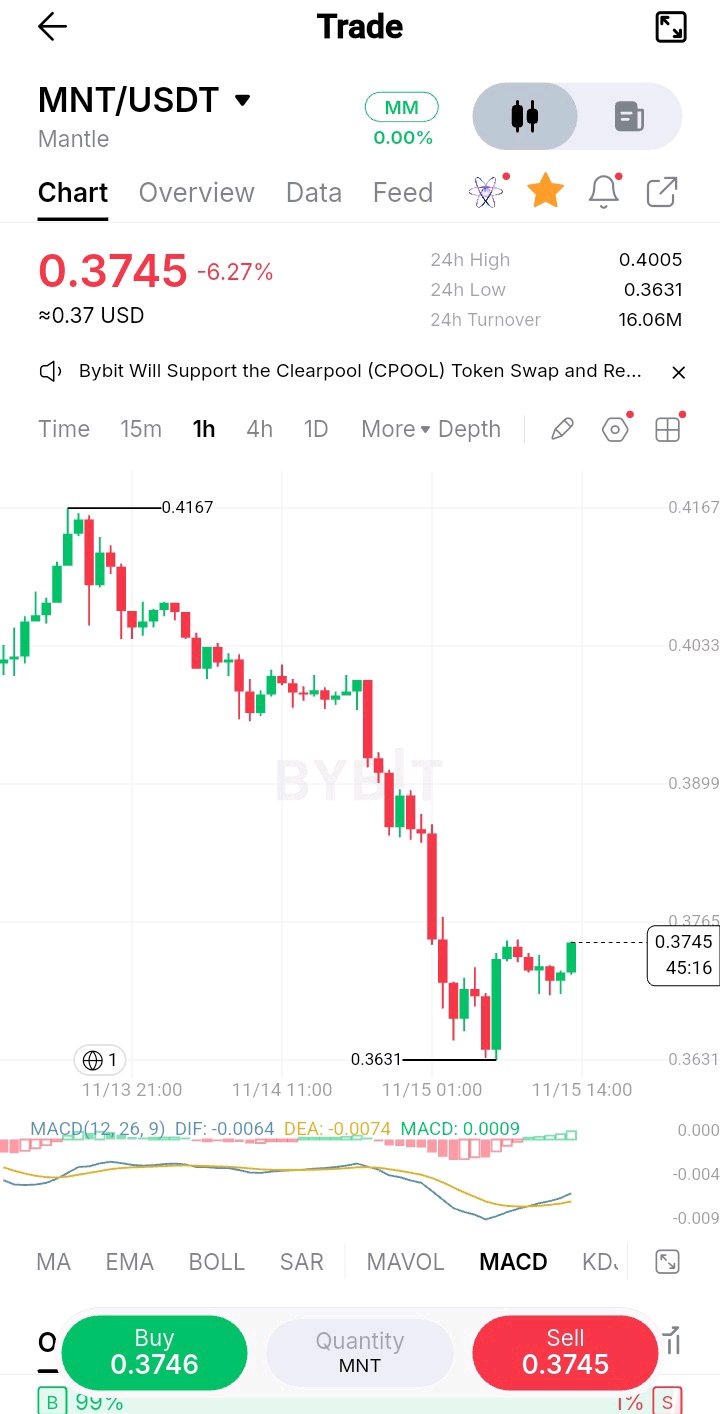
$MNT DAILY UPDATE: A QUIET BUG FIX THAT SAYS A LOT ABOUT MANTLE** Mantle (MNT) is trading around $0.37 after a soft 24 hours. No Mantle-specific bad news explains the dip. The more interesting story is what happened under the hood this week. **Latest Developments** On November 5, security firm Blockaid disclosed a state-root bug in Reth, the upstream execution client used across several EVM networks. Unpatched nodes could produce incorrect state roots, stall during sync, or return faulty proofs through the eth_getProof method. Mantle responded with op-reth v1.6.3, announced around November 7. Instead of jumping to the newest upstream release, the team backported the fix onto its own production version line. Mantle says user assets are safe, no user action is required, and no database migration is needed. Node operators are urged to upgrade. No exploit or fund loss has been reported. Base and BNB Chain also moved on the same issue. Separately, on October 28 the Mantle core contributor team published its fourth budget cycle proposal (July 2026 to June 2027): 40M USDx and 150M MNT. It is open for discussion, and MNT delegators must complete their delegation allocations before the vote begins. **Why This Update Matters** A bad state root doesn't automatically mean stolen funds. It can mean broken sync or unreliable proofs, and bridges and apps depend on those proofs. A short, contained incident with no losses shows the team can patch fast, which matters for any network pitching itself to institutions. The budget proposal matters for a different reason. It shows how Mantle plans to deploy its treasury over the next year and puts MNT delegators directly in the decision loop. **What's Happening Behind the Scenes** Mantle keeps building cross-chain infrastructure. In July, its Super Portal, built with Bybit, migrated to Chainlink CCIP. It currently connects MNT between Ethereum and Solana, with more routes planned. The Mantle and Bybit partnership roadmap also points to wider MNT use across trading, payments, and savings. **What Should the Community Watch Next?** - **Confirmed:** the budget proposal's discussion period and the delegation deadline before voting opens. I couldn't verify a vote date. - **Confirmed:** node operator upgrade compliance for v1.6.3. Unpatched nodes are the remaining risk. - **Unconfirmed:** any follow-up post-mortem from Mantle or Blockaid. Nothing has been announced. **My Daily Perspective** The market sees red today, but the more telling signal is operational. Networks get tested when something breaks upstream, and Mantle stayed online, shipped a targeted fix, and told users plainly what to do (nothing). That's not headline-grabbing, but it's the kind of reliability that long-term adoption depends on. The budget vote is the next real test of community engagement. In crypto, the loudest news moves the chart, but the quiet fixes move the trust. *Not financial advice. Always DYOR.* #ByXIMPACT $MNTUSDT
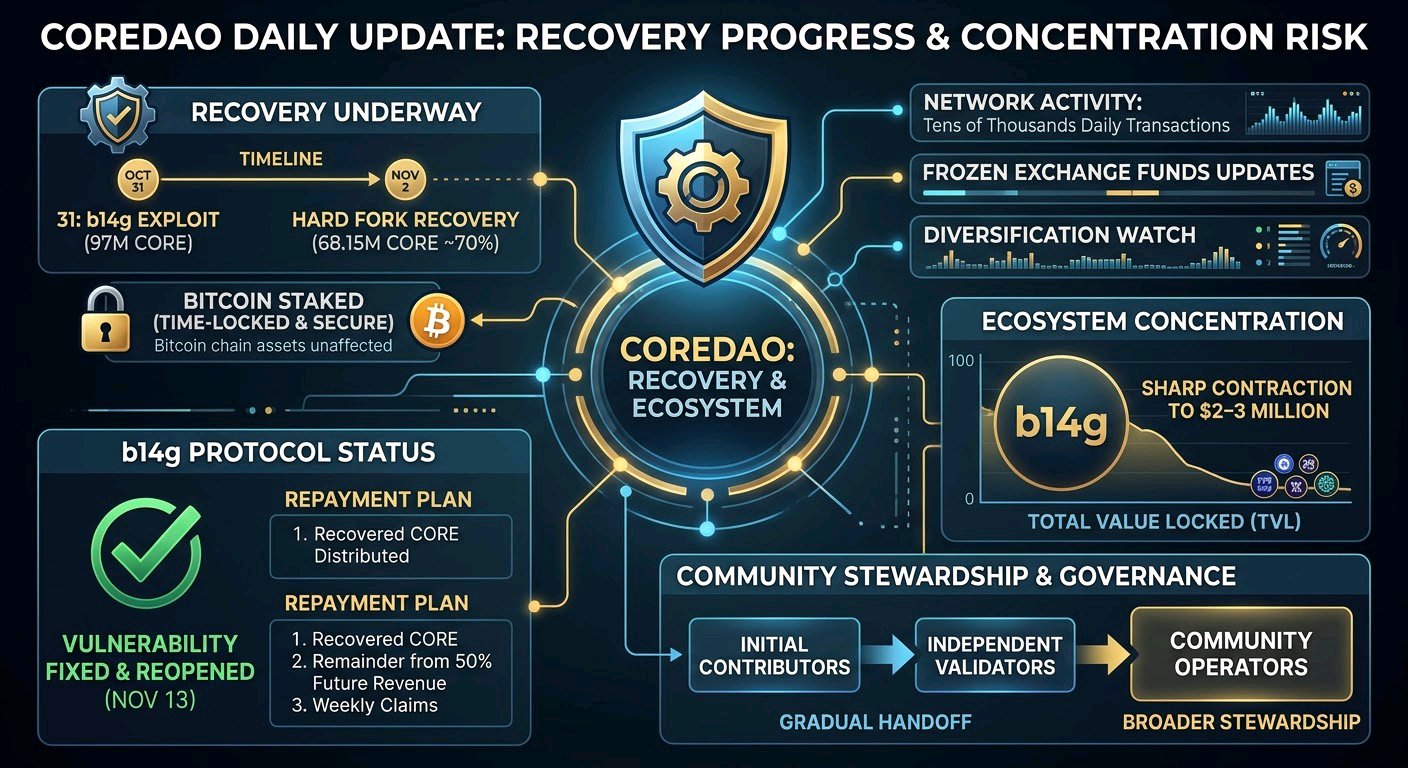
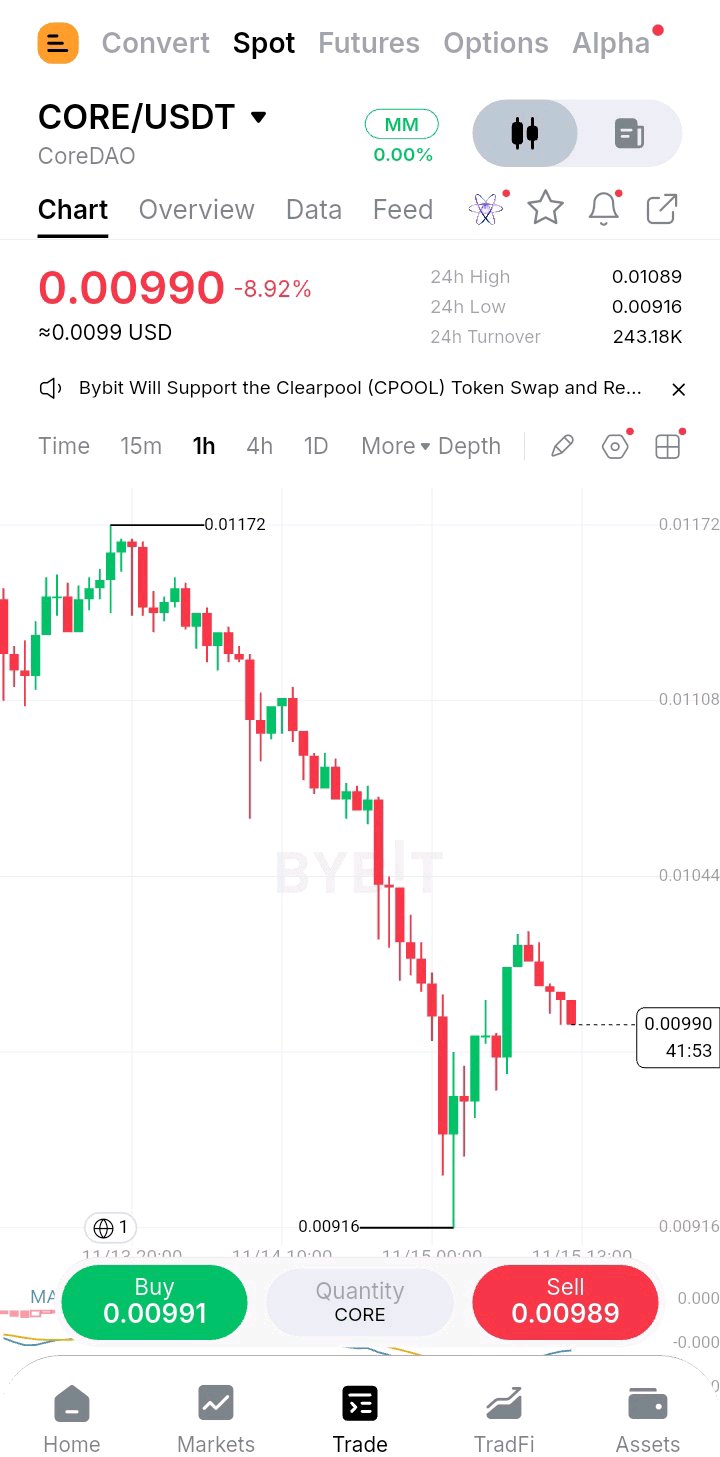
$CORE DAILY UPDATE — RECOVERY UNDERWAY AS ECOSYSTEM CONCENTRATION COMES INTO FOCUS** CoreDAO finds itself in a quiet but revealing stretch. The network remains operational and secure, yet recent data and protocol activity highlight both the progress of recovery efforts and the challenges of a highly concentrated DeFi landscape. # Latest Developments On October 31, the b14g dual-staking protocol suffered an exploit that drained approximately 97 million CORE from 91 staking orders. The issue stemmed from a zero-amount withdrawal path that the contracts did not properly guard against. Core DAO confirmed that the base network, consensus, validators, and direct staking contracts were unaffected. Bitcoin staked through b14g remained time-locked on the Bitcoin chain and was not compromised. A Core hard fork on November 2 recovered roughly 68.15 million CORE (about 70% of the stolen amount) through a one-time state update that did not alter total supply or reverse other transactions. Additional tokens linked to the attacker were frozen on exchanges. By November 13, b14g had deployed a fix for the vulnerability and reopened deposits, withdrawals, staking, and reward claims. The protocol’s repayment plan prioritizes returning the recovered CORE to affected users, with the remainder to be covered over time from 50% of future Core staking revenue, claimable weekly. At the same time, DeFi TVL on Core has contracted sharply. Recent reports put total value locked around $2–3 million, with the large majority still concentrated in b14g itself. This marks a steep decline from earlier periods when the ecosystem supported hundreds of millions in locked value. ## Why This Update Matters The rapid recovery of the majority of funds and the reopening of b14g demonstrate that Core’s infrastructure and coordination with partners can respond effectively to incidents. At the same time, the extreme concentration of remaining TVL in a single protocol underscores a structural risk: when one project accounts for nearly all DeFi activity, any disruption there quickly becomes an ecosystem-wide story. The earlier shift toward greater decentralization—independent validators taking over block production and initial contributors stepping back from DAO roles—continues in the background. That transition, announced in late October, was framed as the start of broader community stewardship. How that process evolves while the network digests the recent exploit will shape confidence in Core’s long-term governance model. ### What’s Happening Behind the Scenes? Network activity continues at a steady, if modest, level. Transaction counts remain in the tens of thousands daily even as liquidity and TVL have compressed. The focus for many participants has shifted from growth metrics to the practical execution of the repayment process and the health of the remaining DeFi footprint. b14g’s decision to reopen after the fix and publish a clear recovery framework is a concrete step. Whether users return capital and whether other protocols can expand will determine if the concentration risk eases in the coming weeks. ### What Should the Community Watch Next? Key items on the radar include the actual distribution of recovered CORE to affected stakers, any further updates on frozen exchange funds, and signs of diversification in Core’s DeFi TVL. The gradual handoff of development and stewardship responsibilities to community operators remains an open process without a fixed timetable—progress there will be measured by visible independent contributions rather than announcements alone. No major new product launches or partnership announcements have emerged in the most recent 48 hours. The current phase is defined more by cleanup and stabilization than by expansion. ### My Daily Perspective Core is navigating a classic post-incident period: the technical response has been relatively swift, yet the market is pricing in both the recovery and the lingering concentration risk. The fact that the base layer held firm is important. Equally important is whether the ecosystem can rebuild liquidity and activity beyond a single dominant protocol. For now, the story is less about sudden catalysts and more about steady execution—returning funds, restoring confidence, and seeing whether community-led growth can take root. Those who stay engaged will be watching the repayment claims and any movement in secondary protocols as the clearest near-term signals. The network is still standing. The next chapter depends on how thoroughly the current repair work is completed and how quickly diversification returns. #ByXIMPACT $COREUSDT
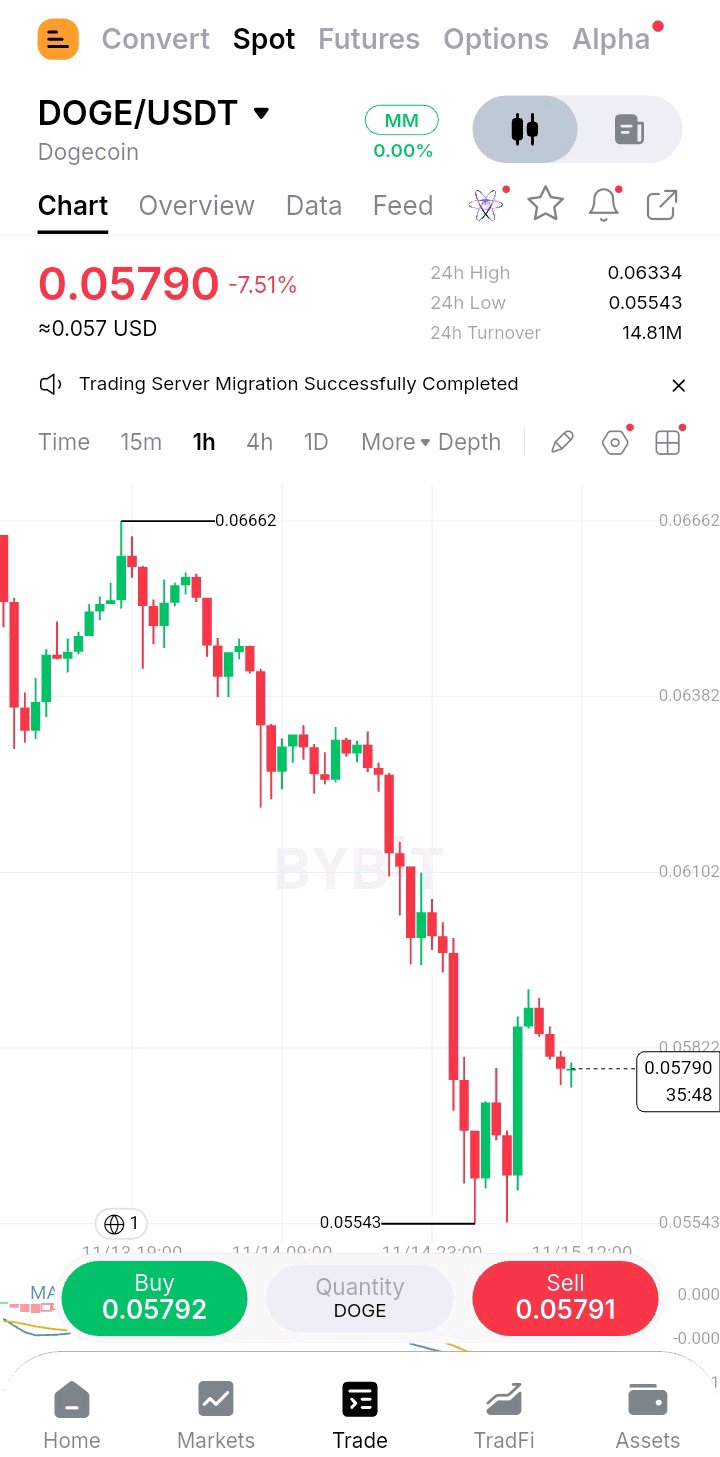
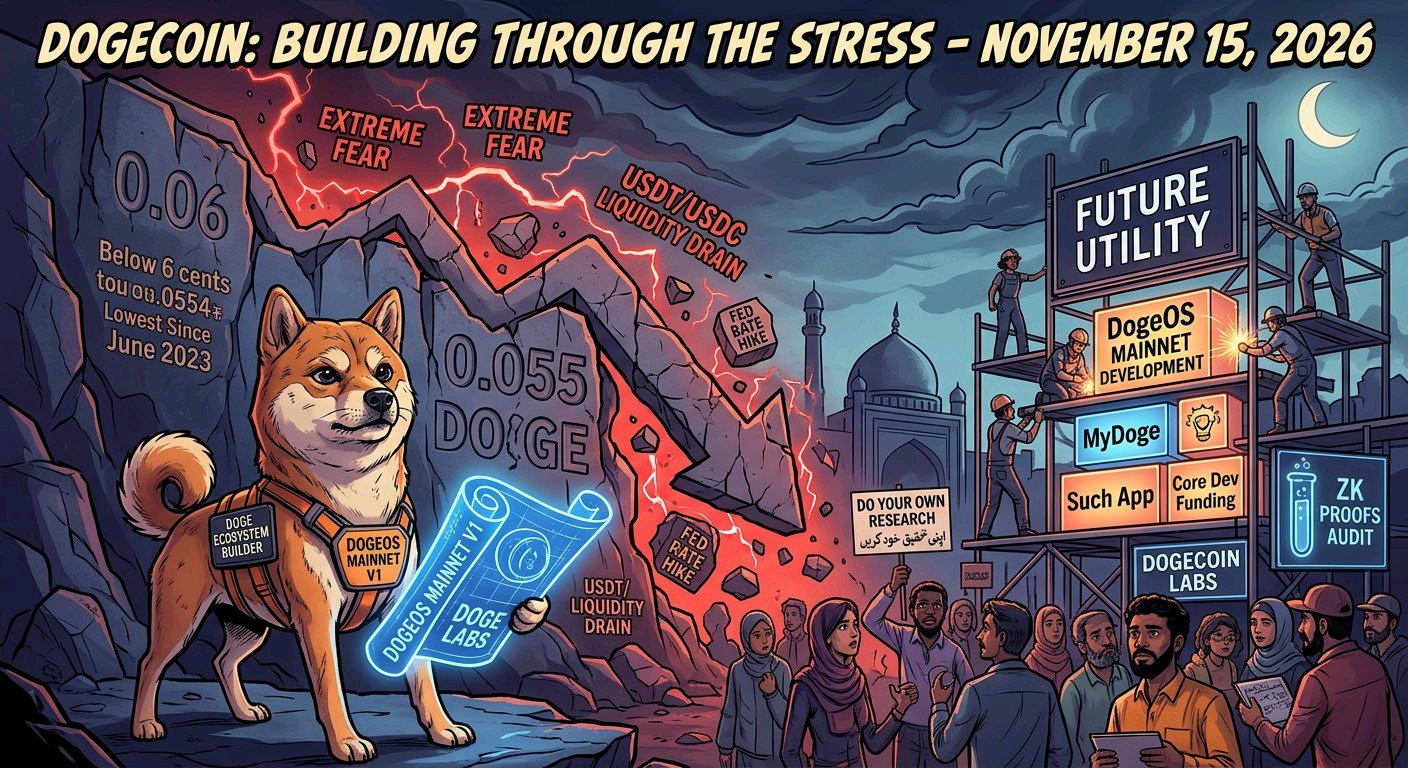
$DOGE IS BACK IN FOCUS, BUT NOT FOR THE REASONS HOLDERS WANTED** Dogecoin slid below the 6-cent mark overnight into Sunday, November 15, 2026. It touched about $0.0554 on Kraken, its lowest level since June 2023. The Bybit screenshot shows the same move: a 24h range of $0.05543 to $0.06334, and a roughly 7.5% daily drop at the time of capture. **Latest Developments** DOGE closed Saturday at about $0.0573 on Kraken, its lowest daily close since at least late 2022, per CryptoTicker (Nov 15). That is roughly 62% below its 2026 closing high of $0.1517 on January 5. Trading volume was heavy. About 256 million DOGE changed hands on Kraken on Saturday, nearly five times the recent daily average. There was no confirmed Dogecoin-specific trigger. DOGE fell with the whole market, only harder. Bitcoin lost around 3.5% over the same stretch, while DOGE lost more than twice that. The macro pressure behind it: - **Rates:** Futures markets were pricing roughly an 88.5% chance of a Fed rate hike on December 8–9, per CME FedWatch via Bitcoin.com. - **ETF outflows:** About $1.07B left US spot Bitcoin ETFs between November 9 and 13 (Farside data, via Coinpaper). - **Thinner liquidity:** Coinbase Institutional data shows the combined supply of USDT, USDC and DAI shrank by about $11.5B in 30 days. - **Sentiment:** The Fear & Greed Index read 10 on Sunday. **Why This Update Matters** Dogecoin trades on attention more than on fundamentals. When the market sits in extreme fear, the largest meme coin tends to feel it first. The ETF picture adds to this. US Dogecoin ETFs have gone a month without inflows, as reported on November 14. The products exist, but fresh demand through them has dried up. **What's Happening Behind the Scenes** While the chart bleeds, the builders keep building: - **DogeOS mainnet:** On November 11, DogeOS CEO Jordan Jefferson told The Block that development of version one is complete, audits are done, and mainnet is "very, very close." The public testnet has been live since September 30. - **Dogecoin Labs:** Launched last month, it brings MyDoge, DogeOS, Such App and teams from the Dogecoin Foundation and House of Doge under one commercial roof. The stated aim is to fund core development without relying only on donations. - **Builders:** Jefferson says more than 100 builders are working on DogeOS-related projects. - **Futures positioning:** On OKX, DOGE open interest fell about 6.5% in coin terms during the evening slide. Roughly 79% of accounts were still long as of Sunday morning, which leaves leveraged longs exposed if the drop continues. **What Should the Community Watch Next?** *Confirmed:* - The Fed meeting on December 8–9. - The June 2023 low near $0.0545, the next level where DOGE last traded before this week. *Unconfirmed:* - The DogeOS mainnet. No date has been announced, so "very close" is a progress update, not a schedule. - The DogeOS bridge currently relies on a validator majority and a trusted execution environment signer. Dogecoin does not verify its ZK proofs natively. Security disclosures and further audits are worth following. - Whether ETF demand returns once the market stabilizes. **My Daily Perspective** Today's story is not a failed project. It is a stressed market. The price is telling one story, extreme fear and forced selling. The development side is telling another, an application layer slowly forming around a coin that never had one. Those two stories rarely meet on the same day. Utility does not stop a crash, and a crash does not erase progress. What matters is whether the ecosystem ships while sentiment is at its lowest. Dogecoin has always been the coin that survives on community and attention. Now it has to show it can earn both. *Not financial advice. Always DYOR.* Is project ki tasveer bana ke dein. #ByXIMPACT $DOGEUSDT
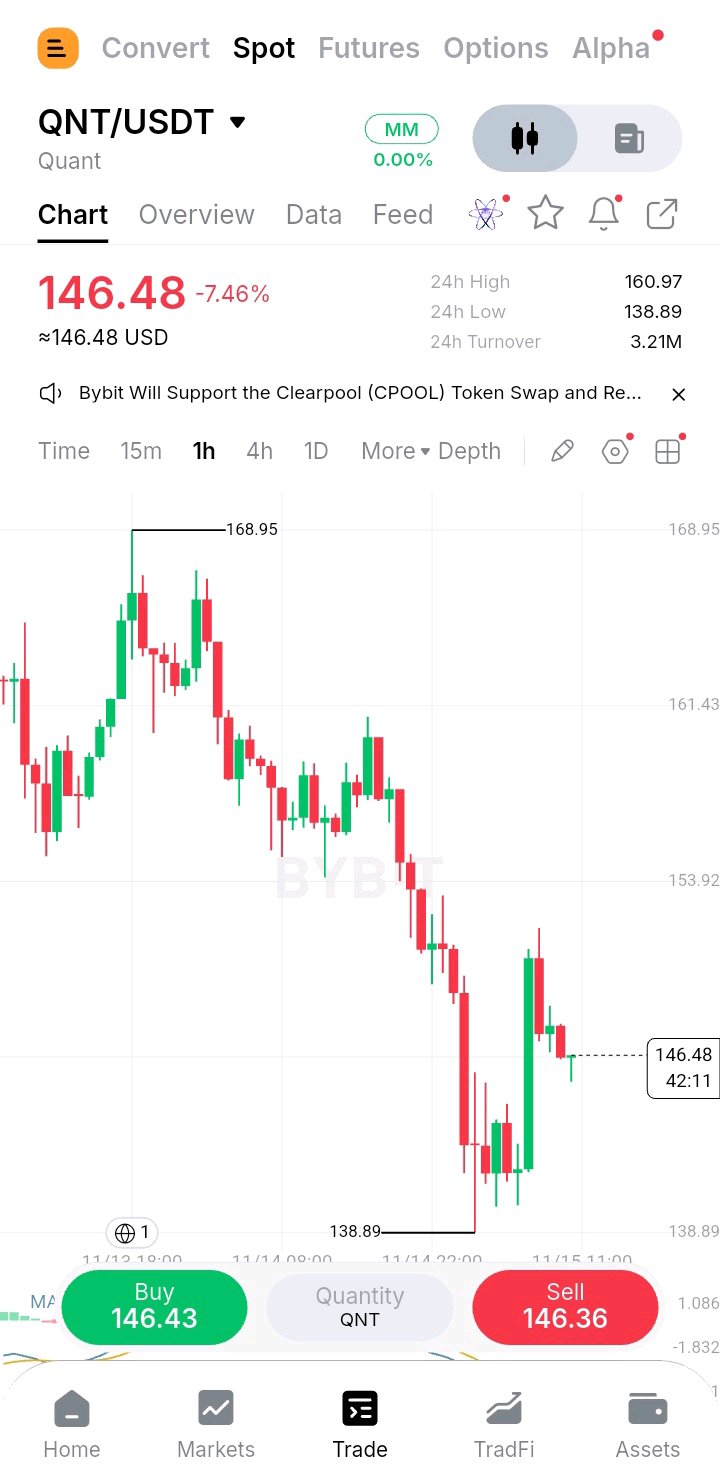
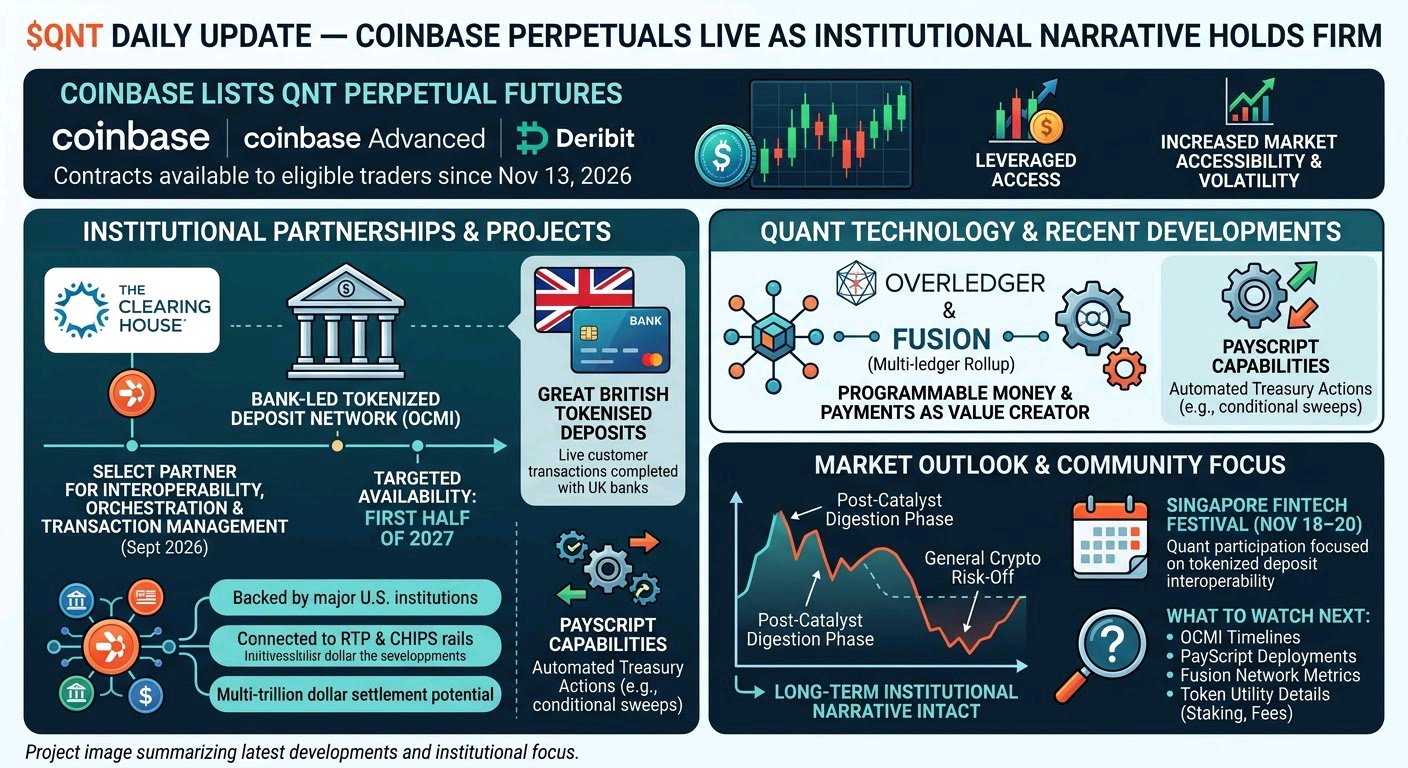
DAILY UPDATE — MARKET PRESSURE MEETS NEW DERIVATIVES ACCESS AS INSTITUTIONAL ROADMAP HOLDS** Quant (QNT) is trading near 146 USDT on major platforms like Bybit, reflecting a sharp pullback of roughly 7-8% in the latest 24-hour window after testing higher levels earlier in the week. The move aligns with broader crypto market risk-off sentiment rather than any project-specific setback. # Latest Developments Coinbase launched perpetual futures trading for QNT on November 13, 2026 (alongside GRAM, GRASS, and ZRO). The contracts became available on Coinbase, Coinbase Advanced, and via Deribit in select jurisdictions, expanding leveraged exposure and hedging options for both retail and institutional participants. Around the same period, Quant published a perspective piece on “Payments as a value creator” (November 12), outlining how programmable money and PayScript can turn payments from a cost center into a product layer for banks. The team also highlighted ongoing work around tokenised deposits, noting live pilot activity in Singapore and confirming their presence at the Singapore Fintech Festival (November 18–20). These updates sit against the still-dominant fundamental backdrop: The Clearing House’s selection of Quant in late September 2026 to power the interoperability, orchestration, and transaction-management layer for its On-Chain Money Initiative. That US bank-backed network for tokenised deposits is targeted to open to participating institutions in the first half of 2027. # # Why This Update Matters The Coinbase perpetual futures listing increases market access and potential liquidity, but it also amplifies short-term volatility—especially in a risk-off environment. Traders now have easier tools to express both bullish and bearish views, which can accelerate moves in either direction. The institutional side remains the longer-term story. Quant continues to position itself as infrastructure for programmable money and tokenised deposits across regulated environments (US Clearing House initiative, prior UK live customer transactions, Singapore pilots). While token utility and revenue capture details are still evolving, the repeated selection by major banking consortia keeps Quant relevant in the real-world asset and interbank settlement conversation. ## What’s Happening Behind the Scenes? Network and ecosystem activity continues to center on Overledger and the Fusion multi-ledger rollup (live since June 2026). Official communications emphasize connectivity to existing payment rails (RTP, CHIPS) and the ability to layer programmable logic on top of proven banking infrastructure rather than replacing it. Recent posts stress interoperability questions that arise as more banks issue tokenised deposits: bank-to-bank settlement, links to ISO 20022 rails, and cross-border/currency handling. No major new security incidents, tokenomics changes, or governance proposals have surfaced in the latest cycle. Price action appears driven primarily by macro crypto pressure and technical selling after the post-September rally, consistent with analysis noting the absence of Quant-specific negative catalysts. ## What Should the Community Watch Next? - Progress updates on The Clearing House On-Chain Money Initiative timeline (integration work and H1 2027 availability target). - Any concrete outcomes or announcements from the Singapore Fintech Festival presence (November 18–20). - Further clarity on how institutional deployments may translate into sustained demand or utility for the QNT token. - Broader market recovery or continued risk-off conditions, given QNT’s recent correlation with overall crypto sentiment. Confirmed schedules remain limited; most near-term catalysts are execution milestones rather than sudden launches. ### My Daily Perspective Quant is in a classic post-catalyst digestion phase. The September banking partnership delivered one of the more credible institutional validations in the sector, and the subsequent price discovery was aggressive. The current pullback, occurring alongside new derivatives access and a soft market, tests whether the narrative can hold without continuous positive headlines. What stands out is the consistency of the underlying work—tokenised deposits moving from concept to live pilots in multiple jurisdictions, plus infrastructure designed for regulated environments. That does not guarantee short-term price strength, but it keeps the project in a different category from purely speculative narratives. The next meaningful signals will likely come from execution updates on the US network and any tangible expansion of live usage, rather than additional listings. Until then, the market is simply recalibrating expectations around a multi-year institutional roadmap. #ByXIMPACT $QNTUSDT
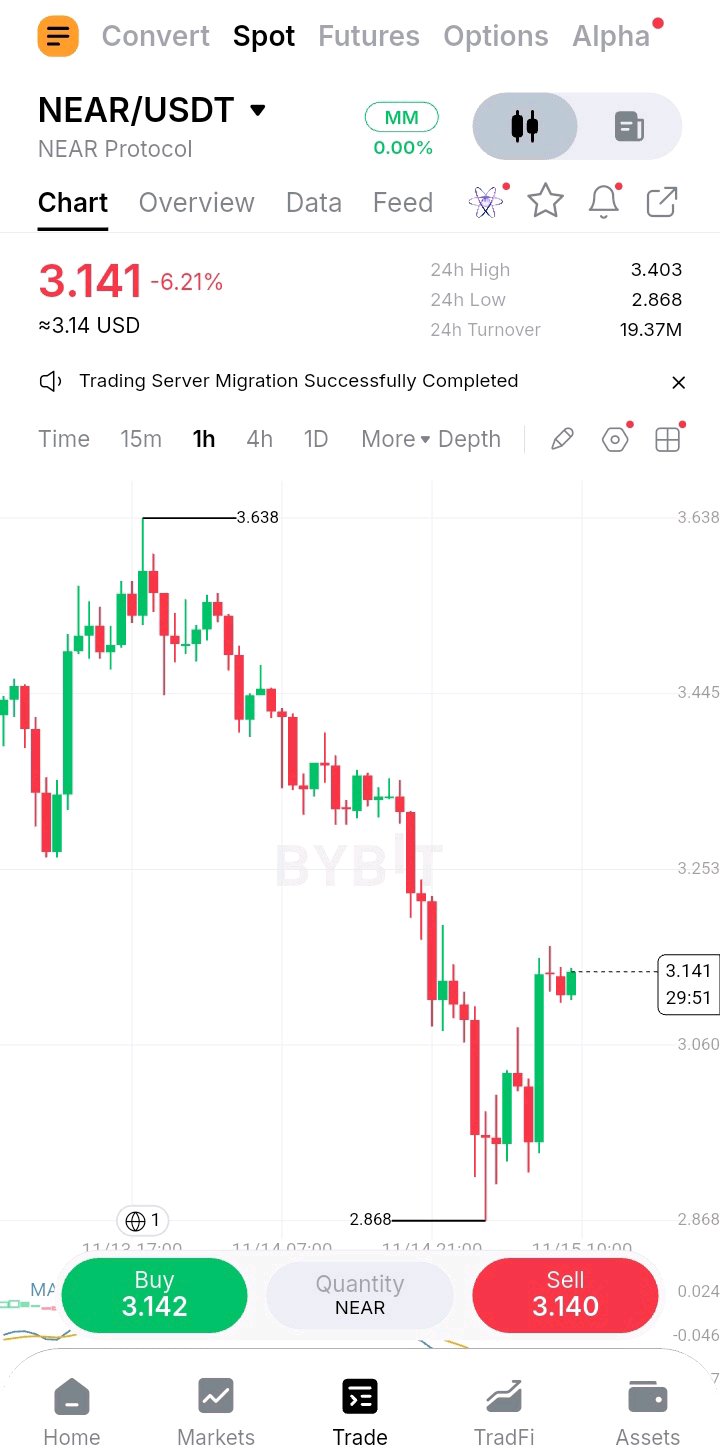
$NEAR DAILY UPDATE: THE PRICE IS UNDER PRESSURE, BUT THE TOKENOMICS STORY IS MOVING** **Latest Developments** NEAR had a rough weekend. The token briefly fell as low as $2.88 overnight into November 15, its lowest level since mid-September. The screenshot shows the same story: a 24-hour range of roughly $2.87 to $3.40, a bounce back to around $3.14, and a daily move of about -6%. One-hour liquidations on November 14 were all long positions (about $1.06M across Binance, Bybit and OKX), which suggests overleveraged longs were being flushed out. The price drop isn't the whole story. Here is what happened on the project side: - **Issuance cut approved (Nov 2):** NEAR's House of Stake approved HSP-029 on November 2, lowering the annual issuance cap from 2.5% to 1.6% over a 24-month ramp. The official vote listing shows 99.96% support. - **Hackathon wrapped up:** The NEAR Hackathon closed submissions on November 14 at 23:59 UTC, with a $250,000 prize pool across 13 tracks. An investment thesis track was added on Nov 14, asking participants to use on-chain data and live dashboards to make evidence-based cases about the network's long-term prospects. **Why This Update Matters** HSP-029 is the second time NEAR has tightened supply. The cap was previously cut from 5% to 2.5% in October 2025. The proposal is projected to keep about 11.8 million NEAR from entering circulation over two years, which means less dilution for holders who don't stake. There is a trade-off. The proposal's own modeling puts gross staking yield falling from about 5.27% to 3.37%. Lower supply growth can support the long-term case, but lower rewards can squeeze smaller validators. Those projections are modeled estimates, not guaranteed outcomes. The market's reaction was not enthusiastic. NEAR dropped roughly 7% on the Tuesday after the vote passed. That fits a pattern where good news for supply doesn't override a weak broad market. **What's Happening Behind the Scenes** The hackathon is a useful signal of developer activity. A $250K prize pool and 13 tracks suggest the ecosystem is still investing in builders during a drawdown. The new thesis track is also a creative move, because it puts on-chain data at the center of the conversation about NEAR's future. Derivatives activity is also elevated. Headlines on November 15 reported NEAR open interest hitting $1.1 billion, the first time since September. High open interest plus sharp moves is how liquidation cascades like this weekend's tend to happen. **What Should the Community Watch Next?** - **Confirmed:** The Security Council's veto window on HSP-029 runs until November 16, so that date is the next checkpoint. - **Confirmed:** A 90-day grace period follows, after which validators must adopt a protocol upgrade for the change to become binding. The cut is not live yet. - **Pending:** The hackathon results. No winners had been announced in what I found. - **Market:** Whether the $2.87 low holds on a retest. Nothing structural has changed in the protocol to explain the drop. It looks like part of a broader risk-off move. **My Daily Perspective** NEAR is in an uncomfortable spot. The fundamentals story is tightening supply, a busy builder community and active governance, while the chart is a reminder that tokenomics don't shield a coin from a weak market. A governance win doesn't prevent a leverage flush. What matters now is follow-through: whether the veto window passes cleanly, whether validators adopt the upgrade, and whether hackathon projects turn into live products. Price is loud, but delivery is what lasts. *Not financial advice. Always do your own research.* #ByXIMPACT $NEARUSDT
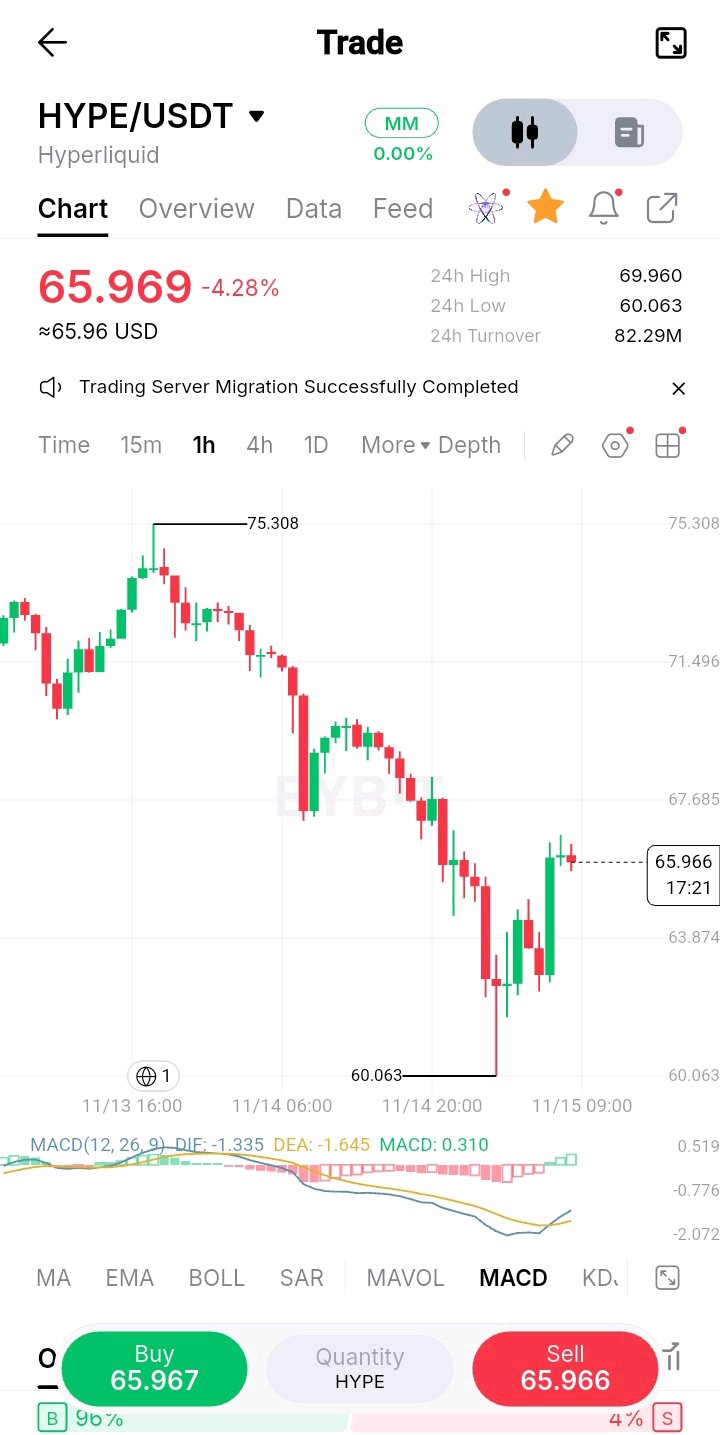
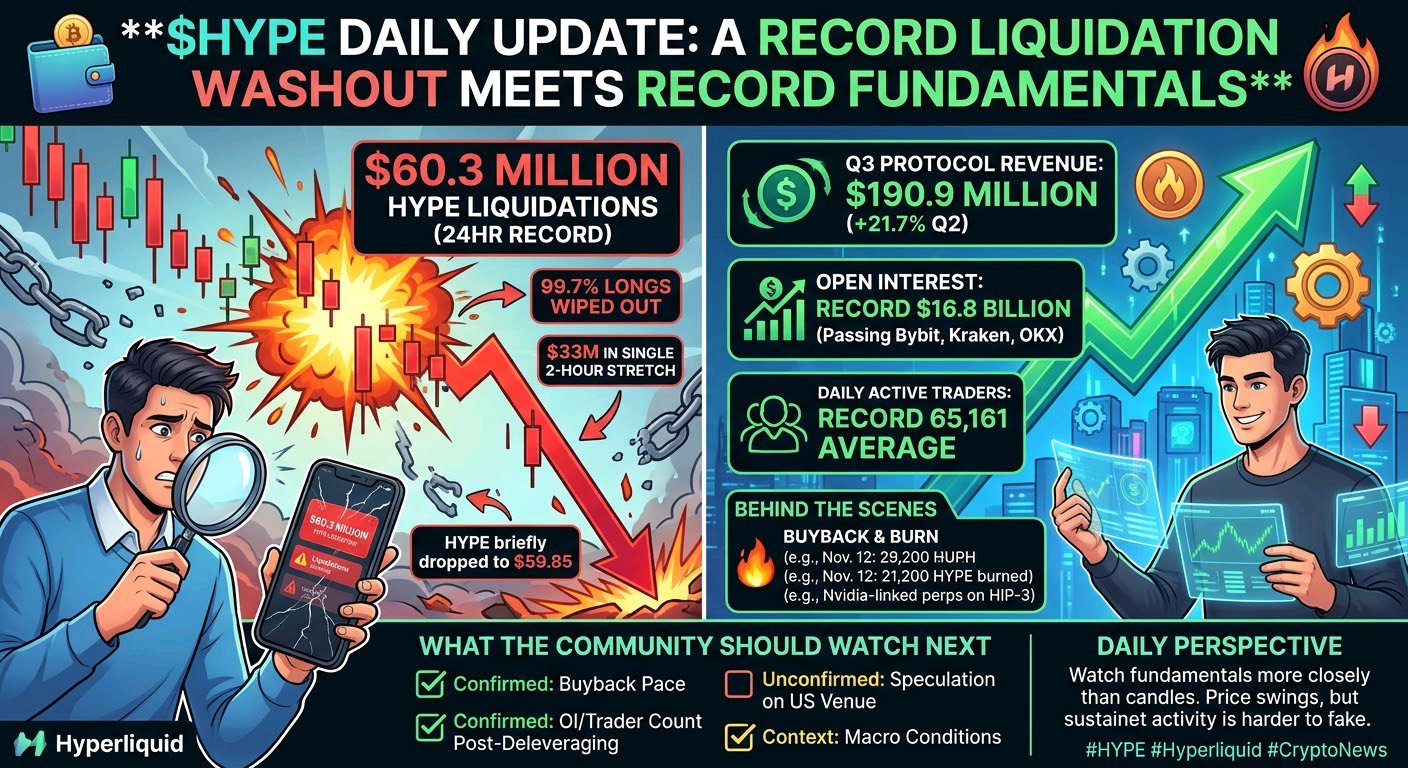
ACTUALIZACIÓN DIARIA DE $HYPE: UNA BARRIDA DE LIQUIDACIONES RÉCORD SE ENCUENTRA CON FUNDAMENTOS RÉCORD** Hyperliquid tuvo 24 horas turbulentas. Una venta masiva golpeó al token, mientras que el protocolo siguió registrando cifras sólidas. **Últimos acontecimientos** Hyperliquid registró $60.3 millones en liquidaciones de HYPE en 24 horas, su total diario más alto para el activo en al menos un año, y el 99.7% de las posiciones liquidadas fueron largos. Cerca de $33 millones de eso fueron eliminados en un solo lapso de dos horas. HYPE cayó brevemente a $59.85. El récord anterior de un día fue de $50.9 millones, establecido el 21 de noviembre de 2025. La venta masiva ocurrió justo después de un sólido informe de fundamentos. El 14 de noviembre, un informe del Q3 situó los ingresos del protocolo en $190.9 millones, un aumento del 21.7% respecto al Q2. El interés abierto alcanzó la cifra récord de $16,800 millones, superando a Bybit, Kraken y OKX. El promedio diario de traders activos alcanzó un récord de 65,161. **Por qué importa esta actualización** El récord de liquidaciones muestra qué tan saturadas estaban las posiciones largas. También demuestra qué tan rápido ocurre el desapalancamiento. Una barrida tan unilateral a menudo elimina a las manos más débiles, aunque no garantiza una reversión. Las cifras del Q3 importan porque provienen del uso, no del sentimiento. El aumento del interés abierto y el número récord de traders muestran que la demanda de la plataforma está creciendo incluso mientras el precio del token cae. **Qué está pasando detrás de escena** Las recompras continúan. El 12 de noviembre, Hyperliquid recompró y quemó 21,200 HYPE en 24 horas, gastando $1.53 millones. Las quemas de por vida suman ahora aproximadamente 50.47 millones de HYPE, más del 5% del suministro. Debido a que las recompras se financian en dólares, los precios más bajos permiten que el mismo presupuesto retire más tokens. La actividad del ecosistema también está creciendo. Los futuros perpetuos vinculados a Nvidia en la infraestructura HIP-3 de Hyperliquid están atrayendo un fuerte volumen de negociación a medida que los traders buscan exposición las 24 horas. Una advertencia: un mayor volumen de futuros no crea automáticamente una demanda spot equivalente para el token. **¿Qué debería observar la comunidad a continuación?** - **Confirmado:** el ritmo de recompra y quema mientras los precios se mantengan bajos. Los rastreadores de datos lo actualizan diariamente. - **Confirmado:** si el interés abierto y el conteo de traders se mantienen después de este evento de desapalancamiento. - **No confirmado:** el mercado también está discutiendo una posible sede en EE. UU. para productos relacionados con Hyperliquid. Tómalo como una especulación hasta que haya un anuncio oficial. - **Contexto:** el mercado cripto en general está bajo presión. Los informes vinculan la caída de HYPE a una venta masiva generalizada, por lo que las condiciones macroeconómicas importan tanto aquí como las noticias del proyecto. **Mi perspectiva diaria** La historia de hoy es una pantalla dividida. El gráfico de precios se ve doloroso, pero el protocolo está registrando ingresos récord, interés abierto récord y un conteo récord de traders, todo mientras quema suministro. La acción del precio a corto plazo puede ser salvaje después de una barrida de liquidaciones, y nadie puede prometer qué sucederá después. Lo que importa es si las cifras de uso siguen subiendo una vez que el polvo se asiente. Los precios oscilan, pero es más difícil falsificar una actividad de red sostenida. Observa los fundamentos más de cerca que las velas. *No es consejo financiero. Siempre haz tu propia investigación.* #ByXIMPACT $HYPEUSDT $BTCUSDT
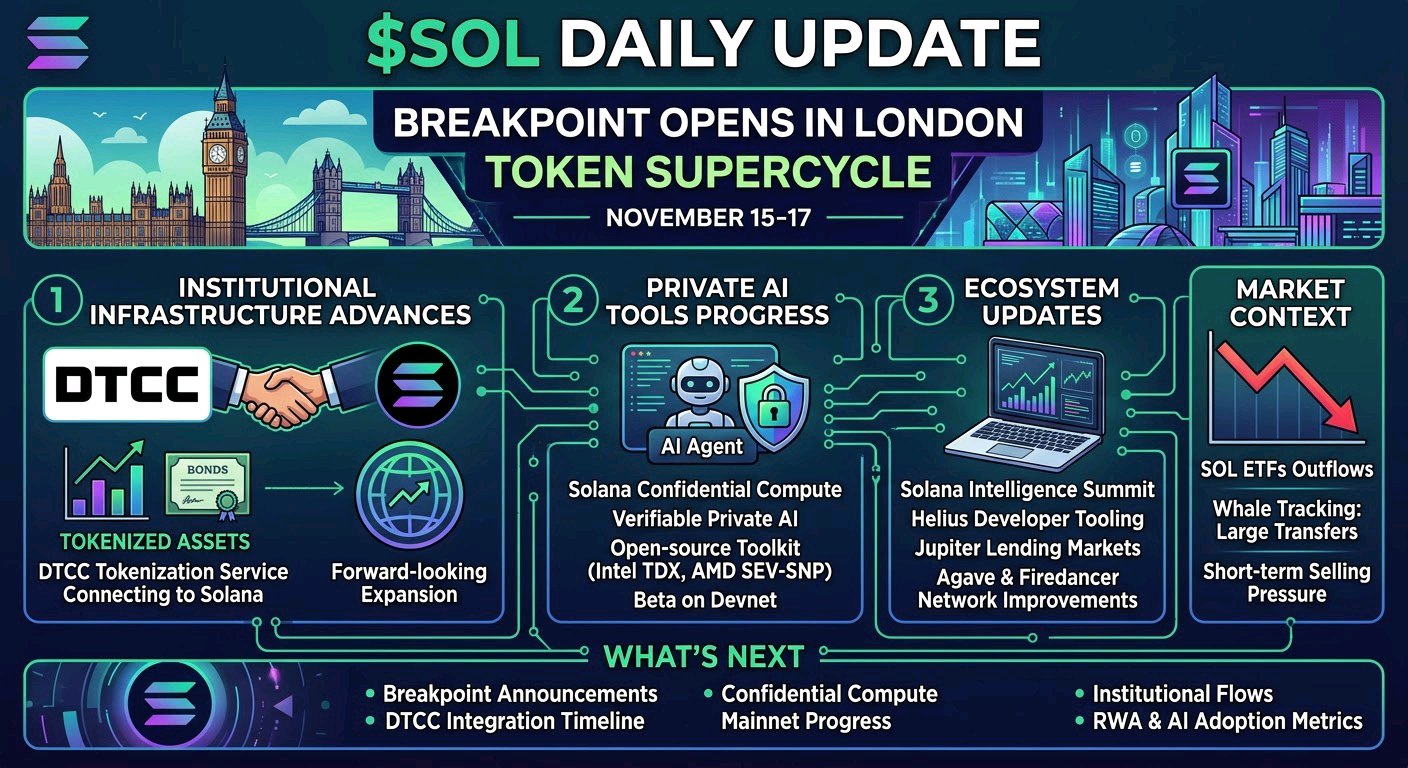
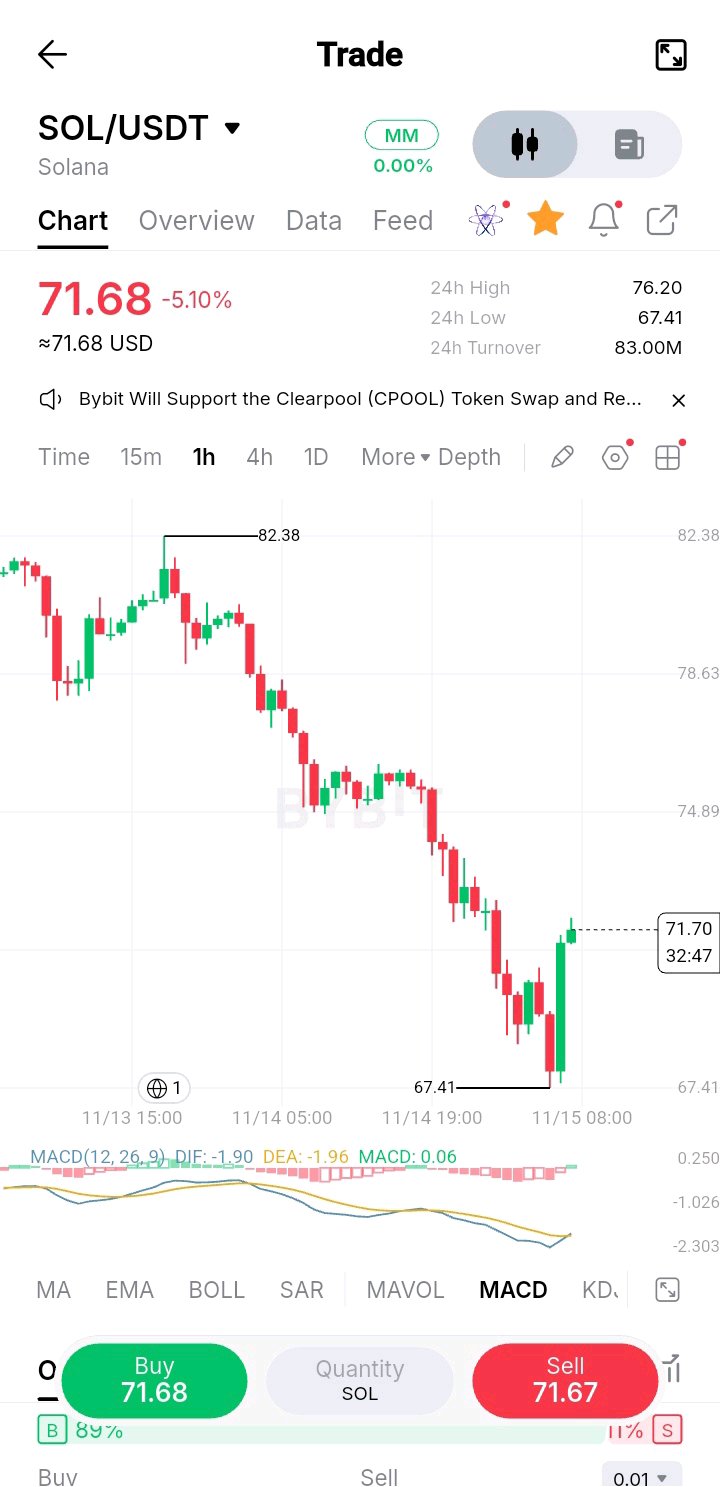
$SOL DAILY UPDATE — BREAKPOINT OPENS IN LONDON AS INSTITUTIONAL INFRASTRUCTURE AND PRIVATE AI TOOLS ADVANCE** Solana’s flagship annual conference, Breakpoint 2026, begins today in London. The three-day event at Olympia London (November 15–17) marks the first time the gathering has come to the UK and is expected to draw thousands of builders, institutions, investors, and policymakers around the theme of the “Token Supercycle.” Programming focuses on stablecoins, payments, tokenized real-world assets, AI-driven activity, and the infrastructure needed to support them. Pre-conference activity already included the Solana Intelligence Summit, Community Awards, Scale or Die technical summit, and other side events. Speaker lists have featured voices from Revolut, former UK political figures, DTCC, Mastercard, and a range of ecosystem teams. Just days earlier, on November 12, the Depository Trust & Clearing Corporation announced plans to connect its Tokenization Service to Solana in the second half of 2027. Eligible DTC-custodied assets—stocks, bonds, Treasuries and similar instruments—would become available in tokenized form on the network while retaining traditional investor protections. Solana becomes another major chain on DTCC’s multi-network roadmap. The service itself only went live in late October, so the Solana link is a forward-looking expansion rather than an immediate launch. On November 13 the Solana Foundation and Nito released Solana Confidential Compute in beta on devnet. The open-source toolkit lets applications verify that AI models or other programs are running inside attested confidential hardware (currently supporting Intel TDX and AMD SEV-SNP, with NVIDIA GPU support in development). After a one-time on-chain verification, any program can check the record at low compute cost. The goal is verifiable private AI without requiring users to simply trust an operator’s claims. It remains unaudited and intended for development use for now. These developments sit against a backdrop of continued short-term selling pressure. U.S. spot Solana ETFs recorded a multi-session streak of outflows, and large transfers (including multi-million SOL movements toward institutional venues) appeared in recent whale tracking. The market has been digesting broader risk-off conditions even as longer-term institutional and technical work continues. **Why this matters** Breakpoint is the highest-visibility moment of the year for Solana builders and partners. Announcements, product demos, and partnership signals that emerge from the event often set the tone for the following months. The DTCC roadmap item, while still more than a year away, places Solana inside the core post-trade infrastructure of U.S. markets—an important credibility signal for regulated asset tokenization. Confidential Compute addresses a practical barrier for privacy-sensitive AI agents and applications that want cryptographic assurance rather than marketing claims. **What’s happening behind the scenes** Ecosystem teams continue shipping. Phantom recently added the ability to share trades as video. Jupiter expanded lending markets and product surfaces. Helius released additional developer tooling. On the real-world asset side, activity around tokenized equities and stablecoin infrastructure remains active. Network performance work and client improvements (Agave, Firedancer) continue in parallel with the conference schedule. **What the community should watch next** - Concrete product or partnership announcements that surface during Breakpoint sessions and side events. - Any further detail on the DTCC integration timeline or technical requirements. - Progress of Confidential Compute toward mainnet after its security audit. - Whether institutional flows stabilize or reverse after the current outflow streak. - Continued adoption metrics in payments, RWAs, and AI-related applications. **My daily perspective** Solana is moving through a period in which short-term price and flow data look heavy while the longer-term infrastructure story keeps advancing. Breakpoint arriving right now gives the ecosystem a high-profile stage to demonstrate progress on the exact themes—tokenization, institutional rails, and practical AI tooling—that the recent announcements highlight. The gap between near-term market sentiment and multi-year institutional timelines is not new in crypto, but it is especially visible this week. The coming days in London will show whether the builders and partners can turn that gap into clearer momentum. The conference is the place to watch. #ByXIMPACT $SOLUSDT
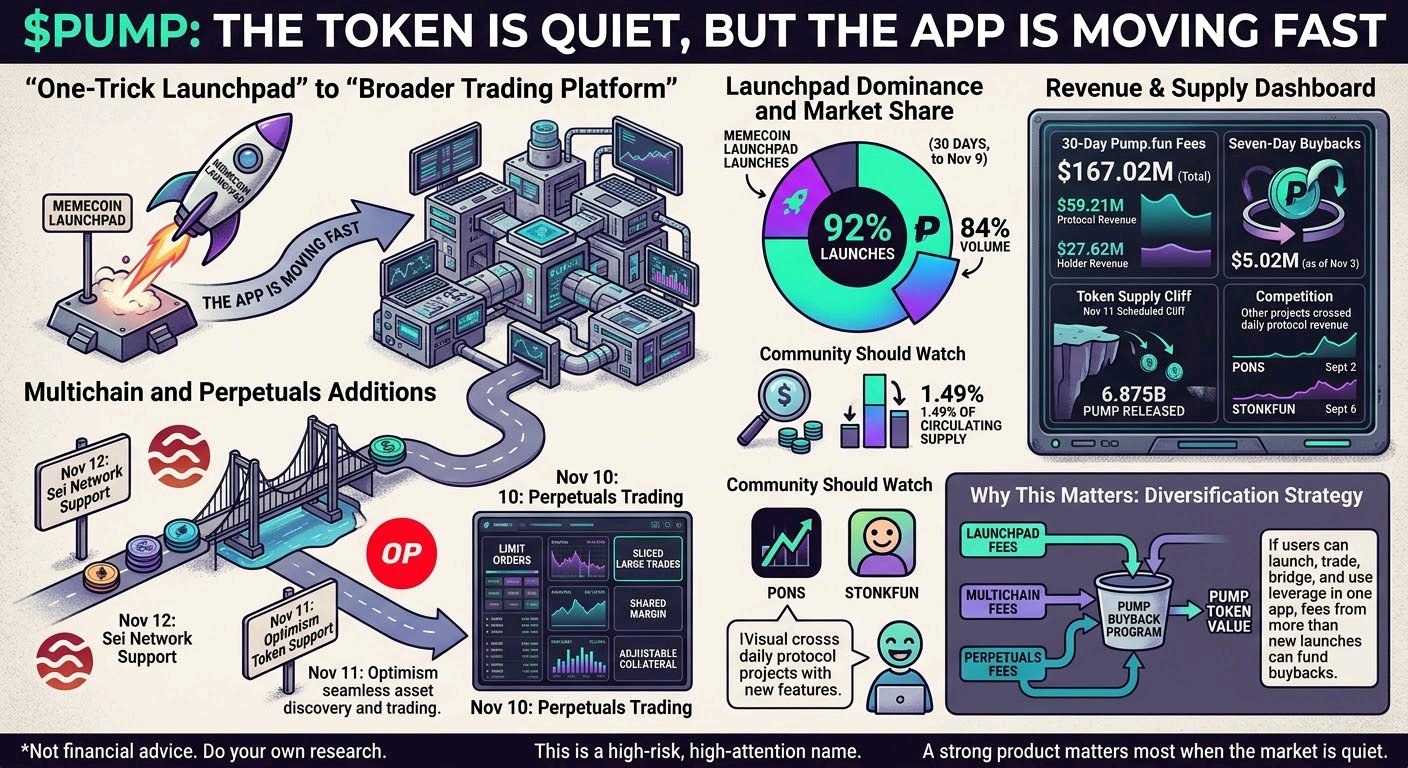
$PUMP: THE TOKEN IS QUIET, BUT THE APP IS MOVING FAST** Pump.fun is no longer behaving like a one-trick memecoin launchpad. In the past week, the team has pushed the app toward a broader trading platform. **Latest Developments** - **Nov 12:** Pump.fun added Sei network support, letting users trade Sei ecosystem tokens and bridge assets across chains inside the app. - **Nov 11:** The app announced Optimism token support, so users can discover and trade those tokens without bridging manually. - **Nov 10:** Perpetuals trading gained limit orders, sliced large trades, shared margin, and adjustable position collateral. - **Nov 9:** Data through that date showed Pump.fun with 92% of memecoin launchpad launches and 84% of trading volume over the prior 30 days. **Why This Matters** The multichain and perps additions point to a strategy shift. If users can launch, trade, bridge and use leverage in one app, Pump.fun can earn fees from far more than new token launches. That matters because those fees fund the PUMP buyback program. The launchpad dominance figure also shows the core product still leads its category. **Behind the Scenes** Revenue and supply are the numbers to follow: - Over 30 days, Pump.fun fees totalled $167.02M, with $59.21M in protocol revenue and $27.62M in holder revenue. - Reported seven-day buybacks were about $5.02M as of Nov 3. - A scheduled cliff on Nov 11 was set to release 6.875B PUMP, about 1.49% of circulating supply. - Competition is real. Pons overtook Pump.fun in daily protocol revenue on Sept 2, and StonkFun did the same on Sept 6. For context on the buyback story, in April the project burned roughly 36% of circulating supply and committed to a revenue-funded buyback. **What the Community Should Watch Next** - **Confirmed:** Whether weekly buybacks hold up as fees move around. - **Confirmed:** How users respond to the new multichain and perps features. - **Unconfirmed:** Whether the new features lift fee revenue. No data shows that yet. - **Unconfirmed:** Future unlock effects on supply. Treat any claim about them as speculation. **My Daily Perspective** The story to watch is revenue diversification. A launchpad leader that adds perps and cross-chain trading is trying to be less dependent on memecoin cycles. Whether that works will show up in fees and buybacks, not in headlines. Fees have been falling and competitors have taken some daily revenue days, so this is a high-risk, high-attention name. A strong product matters most when the market is quiet. *Not financial advice. Do your own research.* --- Two notes for you: - I left out the chart's entry, TP and SL levels, since this format is news-only. - I couldn't confirm PUMP's price today. The latest figure I found was $0.003737 on Binance on Nov 8, so check that before posting if you want to mention price. #ByXIMPACT $PUMPUSDT
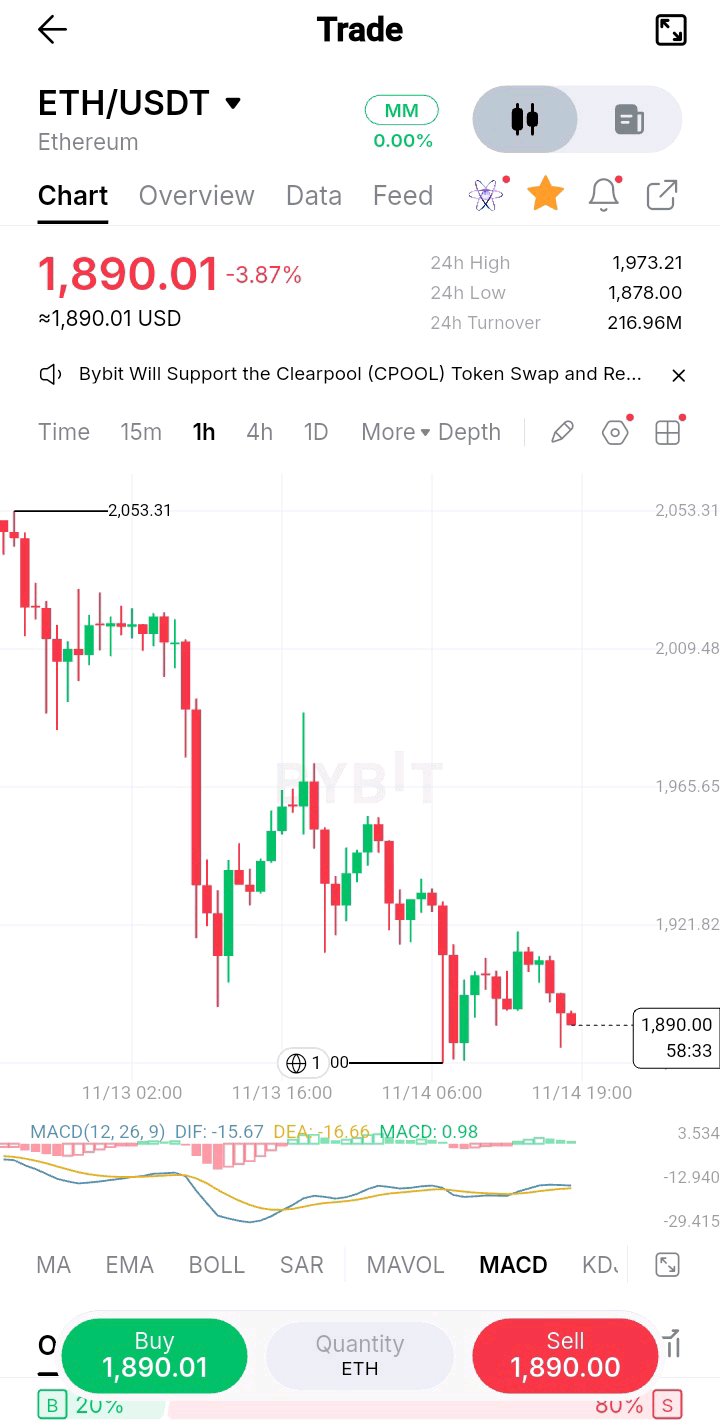
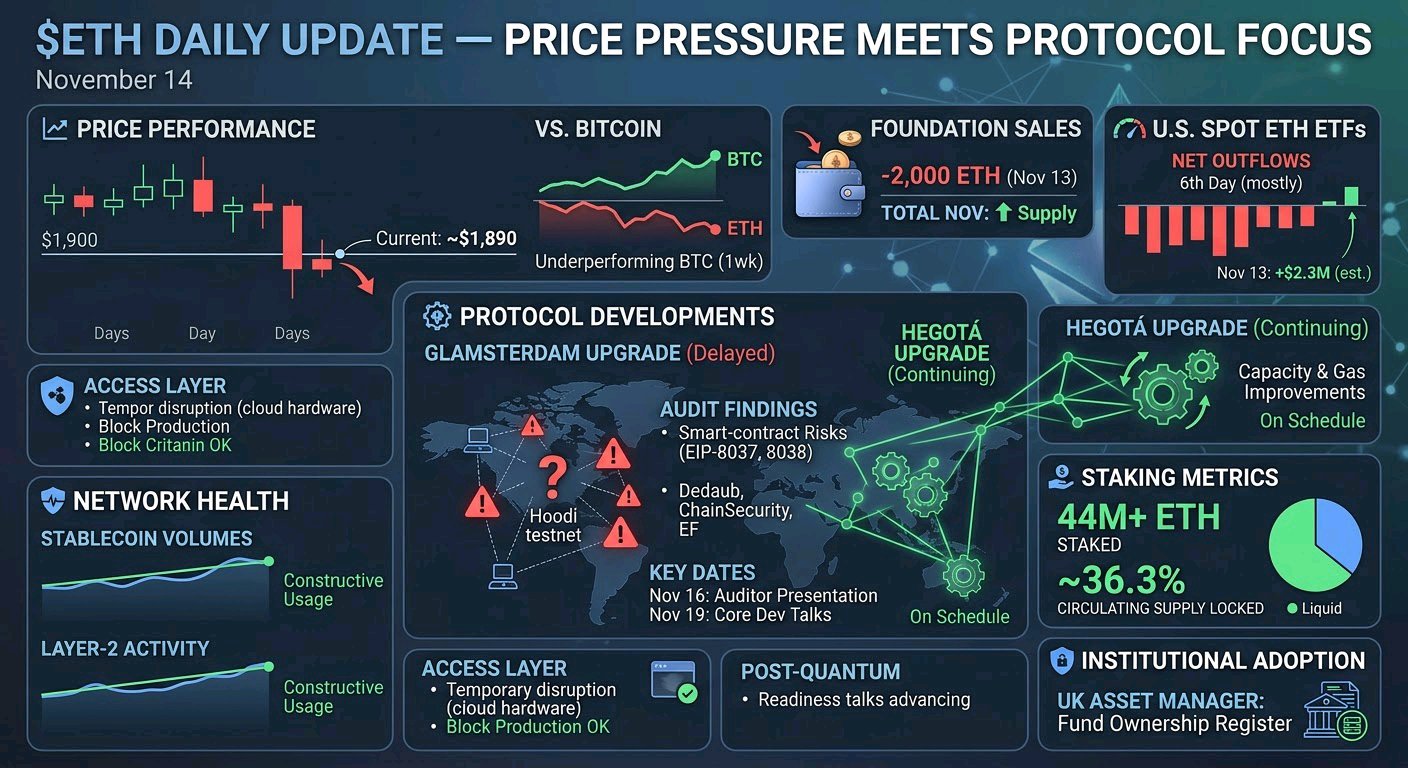
**$ETH DAILY UPDATE — PRICE PRESSURE MEETS PROTOCOL FOCUS** Ethereum is trading near the $1,890 level on November 14 after slipping below $1,900, extending a multi-day retreat that has seen the asset underperform Bitcoin over the past week. The move has coincided with continued outflows from U.S. spot ETH ETFs and additional sales from wallets linked to the Ethereum Foundation. ### Latest Developments U.S. spot Ethereum ETFs recorded another session of net outflows in the recent stretch, with one report noting a sixth consecutive day of withdrawals before a small net inflow of roughly $2.3 million appeared in incomplete Nov. 13 data. Foundation-linked wallets sold another 2,000 ETH on November 13, adding to earlier November sales that have increased circulating supply during the downturn. On the protocol side, the Glamsterdam upgrade remains delayed on the Hoodi testnet. Auditors identified smart-contract compatibility risks tied to gas-repricing changes in EIP-8037 and EIP-8038. Findings from Dedaub, ChainSecurity, and the Ethereum Foundation are scheduled for presentation and open discussion on November 16, followed by further core developer talks on November 19. Parallel work on the subsequent Hegotá upgrade continues without interruption. A separate report noted temporary access-layer disruptions linked to a cloud provider hardware issue. Block production and the consensus layer continued operating normally. Staking activity has reached a new high, with approximately 36.3% of circulating supply locked and more than 44 million ETH staked. ### Why This Update Matters The combination of ETF redemptions and Foundation sales has added measurable sell-side pressure at a moment when broader risk assets are also soft. At the same time, the Glamsterdam delay shows developers prioritizing contract safety over schedule. That caution protects the existing DeFi and application layer even if it pushes the next capacity and gas-pricing improvements further out. Record staking participation continues to tighten liquid supply and signals that long-term holders and validators remain committed despite short-term price weakness. Institutional experiments, including a major UK asset manager using Ethereum as the legal ownership register for a regulated fund, keep adding quiet adoption signals outside pure price action. ### What's Happening Behind the Scenes? Network usage metrics remain constructive even as price has retraced. Stablecoin volumes and Layer-2 activity continue to reflect real economic activity on the chain. Core developers are simultaneously accelerating post-quantum readiness discussions, with proposals advancing for earlier key-material registration and a clearer timeline toward quantum-resistant accounts. The temporary cloud-related access issues highlighted the ongoing reliance of many wallets and services on centralized infrastructure, even while the base protocol itself stayed resilient. ### What Should the Community Watch Next? The November 16 auditor presentation and November 19 All Core Developers discussion will clarify whether Glamsterdam needs specification changes or can move forward on a revised testnet schedule. ETF flow data for the remainder of the week will show whether the recent outflow streak is truly breaking. Any further updates on Hegotá scope or post-quantum milestones will also shape the 2027 roadmap conversation. ### My Daily Perspective Ethereum is currently living through a familiar tension: short-term capital flows and macro pressure are weighing on the token while the protocol layer keeps grinding forward on safety, capacity, and long-term cryptographic resilience. The record staking figure and continued institutional experiments suggest the network’s structural demand has not disappeared with the price. The real test over the coming days is whether developers can resolve the Glamsterdam compatibility questions cleanly and whether ETF flows stabilize. In a market that often over-indexes on daily candles, the quieter work on upgrades and infrastructure still matters most for the years ahead. #ByXIMPACT $ETHUSDT
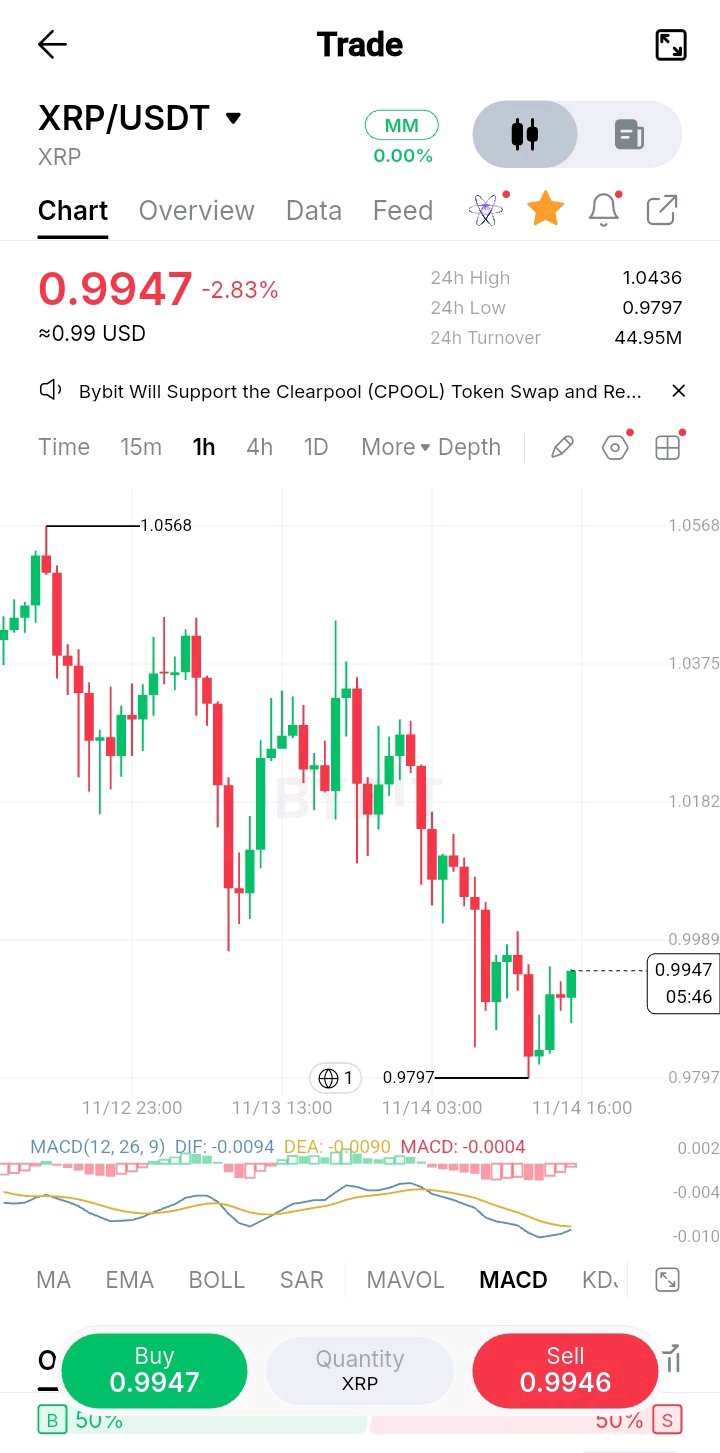
DAILY UPDATE — TRADING UNDER $1 AS MARKET PRESSURE MEETS QUIET ECOSYSTEM PROGRESS** XRP is trading near $0.99 on Saturday, November 14, 2026, after briefly slipping below the psychological $1 level for the first time since August. The token is down roughly 2.8–3% on the day, with 24-hour ranges showing highs near $1.04 and lows around $0.98. The move comes amid a broader crypto sell-off that pushed Bitcoin below $67,000 and triggered significant long liquidations across the market. Spot XRP ETFs recorded approximately $18 million in outflows over a recent 48-hour window, though total assets under management remain in the $1.1–1.7 billion range depending on the tracker. Franklin Templeton’s latest SEC filing (covering the period through September 30) showed its XRP ETF holding about 293 million XRP valued at roughly $440 million at the time, with holdings having risen substantially during the third quarter. On the positive side, Ripple’s RLUSD stablecoin continues its climb and has surpassed PayPal’s PYUSD to become the seventh-largest stablecoin by market capitalization, currently sitting near $2.78 billion. This growth reflects ongoing institutional and exchange adoption of the dollar-backed token issued on both the XRP Ledger and Ethereum. Meanwhile, the XRP Ledger’s proposed native lending protocol is slowly advancing. Validator support for the key LendingProtocol and SingleAssetVault amendments recently reached the low-to-mid 20s (out of the roughly 35 trusted validators), still short of the 29 votes needed to begin the two-week activation countdown. Developers have already shipped patches and refinements ahead of any potential launch. A large on-chain movement of approximately 133 million XRP (valued around $137 million at the time) between unidentified wallets also drew attention in the past day, though no clear context has been confirmed. **Why this update matters** The break below $1 tests short-term sentiment and highlights how XRP remains highly correlated with the broader market during risk-off periods. At the same time, the steady rise of RLUSD and the incremental progress on XRPL lending infrastructure show that utility and institutional infrastructure work continues regardless of price action. ETF outflows are notable but have not erased the substantial base of holdings built since the products launched. Clearpool’s expansion onto the XRP Ledger (with Bybit supporting the CPOOL-to-CLEAR token swap) adds another institutional-lending-focused project to the ecosystem. **What’s happening behind the scenes** Network activity and validator discussions around the lending amendments remain active. Institutional names such as Franklin Templeton continue to maintain and report meaningful XRP exposure through regulated vehicles. Ripple’s own business expansion (including RLUSD adoption and prime brokerage developments) proceeds on a separate track from the token’s daily price swings, a dynamic that community discussions have repeatedly highlighted. **What the community should watch next** Key near-term items include further validator progress on the lending amendments (still several votes short), the scheduled XRP Ledger software updates expected in early December, the next monthly escrow unlock, and any shift in ETF flows once the current market pressure eases. Confirmed timelines remain limited; much of the lending work is still in the voting and refinement stage rather than live deployment. **My daily perspective** Days like this separate noise from signal. The price is under pressure and the $1 level is being tested in real time, yet the underlying ledger work and stablecoin traction have not paused. RLUSD’s climb into the top-tier stablecoin ranks and the measured advance of XRPL lending tools matter more for the medium-term picture than any single session’s red candles. Whether the current support holds or gives way further will shape short-term trading, but the quieter infrastructure developments are what long-term observers should keep on their radar. The story is still being written on both the price chart and the ledger. #ByXIMPACT $XRPUSDT
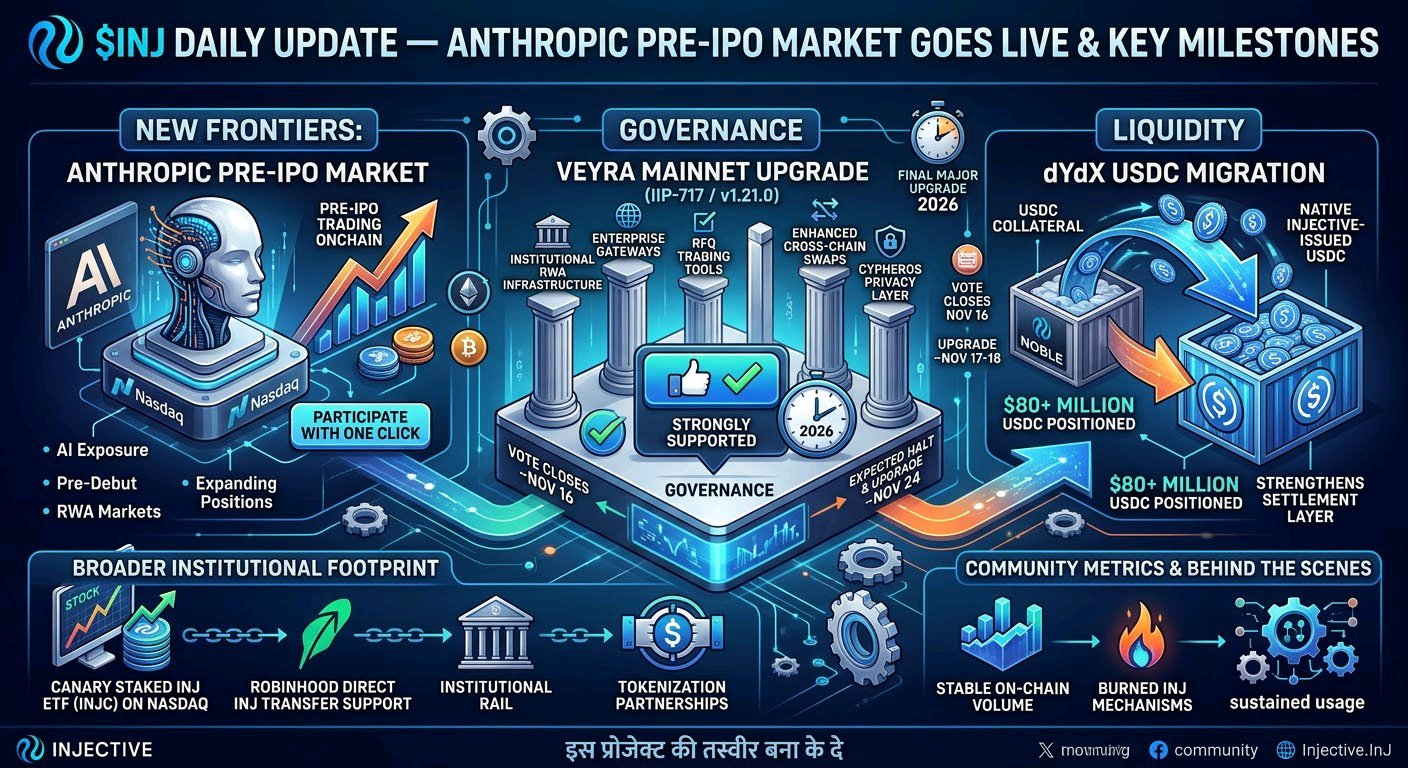
$INJ IS BACK IN FOCUS: THE ETF ERA HAS STARTED** Injective had a big week. Wall Street access arrived, the network turned five, and a new product for institutions went live. **Latest Developments** 🔹 **First U.S. staked INJ ETF is live.** Canary Capital's Staked INJ ETF (ticker INJC) began trading on Nasdaq on November 5, 2026. Nasdaq's own notice confirmed the listing date. The fund holds INJ and stakes most of it, and staking rewards go into the fund's net asset value instead of being paid out as cash. Injective CEO Eric Chen rang the Nasdaq opening bell on November 6. 🔹 **Injective turned 5.** The mainnet anniversary was November 8. Over the past year the network reported $12.86B in onchain trading, with $1.8B of that in perpetuals on real-world assets such as stocks and commodities. The INJ Community BuyBack has burned 517,692 INJ over 14 rounds, and total burn since 2021 stands at 7,295,039 INJ. 🔹 **Institutional Rail launched.** On November 2, Injective introduced a new offering that gives institutions access to block production. **Why This Matters** An ETF puts INJ inside ordinary brokerage accounts. Investors who would never touch a crypto exchange can now get exposure, and staking rewards are built into the fund. That is a different kind of demand from retail speculation. The ETF is also early, so keep expectations realistic. Crypto ETF launches don't guarantee price gains. Reporting after the debut noted the fund held about $16.1M in net assets after two sessions, with the share count unchanged at 600,000. That means the asset growth reflected price moves, not fresh inflows. The real test is whether sustained inflows follow. **What's Happening Behind the Scenes** 🔹 **Network usage.** Canary's launch materials cite over $1B in tokenized assets, more than 3.13B transactions, and about 257,300 monthly active addresses as of October 2026. 🔹 **Upgrades.** June's Vulcan upgrade cut oracle update costs by 90%. September's Meridian upgrade added regulated token issuance. The native EVM, live since November 2025, lets Ethereum developers build on Injective with familiar tools. 🔹 **Tokenomics.** In January 2026, governance lowered issuance to 2.2%–4.4% annually, and the buyback burns continue. 🔹 **Community.** A 10-day Hacker House in Bangkok with AWS and Animoca Brands was announced on October 29. **What Should the Community Watch Next?** *Confirmed:* - Whether INJC attracts real inflows and trading volume after its first weeks. - Two other INJ ETF applications are still pending: 21Shares and REX-Osprey. Their timing is unconfirmed. - The upcoming CypherOS platform for institutional privacy, outlined in Injective's October whitepaper. No firm launch date has been given. *Not confirmed:* Price targets and "next leg up" talk you see online are opinion, not news. **My Daily Perspective** Injective is clearly pushing toward institutional finance: ETF access, RWA markets, regulated issuance and privacy tooling. Listings only open the door, though. Lasting value will depend on real onchain activity and sustained demand, not headlines. The price has been steady near $8 since the listing, and the market seems to be waiting for proof. That's why this story is worth following past the launch week. *Wall Street found the door. Now the network has to give it a reason to stay.* *Not financial #ByXIMPACT $INJUSDT
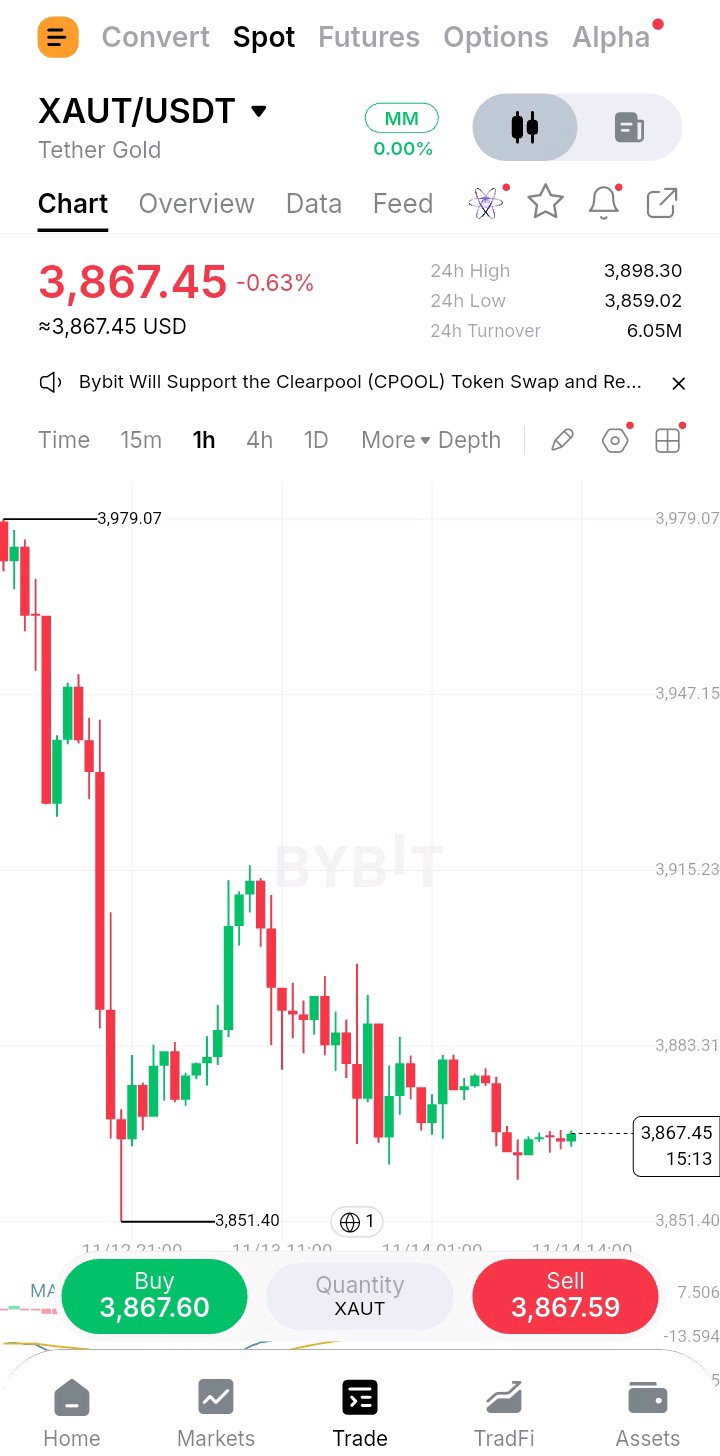
$XAUT IS BACK IN FOCUS: THE GOLD TOKEN JUST GOT ITS BIGGEST TRUST UPGRADE YET** Gold is under pressure and Tether Gold ($XAUT) is trading around $3,867 (Bybit, Nov 14, -0.63% on the day). But the real story today isn't the price. It's the audit. **LATEST DEVELOPMENTS** **Nov 12: KPMG audit.** Tether announced that KPMG U.S. completed an independent audit of the Tether Gold (XAU₮) financial statements for the year ended December 31, 2025, and the audited statements show the token fully backed by allocated physical gold. Tether's CEO Paolo Ardoino highlighted that KPMG counted every single bar as part of the audit. **Nov 4: Q3 reserve report.** Physical gold backing XAUT stood at 827,418 troy ounces (about 25.7 metric tons) on Sept. 30, up 59% from year-end 2025. Tether says customer holdings have grown 73% since the start of the year, with backing reaching a record $3.44 billion. The reserve comprises 2,057 bars, 766 of them added this year, stored in Switzerland to LBMA good-delivery standard. **WHY THIS MATTERS** Analysts note that the biggest hurdle for tokenized gold is trust: holders have to believe the physical metal is really there. A Big Four audit that counts the bars directly addresses that hurdle. Pair it with the growth numbers. Tether cites the World Gold Council's estimate that digital gold could unlock US$700 billion in demand. Verified backing is what institutions and cautious holders look for before moving size into a product like this. **WHAT'S HAPPENING BEHIND THE SCENES** - **Demand kept rising through a volatile summer.** Holders kept adding exposure even while the metal itself swung sharply. - **The token is getting more use cases.** In June, XAUT was brought to crypto lender Ledn, giving holders a way to borrow against their gold instead of selling it. - **Tether's wider gold position softened slightly.** Total disclosed gold holdings, including the gold held in reserve for USD₮, fell by about three tonnes in Q3 to 165 tonnes. That is a balance-sheet figure, separate from XAUT's own backing. **THE MARKET BACKDROP** The screenshot shows a sharp drop from the 3,979 area, a bounce, and then a quiet consolidation near 3,867 after a 24h range of roughly 3,859 to 3,898. Gold came under pressure after higher-than-expected US inflation data, and October inflation figures were the main fundamental focus on Nov 13. For comparison, the Q3 reserve valuation used gold at about $4,157 per ounce, so the metal has pulled back from where it stood at quarter-end. **WHAT TO WATCH NEXT** - **Confirmed:** Tether publishes quarterly attestations, so expect the next reserve update after year-end. Exact dates haven't been announced. - **Macro:** Inflation data and rate expectations are what's moving gold right now, and XAUT follows spot gold one-for-one. - **Unconfirmed:** Whether the audit translates into new exchange integrations, lending partners, or institutional demand is speculation until announced. **MY DAILY PERSPECTIVE** Price will move with the gold market, and nobody can promise where it goes next. What changed this week is the quality of the claim behind the token. A year ago, "backed by real gold" was Tether's word. Now an independent auditor has counted the bars. In tokenized gold, trust is the product. This week, XAUT added to it. *Not financial advice. Always do your own research. #ByXIMPACT $XAUTUSDT
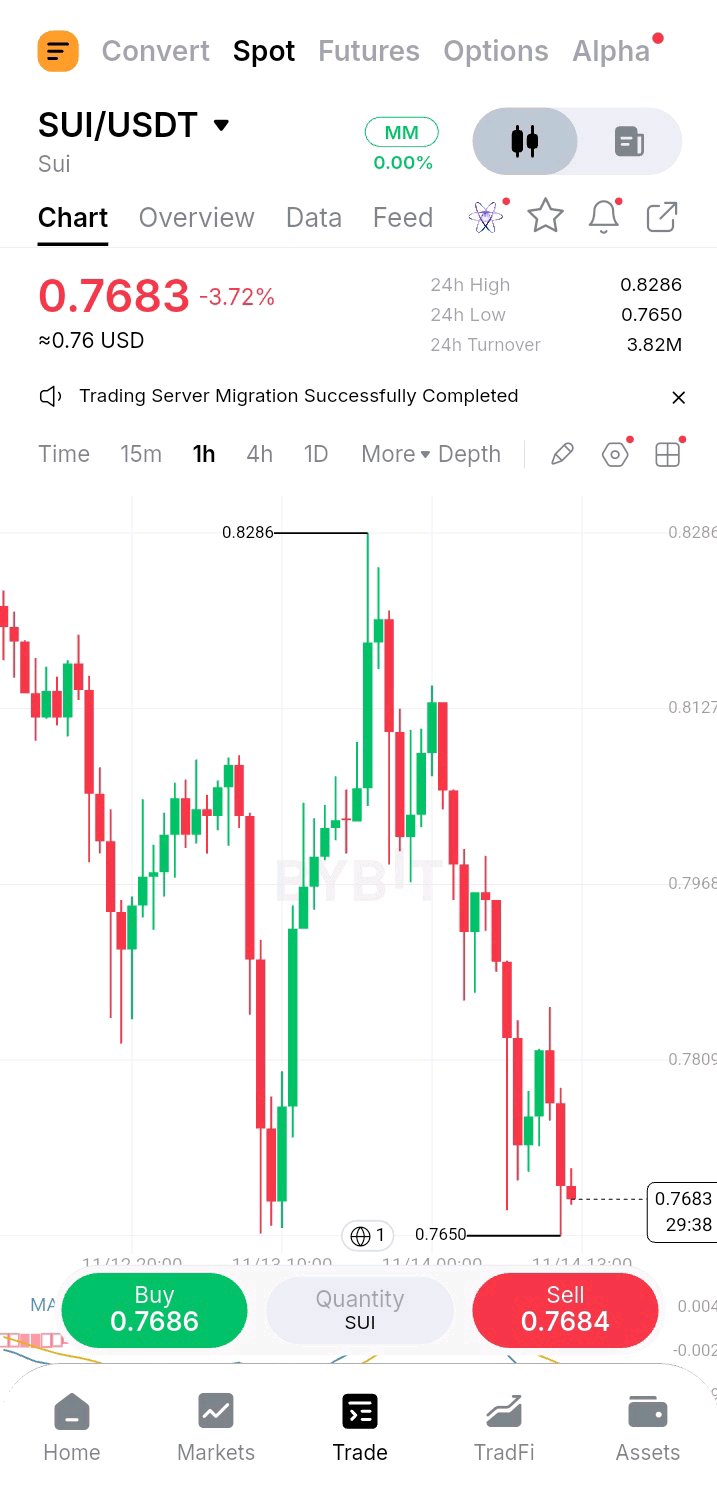
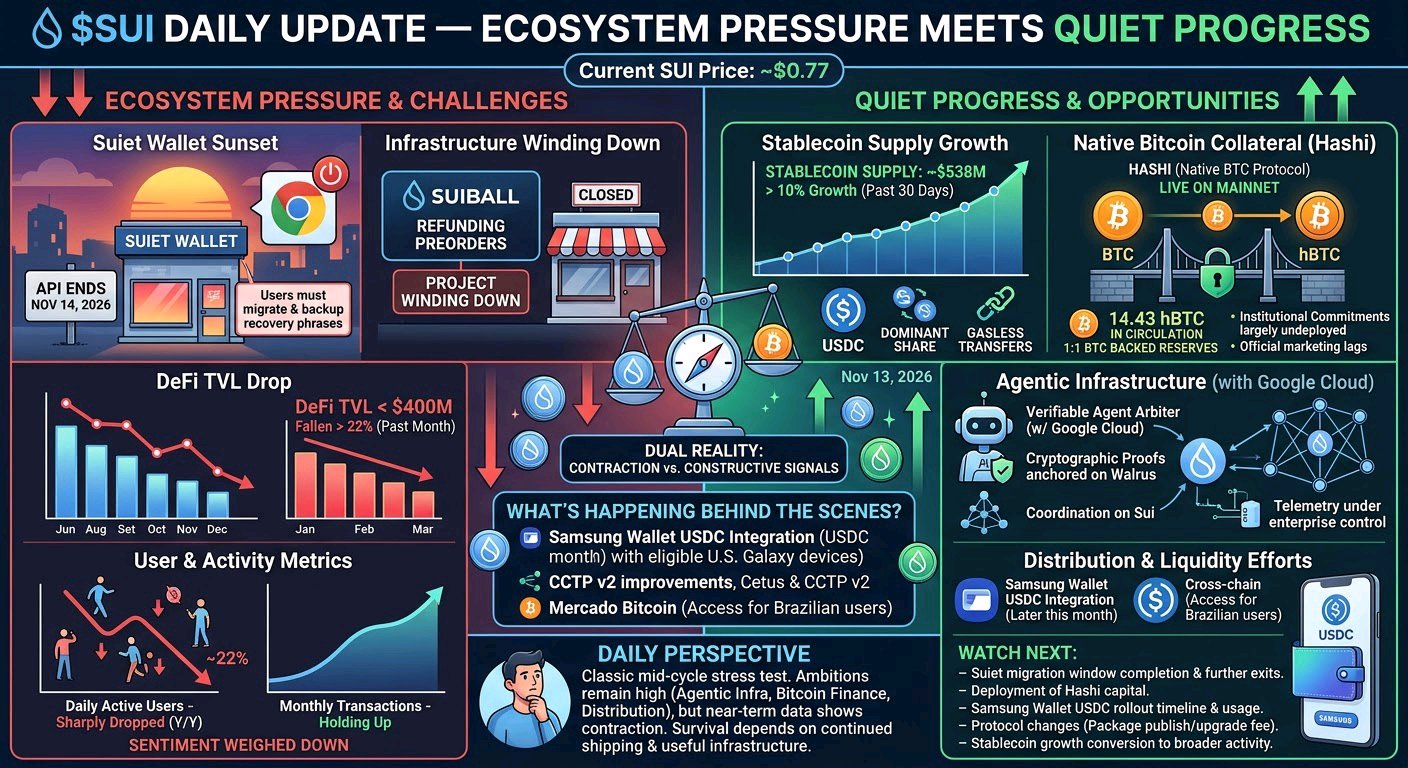
**$SUI DAILY UPDATE — ECOSYSTEM PRESSURE MEETS QUIET PROGRESS** Sui is navigating a tough stretch. The token trades near $0.77 after another session of pressure, while the network confronts real ecosystem friction alongside some constructive under-the-radar moves. ### Latest Developments Suiet, one of the earlier self-custodial wallets built specifically for Sui, is sunsetting. API services end after November 14, 2026. Users have been told to back up recovery phrases and migrate to other compatible wallets. The Chrome extension is expected to follow shortly. This comes on the heels of the Suiball hardware wallet project also winding down and refunding preorders. DeFi total value locked has fallen more than 22% over the past month, settling near the low $400 million range. Daily active users dropped sharply year-over-year according to recent data, even as monthly transaction counts held up better. These exits and metrics have weighed on sentiment. At the same time, stablecoin supply on Sui climbed more than 10% over 30 days to approximately $538 million as of November 13 — a notable divergence while the broader market’s stablecoin supply contracted. USDC accounts for the large majority of that balance. Gasless stablecoin transfers continue to support this growth. Hashi, Sui’s native Bitcoin collateral protocol, has quietly gone live on mainnet. The app now accepts real BTC deposits, with roughly 14.43 hBTC in circulation backed one-to-one by BTC reserves. Official marketing still lags the on-chain reality, and the previously announced $500 million+ in institutional commitments remain largely undeployed at this stage. The Verifiable Agent Arbiter (developed with Google Cloud) continues to receive attention as part of Sui’s agentic infrastructure push. Cryptographic proofs of AI agent activity are designed to be anchored on Walrus and coordinated on Sui, while detailed telemetry stays under enterprise control. This fits the broader narrative of building rails for autonomous agents that can transact and prove compliance. ### Why This Update Matters Wallet and infrastructure exits highlight the challenge of sustaining a full ecosystem stack when activity and capital slow. Lower TVL and fewer daily users reduce the gravity that keeps developers and liquidity providers engaged. Yet the stablecoin growth and early Hashi deposits suggest that payments and Bitcoin-adjacent finance still find product-market fit on Sui even in a quieter market. The agent infrastructure work positions Sui for a potential future where AI agents handle meaningful volume of payments and coordination. Whether that translates into sustained network demand remains the open question. ### What’s Happening Behind the Scenes? Samsung Wallet’s planned USDC-on-Sui integration for eligible U.S. Galaxy devices (targeting tens of millions of users with gasless transfers) is still expected later this month. Cross-chain USDC flows via Cetus and CCTP v2 have improved connectivity. Mercado Bitcoin has expanded access to SUI and related assets for Brazilian users. These distribution and liquidity efforts sit alongside the more visible consolidation in wallets and DeFi. ### What Should the Community Watch Next? - Completion of the Suiet migration window and any further infrastructure exits. - Actual deployment of Hashi capital beyond the initial small reserves. - The Samsung Wallet USDC rollout timeline and early usage numbers. - Any further protocol changes (including the planned package publish/upgrade fee in a future version). - Whether stablecoin growth continues and translates into broader DeFi or payments activity. ### My Daily Perspective Sui is in a classic mid-cycle stress test. The technology and partnerships remain ambitious — agent verification, Bitcoin finance primitives, consumer wallet distribution — but the near-term data shows contraction in users and capital. The projects that survive these periods tend to be the ones that keep shipping useful infrastructure while the noise settles. Today’s combination of a wallet sunset deadline, early Hashi activity, and resilient stablecoin balances captures the current dual reality. The next few weeks of Samsung integration and Hashi traction will reveal whether the constructive signals can begin to outweigh the exits. #ByXIMPACT $SUIUSDT $BTCUSDT
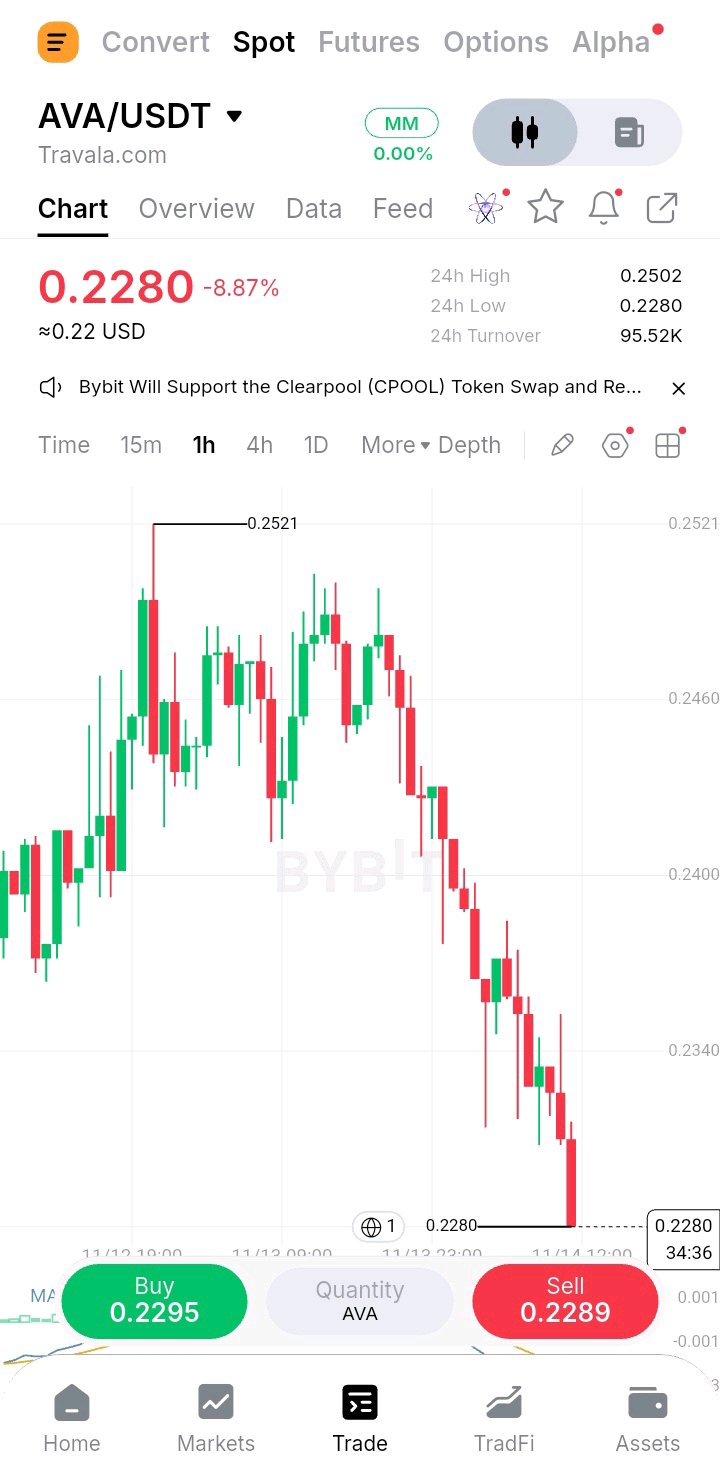
$AVA DAILY UPDATE — AVA 3.0 DROPS WITH A CLEAR TRAVALA-FIRST ROADMAP** Just two days ago, on November 12, the AVA Foundation and Travala officially unveiled AVA 3.0. This is not another vague vision statement. It is a focused, Travala-centred roadmap that doubles down on real-world travel utility, transparent buybacks, and measurable member value. AVA 3.0 builds directly on the foundation of AVA 2.0. The AVA Smart Program already serves more than 180,000 members who lock AVA to unlock up to 13% savings on travel plus additional perks. Members can also pay with AVA for discounted bookings and earn rewards through the Travala AI Agent, which is live on BNB Chain in partnership with Binance Pay. The buyback engine remains central. Every month the AVA Foundation buys AVA on the open market to fund member givebacks, and Travala matches those purchases before locking its share permanently into the AVA Strategic Reserve. The recently introduced Buyback Multiplier can scale Travala’s match up to 3x, pushing total monthly buybacks as high as 4x the givebacks generated by members. More bookings create more rewards, which in turn drive larger buybacks and further permanent locks. The numbers so far are concrete: the Foundation has bought back 5,604,414 AVA to date. Of that, 779,691.92 AVA (roughly 1.1% of circulating supply) sits permanently locked in the Strategic Reserve. Overall, about 17.5% of circulating supply is already locked, with a long-term target of 30%. Next up: increased lock requirements for new Smart members are expected this month (existing members keep their current levels and can use the new Smart Boost feature). AVA+ Partners, which will let other crypto projects lock AVA to have their tokens accepted as payment on Travala, is slated for Q1 2027. # Why This Matters This is one of the clearer utility-focused roadmaps in the sector. Instead of chasing abstract DeFi experiments, AVA 3.0 ties token demand to actual travel bookings, member discounts, and permanent supply reduction. When more people book travel and claim rewards, the buyback machine scales automatically. That creates a feedback loop between platform growth and token scarcity that is rare in practice. ### What’s Happening Behind the Scenes Travala continues to post solid operational numbers. October’s monthly gross revenue came in above $7.4 million. The AI Travel Agent and broader product improvements are live, and the ecosystem is steadily locking more AVA while expanding real payment utility. Mainstream coverage, including from Business Insider, has already picked up the AVA 3.0 announcement, signalling that the project’s travel-plus-crypto positioning is getting noticed outside pure crypto circles. ### What the Community Should Watch Next - Exact timing and details of the November Smart Program lock-level increases and Smart Boost rollout. - Progress updates on AVA+ Partners ahead of the targeted Q1 2027 launch. - Any further development of the agentic travel tools and AI features that recognise Smart membership tiers. - Ongoing monthly buyback results and growth in locked supply toward the 30% goal. These are confirmed directions from the official roadmap, not speculation. ### My Daily Perspective AVA 3.0 feels like a maturity move. The team is choosing to deepen what already works—travel bookings, member rewards, and transparent buybacks—rather than inventing new narratives. In a market full of short-lived hype cycles, a project that keeps shipping real utility and steadily removing tokens from circulation is worth paying attention to. The next few months of execution on the Smart Program updates and AVA+ Partners will show how effectively that Travala-first focus converts into stronger ecosystem metrics. Real travel. Real buybacks. Real utility. That is the story right now. #ByXIMPACT $BTCUSDT $AVAUSDT
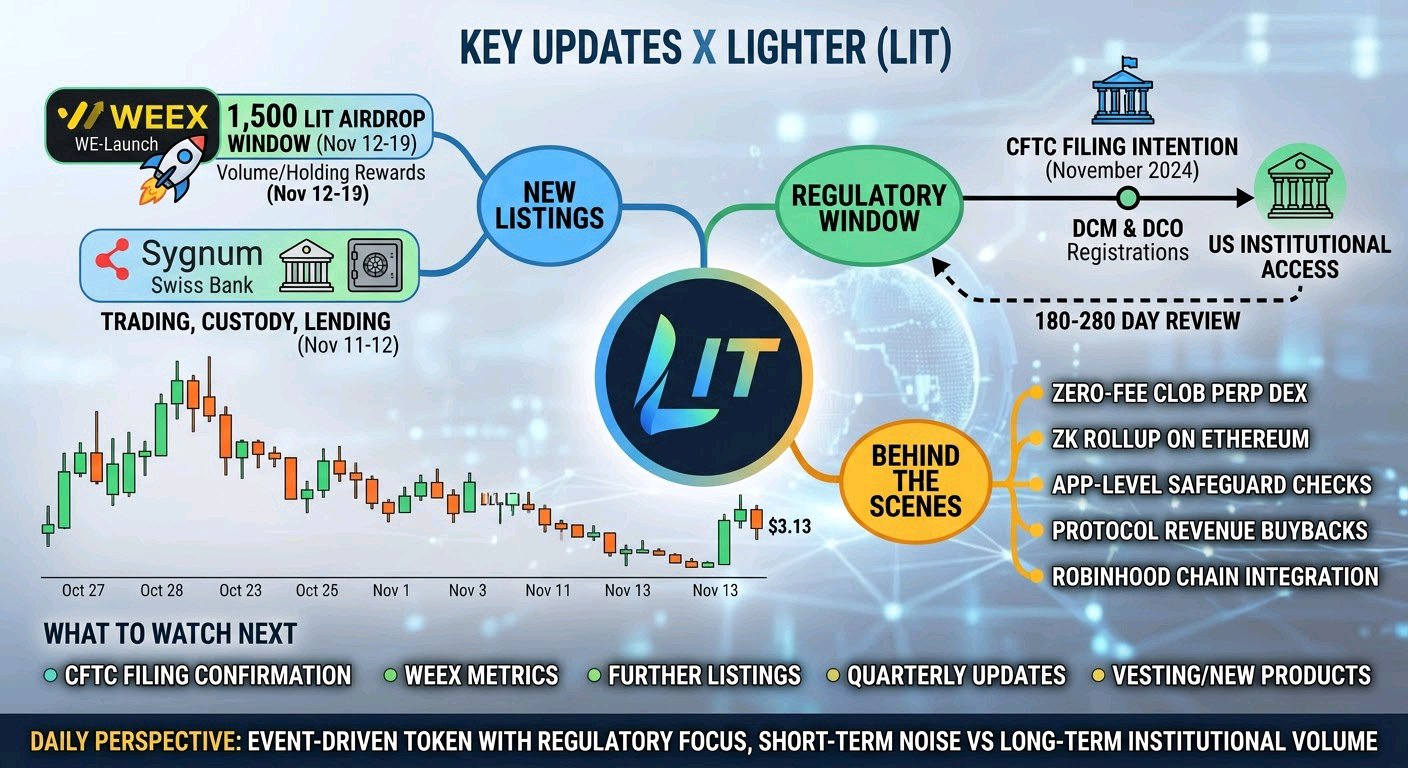
$LIT DAILY UPDATE — NEW LISTINGS AND REGULATORY WINDOW KEEP LIGHTER IN THE SPOTLIGHT** Lighter (LIT) is trading near $3.13 as of the latest sessions, down modestly on the day after testing highs around $3.40 earlier in the week. The chart shows the familiar pattern of sharp moves followed by consolidation that has defined the token since its stronger runs in late October. # Latest Developments The most immediate catalyst in the past 48 hours has been the WEEX WE-Launch campaign. LIT is live on the exchange with a 1,500 LIT airdrop window running from November 12 to November 19. Traders participating through volume or holding requirements can share in the rewards, and the listing generated a noticeable short-term lift on November 13, with reports of a roughly 3% hourly pop tied to the campaign and related social activity. Around the same period, Swiss digital asset bank Sygnum added LIT for trading, custody, and lending. That move, reported over the November 11–12 window, coincided with LIT rising more than 10% on a day when the broader market was softer. Institutional-style access of this kind remains relatively rare for mid-cap perp tokens and has drawn attention from holders looking beyond pure retail flow. Meanwhile, the bigger structural story continues. Lighter still plans to submit applications to the CFTC this month for Designated Contract Market (DCM) and Derivatives Clearing Organization (DCO) registrations. The intention was first outlined on the October 21 investor call. As of mid-November reporting, no formal filing has been confirmed, but the November window remains open. The project has described months of pre-engagement with regulators and is positioning itself as a candidate to become the first on-chain perpetual futures venue with U.S. derivatives registrations, initially targeting institutional clients. ### Why This Update Matters Exchange listings with active reward campaigns create short-term liquidity and visibility. The WEEX airdrop is time-bound, so it tends to concentrate volume while the window is open. The Sygnum addition is more structural — it expands the set of regulated venues where LIT can be held and used by institutions that prefer bank-grade custody and lending rails. The CFTC process is the longer-term variable. A formal filing would mark the start of a multi-month review (reported windows run 180–280 days). Success would open a clearer path for U.S. institutional participation on a regulated on-chain venue. Failure or delay would leave the project operating primarily through its existing non-U.S. and Robinhood Chain channels. Either outcome will shape how the market prices LIT’s regulatory premium. ### What’s Happening Behind the Scenes? Lighter continues to operate as a zero-fee (for standard retail accounts) central-limit-order-book perpetual DEX built as an application-specific ZK rollup on Ethereum. Recent technical notes mention the addition of app-level safeguard checks in partnership with infrastructure providers, aimed at blocking certain rule-violating transactions. Protocol revenue still feeds buybacks, and the Robinhood Chain integration remains a meaningful distribution channel outside the United States. On-chain and exchange data show healthy but not explosive activity. TVL has held in the high hundreds of millions, and the token remains sensitive to both sector-wide perp DEX sentiment and project-specific headlines. Circulating supply dynamics and the approach of team/investor vesting later this year continue to sit in the background of many discussions. ### What Should the Community Watch Next? - Confirmation (or absence) of the actual CFTC filing before the end of November. - Progress and participation metrics on the WEEX airdrop through November 19. - Any further regulated or institutional listings that expand custody and trading options. - Quarterly updates on volume, open interest, revenue, and buyback activity. - Clarity on vesting schedules and any new product launches (options and risk-engine features have been previously flagged). These are confirmed timelines or publicly stated intentions. Outcomes, especially on the regulatory side, remain uncertain. ### My Daily Perspective Lighter is one of the clearer examples of a perp DEX trying to close the gap between high-performance on-chain trading and traditional regulatory frameworks. The combination of a live WEEX campaign, a Swiss bank listing, and an open November filing window keeps the token more event-driven than many peers right now. Short-term price action will likely stay noisy around these catalysts. The more lasting question is whether the project can convert its technical base and distribution partnerships into durable institutional volume under a clearer U.S. regulatory umbrella. For now, the story is still being written in real time. The next few weeks of filings, listings, and campaign results will tell us more than any single daily candle. #ByXIMPACT $LITUSDT