Mulla
1748Like0Shares52Fans1Follow
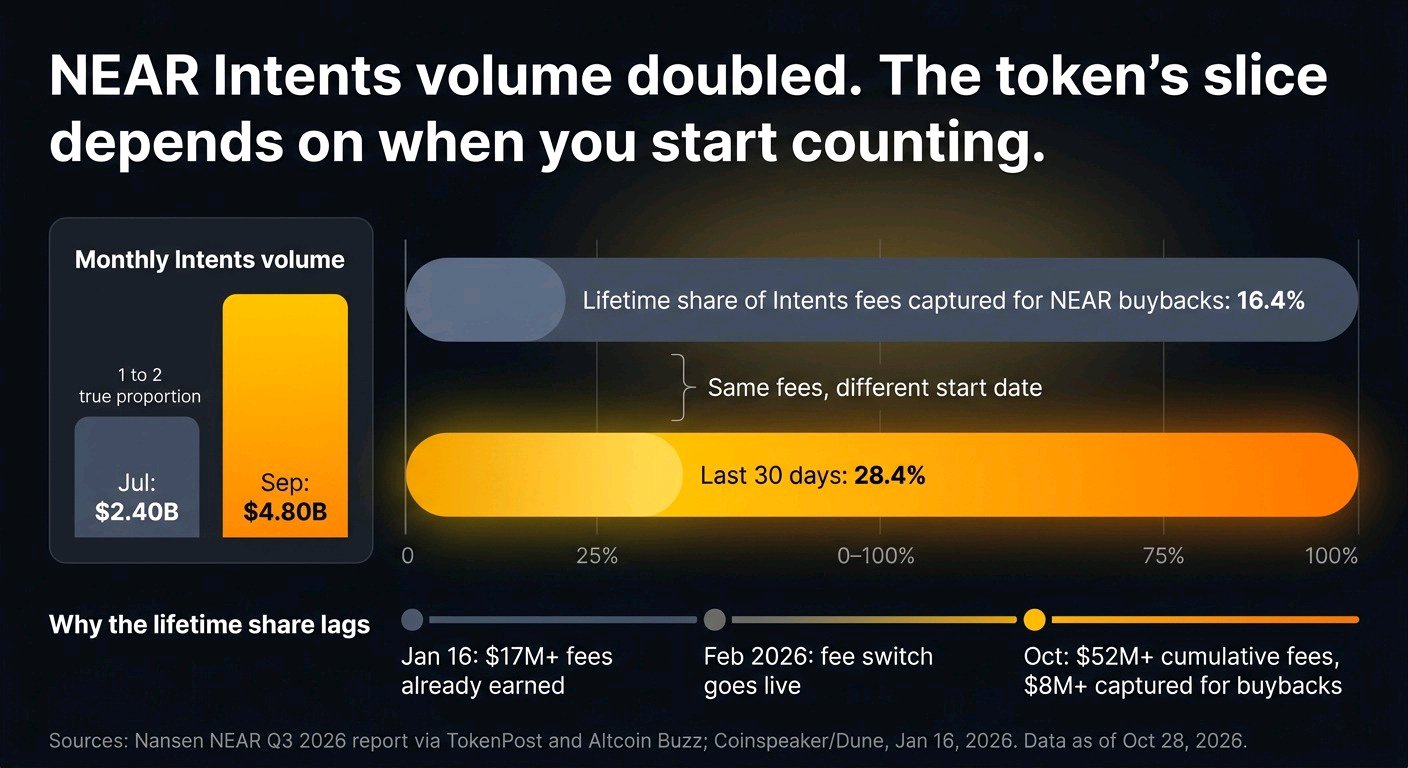
NEAR Intents moved $4.80B in September, double July’s $2.40B. Most readers stop there, but the number that matters for $NEAR is how much of that activity turns into token demand. Per Nansen’s Q3 report, cumulative Intents fees have passed $52M, and over $8M has been captured for NEAR buybacks. That’s a 16.4% lifetime share, which looks thin next to the 28.4% captured over the last 30 days. The gap has a simple cause. More than $17M of those fees were already earned by mid-January, before the fee switch went live in February. Months with zero capture drag the lifetime average down, so if the recent rate holds, the lifetime figure keeps drifting toward it. I’d still watch the 30-day share more than the lifetime one. It sat at 30.5% in the report’s earlier comparison, so the token’s slice doesn’t automatically grow with usage. Captured, bought and burned are also three different numbers, and public trackers don’t yet agree on the middle one. #ByXIMPACT $NEARUSDT
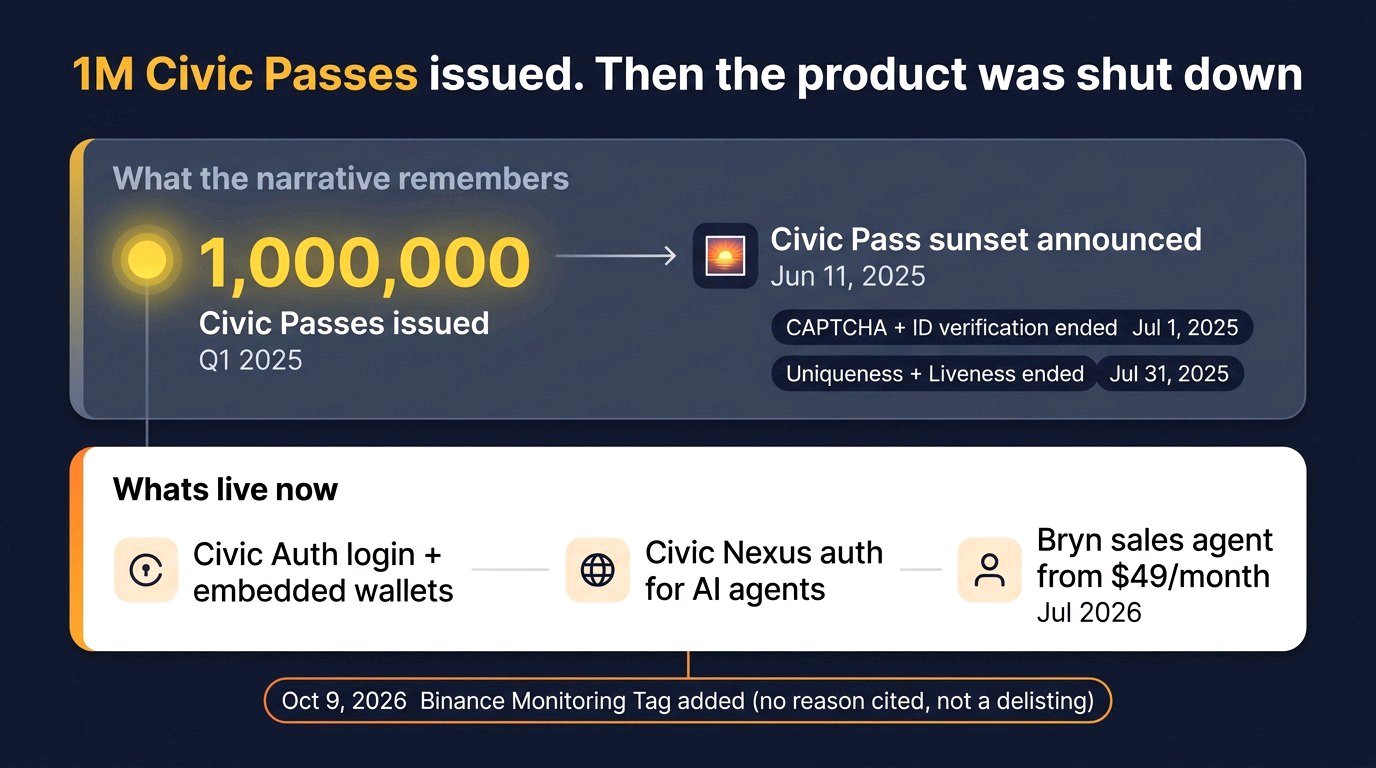
I went looking for Civic’s latest credential issuance numbers and found a shutdown notice. @civickey announced its 1 millionth Civic Pass in Q1 2025. On June 11, 2025, it announced the product would be sunset: CAPTCHA and ID verification ended July 1, Uniqueness and Liveness on July 31. The metric that defined $CVC’s identity story went from milestone to discontinued within months. What’s live now is different. Civic Auth handles login and embedded wallets. Civic Nexus handles auth for AI agents. Since July 2026 there’s also Bryn, a signal-based sales agent starting at $49 a month. It’s a real product with real pricing, and about as far from issuing credentials as you can get. This matters because the “on-chain identity” label tends to outlive the product behind it. Binance put CVC under its Monitoring Tag on Oct 9. It cited no specific reason, and a tag isn’t a delisting, but the review criteria include development activity and public communication. I couldn’t find anywhere that holding CVC is part of using Auth, Nexus or Bryn. Maybe I missed it. If the original use case is retired and the new product bills in dollars, what is the token attached to now? #ByXIMPACT $CRVUSDT
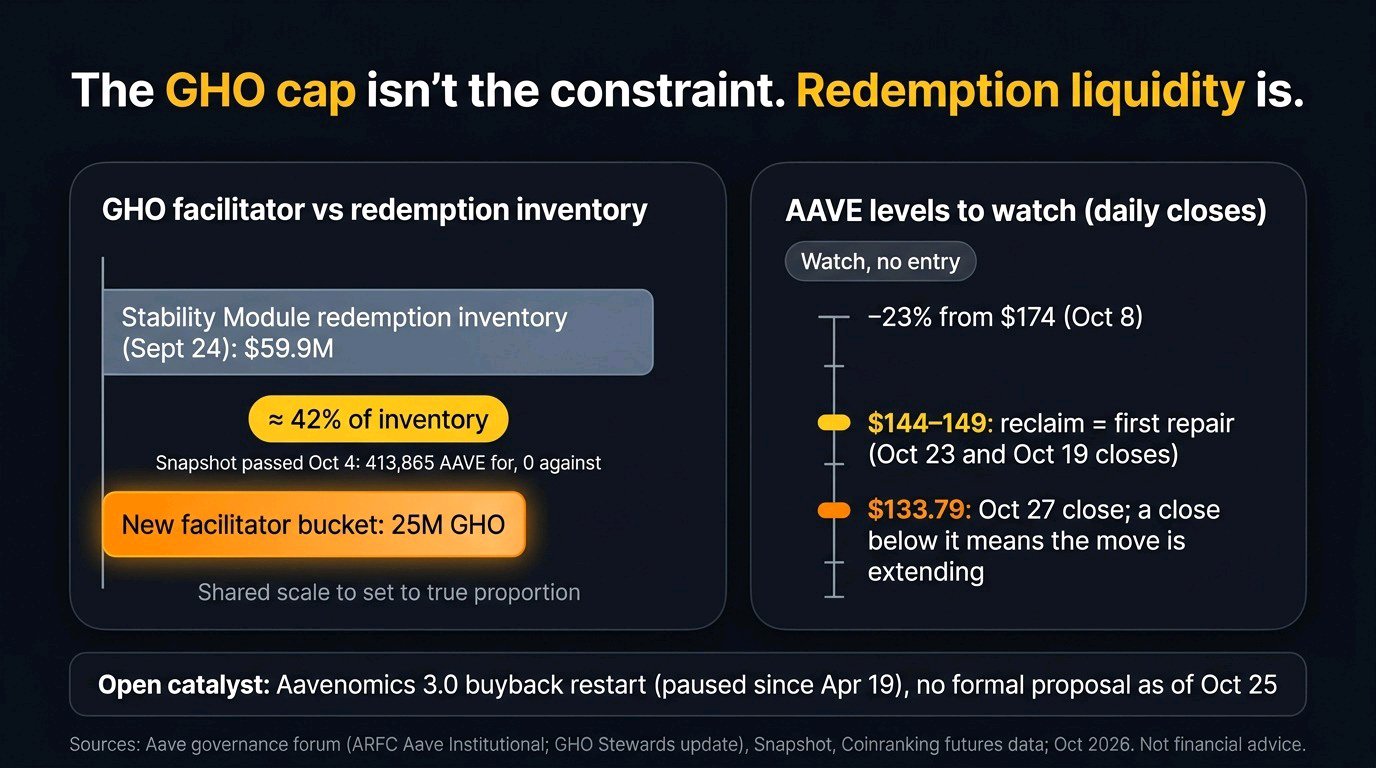
Aave’s new 25M GHO facilitator cleared Snapshot on Oct 4 with 413,865 AAVE for and none against. The proposal itself says GHO’s constraint “is not mint capacity.” The binding limit is redemption inventory: $59.9M in Stability Modules on Sept 24, so 25M GHO is about 42% of it, and GHO traded below $0.999 for most of September. That makes the vote a weak demand catalyst for $AAVE. The open catalyst is Aavenomics 3.0 (buyback restart, paused since April 19), which had no formal proposal as of Oct 25. View: watch, no entry. AAVE fell roughly 23% from $174 on Oct 8 to a $133.79 close on Oct 27, and AAVEUSDT funding is near neutral. Levels: a daily close under $133.79 means the move is extending. Reclaiming $144–149 (the Oct 23 and Oct 19 closes) would be the first repair. Window: until the Aavenomics proposal or the facilitator AIP lands. Risk: a buyback-restart proposal can reprice AAVE higher quickly, which is why this isn’t a short. #ByXIMPACT $AAVEUSDT
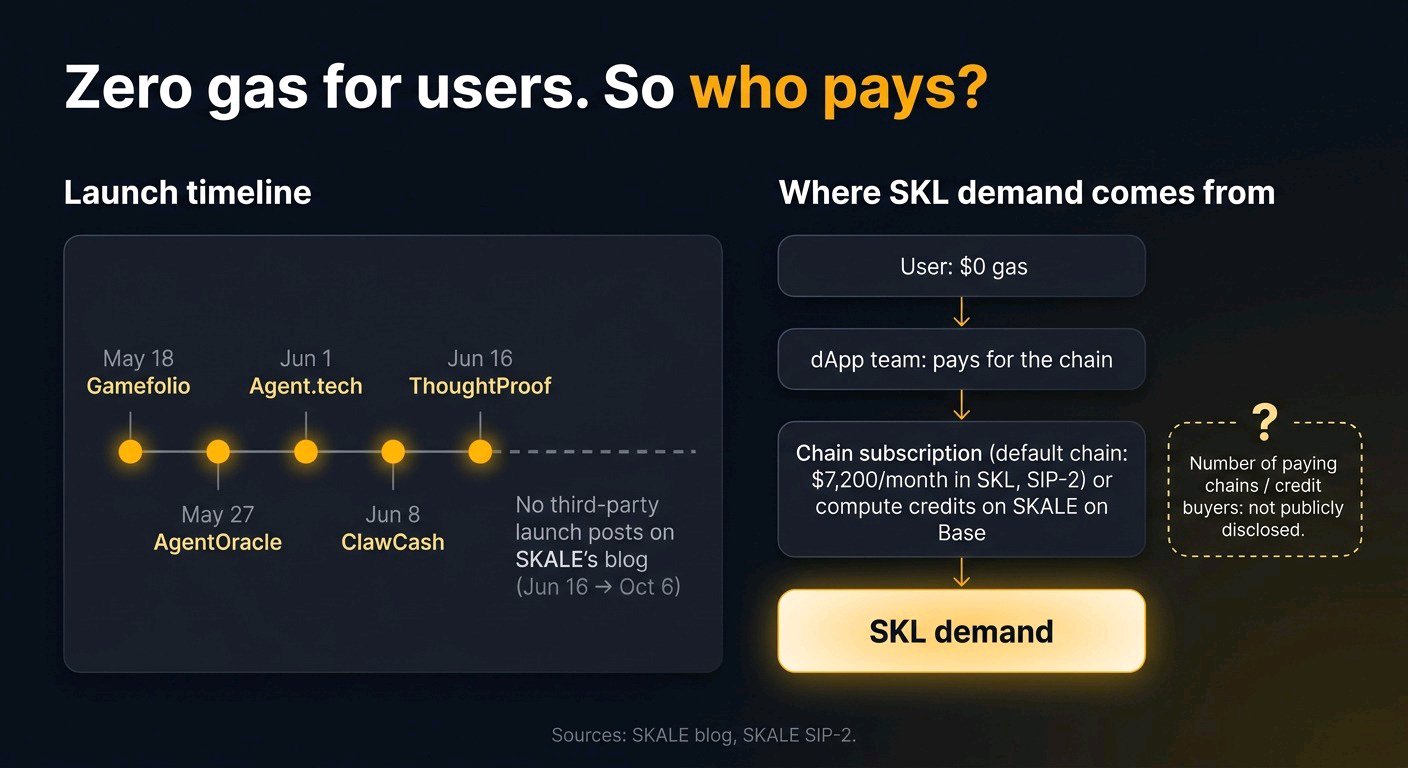
Five dApps announced launches on @SkaleNetwork between May 18 and June 16: Gamefolio, AgentOracle, Agent.tech, ClawCash and ThoughtProof. Since then, SKALE’s blog has posted no third-party launches, and its latest post, from October 6, is a bridge incident update. That makes this a standing observation, not breaking news. A launch count matters less than it looks. On SKALE, users pay zero gas, but someone still pays for the chain. Historically that’s the dApp team, through a monthly subscription in $SKL, and SIP-2 set the default chain at $7,200 a month. SKALE on Base works differently, with prepaid compute credits that can be bought with supported assets, including SKL. So transaction counts, however large, don’t create $SKL demand on their own. A new dApp only shows up in the token if it leases a chain or buys credits. I couldn’t find a public count of how many of those five do either. I used to read each launch post as a demand signal. Until a paying-chain number exists, a launch post tells you who’s building, not who’s paying. #ByXIMPACT $SKRUSDT
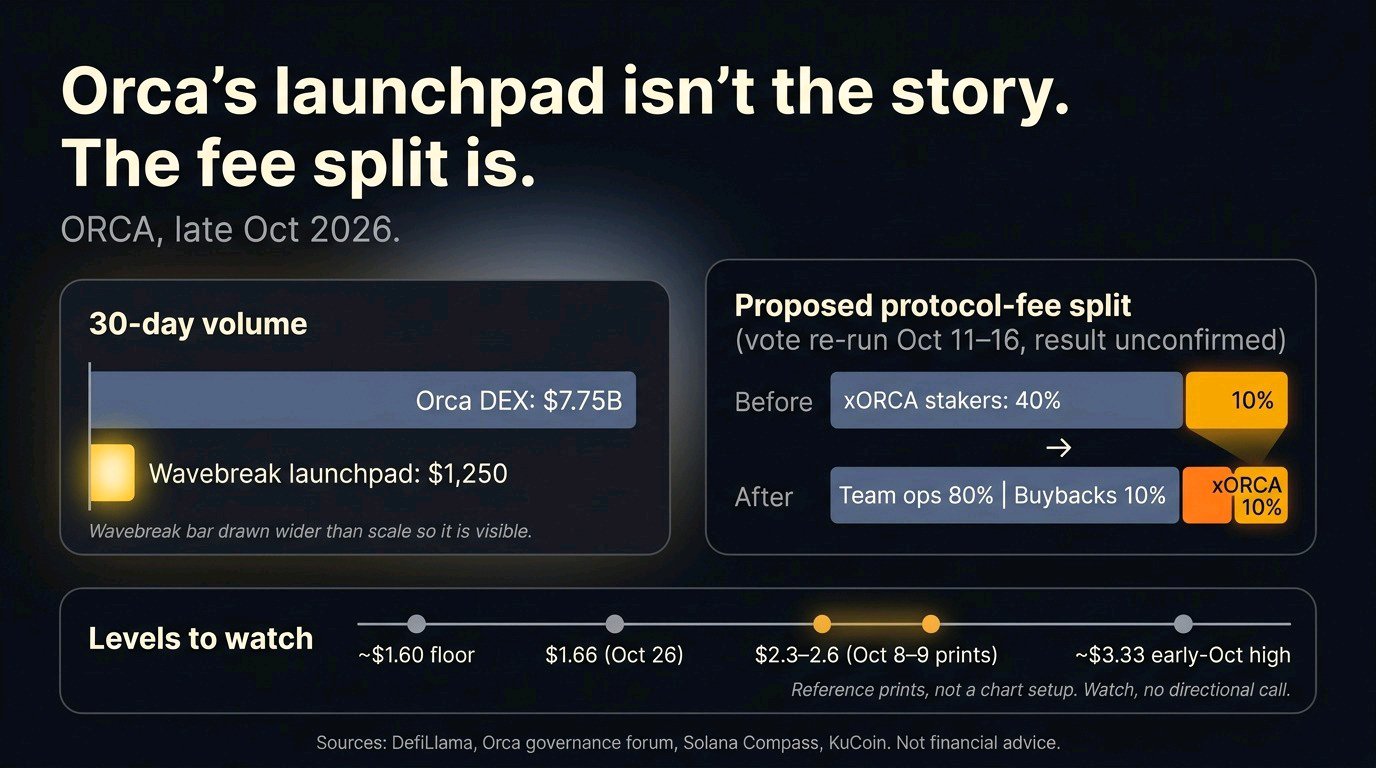
Orca’s launchpad, Wavebreak, did $1,250 in volume over the last 30 days. Orca’s DEX did $7.75B (DefiLlama). Graduation rates aren’t what’s moving $ORCA. The driver is governance. On Oct 7 Orca announced its Loopscale merger alongside a proposal to cut xORCA’s share of protocol fees from 40% to 10%, with 80% to team operations and 10% to buybacks. The vote re-ran Oct 11–16. I couldn’t confirm the result, so check Realms first. View: watch, no directional call. ORCA ran 80%+ into a ~$3.33 high in early October. DefiLlama has it at $1.66 on Oct 26, roughly where it traded a month ago. That’s a full round trip. Levels, from reference prints rather than a chart setup: ~$1.60 as the floor, and $2.3–2.6 (Oct 8–9 prints) as the zone to reclaim. Window: through the first full month of fee data after the vote, roughly end of November. Market cap is about $100M, so books are thin. The level to watch is ~$1.60. A daily close below it, with the fee cut confirmed, breaks the floor. #ByXIMPACT
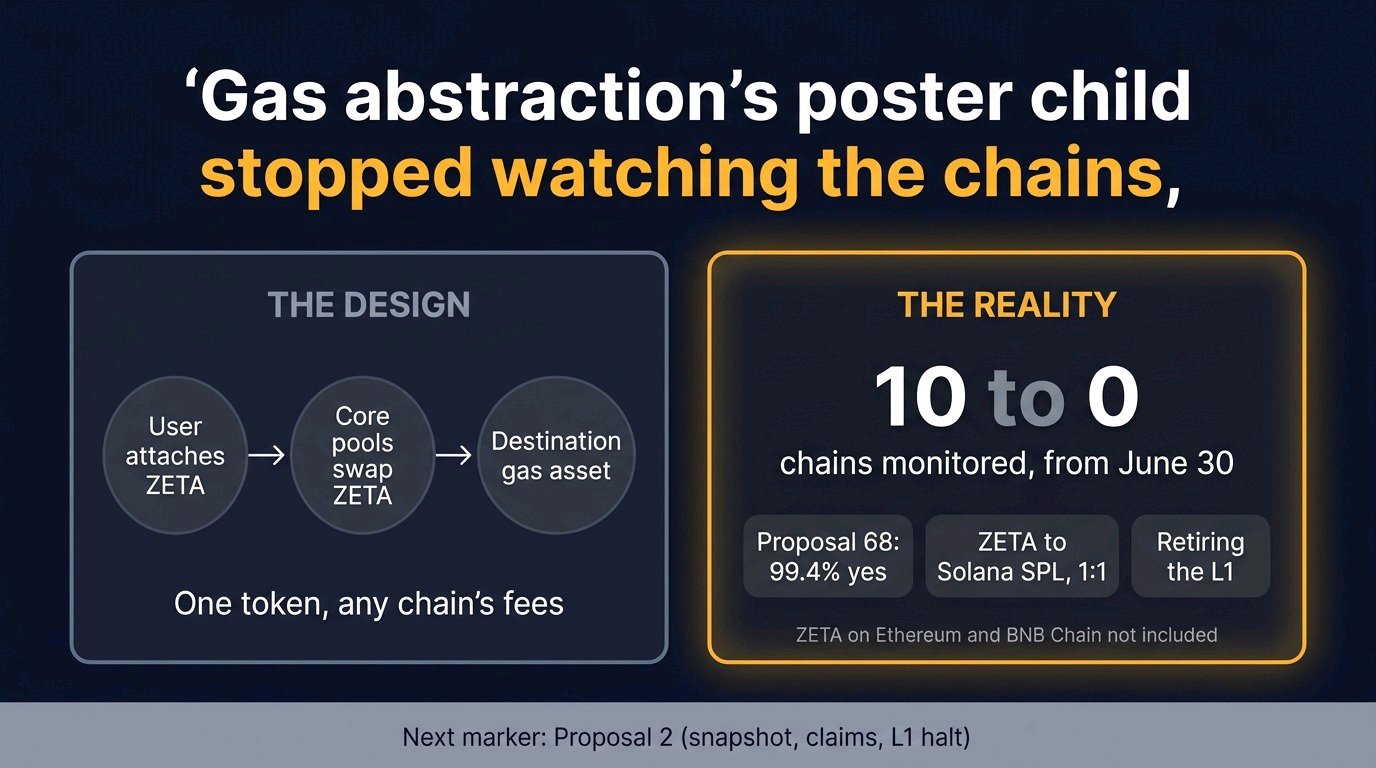
$ZETA built gas abstraction into its design, then stopped watching the chains it abstracted. From June 30, ZetaChain’s cross-chain layer no longer observed Bitcoin, Ethereum, Solana, Arbitrum, Base, BSC, Polygon, Avalanche, Sui or TON. ZETA’s original job was narrow and mechanical. A user attached ZETA to a transaction, and the protocol swapped it through core liquidity pools into the destination chain’s gas asset. One token paid fees anywhere. In September, Proposal 68 passed with 99.4% support. It retires the L1, converts native ZETA 1:1 into a Solana SPL token, and ties the token’s role to Anuma, the private AI app. ZETA on Ethereum and BNB Chain sits outside the migration. If you’re tracking gas abstraction adoption, this is an awkward data point. The wind-down was a choice announced June 1, not a collapse, and it followed an April exploit that drained about $334K from internal team wallets. From the outside I can’t tell whether that says something about the model or just about one team’s economics. The next marker is Proposal 2, which sets the snapshot, claims process and L1 halt. In the coverage I could find, it waits on exchanges confirming their swap procedures and hadn’t been submitted yet. Until it passes, the old chain keeps running while the token’s story has already moved on. #ByXIMPACT $HBARUSDT $ZETAUSDT
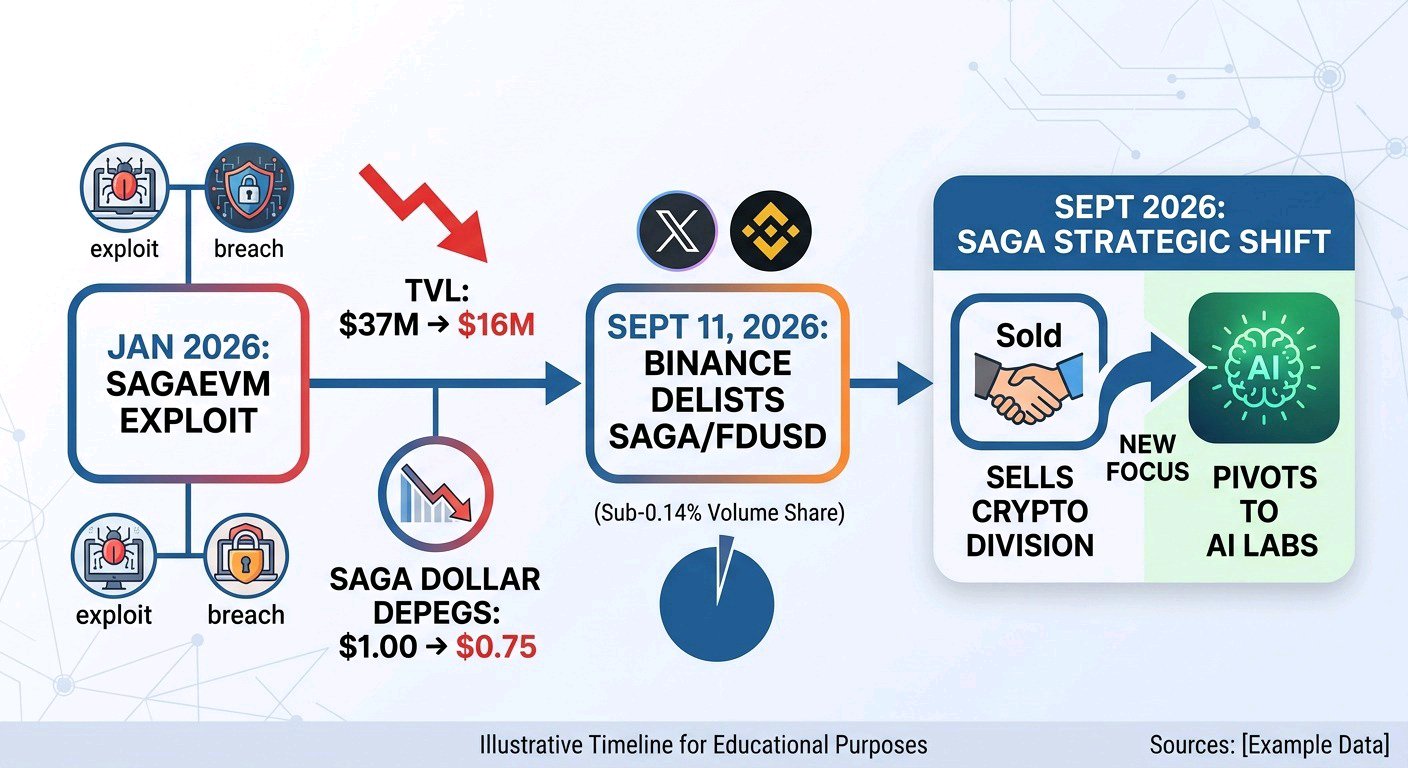
Binance just pulled the SAGA/FDUSD trading pair. Not a delisting of the token — SAGA stays live everywhere else — but that specific pair had shrunk to $100,000–$300,000 in daily turnover, under 0.14% of FDUSD's total volume, so Binance cut it on September 11. For a chain whose signature product exists specifically to prevent liquidity from thinning across its own network, that's a pointed data point about where liquidity actually settles when nothing forces it to stay. Saga's architecture is built around chainlets — application-specific chains spun up on demand — stitched together by its Liquidity Integration Layer so assets on one chainlet aren't stranded from another. That design met a real stress test in January: a $7M exploit on the SagaEVM chainlet triggered a depeg of Saga Dollar to $0.75 and pulled total value locked across the network from roughly $37 million to $16 million in a single day, per DefiLlama. Liquidity didn't stay integrated under pressure — it left fast. Now Saga has sold off its crypto division entirely and redirected toward consumer AI products under a new AI Labs unit, a pivot that raises its own question about how much continued attention chainlet infrastructure gets. None of this proves cross-chainlet composability can't work. It does mean the thinnest liquidity in the whole system right now belongs to the network's own token. #ByXIMPACT $ROSEUSDT
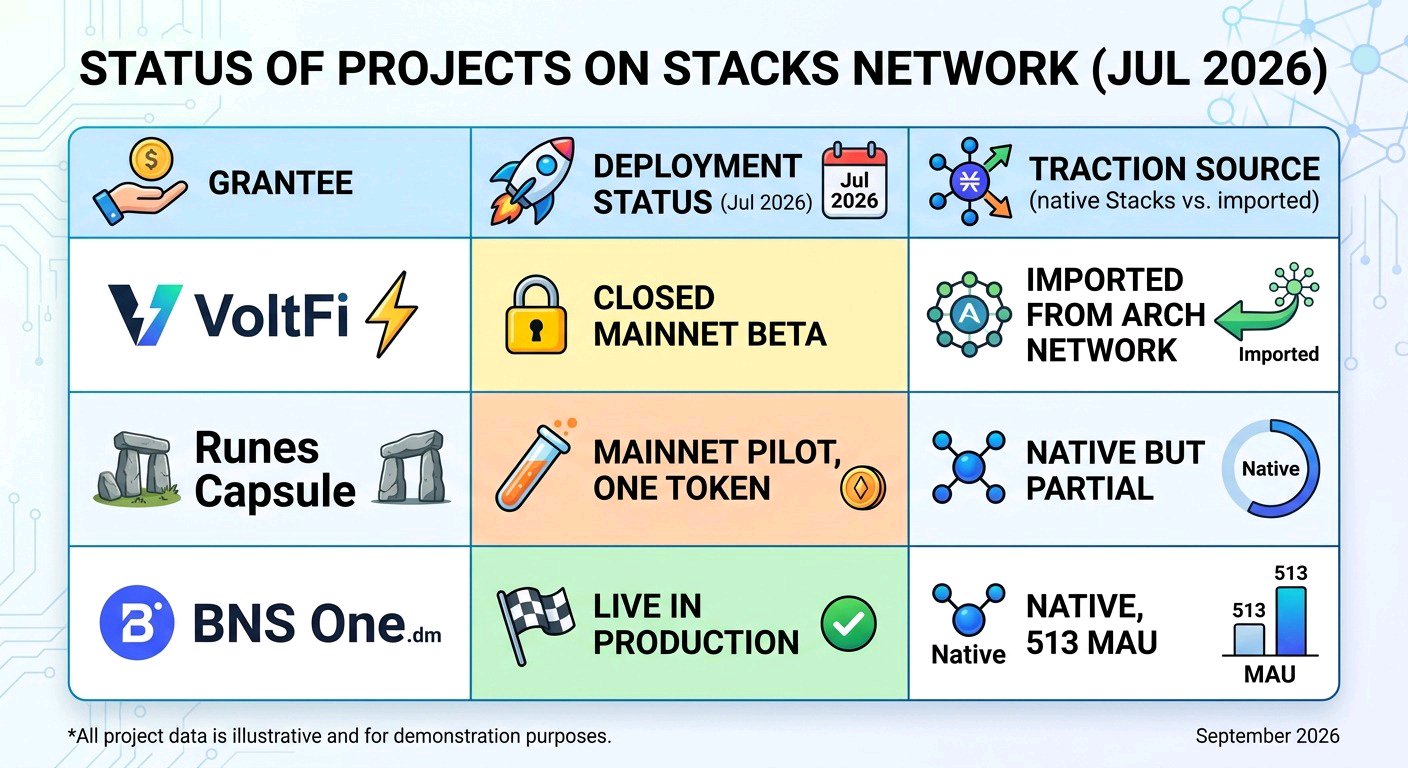
Stacks Foundation's own July 2026 check-in on its SIP-031 interim grants credits one recipient, VoltFi, with "4,956 users and 77,835 trades" of traction — numbers that actually came from Arch Network, a different chain, before the team pivoted to build on Stacks. VoltFi's actual Stacks deployment is a closed mainnet beta that opened in January, with real trades settling on-chain, but the public beta hasn't launched yet. That distinction matters if you're using grant reports to gauge how much developer activity is genuinely landing on $STX rather than being carried over from elsewhere. What's notable is that the Foundation's report doesn't hide this — it states plainly which numbers are prior traction and flags what's still pending for each team, rather than presenting a blanket success story. The rest of the July cohort shows a real spread of deployment stages, not a uniform win. Runes Capsule has a live mainnet pilot for its Bitcoin-to-Stacks bridge using one token, MOM, but trustless withdrawals still depend on BitVM-style proofs that aren't built yet. BNS One is the cleanest case of genuinely native progress: its mobile-first redesign is live in production, with a measured 513 monthly active users, a 13% lift from baseline, tracked directly rather than imported from anywhere. I'd treat "grant funded" and "shipped natively" as two separate questions from here — the Foundation's own reporting makes that distinction easy to check, cohort by cohort. #ByXIMPACT $STXUSDT
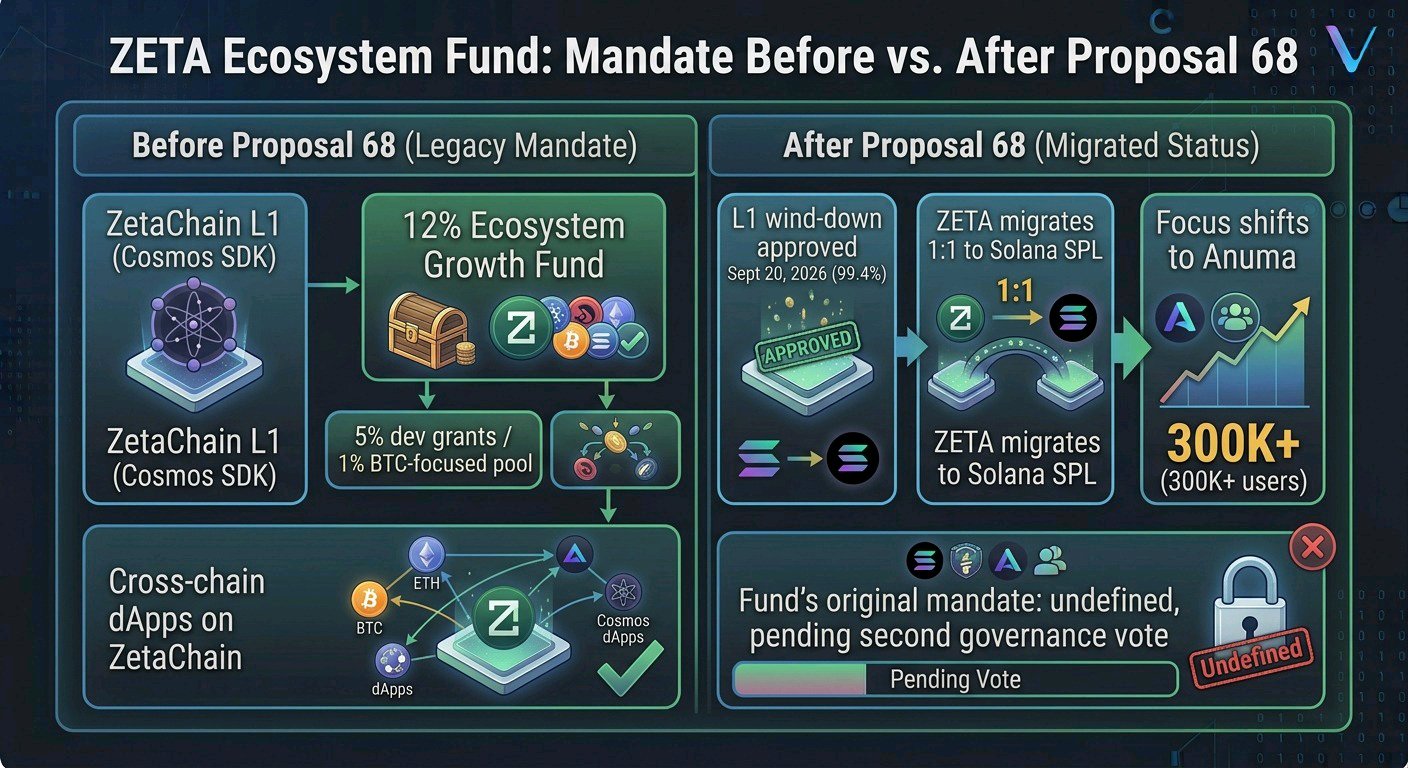
The most consequential update to ZetaChain's ($ZETA) ecosystem fund this month wasn't a new grant round — it's that the ecosystem the fund was built for just voted itself out of existence. On September 20, 2026, ZETA holders passed Proposal 68 with 99.4% support and 58% turnout, authorizing a 1:1 migration of ZETA to Solana as an SPL token and starting the wind-down of ZetaChain's own Cosmos-SDK Layer 1. That L1 is exactly what the original 12%-of-supply Ecosystem Growth Fund was designed to grow — the 5% developer program and 1% Bitcoin-specific pool announced back in 2024 existed to fund dApps building on ZetaChain's omnichain interoperability stack. With the chain itself being retired, that mandate doesn't really exist anymore in the form it was written for. What replaces it is Anuma, ZetaChain's private AI app, which the team says has crossed 300,000 users and over a million requests across 35 models since its February 2026 launch. Contributors are reportedly redirecting effort entirely toward Anuma and Solana infrastructure going forward. A second governance vote still has to set the actual shutdown block and migration mechanics — so the ecosystem fund's practical fate, and whether any of it gets redirected toward Anuma-specific grants, is still an open question the DAO hasn't answered yet. #ByXIMPACT $ZETAUSDT
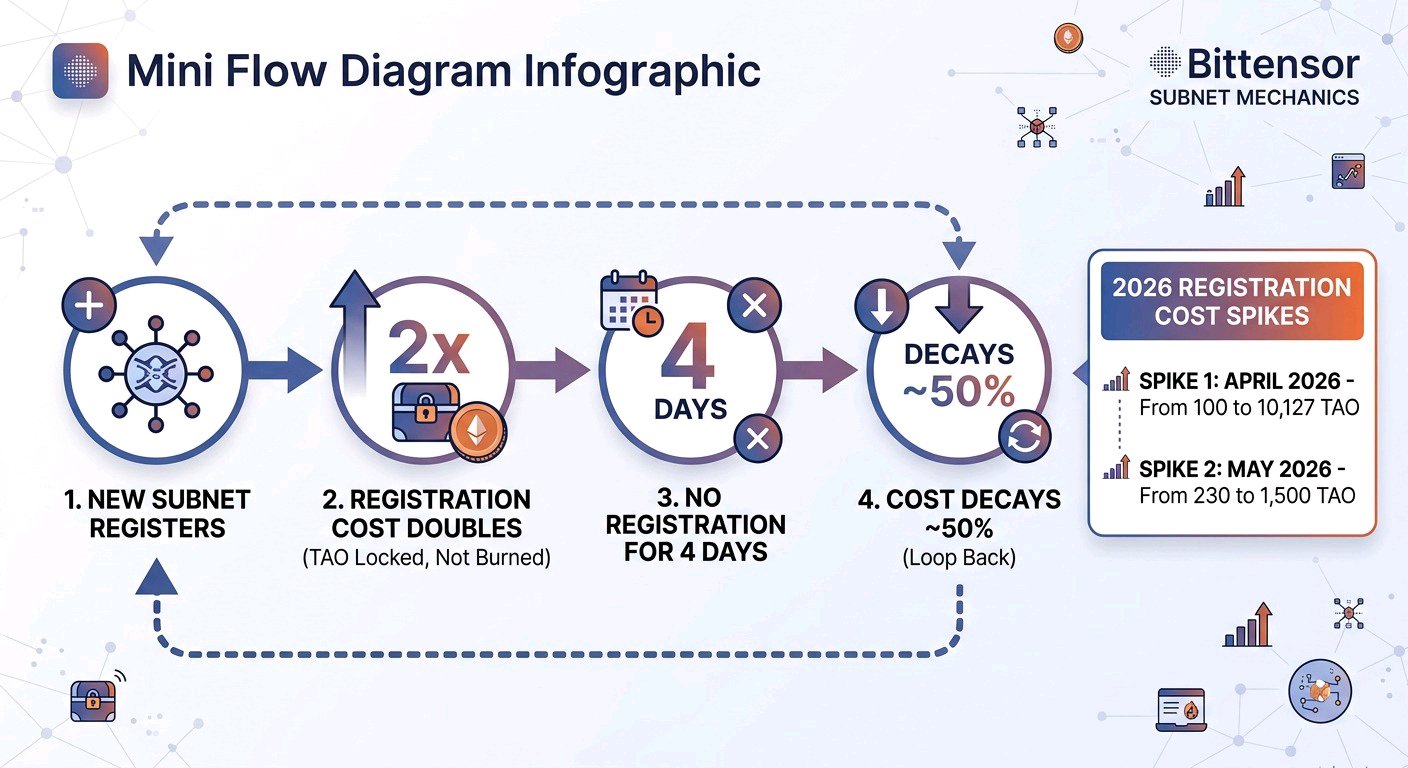
Bittensor's subnet registration cost isn't set by a chart — it's a formula that doubles every time someone claims a slot, then decays back down roughly 50% every four days if no one does. That mechanism has already produced two dramatic spikes this year: registration jumped from 100 TAO to over 10,000 TAO within a month in early 2026, then spiked 6.5x again to 1,500 TAO in a single day around mid-May. Each spike locks a real chunk of TAO out of the float — that slot ran roughly $470K at TAO's price when the May spike hit — and it lands on top of a network where about 73% of circulating TAO is already staked and off exchanges. For $TAO, that's a real, trackable catalyst rather than a sentiment one: watch the subnet registration counter for the next doubling event, since each one mechanically tightens available float overnight. Without a live registration spike in progress right now, this reads as a level-to-watch setup, not a confirmed long — the honest trigger is the next registration jump itself, not a price pattern. #ByXIMPACT $TIAUSDT
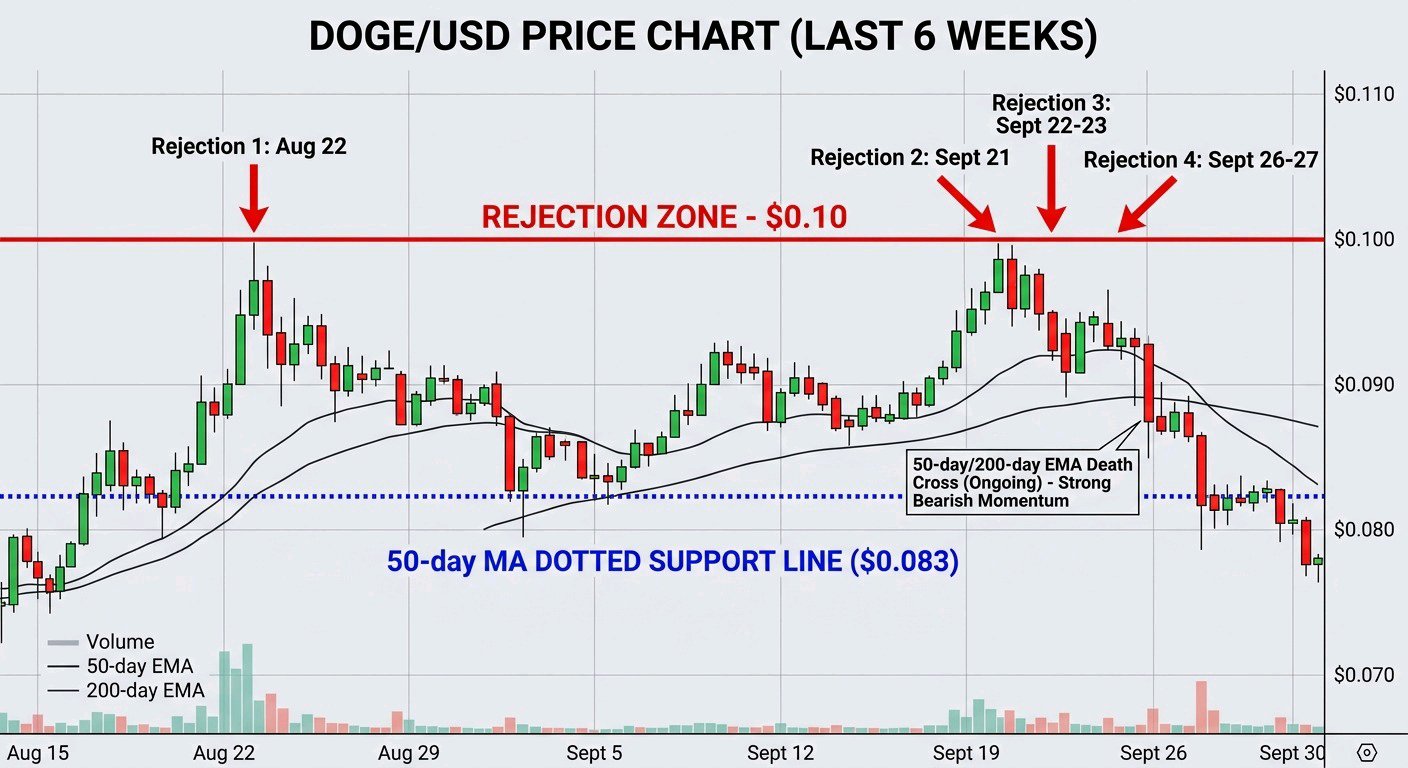
DOGE has been rejected at $0.10 four times since late August — Aug 22, Sept 21–23, and again this weekend — each bounce tied to a Musk-adjacent headline. This week it's X's new cashtag trading tie-ups with Gemini, Kraken and Coinbase, plus Musk replying "lol" to an old NFT screenshot and dropping a DOGE-tagged post. That's a catalyst pattern worth watching on DOGE/USDT, not a breakout worth chasing yet. The 50-day EMA is still under the 200-day — the death cross from earlier this year hasn't reversed — and four rejections at the same level looks like a real ceiling, not noise. Watch zone: a daily close above $0.10 opens $0.11–$0.14. Below $0.083 (the 50-day MA), the bounce loses its floor. Until one of those breaks, this is a range trade, not a trend. Risk: Musk-linked pumps have unwound fast before — March's X Money rally faded within a day on zero confirmed crypto integration. #ByXIMPACT $DOGEUSDT
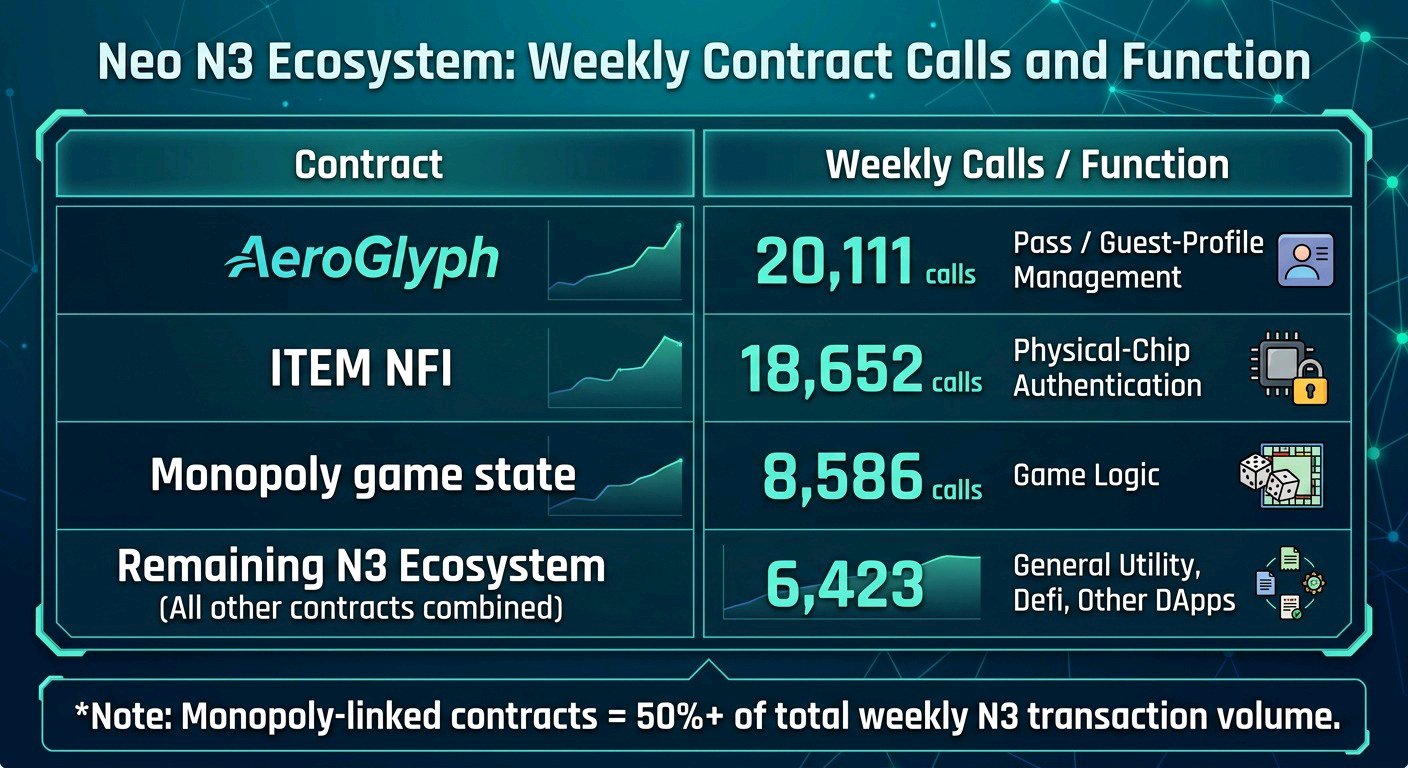
More than half of Neo N3's transaction volume last week came from a Monopoly board game. Not a game studio's on-chain title — an actual Hasbro-licensed physical attraction in São Paulo, where blockchain runs invisibly behind wristbands and NFC cards. COZ's own numbers show the activation generated over 54,600 smart contract calls in its first week of operations (Sept. 13–20), and four of the five most active contracts on the entire N3 chain that week were tied to it. For $NEO, that's worth sitting with before reading too much into "ecosystem growth" headlines. The two busiest contracts weren't gameplay logic at all — AeroGlyph handled pass and guest-profile management (20,111 calls), and ITEM Systems' NFI handled physical-chip authentication (18,652 calls). Actual Monopoly game-state calls came in third, at 8,586. So the volume spike is largely infrastructure overhead for a single consumer venue, not a wave of new dapps calling contracts independently. COZ has said it's targeting roughly two million transactions over the four-month Brazil tour. That's a real, verifiable pipeline of activity — but it's one branded deployment, not distributed developer adoption. Worth watching whether N3's call volume holds up once the tour eventually ends, or whether it was ever meant to. #ByXIMPACT $NEIROCTOUSDT
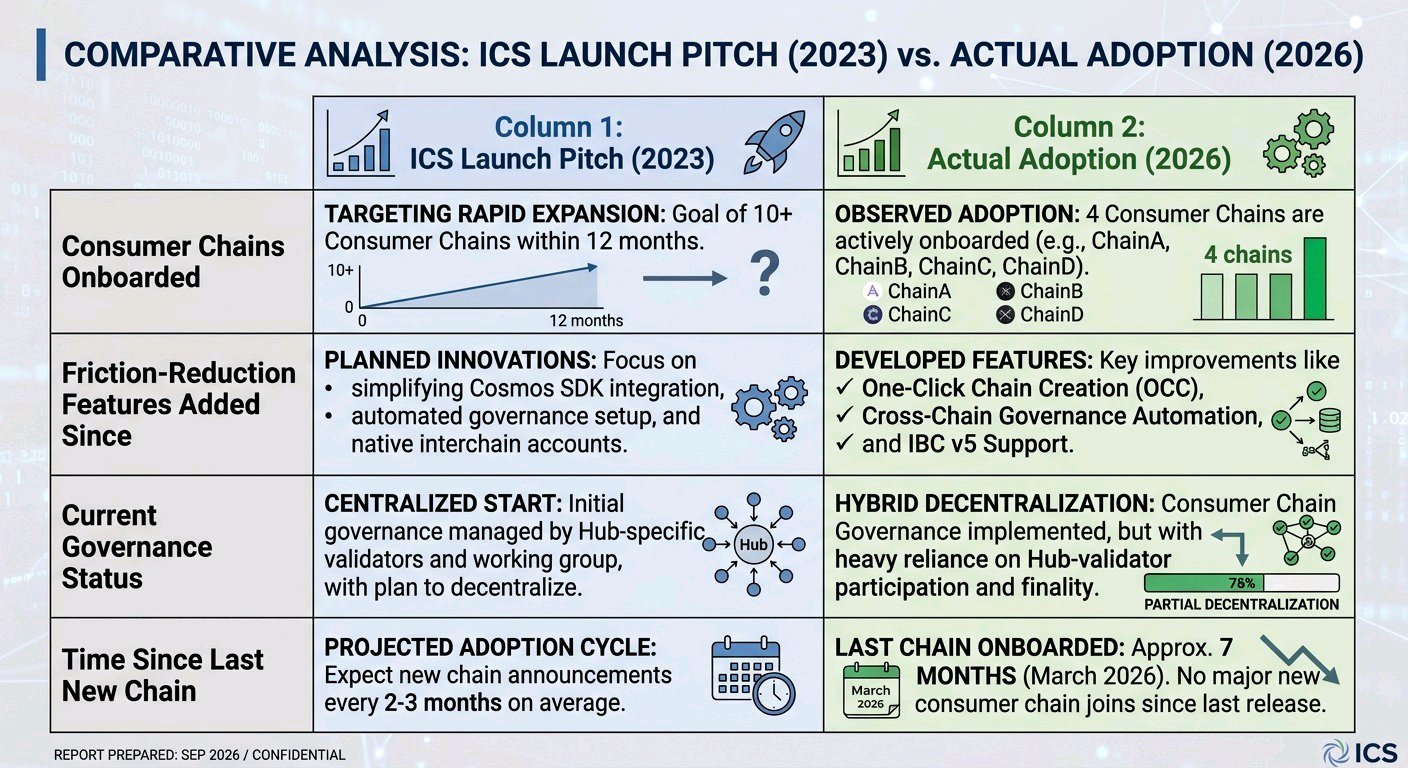
Cosmos Hub's Interchain Security launched in 2023 pitched as "what EigenLayer is to Ethereum, ICS is to Cosmos" — a shared security service meant to onboard a new generation of consumer chains. Three years later, per Cosmos's own documentation, exactly two chains use it: Neutron, onboarded in May 2023, and Stride, onboarded in July 2023. No new chain has joined since. That matters because ICS was one of ATOM's central value-accrual stories — Hub validators lease out ATOM-backed security to other chains in exchange for fees, giving the token utility beyond simple staking. An adoption count frozen at two for over three years tells you something concrete about how that thesis has actually played out against how it was pitched. Cosmos governance has tried to lower the friction since — adding Partial Set Security, which lets a subset of validators opt in rather than requiring the entire set, plus permissionless launch features specifically meant to make ICS easier to adopt. Despite that, a September 2026 fundamental review noted the module's long-term future is still being actively debated inside Cosmos governance, including proposals to restrict or remove it entirely — not the trajectory you'd expect from a feature outperforming its pitch. The mechanism itself seems to work as designed: Neutron has run for years on Hub-validator security without incident. The gap isn't technical. New projects mostly haven't chosen to build as ICS consumer chains, opting instead for their own validator sets or other security models. A feature that works exactly as intended can still fail to find adopters. Whether that's a pricing problem, a governance-tradeoff problem, or just evidence that most new chains don't want to share sovereignty with the Hub is still open three years in. #ByXIMPACT $ATOMUSDT
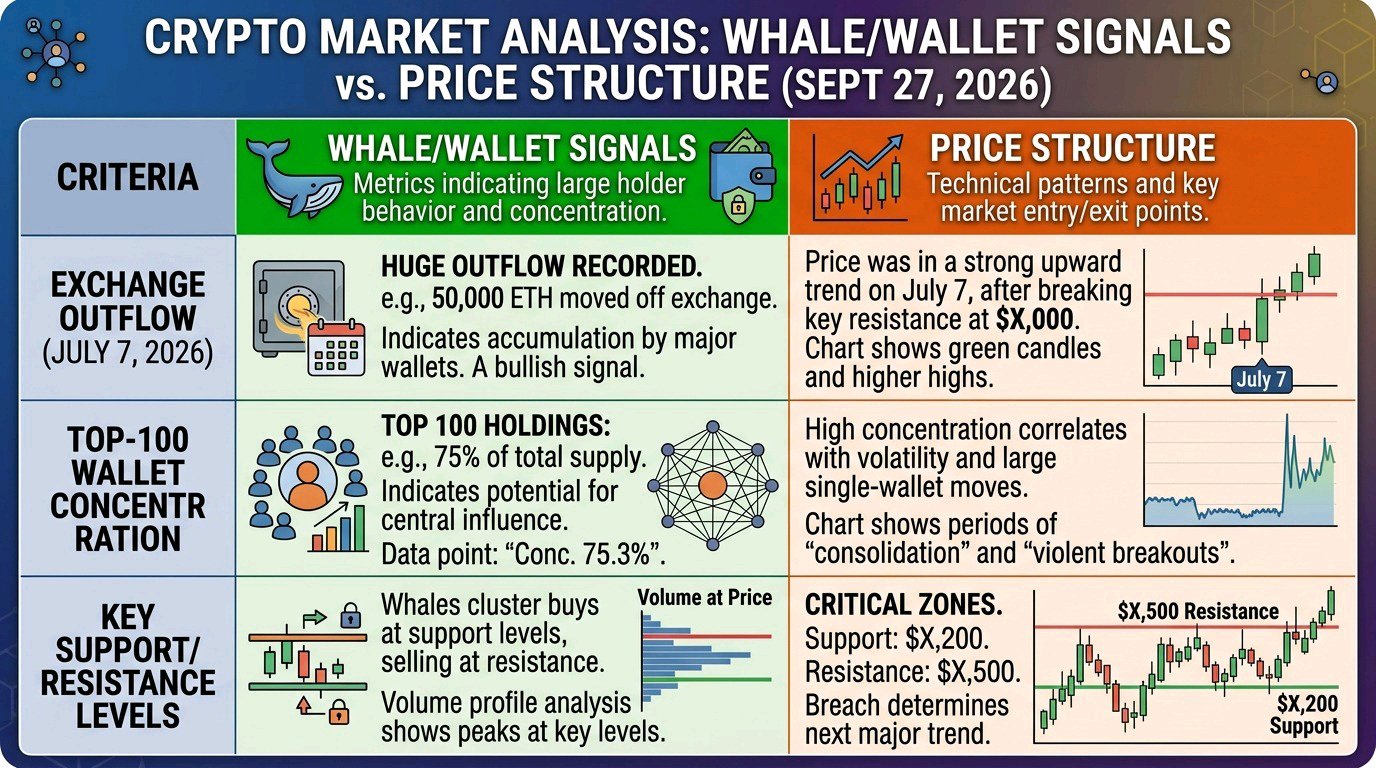
On July 7, roughly 4 billion DOGE (about $300 million) moved from Binance to an unknown wallet while price was sliding through a broader monthly decline — an exchange-outflow pattern typically read as accumulation into cold storage rather than sell-side positioning. That sits against a backdrop of genuine concentration: on-chain trackers show the top 100 wallets controlling close to 80% of tracked supply, and whale cohorts (100M+ DOGE wallets) hit record combined holdings earlier this year. Large holders consolidating and hoarding, in other words, isn't new — it's the standing structure of this token. Market structure right now doesn't support a confident long off that alone. As of mid-July, DOGE had broken a two-year trendline, trading below both its 50-day and 200-day EMAs, with staged support near $0.071 and then $0.056, and resistance around $0.081 and $0.143. This is a watch, not an entry: whale accumulation matters more if price reclaims $0.081 and holds above the 50-day EMA. A break below $0.071 invalidates any accumulation-driven stabilization thesis regardless of what large wallets are doing. #ByXIMPACT $DOGEUSDT
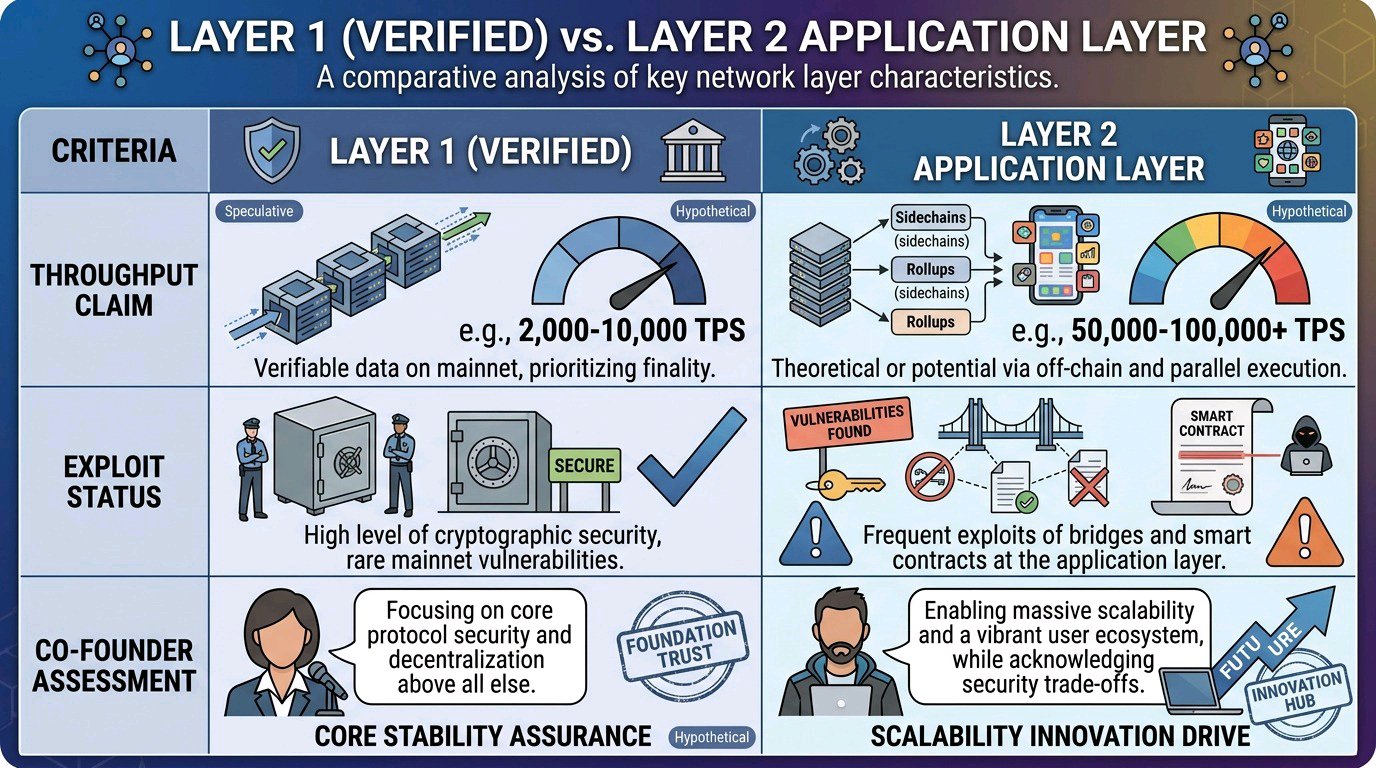
Kaspa's base layer really does process 10 blocks per second — that's not marketing copy, it's been running since the Crescendo hard fork in 2025, verified GHOSTDAG throughput with sub-second first confirmations. What's less settled is whether anyone's actually using that capacity. Cointribune's September 24 rundown of the project's roadmap says it plainly: on-chain activity remains low relative to available throughput, a "build it and they will come" bet whose outcome isn't guaranteed yet. That gap just got a concrete illustration. In late September, a signature-bypass bug in Kasplex's off-chain indexer let attackers mint 186 million ZEAL and roughly 54.4 billion NACHO tokens without holding any private keys, then dump them into the Zealous Swap DEX — crashing affected pool values by 94-99.6%. Kaspa's Layer 1 consensus wasn't touched; the flaw sat entirely in the Layer 2 application stack. What makes this worth sitting with is who called it. Shai Wyborski, co-author of the original PHANTOM/GHOSTDAG research, had spent months publicly warning that Kasplex's governance and security practices weren't ready, without ever disputing the base protocol's performance. The throughput claim held. The usage layer built on top of it didn't. Does 10 BPS matter if the applications meant to fill that capacity keep breaking before they get the chance to use it? #ByXIMPACT $KASUSDT
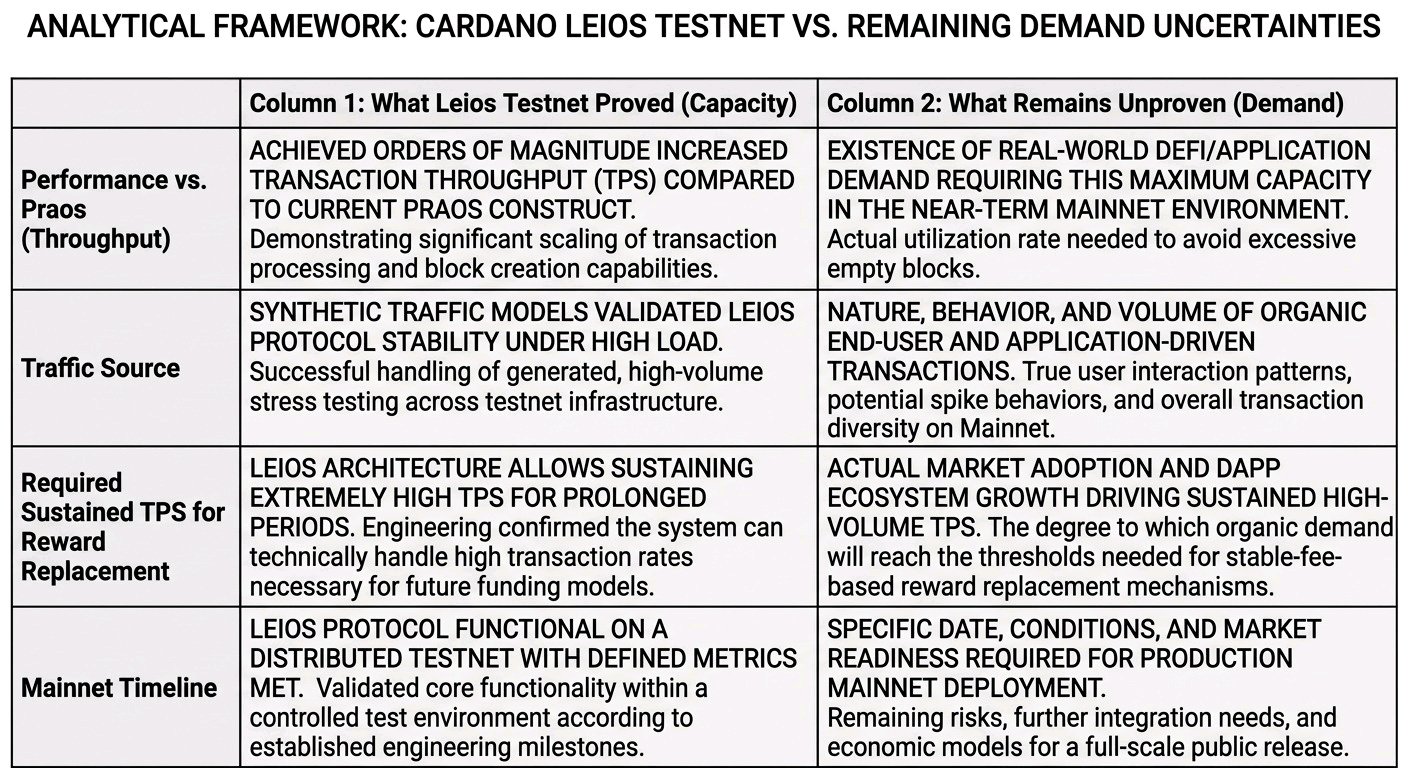
Cardano's Leios testnet just proved something real: over a 41-day run, it sustained 26.8 transaction kilobytes per second against Ouroboros Praos's 4.51 TxkB/s ceiling — a genuine sixfold jump, carrying 18 times the transaction count seen on mainnet over a comparable period. That's a live testnet result, published by Input Output on September 8, not a lab projection. But it's worth being precise about where that traffic came from: it was artificially generated stress-test load, not real users paying real fees. That distinction matters more for $ADA specifically than for most Layer 1 scaling stories, because Cardano's staking rewards currently lean on a declining treasury reserve, and stake pool economics increasingly need organic transaction fees to replace that subsidy as it shrinks. Input Output's own modeling reportedly puts the sustained throughput needed to cover that gap somewhere around 36–50 TPS, closer to 45 after treasury deductions. Leios solves the part of the scaling problem that's about raw capacity — more blockspace, demonstrated safely, without compromising decentralization by Input Output's account. It doesn't, on its own, solve demand. Blockspace sitting empty produces no fee revenue regardless of how fast the consensus layer can technically process it. The throughput number is the easy part to prove on a testnet. Whether real usage shows up once mainnet enables that capacity is the part no testnet result can actually answer. #ByXIMPACT $ADAUSDT
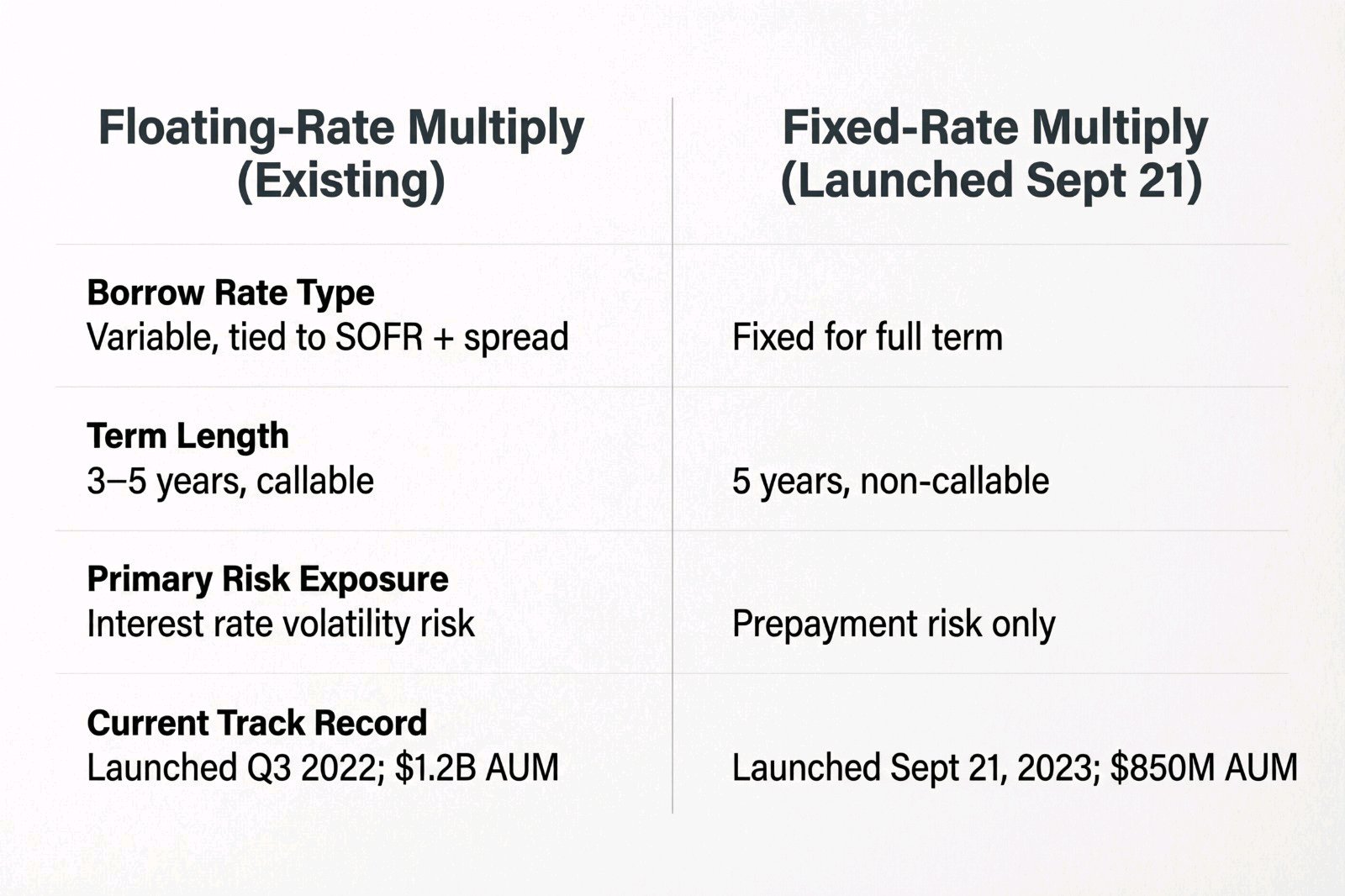
Kamino just shipped something structurally new inside Multiply: on September 21, it launched its first Fixed-Rate Multiply vault, locking a 5.3% annual borrow rate for 30-day terms on the AUTO/wYLDS strategy, built with HastraFi. That matters because every existing Multiply loop borrows at a floating rate tied to pool utilization — the real risk in a leveraged yield loop is usually the borrow cost spiking mid-position, not the collateral price moving. A fixed-rate option removes that specific risk for the first time on Kamino, the kind of feature that tends to pull incremental volume into a protocol's leverage product rather than its base lending market. This is a watch, not a call. The vault is five days old, so there's no volume or renewal data yet to confirm real demand versus a one-off pilot. The checkpoint: late October, when the initial 30-day cohort's terms roll over. If renewal rates hold up and Kamino extends Fixed-Rate vaults to additional pairs by then, the feature is sticking. If it stays a single isolated vault, treat it as a pilot that didn't scale. #ByXIMPACT $KMNOUSDT
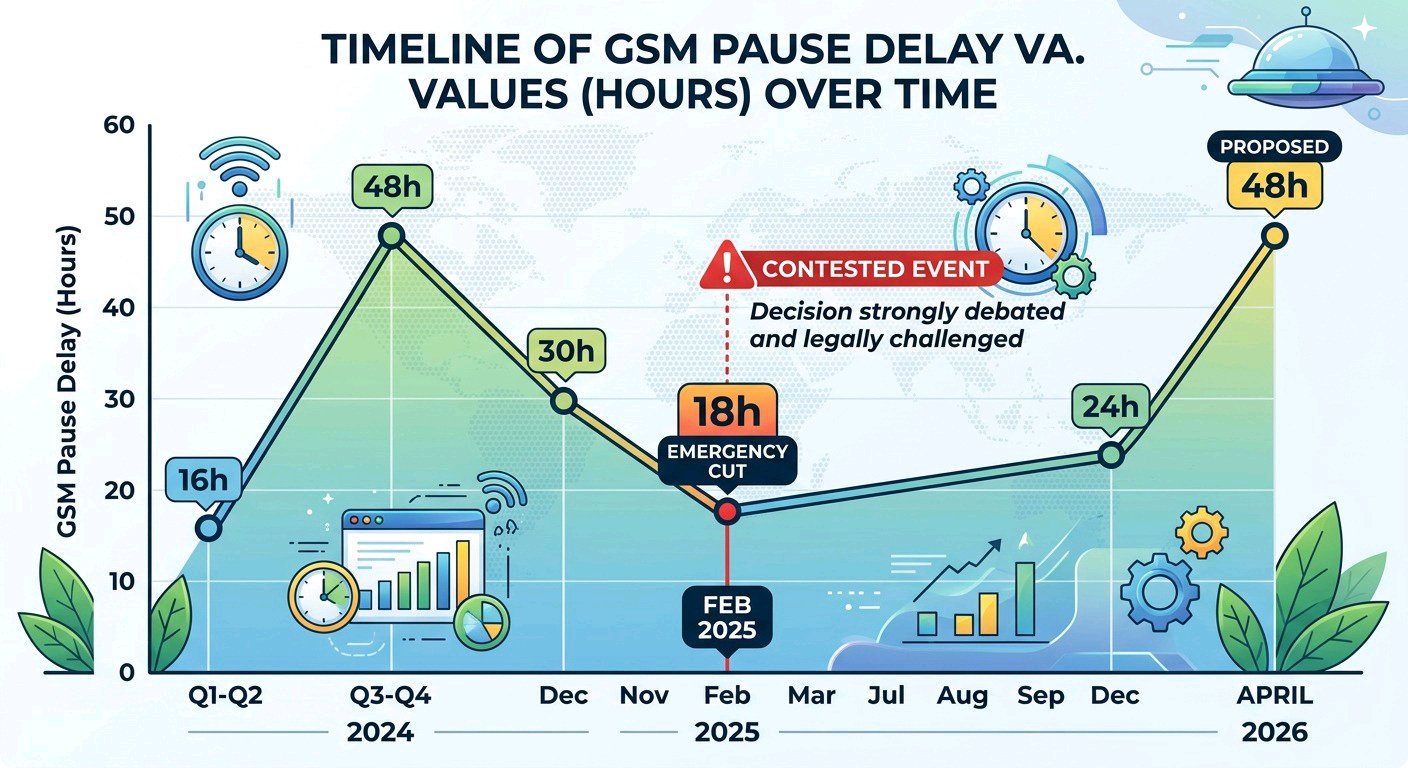
In February 2025, Sky (formerly MakerDAO) cut its own security buffer in half. The Governance Security Module's Pause Delay — the built-in waiting period that gives MKR/SKY holders time to react to a malicious or rushed governance change before it takes effect — was shortened from 30 hours to 18 hours, passed through an emergency proposal introduced without prior notice. Community members flagged the irony immediately: a module built specifically to prevent governance attacks had just been altered by a vote that bypassed the normal deliberation process the module exists to protect. That's not where the story ends. By April 2026, a governance poll was back on the table proposing to raise the Pause Delay from 24 hours to 48 hours — walking the security window most of the way back up. Sky's own documentation is explicit about the tradeoff: a longer delay gives holders more time to detect and react to an attack, but it also slows down every legitimate protocol change that comes after. What that history actually shows is that the GSM isn't a fixed backstop set once and forgotten. It's a live parameter that gets renegotiated under pressure, sometimes shortened during exactly the kind of moment it's supposed to guard against, then lengthened again once the pressure passes. Worth checking where the delay actually sits before assuming it's doing its job. #ByXIMPACT $SKYUSDT
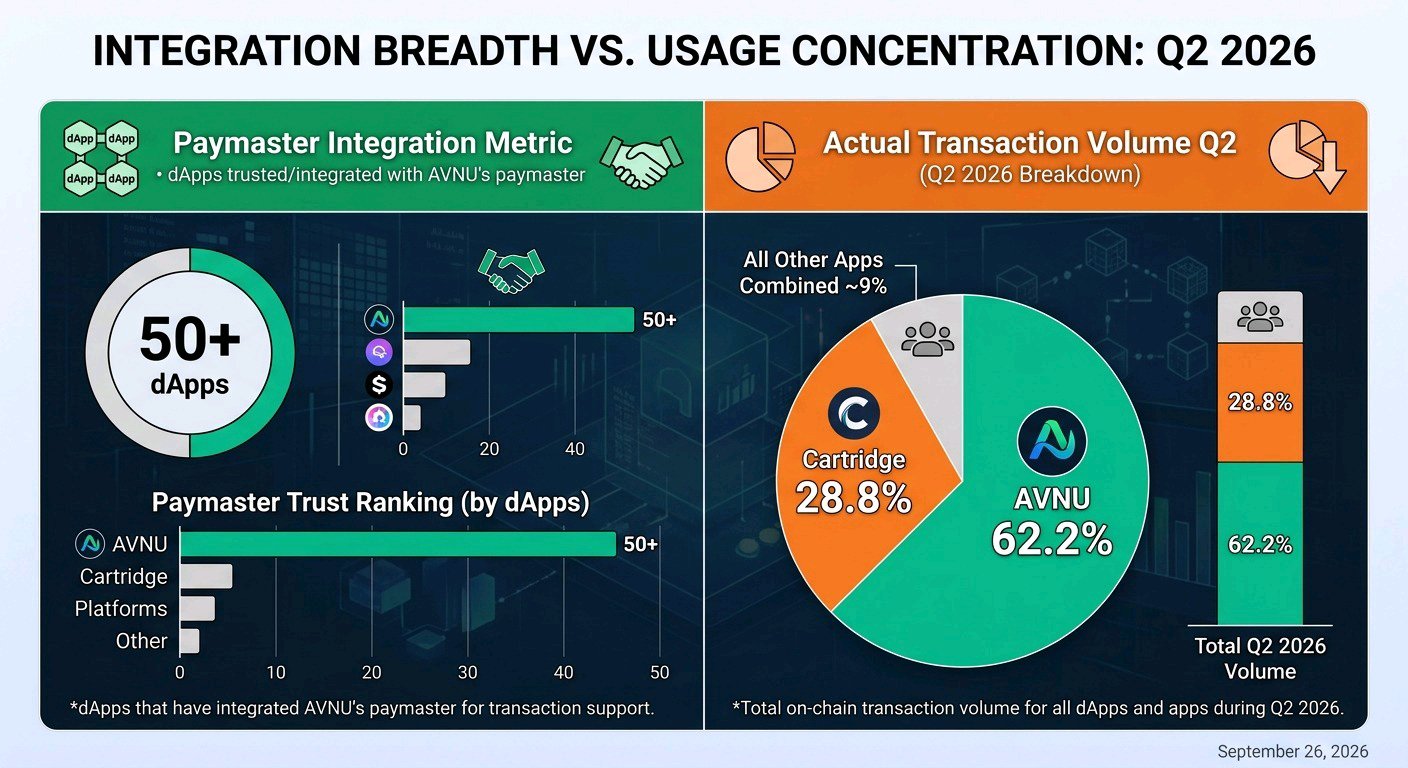
AVNU's paymaster describes itself as trusted by 50+ dApps on Starknet ($STRK), letting users pay gas in USDC, ETH, or a dozen other tokens instead of STRK. That sounds like broad, ecosystem-wide adoption of fee abstraction. But look at where Starknet's actual transaction volume comes from: per Nansen's Q2 2026 report, the chain processed 22.5 million transactions across 71,000 unique users, and AVNU alone — as a DEX aggregator, separate from its paymaster role — generated 14 million of them, 62.2% of the total. Add Cartridge's gaming wallet, and two applications account for 91% of everything happening on Starknet. That matters for how you read "paymaster adoption." Since Starknet's Grinta upgrade made v3 the only supported transaction type, paying gas in anything other than STRK requires routing through a paymaster — which in practice means AVNU's infrastructure, since it built and operates the dominant one. So the same company running the fee-abstraction layer is also generating most of the traffic that uses it. Fifty-plus integrated projects is a real number, but it describes who can plug in, not who's actually driving volume through the rails. Worth separating those two metrics before treating "adoption" as evenly spread across the ecosystem rather than concentrated in the infrastructure provider's own app. #ByXIMPACT $STRKUSDT
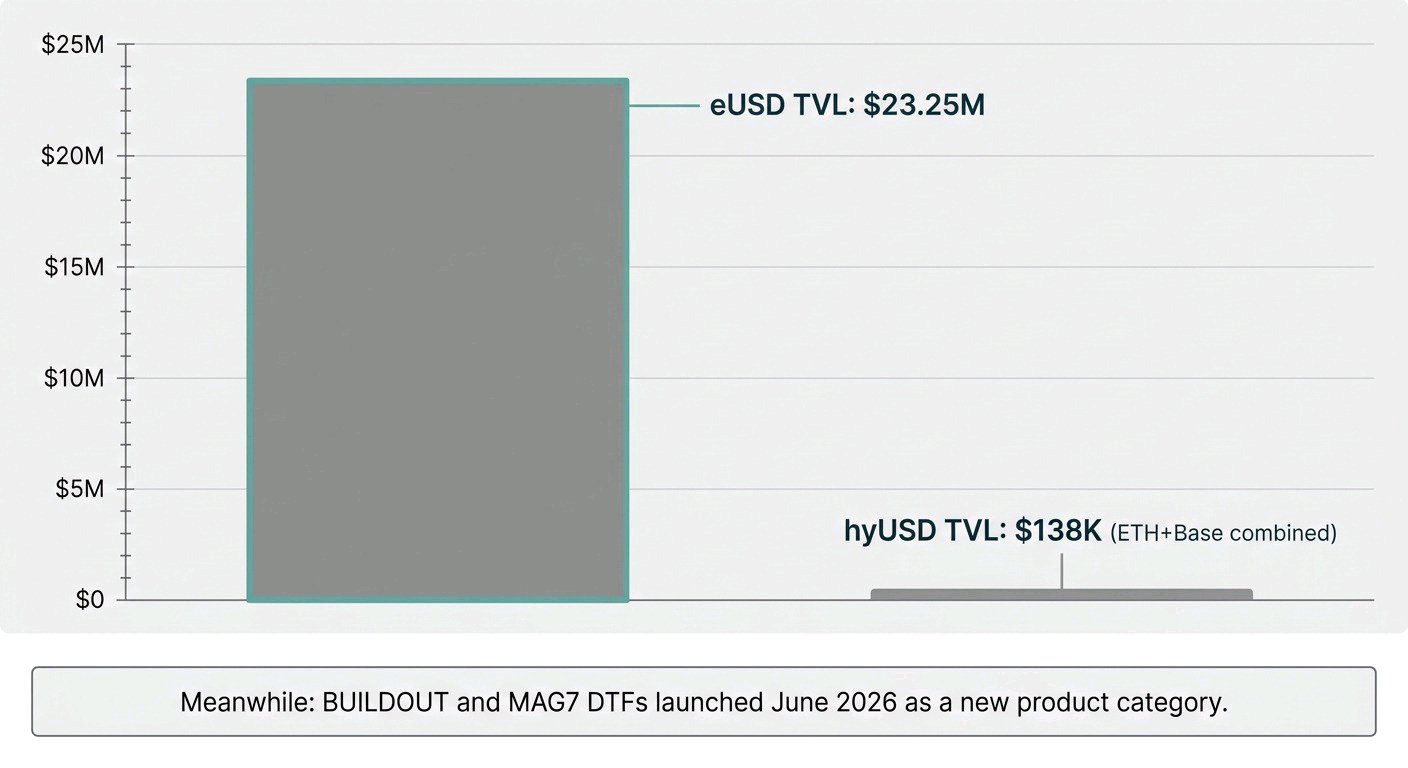
Reserve's original flagship stablecoin, hyUSD, now holds about $138,000 across Ethereum and Base combined. Its sibling eUSD holds $23.25 million. That's not a rounding gap, that's two products in the same protocol living in different universes. hyUSD launched as the higher-yield flatcoin, the one built to outrun inflation in places like Venezuela, per Reserve's own pitch. eUSD came first and stayed simpler. Whatever made eUSD sticky, hyUSD didn't replicate it, and RSR, the token stakers put up as first-loss insurance for both, is down roughly 80% over the past year according to price trackers, even with fee revenue continuing to accrue. Meanwhile Reserve's actual growth is happening somewhere else entirely. This year the protocol launched BUILDOUT, a semiconductor and AI-hardware basket, and MAG7, tracking the seven largest US tech names, both as Decentralized Token Folios rather than RTokens. So "RToken issuance growth" as a framing might be asking about the wrong product. The DTF wrapper looks like where new capital is actually going, while the stablecoin line that built Reserve's original narrative has one clear winner and one that never found its footing. Worth asking whether that's a temporary imbalance or whether hyUSD's design just doesn't have product-market fit that eUSD's does. #ByXIMPACT $PIEVERSEUSDT