NonFiler
1386Like0Shares38Fans1Follow
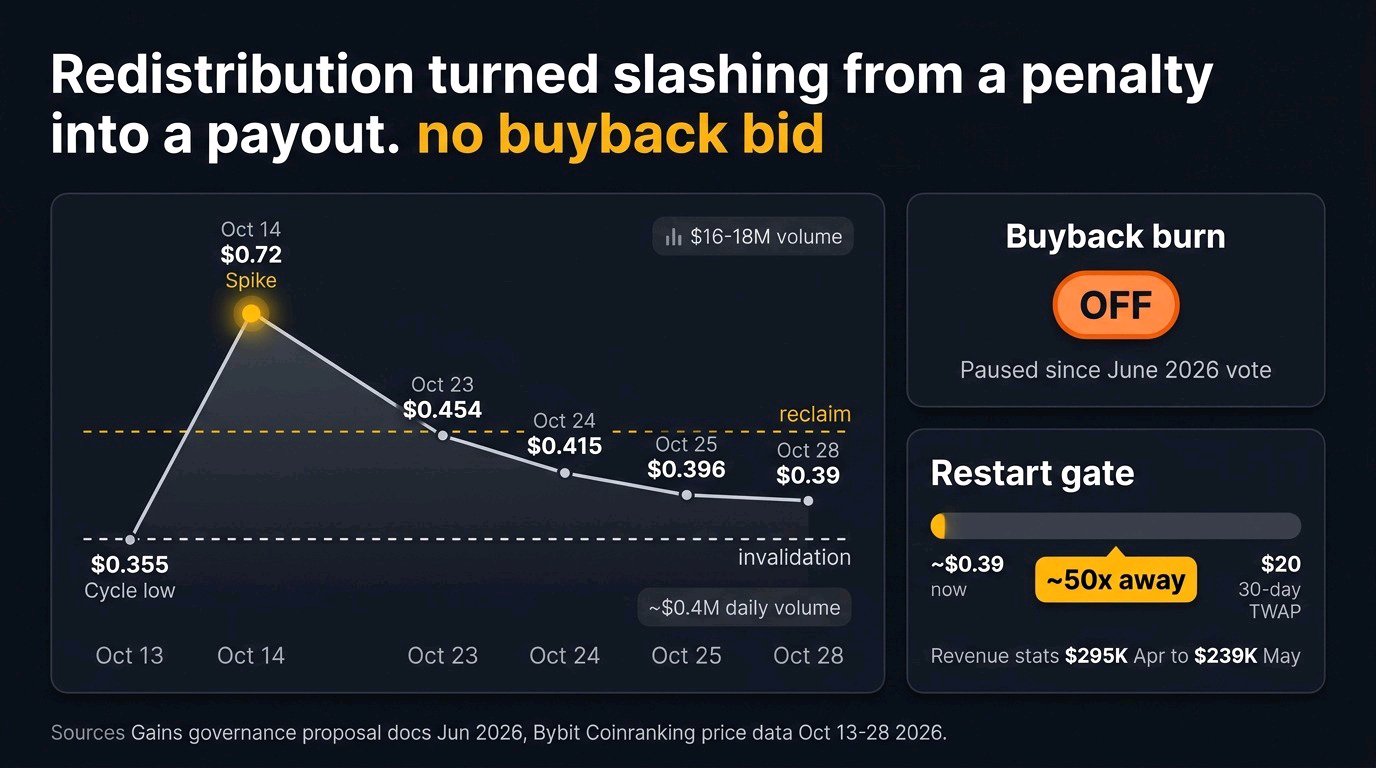
$GNS doubled on Oct 14 to about $0.72 on $16–18M of volume, then gave most of it back. It’s near $0.39 now, and daily volume is down to roughly $0.4M. I couldn’t tie the spike to any @GainsNetwork_io announcement. There’s also no protocol bid underneath. Buyback and burn has been off since the June 2026 “Make Gains Great Again” vote, and the 55% fee allocation now goes to growth and marketing. The DAO can restore it only after a 30-day TWAP of $20, about 50x from here. Revenue was already slipping: $295K in April, $239K in May, per the proposal. View: watch, no directional trade. At a ~$9M market cap, one wallet can move this, so a tight stop is guesswork. Window: roughly two weeks. Reclaiming $0.454 (the Oct 23 close) would be the first sign of strength. Daily closes below $0.355, the Oct 13 low, invalidate the base. #ByXIMPACT $GRASSUSDT
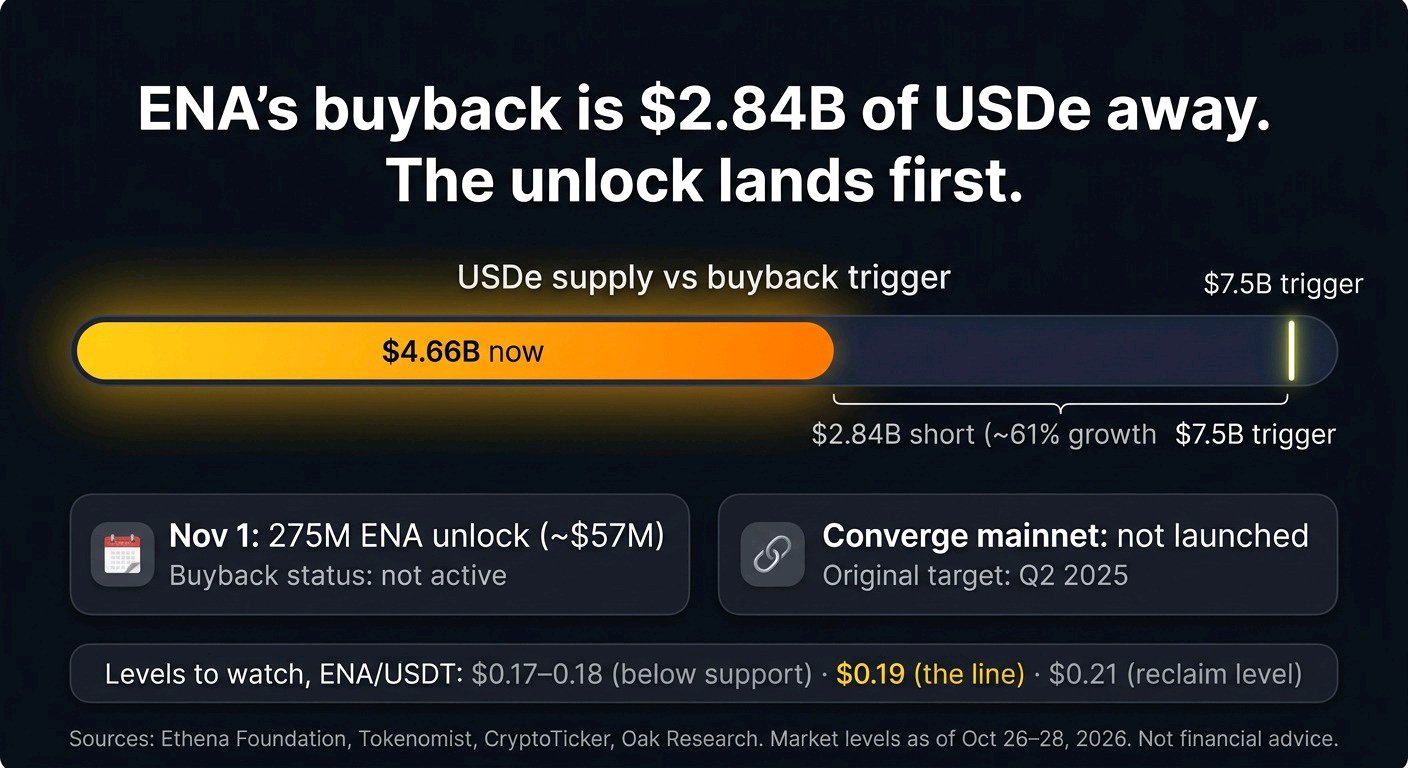
Converge, Ethena’s institutional chain, has no TVL trend to read. Its mainnet was targeted for Q2 2025, and as of September 2026 it still hasn’t launched and no firm date exists. That matters for $ENA more than the chain does. The much-discussed buyback isn’t tied to Converge at all: 95% of net Foundation revenue funds ENA purchases only once USDe supply reaches $7.5B. It sits near $4.66B, roughly 61% short. On Nov 1, 275M ENA (about $57M) unlocks with no buyback running. View: watch, not a directional call. ENA is down about 26% over 30 days with no clean trend. ENA/USDT on Bybit, into Nov 1: $0.19–0.20 is the support band. A daily close below $0.19 opens $0.17–0.18. Reclaiming $0.21, the Oct 14 breakdown level, would suggest the unlock was absorbed. Risk: unlocks are often priced in early, so the move may already be done. A daily close below $0.19 is the line. #ByXIMPACT $ENAUSDT
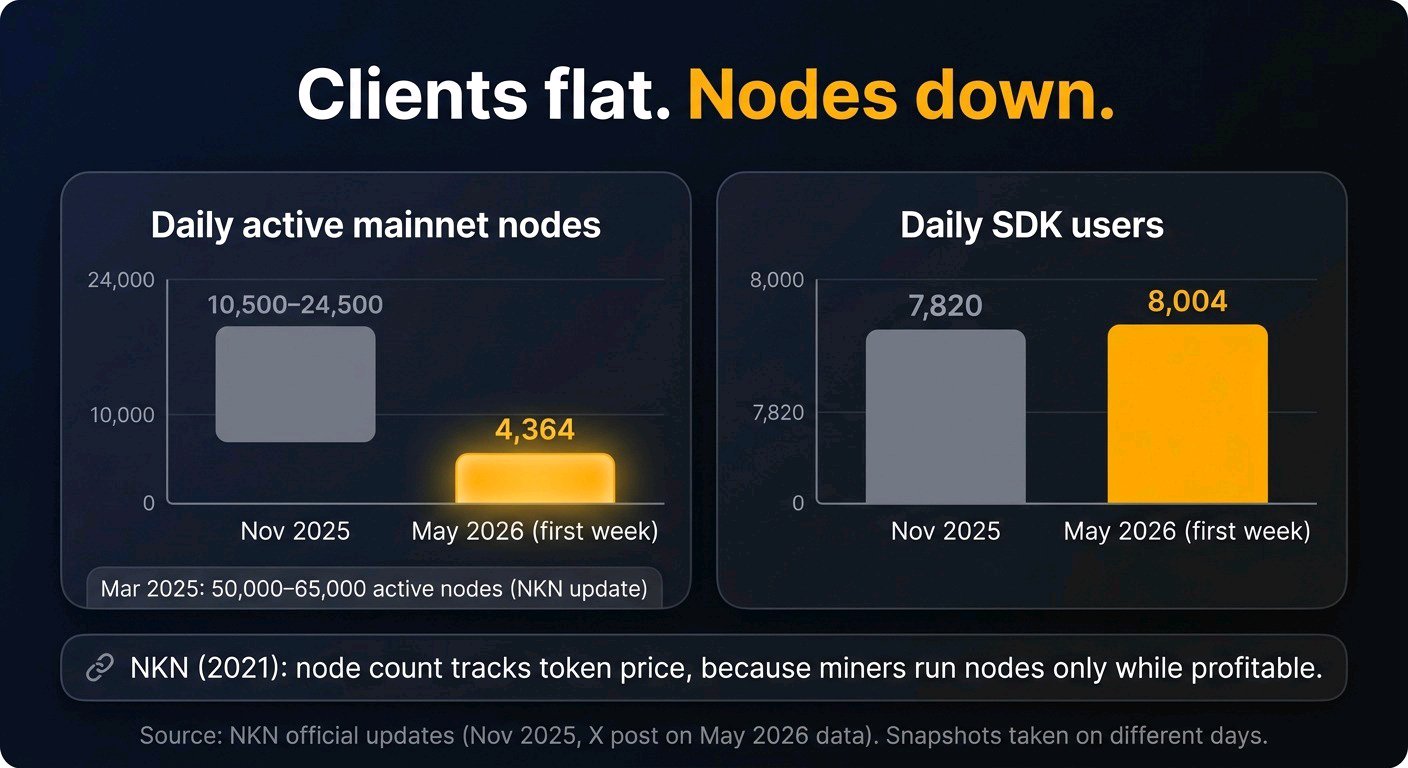
NKN’s own updates show relay nodes and relay clients parting ways. In November 2025, @NKN_ORG reported 10,500–24,500 daily active mainnet nodes and 7,820 daily SDK users. For the first week of May 2026, the figures were 4,364 nodes and 8,004 users. Clients ticked up. Nodes fell to less than half the bottom of the earlier range. For scale, in March 2025 the project cited 50,000–65,000 active nodes. So demand, measured by SDK users, held near 8,000 while supply shrank. That fits a mechanism NKN described itself in 2021: node count tracks the token price almost directly, because miners only run nodes while it’s profitable. Node count is a price-sensitive variable, not an adoption gauge. Two cautions. These are the project’s own snapshots, taken on different days, and the latest I can find covers early May 2026, so this is a standing observation, not breaking news. The metric definitions also look inconsistent between posts, so I wouldn’t lean on exact ratios. I used to quote NKN’s node count as the headline. The client line is the one I’d track alongside it, though with reward seasons running, even that may not be purely organic. #ByXIMPACT $NEARUSDT
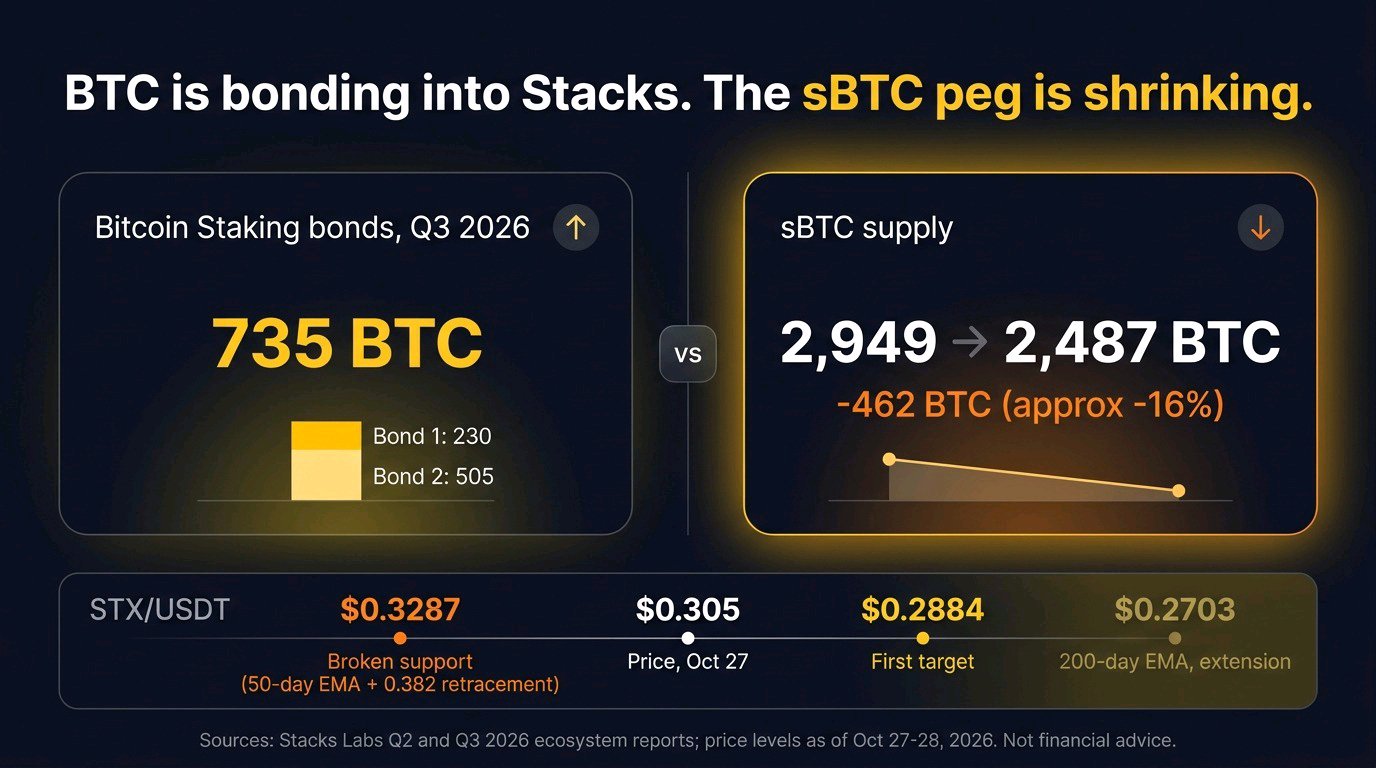
sBTC supply dropped about 460 BTC in Q3 (2,949 → 2,487, roughly −16%), the same quarter Bitcoin Staking pulled in 735 BTC across two bonds. Bonds are filling, but the sBTC peg isn’t growing with them: net withdrawals outran deposits. $STX has since given back a third of its mid-October high ($0.459) and trades near $0.305 after losing $0.3287, where the 50-day EMA and 0.382 retracement overlapped. Funding sits near baseline, so this is a structure call, not a positioning one. STXUSDT on Bybit: short bias on a retest, not at market. Entry: $0.325–0.329 Stop: daily close above $0.340 Targets: $0.2884, then $0.2703 (200-day EMA) Chasing at $0.305 leaves roughly 5% to the first target. Window: through mid-November, around Bond 3 and FOMC volatility. A bond larger than 505 BTC, or a BTC bounce that reclaims $0.3287, voids the idea. That’s the level to watch. #ByXIMPACT $STXUSDC
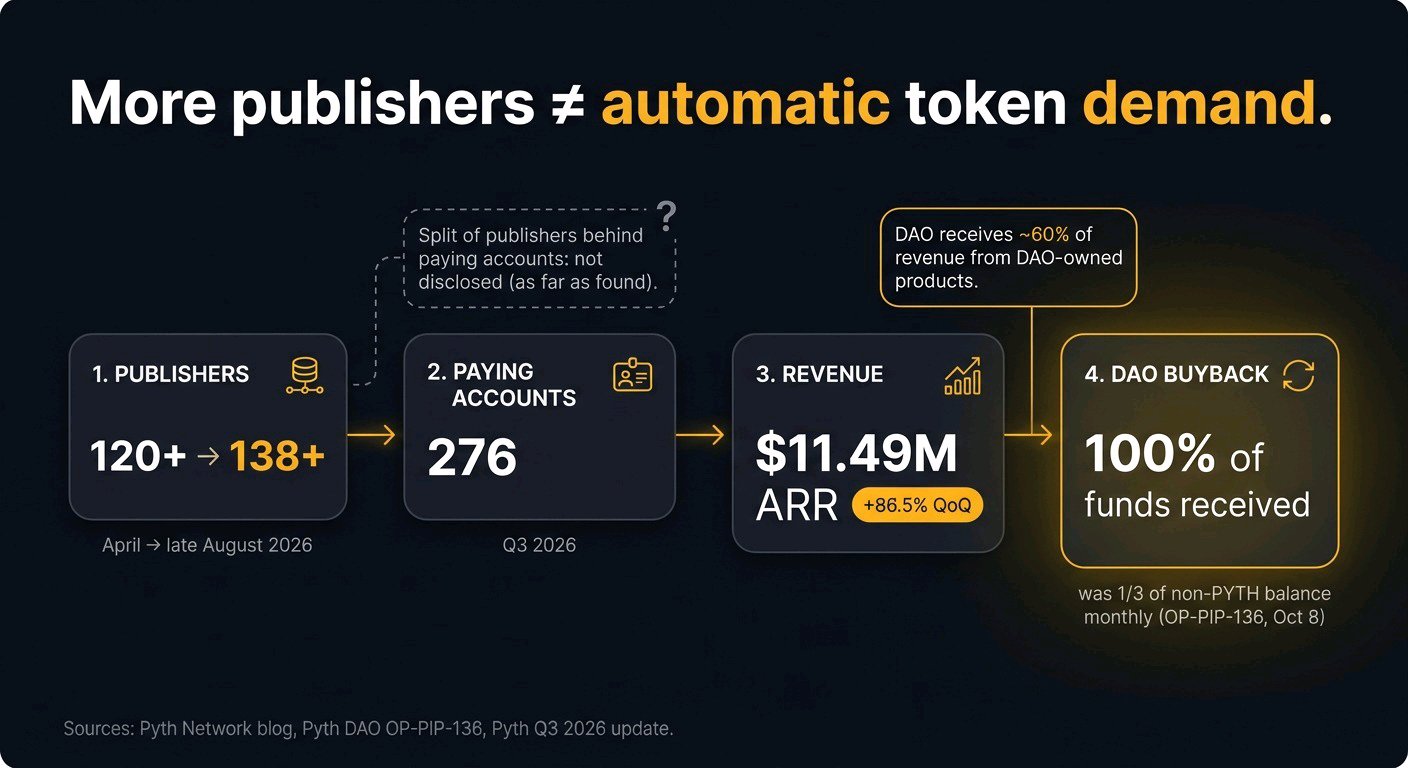
Pyth’s publisher list used to read like a crypto trading desk roster. Since April it hasn’t. On April 6, Euronext FX, Fidelity, Tradeweb, OTC Markets, SGX FX and EDI joined, firms that had distributed data through legacy vendors and terminals. Nasdaq followed on June 30 with TotalView depth-of-book data, then OpenYield with live Treasury quotes on July 24. That’s the latest addition I can find, so treat this as a structural read, not breaking news. The count moved too: more than 120 publishers in April, 138+ cited by Pyth in late August. Here’s why it matters beyond logos. These publishers supply products that get paid for. @PythNetwork reported $11.49M ARR for Q3, up 86.5% quarter over quarter, across 276 paying accounts. Since the October 8 DAO vote (OP-PIP-136), every dollar the DAO receives from those products goes to open-market $PYTH purchases. Before, it was one third of the DAO’s non-PYTH balance each month. The link isn’t automatic, though. The DAO gets roughly 60% of revenue from DAO-owned products, and for Nasdaq Basic, clients still license directly from Nasdaq. Publishers keep control of terms. I used to read publisher count as a vanity metric. Now the number I’d want is how many of those 138 sit behind a paying account, and I haven’t found that split. #ByXIMPACT $PYTHUSDT
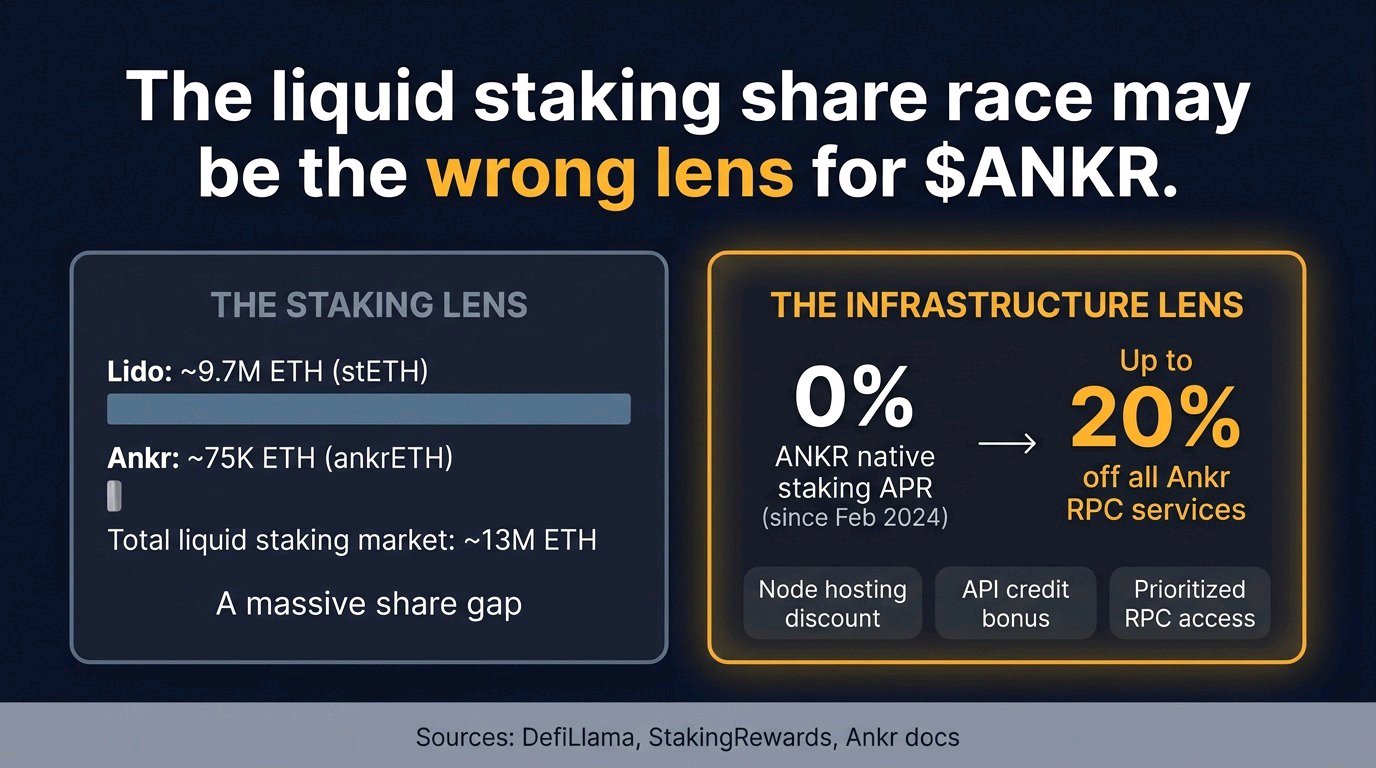
Lido still holds about 56.6% of tracked ETH liquid staking tokens, per DefiLlama on Oct. 8. The more telling seat is the one $ANKR’s staking product occupies: close to zero. Ankr is one of the older liquid staking providers. On Oct. 6, ankrETH had a market cap near $22M. DefiLlama showed about $22.7B in TVL on Lido’s Ethereum side on Oct. 28. By value, that’s roughly a thousandth. Ankr’s own staking page now files ETH under “Partner Staking.” Then there’s the token. The same page says ANKR staking APR is being lowered to 0%, and that ANKR instead unlocks up to 20% off Ankr’s RPC services. Put those together and the share race looks like the wrong lens. A token that once leaned on staking yield is being re-pointed at infrastructure billing. Whatever moves ANKR from here sits closer to how many developers pay for RPC than to whether Lido’s slice shrinks or ether.fi’s grows. I can’t tell whether that’s a downgrade or a cleaner story. RPC at least has customers. But it’s a different thesis from the one the liquid staking label suggests, and I couldn’t find a dated Ankr disclosure on RPC revenue to test it against. The share chart explains Lido. What feeds the ANKR token now is something the staking dashboard can’t answer. #ByXIMPACT $BTCUSDT $LDOUSDT
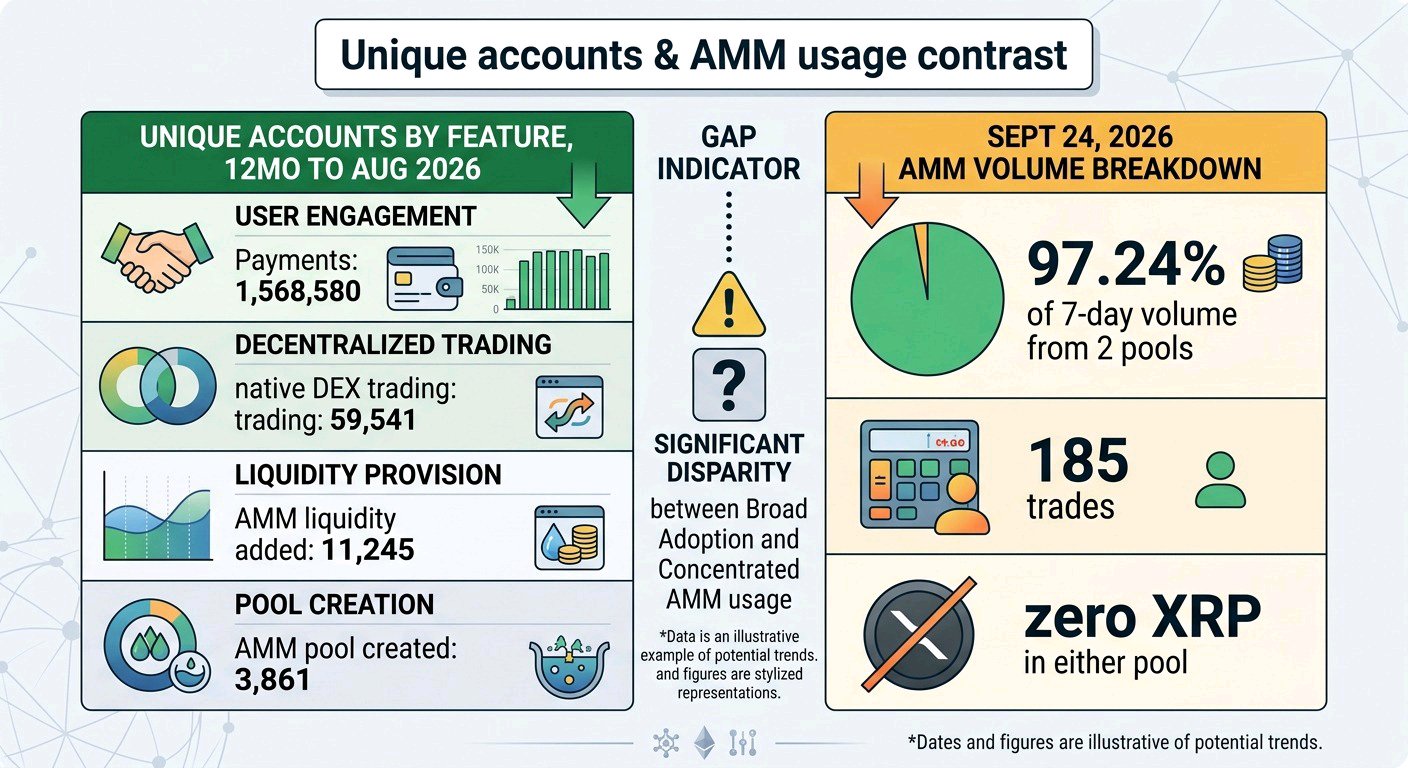
Only 3,861 accounts have ever created an AMM pool on the XRP Ledger, and just 11,245 have ever added liquidity to one — across the twelve months through August, according to an on-chain count published September 8. Compare that to the 1.57 million accounts that sent a plain payment in the same window, or even the 59,541 that used the built-in order-book exchange. The AMM, XRPL's headline DeFi feature, is used by a rounding error of the accounts that touch the ledger at all. It gets more specific than that. Look at what's actually driving the AMM's recent volume and the picture doesn't improve. In the week through September 24, two newly created pools — XPM/TIX and RLUSD/TIX — accounted for 97.24% of all seven-day AMM volume on XRPL, across just 185 trades. Neither pool holds any XRP. The RLUSD/TIX pool's reserves have since shrunk to fractions of a cent. None of this means the AMM amendment failed technically — it works as designed, and liquidity providers who use it do earn fees. But "XRPL has an AMM" and "XRPL's AMM sees meaningful, hype-independent usage" are two different claims, and the second one currently rests on a couple of thin, XRP-less pools doing most of the talking. Worth checking which specific pools are carrying the volume before reading much into any headline AMM number for $XRP. #ByXIMPACT $XRPUSDT
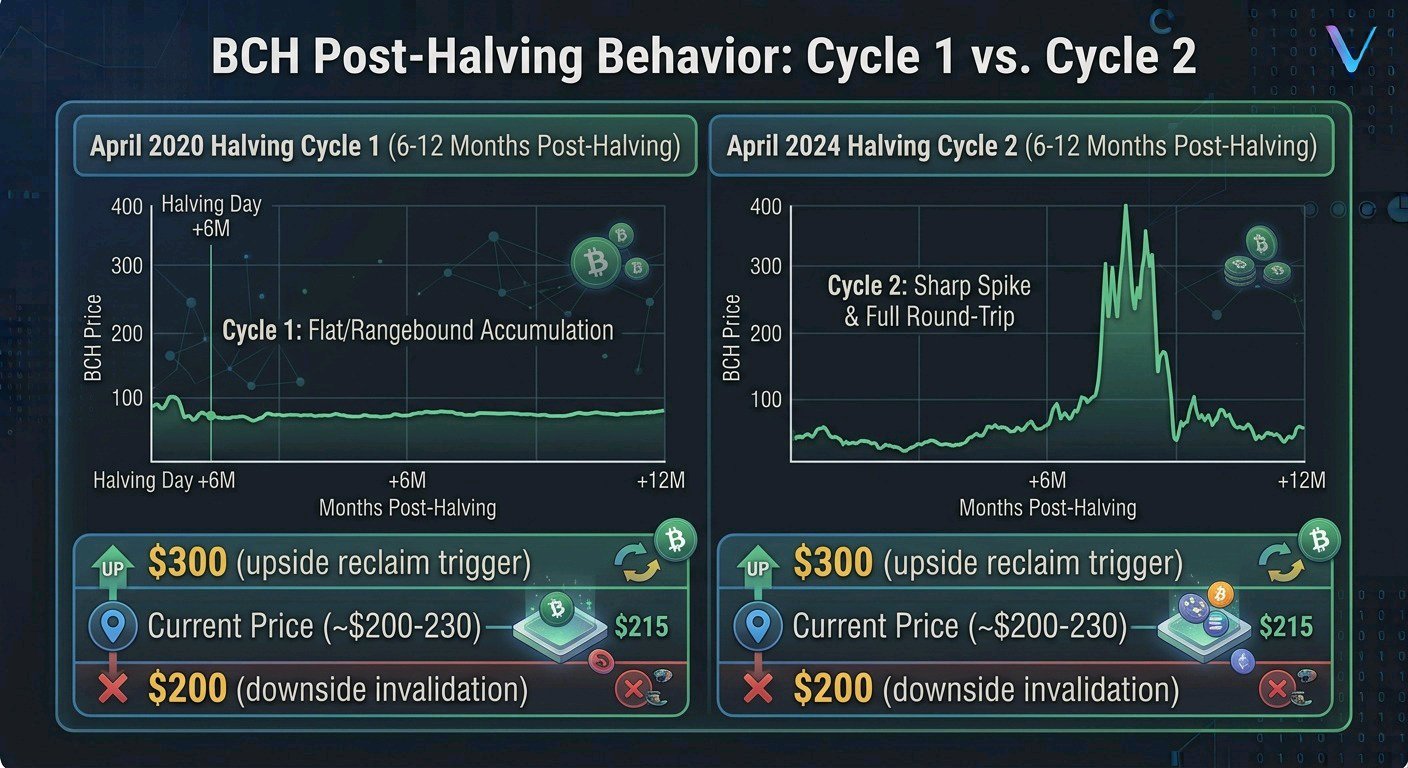
Bitcoin Cash is now roughly two and a half years past its second halving (April 4, 2024), and the two BCH halving cycles have behaved nothing alike. After the first halving in April 2020, price barely reacted — it dipped roughly 20% heading into the event, then traded flat for over six months. After the second, BCH spiked immediately post-halving, then gave the entire move back and round-tripped to pre-halving levels within months. There's no consistent post-halving pattern here to trade off of. That inconsistency, plus BCH still sitting more than 85% below its 2017 all-time high near $200-230 today, argues for watching rather than positioning on a "halving cycle" thesis alone — the next halving isn't until 2028, so there's no near-term catalyst forcing the pattern to repeat either way. The level that matters technically is a reclaim of $300; several analysts flag that as the trigger for a move toward $375-400. Losing the recent range low near $200 would argue the opposite — that this cycle is tracking closer to a prolonged post-halving drift than a delayed rally. #ByXIMPACT $BCHUSDT
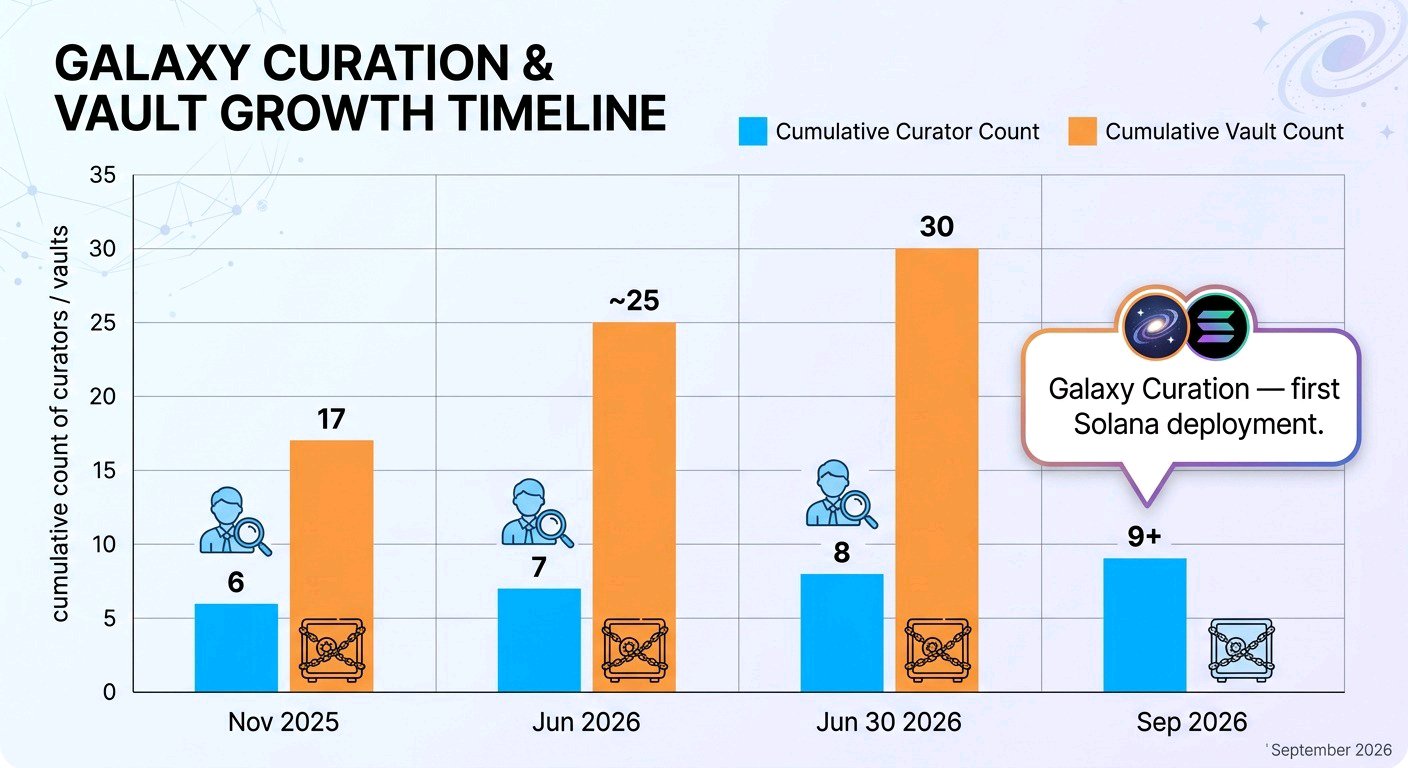
Kamino's vault curator roster has grown from six independent risk managers running 17 vaults in November 2025 to 30 curated vaults holding more than $550 million by August 2026 — and the newest name on that list, Galaxy Curation, made its first-ever Solana deployment anywhere through Kamino just last week. That distinction matters more than a rising TVL number would on its own. Curator growth is a different signal from user growth: each name — Gauntlet, Sentora, Hyperithm, RockawayX, now Galaxy — is a distinct institutional risk-management operation choosing to bring its own methodology on-chain and attach its reputation to it, rather than a protocol chasing incentivized deposits. Galaxy specifically ported the risk framework it uses across a $1.4 billion average loan book into its new Kamino USDC and USDT vaults. Hyperithm joined June 30 with a USDC Apex vault targeting roughly 6.77% APY. $KMNO itself cites more than $21 billion in loans originated over three years with no reported bad debt. That last figure is worth treating as a claim to verify rather than a settled fact — it's Kamino's own reporting, not an independent audit, and it's the kind of number that gets tested precisely as more curators with different risk appetites start operating on the same rails. Curator count is climbing. Whether the no-bad-debt track record holds up as that count keeps growing is the part actually worth watching. #ByXIMPACT $KMNOUSDT
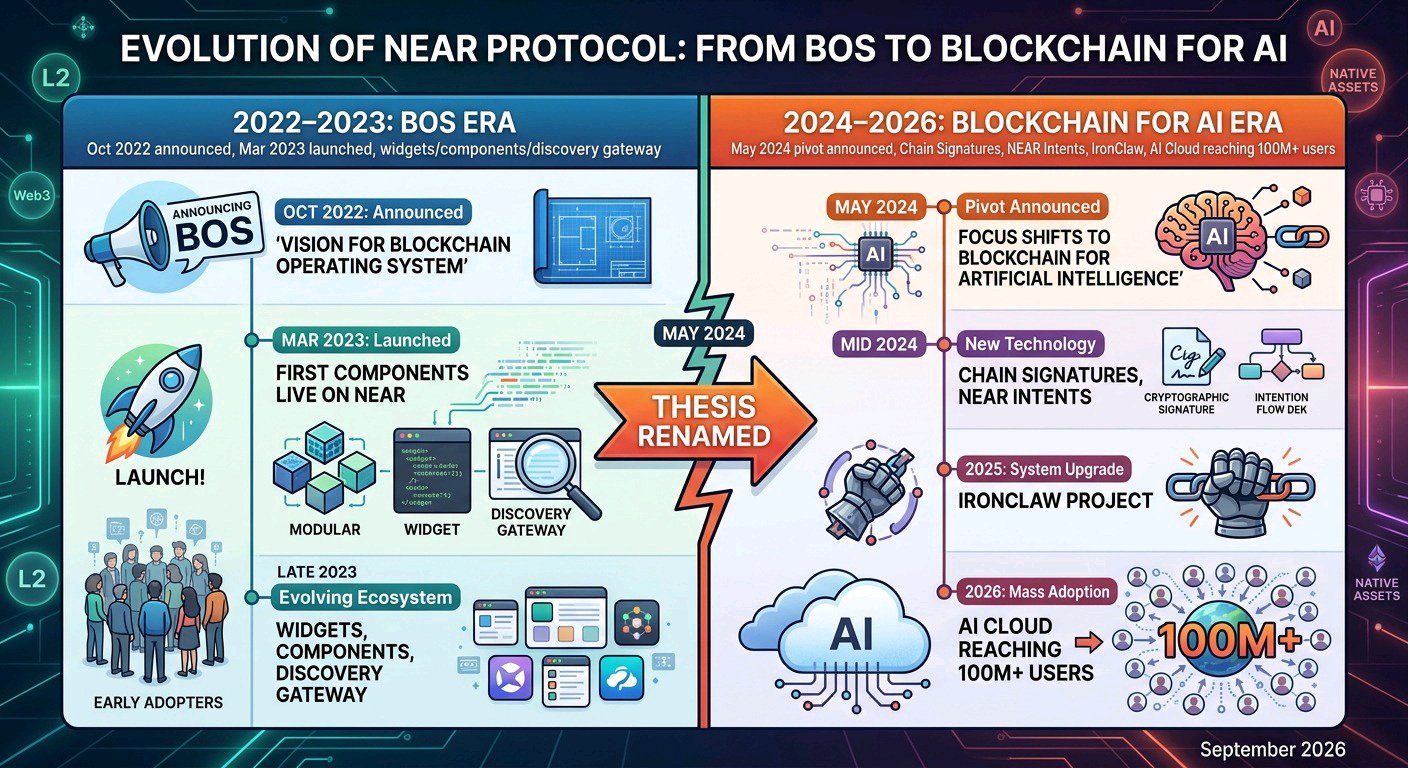
Search "NEAR BOS" today and almost everything that surfaces is dated 2022 or 2023. NEAR's own roadmap history page confirms why: the Blockchain Operating System — once pitched as "the world's first" decentralized frontend layer, complete with widgets, reusable components, and a discovery gateway for Web3 apps — stopped being $NEAR's core thesis by mid-2024, when the foundation renamed its direction "Blockchain for AI" and pivoted publicly toward user-owned AI. That matters if you're evaluating NEAR through a BOS lens at all, because the project itself isn't measuring anything that way anymore. By 2026, the headline numbers NEAR publishes are framed entirely differently: Chain Signatures live on mainnet, NEAR Intents in production, and AI Cloud privacy tooling already integrated into Brave Nightly, OpenMind AGI, and Phala Network, reaching a combined 100 million-plus users, according to NEAR's own January 2026 roadmap announcement. None of that traces back to BOS components or widget counts — it's a different product category built around agents and chain abstraction, not decentralized frontends. This isn't necessarily a failure story. Plenty of L1s abandon early bets for better ones. But it does mean "BOS app growth" isn't a metric anyone at NEAR is tracking or reporting in 2026 — the team moved the goalposts to an entirely new field two years ago. Makes you wonder how many of those original widgets and components are even still live anywhere today. #ByXIMPACT $NEARUSDT
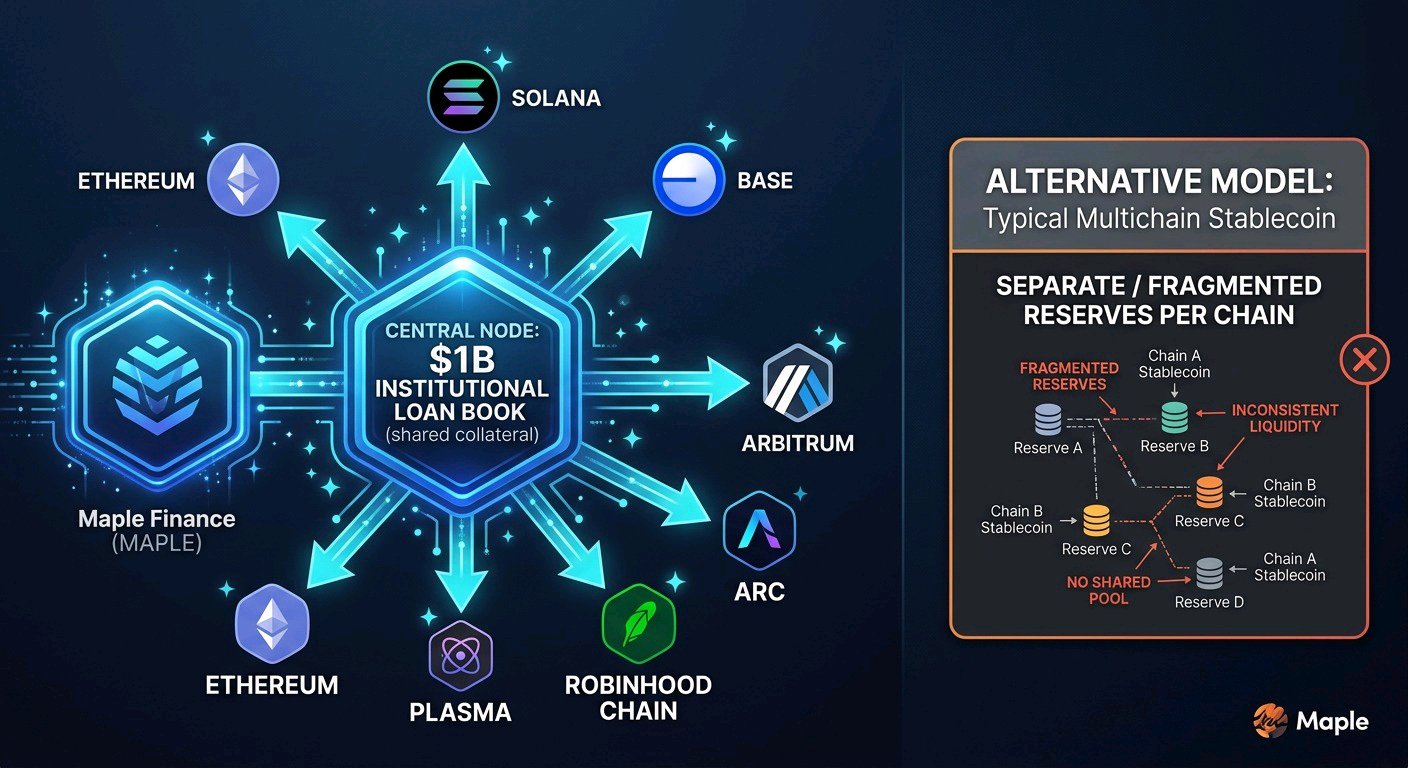
Maple's $SYRUP didn't wait to see how Arc would land — syrupUSDC was live on Circle's new institutional blockchain within days of Arc's public mainnet opening. Arc launched on September 16 with BlackRock, Visa, Mastercard, and DTCC signed on as founding validators, which is a heavier institutional guest list than most Layer 1s get in their first year, let alone their first week. What's worth noticing isn't the chain count. Maple has now stacked deployments across Ethereum, Solana, Base, Arbitrum, Plasma, Robinhood Chain, and now Arc. It's how syrupUSDC gets there. Most multichain stablecoins expand by minting fresh supply locally on each new chain, which means reserves get split up, and the backing on chain six isn't necessarily the same backing as chain one. Maple's version keeps a single collateral base — roughly $1 billion in overcollateralized institutional loans — and treats each new chain as another front door into that same pool, not a separate vault. That's a cleaner story on paper than in practice. A shared collateral base concentrates risk in one credit book even as access points multiply, so the real test isn't whether $SYRUP can keep adding chains. It's whether that single loan book can absorb demand from all of them at once without anyone noticing the difference. #ByXIMPACT $ACHUSDT
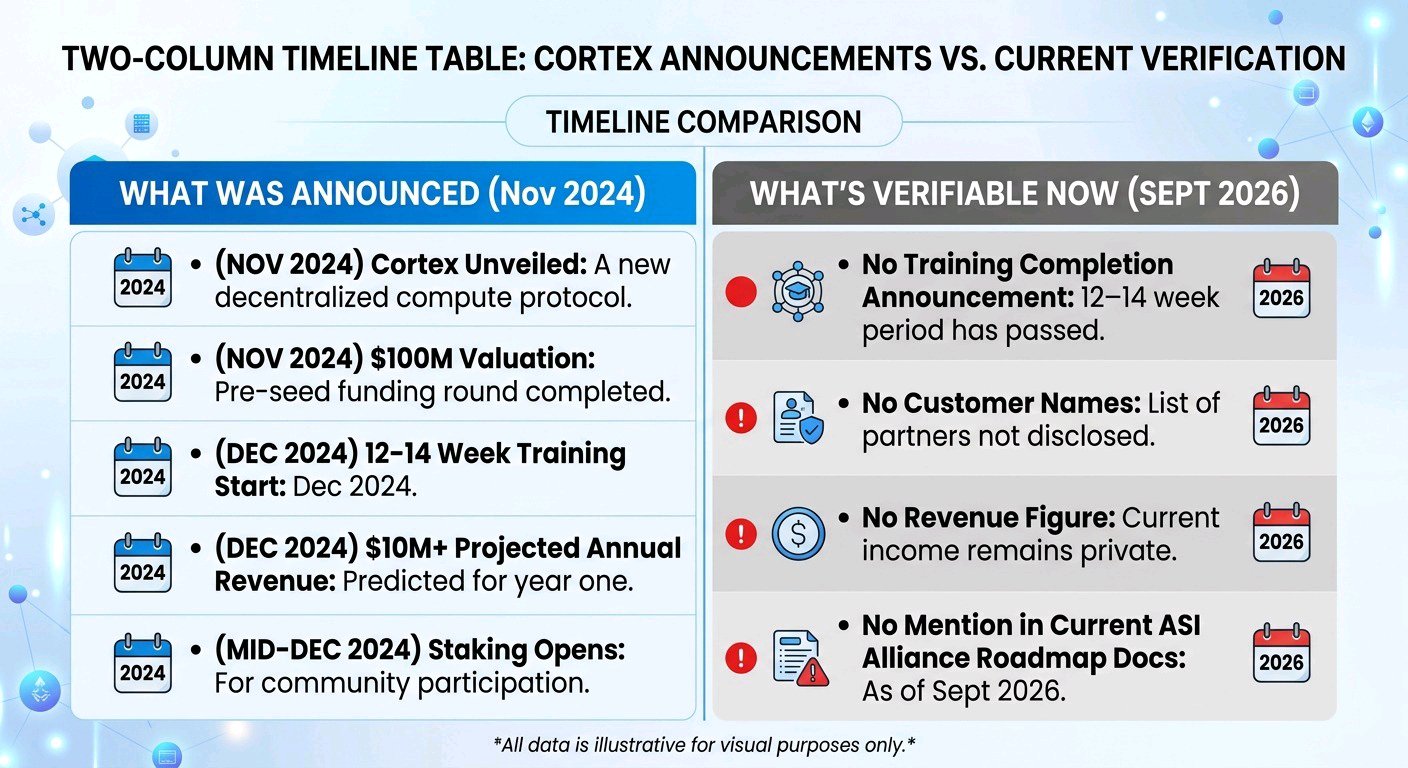
Confirms it — nothing beyond the November 2024 launch announcement surfaces for Cortex. That's the angle: a robotics model promoted with a $100M valuation and $10M+ revenue projection, with zero verifiable follow-up in nearly two years while the alliance moved on to newer branding (ASI:Chain, ASI:Create). Now writing the educational post. Cortex was supposed to be Fetch.ai's proof that decentralized AI could touch real robots. Launched in November 2024 under the "ASI: Train" program, it came with specific numbers: a $100 million valuation, a 12–14 week training run starting that December, and a projection of over $10 million in annual revenue from warehouse operators, robotics startups, and industrial partners staking FET to fund it. That training window closed around March 2025. Eighteen months on, there's no public benchmark, deployment case study, or revenue disclosure for Cortex anywhere in Fetch.ai's own channels or the ASI Alliance's docs. The staking mechanism that was supposed to let holders "own" the model like an AI startup doesn't appear in current ASI Alliance materials either. Compare that to the alliance's 2026 focus — ASI:Chain's devnet, ASI:Create, the Fetch-Skills CLI — none of which mention Cortex as a reference point or precedent. That's the pattern worth noticing with $FET specifically: the project doesn't lack robotics ambition, it lacks a habit of closing the loop on the robotics claims it makes. A model gets announced with a dollar figure attached, and by the time anyone would check whether the number held up, the roadmap has already moved to the next initiative. None of this means the newer robotics-adjacent work (ASI<Train/>'s broader framework, the alliance's compute stack) is following the same path. But if Cortex is any guide, the real test isn't the announcement — it's whether anyone can point to a deployed model and a customer paying for it a year later. #ByXIMPACT $FILUSDT
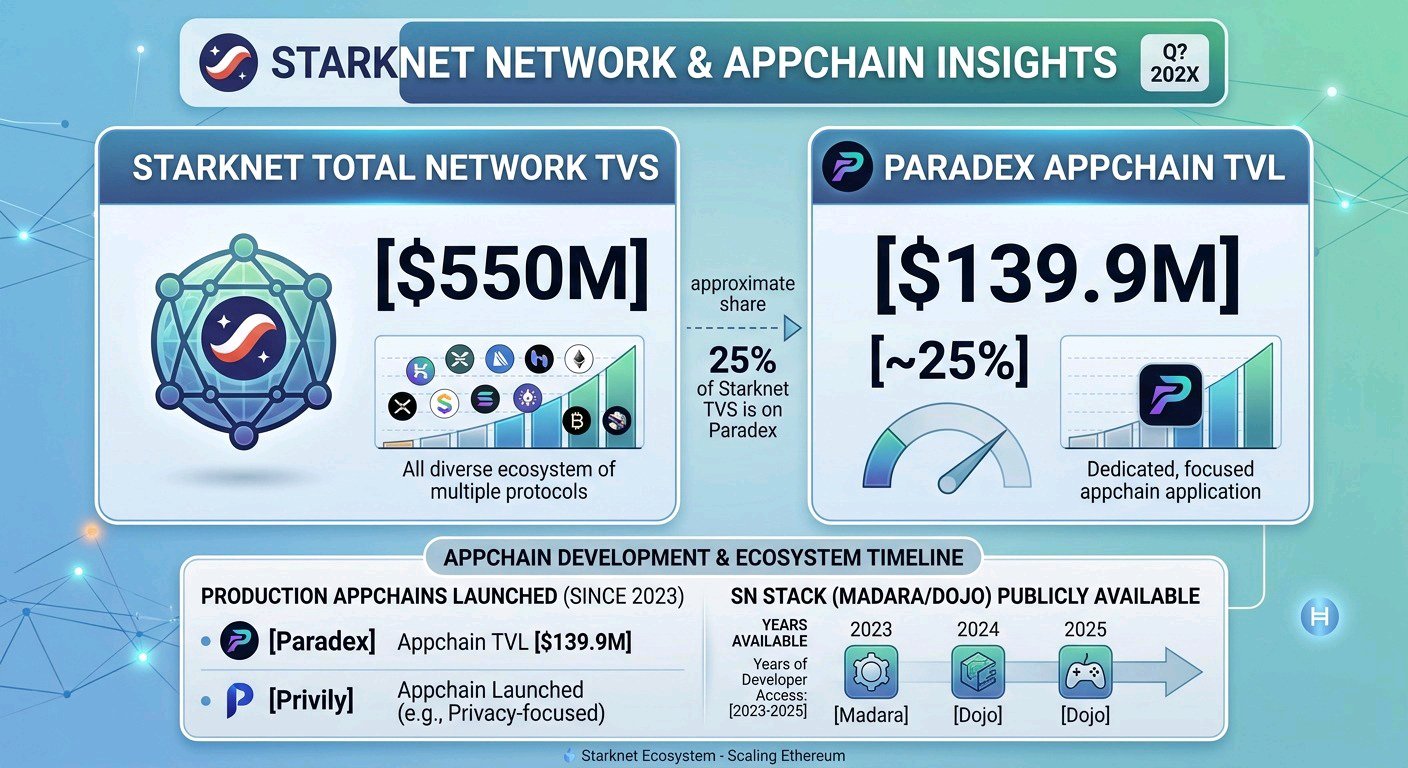
One appchain built on the Starknet stack now holds roughly a quarter of everything locked across the entire ecosystem. Paradex's TVL sits near $139.9 million against Starknet's total network value of about $550 million — and Paradex earns that while running its own chain, not Starknet's base layer. Lifetime trading volume through the platform has passed $170 billion, daily volume runs close to $1 billion, and it now ranks among the top five perpetual DEXs anywhere by volume. That's the number worth sitting with if you're evaluating $STRK on the "appchain adoption" thesis. StarkWare has offered the SN Stack — Madara, Dojo, the StarkWare Sequencer — as a way for teams to launch their own application-specific chains since 2023. Years later, the flagship proof that the thesis works in production is still overwhelmingly one project: Paradex, running as Starknet's original design partner since that same year. Privily, a self-custodial neobank, is one of the only other teams that's gone from framework to live chain. None of that makes the appchain model wrong. Infrastructure adoption is often lumpy, and one large working example is a real signal, not a fake one. But it does mean that right now, judging Starknet's appchain ecosystem and judging one very successful derivatives exchange are close to the same exercise. #ByXIMPACT $STRKUSDT
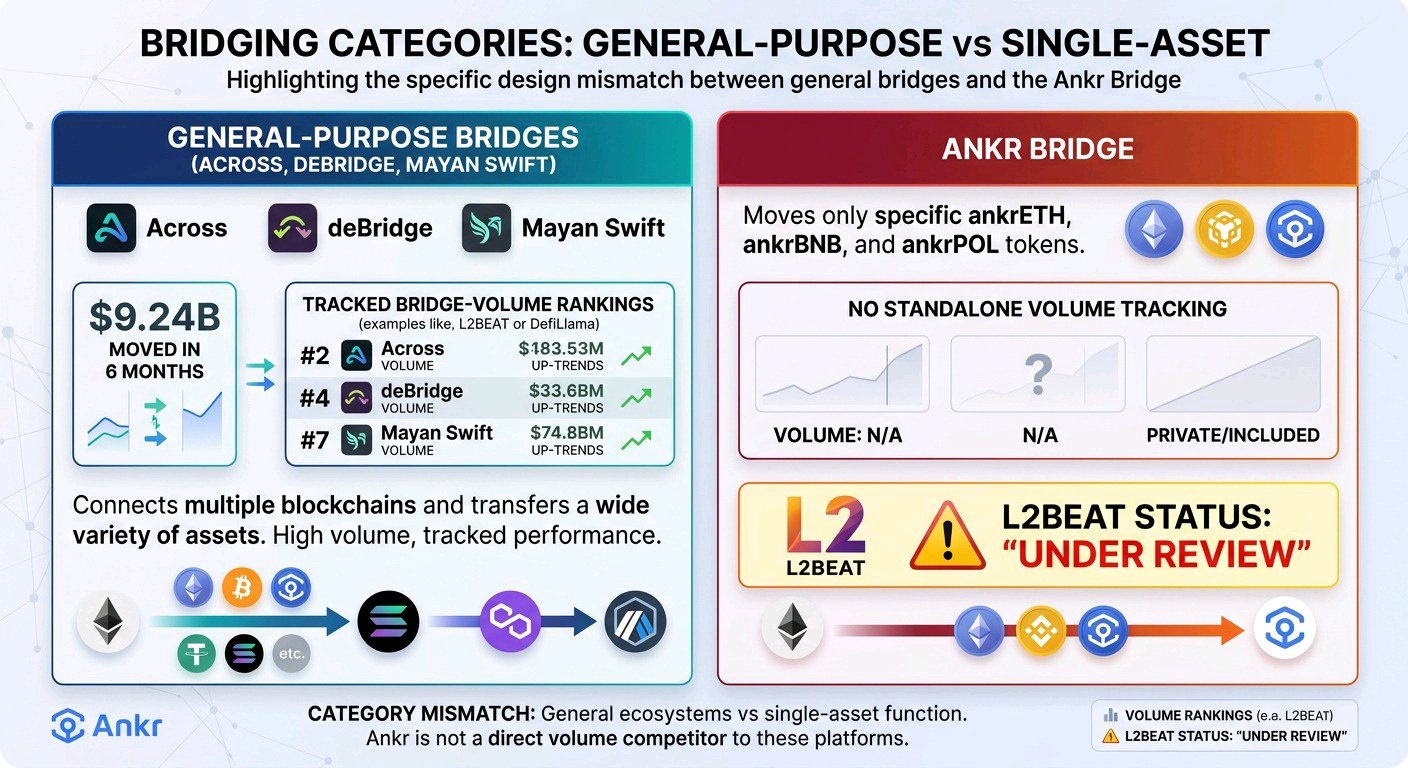
Ankr has a bridge. It's easy to assume that means $ANKR participates in the broader cross-chain volume story — the same category where a single 2026 study found $9.24 billion moved across just three bridges (Across, deBridge, Mayan Swift) in six months. Ankr Bridge doesn't play in that league, and it isn't really designed to. Its actual job is narrower: letting holders of Ankr's own liquid staking tokens — ankrETH, ankrBNB, ankrPOL — move between supported networks while the underlying stake keeps earning rewards. It's a utility feature of the staking product, not a general-purpose cross-chain venue competing for third-party asset flow. That's likely also why there's no independently tracked bridge-volume metric for it anywhere — L2BEAT's own page on Ankr Bridge is marked "under review" with incomplete data, and DefiLlama's bridge rankings don't carry it as a standalone entry at all. Meanwhile the numbers that are tracked paint a clear picture: Ankr's liquid staking TVL sits around $17-23 million across Ethereum, BSC, and a handful of smaller chains, and ANKR itself trades near $0.0037, down more than 98% from its 2021 high near $0.21. None of this is a knock on the bridge doing what it's built for. It's a reminder that "cross-chain bridge" can describe two very different products — one competing for billions in third-party volume, and one quietly moving a project's own token holders between chains. #ByXIMPACT $ANKRUSDT
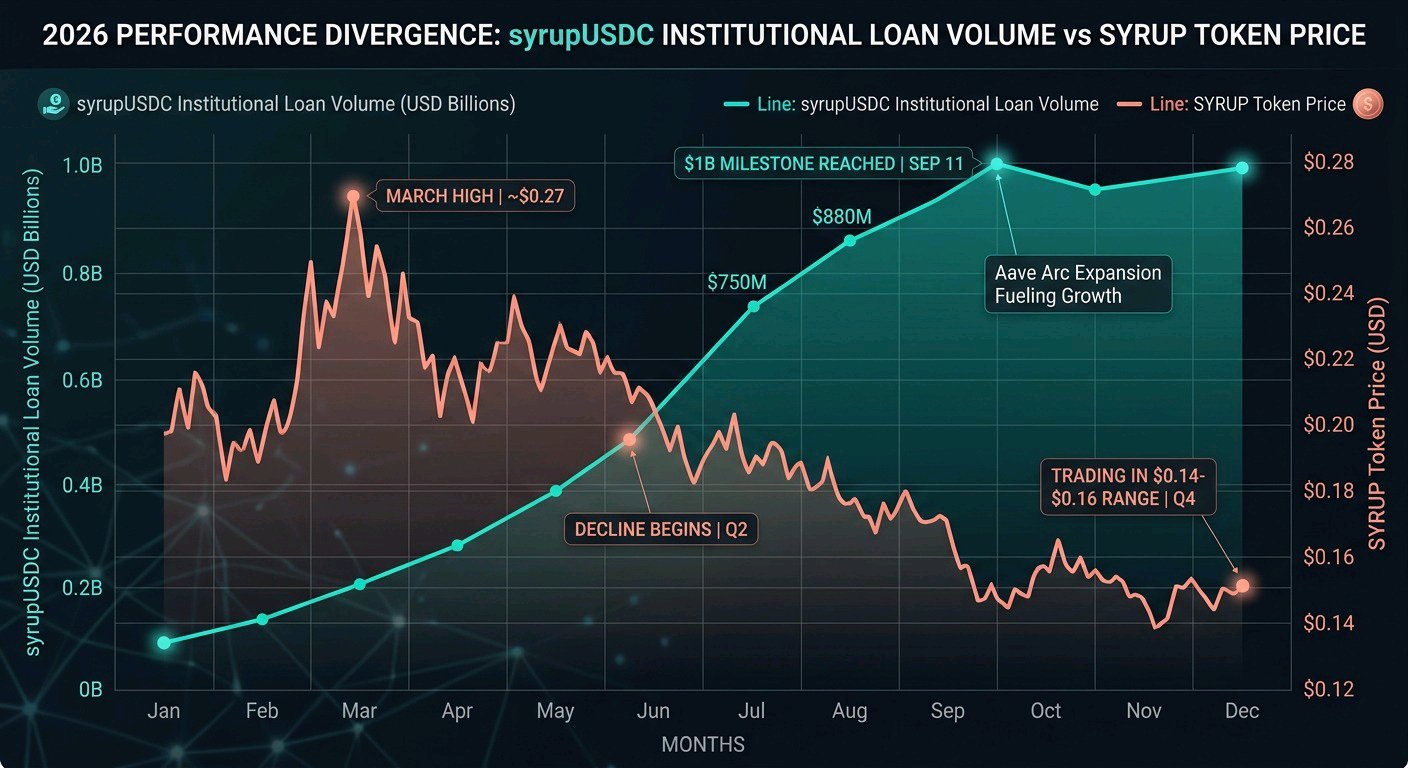
Maple confirmed on September 11, 2026 that syrupUSDC has crossed $1 billion in overcollateralized institutional loans, with that same credit structure now live on a second venue, Arc — expansion without altering the underlying loan book's quality. It follows an H1 2026 print of $4.6B AUM (+81% YoY) and $1.9B in loans outstanding, an all-time high, at a time the broader DeFi lending market contracted roughly 31%. That's a real divergence: Maple growing while its category shrinks. What hasn't kept pace is $SYRUP itself, which has drifted down from its March 2026 high near $0.27 into the $0.14-$0.16 range more recently — the token hasn't re-rated alongside the loan book. Watching for whether the Arc expansion pulls in incremental institutional volume beyond the $1B threshold over the coming weeks, which would be the clearer signal here than price action alone. A stall at $1B with no follow-through growth into Q4 would say the milestone was a plateau, not a new leg. #ByXIMPACT $2ZUSDC
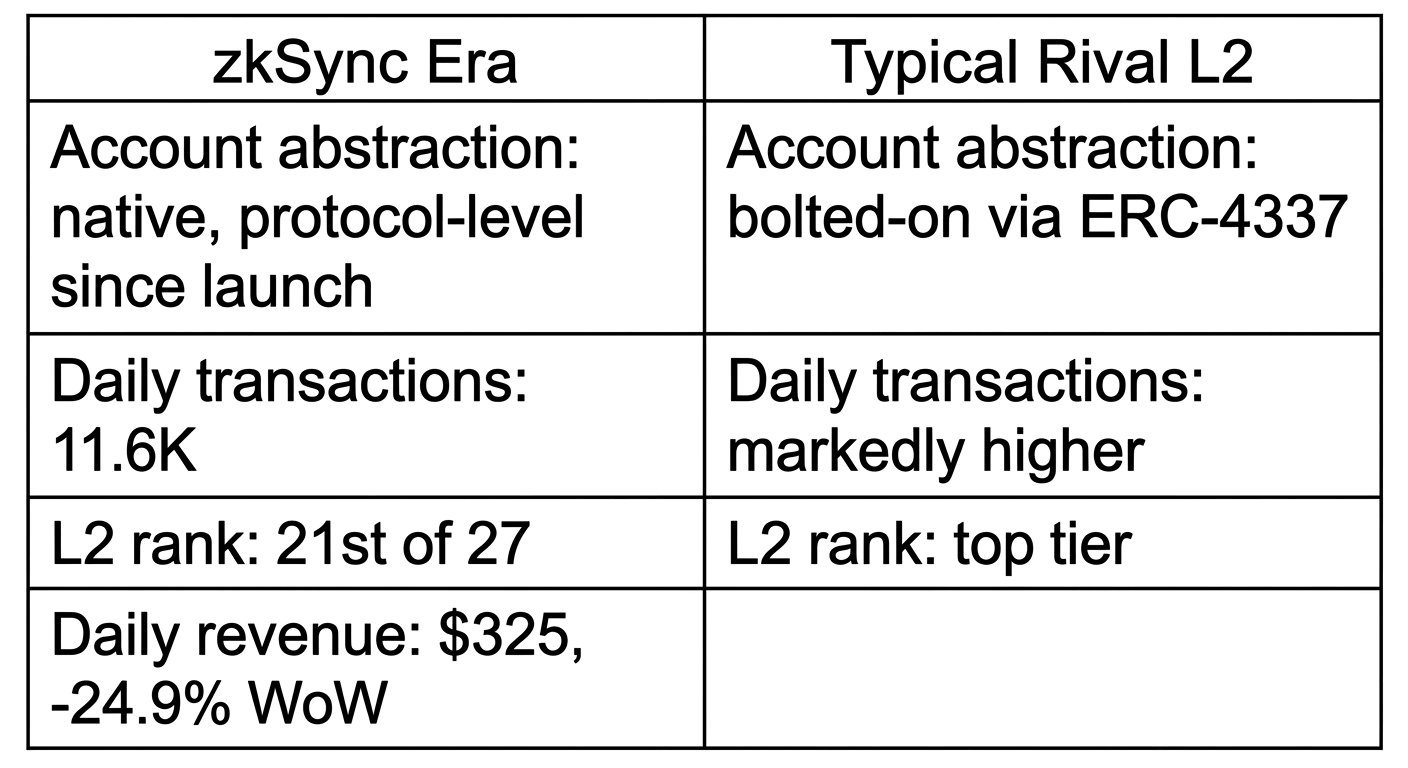
$ZK's chain, zkSync Era, built account abstraction into its core protocol from day one — Smart Accounts and Paymasters at the base layer, not bolted on afterward through ERC-4337 like most competing Ethereum L2s still do. That head start in architecture hasn't shown up in the usage numbers. As of growthepie's July 10, 2026 snapshot, zkSync Era processed 11,600 daily transactions, ranking 21st out of 27 tracked Layer 2 chains — down 27.6% week over week. Daily chain revenue sat at $325, down nearly 25% over the same period. These aren't crisis-level numbers, but they're small for a chain that's had the most technically elegant version of a headline UX feature since before most rivals had a roadmap for it. That's the part worth sitting with. Native account abstraction was supposed to be the thing that made onboarding painless enough to pull in users who'd otherwise bounce off seed phrases and gas tokens. If that were the deciding factor in adoption, zkSync should be near the top of the L2 leaderboard rather than near the bottom. Instead, chains running the "worse," bolted-on version of account abstraction are doing more daily volume. Which raises a more useful question than whether zkSync has good tech — it's whether account abstraction, elegant or clunky, was ever really the bottleneck standing between users and L2 adoption in the first place. #ByXIMPACT $ZKUSDT
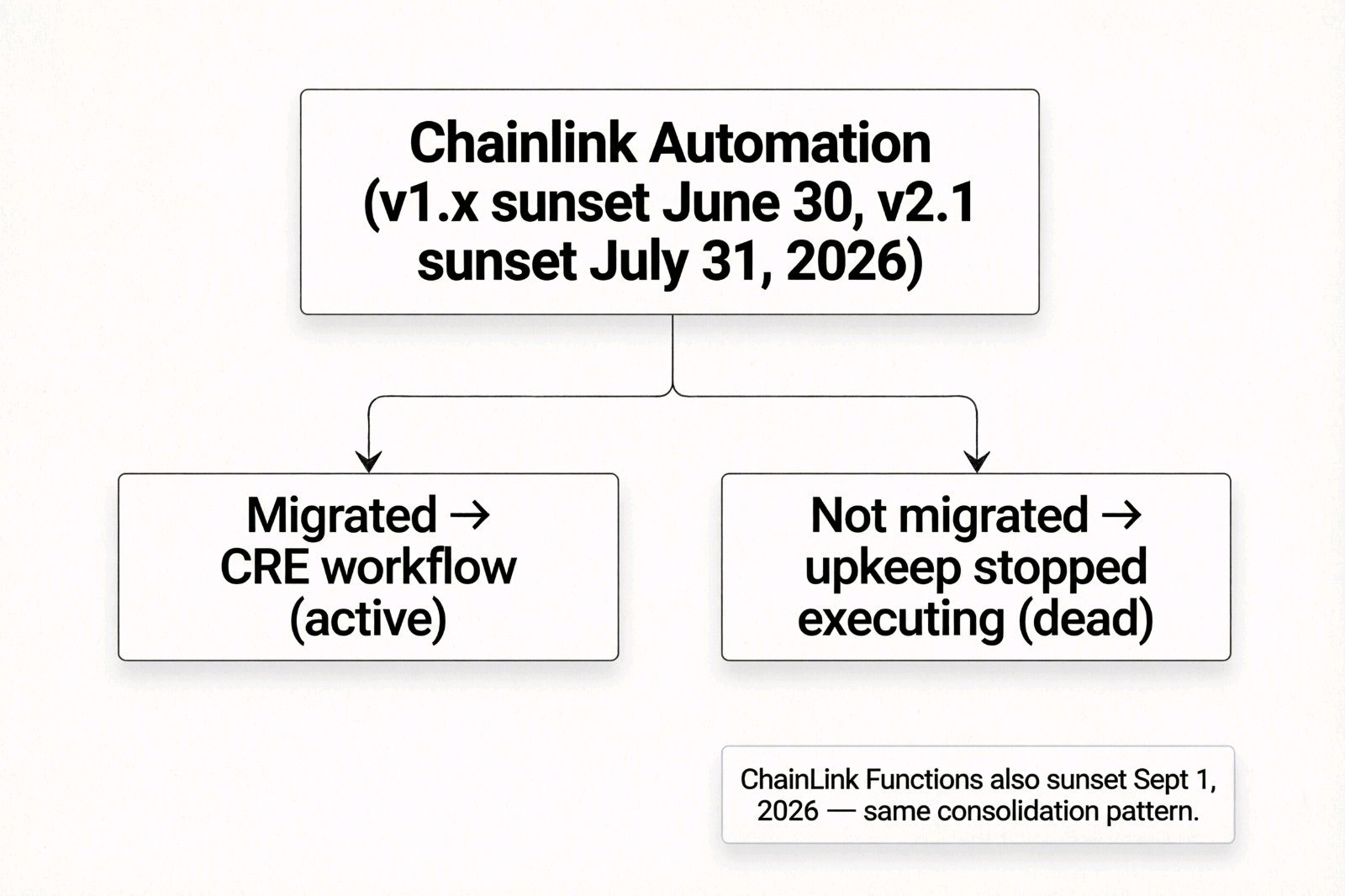
$LINK's Automation network doesn't exist as a standalone product anymore. Not in spirit — literally: v1.x sunset June 30, 2026, and v2.1 followed on July 31. Any upkeep still running on those older registries simply stopped executing on those dates. That changes what "Automation usage growth" even means right now. Chainlink built a replacement, the Chainlink Runtime Environment (CRE), designed to absorb Automation's job — plus more — into a single workflow system: cron triggers, on-chain event triggers, and the equivalent of checkUpkeep/performUpkeep all folded into one execution model. Chainlink's own migration guides walk developers through remapping an old upkeep into a CRE workflow using a bridge pattern, because existing contracts weren't rewritten automatically. So the real signal isn't how many upkeeps were registered before the sunset — that number is now largely irrelevant, since anything unmigrated is dead. It's how much of that traffic actually reappeared inside CRE versus simply broke. Independent developer write-ups published after the July 31 cutoff describe production upkeeps going silent because teams hadn't migrated in time, which is a very different story from "usage growing." Automation is Chainlink's second product folded into CRE this year — Functions sunset on September 1. That reads as consolidation, not organic adoption. Whether CRE actually retained that workload, rather than just replacing the registry it ran on, is the part worth checking before treating this as a growth story. #ByXIMPACT $LINKUSDT
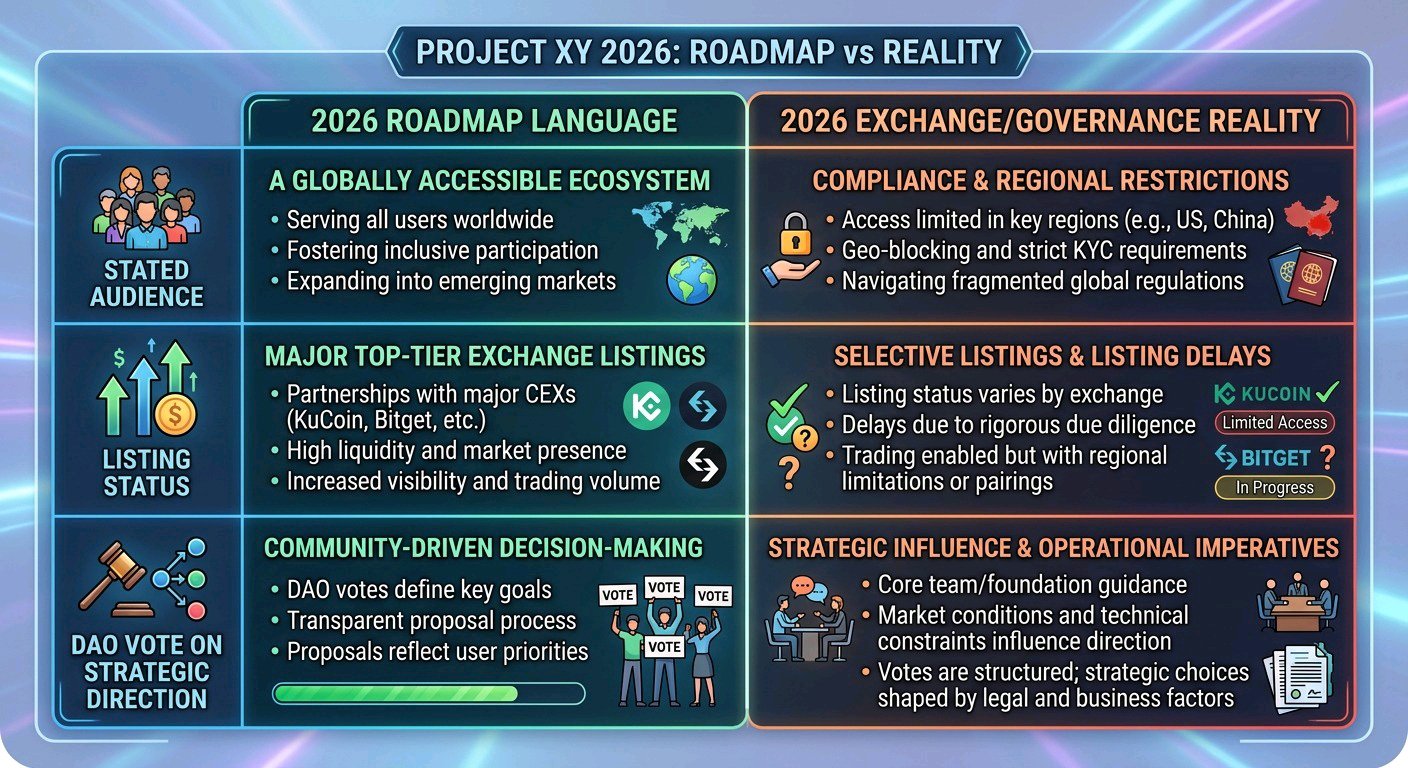
Gains Network's 2026 roadmap talks about expanding gTrade "horizontally into a broader financial network" and courting trading desks and proprietary funds as institutional liquidity providers. In the same stretch of 2026, KuCoin delisted GNS in March and Bitget pulled the GNS/USDT pair in April, both citing routine liquidity and volume reviews. By early July, $GNS was trading around $0.63 with a market cap near $15 million — down from an all-time high above $12. That gap is the actual story. A protocol pitching itself to proprietary trading desks needs deep, reliable liquidity and broad exchange access; losing two centralized listings in two months works directly against that pitch, regardless of what the roadmap says. Gains Network also put its own strategic direction to a DAO vote in June, asking GNS holders to weigh in on gTrade's future — not the kind of question a protocol confidently expanding toward institutional-grade infrastructure typically needs to ask. None of this means the ambition is dishonest. On-chain perps volume and buyback mechanics can be healthy even while a token's centralized-exchange footprint shrinks. But "institutional liquidity provider onboarding" reads differently once you know the same year included delistings and a vote on where the project goes next. Does exchange accessibility matter less for a protocol betting on on-chain-native institutional flow, or is that the wrong assumption? #ByXIMPACT $GRASSUSDT
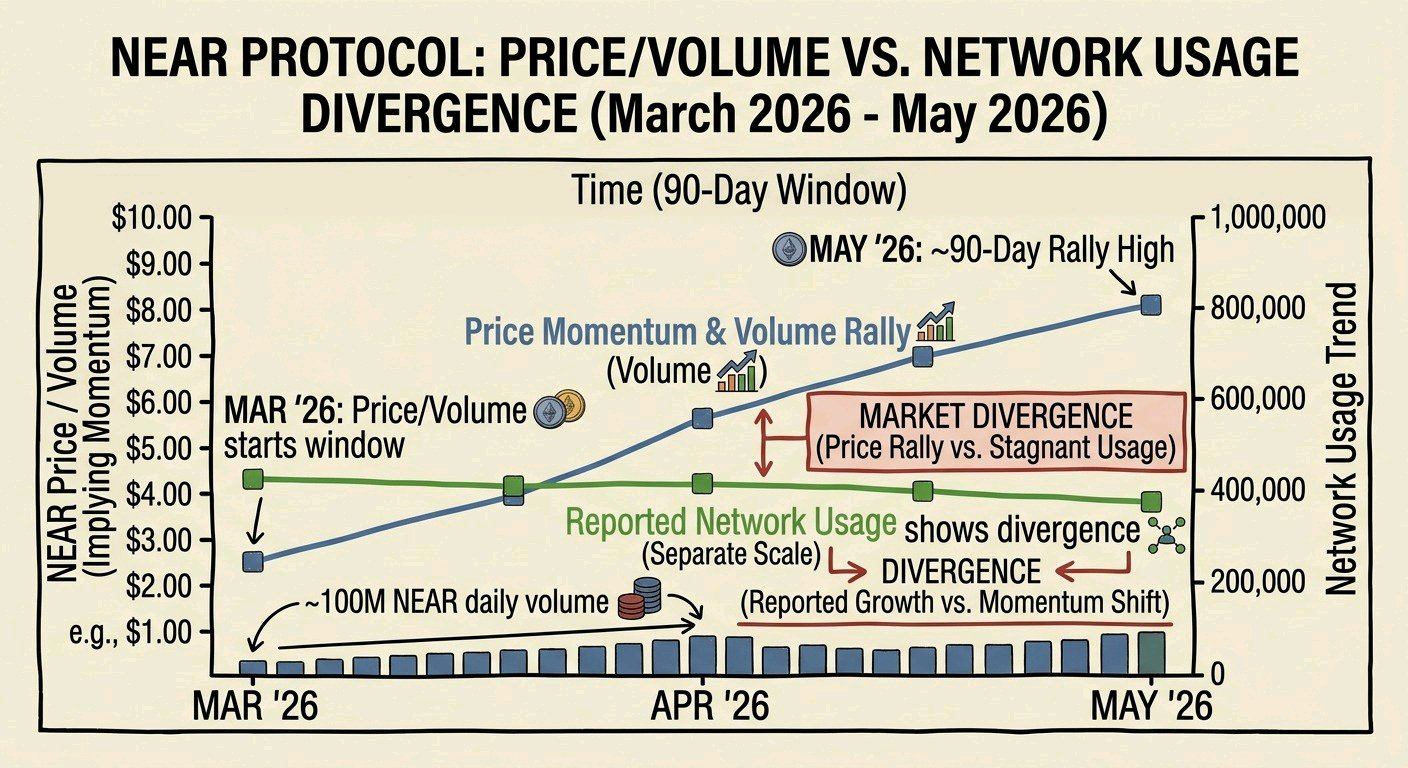
NEAR ($NEAR) climbed roughly 115% over a 90-day stretch into late May 2026, with weekly surges past 50% and daily volume spiking above $1 billion on the back of its pitch to become settlement infrastructure for AI agents. By June 21, though, the same coverage cycle following that rally noted something the price chart didn't: usage had been falling even as the narrative intensified, and the agent economy the token was being priced for hadn't materialized at scale yet. That gap is worth sitting with. NEAR has actually built the pieces for agent-to-agent payments — an intents system that lets agents state what they want done and have solvers route it across chains, and a protocol called AITP for agents to transact with each other inside a marketplace layer. That's real infrastructure, not vaporware. But infrastructure existing and agents actually using it to move value are two different claims, and the market rewarded the first as if it were evidence of the second. I don't think that makes the thesis wrong, necessarily — early infrastructure usually gets built before the workload arrives to fill it. But it does mean the honest test for "agent-to-agent payment adoption" here isn't the token's price action, it's whether transaction volume through Intents and AITP actually grows independent of sentiment cycles. Has anyone seen a published, agent-specific transaction count from NEAR itself, separate from total network TPS? #ByXIMPACT $NEARUSDT
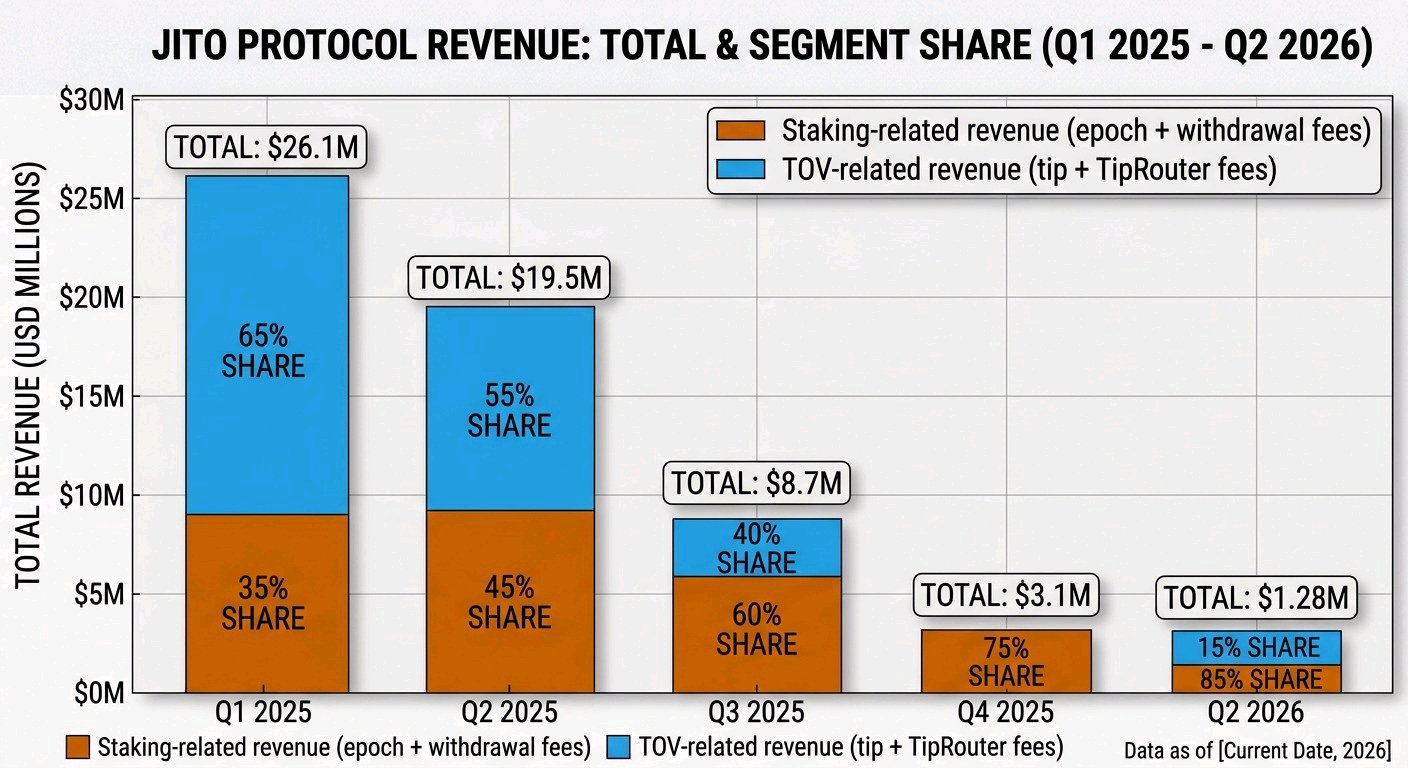
Jito's total protocol revenue was $1.28M in Q2 2026 — the fifth consecutive quarterly decline, down from $26.1M in Q1 2025. That's roughly a 95% drop over five quarters. Inside that shrinking number, though, the share coming from StakeNet-managed staking fees actually grew: the 4% epoch fee on JitoSOL rewards went from 35.8% of revenue in Q1 to 36.5% in Q2, and staking-related revenue overall made up 57% of the total, versus 42% from tip and TipRouter fees. $JTO holders reading that as StakeNet "usage growth" are technically right and also missing the point. StakeNet automates validator selection and rebalancing for the JitoSOL pool — it didn't get more usage this quarter, it got steadier as the more volatile MEV-tip side of the business collapsed faster than the staking side did. A rising share of a shrinking total isn't the same signal as rising absolute usage, and the two get conflated constantly in dashboard screenshots that only show percentages. What StakeNet would need to show to back a real growth story is more delegated stake and more fee-generating epochs in absolute dollar terms — not just a bigger slice of a $1.28M quarter that used to be $26.1M. The share tells you what's resilient, not what's healthy — a difference worth remembering the next time a StakeNet metric gets called a growth signal. #ByXIMPACT $JTOUSDT